
North America
United States
A vast nation of diverse landscapes, cities, and cultures.
United States at a glance
USD
English
$130–$500
Year-round
27° / 4°C
74/100
Visa-free entry for 🇺🇸 US, 🇬🇧 UK, 🇪🇺 EU passport holders. Always confirm requirements with the embassy before booking.
Destinations in United States
89 guides available

New York City
United States
New York City needs no introduction — it's the cultural and financial capital of the world. Five boroughs, each with dozens of distinct neighborhoods, offering everything from Michelin-starred restaurants to $1 pizza slices. The subway runs 24/7, the energy is relentless, and there's genuinely something new to discover on every visit.
San Francisco
United States
San Francisco is one of America's most beautiful cities — the Golden Gate Bridge, cable cars climbing steep hills, and Victorian painted ladies are just the start. Fisherman's Wharf, Alcatraz, the Mission District's murals, and some of the country's best food (from sourdough to dim sum) make it endlessly explorable. Bring a jacket — the fog is real.

Chicago
United States
Chicago is America's architectural capital — a skyline of art deco towers and modern masterpieces rising from the shores of Lake Michigan. Deep-dish pizza is iconic, the jazz and blues scene is legendary, and the Art Institute is world-class. The Riverwalk, Millennium Park's Bean, and the city's diverse neighborhoods make the Windy City a must-visit.

Los Angeles
United States
LA is a sprawling mosaic — Hollywood glamour, Pacific beaches, Getty art, Griffith Observatory views, and some of the country's best Mexican and Asian food. The city sprawls but rewards exploration: Venice's boardwalk, Downtown's renaissance, Beverly Hills' polish, and canyon drives to hidden overlooks.

Boston
United States
Boston is America's most walkable big city — four centuries of history packed into cobblestone streets, punctuated by Fenway's green monster, Italian cannolis in the North End, and college-town energy from Harvard and MIT across the river. The Freedom Trail delivers Revolutionary history in a single 2.5-mile walk.

Washington, D.C.
United States
The nation's capital delivers a staggering amount of world-class culture for free — 20+ Smithsonian museums, the National Gallery, every major memorial on the Mall. Beyond the monuments, Georgetown's cobblestones, U Street's jazz history, and Eastern Market's weekend bustle give DC a neighborhood depth many visitors miss.

Miami
United States
Miami is tropical America with a Latin pulse — pastel Art Deco along Ocean Drive, Wynwood's street-art galleries, Little Havana's dominoes and cafecito, and some of the country's best clubbing. The Everglades and Florida Keys are day-trip distance, and Miami Beach's Atlantic sand is steps from downtown.

New Orleans
United States
The most culturally distinct city in America — where Creole and Cajun cooking, jazz, second-line parades, and a French-Spanish colonial heart create something you genuinely can't find anywhere else. The French Quarter's wrought-iron balconies, Frenchmen Street's nightly brass bands, and beignets at 3am at Café du Monde.

Seattle
United States
Seattle sits on a stretch of Puget Sound backed by the Cascades — with Mt. Rainier dominating the skyline on clear days. Pike Place Market's fish-tossing, the Space Needle's rotating deck, Chihuly glass art, and a coffee culture that invented the global latte. Ferries to Bainbridge and island-hop weekends are part of the deal.

Oʻahu
United States
Hawaii's most populated island packs Waikiki Beach's surf, Pearl Harbor's history, the North Shore's legendary winter waves, Hanauma Bay's snorkel reef, and Diamond Head's crater hike into one island you can drive around in a day. Honolulu's Chinatown is unexpectedly great for food and art.

American Southwest
United States
A road-trip region of red-rock canyons and impossibly wide skies — Grand Canyon's South Rim, Sedona's crimson buttes, Antelope Canyon's light shafts, Horseshoe Bend, and Monument Valley's towering mesas. Flagstaff and Sedona anchor most itineraries; a rental car is mandatory and the distances are bigger than they look.

Austin
United States
Austin is Texas with the volume turned up — a tech-money boomtown still nursing its "Keep Austin Weird" soul. Live music spills from honky-tonks on South Congress, smoked brisket lines form by 10 a.m. at Franklin, and Lady Bird Lake threads the downtown skyline with paddleboards and bats. Rainey Street, East Austin, and the Hill Country day-trip loop all reward a car or rideshare.

Nashville
United States
Music City is equal parts bachelorette-pedal-tavern chaos on Broadway and deeply serious songwriter culture at the Bluebird Cafe and Station Inn. Hot chicken sweats at Hattie B's and Prince's, the Ryman Auditorium still hosts acoustic sets under its stained glass, and East Nashville and 12South have eclipsed downtown as the city's creative heart.

Savannah
United States
Savannah is Spanish moss, cobblestone streets, and 22 garden squares laid out in 1733 — one of the most perfectly preserved colonial grids in America. It's also a to-go-cup town where SCAD art students, ghost tours, and century-old dining rooms like Mrs. Wilkes share the same shady blocks. Beach day at Tybee Island is 20 minutes east.

Charleston
United States
Charleston has perfected the southern coastal city — pastel Rainbow Row on East Bay, Battery mansions staring down the harbor where Fort Sumter sits, and a restaurant scene (Husk, FIG, The Ordinary) that has defined modern low-country cooking. Gullah-Geechee heritage, King Street shopping, and plantation day trips round out longer visits.
Portland
United States
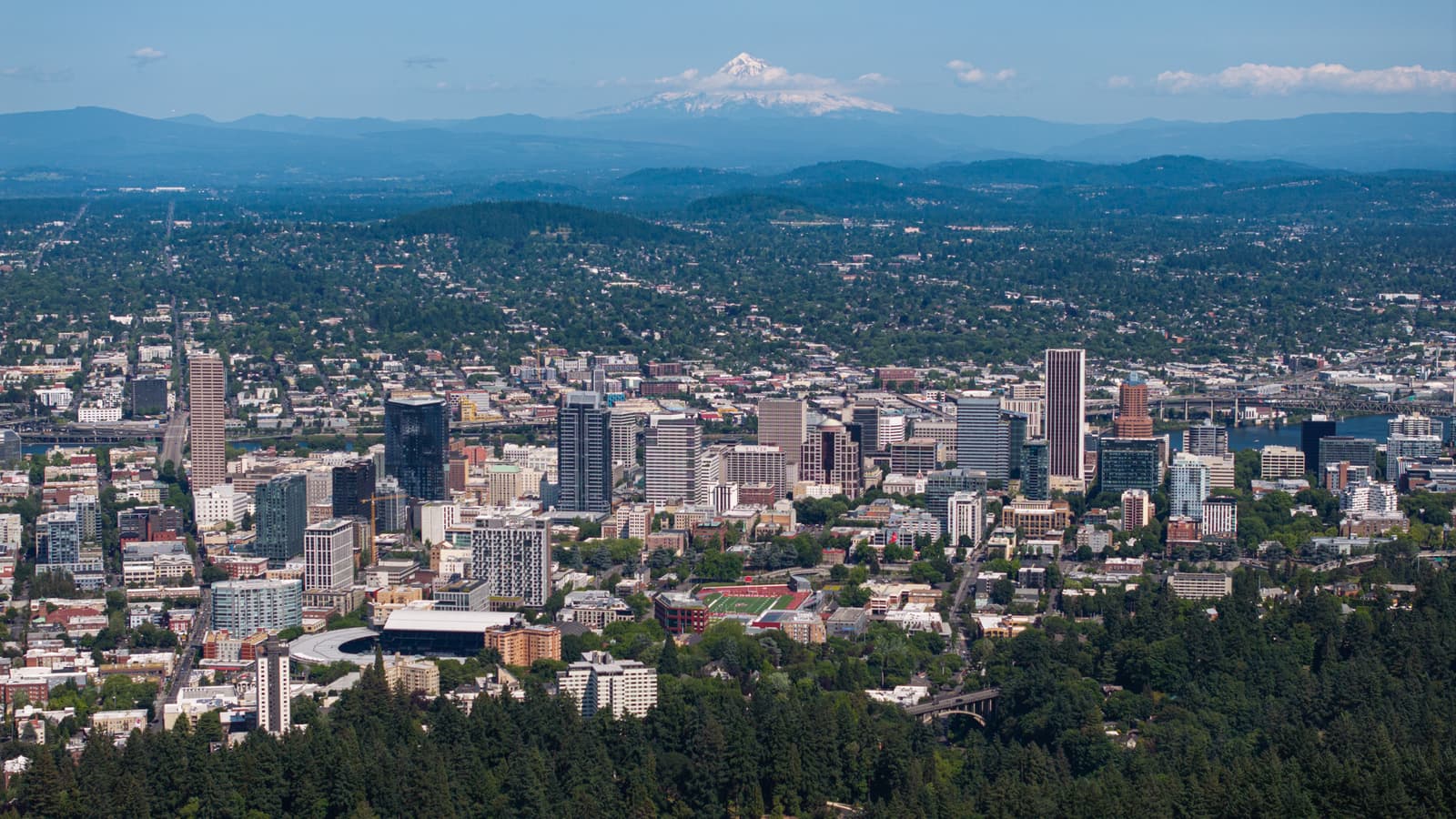
Portland is still weird, still rainy, and still one of the best small food + beer + coffee cities in America — though its downtown is in real transition since 2020. Powell's City of Books anchors the west side, food cart pods dot every neighborhood, Forest Park is a 5,200-acre wilderness in the city, and Mt. Hood plus the Columbia River Gorge are 45 minutes east.

Denver
United States
Denver sits exactly one mile up — altitude real enough to floor first-time visitors. It's the Rockies' gateway city: craft beer everywhere, legal cannabis since 2014, a restored 1881 Union Station that's now one of the country's best urban train halls, and Red Rocks Amphitheatre 15 minutes west. Breckenridge, Vail, and Rocky Mountain NP are an hour or two into the mountains.

Yellowstone National Park
United States
Yellowstone was the world's first national park (1872) and still one of its strangest — 2.2 million acres sitting on a supervolcano, home to half the planet's geysers, the continent's largest free-roaming bison herd, and the wolves of Lamar Valley. The Grand Loop Road connects Old Faithful, Grand Prismatic Spring, and the Grand Canyon of the Yellowstone in a weeklong figure-eight.

Grand Canyon National Park
United States
One of the planet's most familiar landscapes still lands the first time you walk up to Mather Point. The canyon is 277 miles long, a mile deep, and took the Colorado River roughly six million years to carve. South Rim (open year-round, 90% of visitors) is where most trips happen; North Rim is 10% of the traffic and closed half the year. The rule on Bright Angel: down is optional, up is mandatory.

Yosemite National Park
United States
Yosemite Valley is seven miles of polished granite — El Capitan's 3,000-foot wall, Half Dome's hood above it, and three of the tallest waterfalls in North America — all visible from Tunnel View in one shot. Most visitors never leave the Valley; the high country at Tuolumne Meadows and the Mariposa Grove of giant sequoias reward the detour, and a Merced Amtrak + YARTS bus is a real budget route from San Francisco.
Zion National Park
United States
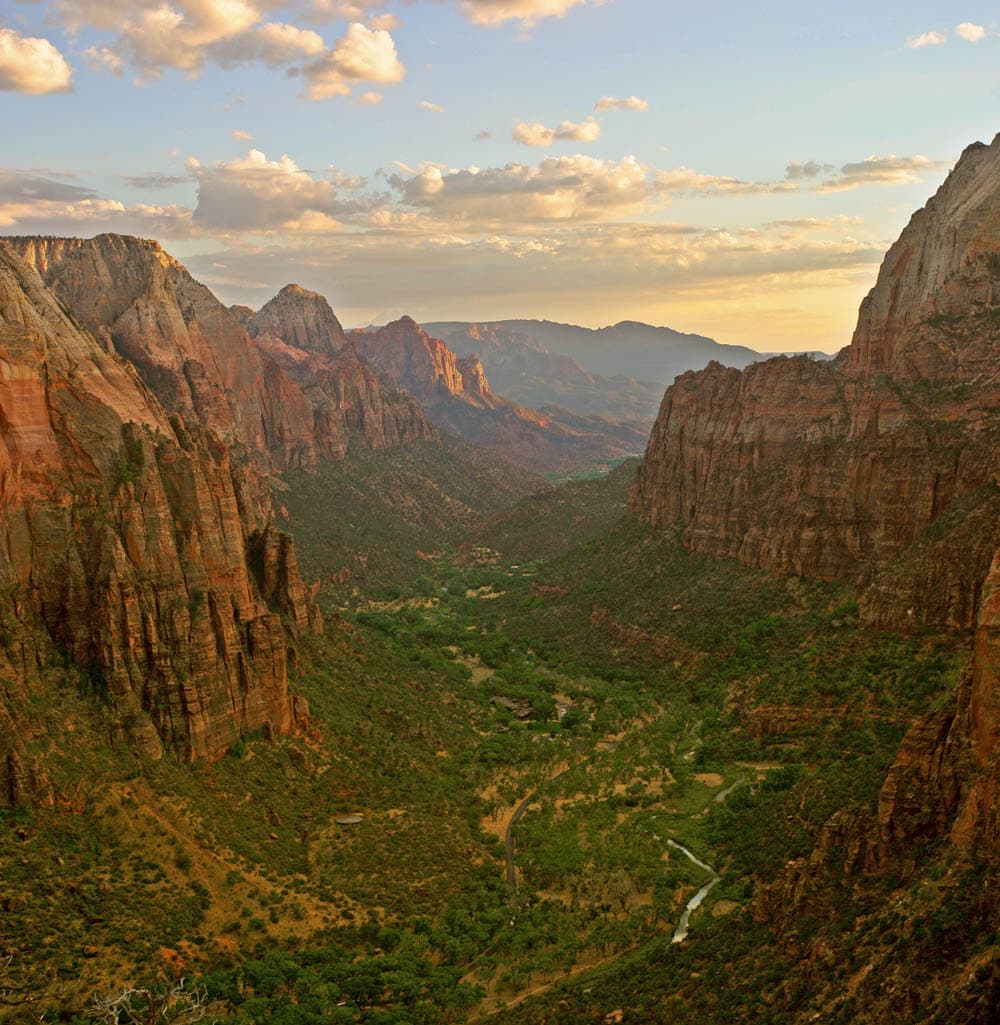
Zion is a slot canyon national park — the Virgin River carved red-and-white Navajo Sandstone walls up to 2,000 feet above the valley floor. It's the third most-visited U.S. park (4.5 million a year), which is why the Zion Canyon shuttle is mandatory April–November. Angels Landing's chained ridge requires a permit lottery and has killed hikers; the Narrows is a wade-up-river slot that closes on flash-flood days.

Glacier National Park
United States
Northern Montana's crown — a million acres of jagged peaks, ice-blue lakes, and dwindling glaciers (26 left, down from 150 in 1850). The Going-to-the-Sun Road across Logan Pass is one of the world's great drives, open only late June through mid-October. Grizzlies are serious here — bear spray isn't optional. Amtrak's Empire Builder actually stops at the park, a rarity for U.S. national parks.

Great Smoky Mountains National Park
United States
The most-visited national park in the U.S. — 13 million visitors a year, more than double #2 — and still free to enter (parking tag since 2023). 522,000 acres of Appalachian rainforest straddle the TN/NC line, with more tree species than all of Europe, 1,500+ black bears, and the world's only predictable synchronous firefly display in June. Cades Cove at dawn is the wildlife jackpot; the kitsch in Gatlinburg is its own experience.

Acadia National Park
United States
The first national park east of the Mississippi (1916) — 47,000 acres across Mount Desert Island, the Schoodic Peninsula, and Isle au Haut. Cadillac Mountain at 1,530 ft is the first place in the continental US to see sunrise October through early March. Rockefeller's 45 miles of carriage roads exclude cars; the 27-mile Park Loop Road connects Sand Beach, Thunder Hole, Otter Cliffs, and Jordan Pond. The Beehive and Precipice ladder trails are some of the most dramatic hikes in the eastern US.

Las Vegas
United States
The 4.2-mile Strip is a self-contained universe of themed megaresorts — the Bellagio fountains, the Venetian canals, the Eiffel Tower replica, the Sphere's LED exterior. 42 million visitors a year. Beyond the casinos: the Fremont Street Experience in Downtown's vintage heart, world-class residencies (Adele, U2 at Sphere), and a surprisingly strong food-and-cocktail scene built on celebrity-chef imports. Red Rock Canyon sits 30 minutes west, the Grand Canyon 4 hours east, Zion 3 hours northeast.

Maui
United States
Hawaii's second-largest island — the Road to Hana's 620 curves and 59 bridges past waterfalls and bamboo forests, sunrise above the clouds at Haleakalā's 10,023-ft summit crater, winter humpback whales in the Auʻau Channel, and the snorkel-famous Molokini crater. Lahaina's historic town was devastated by the August 2023 wildfire — visiting West Maui responsibly supports recovery. Kāʻanapali, Wailea, and Kīhei host the resort zones; Pāʻia and Upcountry Makawao are the laid-back alternatives.

San Diego
United States
Southern California's laid-back beach-and-burrito capital — 70 miles of Pacific coast, 70°F year-round, and an arc from surfy Ocean Beach through La Jolla's sea-lion coves to Coronado's Hotel del Coronado and the Mexican border at Tijuana. Balboa Park packs 17 museums and the world-class San Diego Zoo into 1,200 acres. The Gaslamp Quarter anchors downtown nightlife; North Park and Liberty Station handle the craft-beer + food-hall crowds. The nation's largest naval base shapes the skyline with destroyer silhouettes.

Denali National Park
United States
Home to Denali (20,310 ft / 6,190m), tallest peak in North America — visible from only ~30% of visits due to cloud cover (the "30 Percent Club"). A 92-mile Park Road is the sole access, with private vehicles restricted past Mile 15 and park camper + tour buses handling visitors. Important: the 2021 Pretty Rocks landslide has closed the road beyond Mile 43, so Eielson + Wonder Lake remain inaccessible in 2026. Wildlife Big 5: grizzly, caribou, moose, wolves, Dall sheep. Anchorage (ANC) 4hr south, Fairbanks (FAI) 2hr north; Alaska Railroad Denali Star stops in the park. Aurora visible from late August.

Philadelphia
United States
America's first UNESCO World Heritage City — where both the Declaration of Independence (1776) and the Constitution (1787) were signed. Reading Terminal Market, Eastern State Penitentiary, the Philadelphia Museum of Art, and the Liberty Bell are all within walking distance. The cheesesteak was invented here, and Philadelphians are passionate about all of it.

Santa Fe
United States
America's oldest state capital (1610) at 7,200 feet — a high-desert city built in Pueblo adobe style where the Palace of the Governors is the oldest continuously occupied public building in the US. Canyon Road's 80 galleries make this the densest concentration of art in North America. Meow Wolf's immersive art installation is unlike anything else on Earth. "Red or green?" (chile sauce) is the official state question.

Asheville
United States
Blue Ridge Mountain city nicknamed Beer City USA — more craft breweries per capita than any American city. Biltmore Estate (250 rooms, George Vanderbilt, 1895) is the largest private home in America. The River Arts District has 200+ working artist studios in former industrial buildings. Gateway to the Great Smoky Mountains National Park (45 minutes) and the Blue Ridge Parkway.

Key West
United States
The southernmost point in the continental US — 90 miles to Cuba, an island that seceded from the United States in 1982 (the Conch Republic) and never quite came back. Hemingway lived here and wrote some of his best work; his six-toed cats still roam his Whitehead Street home. The 1.25-mile Duval Street is the “longest bar in America”, the nightly Mallory Square sunset celebration is a 50-year-old ritual, and Fort Zachary Taylor State Park is the best beach on the island. Pair Old Town’s Conch architecture with a Yankee Freedom day trip to the remote Dry Tortugas National Park.

Napa Valley
United States
Northern California's premier wine region — a 30-mile-long, 5-mile-wide valley an hour north of San Francisco that contains over 400 wineries and produces 4% of California's wine while generating 27% of the state's wine value. The 1976 'Judgment of Paris' blind tasting put Napa on the world map when a French jury rated Stag's Leap Wine Cellars Cabernet Sauvignon and Chateau Montelena Chardonnay above their celebrated French counterparts — Time magazine called it 'the day Napa Valley earned its place.' The first American Viticultural Area outside Augusta, Missouri (1981), the valley now contains 16 sub-AVAs each with distinct soil and microclimate. Cabernet Sauvignon dominates at ~55% of plantings, supported by daily marine fog rolling in from San Pablo Bay through the Petaluma Gap and a 40°F+ diurnal temperature swing. Anchored by Napa town in the south and St. Helena and Calistoga in the north along the SR-29 'Wine Route,' with the parallel Silverado Trail offering a quieter alternative. The 1989 Napa Valley Wine Train still runs vintage Pullman dining cars 36 miles round-trip at 18 mph past vineyards. Closest airports: Oakland (OAK) and SFO.

Sedona
United States
A small town of about 10,000 people set among Arizona's most photogenic red sandstone — the iron-oxide-coated Schnebly Hill Formation deposited 270 million years ago when the area was a vast inland sea, the same geological layer that extends north to the Grand Canyon's pink lower walls. Cathedral Rock, Bell Rock, Boynton Canyon, and Airport Mesa are the four 'vortex' sites of the New Age belief system that has driven a wellness/metaphysical tourism economy here since the 1980s — there is no scientific evidence for vortexes; there is also no shortage of believers. Sedona was designated only the 8th International Dark Sky Community in the world in 2014, and the Milky Way is naked-eye visible from anywhere in town on clear nights. The Chapel of the Holy Cross (built 1956 by Marguerite Brunswig Staude) rises directly out of the red rock walls with a 250-foot iron cross as structural support. Slide Rock State Park is named for the natural 80-foot sandstone water slide carved into Oak Creek bedrock. Population is just 10,000 but the town receives over 3 million visitors per year — the result is severe summer/holiday traffic on SR-89A and an enforced parking permit system at popular trailheads. Closest airport: Flagstaff (FLG) 30 mi north, or Phoenix Sky Harbor (PHX) 2 hours south.

Niagara Falls
United States
Three waterfalls on the Niagara River between New York State and the Canadian province of Ontario — the American Falls (167 ft tall, 1,060 ft wide), Bridal Veil Falls (the small one separated by Luna Island, also on the US side), and the dominant Horseshoe Falls (167 ft tall, 2,600 ft wide) carrying 90% of the total water volume with the curve sitting mostly in Canada. Combined flow averages 750,000 gallons per second. Second-largest waterfall in the world by flow rate (after Inga Falls in DRC) but only 51st by height — the fame comes from being the largest in the inhabited Western world and the most accessible, drawing 12+ million visitors a year split roughly equally between US and Canadian sides. The falls erode upstream at about 1 ft per year (down from 3 ft historically due to flow control); the 7-mile gorge below is the path the falls have carved over 12,500 years since the last ice age. The Maid of the Mist boat tour has operated continuously since 1846 — the oldest tourist attraction in North America. Niagara also produces ~2.4 million kW of hydroelectric power, with treaty agreements diverting up to 75% of natural flow into the power stations at night and in winter. Closest airports: Buffalo Niagara (BUF, US side) and Toronto Pearson (YYZ, Canadian side).

Pittsburgh
United States
The Steel City reborn as a tech and medicine capital — three rivers (Allegheny, Monongahela, Ohio) meeting at the tip of Point State Park, 446 bridges (more than any city in the world), and 712 sets of public city steps climbing the hillsides. Andrew Carnegie's flour-and-steel empire built world-class museums (the Carnegie, the Andy Warhol, the Frick), and the city's unique topography means the Mt. Washington overlook delivers one of America's great urban skylines. Stronger transit than peers expect (free downtown T light rail, two surviving 1870s funicular Inclines), the Strip District for food markets, Primanti Brothers sandwiches since 1933, and dramatically cheaper hotels than peer Eastern US cities.

Salt Lake City
United States
The 1847 Mormon pioneer capital at the foot of the Wasatch Mountains — a perfect numbered grid radiating from Temple Square (the LDS Church world headquarters and the most-visited tourist site in Utah), 11 ski resorts within an hour's drive (more than any other US city), and the Great Salt Lake stretching to the horizon west of town. Unusually walkable for the western US (free downtown TRAX light rail, flat grid, generous sidewalks), with the famous "Greatest Snow on Earth" at Park City, Snowbird, Alta, and Deer Valley. The Sundance Film Festival (late January), Antelope Island bison herds, and the surreal Bonneville Salt Flats are all day-trip distance.

Minneapolis
United States
The Mississippi River city built around St. Anthony Falls — the only natural waterfall on the entire 2,340-mile river — with 22 lakes inside city limits, the 50-mile Grand Rounds parkway connecting them all, and the world's largest enclosed Skyway system (9.5 miles of climate-controlled second-floor corridors connecting 80 downtown blocks for the brutal winters). Prince was born and lived almost his entire life here; Paisley Park and First Avenue are the music pilgrimage sites. The Walker Art Center and Minneapolis Institute of Art (permanently free) are world-class; the Mall of America is 12 miles south. Twin city to St. Paul, 11 miles east — one airport, one transit system, no clear hierarchy between them.

Atlanta
United States
The capital of the New South — Sherman burned the city in 1864 and the phoenix on the official seal commemorates the rise from ashes. Martin Luther King Jr. was born here, preached at Ebenezer Baptist Church on Auburn Avenue, and is buried at the King Center; the MLK National Historical Park is the essential Civil Rights pilgrimage. Coca-Cola was invented here in 1886 and the brand still anchors downtown alongside the Georgia Aquarium (largest in the Western Hemisphere) and the Civil and Human Rights Center. The 22-mile Beltline trail has connected 45 neighborhoods into a continuous urban park; Ponce City Market and Krog Street Market on the Eastside Trail are the food-scene anchors. ATL is the busiest airport in the world; Atlanta is the cultural and economic capital of the South.

Kauai
United States
The oldest of the main Hawaiian islands at 5.1 million years — long enough for erosion to carve the cathedral-green Na Pali Coast cliffs (1,200 m straight from the Pacific) and Waimea Canyon, the "Grand Canyon of the Pacific". Mount Waiʻaleʻale at the centre is among the wettest spots on Earth (~9,500 mm of rain a year), feeding seven rivers that pour out across taro-field valleys to Hanalei Bay’s 3-km golden crescent. The county forbids any building taller than a coconut palm, half the island remains undeveloped, and the only road around it dead-ends 27 km short of completing the loop — making the Na Pali Coast accessible only by foot, boat, or helicopter. The "Garden Isle" is the slowest-paced and most photogenic of the Hawaiian islands.

Big Island
United States
Hawaii Island is bigger than all the other Hawaiian islands combined and is still actively growing — Kilauea is one of the world’s most active volcanoes (currently erupting as of April 2026) and Mauna Kea’s 4,205-m summit hosts 13 international observatories under what astronomers consider Earth’s clearest skies. Eight of the world’s 13 climate zones exist on this single island: the Hilo side gets 3,400 mm of tropical rainforest rain a year while the Kona side stays dry desert at 500 mm; Mauna Kea’s summit has alpine conditions year-round and snows in winter. Add Punaluʻu black-sand beach, Kona coffee country, the green sea turtles at Puʻuhonua o Hōnaunau, and the manta-ray night snorkel off Keauhou Bay. The most geologically dramatic of the Hawaiian islands.

Tampa
United States
Florida’s Gulf-coast counterweight to Miami — a working city of 395K (3.4M metro) wrapped around the largest open-water estuary in Florida. Ybor City, the 1885-founded Cuban-Spanish-Italian cigar district, is where the Tampa Cuban sandwich was invented (the official sandwich of Tampa by city ordinance) and where wild chickens still roam between the brick streets descended from cigar-rollers’ birds. Add Busch Gardens (the densest concentration of major rollercoasters in the southern US), the 4-km waterfront Riverwalk, the Florida Aquarium’s 500,000-gallon coral reef tank, and the legendary Bern’s Steak House (largest restaurant wine collection on Earth, 500,000 bottles). Tampa International Airport regularly tops US traveller-satisfaction rankings; Clearwater Beach (regularly named America’s best beach) is 40 minutes west.

Detroit
United States
Detroit is the great American comeback city — the birthplace of Motown, the auto industry, and techno music, now in the middle of a 15-year reinvention that has restored Michigan Central Station, filled downtown with cocktail bars, and turned former industrial corridors into bike trails. The Detroit Institute of Arts holds a top-five US collection (Diego Rivera's Detroit Industry murals are here), Belle Isle is a 982-acre Olmsted-designed island park in the river, and the Henry Ford Museum complex in Dearborn is one of America's great Americana collections. Lafayette and American Coney Islands still serve chili dogs at 02:00.

Cleveland
United States
Cleveland sits at the mouth of the Cuyahoga River where it meets Lake Erie, and the city's two great institutions — the Rock & Roll Hall of Fame and the Cleveland Orchestra (one of the world's top five) — sum up its split personality: blue-collar rock town and high-culture European-flavored powerhouse. The West Side Market has been operating since 1912, the lakefront Edgewater beach gives you a real sand swim 10 minutes from downtown, and the city is now arguably the best sports town per-capita in America (Browns, Cavs, Guardians all play within walking distance of each other downtown).

Cincinnati
United States
Cincinnati hits above its weight — the Over-the-Rhine neighborhood is one of the largest collections of 19th-century Italianate architecture in the United States, the John A. Roebling Suspension Bridge (1866) was the prototype for the Brooklyn Bridge, and the city's two contributions to American food (Cincinnati chili and the goetta breakfast sausage) are unlike anything else. The Reds play at riverfront Great American Ball Park, the Bengals next door at Paycor Stadium, and Findlay Market (1855) still anchors the OTR food scene every Saturday morning.

Indianapolis
United States
Indianapolis is the most under-rated big city in the Midwest — the Indianapolis Motor Speedway hosts the Indy 500 (350,000 spectators, the largest single-day sporting event in the world) every Memorial Day weekend, the NCAA is headquartered downtown, and Mass Ave (Massachusetts Avenue) has emerged as one of the Midwest's best food-and-drink corridors. The downtown is genuinely walkable thanks to the 8-mile Cultural Trail loop, and the city has more memorial monument acreage than any US city outside Washington DC — Soldiers' and Sailors' on Monument Circle is the unofficial symbol.

Memphis
United States
Memphis is the soul-music capital of the American South — Beale Street neon, Sun Studio's tiny tile-floor room where Elvis cut his first record in 1954, the Stax studio where Otis Redding and Booker T. recorded, and Graceland 9 miles south where Elvis lived from 1957 until his death in 1977. The Mississippi River bluff downtown looks across to Arkansas; the National Civil Rights Museum is built into the Lorraine Motel where Martin Luther King Jr. was assassinated in 1968. Add some of the best slow-cooked dry-rub barbecue in America (Rendezvous, Central BBQ, Payne's) and you have a city where music and history sit on every corner.

Orlando
United States
Orlando is the theme-park capital of the world — Walt Disney World's four parks (Magic Kingdom, EPCOT, Hollywood Studios, Animal Kingdom) cover 25,000 acres southwest of the city, while Universal Orlando (three parks including the new Epic Universe opening 2025) sits closer in. Beyond the parks, downtown Orlando wraps around Lake Eola with its swan boats and weekly farmers' market, ICON Park's 400-foot wheel anchors International Drive, and the Kennedy Space Center is an hour east. The metro is enormous (2.7M), the airport is one of the busiest in the US, and theme-park strategy (FastPass, park-hopper, off-season vs holiday weeks) is its own discipline.

Charlotte
United States
Charlotte is North Carolina's biggest city and the second-largest US banking centre after New York — Bank of America and Truist (formerly BB&T) are headquartered here, and the Uptown skyline along Tryon Street is a wall of corporate towers. Beyond banking, the NASCAR Hall of Fame anchors stock-car culture an hour from the Charlotte Motor Speedway, the US National Whitewater Center (a man-made Olympic-grade rapids course) sits west of town, and the Discovery Place science museum draws families. Charlotte is also the entry point to the western North Carolina mountains (Asheville is 2 hours northwest).

Raleigh
United States
Raleigh is North Carolina's state capital and the southern point of the Research Triangle (Raleigh – Durham – Chapel Hill) — three universities (NC State, Duke, UNC) and the Research Triangle Park anchor one of the densest concentrations of PhDs in America. Downtown is built around the 1840 NC State Capitol, the free North Carolina Museum of Natural Sciences (the largest natural-history museum in the Southeast), the NC Museum of Art's outdoor sculpture park, and Fayetteville Street's restaurants and bars. The college-town energy from NC State (37,000 students) means the food scene punches well above a city this size, and the surrounding Triangle area gives you Durham's renovated tobacco district and Chapel Hill's basketball.

Tucson
United States
Tucson sits in a Sonoran Desert basin ringed by five mountain ranges and saguaro forests so dense they got their own national park (split into east and west units that bracket the city). It's the oldest continuously inhabited place in the US — 4,000+ years of history layered through the Tohono O'odham, the Spanish mission of San Xavier del Bac (1797), Mexican rule, and the Wild West railroad town. The food scene is the only UNESCO City of Gastronomy in the US, built on Sonoran-Mexican traditions with chimichangas (invented here), sonoran hot dogs, and fresh tortillas at decades-old neighborhood spots.

Albuquerque
United States
Albuquerque straddles the Rio Grande on a high desert plateau (5,300 ft) with the granite face of the Sandia Mountains rising 5,000 ft directly east of downtown — reachable by the longest aerial tramway in the Americas. The Old Town adobe plaza dates to 1706 Spanish settlement, and green chile (the state question is literally 'red or green?') drips from every breakfast burrito. Each October the world's largest hot air balloon festival floods the sky with 500+ balloons; the rest of the year you get Breaking Bad locations, Petroglyph National Monument, and 310 days of sunshine.

Milwaukee
United States
Milwaukee earned its German-immigrant brewing reputation honestly — Pabst, Schlitz, Miller, and Blatz all started here, and the beer halls and corner taverns still anchor the city's social life. The Lake Michigan shoreline gives Milwaukee a 1,000-mile-long swimming pool, the white sail-like Calatrava-designed art museum is the most photographed building in Wisconsin, and the cobblestoned Third Ward warehouse district has become the food and craft hub. Add the Harley-Davidson Museum (the company was founded here in 1903), Bucks championship-era basketball, fish fries every Friday night, and you've got the quintessential Great Lakes city.

Kansas City
United States
Kansas City is two cities (Missouri and Kansas) on opposite banks of the state line, but the Missouri side holds the heart: world-class barbecue (Joe's, Q39, Arthur Bryant's, Gates), the 18th & Vine jazz district where Charlie Parker and Count Basie made their names, the Country Club Plaza (the country's first car-oriented shopping district, 1923, modeled on Seville), and more public fountains than any city outside Rome. The food obsession runs deeper than just BBQ — Boulevard beer, KC strip steaks, and a pizza style of its own. The Chiefs' Super Bowl runs and the Royals' Kauffman Stadium round out one of the most underrated US cities.

St. Louis
United States
St. Louis sits where the Missouri meets the Mississippi — a Midwestern river city defined by Eero Saarinen's 630-foot Gateway Arch, Forest Park (larger than Central Park, with five free major museums), and a stubborn small-city food culture built on toasted ravioli, gooey butter cake, and tomato-sweet pork-steak BBQ. The population peaked at 856,000 in 1950 and has fallen to roughly 280,000, leaving an oversized skyline, brick neighbourhoods, and two-day weekends that still feel like a 1.5-million-person town. Cardinals baseball at Busch Stadium and the free Anheuser-Busch brewery tour anchor the calendar.

Louisville
United States
Louisville (locally pronounced LOO-uh-vul) is the bourbon capital of the world and the home of the Kentucky Derby — the first Saturday in May at Churchill Downs has been running uninterrupted since 1875. The Urban Bourbon Trail links 40+ bars and distilleries within the city; the Louisville Slugger factory makes the bats every MLB player swings; and NuLu has rebuilt East Market Street into a tight strip of restaurants, distilleries, and galleries. Add the Muhammad Ali Center, a passable food scene, and Frankfort Avenue's Frankfort Avenue antique row, and the city punches well above its 630,000 population.

Madison
United States
Madison is built on a narrow isthmus between Lake Mendota and Lake Monona, with the white-granite Wisconsin State Capitol (the only state capitol built on an isthmus, and a near-twin of the US Capitol's design) anchoring the dead centre. The University of Wisconsin–Madison wraps the western lakeshore, the Dane County Farmers' Market loops the Capitol Square every Saturday April–November (the largest producer-only farmers' market in the United States), and the Memorial Union Terrace's sunburst chairs are the unofficial summer living room. Beer, cheese, brats, and lake life — Wisconsin to its core.

Buffalo
United States
Buffalo invented the chicken wing at the Anchor Bar on Main Street in 1964 and never quite got over it — but the city is also the closest American gateway to Niagara Falls (20 miles north), the home of Frank Lloyd Wright's masterpiece Darwin Martin House complex, and a rebuilt waterfront at Canalside that turned a derelict freight terminus into the city's summer centre. Add Bills Mafia at Highmark Stadium, the Albright-Knox-Buffalo AKG Art Museum (one of the best modern collections between Manhattan and Chicago), and the cheapest steak fingers in the East, and the city has quietly stopped being a punchline.

Boise
United States
Idaho's capital sits where the high desert meets the Rockies — the Boise River cuts straight through downtown, lined by a 25-mile greenbelt of cottonwoods and bike paths that locals treat as the city's spine. The state's only Basque population in the country (roughly 15,000) gave Boise a Basque Block of pintxos bars and the Cyrus Jacobs-Uberuaga House. Add the climbable foothills behind town, the gold-domed Idaho State Capitol, and a tech scene anchored by Micron and HP, and you have one of the fastest-growing small cities in the West.

Anchorage
United States
Anchorage holds nearly 40% of Alaska's population on a Cook Inlet promontory ringed by the Chugach Mountains. The Tony Knowles Coastal Trail runs 11 miles along the water with regular moose sightings and beluga whales offshore. It's the staging ground for Denali, the Kenai Peninsula, and Prince William Sound — and the only US city where you can land on a Boeing 737, fish for king salmon downtown on Ship Creek, and watch a midnight-sun sunset around 23:30 in late June.

Burlington
United States
Vermont's biggest city is still small — under 45,000 people — and packs them onto a hillside that drops into Lake Champlain. Church Street Marketplace is a four-block pedestrian mall of brick, buskers, and farm-to-table restaurants. The University of Vermont (UVM) keeps the place caffeinated and progressive; Ben & Jerry's was founded here in 1978, Magic Hat brews on the south end of town, and the Adirondack peaks across the lake make every sunset look staged. Fall foliage peaks early October.

Annapolis
United States
Maryland's capital was briefly the capital of the United States (Nov 1783–Aug 1784), and the State House is the oldest US capitol still in continuous legislative use. The 18th-century brick streets of the historic district run downhill to the Chesapeake Bay-fed harbor — known locally as Ego Alley because boaters love to be seen there. The US Naval Academy occupies 338 waterfront acres on the Severn River; Maryland blue crabs come steamed with Old Bay; and Annapolis is the self-proclaimed sailing capital of America, with a fleet of charter sloops on the city dock most weekends.

Houston
United States
Houston is the fourth-largest US city (2.3M in the city, 7.3M in the metro) and the most diverse — more than 145 languages spoken, world-class Vietnamese, Indian, and Tex-Mex food scenes side by side. NASA Johnson Space Center sits 25 miles south, the Museum District packs 19 institutions into 1.5 square miles (the Menil Collection alone justifies the trip), and Buffalo Bayou Park has reshaped downtown with 160 acres of trail along the water. The catch: Houston is sprawling, hot from June through September, and exposed to Atlantic hurricanes in late summer.

Dallas
United States
Dallas anchors the 8.1M-person DFW metroplex. Downtown Dallas holds the 68-acre Arts District (the largest contiguous arts district in the US), the Sixth Floor Museum at Dealey Plaza covering the JFK assassination from the actual sniper window, and Deep Ellum's live music. Forty miles west in Fort Worth, the Stockyards stage a twice-daily cattle drive, the Kimbell Art Museum (Renzo Piano) holds Caravaggios and Michelangelos, and Sundance Square is the most walkable downtown in Texas. The Cowboys play in Arlington at AT&T Stadium between the two cities.

San Antonio
United States
San Antonio is the seventh-largest US city (1.5M) and the most Mexican-feeling major city in the United States, anchored by the Alamo and a 3-mile pedestrian River Walk that runs 20 feet below street level through downtown. The five Spanish colonial missions (Mission San Jose plus the Alamo and three others) form a UNESCO World Heritage Site, the King William Historic District holds Victorian mansions, and the Pearl District has turned a 19th-century brewery into the city's best food and shopping zone. Tex-Mex was effectively invented here.

Phoenix
United States
America's fifth-largest city and the heart of the Valley of the Sun — 1.6 million in the city proper, nearly 5 million across the metro, sprawling across the northern Sonoran Desert at 1,086 ft elevation. The signature trio is Camelback Mountain (a 1.3-mile rock-scramble up to a city-and-desert panorama), Old Town Scottsdale (boutique-and-margarita strip 20 minutes east), and the Desert Botanical Garden (50,000 plants on 140 acres). Brutal Jun-Sep heat regularly hits 45°C, but Nov-Apr is shirtsleeve perfection — the same window the Cactus League brings 15 MLB teams here for spring training. Phoenix is also the practical gateway: Sedona is 2 hours north, the Grand Canyon 4 hours.

Palm Springs
United States
California's mid-century modern oasis — a 50,000-person resort city tucked against the 10,800 ft wall of San Jacinto Peak, 1.5 hours east of Los Angeles in the Coachella Valley. The town carries the highest concentration of preserved 1950s-60s desert modernism in the country (Modernism Week every February draws 162,000 attendees). The Palm Springs Aerial Tramway climbs 8,500 vertical ft to alpine wilderness in 10 minutes; Joshua Tree National Park is 30 minutes east. Pool culture is the local religion — over 100 hotels are designed around the courtyard pool. Coachella and Stagecoach drop into nearby Indio in April; summers spike to 45°C, but Oct-May is dry, mild, and built for cocktails.

Lake Tahoe
United States
North America's largest alpine lake — 22 miles long, 12 miles wide, 1,645 ft deep at center, sitting at 6,225 ft elevation in the Sierra Nevada and split between California and Nevada. Twelve ski areas ring the basin (Heavenly, Palisades Tahoe, Northstar, Kirkwood, Sugar Bowl, Mount Rose) — the densest concentration in North America. In summer the same shoreline becomes a beach-and-boat playground: Emerald Bay's granite-walled cove, Sand Harbor's clear turquoise water, and 72 miles of paved bike path on the West Shore. Reno (RNO) is 30 minutes from the North Shore; Sacramento (SMF) is 2 hours from the South. The state line splits casinos onto the Nevada side and most pine-forested cabins onto the California side.

Joshua Tree National Park
United States
Joshua Tree spans 800,000 acres at the meeting point of the Mojave and Colorado deserts in southern California, two hours east of Los Angeles. The park is famous for the namesake yucca trees that cluster in the higher Mojave half, the surreal monzogranite boulder piles at Hidden Valley and Jumbo Rocks, and one of the best concentrations of single-pitch climbing and bouldering in the world (1,400+ routes). Skull Rock, the Cholla Cactus Garden, and Keys View over the Coachella Valley are the can't-miss roadside stops. Twentynine Palms and Yucca Valley are the gateway towns; the season runs October through May.

Bryce Canyon National Park
United States
Bryce Canyon is the hoodoo amphitheater of southern Utah — not actually a canyon but a series of natural amphitheaters carved into the eastern edge of the Paunsaugunt Plateau, packed with the densest concentration of hoodoos (eroded sandstone spires) on Earth. The rim sits at 8,000 to 9,000 feet, which makes it noticeably cooler than nearby Zion (4 hours from Las Vegas, 1.5 hours from Zion). The classic combination is a sunrise stop at Inspiration or Sunrise Point followed by descending into the amphitheater on the Navajo Loop and Queens Garden Trail. An International Dark Sky Park, the night skies here are extraordinary.

Arches National Park
United States
Arches sits on 76,000 acres of red Entrada and Navajo Sandstone north of Moab in eastern Utah, holding more than 2,000 documented natural stone arches — the densest concentration on the planet. Delicate Arch (the Utah license-plate arch) is the iconic 3-mile sunset hike, while Landscape Arch on the Devil's Garden Trail spans 306 feet, one of the longest natural arches on Earth. The Windows section delivers four major arches in one short loop. Timed-entry vehicle reservations are required April through October via recreation.gov. Moab is the gateway town and pairs naturally with a Canyonlands NP day trip.

Mount Rainier National Park
United States
Mount Rainier is a 14,411-foot active stratovolcano less than 90 miles southeast of Seattle, the most prominent peak in the Lower 48 and the centerpiece of a 369-square-mile park established in 1899. The Paradise area on the south flank (5,400 feet) is the busiest base, with the Skyline Trail circling subalpine meadows that erupt with avalanche lily and Indian paintbrush every July and August. Sunrise on the northeast side, at 6,400 feet, is the highest road in Washington and gives the closest road-accessible view of the mountain. Reflection Lakes is the iconic mirror shot, Mowich Lake holds the quiet northwest corner, and snow lingers on the high country into July most years.

Olympic National Park
United States
Olympic spans 922,000 acres on Washington's Olympic Peninsula and packs three separate ecosystems into one park, none of them connected by interior roads. The Hoh Rain Forest on the west side gets 12 feet of rain a year and grows moss-draped Sitka spruce cathedrals. The 73-mile Pacific coast strip holds Ruby Beach, Rialto with its sea stacks, and Shi Shi. The interior alpine zone tops out at 5,200-foot Hurricane Ridge with views from the Olympics back across the Strait of Juan de Fuca to Vancouver Island. Lake Crescent and Sol Duc Hot Springs are the natural bases, the park is 2.5 hours from Seattle including a ferry, and the coast stays open year-round.

Crater Lake National Park
United States
Crater Lake is the deepest lake in the United States at 1,949 feet, formed when 12,000-foot Mount Mazama collapsed roughly 7,700 years ago and the caldera filled with snowmelt. The water has no inlets or outlets and produces a near-impossible indigo blue that has stopped photographers for a century. The 33-mile Rim Drive circles the caldera (closed November to May for snow), Wizard Island rises from the western shore as a perfect cinder cone, and Cleetwood Cove Trail is the only legal route to the water — a 700-foot descent and a tougher climb back. The park sits 4 hours from Portland or 1.5 hours from Medford (MFR), peaks July-September, and is a designated International Dark Sky Park.

Park City
United States
Utah's flagship ski town and the closest big-airport-to-resort drive in the US — 32 miles east of Salt Lake City via I-80, just 40 minutes from SLC International. Two world-class resorts share the basin: Park City Mountain (the largest ski resort in the US at 7,300 acres after the 2015 Canyons merger) and Deer Valley (skiers-only, perennially ranked the nation's top resort by SKI Magazine readers). Historic Main Street is a preserved 1890s silver-mining town with 64 buildings on the National Register, hosting Sundance Film Festival each January. At 7,000 ft base it's lower than Colorado giants — easier acclimation. Summer brings world-class mountain biking and the Utah Olympic Park.

Telluride
United States
A 2,600-person Victorian town wedged into a box canyon at 8,750 ft, walled in on three sides by 13,000-ft San Juan peaks — the most dramatic setting of any ski town in the Lower 48. The free public gondola, the only one of its kind in North America, connects historic Telluride to Mountain Village at 9,500 ft in 13 minutes, running 7am-midnight in ski and summer seasons. Bridal Veil Falls plunges 365 ft at the canyon's eastern dead-end, the tallest free-falling waterfall in Colorado. The whole town is a National Historic Landmark District. Bluegrass Festival in June and Telluride Film Festival each Labor Day weekend draw devoted national crowds.

Aspen
United States
America's most famous ski town and the priciest in this set — a 7,000-resident former silver-mining town at 7,908 ft surrounded by four separate mountains under one Aspen Snowmass lift ticket: Aspen Mountain (Ajax) rising from town, Aspen Highlands with the legendary Highland Bowl hike, Buttermilk (Winter X Games home since 2002), and massive Snowmass 12 miles down-valley. The Maroon Bells, twin 14,000-ft peaks reflected in Maroon Lake, are the most photographed mountains in North America (reservation shuttle May-October). Off the slopes, the Aspen Music Festival fills July and August, the Food and Wine Classic takes over mid-June, and the Aspen Ideas Festival convenes thinkers each summer. ASE airport sits 4 miles from downtown.

Outer Banks
United States
The Outer Banks are a 200-mile chain of barrier islands off North Carolina, strung from the wild horse beaches of Corolla in the north through Kitty Hawk, Nags Head, Hatteras, and ferry-only Ocracoke. Cape Hatteras Lighthouse (198 feet, the tallest brick lighthouse in the United States) anchors the middle of the chain, the Wright Brothers National Memorial in Kill Devil Hills marks the spot of the first powered flight in 1903, and the Cape Hatteras National Seashore protects 70 miles of undeveloped Atlantic beach. This is a quieter, fishing-and-family vacation coast, not a boardwalk-and-arcade one.

Cape Cod
United States
Cape Cod is the 65-mile hooked arm of Massachusetts that defines the New England summer for most of the East Coast. The Cape Cod National Seashore protects 44,000 acres of dune, marsh, and Atlantic beach from Eastham to Provincetown at the tip; the 22-mile Cape Cod Rail Trail runs the spine of the Lower Cape on a converted rail bed; and Hyannis is the ferry hub for day trips to Martha's Vineyard and Nantucket. Six loose regions (Upper, Mid, Lower, Outer, plus Falmouth and Sandwich) each have their own character. The catch: Friday and Sunday traffic over the Sagamore and Bourne bridges can add two hours to a trip.
.jpg%3Fwidth%3D1280&w=1600&q=75)
Myrtle Beach
United States
Myrtle Beach is the resort capital of the 60-mile Grand Strand on the South Carolina coast and the most popular family beach vacation in the South. The 200-foot SkyWheel and the Boardwalk anchor the city center, Broadway at the Beach is the entertainment district with shops and restaurants, and the area holds more than 90 golf courses plus 50-plus miniature golf courses (a self-claimed mini-golf capital of the world). Direct flights into MYR from 30+ US cities, peak season runs April through September, and the food-and-mini-golf scene is unapologetically aimed at families and golf groups, not foodies.

Newport
United States
Newport, Rhode Island, is a 25,000-person harbor city on Aquidneck Island that doubled as the Gilded Age summer capital for the Vanderbilts, Astors, and Belmonts in the late 1800s. The Preservation Society of Newport County runs guided tours of seven mansions including The Breakers (Cornelius Vanderbilt II's 70-room summer cottage), Marble House, Rosecliff, and The Elms. The 3.5-mile Cliff Walk threads the cliffside behind the mansions, the International Tennis Hall of Fame is set in the Newport Casino, and the Newport Folk and Jazz Festivals fill July and August. Bowen's Wharf and Thames Street hold the harbor restaurants and chowder bars.

Branson
United States
Branson is a 10,000-person Ozark Mountain town in southwest Missouri that pulls roughly 9 million visitors a year on the strength of 50-plus live theaters, a 49-mile shoreline on Table Rock Lake, and the Silver Dollar City theme park up the road. The downtown 76 Country Boulevard strip stacks neon-lit theaters end to end (more theater seats than Broadway, the locals like to point out), Branson Landing runs a mile and a half along Lake Taneycomo with a fountain show and chain restaurants, and Dolly Parton's Stampede dinner theater feeds 1,000 people a night. Most travelers fly into Springfield (SGF, 45 minutes north) since Branson Airport (BKG) has thin scheduled service.

Gatlinburg
United States
Gatlinburg is a 4,000-person mountain resort town wedged into a Tennessee river valley right at the main entrance to Great Smoky Mountains National Park, the most-visited national park in the country at 13 million-plus visitors a year. The walkable Parkway downtown packs taffy shops, moonshine tasting rooms, ski-lift bases, and the SkyLift Park up to a 680-foot pedestrian suspension bridge (the longest in North America) all in eight blocks. Pigeon Forge and Dollywood are five miles north along US-441, and the Roaring Fork Motor Nature Trail loops 5.5 miles through old-growth forest just east of town. Closest airport is Knoxville (TYS, 1 hour 15 minutes northwest).

South Padre Island
United States
South Padre Island is a 34-mile barrier island at the southern tip of Texas, a one-bridge causeway from Port Isabel and a 30-minute drive from Brownsville. The town occupies the southern five miles; everything north is undeveloped Gulf-of-Mexico beach and dune. It is the sport-fishing capital of Texas, headquarters of the Sea Turtle Inc rescue, and home to the world's largest sandcastle competition (Sandcastle Days, October). The reputation is split: a notorious March spring break, then nine quiet, family-friendly months of dolphin tours, kiteboarding, and 25-dollar beachfront tacos. Closest airports are Brownsville/SPI (BRO) and Harlingen (HRL), both inside an hour. Do not confuse it with Padre Island National Seashore, 90 miles north near Corpus Christi.

Jacksonville
United States
Jacksonville is the largest city by area in the continental United States (875 square miles, after a 1968 city-county consolidation) and the most populous in Florida at roughly 1 million residents. The St. Johns River cuts the downtown in half, the Cummer Museum and MOCA cover the city's serious art interests, and the Jacksonville Zoo and Gardens is regularly ranked in the top 10 nationally. Three full Atlantic beach towns (Jacksonville Beach, Neptune Beach, Atlantic Beach) sit 18 miles east, and the St. Johns River Ferry at Mayport still carries cars across the river to Fort George Island. Amelia Island is 45 minutes north. The NFL Jaguars play at TIAA Bank Field downtown.

Hilton Head
United States
A 12-mile crescent-shaped Lowcountry barrier island off the southern coast of South Carolina, master-planned in the 1950s by developer Charles Fraser around the principle that buildings should never overshadow the trees. The result is a quietly affluent island of 33-plus golf courses (host of the RBC Heritage PGA tournament every April at Harbour Town Links, played around the candy-striped 1969 lighthouse on the 18th hole), 60 miles of paved bike paths threading the maritime forest, and the 605-acre Sea Pines Forest Preserve. Charleston is two hours north on US-17; Savannah is 45 minutes south across the Talmadge Bridge.

Martha's Vineyard
United States
A 100-square-mile triangular island seven miles south of Cape Cod, reached by a 45-minute Steamship Authority car ferry from Woods Hole. Six distinct towns share the island, each with its own personality: white-clapboard Edgartown of sea-captain mansions, the working ferry port of Vineyard Haven, the gingerbread-cottage Methodist camp meeting at Oak Bluffs, the Wampanoag tribal lands and 150-foot striated clay cliffs at Aquinnah, plus rural Chilmark and West Tisbury inland. The Vineyard's Camelot legacy runs from JFK summers through the Obama family's recurring August stays at Blue Heron Farm.

Nantucket
United States
A crescent-shaped 48-square-mile island 30 miles south of Cape Cod, named the Faraway Land by the Wampanoag and once the wealthiest port in the world during the 1820s peak of the Nantucket whaling fleet. When kerosene replaced whale oil and the harbour silted up in the late 19th century, the entire town fossilised in place, leaving the largest concentration of pre-1850 architecture in the United States: cobblestone Main Street, 800-plus surviving Federal and Greek Revival houses, and the Whaling Museum in the old Hadwen and Barney Oil Refinery. Daily ferries from Hyannis run one hour by fast catamaran or 2.25 hours by traditional ferry.

Bar Harbor
United States
The gateway town to Acadia National Park on the northeast shore of Mount Desert Island, three hours by car from Portland. Once a Gilded Age summer colony for Rockefellers, Vanderbilts, and Astors (the 1947 fire destroyed most of the cottages), Bar Harbor today is a compact downtown of brick storefronts, lobster pounds, ice-cream parlours, and the trailhead for nearly every Acadia visitor's first day. Cadillac Mountain summit (1,530 feet, the highest point on the eastern seaboard) is a 20-minute drive away, the carriage roads start a mile south, and Jordan Pond House serves the legendary popovers a 15-minute drive from the town pier.