
Crater Lake National Park
THE QUICK VERDICT
By Anthony · Updated April 2026
Choose Crater Lake National Park if You want the bluest water on the continent and a single concentrated jaw-dropping rim view, paired with a quiet southern Oregon road trip rather than a multi-week wilderness expedition..
- Best for
- 33-mile Rim Drive, Wizard Island cinder cone, Cleetwood Cove descent to the water, Watchman sunset
- Best window
- Jul–Sep
- Budget anchor
- $175/day mid-range
- Narrow window
- Only 3 good months a year — book around them
- Skip if
- you visit November-May when Rim Drive closes for snow and only the south entrance stays open
Crater Lake is the deepest lake in the United States at 1,949 feet, formed when 12,000-foot Mount Mazama collapsed roughly 7,700 years ago and the caldera filled with snowmelt. The water has no inlets or outlets and produces a near-impossible indigo blue that has stopped photographers for a century. The 33-mile Rim Drive circles the caldera (closed November to May for snow), Wizard Island rises from the western shore as a perfect cinder cone, and Cleetwood Cove Trail is the only legal route to the water — a 700-foot descent and a tougher climb back. The park sits 4 hours from Portland or 1.5 hours from Medford (MFR), peaks July-September, and is a designated International Dark Sky Park.
The two links below are affiliate links — MapSorted earns a small commission if you book through them, at no extra cost to you. How this works.
Tours & Experiences
Bookable tours, activities, and day trips in Crater Lake National Park
Where to Stay
Compare hotels and rentals in Crater Lake National Park
📍 Points of Interest
Rim Village & Sinnott Memorial
Main visitor area on south rim with the most-photographed lake view
Cleetwood Cove Trail· 13 km NE
Only legal access to the lakeshore — 1.1 miles down, steep climb back
Wizard Island
763-foot cinder cone in the lake; reached by boat tour with optional 3-hour drop-off
Watchman Peak
1.6-mile hike to 8,013-ft fire-lookout with iconic Wizard Island view
Mount Scott· 14 km E
8,929-ft highest peak in the park; 4.4-mile hike to fire lookout with 100-mile views
Phantom Ship Overlook
Southeast rim view of the 400,000-year-old eroded-lava island
Pinnacles Overlook· 16 km E
Canyon of pumice spires up to 100 feet tall on the east side
Plaikni Falls
Wheelchair-accessible 2-mile round-trip walk to a 20-ft waterfall
Cloudcap Overlook· 14 km NE
Highest paved road in Oregon (7,800 ft) on the east rim
★ Local Picks
Sun Notch
0.8-mile loop to a U-shaped notch with face-on view of Phantom Ship
Discovery Point Trail
2.2-mile rim walk from Rim Village to where prospector Hillman first saw the lake in 1853
Vidae Falls
100-foot ribbon waterfall right off Rim Drive on the southeast side
At a Glance
- Pop.
- Park (no permanent residents); Klamath Falls gateway 22K
- Timezone
- Los Angeles
- Dial
- +1
- Emergency
- 911
Crater Lake is the deepest lake in the United States at 1,949 feet — and the seventh-deepest in the world; for comparison, two Empire State Buildings would not stand in it
The lake formed roughly 7,700 years ago when 12,000-foot Mount Mazama collapsed on itself in an eruption 42 times the size of the 1980 Mount St. Helens blast — the resulting caldera filled with snowmelt over the following 700 years
The lake has no inlets and no outlets — its water is pure rainwater and snowmelt, and the indigo-blue color comes from the depth and purity that allow only blue wavelengths to scatter back
The 33-mile Rim Drive circles the entire caldera and typically closes from late October or early November through late June or early July for snow — making peak season a tight 3-4 months
Cleetwood Cove Trail is the only legal access to the water — a 1.1-mile descent (700 feet down) to the dock for boat tours and shore access; the climb back is steep
Crater Lake is a designated International Dark Sky Park and one of the darkest night skies in the contiguous US — the Milky Way is visible naked-eye from the rim on clear summer nights
The park became Oregons only national park in 1902, the sixth in the US, and remains the states single national park today
Top Sights
Rim Drive
📌The 33-mile loop around the caldera is the parks defining experience. Allow 2 to 3 hours for a leisurely drive with stops at the 30+ pullouts and overlooks. The road climbs to over 7,800 feet at Cloudcap Overlook (the highest paved road in Oregon), with constantly shifting views of the lake, Wizard Island, and the Phantom Ship. Closes early November through late June for snow.
Rim Village & Sinnott Memorial Overlook
📌The main visitor area on the south rim, anchored by the historic Crater Lake Lodge (1915, 71 rooms) and the Rim Village cafeteria. The Sinnott Memorial Overlook just below the Rim Village walk is the parks most-photographed view of the lake — a stone overlook built into the caldera wall in 1931. Free ranger talks throughout the day in summer.
Cleetwood Cove Trail
📌The only legal trail down to the lakeshore — 1.1 miles each way, dropping 700 feet on switchbacks. The hike down is moderate; the climb back is the equivalent of a 65-story building and humbles even fit hikers. From the bottom, you can swim in the lake (water is clear and very cold, about 55°F mid-summer) or board a boat tour.
Wizard Island Boat Tour
📌A 2-hour ranger-narrated boat tour from the Cleetwood Cove dock, including a 3-hour optional drop-off on Wizard Island. The island is a perfect 763-foot-tall cinder cone rising from the western edge of the lake — climb to the summit crater (1.8 miles round trip) for a view of the lake from the lake. Tours run late June through mid-September; book months ahead.
Watchman Peak
📌A 1.6-mile round-trip hike from a Rim Drive pullout to the parks best fire-lookout overlook — a 1933 stone fire-lookout cabin perched at 8,013 feet directly above Wizard Island. The view down at the island and across the entire lake to Mount Scott is the iconic Crater Lake postcard. Sunset is the popular time; bring a headlamp for the descent.
Mount Scott
📌At 8,929 feet, Mount Scott is the highest point in the park and the highest peak for many miles around. The 4.4-mile round-trip hike from the Rim Drive trailhead climbs 1,250 feet to a 1952 fire lookout with 100-mile views — Klamath Lake to the east, the Cascades north and south, and the entire caldera below. The hardest popular hike in the park; allow 3-4 hours.
Phantom Ship Overlook
📌A pullout on the southeast rim with a head-on view of the Phantom Ship — a small island of 400,000-year-old eroded lava that sticks out from the lake like a 16-masted ghost galleon when low light hits it. One of the parks two named islands (the other being Wizard) and a favorite of photographers at sunrise.
Pinnacles Overlook
📌A 6-mile spur road off the Rim Drive leads to a canyon of pumice and ash spires — pumice fumaroles formed when hot gases vented through the volcanic deposit after the Mazama eruption and welded the surrounding ash into stone. They look like a forest of stone needles up to 100 feet tall.
Plaikni Falls
📌A relatively new (2011) accessible trail — 2 miles round trip on a flat, wide path through old-growth forest to a 20-foot waterfall fed by snowmelt off Mount Scott. Wheelchair-accessible to within sight of the falls. A welcome change of pace from the constant lake-and-rim views and one of the few flat hikes in the park.
Climate & Best Time to Go
Crater Lake sits at 6,178 feet at the lake surface and 7,000-8,000 feet at most rim viewpoints — high alpine weather year-round. The park averages 41 feet of snow per year, one of the snowiest places in the US, and snow can fall in any month. Summer is short but spectacular: clear, dry, and mild during the day, cold at night even in July. Spring is essentially nonexistent — the high country goes from winter to summer in a 2-3 week period in late June. Always pack layers and rain gear.
Spring
April - May23-54°F
-5 to 12°C
Mostly still winter at the rim. Snow depth at Park Headquarters (6,500 feet) typically peaks 12-15 feet in late March and slowly melts through May. Rim Drive remains closed. The South Entrance and short access road to Rim Village stay open year-round, weather permitting. Expect snow on any mid-May visit.
Summer
June - August39-72°F
4-22°C
The full park experience opens, but late. Rim Drive typically opens late June or early July depending on snow plowing — sometimes not until mid-July in big snow years. July and August are dry, clear, and mild — peak time for everything. Wildflowers in subalpine meadows peak late July to mid-August. Days can hit 80°F at the rim; nights drop to 35-40°F.
Autumn
September - October23-59°F
-5 to 15°C
Crowds drop sharply after Labor Day and the weather often holds clear into early October. Vine maples and aspens turn red and gold along the access roads. First serious snow at the rim typically falls in mid-to-late October; Rim Drive usually closes by early November. A genuine sweet spot for solitude with the lake views intact.
Winter
November - March10-36°F
-12 to 2°C
Most of the park is snowbound. Rim Drive is closed; only the South Entrance access road stays plowed to Rim Village. Crater Lake Lodge and the Rim Cafe close for the season; the Steel Visitor Center at park headquarters stays open year-round. Cross-country skiing and snowshoeing on the closed Rim Drive are spectacular — ranger-led snowshoe walks run weekends.
Best Time to Visit
Mid-July through mid-September is the unambiguous peak. Rim Drive is open by July most years, all facilities are running, weather is dry and clear, and the lake is at its most photogenic. Late September is a great runner-up — facilities still mostly open, weather often holds clear, and crowds drop sharply after Labor Day. Avoid June for full park access (Rim Drive often still closed) but its excellent for solitude at Rim Village. Winter is its own thing — only the South Entrance access road is open, and the rest of the park becomes a cross-country ski and snowshoe wonderland.
Spring (April - June)
Crowds: Very lowLargely still winter at the rim. Rim Drive remains snowed in until late June or early July depending on the year. The South Entrance access road and Rim Village stay open year-round, weather permitting. Excellent for solitude — Rim Village and Sinnott Memorial Overlook are both open and almost empty. The lake itself looks the same whether you can drive the rim or not.
Pros
- + No crowds
- + Lower lodge rates if open
- + Cross-country skiing on closed Rim Drive late in season
- + Rim Village still accessible
Cons
- − Rim Drive closed
- − Many trails impassable
- − Boat tours not yet running
- − Cold and unpredictable weather
Summer (July - August)
Crowds: HighPeak season. Rim Drive opens by early July most years (sometimes mid-July in big snow years), all facilities running, weather is dry and clear with mild days and cold nights. Boat tours start late June, sell out weeks ahead. The wildflowers in subalpine meadows peak late July to mid-August. Crater Lake Lodge books up a year in advance. Rim Drive can have heavy traffic but rarely traffic jams.
Pros
- + All roads open
- + Boat tours running
- + Wildflower bloom
- + Best weather of the year
- + All facilities open
Cons
- − Crater Lake Lodge requires booking a year ahead
- − Boat tours sell out weeks ahead
- − Cleetwood Cove Trail can have lines
- − Wildfire smoke possible some years
Autumn (September - October)
Crowds: Moderate September, low by OctoberMany regulars vote September the best month overall. Crowds drop 50% after Labor Day, weather often holds clear, lodge rates drop 20-30%. Aspens turn gold along access roads in late September. First serious snow at the rim usually falls in mid-to-late October; Rim Drive typically closes for the season by early November. Boat tours run through mid-September.
Pros
- + Excellent weather
- + Dramatically lower crowds
- + Lodge rates drop
- + Fall colors on access roads
- + Boat tours still running through mid-Sep
Cons
- − First snow possible by late September
- − Lodge closes mid-October
- − Boat tours end mid-September
- − Some facilities reduce hours
Winter (November - March)
Crowds: Very lowMost of the park is snowbound. Only the South Entrance access road is plowed to Rim Village. Crater Lake Lodge and the Rim Cafe close for the season; the Steel Visitor Center stays open year-round. The closed Rim Drive becomes a 33-mile cross-country ski route — ski rentals available at Diamond Lake Resort. Ranger-led snowshoe walks run weekends from Rim Village. The lake covered in snow on the rim with deep blue water below is one of the great winter park sights.
Pros
- + Spectacular snow scenery
- + Cross-country skiing on closed Rim Drive
- + Free ranger snowshoe walks weekends
- + Almost empty park
Cons
- − Crater Lake Lodge closed
- − Only South Entrance road open
- − Days short and often stormy
- − Heavy snow can close even South Entrance temporarily
🎉 Festivals & Events
Annual Rim Drive Opening
Late June - early JulyNot a festival but a major park milestone — the announcement of Rim Drives reopening dates after an estimated 200 inches of snow has been plowed. In big snow years, it can be mid-July before the full loop is open.
Sinnott Memorial Overlook Centennial Talks
July - AugustFree ranger talks throughout summer at the 1931 Sinnott Memorial Overlook below Rim Village — the parks most-photographed viewpoint and a National Historic Landmark in its own right.
Stargazing Programs at Rim Village
July - September Saturday nightsFree 90-minute ranger-led stargazing with telescope and laser pointer from the Rim Village amphitheater. The park is an International Dark Sky Park; the Milky Way is visible naked-eye over the lake.
Ranger-led Snowshoe Walks
November - April Saturdays/SundaysFree 2-hour ranger-led snowshoe walks from Rim Village through winter. Snowshoes provided at no charge (donation appreciated). Run weather-permitting; check the Steel Visitor Center.
Off the Beaten Path
Watchman Peak Sunset
The 1.6-mile round-trip hike from the West Rim Drive pullout to the 1933 fire-lookout cabin at 8,013 feet. Times perfectly for sunset over Wizard Island — the lake turns gold and orange beneath you, the Cascades silhouette to the west, and almost everyone has driven back to Rim Village by this point.
Sunset over the lake from Watchman Peak is one of the great American park views, and it is bizarrely uncrowded. Bring a headlamp for the descent — the trail is rocky and the parking lot is dark within 20 minutes of the sun dropping.
Crater Lake at Night (Stargazing)
The park is an International Dark Sky Park — one of the darkest skies in the contiguous US. From the Rim Village amphitheater on summer Saturday nights, a ranger leads a free 90-minute stargazing program with a telescope and laser pointer. Otherwise, simply driving to any rim pullout after 10pm gives you Milky Way views with the lake below.
Most park visitors leave by sunset and miss the Milky Way over Wizard Island reflected in the lake — one of the most surreal night images possible. Bring binoculars for Andromeda and a red headlamp to preserve night vision.
Sun Notch & Vidae Falls
Sun Notch is a flat 0.8-mile loop from a Rim Drive pullout on the southeast side — climbs gently to a U-shaped notch in the caldera wall with one of the closest face-on views of the Phantom Ship. Vidae Falls 6 miles south is a 100-foot ribbon waterfall right off Rim Drive — easily missed at speed.
Sun Notch sees a fraction of the visitors at the major overlooks, and the framing of the Phantom Ship through the notch is unique. Vidae Falls is a 30-second stop most drivers blow past in their hurry to circle the rim.
Discovery Point Trail
A 2.2-mile round-trip walk from Rim Village along the south rim to Discovery Point — the spot where prospector John Wesley Hillman first saw the lake in 1853 and named it Deep Blue Lake. Mostly flat, easily missed by car-bound visitors.
A short walk from the busiest part of the park drops you into surprising solitude with constantly shifting views of the lake and Wizard Island. Add this on a smoky day when the Rim Drive views are obscured — you walk through forest with the lake glimpsed between trees.
Crater Lake Lodge Sunset Drinks
The 1915 Crater Lake Lodge has a wide stone porch on the south rim with rocking chairs facing the lake. Order a cocktail or beer from the lodges Great Hall lounge and bring it out to a rocking chair at sunset — the staff will not mind, the view is incomparable, and you do not need to be a guest.
A dignified moment in one of the great park lodges. The rocking chairs fill 30 minutes before sunset on summer evenings — get there at 7 to claim one. Pair with dinner at the lodge dining room for a perfect park-day finale.
Safety Breakdown
Very Safe
out of 100
Crater Lake is extremely safe from a crime perspective. The real hazards are altitude (most rim viewpoints sit at 7,000-8,000 feet), exposure on the snow-buried roads in winter, the Cleetwood Cove return climb that catches out unfit visitors, and the obvious risk of falling into the caldera. Cell service is limited at Rim Village and absent on most of Rim Drive. Bears are present but rare encounters; the bigger wildlife issue is squirrels and chipmunks at overlooks aggressively begging for food.
Things to Know
- •The Cleetwood Cove return climb is the equivalent of a 65-story building at 6,200 feet elevation — pace yourself, take breaks, and turn back if you have any heart or breathing condition
- •Stay behind the rim wall at all overlooks — the caldera walls drop straight down 1,000+ feet, and people fall every few years; the wall is there for a reason
- •Altitude sickness is possible for visitors arriving from sea level — hydrate, take it slow on the first day, descend if symptoms worsen
- •Snow can fall in any month; pack a fleece and rain jacket even on a sunny July day
- •In winter, do not park outside the Rim Village plowed area — vehicles can be buried by snowstorms in hours
- •Cross-country skiers and snowshoers on the closed Rim Drive should always carry the 10 essentials and tell someone their itinerary; help can be hours away
- •Do not feed any wildlife including the chipmunks at overlooks — they have been habituated and now bite hands offered food
Natural Hazards
Emergency Numbers
General Emergency
911
Park Dispatch (24-hour)
541-594-3000
Steel Visitor Center
541-594-3100
Rim Village Visitor Center (summer)
541-594-3090
Mazama Village (summer)
541-594-2255
Costs & Currency
Where the money goes
USD per dayBackpacker = hostel dorm + street food + public transit. Mid-range = 3-star hotel + neighbourhood restaurants + transit cards. Luxury = 4/5-star + fine dining + taxis. How we calibrate these numbers →
Quick cost estimate
Customize per category →Estimates based on regional averages. Flight prices vary by season and airline.
budget
$60-110
Mazama Village campground ($21-32) or off-park camping, grocery food cooked at camp, self-drive Rim Drive, free ranger programs
mid-range
$160-260
Mazama Village cabin or Klamath Falls hotel, one lodge meal, Standard Boat Tour ($48-65), paid entry
luxury
$410+
Crater Lake Lodge premium lakeview room, full lodge dining, Wizard Island Tour ($67-95), private guided photo workshop
Typical Costs
| Item | Local | USD |
|---|---|---|
| Park EntryPrivate vehicle, 7-day pass | USD 30 | $30 |
| Park EntryAmerica the Beautiful annual pass (all NPS sites) | USD 80 | $80 |
| AccommodationMazama Village campground (NPS reservable) | USD 21-32 | $21-32 |
| AccommodationMazama Village cabins (summer) | USD 175-220 | $175-220 |
| AccommodationCrater Lake Lodge (mid-May to mid-Oct) | USD 250-450 | $250-450 |
| AccommodationCrater Lake Lodge premium lakeview room | USD 380-580 | $380-580 |
| AccommodationKlamath Falls hotel (mid-range) | USD 110-180 | $110-180 |
| AccommodationDiamond Lake Resort (10 mi north) | USD 130-220 | $130-220 |
| FoodRim Village cafeteria meal | USD 12-18 | $12-18 |
| FoodSit-down dinner at Crater Lake Lodge | USD 32-58 | $32-58 |
| FoodAnnie Creek Restaurant at Mazama Village | USD 16-28 | $16-28 |
| TransportGasoline (per gallon, near park) | USD 4.20-4.80 | $4.20-4.80 |
| TransportCar rental per day (MFR) | USD 50-130 | $50-130 |
| ActivitiesStandard Boat Tour (2 hours) | USD 48-65 | $48-65 |
| ActivitiesWizard Island Tour (5+ hours) | USD 67-95 | $67-95 |
| ActivitiesCrater Lake Trolley (2-hour ranger tour) | USD 32 | $32 |
| ActivitiesBackcountry permit (overnight) | Free | Free |
💡 Money-Saving Tips
- •Camp at Mazama Village ($21-32) instead of staying at the lodge — flush toilets, hot showers, and youre 7 miles from Rim Village
- •Buy the America the Beautiful annual pass ($80) if you will visit any other NPS site in the next 12 months — it pays for itself in 3 entries
- •Stay in Klamath Falls ($110-180) instead of Crater Lake Lodge — you commute 1 hour each way
- •Pack a cooler with groceries from Klamath Falls or Medford — there is no real grocery store inside the park except the small Mazama Village shop
- •Book Crater Lake Lodge as soon as the reservation window opens (13 months ahead) for any peak July-August weekend room
- •Take advantage of Oregon having no sales tax — what you pay is what is on the tag, dramatically cheaper than equivalent goods across state lines
- •Visit in late September for clear weather and dramatic lower crowds — most facilities still open through Sep, lodge rates drop 20-30%
- •Standard Boat Tour ($48-65) is half the cost of the Wizard Island Tour and gives the same lake-from-the-water perspective if you do not need the Wizard Island climb
US Dollar
Code: USD
US dollars only. Credit and debit cards work at the entrance station, Crater Lake Lodge, the cafeteria, gift shops, boat-tour ticket office, and the Mazama Village store. ATMs are at Crater Lake Lodge and Mazama Village (summer only) and in every gateway town. Cell signal is unreliable across most of the park — bring some cash for tipping and small purchases. Oregon is one of just five US states with no sales tax — what you see on the price tag is what you pay.
Payment Methods
Credit and debit cards are accepted everywhere inside the park including the entrance station (chip-and-PIN cards work). Contactless and Apple/Google Pay work at lodges and visitor centers but not at remote trailhead self-pay stations. Cell signal is unreliable across most of the park — do not count on mobile payment apps that need data. Carry some cash for tips. Oregon has no sales tax, which is genuinely unusual in the US.
Tipping Guide
18-22% is standard for table service in the US. 20% is the reliable default. The Crater Lake Lodge dining room and the Annie Creek Restaurant at Mazama Village follow normal US tipping. Counter-service spots at Rim Village cafeteria do not require tipping but tip jars are appreciated.
$1-2 per drink for simple orders, 18-20% for cocktails or full-service bar tabs. The Crater Lake Lodge Great Hall lounge is the only proper bar in the park.
Boat tour guides (rangers): rangers cannot accept tips — instead consider a Crater Lake National Park Trust donation. Trolley tour drivers: $5-10 per person. Private guided photo or hiking tours: 15-20% of trip cost.
$2-5 per bag for bellhops at Crater Lake Lodge. $3-5 per night for housekeeping. Mazama Village cabins do not have separate hospitality staff — no tipping needed.
$5-10 per person for shuttle drivers from Klamath Falls. Crater Lake Trolley drivers do take tips ($2-5 per person).
How to Get There
✈️ Airports
Rogue Valley International-Medford Airport(MFR)
80 mi (129 km) to South EntranceThe closest commercial airport — 1.5 hours from the South Entrance via OR-62. Limited but useful direct service from Seattle, Portland, San Francisco, Los Angeles, Denver, and Phoenix. All major rental car brands at the airport. Best overall option for a Crater Lake-only trip.
✈️ Search flights to MFRPortland International Airport(PDX)
240 mi (386 km) to North EntranceA 4-hour drive south on I-5 then OR-138. The natural northern gateway, best for combining Crater Lake with Portland or the Columbia River Gorge. Far more flight options and competitive rental prices than MFR.
✈️ Search flights to PDXRoberts Field (Bend/Redmond)(RDM)
110 mi (177 km) to North Entrance via US-972.5-hour drive south on US-97. Useful if combining Crater Lake with Bend, Smith Rock, and the Three Sisters Wilderness on a Central Oregon volcanic landscape trip.
✈️ Search flights to RDMKlamath Falls Airport(KLMR)
60 mi (97 km) to South EntranceTiny regional airport with minimal commercial service. The Amtrak Coast Starlight station here is more useful — overnight train connections from LA, San Francisco (Emeryville), Portland, and Seattle.
✈️ Search flights to KLMR🚆 Rail Stations
Klamath Falls (Amtrak Coast Starlight)
The Amtrak Coast Starlight stops in Klamath Falls daily in both directions on its Los Angeles-to-Seattle run. Northbound arrivals are early morning (around 7am); southbound arrivals are late evening. From Klamath Falls, take a Crater Lake Shuttle (USD 75-120) or Eastside Discovery Tours up to the park.
🚌 Bus Terminals
South Entrance (year-round)
The main entrance, on OR-62 between Medford and Klamath Falls. Open year-round (the access road to Rim Village stays plowed); leads to Mazama Village (summer only) and Rim Village. Closed gates in extreme storms only.
North Entrance (seasonal)
Open roughly June through October on OR-138, the most direct approach from Bend or Eugene. Closed by snow the rest of the year. The northern access drops you onto Rim Drive on the western side near Watchman Peak.
East Entrance / Rim Drive (seasonal)
The Rim Drive is the entire 33-mile loop and effectively the parks own access road. Closed by snow from early November through late June or early July. When open, you can enter from any of three points (north, south access road, east) and follow the loop.
Travel Connections
Portland
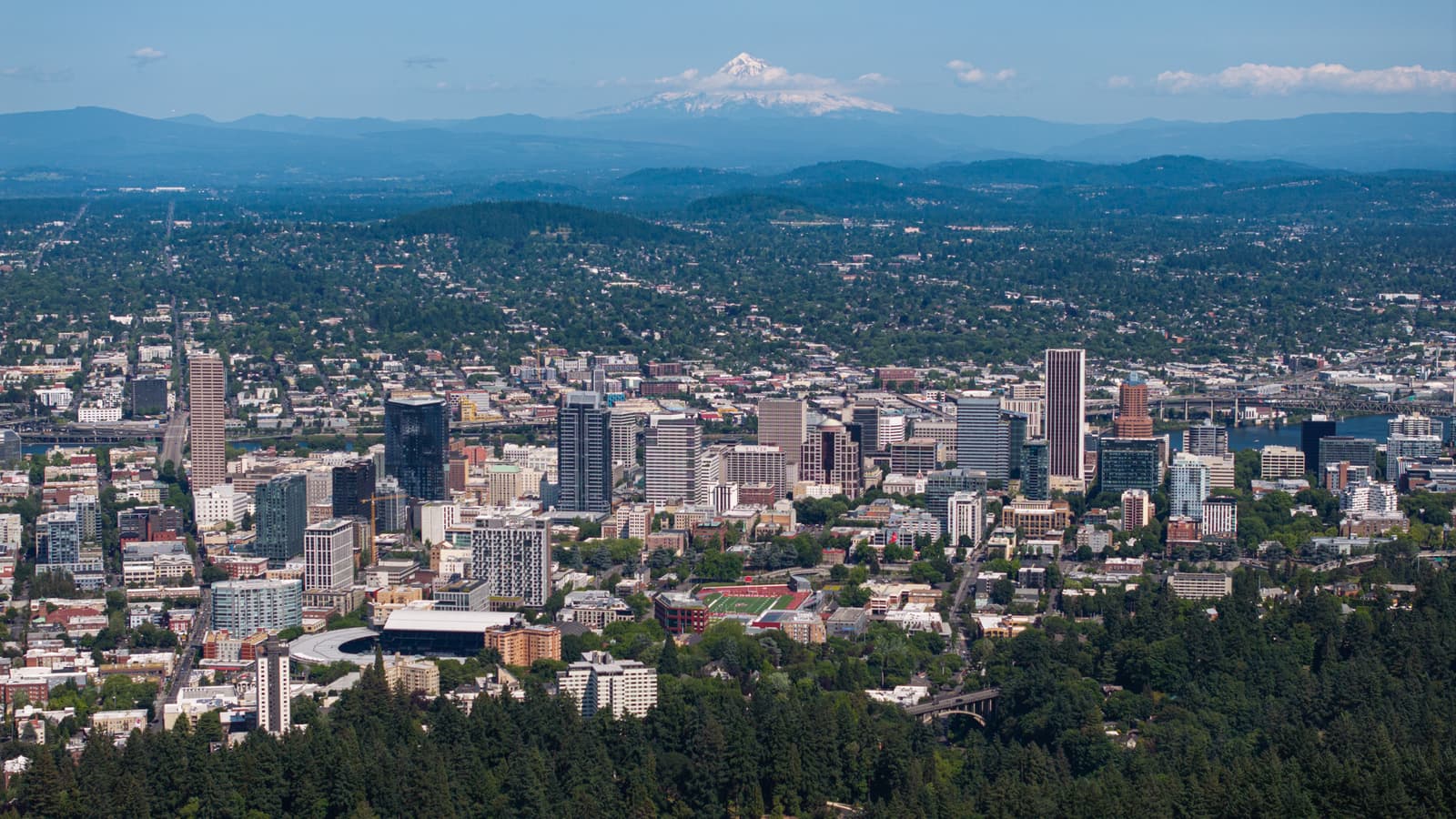
Oregons largest city is the natural northern gateway. Powells Books, Forest Park, the Lan Su Chinese Garden, and the food cart pods are highlights. The drive south to Crater Lake on I-5 then OR-138 takes about 4 hours, passing through Roseburg and the upper Umpqua River canyon.
Medford & Ashland (Rogue Valley)
Medford has the closest commercial airport (MFR) — 1.5 hours from the South Entrance via OR-62. Ashland 15 miles south is home to the Oregon Shakespeare Festival (Feb-Oct), a major regional theater destination. Combine Crater Lake with 2-3 days of Shakespeare for a classic Oregon trip.
Mount Shasta, California
A 14,162-foot stratovolcano just over the California border — one of the most prominent peaks on the Pacific Crest Trail and a recognizable cone visible from I-5 for over 100 miles. The town of Mount Shasta has an alpine vibe and good day hikes; pair with Crater Lake on a Pacific Northwest volcanoes road trip.
Lassen Volcanic National Park
Northern Californias underrated volcano park — fumaroles, mudpots, hot springs, and a 10,457-foot peak. The natural southern bookend to a Crater Lake trip if you are doing a Cascades-volcanoes loop. Far less visited than Crater Lake.
Bend, Oregon
Central Oregons high-desert outdoor capital — the Deschutes River through downtown, 22 craft breweries, and Smith Rock State Park 30 miles north. A natural northern bookend if combining Crater Lake with the broader Oregon volcanic landscape (Newberry, the Three Sisters, McKenzie Pass).
Entry Requirements
Crater Lake National Park is in southern Oregon, USA. International visitors need either an ESTA (Visa Waiver Program) or a full visitor visa (B-1/B-2) to enter the country. Visa Waiver Program travelers should apply for ESTA at least 72 hours before travel. US citizens need only valid government-issued ID. The park itself has no border control. The closest US ports of entry are Portland (PDX) for most flights and Klamath Falls (KLMR Amtrak station) for rail arrivals.
Entry Requirements by Nationality
| Nationality | Visa Required | Max Stay | Notes |
|---|---|---|---|
| US Citizens | Visa-free | Unlimited | Valid government-issued ID required (REAL ID or passport for domestic flights after May 2025). |
| UK Citizens | Visa-free | 90 days | ESTA required under Visa Waiver Program (USD 21, apply online at esta.cbp.dhs.gov). Valid for 2 years or until passport expires. |
| EU Citizens | Visa-free | 90 days | Most EU nationals qualify for ESTA (USD 21). Apply at least 72 hours before travel. |
| Canadian Citizens | Visa-free | 6 months | No ESTA or visa required for tourism. Valid passport required at land and air crossings. |
| Australian Citizens | Visa-free | 90 days | ESTA required (USD 21). Apply at esta.cbp.dhs.gov. |
| Japanese Citizens | Visa-free | 90 days | ESTA required (USD 21). |
| Indian Citizens | Yes | As per visa | B-1/B-2 visitor visa required. Apply at US consulate; current wait times can be 6-24 months. Interview required. |
Visa-Free Entry
Tips
- •Apply for ESTA only at esta.cbp.dhs.gov — third-party sites charge 3-5x the official $21 fee for no added value
- •Reserve boat tours and Crater Lake Lodge rooms as far in advance as possible — both sell out months ahead in summer
- •The park entry fee ($30/vehicle, 7 days) is separate from any visa or ESTA cost — pay at the entrance station or use an America the Beautiful pass
- •Oregon has no state sales tax, which feels unusual to most US visitors — what is on the price tag is what you pay
- •Cell service is unreliable across most of the park — download offline maps and have a printed backup of your lodging reservation and boat tour ticket
Getting Around
A private vehicle is essentially required. There is no public transit into the park, no in-park shuttle, and no rideshare for most of the park interior. The 33-mile Rim Drive is the parks defining experience and is closed November through late June. Distances inside the park are modest by Western park standards — a leisurely Rim Drive loop with stops takes 4-5 hours total, the entire park can be sampled in a long day. Plan to base in Mazama Village inside the park or in Klamath Falls (50 miles south) for multi-day trips.
Car Rental
USD 50-130/day from MFR or PDX; fuel USD 4.20-4.80/gallonPick up at Medford (MFR) for the closest commercial airport — 1.5 hours from the South Entrance via OR-62. Standard 2-wheel-drive cars handle all paved park roads in summer. Chains required from October through May on park roads. Gas is available at Mazama Village inside the park (summer only) and at Diamond Lake or Chiloquin off-park year-round.
Best for: Reaching the park, completing the Rim Drive loop, multi-day exploration
Crater Lake Trolley
USD 32 adult, USD 17 childA historic-style trolley operated by Crater Lake Trolley LLC runs ranger-narrated 2-hour tours of Rim Drive from Rim Village throughout summer. Useful if you want narration without driving, but it covers only the eastern half of the rim drive — it does not complete the full loop.
Best for: Visitors without rentals; ranger-narrated tour without driving
Crater Lake Lodge Boat Tours
USD 48-65 adult standard tour, USD 67-95 Wizard Island tourOperated by Crater Lake Hospitality from Cleetwood Cove dock. The Standard Lake Tour (2 hours) circles the lake; the Wizard Island Tour (5+ hours) drops you on the island for 3 hours of independent hiking. Both are ranger-narrated. Tickets sell out weeks ahead in summer.
Best for: Lake-level perspective, Wizard Island climb, ranger natural history narration
Klamath Falls Shuttle
USD 75-120 per person one-wayCrater Lake Shuttle and Eastside Discovery Tours run pre-arranged transfers from Klamath Falls (KLMR Amtrak station and airport) to Rim Village in summer. Useful for Amtrak Coast Starlight passengers — the train stops in Klamath Falls overnight northbound or southbound.
Best for: Amtrak passengers connecting from Klamath Falls; carless visitors
Walkability
The park itself is not walkable between main areas. Within Rim Village you can walk between the lodge, gift shop, cafe, and Sinnott Memorial Overlook. Mazama Village (the main campground area, 7 miles south of Rim) has a small store, gas station, and lodge cabins clustered together. The Rim Drive is on-foot-only in winter (closed to cars) and becomes a spectacular ski and snowshoe route.
Shopping
Shopping at Crater Lake is concentrated at Rim Village (Crater Lake Lodge gift shop and the cafeteria adjacent gift shop), Mazama Village (small general store, summer only), the Steel Visitor Center bookstore at park headquarters, and the gateway towns of Klamath Falls, Medford, and Ashland. In-park shops carry the standard NPS-branded gear, plush wildlife, and field guides. Authentic Oregon goods — Pendleton wool, marionberry products, Oregon wines — are richer in the gateway towns and Portland.
Crater Lake Lodge Gift Shop
historic lodgeThe 1915 Crater Lake Lodge gift shop is in the Great Hall lounge with a stone fireplace and full lake views. Stocks NPS-branded clothing, locally made cedar carvings, regional natural-history books, and quality souvenirs. The lodge itself is a National Historic Landmark and worth visiting even if you are not shopping.
Known for: NPS passport stamps, locally crafted items, lodge memorabilia, regional books
Rim Village Visitor Center & Cafeteria Gift Shop
park visitor centerAdjacent to the Rim Village cafeteria with the parks largest selection of branded merchandise and field guides. Run by Crater Lake Hospitality. The visitor center side has a small museum on the Mazama eruption that is worth 20 minutes.
Known for: NPS branded outerwear, field guides, Mazama eruption books, Crater Lake postcards
Mazama Village Store (summer only)
general storeA small general store at Mazama Village (7 miles south of Rim) selling basic groceries, beer and wine, camping supplies, microspikes, postcards, and gas. Open roughly mid-May through mid-October. The closest place in the park to buy basic food and supplies.
Known for: Basic groceries, camp fuel, microspikes, beer and Oregon wines
Klamath Falls — Downtown
gateway townA working town on the Amtrak line with a small downtown of independent shops, the Favell Museum of Native American Artifacts, and good basic shopping (grocery, outdoor gear, hardware). Cheaper lodging and meals than anywhere closer to the park.
Known for: Native American artifacts (Favell Museum gift shop), basic outdoor gear, Klamath Lake products
Ashland — Lithia Way and Plaza
gateway theater townA 1.5-hour drive southwest, Ashland is the home of the Oregon Shakespeare Festival and has the regions best independent bookstore (Bloomsbury Books), several quality galleries, and Pendleton wool shops. The Lithia Park area is the prettiest small downtown in southern Oregon.
Known for: Pendleton wool blankets, Shakespeare Festival merchandise, fine art prints, independent books
🎁 Unique Souvenirs to Look For
- •NPS Passport and cancellation stamps — one free stamp at every visitor center, including Rim Village and Steel Visitor Center
- •Mazama eruption book or geological field guide — the parks origin story is genuinely fascinating, and the Steel Visitor Center bookstore has the best selection
- •Pendleton wool blanket from Ashland — the iconic Oregon textile, manufactured in nearby Washougal, WA
- •Klamath Tribes traditional crafts from the Favell Museum gift shop in Klamath Falls
- •Oregon marionberry jam, syrup, and chocolate — distinctly Oregon, available at most regional grocery stores
- •Crater Lake-branded huckleberry jam and taffy from Mazama Village store
- •Cedar carving from the Crater Lake Lodge gift shop — typically Pacific Northwest tribal designs
- •Crater Lake topographic map (USGS) — practical and looks good framed
Language & Phrases
English is universal in Oregon. What can confuse first-time visitors is the dense geological and NPS vocabulary used by rangers, signs, and visitor center exhibits. A handful of Cascadia volcano and trail terms make ranger talks and caldera-rim signs much easier to follow.
| English | Translation | Pronunciation |
|---|---|---|
| Caldera | A large crater formed when a volcano collapses inward — Crater Lake sits in one 5 by 6 miles wide | kal-DAIR-uh — common geological term, used constantly at Crater Lake |
| Mazama | The 12,000-foot stratovolcano that collapsed 7,700 years ago to form the caldera; pronounced muh-ZAH-muh | muh-ZAH-muh — also the name of the village inside the park |
| Pumice | Light, porous volcanic rock formed during the Mazama eruption — covers most of the park surface | PUM-iss — the Pumice Desert north of the lake is named for it |
| Phantom Ship | A small island of 400,000-year-old eroded lava in the lake that resembles a ghost ship — older than the lake itself | FAN-tum SHIP |
| Wizard Island | The 763-foot cinder cone island in the western part of the lake — a post-collapse volcanic eruption inside the caldera | WIZ-erd EYE-land |
| Rim Drive | The 33-mile loop around the caldera — closed November to late June for snow | RIM DRIVE — capitalized as a proper noun in the park |
| Cleetwood Cove | The only legal trail down to the lakeshore — 1.1 miles each way, 700 feet down | KLEET-wood COVE |
| Ranger | NPS employee in uniform — interpretive, law enforcement, or maintenance | RAIN-jur — flat hat = interpretive ranger |
| Bear box | Metal food-storage locker at trailheads and backcountry camps | BAIR BOKS |
| Dark Sky Park | A site certified by the International Dark-Sky Association for low light pollution — Crater Lake earned the designation in 2024 | DARK SKY PARK |
If you like Crater Lake National Park, you'll love…
4 cities with a similar vibe, outside of the same country.

Oman · OVR 76
landscapes that steal the show · low-anxiety streets

Mongolia · OVR 74
landscapes that steal the show · low-anxiety streets

New Zealand · OVR 76
jaw-dropping scenery · low-anxiety streets

United Kingdom · OVR 70
remarkably safe · unforgettable natural beauty