Nassau
THE QUICK VERDICT
By Anthony · Updated April 2026
Choose Nassau if you want easy English-speaking Caribbean access with US Pre-Clearance, a colonial pirate-history capital, and one-stop Atlantis resort options.
- Best for
- Queen's Staircase, Atlantis day pass, Arawak Cay fish fry, US Pre-Clearance home flights
- Best window
- Dec–May
- Budget anchor
- $240/day mid-range
- Skip if
- you want a quiet beach trip — 4M cruise arrivals/year crowd Bay Street and Paradise Island
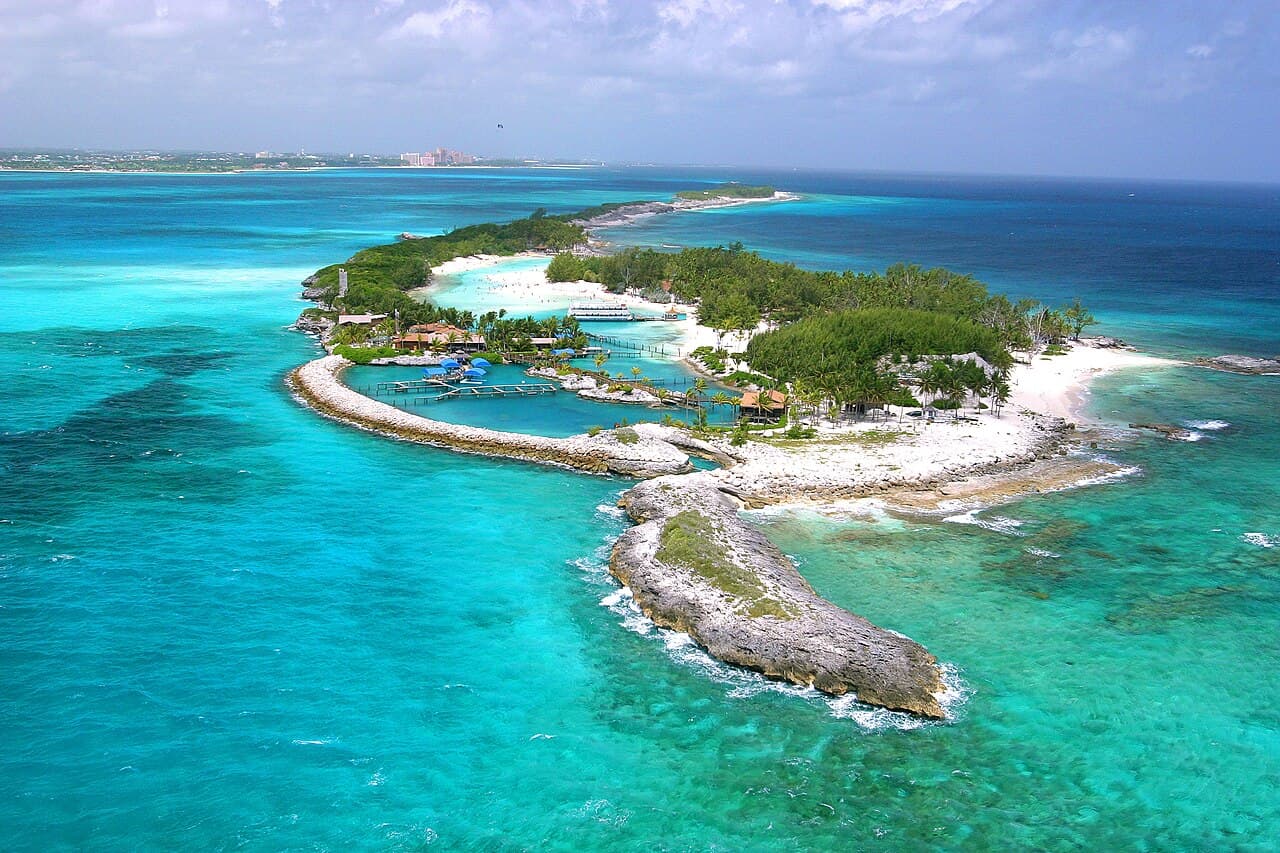
The pastel-pink colonial capital of the Bahamas on New Providence Island — the 102-step Queen’s Staircase carved by enslaved labour in the 1790s, the British colonial Government House, the Pirates of Nassau Museum tracing the city’s 18th-century pirate-republic era, and the massive Atlantis Resort across the bridge on Paradise Island. Cruise-ship central (over 4 million arrivals/year), with US Pre-Clearance at the airport meaning you skip US Customs on your return flight. Pair it with a day trip to Exuma’s swimming pigs to elevate the trip.
The two links below are affiliate links — MapSorted earns a small commission if you book through them, at no extra cost to you. How this works.
Tours & Experiences
Bookable tours, activities, and day trips in Nassau
Where to Stay
Compare hotels and rentals in Nassau
📍 Points of Interest
Queen's Staircase & Fort Fincastle
66 limestone steps carved by enslaved labourers 1793-94 — climbs to a small fortress with the best harbour view downtown
Atlantis Paradise Island
The 23-acre flagship Caribbean megaresort and water park with 11 pools, the Mayan slide, and the world's largest open-air marine habitat
Pirates of Nassau Museum
Pirate-history museum on the site of an actual 18th-century pirate hideout — full-size replica ship, Blackbeard exhibits
Bay Street & Parliament Square
Pastel Bahamian government buildings with Queen Victoria's statue at the centre, plus the duty-free shopping artery
Ardastra Gardens
Tropical garden with the world's only marching-flamingo display three times daily
John Watling's Distillery
Bahamian rum distillery in the historic Buena Vista estate (1789) — free tours, three rums, exceptional rum cake
Cable Beach
The 4-mile west-of-Nassau beach strip backing the Baha Mar resort complex — white sand, calm water, beach bars
★ Local Picks
Arawak Cay (Fish Fry)
30+ Bahamian-owned shacks serving the freshest conch on the island — Twin Brothers, Goldie's, Oh Andros are the standouts
At a Glance
- Pop.
- 275K (city), 290K (New Providence)
- Timezone
- Nassau
- Dial
- +1
- Emergency
- 911 / 919
Nassau was the de facto capital of Caribbean piracy from roughly 1696 to 1718 — Blackbeard, Calico Jack Rackham, Anne Bonny, and Mary Read all operated from this harbour. The "Republic of Pirates" ended when Woodes Rogers arrived as Royal Governor with a pardon in one hand and a hangman's rope in the other; his motto, still on the Bahamian coat of arms, is "Expulsis Piratis, Restituta Commercia" — Pirates Expelled, Commerce Restored
The Bahamas became independent from the United Kingdom on July 10, 1973 — a Commonwealth nation with King Charles III as head of state, governed by a Westminster parliamentary system from Parliament Square in downtown Nassau. Bahamian dollars are pegged 1:1 to the US dollar and US dollars circulate interchangeably
The Andros Barrier Reef — visible from Nassau as a band of darker water on the eastern horizon — is the world's third-longest barrier reef (190 miles), after Australia's Great Barrier and Belize. Adjacent to it is the Tongue of the Ocean, a 6,000-foot-deep trench used by the US Navy for submarine testing (AUTEC base)
The pink-and-white Bahamian flamingos at Ardastra Gardens perform a marching parade three times daily — the only trained-flamingo display in the world. The Caribbean flamingo (Phoenicopterus ruber) is the national bird and was nearly hunted to extinction in the 1950s; the population on Inagua now numbers 80,000+
Junkanoo is the Bahamas' national festival — masked street parades with elaborate cardboard-and-crepe-paper costumes, brass bands, and goatskin drums on Boxing Day (December 26) and New Year's Day. The tradition derives from West African rites brought by enslaved Africans and adapted with European Christmas elements; it is a UNESCO Intangible Cultural Heritage candidate
Atlantis Paradise Island — the 23-acre water-park resort just across the harbour bridge — opened in 1998 and reshaped Caribbean tourism with its all-inclusive megaresort model. The "Dig" archaeological exhibit beneath the resort holds the world's largest open-air marine habitat with 50,000 sea creatures
Top Sights
Queen's Staircase & Fort Fincastle
🗼66 steps carved by enslaved labourers between 1793 and 1794 from solid limestone — one step for each year of Queen Victoria's reign (the name was added later). The staircase climbs 102 feet to Fort Fincastle, a small lookout fortress shaped like the bow of a ship. The view from the top covers the entire harbour and Paradise Island bridge. Free; vendors at the bottom can be persistent.
Atlantis Paradise Island
🗼The 23-acre flagship resort and water park that defined the modern Caribbean megaresort. Aquaventure has 11 pools and 20 swimming areas including the Mayan Temple slide that drops you through a clear shark tunnel. The Dig — a fictional Atlantis ruin holding the world's largest open-air marine habitat (50,000 creatures) — is open to non-guests via a paid Aquaventure day pass ($165-300). The Cove and Coral towers are the premium accommodations.
Pirates of Nassau Museum
🏛️A small but well-executed pirate-history museum on the site of an actual pirate hideout — full-size replica pirate ship, walk-through dockside scenes, exhibits on Blackbeard, Anne Bonny, and Calico Jack, and the Republic of Pirates that operated from this harbour 1696–1718. $13.50 adult, kids $6.50; works for ages 6 and up. The shop has authentic doubloon replicas.
Bay Street & Parliament Square
📌The downtown heart of Nassau — pastel-painted Bahamian government buildings (the salmon-pink Parliament, the rum-coloured Senate, the public library in a former octagonal jail) arranged around Parliament Square with Queen Victoria's statue at the centre. Bay Street is the main shopping artery. Avoid the cruise-port hours (10am-3pm on cruise days) when the area is mobbed.
Ardastra Gardens & Conservation Centre
🌳A 5-acre tropical garden with the only marching-flamingo display in the world — three times daily (10:30am, 1:15pm, 4:15pm) the trained Caribbean flamingos parade in formation in response to verbal cues from a handler. Also: lory parrots feeding from your hand, peacocks, and rescued island wildlife. $20 adult; the flamingo show is the headline.
John Watling's Distillery
🗼A small Bahamian rum distillery in the historic Buena Vista estate (1789) on the West Hill — three rums (Pale, Amber, Buena Vista) hand-bottled on site and named after the 17th-century Bahamian buccaneer John Watling. Free distillery tours and tastings, the historic main house has been preserved, and the rum cake is exceptional. Closed Sundays.
Cable Beach
🏖️The 4-mile west-of-Nassau beach strip backing the Baha Mar resort complex (Grand Hyatt, SLS, Rosewood) and the city's casino. White sand, calm protected water, beach bars all the way. The Baha Mar Casino, the Royal Blue golf course (Jack Nicklaus design), and the Esther Rolle Theater for live music are the resort headliners. Free public access at multiple points.
Junkanoo Beach
🏖️The downtown public beach — walking distance from the cruise port and Bay Street, lined with thatched beach bars (Tiki Bikini Hut, Junkanoo Beach Club) serving conch fritters and rum punch all day. Not the prettiest beach in the Bahamas (Cable Beach is better) but the most convenient and the best people-watching when cruise ships are in.
Climate & Best Time to Go
Nassau has a tropical maritime climate — warm year-round with consistent trade winds keeping the coast comfortable. Average highs sit between 26°C in winter and 32°C in summer. Humidity is high May through October. Hurricane season runs June through November, with peak risk August through October. The Bahamas sits directly in the path of many Atlantic hurricanes — Hurricane Dorian (2019, Category 5) devastated the northern Bahamas, though Nassau was spared the worst.
Dry High Season
December - April68 to 81°F
20 to 27°C
The peak tourist season — drier, lower humidity, and the cool trade winds make it the most comfortable period. December through Easter is the most expensive window. Water temperature drops to about 23°C — refreshing but cooler than summer. Hurricane risk is essentially zero in this window.
Spring Shoulder
May - June73 to 86°F
23 to 30°C
Excellent value period — water warming, hurricane risk minimal, hotel rates drop 30-40%. Some afternoon thunderstorms but mostly bright days. The best balance of weather and price.
Hurricane / Wet Season
July - October77 to 90°F
25 to 32°C
Hot, humid, and the period of real hurricane risk. Most days are sunny but afternoon thunderstorms build up; September is statistically the highest hurricane risk month. Rates are at their lowest. Travel insurance with hurricane coverage is recommended.
Late Hurricane / Recovery
November72 to 82°F
22 to 28°C
Hurricane risk drops sharply after mid-November. Trade winds return, humidity drops, and rates remain low through about December 15. An excellent two-week window in mid-to-late November for the dry-season experience without dry-season prices.
Best Time to Visit
Mid-November to mid-April for the dry season — pleasant temperatures, low humidity, no hurricane risk. Mid-November and after Easter through May are the sweet spots for high-season weather without peak prices. Avoid September (peak hurricane risk) unless travel insurance covers storm cancellations.
Holiday Peak (Dec 20 - Jan 5)
Crowds: Very highThe most expensive period of the year — Christmas, New Year's, and Junkanoo (December 26 and January 1) make Nassau the centre of Bahamian celebration. Hotels book 6+ months ahead; rates are 50-100% above shoulder season. The cultural payoff is real if Junkanoo is on your bucket list.
Pros
- + Junkanoo parade (Boxing Day & New Year's Day)
- + Most festive atmosphere
- + Reliable dry weather
Cons
- − Highest prices of the year
- − Hotels book months ahead
- − Cruise port at maximum
High Season (Jan 6 - April)
Crowds: HighThe classic Caribbean escape window — North American snowbirds and spring breakers, with the most reliable weather and the dry-season trade winds. Easter is a peak week. Hotel prices remain high through Easter.
Pros
- + Most reliable weather
- + All restaurants and bars active
- + Diving conditions excellent
- + Bio-bay tours running
Cons
- − Expensive accommodation
- − March spring break
- − Cruise port crowded daily
Shoulder (May - June)
Crowds: ModerateBest value window — temperatures still pleasant, hurricane risk minimal until late June, rates drop 30-40%. Water has warmed from winter. Excellent for snorkelling and diving without the high-season crowds.
Pros
- + Significant price drops
- + Warm water for snorkelling
- + Easier reservations
Cons
- − Some afternoon thunderstorms
- − Increasing humidity
- − Hurricane season starts June 1
Hurricane Season (July - October)
Crowds: LowHot, humid, and the period of real (but statistically variable) hurricane risk. The Bahamas sits directly in the path of many Atlantic storms — Hurricane Dorian (2019) devastated the northern Bahamas though Nassau was spared. Hotel rates at their lowest. Travel insurance with hurricane coverage strongly recommended.
Pros
- + Lowest prices of the year
- + Empty beaches
- + Best chance of upgrades
Cons
- − Hurricane risk peaks August-October
- − Highest humidity
- − Some businesses close September
🎉 Festivals & Events
Junkanoo (Boxing Day & New Year's Day)
Dec 26 / Jan 1The Bahamas' national festival — masked street parades with elaborate cardboard-and-crepe-paper costumes, brass bands, and goatskin drums starting at 2am and continuing until 9am along Bay Street. The single most important cultural event of the year.
Bahamas International Film Festival
OctoberWeek-long Caribbean and international film festival — typically held just before peak hurricane season ends, with screenings around Nassau and Paradise Island.
Andros Crab Festival
JuneThree days of crab-cooking competitions, music, and Bahamian culture on the island of Andros — a 30-min flight from Nassau, well worth the day-trip combination for adventurous travellers.
Bahamas Carnival
MayThree-week-long carnival culminating in the Music Masters competition and the road march — a more recent addition to the calendar (since 2015) and a livelier, more contemporary equivalent to Junkanoo.
Off the Beaten Path
Arawak Cay (Fish Fry)
A row of brightly-painted shacks on West Bay Street — 30+ Bahamian-owned restaurants serving the national dish (cracked conch, conch salad, and conch fritters made to order in front of you). Twin Brothers, Goldie's, and Oh Andros are the standouts. Friday and Saturday nights it becomes the city's informal music venue with rake-and-scrape bands, dominoes slamming on tables, and Sands Beer flowing. Cash-friendly; locals dominate.
Bay Street is the cruise-tourist Bahamas; Arawak Cay is the actual Bahamian Bahamas — locals from across New Providence converge here and the conch is at peak freshness because it's prepared from live shells while you watch.
Graycliff Cigar Factory & Restaurant
A historic mansion (1740) on the West Hill that houses three things: the only working cigar factory in the Bahamas (hand-rolled by Cuban-trained torcedores you can watch), a 250,000-bottle wine cellar (the largest in the Caribbean), and a fine-dining restaurant in the original colonial house. Cigar tours are $30 with a free cigar; the wine-cellar tour is among the most impressive in the Western Hemisphere.
Graycliff is the most historically dense single property in Nassau — pirates, governors, mob bosses (Meyer Lansky stayed here), and royalty have all passed through. The cigar factory is the only such operation between Cuba and the US that uses Cuban traditions.
Clifton Heritage National Park
A 208-acre park on the southwestern tip of New Providence Island — slave quarters and church ruins, an Underwater Sculpture Garden (the Atlas of Lucayan Maidens, 18-foot statues by Jason deCaires Taylor in 30 feet of water), nature trails through coastal forest, and the most dramatic ocean cliffs on the island. $10 entry; the snorkel-on-the-sculptures experience requires a boat trip from the park.
Most visitors never leave the cruise port + Atlantis bubble. Clifton is the genuine Bahamas — colonial slave history, Lucayan-Indigenous heritage, dramatic landscape, and an underwater art installation by the artist who created Cancún's famous one. Far quieter than Atlantis.
Café Matisse
A tiny Italian-Bahamian restaurant in a 200-year-old courtyard a block from Parliament Square — home-made pastas, fresh-fish dishes (mahi, snapper, grouper), and an outdoor courtyard that feels nothing like the chain restaurants down Bay Street. Lunch is the value play; dinner is romantic. Reservations recommended for dinner.
Bay Street has been hollowed-out by chain restaurants serving cruise-passenger demand; Matisse is the ten-year holdout of independent fine dining in the historic core. Owner-operated by an Italian-Bahamian family.
Junkanoo Museum
A small museum on Bay Street showcasing actual costumes from past Junkanoo parades — the elaborate cardboard-and-crepe-paper masks, fringed skirts, and headdresses that take groups months to construct each year. The history of the festival from West African origins through the colonial-era restrictions to modern revival is well-told. $5; closed Sundays.
Most visitors never see Junkanoo because it happens twice a year (Boxing Day and New Year's Day at 2am-9am). The museum makes the festival accessible year-round and the costumes up close are extraordinary.
Safety Breakdown
Moderate
out of 100
Nassau has a higher crime rate than most US Caribbean destinations, but the violence is overwhelmingly concentrated in specific "Over-the-Hill" neighbourhoods (Bain Town, Grants Town) that tourists have no reason to enter. The cruise port, Bay Street, Cable Beach, and Paradise Island are heavily policed and statistically safe for visitors. The US State Department periodically issues advisories — read the current version before travel. The bigger practical risks for most visitors are sun, sea hazards, and pickpocketing in tourist crowds.
Things to Know
- •Stay in the visitor zones — Bay Street, Cable Beach, Paradise Island, and Cable Beach are safe day and night with normal precautions; the "Over-the-Hill" neighbourhoods south of Shirley Street have higher crime and offer nothing to tourists
- •Avoid walking after dark in downtown Nassau outside Bay Street; take a taxi between hotels and restaurants in the evening even for short distances
- •Beach safety: Cable Beach has lifeguards; many other beaches do not — rip currents around Paradise Island and the eastern beaches can be strong
- •Jet ski rentals have a documented record of overcharging and disputed-damage claims — use only resort-affiliated operators (Atlantis, Baha Mar) or skip jet skis entirely
- •Cruise-day pickpocketing on Bay Street is the #1 reported tourist crime — keep wallet in front pocket, bag zipped
- •Hurricane season (June-November): monitor National Hurricane Center; the Bahamas is directly in the path of many Atlantic storms
- •Hospitals: Doctors Hospital (private, downtown) is the main facility for visitor emergencies; Princess Margaret is the public hospital
Emergency Numbers
Police
911 or 919
Ambulance
911
Fire
911
Tourism Hotline
242-302-2000
Costs & Currency
Where the money goes
USD per dayBackpacker = hostel dorm + street food + public transit. Mid-range = 3-star hotel + neighbourhood restaurants + transit cards. Luxury = 4/5-star + fine dining + taxis. How we calibrate these numbers →
Quick cost estimate
Customize per category →Estimates based on regional averages. Flight prices vary by season and airline.
budget
$110-170
Budget guesthouse or hostel-style accommodation (limited in Nassau), conch fritters and Sands Beer at Arawak Cay, jitney transport, free public beaches
mid-range
$220-350
Comfort Suites Paradise Island or mid-range Cable Beach hotel, sit-down restaurant meals, taxi transport, museum entries, Aquaventure day pass occasional
luxury
$500-1200
The Cove or Coral at Atlantis, Rosewood Baha Mar, fine dining (Café Matisse, Graycliff), private yacht-charters or seaplane day trips to Exumas
Typical Costs
| Item | Local | USD |
|---|---|---|
| AccommodationBudget guesthouse (off-strip) | $80-130 | $80-130 |
| AccommodationMid-range Cable Beach hotel double | $200-350 | $200-350 |
| AccommodationAtlantis Coral Tower (mid-tier) | $400-700 | $400-700 |
| AccommodationThe Cove at Atlantis (premium) | $700-1500 | $700-1500 |
| FoodConch fritters at Arawak Cay | $8-12 | $8-12 |
| FoodCracked conch dinner with peas-and-rice | $22-30 | $22-30 |
| FoodRestaurant dinner Bay Street (3 courses) | $45-75 | $45-75 |
| FoodSands Beer (Bahamian local lager) | $5-7 | $5-7 |
| FoodBahama Mama cocktail at a beach bar | $10-15 | $10-15 |
| TransportTaxi airport to downtown | $32 | $32 |
| TransportJitney single fare | $1.25 | $1.25 |
| AttractionPirates of Nassau Museum | $13.50 | $13.50 |
| AttractionArdastra Gardens | $20 | $20 |
| AttractionAtlantis Aquaventure day pass | $165-300 | $165-300 |
| AttractionExuma swimming pigs day tour | $250-450 | $250-450 |
💡 Money-Saving Tips
- •Eat at Arawak Cay (Fish Fry) instead of Bay Street tourist restaurants — same conch dishes for half the price and twice the atmosphere
- •Cable Beach is a free public beach with the same sand and water as the resorts charging $50/day for chairs — bring your own towel
- •Take the jitney ($1.25) instead of a taxi from Bay Street to Cable Beach for the local experience
- •Aquaventure day passes from Atlantis are expensive — Comfort Suites Paradise Island includes Atlantis access in the room rate (sometimes a better total deal)
- •Skip the Atlantis dolphin programs ($165+) — Blue Lagoon Island has comparable encounters at lower prices and includes round-trip ferry
- •Bahamian rum (Ricardo, John Watling's, Bacardi which is bottled in PR but originally Cuban) is duty-free and a fraction of US prices — buy at Bay Street duty-free shops not at the airport
Bahamian Dollar
Code: BSD
The Bahamian dollar is pegged 1:1 to the US dollar — they circulate interchangeably, and you will receive change in either currency. US dollars are accepted everywhere. ATMs dispense Bahamian dollars (sometimes US dollars at airport ATMs). No need to exchange currency; use US dollars directly. Keep BSD coins as souvenirs — they include the famous Bahamian fifteen-cent piece (square in shape).
Payment Methods
Credit/debit cards (Visa, Mastercard) accepted everywhere modern; American Express less universal. Apple Pay/Google Pay accepted at chain restaurants and resort properties; less so at small Bahamian-owned spots. Cash useful for jitneys, the Straw Market, Arawak Cay, and tipping. ATMs at Royal Bank of Canada, Scotiabank, and CIBC throughout downtown and Cable Beach.
Tipping Guide
Most restaurants automatically add a 15% gratuity (sometimes called "service charge") to the bill — check before adding more. If not included, tip 15-20%.
$1-2 per drink at bars; 15% on a tab. Resort bars often add the gratuity automatically.
15% standard. Round up for shorter trips ($5 trip → $6).
$3-5 per day left on the pillow.
$1-2 per bag; bell hops similarly.
$10-20 per person for a half-day tour; 15-20% of tour cost for full-day.
How to Get There
✈️ Airports
Lynden Pindling International Airport(NAS)
15 km west of downtownTaxi to downtown $32 + $0.50 per additional bag (20-25 min); to Cable Beach $22 (15 min); to Paradise Island $42 (30 min). The airport has a US Pre-Clearance facility — when flying back to the US, you clear US Customs and Immigration in Nassau and arrive in the US as a domestic passenger, dramatically reducing arrival times.
✈️ Search flights to NAS🚌 Bus Terminals
No long-distance bus terminal
No inter-island bus network — travel between Bahamian islands is by domestic flight (Bahamasair, Western Air, Pineapple Air) or ferry (Bahamas Ferries to Eleuthera, Andros, Exuma).
Getting Around
Nassau's transport options are taxis, jitneys (local minibuses), rental cars (drive on the LEFT — British colonial inheritance), and walking around downtown. Uber operates only in a limited form (no app-based ride-hailing as in the US); jitneys are cheap and authentic but bewildering for tourists. Most visitors rely on the official taxi system with fixed-zone fares.
Taxi
$14-32 per typical metro tripOfficial metered taxis with fixed-zone fares — Nassau Airport to downtown $32, downtown to Cable Beach $22, downtown to Atlantis $14, downtown to Cable Beach $16. Rates are per car (1-2 people), with surcharges for additional passengers. Drivers are typically excellent informal guides. Tipping 15% standard.
Best for: Airport transfers, between districts, hotel-to-restaurant evenings
Jitneys (No. 10 etc)
$1.25 per ride flatCheap minibuses ($1.25 flat fare) running fixed routes across the island — Number 10 from Bay Street to Cable Beach is the most useful for visitors. No formal stops; flag from the kerb, exit by tapping the roof or saying "bus stop please." Cash only, exact change preferred. An authentic experience.
Best for: Bay Street to Cable Beach, budget travellers, local cultural experience
Walking
FreeDowntown Nassau (Bay Street, Parliament Square, Queen's Staircase) is highly walkable — the entire historic core fits in a 1km walking circle. Cable Beach is too far to walk from downtown (7km). Paradise Island is connected to downtown by a paid pedestrian bridge ($1) but is a 25-min walk; most take a taxi.
Best for: Downtown Nassau, Bay Street, historic sites
Rental Car
$50-80/dayUseful for exploring the western end of New Providence (Clifton Heritage Park) or the eastern end (Yamacraw Beach). Note: drive on the LEFT side (British colonial inheritance). Major chains (Avis, Budget, Hertz) at the airport; rates $50-80/day. Most tourists do not rent — taxis cover the standard itinerary fine.
Best for: Western/eastern New Providence, Clifton Park, beach exploration
Walkability
Downtown Nassau is highly walkable; Cable Beach and Paradise Island are not connected to downtown on foot. The standard tourist itinerary is downtown by foot, taxi between districts.
Travel Connections
Entry Requirements
The Bahamas has one of the most permissive entry policies in the Caribbean — visa-free entry of 90 days (or longer for some nationalities) for most Western passport holders, US/Canadian/UK/EU/Australian/NZ. The Bahamas is a Commonwealth nation but is NOT in the EU or the US Customs Union. The Bahamas Travel Health Card (Bahamas Travel Visa online form) requirement was lifted in 2022 and is no longer required.
Entry Requirements by Nationality
| Nationality | Visa Required | Max Stay | Notes |
|---|---|---|---|
| US Citizens | Visa-free | 8 months in any 12-month period | No visa required. Passport must be valid for the duration of stay (the previously-required 6-month buffer was relaxed). On arrival, fill out an online Bahamas Travel Card before flight (free, electronic). |
| UK Citizens | Visa-free | 90 days (extendable to 8 months) | No visa required. Passport must be valid for entire stay. Bahamas Travel Card online before flight. |
| EU Citizens | Visa-free | 90 days (some nationalities longer) | No visa required for most EU passports. Bahamas Travel Card online before flight. |
| Canadian Citizens | Visa-free | 8 months in any 12-month period | No visa required. Most generous of any Bahamian visa policy — Canadians can effectively winter in the Bahamas. |
Visa-Free Entry
Visa on Arrival
Tips
- •Nassau airport has a US Pre-Clearance facility — when flying to the US, you clear US Customs and Immigration in Nassau and arrive in the US as a domestic passenger; arrive 2.5+ hours early for international flights to use it
- •No vaccinations required for entry; yellow fever certificate only needed if arriving from a yellow-fever country
- •Bahamian Departure Tax ($29 per person) is included in airline ticket prices for almost all flights — no separate fee at departure
- •Customs limits: 1 quart of liquor and 200 cigarettes duty-free into the Bahamas; US-bound returnees can bring back $800 worth of duty-free goods including 1 litre of liquor
Shopping
Nassau is a duty-free port — luxury goods (jewellery, watches, perfumes, spirits) are sold without import duty and prices on premium brands (Rolex, Cartier, Tiffany) can be 25-30% below US retail. Bay Street has the duty-free luxury concentration; the Straw Market has the local crafts; Marina Village at Atlantis has resort boutiques. Bahamian rum and Junkanoo crafts are the authentic souvenirs.
Bay Street
duty-free shopping streetThe traditional shopping artery — 6 blocks of duty-free jewellery, watches, perfumes, spirits, and tobacco in genuinely competitive pricing. John Bull is the largest department store; Solomon's Mines for jewellery; Diamonds International, Colombian Emeralds, Tanzanite International. Duty-free savings are real on luxury items but verify US prices first online.
Known for: Duty-free jewellery, watches, perfumes, spirits, electronics
Straw Market
craft marketA two-floor covered market on Bay Street with hundreds of stalls selling straw bags, hats, wood carvings, conch-shell crafts, and T-shirts. The actual Bahamian-made straw work (woven palm-frond bags) is in the back rows; the front rows are increasingly imported tourist goods. Bargaining expected — start at 50% of the asking price.
Known for: Straw bags and hats, wood carvings, T-shirts, conch shell jewellery
Marina Village (Atlantis)
resort shoppingA pedestrian "village" of resort shops at Atlantis — Bahamian art galleries (Doongalik Studios, Gallery 8), boutique resort wear, and fine jewellery (David Yurman, John Hardy). More expensive than Bay Street but better quality on the high end. Open to non-guests via the marina entrance.
Known for: Bahamian art, designer resort wear, fine jewellery
🎁 Unique Souvenirs to Look For
- •Hand-rolled cigars from Graycliff — Cuban-trained Bahamian rollers using Bahamian and Dominican leaf; the only working cigar factory in the Bahamas
- •Bottle of John Watling's Buena Vista or Pale rum — small-batch Bahamian rum hand-bottled at the historic 1789 distillery on West Hill
- •Authentic woven straw bag from the Bahamas Straw Market — woven from sisal or silver palm by Bahamian craftswomen, identifiable by the tighter weave and natural materials
- •Junkanoo Museum miniature — small-scale replicas of the elaborate cardboard-and-crepe-paper Junkanoo costumes; available at the Junkanoo Museum shop
- •Conch-shell jewellery — pink-lipped conch shells turned into pendants, earrings, and trinket boxes; the Straw Market has the widest selection
- •Bahamian sea-salt or hot-pepper sauce — Pinder's Bahamian Hot Sauce and Sandyport sea salt are produced locally and travel well
Language & Phrases
English is the official language of the Bahamas and universally spoken — no language barrier exists for English-speaking visitors. However, Bahamian English (or Bahamian Creole, called "dialect" by Bahamians) has its own vocabulary, melody, and famous expressions. Using a few Bahamian-isms in conversation will be received with delight by locals. The slang below is rooted in Bahamian Creole rather than standard English.
| English | Translation | Pronunciation |
|---|---|---|
| Hello (general greeting) | Hey, what's the deal? | hey, whas-da-DEEL |
| How are you? | Wha' gern on? | wha-GERN-on |
| I'm good | I'm straight | ahm-STRAIGHT |
| No problem / OK | No big ting | no-big-TING |
| Thank you | Thanks / Tank you | thanks / TANK-you |
| You're welcome | You're welcome / No worries | no WORE-ees |
| Friend | Brudda / Sista | BRUH-da / SIS-ta |
| Hangout / chill | Lime | lyme |
| Gossip | Sip-sip | sip-sip |
| Crazy / wild | Mash up | mash-up |
| Goodbye | Later, dread / Bless up | LAY-tah / bless-UP |
| Cheers! | Cheers, mon! | cheers-MON |
If you like Nassau, you'll love…
4 cities with a similar vibe, outside of the same country.

.jpg%3Fwidth%3D1280&w=1600&q=75)

