
Nuuk
THE QUICK VERDICT
By Anthony · Updated May 2026
Choose Nuuk if you want a Greenlandic city base — fjord tours, the National Museum, midnight-sun walks, and the most accessible Arctic capital on Earth.
- Best for
- nature · spotless streets · food
- Two seasons
- Apr and Jun–Sep
- Budget anchor
- $290/day mid-range
- Costs bite
- Top 10% of destinations on daily spend ($290/day mid-range)
- Skip if
- a budget trip is the priority
Greenland's capital and largest city — population just over 20,000, more than a third of the territory — perches on a rocky peninsula at the mouth of one of the largest fjord systems on Earth, with Sermitsiaq mountain (1,210 m) rising directly across the bay. Founded by Hans Egede in 1728 as Godthåb ("Good Hope"), Nuuk holds the National Museum of Greenland, the country's best fjord boat tours, the Katuaq Cultural Centre, and a surprisingly Scandinavian-mild climate. Midnight sun late May to late July; long mild winters with regular aurora through April.
I've been here
Read my postcard from Nuuk — a first-hand trip report →
The two links below are affiliate links — MapSorted earns a small commission if you book through them, at no extra cost to you. How this works.
Tours & Experiences
Bookable tours, activities, and day trips in Nuuk
Where to Stay
Compare hotels and rentals in Nuuk
📍 Points of Interest
Nuuk Fjord
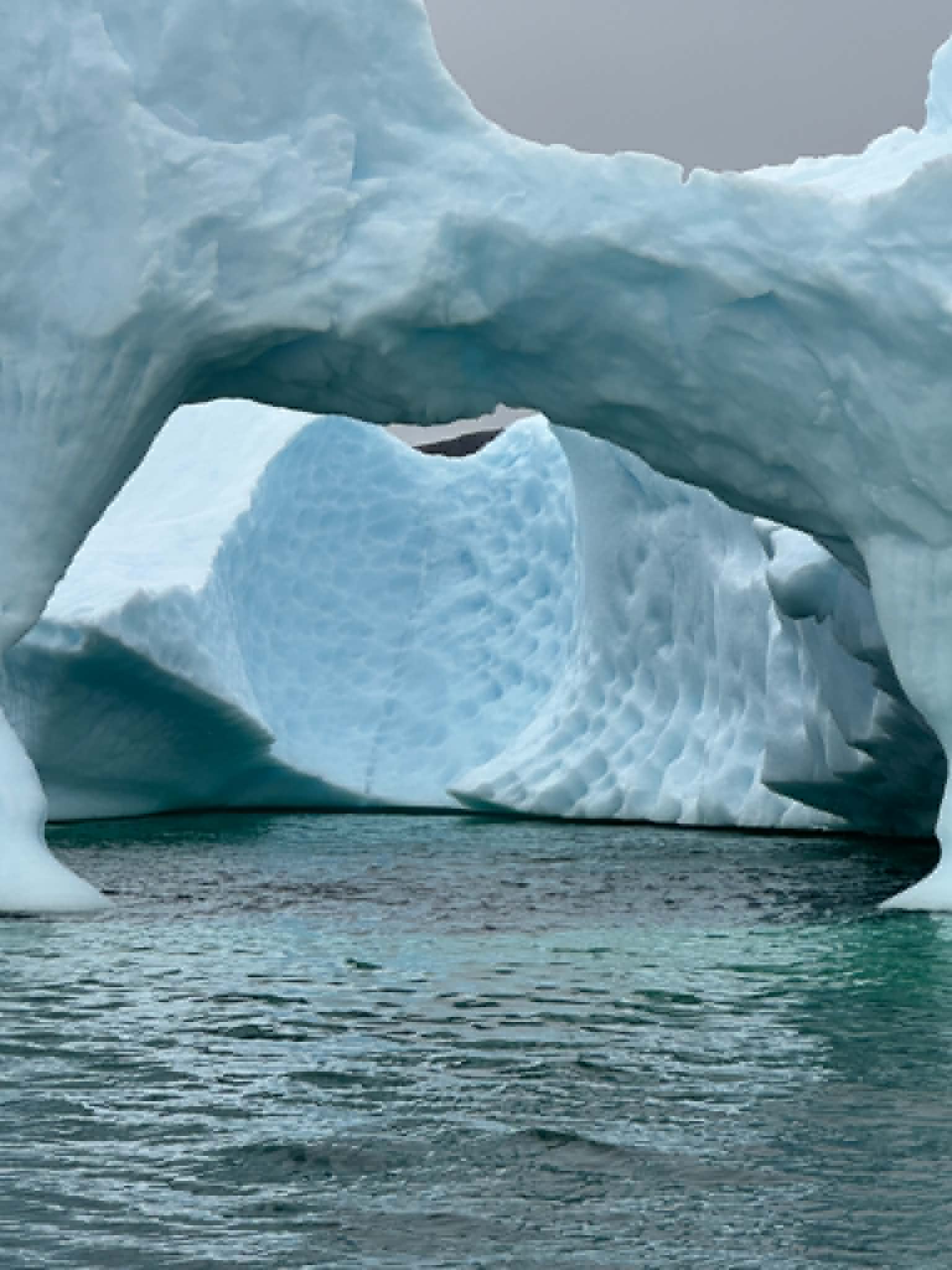
One of the largest fjord systems on Earth, home to icebergs, seals, and seasonal humpback and fin whales — the best fjord boat tours in Greenland depart from here
Greenland National Museum
Greenland's flagship museum, home to the 500-year-old Qilakitsoq mummies and the country's most significant collection of Inuit, Norse, and modern Greenlandic art
Old Colonial Harbour (Kolonihavnen)
The 18th-century colonial core of Nuuk, with painted wooden houses, the cathedral, and the Hans Egede statue overlooking the fjord
Nuuk Cathedral (Annaassisitta Oqaluffia)
The small red Lutheran cathedral built in 1849, seat of the Diocese of Greenland
Katuaq Cultural Centre
Striking modernist arts centre hosting concerts, films, exhibitions, and the biennial Nuuk Nordisk festival
Sermitsiaq Mountain
The 1,210-metre peak that dominates Nuuk's skyline across the fjord — the city's most photographed natural landmark
Hans Egede Statue
Statue of Nuuk's founder on the bluff above the Old Harbour — the photographic anchor of the colonial district
★ Local Picks
Quassussuaq (Lille Malene) Viewpoint
420-metre summit with panoramic views over Nuuk, the fjord, and Sermitsiaq mountain — accessible via a 2–3 hour hike from town
Brugseni Nuussuaq
Greenland's largest supermarket — surprisingly well-stocked with fresh produce, specialty foods, and the kind of self-catering options that make Nuuk meaningfully cheaper to visit
At a Glance
- Pop.
- 20,113
- Timezone
- Godthab
Nuuk is the capital and largest city of Greenland — population just over 20,000, more than a third of the entire territory — yet remains one of the smallest capital cities in the world
The city perches on a rocky peninsula at the mouth of a vast fjord system on Greenland's southwest coast, with the iconic Sermitsiaq mountain (1,210 m) rising directly across the bay
Founded in 1728 by Norwegian-Danish missionary Hans Egede, Nuuk (originally Godthåb, "Good Hope") is the oldest continuously inhabited European-founded settlement in Greenland
Despite its remote latitude (64°N — same as Reykjavik), Nuuk's coastal climate is comparatively mild: summer highs touch 10°C and winter lows rarely dip below −15°C, far warmer than inland Greenland
There are no roads connecting Nuuk to any other settlement in Greenland — every onward journey is by air or boat. The international airport (GOH) is the country's main aviation hub
Greenlandic (Kalaallisut) is the official language; Danish is universally understood; English is widely spoken in tourism and government. The currency is the Danish Krone
Top Sights
Nuuk Fjord Boat Tour
📌The single best thing to do in Nuuk. Half- and full-day tours leave from the small-boat harbour in Old Nuuk and motor out into one of the largest fjord systems on Earth — past icebergs, basking seals, and (in season) humpback and fin whales. The boats are small (4–8 passengers), the captain is usually a local in his twenties or thirties, and you can get within metres of drifting icebergs. Multiple operators including Tupilak Travel and Nuuk Water Taxi. From ~900 DKK (~$130).
Greenland National Museum
🏛️Greenland's flagship museum (Nunatta Katersugaasivia Allagaateqarfialu) houses the country's most important collection — including the famously preserved 500-year-old Qilakitsoq mummies, found frozen in a cave in 1972. Galleries cover Inuit prehistory, the Norse settlements, the Thule expansion, and modern Greenlandic art. A genuine must-do, and the rainy-day option in a town that gets a lot of rain. Entry 50 DKK (~$7).
Old Colonial Harbour (Kolonihavnen)
📌The original 18th-century settlement core, where Hans Egede landed in 1728. Painted wooden houses in red, yellow, and blue cling to the rocks above the small-boat harbour. The Hans Egede statue stands on the bluff above the church, looking out over the fjord. The historic district is small — easily walkable in 90 minutes — but is the most photogenic spot in Nuuk and a quiet escape from the modern city above.
Katuaq Cultural Centre
📌A striking modernist building of curving wood and glass that hosts concerts, films, art exhibitions, and the annual Nuuk Nordisk arts festival. Designed by Schmidt Hammer Lassen architects to evoke the aurora borealis. The café is a popular local meeting spot; the cinema shows international films with Danish subtitles. Worth checking the events calendar even on a short visit.
Sermitsiaq Mountain Hike
🗼The 1,210-metre Sermitsiaq dominates the skyline across the bay from Nuuk. Reaching the summit is a serious 8–10 hour expedition requiring boat transport across the fjord and experienced glacier travel; lower hikes around its base are achievable in a day. Even from the city, the mountain anchors every view. Photograph it in the long evening light from the Old Harbour or Quassussuaq (Lille Malene) lookout.
Quassussuaq (Lille Malene) Viewpoint
📌A 2–3 hour walk from town to a 420-metre summit overlooking Nuuk, the fjord, and Sermitsiaq beyond. Trail starts behind the Hans Egede school and climbs steadily through tundra. Signage is minimal — follow the worn track. The single best free experience in Nuuk on a clear day; in good visibility the panorama runs from open ocean to inland icecap.
Nuuk Cathedral (Annaassisitta Oqaluffia)
📌The small red-painted Lutheran cathedral in Old Nuuk dates to 1849 and remains the seat of the Diocese of Greenland. Modest interior with carved pews and a model ship suspended from the ceiling, a tradition in coastal Lutheran churches. Open during services; otherwise admire from outside. The bluff beside the cathedral is the spot where Hans Egede first preached.
Costs & Currency
Where the money goes
USD per dayBackpacker = hostel dorm + street food + public transit. Mid-range = 3-star hotel + neighbourhood restaurants + transit cards. Luxury = 4/5-star + fine dining + taxis. How we calibrate these numbers →
Quick cost estimate
Customize per category →Estimates based on regional averages. Flight prices vary by season and airline.
budget
$120-180
Apartment rental or hostel, self-catering from Brugseni, walking + occasional bus, one fjord tour, free hikes
mid-range
$220-350
Mid-range hotel or design apartment, mix of restaurant meals and home cooking, several tours, taxis as needed
luxury
$500+
Hotel Hans Egede or HHE Apartments, daily restaurant dinners, premium tours (helicopter sightseeing, private boat charter)
Typical Costs
| Item | Local | USD |
|---|---|---|
| AccommodationApartment rental (Atcon-style, mid-range) | 900–1,400 DKK | $130–200 |
| AccommodationHostel dorm bed (Nuuk City Hostel) | 350–550 DKK | $50–80 |
| AccommodationHotel Hans Egede double | 1,800–2,800 DKK | $260–400 |
| FoodCafé lunch (sandwich + coffee) | 120–180 DKK | $17–26 |
| FoodRestaurant dinner (2 courses, no drinks) | 300–500 DKK | $45–75 |
| FoodBrugseni groceries (3 days, two people) | 500–900 DKK | $70–130 |
| FoodBeer in a bar | 60–80 DKK | $9–12 |
| TransportBus single ride | 20 DKK | $3 |
| TransportAirport taxi | 80–120 DKK | $12–17 |
| TransportHalf-day fjord tour | 900–1,400 DKK | $130–200 |
| TransportWhale watching tour | 1,100–1,500 DKK | $160–220 |
| AttractionNational Museum entry | 50 DKK | $7 |
| AttractionQuassussuaq hike | Free | $0 |
💡 Money-Saving Tips
- •Rent an apartment and self-cater — restaurant meals run 3–4x the supermarket cost, and Nuuk apartments are well-equipped
- •Restaurants close early (9 PM most kitchens). Plan dinner around their schedule or cook at home — both are cheaper than rushing
- •Walk the Quassussuaq trail for free; the views are arguably better than any paid tour
- •Visit in April or September shoulder months for 25–30% off summer prices and similar daylight hours
- •Brugseni has a good wine and beer selection at fair prices — bar drinks are 3x more expensive
- •Book direct flights via Icelandair through Keflavik for the cheapest North American route, often $200+ less than via Copenhagen
- •The bus network is extensive enough that taxis are rarely needed — save 100 DKK/day by riding Nuup Bussii
Danish Krone
Code: DKK
1 USD ≈ 6.9 DKK (early 2026). Greenland uses the Danish Krone exclusively — no separate Greenlandic currency. ATMs are available at Bank of Greenland in the city centre and at the airport. Cards (Visa, Mastercard, Amex) are accepted nearly everywhere — restaurants, hotels, taxis, supermarkets, even small craft shops. Carry 200–500 DKK in cash for the rare cash-only situation.
Payment Methods
Major credit cards accepted nearly everywhere — Nuuk is essentially a cashless city. Apple Pay and Google Pay work at chain establishments. Greenland is not part of the Eurozone or Schengen — bring DKK or use a low-foreign-fee card. Forex booths exist but offer poor rates; ATM withdrawals are better.
Tipping Guide
Service charge is included. Rounding up to the nearest 50 DKK (~$7) for excellent service is generous but not expected.
Not customary. 50–100 DKK for exceptional concierge help is generous.
100–200 DKK per person per day for a multi-day expedition guide is appropriate. Half-day boat tour operators do not expect a tip.
Round up to the nearest 10 DKK. No structured tip expected.
Climate & Best Time to Go
Nuuk has a subarctic coastal climate moderated by the surrounding fjords — milder than its latitude suggests, but with rapidly changing conditions year-round. Summers are short and cool with long days; winters are long, dark, and snowy but rarely as cold as inland Greenland. Wind and fog are constant companions; pack layers and a windproof shell whatever the season.
Midnight Sun (Late Spring / Summer)
Late May - Late July41 to 52°F
5 to 11°C
Peak season. Days run 22–24 hours of usable light from late May through late July. Boat tours operate, whales arrive in the fjord, and the city itself is alive at all hours — locals out at 2 AM as if it were evening. Highest prices and busiest accommodation; book 3+ months ahead.
Late Summer / Early Autumn
August - September37 to 48°F
3 to 9°C
Daylight tapers but boats still run; first auroras appear from mid-September. A genuine sweet spot — fewer tourists, lower prices, and the chance to combine summer activities with the early Northern Lights. Weather is less stable than peak summer.
Aurora Season
October - April10 to 28°F
-12 to -2°C
Cold, dark, and excellent for the Northern Lights. Polar night does NOT apply this far south — Nuuk has 4+ hours of daylight even in deepest December. Temperatures rarely below −15°C in town. Auroras visible on clear nights from October through early April; aurora cruises run on selected dates.
Late Winter / Early Spring
February - April14 to 32°F
-10 to 0°C
Daylight returning rapidly, snow is settled, and conditions stabilise. Cross-country skiing and snowshoeing accessible from town; aurora viewing remains strong through mid-March. April is one of the cheapest months to visit and surprisingly comfortable for outdoor activities.
Best Time to Visit
June through early August for the midnight sun, whale watching, and fjord boat tours under maximum daylight. September for the sweet spot of late-summer activities plus the first auroras. October–March for serious aurora chasing. April for cross-country skiing without the brutal cold. Most travellers find late June through mid-August the most rewarding window, despite peak prices.
Midnight Sun (Late June - Mid-August)
Crowds: High (for Greenland)Peak season. 22+ hours of usable light, fjord tours operating daily, whales in residence, locals out at all hours. Most expensive period and accommodation books out 3+ months ahead. The classic Nuuk experience.
Pros
- + Maximum daylight for activities
- + Most boat tours running
- + Whales reliably present
- + Warmest temperatures
- + Most restaurants and shops open
Cons
- − Highest prices of the year
- − Sleep disrupted without blackout curtains
- − Books out early
- − Mosquitoes in late July and August
Late Summer / Early Autumn (Late August - September)
Crowds: Low to moderateCrowds thin, prices drop, and the first auroras appear from mid-September. Whale watching strong through August; daylight still long enough for hiking. A genuine sweet spot for a 5–7 day trip.
Pros
- + Aurora season starts
- + Cheaper than peak summer
- + Whales still around in August
- + Fewer tourists
Cons
- − Weather more changeable
- − Some operators reducing schedules
- − Daylight tapers fast
Aurora Season (October - March)
Crowds: LowCold and dark, but Nuuk's coastal climate means temperatures rarely below −15°C — far milder than aurora destinations like northern Norway. Northern Lights visible on clear nights. Polar night does NOT apply at this latitude — Nuuk has 4+ hours of daylight even in deepest December.
Pros
- + Strong aurora chances
- + Cheapest period of the year
- + Quiet city
- + Snow-covered photogenic landscape
Cons
- − Limited boat tours
- − Some restaurants and shops closed
- − Short daylight hours
- − Weather-related flight delays possible
Spring (April - Mid-May)
Crowds: LowDaylight returning, snow still solid, and conditions ideal for cross-country skiing, snowshoeing, and aurora viewing through mid-March. Fjords still ice-bound in places, so boat tours limited until late May. April is one of the best-value months in Nuuk.
Pros
- + Long daylight without summer prices
- + Excellent skiing/snowshoeing
- + Late aurora window
- + Lower accommodation rates
Cons
- − Boat tours limited
- − Whale season has not started
- − Weather variable between winter and summer regimes
🎉 Festivals & Events
National Day of Greenland (Ullortuneq)
June 21Greenland's national day on the summer solstice. Nuuk hosts the largest celebration — flag-raising at the Hans Egede statue, traditional drum dancing, kaffemik open houses, parades, and concerts at Katuaq. The single best day of the year to be in Nuuk.
Nuuk Nordisk Cultural Festival
June (biennial)A week-long pan-Nordic arts festival held every other year at Katuaq Cultural Centre and venues across the city. Music, theatre, film, literature. Brings major international Nordic artists to Greenland.
Nuuk Snow Festival
FebruaryA small but vibrant winter festival featuring snow sculpture competitions, ice fishing, dog-sled demonstrations, and Greenlandic music. Held on the harbour and central park.
Off the Beaten Path
The 2 AM Walk in June
In late June, the sun in Nuuk barely sets — twilight pools at the horizon for two or three hours, then the light returns. Locals are out on the streets at 2 AM as if it were dusk. Walk from the Old Colonial Harbour up along the coastal path past the Cathedral; the city is quiet, the bay is glassy, and the pale northern light is unlike anything you will see at home.
Most travellers in Nuuk stick to daytime hours. The midnight walk is the experience that rewires what you think a "city at night" feels like — and it costs nothing.
Brugseni Supermarket Stocking
The Brugseni supermarket in Nuussuaq is comically well-stocked for a town this far north. Fresh fish, decent produce, hothouse vegetables (asparagus arrives in summer — yes, asparagus), local Greenlandic specialties like reindeer jerky and musk-ox pâté, and an outsized health-food shelf where you can find things like activated charcoal. Self-catering in Nuuk is a meaningful budget hack.
Restaurants in Nuuk close shockingly early (most kitchens shut by 9 PM). Cooking from Brugseni is not just cheaper — it is genuinely how many visitors actually eat after their day winds down.
Greenlandic Music in the Background
Greenland has a small but legitimate contemporary music scene that punches well above its weight — folk-rock, Inuit-language pop, traditional drum dancing reframed by younger artists. It plays in cafés like Café Inuk and quietly in apartment Bluetooth speakers. Search "Nanook" or "Small Time Giants" or "Nive Nielsen" before you arrive — the music has a melancholy that pairs unbelievably well with the landscape.
Almost no English-language travel media surfaces this. The first-hand discovery of Greenlandic music in situ is one of the quiet pleasures of the trip.
Cooking-At-Home in a Modern Apartment
Nuuk has a small but growing apartment-rental sector — properties like Atcon Apartments offer modern, bright, Scandinavian-clean spaces a short walk from the centre. Renting an apartment (rather than a hotel) and cooking most meals turns a 7-day Nuuk trip from a $300/day proposition into something closer to $150/day, while also dramatically improving sleep in the midnight-sun period (proper blackout curtains).
The apartment vs. hotel question is normally a wash in major cities. In Nuuk, where restaurants close early and food costs are high, the apartment route also unlocks a fundamentally better trip.
Drop a Pin Before You Arrive
Nuuk's side streets are not on Google Maps with anything close to the precision of major cities. Buildings often look near-identical, addresses can be ambiguous, and several apartment complexes hide up unmarked driveways. Drop a pin on Google Maps the moment you book your accommodation — and screenshot the location. Multiple visitors have ended up using AirTags or pinging a host to find their door on arrival night.
Not glamorous advice but it will save you 30 frustrated minutes after a long flight.
Safety Breakdown
Very Safe
out of 100
Nuuk is among the safest cities in the world by crime statistics — violent crime against tourists is essentially unheard of, and even petty theft is rare. The genuine risks are environmental: rapidly changing weather, exposure on hiking trails, fjord boat conditions, and the isolation of the medical system. Any injury that would be minor elsewhere becomes serious when the nearest advanced hospital is a 3-hour flight away. Comprehensive travel insurance with Arctic evacuation cover is strongly advised.
Things to Know
- •Bars in Nuuk close early and alcohol is regulated — no sales on Sundays, restricted hours other days. Public drunkenness exists but rarely affects tourists
- •Trails like Quassussuaq are unsigned and weather can shift rapidly — tell your accommodation where you are going and carry a fully-charged phone
- •Boat tours can be cancelled at short notice for fog or wind; build flexibility into your itinerary, especially shoulder season
- •Tap water in Nuuk is excellent (sourced from glacial reservoirs) and safe to drink everywhere
- •Polar bears are not a concern in Nuuk itself but inland hiking can encounter musk ox; give them a wide berth
- •Sea-ice safety is not relevant in Nuuk year-round (the fjord rarely freezes solid); standard cold-weather caution applies
- •Medical care in Nuuk (Queen Ingrid's Hospital) handles routine cases; complex care requires evacuation to Reykjavik or Copenhagen
- •Streets and stairs ice over heavily in winter — proper boots with grip are essential, locals use Yaktrax or similar studs
Natural Hazards
Emergency Numbers
Police / Fire / Ambulance
112
Queen Ingrid's Hospital (Dronning Ingrids Hospital)
+299 34 40 00
Nuuk Police
+299 70 14 48
How to Get There
✈️ Airports
Nuuk International Airport(GOH)
4 km north of city centreA new long-runway international terminal opened in late 2024, replacing the old short-runway airport. Bus 1 runs from the terminal to the city centre roughly every 30 minutes for 20 DKK; taxi is 80–120 DKK (~$12–17) and 10 minutes. Some hotels and apartments offer included shuttles — confirm at booking.
✈️ Search flights to GOHKeflavík International (Reykjavik, Iceland)(KEF)
1,500 km eastIcelandair operates direct flights from Keflavik to Nuuk roughly twice daily in summer (less frequent in winter). Flight time ~3 hours. Direct trans-Atlantic connections from Boston, NYC, Toronto, Seattle, and many European cities make Keflavik the easiest gateway from North America.
✈️ Search flights to KEFCopenhagen Airport (Denmark)(CPH)
3,400 km southeastAir Greenland operates direct year-round flights from Copenhagen to Nuuk. The historic European gateway. Book 3–6 months ahead in summer; capacity is limited. Flight time 4.5 hours.
✈️ Search flights to CPHGetting Around
Nuuk is small enough to walk most of, but the topography is steep and the city sprawls across multiple districts (Old Nuuk, city centre, Nuussuaq, Qinngorput) that are 2–4 km apart. The local bus network (Nuup Bussii) covers most neighbourhoods reliably. Taxis are plentiful; ride-share apps do not exist. Once outside the city, every onward move is by air or boat.
Walking
FreePractical within any one district — the city centre, Old Harbour, and central waterfront are all walkable in 20 minutes. Hills are steep and sidewalks ice over heavily in winter. Comfortable shoes with grip are essential.
Best for: Within-district moves, Old Nuuk sightseeing
City Bus (Nuup Bussii)
20 DKK (~$3) per rideThree main routes (1, 2, 3) connect the airport, central districts, and outlying neighbourhoods. Buses run every 15–30 minutes 06:00–24:00. Pay cash (single ride) or buy a multi-ride card. Useful for longer cross-city moves or in bad weather.
Best for: Airport runs, cross-district moves, winter weather
Taxi
50–150 DKK per ride (~$7–22)Several taxi companies operate; Nuuk Taxi (+299 38 11 11) is the largest. No app — flag on the street or phone for pickup. Fares are reasonable by Greenland standards. No tipping expected.
Best for: Airport runs, late-night moves, heavy luggage
Fjord Boat & Water Taxi
900–2,000 DKK per tour (~$130–290)Tourism boat tours and private water taxis operate from the small-boat harbour. Used for the iconic fjord tour, whale watching, and access to remote settlements like Kapisillit. Multiple operators including Tupilak Travel and Nuuk Water Taxi.
Best for: Fjord tours, whale watching, settlement access
Walkability
Within any single district — high. Across the city — moderate; Old Nuuk to Qinngorput is a 5+ km walk with steep hills. Most visitors mix walking with bus or taxi for cross-city moves.
Travel Connections

Ilulissat
Greenland's third-largest town and the gateway to the UNESCO-listed Ilulissat Icefjord. The natural pairing with Nuuk for any 7–10 day Greenland trip — Nuuk for the city, Ilulissat for the calving glacier, dog sledding, and Disko Bay whales.

Reykjavik
Iceland's capital is the most common gateway to Greenland for North American travellers — direct from Boston, NYC, Toronto, Seattle. A natural 2–3 day pair with a Nuuk trip; combine the Blue Lagoon and the Golden Circle with Greenlandic ice and museums.

Copenhagen
The traditional European gateway to Greenland — Air Greenland operates direct year-round flights to Nuuk. Worth 2–3 days in Copenhagen before or after for Nyhavn, Tivoli, and the world-class Nordic restaurant scene.
Kangerlussuaq
A former US air base at the head of a 170-km fjord, deep enough inland to access the Greenland Icecap on foot. Day trips to the icecap edge depart from Kangerlussuaq. Often used as a stopover en route between Copenhagen and Nuuk.
Entry Requirements
Greenland is part of the Kingdom of Denmark but outside the Schengen Area and the European Union. Most western travellers enter visa-free for short stays — but the Schengen visa does NOT grant entry to Greenland; a separate Danish/Greenland arrangement applies. Most flights arrive via Iceland or Copenhagen and immigration is completed at Nuuk International Airport.
Entry Requirements by Nationality
| Nationality | Visa Required | Max Stay | Notes |
|---|---|---|---|
| US Citizens | Visa-free | 90 days in any 180-day period | No visa needed. Valid US passport required. Immigration officer stamps passport at Nuuk on arrival. Insurance with Arctic evacuation cover strongly recommended. |
| UK Citizens | Visa-free | 90 days in any 180-day period | No visa needed post-Brexit. Standard UK passport required; check 6-month validity on your return date. |
| EU Citizens | Visa-free | 90 days in any 180-day period | Schengen rules do NOT apply to Greenland. EU passport entitles visa-free entry but Schengen time does not pool with Greenland time. |
| Australian Citizens | Visa-free | 90 days in any 180-day period | No visa needed for tourism. Comprehensive insurance with medical evacuation strongly advised. |
| Japanese Citizens | Visa-free | 90 days | No visa needed for short stays. Flights from Japan typically connect via Copenhagen. |
Visa-Free Entry
Tips
- •Schengen visa does NOT cover Greenland — check Danish/Greenland entry rules separately
- •Carry proof of onward travel and accommodation — sometimes asked at Nuuk immigration
- •Travel insurance with Arctic evacuation cover is strongly advised — the nearest advanced hospital is in Reykjavik or Copenhagen
- •Passport must have 3 months validity beyond your departure; many airlines require 6 months
- •No visa-on-arrival option — citizens of countries requiring a visa must apply at a Danish consulate well ahead
Shopping
Shopping in Nuuk is modest but better-stocked than anywhere else in Greenland. The city centre has a handful of craft shops, a small but real fashion scene built around Inuit-influenced contemporary design, and the country's best supermarkets. What you want to bring home is Greenlandic craft — tupilak carvings, sealskin garments, qiviut (musk-ox wool) knitwear — supplemented by the pieces you cannot find elsewhere: contemporary Inuit art and Nuuk-designed clothing.
Imaneq (City Centre)
mixed retailThe main shopping street running through central Nuuk. Includes the small Nuuk Centre mall, cafés, the Hans Egede statue, and several craft shops. Most retail is concentrated within a 400-metre stretch.
Known for: Craft shops, Greenlandic clothing, the Nuuk Centre mall
Brugseni Supermarket
supermarketGreenland's national co-op chain. The Nuussuaq branch is the country's largest supermarket — surprisingly well-stocked with fresh fish, hothouse produce (asparagus, avocados, herbs), specialty foods, health-store items, and a wine and beer section. Open 09:00–20:00 most days.
Known for: Self-catering, Greenlandic specialty foods, health-store items
Inuk Design / Greenlandic Boutiques
fashionSeveral small fashion boutiques in the city centre design and produce contemporary clothing influenced by Inuit motifs and Arctic functionality. Inuk Design and Bibi Chemnitz are the best-known names. Higher prices, but unique pieces you cannot find elsewhere.
Known for: Inuit-influenced contemporary clothing, scarves, accessories
🎁 Unique Souvenirs to Look For
- •Tupilak carving — small figurines from reindeer antler or sperm whale tooth depicting spirits from Inuit shamanic tradition; signed pieces are best
- •Sealskin mittens (kamik) or sealskin slippers — extraordinarily warm, ethically sustainable in Greenland
- •Qiviut (musk-ox wool) scarf or hat — eight times warmer than sheep's wool and uniquely Arctic
- •Greenlandic tea blends — dried Arctic thyme, crowberry leaf, Labrador tea
- •Contemporary Inuit art prints from the National Museum gift shop
- •A bag of Greenlandic dark chocolate from Brugseni — surprisingly good and packs well
Language & Phrases
Greenlandic (Kalaallisut) is the official language and the native tongue of most residents. Danish is universally understood and used in business, government, and signage. English is widely spoken in tourism, hospitality, and government — Nuuk is the most English-friendly city in Greenland. Greenlandic is a polysynthetic language: words can be enormously long, encoding what English would render as a full sentence. A simple greeting in Greenlandic is genuinely appreciated and few visitors attempt it.
| English | Translation | Pronunciation |
|---|---|---|
| Hello / Good day | Aluu / Kutaa | ah-LOO / KOO-tah |
| Good evening | Unnuk tikilluarit | OO-nook tee-kee-LOO-ah-reet |
| Thank you | Qujanaq | KOO-yah-nahk |
| Yes | Aap | AHP |
| No | Naamik | NAH-meek |
| How much? | Qasseeqarpa? | KAH-say-KAR-pah |
| Where is...? | Sumiippa...? | SOO-meep-pah |
| Sea / Ocean | Imaq | EE-mahk |
| Mountain | Qaqqaq | KAK-kak |
| Northern Lights | Arsarnerit | ar-SAR-nay-reet |
| Beautiful | Pinnersoq | PEEN-ner-sohk |
| Cheers! | Kasuutta! | KAH-soot-tah |
| Goodbye | Baaj / Inuulluarit | BYE / ee-NOOL-loo-ah-reet |
If you like Nuuk, you'll love…
4 cities with a similar vibe, outside of the same country.

Iceland · OVR 76
immaculate streets · nomad-ready infrastructure

United States · OVR 74
noticeably tidy at every turn · fast wifi, English-friendly

Finland · OVR 72
immaculate streets · easy to live online

Australia · OVR 78
noticeably tidy at every turn · nomad-ready infrastructure