
Bryce Canyon National Park
THE QUICK VERDICT
By Anthony · Updated April 2026
Choose Bryce Canyon National Park if You want the densest hoodoo formations on Earth, cooler high-elevation weather than Zion, a free in-park shuttle, and the darkest night skies in the lower 48..
- Best for
- Sunrise Point at dawn, Navajo Loop and Queens Garden descent, Inspiration Point's hoodoo amphitheater
- Best window
- May–Oct
- Budget anchor
- $180/day mid-range
- Worth a look
- sitting at 8,000-9,000ft makes Bryce 15-20F cooler than Zion in summer, an underrated July escape
Bryce Canyon is the hoodoo amphitheater of southern Utah — not actually a canyon but a series of natural amphitheaters carved into the eastern edge of the Paunsaugunt Plateau, packed with the densest concentration of hoodoos (eroded sandstone spires) on Earth. The rim sits at 8,000 to 9,000 feet, which makes it noticeably cooler than nearby Zion (4 hours from Las Vegas, 1.5 hours from Zion). The classic combination is a sunrise stop at Inspiration or Sunrise Point followed by descending into the amphitheater on the Navajo Loop and Queens Garden Trail. An International Dark Sky Park, the night skies here are extraordinary.
The two links below are affiliate links — MapSorted earns a small commission if you book through them, at no extra cost to you. How this works.
Tours & Experiences
Bookable tours, activities, and day trips in Bryce Canyon National Park
Where to Stay
Compare hotels and rentals in Bryce Canyon National Park
📍 Points of Interest
Sunrise Point
The first major viewpoint along the rim and the best spot for sunrise color on the hoodoos
Sunset Point
The trailhead for the Navajo Loop and Wall Street descent into the amphitheater
Inspiration Point
The most photographed viewpoint with three terraced overlooks of the Silent City of hoodoos
Bryce Point
The southernmost rim viewpoint with the most commanding panoramic angle on the entire amphitheater
Rainbow Point· 14 km SW
The 9,115-foot southern terminus of the scenic drive — the highest point in the park
Peekaboo Loop
A 5.5-mile loop into the amphitheater interior — the most ambitious circuit without backcountry permits
Bryce Canyon Lodge
The historic 1925 in-park lodge with cabins, dining room, and a quiet back veranda by the rim
Natural Bridge
A red-rock arch viewpoint along the southern scenic drive, 11 miles south of the visitor center
★ Local Picks
Navajo Loop / Queens Garden Combo
A 3-mile loop down through Wall Street switchbacks past Thor's Hammer and Queens Garden — the best hike in the park
Mossy Cave Trail
A 0.8-mile round-trip to a moss-draped grotto with a small waterfall — outside the main entrance
Fairyland Point
A quieter sister amphitheater north of the main one, with the 8-mile Fairyland Loop trail
At a Glance
- Pop.
- No permanent residents; ~2.4M visitors/year
- Timezone
- Denver
- Dial
- +1
- Emergency
- 911
Bryce Canyon is technically not a canyon but a series of natural amphitheaters carved into the eastern edge of the Paunsaugunt Plateau in southern Utah, with the densest concentration of hoodoos (eroded sandstone spires) on Earth
The rim sits between 8,000 and 9,000 feet of elevation — significantly cooler than nearby Zion at 4,000 feet, and several degrees cooler than Las Vegas any time of year
Established as a National Monument in 1923 and elevated to a National Park in 1928 — named for Mormon settler Ebenezer Bryce, whose famous quip about the landscape was "a hell of a place to lose a cow"
Roughly 2.4 million people visit each year, with the overwhelming majority concentrated at four main rim viewpoints (Sunrise, Sunset, Inspiration, Bryce) along the first 3 miles of the park road
A free park shuttle runs from April through late October between the Shuttle Staging Area, the Visitor Center, and the four main amphitheater viewpoints — strongly recommended in peak season when parking lots fill by 10am
Entry is $35 per vehicle for 7 days or $80 for the America the Beautiful annual pass — Bryce is one of Utah's "Mighty 5" parks and is most often paired with Zion (1.5 hr drive) or as part of a longer Utah loop
Bryce was designated an International Dark Sky Park in 2019 — among the darkest skies in the lower 48 with a Bortle 1-2 rating, with regular ranger-led astronomy programs in summer
Top Sights
Sunrise Point
📌The first major viewpoint along the rim and the obvious choice for the park's namesake event — sunrise paints the hoodoos in orange-and-pink fire from below as the light climbs up the amphitheater walls. The trailhead for the Queens Garden descent is here. Park early; the lot fills 30 minutes before dawn in summer.
Sunset Point
📌A short walk south of Sunrise Point along the Rim Trail — confusingly named, since the morning light here is excellent and the evening light is direct rather than dramatic. The trailhead for the Navajo Loop (the famous switchback descent into the amphitheater) starts here.
Inspiration Point
📌The most photographed viewpoint in the park, with three terraced overlooks at slightly different elevations. The upper overlook delivers the panoramic view of the Silent City — a dense thicket of hoodoos stretching as far as the eye can see. Worth catching at both sunrise and sunset for the dramatic shifts in shadow and color.
Navajo Loop and Queens Garden Combo Trail
📌The single best hike in the park — a 3-mile loop that descends from Sunset Point on the Navajo Loop's famous Wall Street switchbacks (200-foot Douglas firs growing between sandstone walls), winds through the amphitheater floor past Thor's Hammer and Queens Garden, and climbs back to Sunrise Point. About 600 feet of elevation change. Do it counterclockwise (down Navajo, up Queens Garden) to take the steeper grade going down.
Bryce Point
📌The southernmost viewpoint along the main rim road and the most commanding panoramic angle on the entire amphitheater — the view looks back north and slightly down across the full hoodoo field. The trailhead for the Peekaboo Loop and the longer Under-the-Rim Trail starts here.
Rainbow Point and the Southern Scenic Drive
📌The 18-mile drive south from the main amphitheater to Rainbow Point at the park's far southern end (9,115 feet — the highest point in the park). Pull-offs at Black Birch Canyon, Ponderosa Canyon, Agua Canyon, and Natural Bridge along the way. Fewer crowds than the main amphitheater and a different kind of beauty — open canyon vistas rather than concentrated hoodoos.
Mossy Cave Trail
📌A 0.8-mile round-trip trail to a moss-draped grotto with a small waterfall fed by an 1890s pioneer-built irrigation ditch. Located outside the main park entrance off Highway 12 — no entrance fee at this trailhead. A great short hike for kids or anyone who wants the hoodoos without the elevation gain.
Peekaboo Loop
📌A 5.5-mile loop that drops from Bryce Point into the amphitheater interior and connects with the Navajo and Queens Garden trails — the most ambitious circuit accessible without backcountry permits. Open to hikers and horseback riders (Canyon Trail Rides operates the only authorized horse concession). 1,500 feet of elevation change; allow 4-5 hours.
Climate & Best Time to Go
Bryce's high elevation (8,000-9,000 ft on the rim) keeps it noticeably cooler than nearby Zion — summer days top out in the comfortable mid-20s°C while nights drop to single digits even in July. Winter is a real winter: snow from late November through early April, with several feet accumulating in heavy years and overnight temperatures regularly below -15°C. Spring is windy and unpredictable; fall is the most stable. Afternoon thunderstorms are common July through September with lightning a real hazard on exposed rim points.
Spring
April - May27-64°F
-3 to 18°C
Snow is melting and trails are reopening, but conditions are unpredictable — late snowstorms through early May are common. By mid-May the park is in full operating mode with the shuttle running and all trails clear. Cool mornings warming to comfortable afternoons. Crowds build steadily through May.
Summer
June - August41-81°F
5 to 27°C
Peak season and the most pleasant weather of the year. Days are mild (the elevation keeps things much cooler than Zion or Vegas), nights are crisp (sometimes near freezing). Afternoon monsoon thunderstorms develop frequently from mid-July through September — be off exposed rim points by 1pm and watch for lightning. The Astronomy Festival is in mid-June.
Autumn
September - October28-72°F
-2 to 22°C
The most stable weather of the year — cool sunny days, cold clear nights, no monsoon, and aspen colors in late September through mid-October. Crowds drop noticeably after Labor Day. Shuttle continues through late October. Photographers consider this the prime window.
Winter
November - March5-41°F
-15 to 5°C
A genuine high-elevation winter with snow on the ground from late November through early April. Several feet of accumulation in heavy years. Some park roads close after major storms. The juxtaposition of red hoodoos and snow is one of the most photographed scenes in the National Park system. Cross-country skiing on the rim trails is a quietly excellent winter activity.
Best Time to Visit
Mid-May through October offers the best combination of weather, full park access, and the shuttle in service. The peak shoulder windows are May-early June (before peak summer heat anywhere in the broader region) and September-October (post-monsoon, with aspen colors in late September). Winter is genuinely beautiful with snow on the hoodoos but requires careful planning — some roads close, ice on trails is significant, and overnight temperatures plunge.
Spring (April - May)
Crowds: Low in April, moderate by mid-MayA transition window — late snowstorms through early May are common, but by mid-May the park is fully operational. Cool mornings warming to comfortable afternoons. Crowds build steadily through May. The shuttle starts running in April.
Pros
- + Cool comfortable afternoons
- + Wildlife active and visible
- + Shoulder-season lodging rates
- + Lower crowds than summer
Cons
- − Late snowstorms possible through early May
- − Some trails icy or muddy
- − Variable weather
Summer (June - August)
Crowds: Very high — peak seasonPeak season with the best weather of the year — the high elevation keeps days mild even when Vegas and Zion are baking. Afternoon monsoon thunderstorms develop frequently from mid-July through September. The Astronomy Festival is in mid-June. Crowds are heavy but the shuttle handles them well.
Pros
- + Mild high-elevation temperatures
- + Full shuttle service and all programs running
- + Astronomy Festival in mid-June
- + Long daylight hours
Cons
- − Crowds peak
- − Lodging at premium prices
- − Afternoon lightning on exposed rim points
- − Parking lots fill by 10am
Autumn (September - October)
Crowds: Moderate in September, low-moderate in OctoberThe most stable weather of the year and the connoisseur season — cool sunny days, cold clear nights, no monsoon, and aspen colors in late September through mid-October. Crowds drop noticeably after Labor Day. Shuttle continues through late October.
Pros
- + Best weather of the year
- + Aspen colors late September through mid-October
- + Post-monsoon clear skies
- + Smaller crowds
Cons
- − Days shortening rapidly
- − Cool nights below freezing by late October
- − Shuttle ending in late October
Winter (November - March)
Crowds: Very lowA genuine high-elevation winter — snow on the hoodoos, several feet of accumulation in heavy years, and overnight temperatures regularly below -15°C. Some roads close after major storms. Cross-country skiing on the rim trails is excellent. The juxtaposition of red rock and snow is one of the National Park system's most distinctive scenes.
Pros
- + Lowest crowds of the year
- + Red rock with snow is genuinely unique
- + Lowest lodging rates
- + Cross-country skiing on the rim
Cons
- − Some roads close after storms
- − Trails can be icy or impassable
- − Short daylight hours
- − Bitter overnight cold
🎉 Festivals & Events
Bryce Canyon Astronomy Festival
Mid-June (4 days)The biggest event of the year — dozens of telescopes, professional astronomers, ranger talks, and special after-dark park access. One of the premier dark-sky events in the US national park system. Lodging books out months ahead.
Geology Festival
Mid-July (weekend)A weekend of ranger-led geology talks, field trips into the amphitheater, and family programs focused on how the hoodoos formed. Smaller and quieter than the Astronomy Festival.
Winter Festival
Mid-FebruaryA smaller President's Day weekend event with cross-country ski demos, snowshoe hikes, and astronomy under winter skies. A quietly excellent time to visit when the rim is dusted with snow.
Off the Beaten Path
Fairyland Loop Trail
An 8-mile loop trail that starts at Fairyland Point (1 mile inside the park entrance, but typically skipped because it's before the shuttle stops) and descends into a quieter sister amphitheater north of the main one. Comparable scenery to the Navajo Loop but with maybe 5% of the foot traffic.
Most visitors funnel into Sunrise/Sunset/Inspiration/Bryce Points and never see Fairyland, even though it has hoodoos every bit as dramatic. The full 8-mile loop is committing; the 4-mile out-and-back to the Tower Bridge formation is a great half-day hike.
Stargazing at the Astronomy Festival or any clear night
Bryce is one of the darkest sites in the continental US (Bortle 1-2). The annual Astronomy Festival in mid-June brings dozens of telescopes and astronomers to the park, but any clear moonless night from any of the rim viewpoints is extraordinary. Drive to Bryce Point at 10pm in summer for the Milky Way arching directly over the hoodoos.
You don't need to be there for the festival — the dark skies are a year-round feature and the rim viewpoints are open 24 hours. Bring a red-light headlamp and let your eyes adapt for 20 minutes.
Bryce Canyon Lodge's back veranda
The historic 1925 Bryce Canyon Lodge sits 100 yards from the rim — its back veranda has Adirondack chairs facing into the trees, with the amphitheater just past them. A perfect spot to read or have a beer in late afternoon when the lodge bar is open. Even non-guests can hang out here.
Most day-trippers never set foot in the lodge. The veranda is quiet, has shade, and is a 5-minute walk to Sunrise Point. Bring a book.
Mossy Cave Trail in winter
In summer Mossy Cave is a pleasant family hike. In winter the small waterfall freezes into elaborate icicle formations and the trail is often dusted with snow — a magical 0.8-mile round trip with almost no other visitors.
Winter visitors get an entirely different experience — the trail is short, accessible without heavy gear, and the ice formations are genuinely spectacular. Combine with a snowy morning at Sunrise Point for a memorable winter day.
Cross-country skiing on the rim trails (winter)
When snow accumulates (typically December through March), the closed sections of the Rim Trail become some of the best cross-country skiing in southern Utah — groomed by Ruby's Inn and free to use. Ski rentals available at Ruby's Inn just outside the park.
Most park visitors don't consider Bryce a winter destination. The combination of red rock dusted with snow, near-empty trails, and clean cold air is genuinely one of the most distinctive winter park experiences in the US.
Safety Breakdown
Very Safe
out of 100
Crime is essentially a non-issue at Bryce. The real hazards are altitude (the rim is 8,000-9,000 ft and visitors arriving from sea level often feel it), summer afternoon lightning on exposed rim points, ice on the trails in winter and shoulder seasons, and falls from the rim itself. The park has guard rails at major viewpoints but the off-rail areas are completely unfenced — keep children well back from the edge. Cell service is patchy; the visitor center has reliable coverage but trail interiors do not.
Things to Know
- •Take it easy your first day if arriving from sea level — the rim sits at 8,000-9,000 feet and altitude affects most visitors with mild headaches or shortness of breath. Hydrate and avoid alcohol the first night
- •Be off exposed rim points by 1pm in July-September monsoon season — lightning kills hikers in the Southwest every year and Inspiration and Bryce Points are obvious lightning targets
- •Trails in the amphitheater can be icy from October through April even when the rim above is dry — ice cleats (Yaktrax or microspikes) are available cheap from outfitters in town and prevent the most common trail injury
- •Do the Navajo Loop counterclockwise (down Wall Street, up Queens Garden) to take the steeper grade going down — easier on the knees
- •Stay well back from unfenced rim sections — the drops are 200-1,000 feet and there have been fatal falls
- •Carry a liter of water per person for any descent into the amphitheater — the climb back up at altitude tires people out faster than they expect
- •Watch for cliff swallows and bats nesting in the amphitheater walls — beautiful but worth observing from a distance, not approaching
- •In winter, check road conditions at the visitor center before driving the southern scenic drive — it can close after major snowstorms
- •Cell service is unreliable in the park interior — tell someone your route and return time before any longer hike
Natural Hazards
Emergency Numbers
General Emergency
911
Bryce Canyon NPS Dispatch
435-834-5322
Garfield Memorial Hospital (Panguitch)
435-676-8811
Dixie Regional Medical Center (St. George)
435-251-1000
Costs & Currency
Where the money goes
USD per dayBackpacker = hostel dorm + street food + public transit. Mid-range = 3-star hotel + neighbourhood restaurants + transit cards. Luxury = 4/5-star + fine dining + taxis. How we calibrate these numbers →
Quick cost estimate
Customize per category →Estimates based on regional averages. Flight prices vary by season and airline.
budget
$70-110
North or Sunset Campground, groceries from Ruby's Inn, free trails, free shuttle, shared park entry
mid-range
$160-260
Mid-tier Ruby's Inn or Tropic motel, casual dining, rental car, one guided horseback or hiking activity
luxury
$400-700
Bryce Canyon Lodge cabin, fine dining at the Lodge, private guide, helicopter tour over the amphitheater
Typical Costs
| Item | Local | USD |
|---|---|---|
| EntryBryce Canyon entry (per vehicle, 7 days) | $35 | $35 |
| EntryAmerica the Beautiful annual pass (all NPS) | $80 | $80 |
| AccommodationNorth Campground (tent site) | $20 | $20 |
| AccommodationSunset Campground (tent site) | $20 | $20 |
| AccommodationBryce Canyon Lodge (cabin, book 12+ months ahead) | $240-380/night | $240-380/night |
| AccommodationRuby's Inn (gateway hotel) | $140-260/night | $140-260/night |
| AccommodationTropic motel (7 mi east) | $110-180/night | $110-180/night |
| AccommodationPanguitch chain hotel (25 mi north) | $90-160/night | $90-160/night |
| FoodCoffee and pastry at Ruby's Inn | $6-10 | $6-10 |
| FoodCasual lunch at Ruby's Inn or Stone Hearth Grille | $15-25 | $15-25 |
| FoodDinner at Bryce Canyon Lodge dining room | $35-65 | $35-65 |
| TransportPark shuttle (in-park) | Free | Free |
| TransportFuel (one tank fillup at Ruby's) | $45-65 | $45-65 |
| Activities2-hour Canyon Trail Rides horseback into amphitheater | $90-110/person | $90-110/person |
| ActivitiesHalf-day Canyon Trail Rides (Peekaboo Loop) | $160-180/person | $160-180/person |
| ActivitiesGuided sunset stargazing tour | $80-130/person | $80-130/person |
| ActivitiesHelicopter scenic flight (Bryce Canyon Heli) | $165-385/person | $165-385/person |
💡 Money-Saving Tips
- •Buy the America the Beautiful annual pass ($80) if you're hitting 3+ national parks in 12 months — it pays for itself immediately
- •Camp at North or Sunset Campground ($20/night) instead of paying $240+ for the Lodge — book on recreation.gov 6 months ahead
- •Stay in Tropic (7 miles east) for 30-40% cheaper rates than Ruby's Inn and a 10-minute drive in
- •Stay in Panguitch (25 miles north) for the cheapest chain hotel rates — 30-minute drive but real savings
- •Use the free park shuttle in summer instead of fighting for parking — shuttle stops are at every major viewpoint
- •Buy groceries at the Ruby's Inn general store (limited but adequate) or stock up in Cedar City or Panguitch on the drive in for serious savings
- •Visit late September through October for excellent weather, smaller crowds, and shoulder-season lodging rates
- •Skip the helicopter tour unless it really matters to you — the rim viewpoints and amphitheater hikes deliver the iconic views for free
- •Combine with Zion in one trip — both share the same airports and one-way rentals are usually no extra fee from LAS
- •In winter, hotel rates drop 40-60% and the park is genuinely beautiful with snow — bring microspikes for the trails
US Dollar
Code: USD
Standard US Dollars. ATMs are available at Ruby's Inn just outside the park entrance and at several locations in Panguitch (25 miles north). Credit and contactless payments work essentially everywhere — the entrance station, lodge, gift shops, restaurants, and Ruby's Inn all accept Visa and Mastercard. American Express is widely accepted. Carry a small amount of cash for tips and small purchases.
Payment Methods
Credit and debit cards accepted essentially everywhere — entrance station, Visitor Center bookstore, Lodge restaurant and bar, gift shops, Ruby's Inn, gas stations, restaurants, Tropic town shops. Visa and Mastercard universal; American Express widely accepted. Tap-to-pay and Apple Pay/Google Pay work at most modern terminals. Cash is useful only for tips and the very occasional small-town shop without a card reader.
Tipping Guide
18-20% of the pre-tax bill is standard for table service. 20%+ for good service. Counter service and quick-serve does not require tipping (optional $1-2).
$2-5 per bag for bellhops at Bryce Canyon Lodge or Ruby's Inn. $3-5 per night for housekeeping, left in the room with a note.
15-20% of the tour cost for guided horseback rides (Canyon Trail Rides), hiking tours, or stargazing tours. $5-10 per person for shorter activities.
No tipping expected on the free park shuttle. $1-2 is appreciated on commercial shuttle services from outside the park.
$1-2 per drink or 15-20% of the total tab at the Lodge bar, Ruby's Inn bar, and other gateway venues.
How to Get There
✈️ Airports
Harry Reid International (Las Vegas)(LAS)
270 miles southwest (4 hr by car)The most common fly-in hub for Bryce — cheap flights from across the country, huge rental fleet, and a 4-hour drive via I-15 and Highway 9 (passing through Zion). Most Bryce-Zion road trips fly into LAS, do both parks, and loop back.
✈️ Search flights to LASSalt Lake City International(SLC)
270 miles north (4 hr by car)The closest full-service hub if you're doing a Mighty 5 loop. More international service than Vegas. Drive south on I-15 then east on Highway 20 and 89. Long drive but scenic and straightforward.
✈️ Search flights to SLCSt. George Regional Airport(SGU)
120 miles southwest (2 hr 15 min by car)A small regional airport with primarily Delta, American, and United regional routes from SLC, DEN, DFW, PHX, and LAX. Limited fleet and usually higher fares but a much shorter drive than LAS or SLC. Worth checking if the schedule and price align.
✈️ Search flights to SGUCedar City Regional Airport(CDC)
80 miles west (1 hr 30 min by car)A very small airport with limited Delta SLC service. Convenient if you're doing only Bryce and Zion and the schedule works, but selection is thin and prices are usually high.
✈️ Search flights to CDC🚌 Bus Terminals
Bryce Canyon Park Entrance Station
The single park entrance, on Highway 63 just south of Highway 12. $35 per vehicle for 7 days, or $20 per person on foot or bicycle. Queues are typically minimal (10-20 minutes maximum on busy summer mornings). The Visitor Center is 0.5 miles inside.
Travel Connections
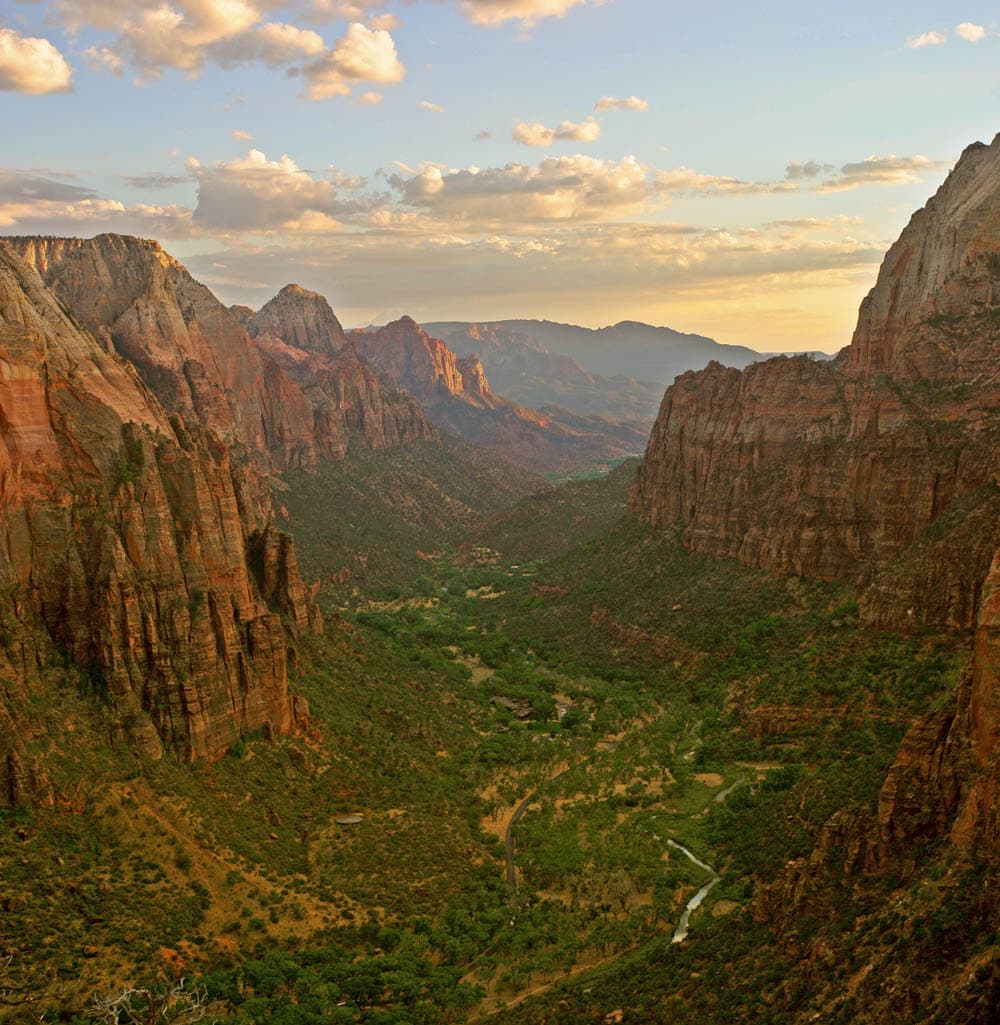
Zion National Park
The natural pairing — completely different landscape (you look down on hoodoos at Bryce, you look up at red sandstone walls at Zion) and on every Mighty 5 itinerary. Most visitors do Zion 2-3 days then Bryce 1-2 days, or vice versa.
Capitol Reef National Park
The next park east on a Mighty 5 loop — drives through Grand Staircase-Escalante National Monument on Highway 12, one of the most beautiful scenic byways in America. Capitol Reef is the quietest of Utah's Big 5 and the natural pairing with Bryce on any multi-park trip.

Las Vegas
The most common fly-in hub for Bryce — cheap flights from across the country, huge rental fleet, and a 4-hour drive via I-15 and Highway 9 through Zion. Most Bryce-Zion trips fly into LAS, do both parks, and loop back.

Salt Lake City
The closest full-service hub if you're doing a Mighty 5 loop and want to fly in and out one direction. Long drive but reasonable. SLC has more international service than Vegas.
Grand Canyon National Park (North Rim)
The North Rim of the Grand Canyon is open mid-May to mid-October only and is a 3-hour drive south through Kanab — vastly less crowded than the South Rim and a natural add-on to a Bryce-Zion loop. The view across the canyon to the South Rim is one of the great park overlooks.
Entry Requirements
Bryce Canyon is in southern Utah, USA. International visitors need either a US visa or an approved ESTA (Electronic System for Travel Authorization) if traveling under the Visa Waiver Program. US citizens and permanent residents need only a REAL ID-compliant driver's license or passport for domestic flights. The park itself has no entry requirements beyond the $35 per-vehicle 7-day pass (or $80 annual America the Beautiful pass).
Entry Requirements by Nationality
| Nationality | Visa Required | Max Stay | Notes |
|---|---|---|---|
| US Citizens | Visa-free | Unlimited | Domestic travel — only a REAL ID-compliant driver's license or passport required for flights. |
| UK Citizens | Visa-free | 90 days | ESTA required ($21, apply online at least 72 hours before travel). Valid 2 years or until passport expires. Biometric e-passport required. |
| EU Citizens | Visa-free | 90 days | ESTA required for most EU nationalities ($21). A handful of EU nationalities still require a B-1/B-2 visa — verify at your local US embassy. |
| Australian Citizens | Visa-free | 90 days | ESTA required ($21). Processing usually within minutes but can take up to 72 hours. |
| Canadian Citizens | Visa-free | 6 months | Valid passport required. No visa or ESTA needed. NEXUS pass holders can use expedited processing lanes. |
| Indian Citizens | Yes | As per visa | B-1/B-2 visitor visa required. Apply at US embassy/consulate. Interview and biometrics required. Processing can take 2-12 months. |
| Chinese Citizens | Yes | As per visa | B-1/B-2 visa required. 10-year multiple-entry visas are common. Interview and biometrics at US embassy/consulate. |
Visa-Free Entry
Tips
- •Apply for ESTA only on the official esta.cbp.dhs.gov site — avoid third-party sites that charge inflated fees
- •Your $35 vehicle park pass covers the entire park for 7 days — keep the receipt visible on the dashboard
- •Buy the America the Beautiful annual pass ($80) if you're visiting 3+ national parks in 12 months — it pays back immediately
- •Carry ID at all times — the park is federal property and rangers may request identification
- •Passport must be valid for the duration of your US stay (most Western nationalities are not subject to the 6-month rule, but verify)
- •If renting a car at LAS or SLC, confirm the rental allows national-park dirt roads — most do, but some economy lines exclude unpaved access
Getting Around
Bryce is the rare US national park with a genuinely useful free shuttle. From April through late October the Bryce Canyon Shuttle runs every 10-15 minutes between the Shuttle Staging Area (just outside the park entrance), the Visitor Center, the Lodge area, and the four main amphitheater viewpoints (Sunrise, Sunset, Inspiration, Bryce). Riding the shuttle is voluntary but strongly recommended in peak summer when parking lots fill by 10am. For everything beyond the main amphitheater (the southern scenic drive to Rainbow Point, Fairyland Point, Mossy Cave) you need your own vehicle.
Bryce Canyon Shuttle (free)
Free with park entranceA free shuttle running April through late October, every 10-15 minutes from early morning to early evening. Stops at the Shuttle Staging Area (Ruby's Inn area, just outside the park), Visitor Center, North Campground, Lodge, Sunrise Point, Sunset Point, Inspiration Point, and Bryce Point. A full loop takes about 50 minutes. No reservations required.
Best for: All four main amphitheater viewpoints during peak summer when parking is full
Private vehicle
Fuel $40-60 per fill; rental $50-100/dayRequired for the 18-mile southern scenic drive to Rainbow Point, for Fairyland Point at the north end, and for Mossy Cave outside the main entrance. Also the only option in winter when the shuttle doesn't run. Parking at the main amphitheater viewpoints fills by 10am in summer; arrive early or use the shuttle.
Best for: Rainbow Point scenic drive, winter visits, and visitors based outside the gateway
Guided horseback or hiking tours
Horseback $90-160 per person; hiking $80-150 per personCanyon Trail Rides operates the only authorized horseback concession, with 2-hour and half-day rides into the amphitheater on the Peekaboo and Fairyland trails. Several local outfitters run guided hiking and stargazing tours from Ruby's Inn.
Best for: Visitors who want a guided experience or who are not comfortable hiking solo
On-foot inside the park
FreeThe Rim Trail runs 5.5 miles from Fairyland Point to Bryce Point along the amphitheater rim — most visitors walk shorter sections between viewpoints. Trails into the amphitheater (Navajo, Queens Garden, Peekaboo, Fairyland) are well-marked, well-maintained, and signed at every junction.
Best for: All in-park hiking
Cycling
Bike rental $35-55/dayA 5-mile multi-use path runs from Red Canyon (just outside the park) to Inspiration Point, paralleling the main park road and offering a car-free way to reach the main viewpoints. Open to bikes, pedestrians, and strollers. Bike rentals available at Ruby's Inn.
Best for: A scenic alternative to driving the main park road
Walkability
The park itself is best experienced on foot once you reach the rim. The Rim Trail connects all four main amphitheater viewpoints with a paved or hard-packed surface. The gateway area outside the entrance (Bryce Canyon City / Ruby's Inn) is essentially a small commercial strip — walkable internally if you're staying there but spread out.
Shopping
Shopping at Bryce is concentrated in two places: the in-park Visitor Center bookstore and the Bryce Canyon Lodge gift shop, plus the cluster of shops at Ruby's Inn / Bryce Canyon City just outside the entrance. Ruby's Inn has a sprawling general store with groceries, fuel, outdoor gear, souvenirs, Western wear, and a post office — useful as the only real one-stop shop in the area. The town of Tropic, 7 miles east on Highway 12, has a couple of small shops and is more authentically a working ranching town. For serious supplies, drive 25 miles north to Panguitch.
Bryce Canyon Visitor Center Bookstore
park bookstoreThe main NPS bookstore at the visitor center, operated by the Bryce Canyon Natural History Association nonprofit. Geology guides, hiking books, dark-sky and astronomy resources, kids' Junior Ranger gear, and the official park map. Stamp station for the NPS passport.
Known for: NPS passport stamps, geology guides, dark-sky books
Bryce Canyon Lodge Gift Shop
park lodge gift shopInside the historic 1925 Bryce Canyon Lodge — Pendleton blankets, Native American silver and turquoise jewelry, fine art prints, and higher-end souvenirs than the visitor center. Worth a wander even if you're not buying.
Known for: Pendleton blankets, Native American jewelry, fine prints
Ruby's Inn General Store
general storeA sprawling one-stop just outside the park entrance — groceries, fuel (only fuel within 25 miles), outdoor gear, souvenirs, Western wear, gun and ammo counter, post office, and a small pharmacy. Open early to late. Essential for last-minute supplies.
Known for: Fuel, groceries, last-minute gear, Western wear
Old Bryce Town Shops
tourist shopping villageA small Western-themed shopping cluster at Ruby's Inn — rock and gem shop, ice cream parlor, souvenir t-shirts, Native American crafts, and a general gift store. Touristy but genuinely fun and family-friendly. Open seasonally.
Known for: Rocks and gems, family souvenirs, ice cream
Tropic town shops
small-town local shopsThe town of Tropic, 7 miles east of the park entrance, has a small grocery, a couple of cafes, and a few local craft and antiques shops. More authentic and quieter than Ruby's Inn — worth a 30-minute stop on a slow afternoon.
Known for: Local cafes, antiques, small-town atmosphere
🎁 Unique Souvenirs to Look For
- •NPS passport stamp from Bryce Canyon (stamp station at the Visitor Center)
- •A Bryce-specific geology or hiking guidebook (the Bryce Canyon Natural History Association volume is the standard reference)
- •A polished hoodoo-rock or gem from the Old Bryce Town rock and gem shop
- •Pendleton wool blanket from the Lodge gift shop — the iconic Southwest pattern is genuinely beautiful
- •Native American silver-and-turquoise jewelry from the Lodge gift shop (avoid roadside stands)
- •America the Beautiful annual park pass ($80) if you're visiting 3+ parks within 12 months
- •A Bryce Astronomy Festival commemorative t-shirt (mid-June only) or an "I survived the elevation" mug
Language & Phrases
English is universal. Park signage is in English with some Spanish translation. The terms below are the geology and high-desert hiking jargon you will hear from rangers and the visitor center exhibits — knowing them makes the geology talks and the trail signs land immediately.
| English | Translation | Pronunciation |
|---|---|---|
| Hoodoo | A tall thin spire of rock formed by erosion, often capped by a harder protective stone | HOO-doo — Bryce has the densest concentration on Earth |
| Amphitheater | A natural curved bowl carved into the edge of a plateau by erosion | AM-fi-thee-uh-ter — Bryce is technically a series of these, not a canyon |
| Plateau | An elevated flat expanse of land | pla-TOH — the Paunsaugunt Plateau is what Bryce is carved into |
| Paunsaugunt | The high plateau Bryce sits on; Paiute name meaning "home of the beavers" | PAWN-suh-gunt |
| Bortle scale | A 1-to-9 scale of night-sky darkness; 1 is darkest | BOR-tul — Bryce rates 1-2, among the darkest sites in the lower 48 |
| Frost wedging | The geological process that carves the hoodoos — water freezes in cracks, expands, and breaks rock apart | Bryce gets 200+ freeze-thaw cycles per year, the highest of any US park |
| Wall Street | The famous switchback section of the Navajo Loop with 200-foot Douglas firs growing between sandstone walls | A 0.5-mile descent that drops 600 feet through the most photographed section of the park |
| Thor's Hammer | A famously photogenic capped hoodoo near the bottom of the Navajo Loop | A 35-foot spire with a balanced rock cap, 5 minutes' walk down from Sunset Point |
| Silent City | The dense field of hoodoos visible from Inspiration Point | A nickname dating from the 1920s for the cathedral-like density of the formations |
| Mighty 5 | Utah's five national parks: Zion, Bryce, Capitol Reef, Arches, Canyonlands | A common Utah road-trip branding — Bryce is usually second or third on the loop |
| Microspikes / Yaktrax | Strap-on metal cleats for icy trails | Essential gear October through April for any descent into the amphitheater |
| Leave No Trace | The ethical backcountry code: pack out everything | LNT for short — non-negotiable on any park hike |
If you like Bryce Canyon National Park, you'll love…
4 cities with a similar vibe, outside of the same country.

New Zealand · OVR 76
unforgettable natural beauty · remarkably safe

Croatia · OVR 73
unforgettable natural beauty · noticeably tidy at every turn

United Kingdom · OVR 79
immaculate streets · low-anxiety streets

Chile · OVR 76
unforgettable natural beauty · immaculate streets