
American Southwest
THE QUICK VERDICT
By Anthony · Updated April 2026
Choose American Southwest if you want Grand Canyon vistas, Sedona red rocks, Antelope Canyon light shafts, and the great American road trip through red-rock country.
- Best for
- Antelope Canyon light shafts, Horseshoe Bend, Sedona vortex hikes, Monument Valley golden hour, Grand Canyon South Rim
- Two seasons
- Mar–May and Sep–Nov
- Budget anchor
- $300/day mid-range
- Costs bite
- Top 10% of destinations on daily spend ($300/day mid-range)
- Worth a look
- Lower Antelope Canyon is consistently quieter and cheaper than Upper but the photos are nearly identical
A road-trip region of red-rock canyons and impossibly wide skies — Grand Canyon's South Rim, Sedona's crimson buttes, Antelope Canyon's light shafts, Horseshoe Bend, and Monument Valley's towering mesas. Flagstaff and Sedona anchor most itineraries; a rental car is mandatory and the distances are bigger than they look.
The two links below are affiliate links — MapSorted earns a small commission if you book through them, at no extra cost to you. How this works.
Tours & Experiences
Bookable tours, activities, and day trips in American Southwest
Where to Stay
Compare hotels and rentals in American Southwest
📍 Points of Interest
Grand Canyon South Rim· 136 km N
The most-visited rim of the Grand Canyon with iconic overlooks
Sedona Red Rocks
Dramatic sandstone formations and vortex sites around Sedona
Horseshoe Bend· 225 km N
270-degree meander of the Colorado River near Page
Upper Antelope Canyon· 224 km N
Sculpted slot canyon on Navajo land with famous light beams
Lower Antelope Canyon· 226 km N
Deeper, less crowded sister slot canyon with ladder descents
Monument Valley· 280 km NE
Iconic sandstone buttes on the Navajo Nation
Flagstaff Historic Downtown· 38 km N
High-altitude Route 66 town and gateway to the Grand Canyon
Petrified Forest National Park· 178 km E
Fossilized trees and the Painted Desert badlands
Meteor Crater· 70 km E
Best-preserved impact crater on Earth, 1.2 km wide
★ Local Picks
Cathedral Rock
Short, steep scramble to one of Sedona's iconic formations
Toroweap Overlook· 190 km NW
Remote Grand Canyon North Rim viewpoint with 900m sheer drop
Cameron Trading Post· 116 km N
Historic 1916 Navajo trading post with gallery and hotel
Slide Rock State Park
Natural red-rock waterslide in Oak Creek Canyon
Bearizona Wildlife Park· 60 km NW
Drive-through wildlife park in Williams on Route 66
At a Glance
- Pop.
- Varies
- Timezone
- Phoenix
- Dial
- +1
- Emergency
- 911
The American Southwest region spans Arizona, Utah, New Mexico, and parts of Colorado and Nevada, covering the Colorado Plateau — one of the world's most concentrated arrays of national parks
The Grand Canyon is 446 km long, up to 29 km wide, and more than 1,800 meters deep — carved by the Colorado River over an estimated 6 million years
Sedona's red sandstone formations glow crimson at sunrise and sunset thanks to iron oxide in the rock, and draw millions of visitors to claimed "energy vortexes"
Monument Valley sits on the Navajo Nation, the largest Native American reservation in the United States at 71,000 square kilometers — larger than West Virginia
Horseshoe Bend, the viral horseshoe curve of the Colorado River near Page, drops 300 meters from rim to water in a sheer sandstone cliff
The region's "Four Corners" is the only point in the US where four states meet (Arizona, New Mexico, Colorado, Utah) — the intersection is run by the Navajo Nation
Top Sights
Grand Canyon South Rim
🗼The most-visited rim of the Grand Canyon, with Mather Point, Yavapai Observation Station, and the historic Village. Free shuttle buses connect viewpoints along the Hermit Road and Kaibab rims. Open year-round.
Sedona Red Rocks
🗼Sandstone formations like Cathedral Rock, Bell Rock, and Courthouse Butte rise from the high desert around Sedona. Trails range from easy strolls to scrambles. Four celebrated "vortex" sites draw spiritual seekers.
Antelope Canyon
🗼A pair of narrow, sculpted slot canyons on Navajo land near Page, Arizona. Upper Antelope is famous for light beams (midday, late spring through early fall); Lower Antelope is deeper and less crowded. Guided tours only.
Horseshoe Bend
🗼A 270-degree meander of the Colorado River carved 300 meters deep into Navajo sandstone. A 2-km round-trip trail from the parking lot leads to the overlook. Go at sunrise to beat the crowds and heat.
Monument Valley
🗼The iconic sandstone buttes that defined the American Western — Mittens, Totem Pole, John Ford's Point. A 27-km unpaved scenic loop drive is doable in a regular car (slowly). Navajo guides lead backcountry tours.
Flagstaff Historic Downtown
🏘️A high-altitude college town (2,100 m) and gateway to the Grand Canyon. Brick buildings from the railroad era, Route 66 storefronts, craft breweries, and one of the darkest night skies in the US at Lowell Observatory.
Petrified Forest National Park
🗼A landscape of 225-million-year-old fossilized trees turned to rainbow-hued quartz, plus the vibrant badlands of the Painted Desert. A 45-km scenic drive connects the highlights. Half-day stop en route between Flagstaff and New Mexico.
Meteor Crater
🗼A privately owned impact crater 1.2 km wide and 170 m deep — preserved almost perfectly because of the arid climate. Created 50,000 years ago by a 50-meter iron-nickel meteorite traveling at 45,000 km/h.
Costs & Currency
Where the money goes
USD per dayBackpacker = hostel dorm + street food + public transit. Mid-range = 3-star hotel + neighbourhood restaurants + transit cards. Luxury = 4/5-star + fine dining + taxis. How we calibrate these numbers →
Quick cost estimate
Customize per category →Estimates based on regional averages. Flight prices vary by season and airline.
budget
$90-150
Campground or hostel, car rental shared among group, cooking your own meals, national park pass for multiple parks
mid-range
$220-380
Mid-range hotel in Sedona/Flagstaff, rental car, restaurant meals, 1-2 guided tours (Antelope, Pink Jeep)
luxury
$600+
Luxury Sedona resort or El Tovar at Grand Canyon, fine dining, helicopter tour, private Navajo guide
Typical Costs
| Item | Local | USD |
|---|---|---|
| AccommodationCampground site (NPS) | $18-35 | $18-35 |
| AccommodationBudget motel (Flagstaff/Page) | $90-150 | $90-150 |
| AccommodationMid-range hotel (Sedona) | $200-350 | $200-350 |
| AccommodationEl Tovar (Grand Canyon South Rim) | $300-650 | $300-650 |
| AccommodationLuxury Sedona resort | $450-1,200+ | $450-1,200+ |
| FoodBreakfast at a diner | $10-18 | $10-18 |
| FoodNavajo taco at Cameron Trading Post | $15-20 | $15-20 |
| FoodDinner for two with drinks | $70-130 | $70-130 |
| FoodCraft beer at a Flagstaff brewery | $6-9 | $6-9 |
| TransportRental car per day (economy) | $55-110 | $55-110 |
| TransportTank of gas | $45-80 | $45-80 |
| TransportGrand Canyon Railway round trip | $75-250 | $75-250 |
| AttractionsGrand Canyon entry per vehicle (7 days) | $35 | $35 |
| AttractionsAmerica the Beautiful annual pass | $80 | $80 |
| AttractionsAntelope Canyon guided tour | $60-120 | $60-120 |
| AttractionsPink Jeep Sedona tour | $100-180 | $100-180 |
| AttractionsMonument Valley tribal park entry | $8 per person | $8 |
💡 Money-Saving Tips
- •Buy the America the Beautiful pass ($80) if visiting 3+ national parks — it covers entry for a vehicle at every park for a year
- •Camp or stay in gateway towns like Tusayan, Williams, or Flagstaff instead of inside parks
- •Pack water jugs and fill them in town — bottled water in-park is expensive
- •Grocery-store deli sandwiches save $20-40 per person vs. lodge restaurants
- •Skip helicopter tours in favor of high-viewpoint hikes like Cathedral Rock or Yavapai Point
- •Visit in the shoulder seasons (April-May, September-October) for lower lodging rates
- •Grand Canyon shuttle buses are free — no need to rent extra vehicles once in the park
- •Free ranger programs (geology walks, sunset talks) rival paid tours for interpretation
US Dollar
Code: USD
The US Dollar is the only accepted currency. ATMs are available in all gateway towns. Carry cash for remote fuel stations, Navajo Nation vendors, and tour tips — cards can be declined in remote areas when satellite links fail.
Payment Methods
Credit and debit cards are accepted in all towns and major restaurants. Contactless (Apple/Google Pay) common. Cash is essential for some Navajo Nation vendors, remote fuel stations, roadside jewelry stands, and tips for tour guides.
Tipping Guide
18-20% is standard. 15% is a minimum for acceptable service. Tax is not included in menu prices.
$1-2 per drink, or 18-20% on a tab.
15-20% for taxis. Uber/Lyft via app (availability is spotty outside Sedona/Flagstaff).
$2-5 per bag for bellhops. $3-5 per night for housekeeping.
$10-20 per person for half-day tours (Antelope, Pink Jeep); $20-40 for full-day or Monument Valley. Tipping Navajo guides especially appreciated.
Never tip federal park rangers — against regulations. But do tip shuttle drivers ($1-2) and concession staff like mule wranglers ($5-20).
Climate & Best Time to Go
The American Southwest spans a huge elevation range — from desert floors at 900 meters to canyon rims above 2,500 meters — so weather varies dramatically. Low deserts (Phoenix, Page) bake in summer (40°C+), while Grand Canyon South Rim and Flagstaff can get snow in winter. Sedona sits in between. The July-September "monsoon" brings sudden, violent thunderstorms and flash floods.
Spring
March - May41-79°F
5-26°C
The most popular season. Wildflowers bloom in low deserts by March; Grand Canyon rim thaws out by May. Pleasant temperatures everywhere. Some mountain snow lingers into April at the North Rim.
Summer
June - August59-104°F
15-40°C
Scorching in the low deserts — Phoenix and Page regularly top 40°C. Higher elevations like Flagstaff and the Grand Canyon rim stay cooler. The Southwest monsoon kicks in mid-July with daily thunderstorms, lightning, and flash floods.
Autumn
September - November37-82°F
3-28°C
Excellent travel season. Monsoon tapers off in September, temperatures drop, and aspens turn gold at higher elevations. Grand Canyon rims are gorgeous. November brings first mountain snows.
Winter
December - February14-59°F
-10-15°C
Snow covers the Grand Canyon South Rim and Flagstaff; lower elevations like Sedona and Page stay mild. North Rim closes from mid-October to mid-May. Fewer crowds, striking red-rock-and-snow photographs.
Best Time to Visit
April-May and September-October are the ideal windows — moderate temperatures, minimal monsoon risk, manageable crowds. Mid-summer is hot but also features lighting beams in Upper Antelope Canyon (late May-early September). Winter offers dramatic snow-on-red-rock photos but closes the Grand Canyon North Rim.
Spring (March - May)
Crowds: Moderate, rising to high by MayMild, dry, and increasingly warm. Wildflowers in low deserts in March; South Rim snow melts by mid-April. One of the two best travel windows. Spring break weeks can be crowded at Grand Canyon.
Pros
- + Comfortable temperatures almost everywhere
- + Wildflowers in low deserts
- + Low humidity and minimal storm risk
- + Clear skies for photography
Cons
- − Spring break crowds
- − North Rim still closed
- − Chilly mornings at elevation
- − Higher lodging prices approaching summer
Summer (June - August)
Crowds: Very highPeak season with intense heat in low deserts. Monsoon thunderstorms begin mid-July, bringing lightning, rainbows, and flash-flood risk. Antelope Canyon light beams at their best. Grand Canyon Rim-to-Rim hikes must start before dawn.
Pros
- + Full access to North Rim
- + Antelope Canyon light beams
- + Long daylight hours
- + Dramatic monsoon lightning photography
Cons
- − Dangerous heat below the rim (50°C+)
- − Highest prices and biggest crowds
- − Flash flood risk in slot canyons
- − Smoke from Western wildfires
Autumn (September - November)
Crowds: Moderate, decliningArguably the best season. Monsoon fades, temperatures drop, aspens turn gold at the North Rim and San Francisco Peaks. Crowds thin after Labor Day. First snow at the North Rim in late October typically closes it mid-October.
Pros
- + Ideal temperatures
- + Gold aspens at elevation
- + Fewer crowds than summer
- + Clear air after monsoon
Cons
- − Rapid cold fronts in late November
- − North Rim closes mid-October
- − Days shortening quickly
- − Some trails begin icing up
Winter (December - February)
Crowds: LowDramatically different — snow on red rock, solitude, and moody skies. South Rim stays open but trails can be icy. Low-desert destinations like Page and Phoenix stay mild and make excellent winter getaways. North Rim closed.
Pros
- + Stunning snow-and-red-rock photography
- + Lowest hotel prices
- + No crowds even at famous viewpoints
- + Warm days in low desert
Cons
- − Icy rim trails
- − North Rim, Hermit Road, and some facilities closed
- − Short daylight
- − Winter storms can close I-40
🎉 Festivals & Events
Sedona International Film Festival
FebruaryA nine-day festival showcasing independent films, documentaries, and shorts at historic Sedona theaters, drawing filmmakers from around the world.
Grand Canyon Music Festival
August - SeptemberChamber music performances held at the Shrine of the Ages at Grand Canyon South Rim since 1984 — a surreal setting for classical music.
Flagstaff Festival of Science
SeptemberA 10-day free festival celebrating science, with lectures, telescope nights at Lowell Observatory, open houses at USGS labs, and family activities.
Navajo Nation Fair
SeptemberThe largest Native American fair in the US, held in Window Rock, Arizona. Rodeo, powwow, horse races, traditional song and dance, and frybread competitions.
Off the Beaten Path
Cathedral Rock Trail at Sunset
A short but steep 2-km round-trip scramble up to a saddle between Sedona's two most photographed sandstone spires. No ropes needed, but there are a few hands-and-feet sections.
Everyone takes the postcard shot from Red Rock Crossing. The real experience is climbing up to the saddle and watching the rocks catch fire at sunset.
Toroweap Overlook
A remote overlook on the Grand Canyon North Rim where the canyon drops straight down 900 meters to the Colorado River — no railings. Reached only by 100 km of rough unpaved roads (high clearance required).
Perhaps the most dramatic Grand Canyon view anywhere, and you'll likely have it entirely to yourself. A world away from the South Rim crowds.
Cameron Trading Post
A 1916 frontier trading post on the Navajo Nation between Flagstaff and the Grand Canyon. Stone buildings, a historic hotel, a gallery room of museum-quality Navajo rugs and jewelry, and the best Navajo tacos anywhere.
Not a tourist trap but a working trading post where Navajo artisans still bring goods. The gallery is worth a visit even if you don't buy, and the tacos are legendary.
Slide Rock State Park
A natural red-rock waterslide in Oak Creek Canyon north of Sedona. The creek has carved smooth slickrock channels you can actually slide down. Historic apple orchard on site.
A quintessential Arizona summer escape that locals visit when tourists are sweating through Sedona at 38°C. Come early — the parking lot fills by 10 AM.
Bearizona Drive-Through Wildlife Park
A 2.4-km drive-through habitat in Williams, Arizona where you encounter black bears, bison, wolves, and bighorn sheep from your car, plus a walk-through fort with smaller animals.
A charmingly unpretentious stop on Route 66 that's great for road-weary kids, and genuinely impressive if you catch the wolves or bears up close.
Safety Breakdown
Very Safe
out of 100
The Southwest's gateway towns (Sedona, Flagstaff, Page, Williams) have low crime rates. The real risks are environmental: extreme heat, flash floods, altitude sickness on the rim, dehydration, and long distances between services. More national-park visitors die from heat and falls here than anywhere else in the system.
Things to Know
- •Carry and drink far more water than you think you need — 4 liters per person per day in summer is a minimum
- •Never hike rim to river and back in a single day during summer — the canyon acts like an oven below the rim
- •Watch the sky above slot canyons; a storm 30 km away can send a deadly flash flood through Antelope Canyon
- •Fill the gas tank whenever possible — it can be 150 km between stations on Navajo Nation
- •Cell service is nonexistent in much of the region; download offline maps before leaving town
- •Respect Native American land — stay on marked roads, never photograph locals without permission, observe tribal rules
- •Don't leave valuables visible in vehicles at trailheads, especially at popular viral spots like Horseshoe Bend
Natural Hazards
Emergency Numbers
Emergency (Police/Fire/Ambulance)
911
Grand Canyon Dispatch
928-638-7805
Poison Control
1-800-222-1222
Flagstaff Medical Center
928-779-3366
How to Get There
✈️ Airports
Phoenix Sky Harbor International Airport(PHX)
175 km south of Sedona; 375 km south of Grand Canyon South RimRental car is the standard — every major chain has a desk. Groome Transportation runs shuttles to Sedona ($55 one way) and Flagstaff ($50). No direct rail or bus to parks.
✈️ Search flights to PHXHarry Reid International Airport (Las Vegas)(LAS)
440 km west of Grand Canyon South RimRental car is the default. Many visitors do Grand Canyon West (Skywalk) as a day trip from Vegas. Several tour operators run day and overnight coach trips to the South Rim.
✈️ Search flights to LASFlagstaff Pulliam Airport(FLG)
5 km south of Flagstaff, 120 km south of Grand Canyon South RimSmall airport served by American Airlines via Phoenix and Dallas. Taxi or rental car into town. Groome Transportation connects to Grand Canyon.
✈️ Search flights to FLGPage Municipal Airport(PGA)
5 km south of PageVery small regional airport. Mostly scenic flights, Contour Airlines service from Denver, and private aviation. Rental car or tour-operator pickup on arrival.
✈️ Search flights to PGA🚆 Rail Stations
Flagstaff Amtrak Station
Downtown FlagstaffA daily stop for the Southwest Chief (Chicago-Los Angeles) in historic downtown Flagstaff. From Flagstaff, connect to the Grand Canyon via rental car or the vintage Grand Canyon Railway departing from nearby Williams Junction.
Williams Grand Canyon Railway Depot
Williams, AZ, 100 km south of Grand CanyonHome of the historic Grand Canyon Railway, a daily round-trip steam/diesel train from Williams to Grand Canyon Village South Rim. A fun nostalgic alternative to driving to the canyon.
🚌 Bus Terminals
Flagstaff Greyhound & Groome Shuttle
Greyhound and FlixBus stop in Flagstaff with connections to Phoenix, Albuquerque, and Las Vegas. Groome Transportation runs the most useful regional shuttles: PHX-Sedona-Flagstaff-Grand Canyon. Bus service within parks is limited to in-park shuttles.
Getting Around
A rental car is essentially mandatory to explore the Southwest. Distances are huge (Grand Canyon to Monument Valley is 280 km; Sedona to Page is 210 km) and public transport between parks is minimal. Once inside Grand Canyon South Rim, however, free shuttle buses efficiently cover all viewpoints. Amtrak's Southwest Chief stops at Flagstaff, and small regional airports serve the area.
Rental Car
$45-100 per day (economy) plus gas ($40-80/tank)The default mode of travel. Pick up in Phoenix, Las Vegas, or Flagstaff. A standard sedan handles most paved park roads. A high-clearance SUV is needed for Monument Valley's loop road, Toroweap, and many Navajo Nation backroads. Never attempt unpaved roads when wet.
Best for: All regional travel — truly unavoidable unless joining guided tours
Grand Canyon Shuttle Buses
Free (with park entry)Free color-coded shuttle buses loop the Grand Canyon South Rim year-round. The Village (Blue), Kaibab Rim (Orange), and Hermit Road (Red, seasonal) routes connect trailheads, lodges, and viewpoints. The Hermit Road is closed to private cars March-November.
Best for: Visiting all South Rim viewpoints without parking hassles
Amtrak Southwest Chief
$150-350 one way Chicago-Flagstaff (coach); $70-150 LA-FlagstaffAmtrak's daily train from Chicago to Los Angeles stops at Flagstaff, Arizona. From Flagstaff, connect to Grand Canyon via rental car or the Grand Canyon Railway (vintage train from Williams).
Best for: A scenic rail approach from Chicago or LA, avoiding Phoenix airport
Regional Flights
$150-400 one way for regional legsPhoenix Sky Harbor (PHX) and Las Vegas Harry Reid (LAS) are the major gateways. Smaller airports in Flagstaff (FLG), Page (PGA), and St. George (SGU) handle limited regional flights, mostly via American and United.
Best for: Long-distance approach; skipping 6+ hour drives from Phoenix
Pink Jeep Tours & Guided Excursions
Pink Jeep: $100-180 per adult. Antelope Canyon: $60-120. Monument Valley: $80-200Sedona's signature pink 4x4 tours take visitors onto rugged red-rock trails inaccessible to passenger cars — Broken Arrow and Diamondback are iconic. Navajo-guided tours run into restricted zones of Monument Valley and Antelope Canyon.
Best for: Accessing the backcountry of Sedona, visiting Antelope Canyon (guides required), deeper Monument Valley
Walkability
Downtown Sedona, Flagstaff, Williams, and Page are pleasantly walkable once you've parked. The Grand Canyon Village is very walkable — you can walk the entire South Rim Trail (21 km) past all major viewpoints. Outside town centers, distances and lack of sidewalks make walking impractical.
Travel Connections
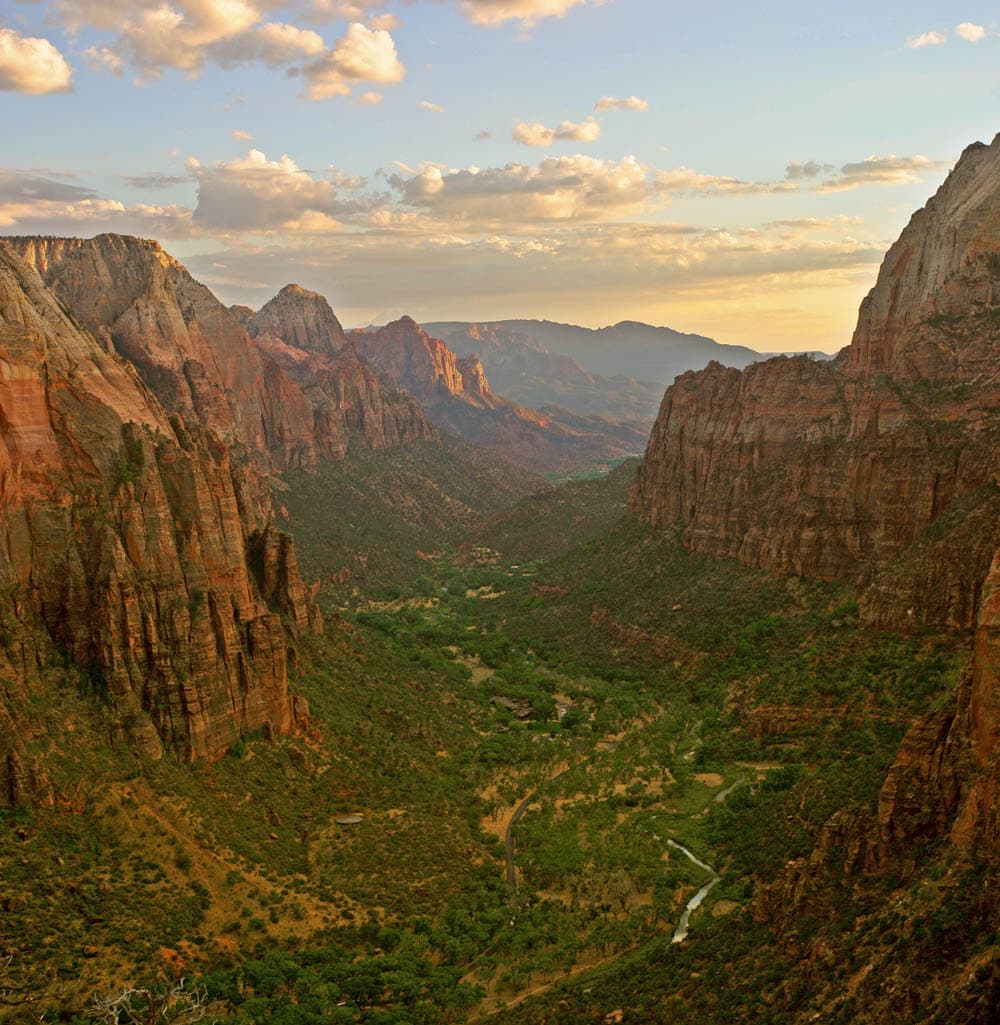
Zion National Park
Utah's most visited national park, famous for the Narrows slot canyon hike, Angels Landing chains, and soaring Navajo sandstone walls. Seasonal shuttle-only access through the main canyon.

Bryce Canyon National Park
Otherworldly amphitheaters of orange hoodoos at 2,700 meters elevation. The Navajo Loop and Queens Garden trails descend into the hoodoo forest. Often pairs with Zion as part of a Utah parks tour.

Las Vegas
The Las Vegas Strip's mega-resorts, shows, and restaurants — a jarring contrast to the surrounding desert. Also a major airport gateway for Grand Canyon West and Hoover Dam tours.
Phoenix / Scottsdale
Arizona's capital metro with luxury Scottsdale resorts, Frank Lloyd Wright's Taliesin West, the Heard Museum of Native American art, spring training baseball, and desert botanical gardens.

Santa Fe
New Mexico's 400-year-old capital with adobe architecture, Canyon Road galleries, Georgia O'Keeffe Museum, and famous green chile cuisine. The oldest capital city in the United States.
Entry Requirements
The American Southwest is in the United States. Entry requirements follow US federal immigration law. Most international visitors need either a visa or an approved ESTA under the Visa Waiver Program. Note that entering Native American reservations (Navajo Nation, Hopi Reservation) does not require any additional US immigration paperwork, but individual tribal parks have their own fees and permits.
Entry Requirements by Nationality
| Nationality | Visa Required | Max Stay | Notes |
|---|---|---|---|
| Canadian Citizens | Visa-free | 6 months | No visa or ESTA required. Valid passport needed. Can drive directly across the border. |
| UK Citizens | Visa-free | 90 days | ESTA required ($21, valid 2 years). Apply online before travel. |
| EU/Schengen Citizens | Visa-free | 90 days | ESTA required. Apply at least 72 hours before departure. |
| Australian Citizens | Visa-free | 90 days | ESTA required. Standard Visa Waiver Program rules apply. |
| Chinese Citizens | Yes | Up to 10 years (multiple entry B1/B2) | Must apply for a B1/B2 visa at the US Embassy. Interview required. |
| Indian Citizens | Yes | Varies | B1/B2 tourist visa required with embassy interview. |
Visa-Free Entry
Tips
- •Apply for ESTA at least 72 hours before your flight; $21 and valid for 2 years
- •International driving permits are recommended alongside your home license; rental companies may require one
- •Buy the America the Beautiful annual pass ($80) if visiting multiple parks — it's the only practical pass system
- •Navajo Nation has its own observed time zone — Mountain Daylight Time year-round in summer, which differs from surrounding Arizona
- •US Customs allows $800 in duty-free goods per person
- •Global Entry ($100/5 years) helps if you'll fly in and out of PHX or LAS
Language & Phrases
English is the primary language. Spanish is widely spoken throughout the region, and many place names are Spanish-origin. Navajo (Dine bizaad) is still actively spoken across the Navajo Nation. A handful of regional and outdoors-specific terms are essential vocabulary for visitors.
| English | Translation | Pronunciation |
|---|---|---|
| Monsoon | The summer rainy season (mid-July through September) | mon-SOON — "We got caught in a monsoon yesterday" means a thunderstorm |
| Slot canyon | A narrow, deep canyon carved by flash floods | Just "slot canyon" — think Antelope or Buckskin Gulch |
| Vortex | A site in Sedona claimed to have concentrated energy | VOR-tex — you'll hear about the four main Sedona vortexes everywhere |
| Hoodoo | A tall, thin rock spire formed by erosion | HOO-doo — the signature formation of Bryce Canyon |
| "It's a dry heat" | The Southwest's apologetic excuse for 42°C days | Said seriously by locals; mock it gently |
| BLM land | Public land managed by the Bureau of Land Management — often free dispersed camping | bee-ell-EM land — vast stretches of the West are BLM |
| Four Corners | The only point where four US states meet (AZ, NM, CO, UT) | Operated by the Navajo Nation as a monument |
| "The rez" | Shorthand for a Native American reservation | rez — Navajo Nation is the largest rez in the US |
| Kiva | A round ceremonial room used by Pueblo peoples | KEE-vah — you'll see them at ancient ruins like Mesa Verde |
| Ya'at'eeh | Hello (Navajo) | yah-ah-TAY — a respectful greeting on the Navajo Nation |
Shopping
Southwest shopping centers on Native American crafts — Navajo, Hopi, and Zuni artisans produce some of the finest silver-and-turquoise jewelry, rugs, pottery, and kachina carvings in the world. Authentic pieces bought directly from artists or reputable trading posts support Native communities. Beware "Navajo-style" mass-produced imports at roadside stands.
Tlaquepaque Arts Village
artisan & galleryA re-creation of a Mexican colonial arts village in Sedona, with cobblestone courtyards, galleries of Southwestern and Native American art, fine-art jewelry, and destination restaurants.
Known for: Fine art, Native-inspired jewelry, Southwestern paintings, leather goods, handmade ceramics
Cameron Trading Post
historic trading postA 1916 Navajo trading post between Flagstaff and the Grand Canyon. The gallery room houses museum-grade Navajo rugs, Hopi kachinas, pottery, and antique jewelry alongside a working retail floor.
Known for: Authentic Navajo rugs, museum-quality pieces, historic jewelry, Navajo tacos at the restaurant
Hubbell Trading Post National Historic Site
historic trading postThe oldest continuously operated trading post on the Navajo Nation, established in 1878 and now run by the National Park Service. Functioning retail plus ranger-led tours of the historic Hubbell home.
Known for: Ganado-style Navajo rugs (the iconic red-and-black pattern), baskets, direct-from-artist jewelry
Old Town Flagstaff & Route 66
Americana & outdoorFlagstaff's historic brick downtown blends Route 66 memorabilia, breweries, and outdoor-gear shops with a respectable Native-crafts scene at stores like Babbitt's Backcountry Outfitters.
Known for: Route 66 souvenirs, outdoor gear, craft beer, used bookstores, turquoise jewelry
🎁 Unique Souvenirs to Look For
- •Navajo rug — hand-woven on vertical looms, signed and certified at reputable trading posts (prices $200-20,000+)
- •Turquoise-and-silver jewelry — look for the Authentic Indian-Made logo, Navajo/Hopi/Zuni hallmarks, and solid sterling
- •Hopi kachina doll — carved cottonwood figures representing spirit beings; authentic Hopi carvings are signed on the base
- •Zuni inlay jewelry — intricate stone mosaic work, often in traditional patterns
- •Native American pottery — Acoma, Santa Clara, or Jemez pueblo styles, often signed by the artist
- •Arizona copper goods — everything from earrings to candle holders from the Copper State
- •Pinon-pine nuts and prickly-pear jelly from roadside stands
- •Grand Canyon National Park poster or ranger hat from park bookstores
If you like American Southwest, you'll love…
4 cities with a similar vibe, outside of the same country.

Kenya · OVR 75
unforgettable natural beauty · low-key street vibe

Antigua and Barbuda · OVR 70
unforgettable natural beauty · workable for remote days

Saudi Arabia · OVR 77
jaw-dropping scenery · low-key street vibe

United Kingdom · OVR 79
unforgettable natural beauty · reliable wifi, decent English