All Destinations
26 of 576 guides match

Arequipa
Peru
Arequipa is Peru's second-largest city (~1.1 million) sitting at 2,335m (7,660 ft) in a high-desert basin under the perfect cone of El Misti volcano (5,822m). The colonial old town is built almost entirely from sillar — pearly-white volcanic ash blocks quarried from nearby Chachani — earning the nickname La Ciudad Blanca. The standout sight is the Santa Catalina Monastery: a walled 'city within a city' (20,000 m², founded 1579) that operated as a closed convent for almost 400 years and still has 20 Dominican nuns in residence. Arequipa is also the staging post for the two-day descent into the Colca Canyon (3,400m deep, twice the Grand Canyon) to see the morning thermals carry condors out of the gorge.

Bariloche
Argentina
Argentina's Patagonian lake district capital — a Swiss-chocolate town on the shore of Nahuel Huapi Lake beneath the Andes. Cerro Catedral is South America's largest ski resort; the Circuito Chico drive is one of the hemisphere's most scenic road loops. The "chocolate capital of Argentina" hosts artisan chocolatiers on every corner of Mitre street.

Bogota
Colombia
Bogota is a high-altitude capital undergoing a cultural renaissance. La Candelaria's colonial streets are alive with street art, the Gold Museum is dazzling, and Monserrate offers sweeping views from 3,150m. The food scene is booming, the coffee is (unsurprisingly) excellent, and the Ciclovia turns major roads into a car-free playground every Sunday.

Buenos Aires
Argentina
Buenos Aires is the Paris of South America — grand Haussmann-style avenues, sidewalk cafes, and a fierce cultural identity built on tango, steak, and Malbec. The city's barrios each have a distinct personality, from the colorful houses of La Boca to the tree-lined elegance of Palermo. Incredible value for visitors right now.

Cartagena
Colombia
Cartagena's UNESCO-listed walled city is one of the most beautiful colonial centers in the Americas — bougainvillea-draped balconies, pastel-colored buildings, and cobblestone streets alive with music and street food. The Caribbean warmth extends to the people, the nearby Rosario Islands, and the ceviche.

Copacabana
Bolivia
A sun-bleached pilgrimage town on the Bolivian shore of Lake Titicaca, three and a half hours by road from La Paz across the Tiquina ferry crossing. The whitewashed Moorish-style Basílica de Nuestra Señora de Copacabana houses the Dark Virgin, Bolivia's patron saint, and on weekends drivers line up the length of Avenida 6 de Agosto to have new vehicles blessed with flower garlands and beer. The harbour launches small wooden boats for the two-hour crossing to Isla del Sol, the Inca creation-myth island where Manco Cápac and Mama Ocllo emerged. Trout pulled fresh from Titicaca arrives whole and grilled at lakefront comedores, and the Yunguyo border crossing puts Peru's Puno just three hours further on.

Cusco
Peru
Cusco is the ancient capital of the Inca Empire and the gateway to Machu Picchu. Colonial churches built on Inca foundations, the vibrant San Pedro market, and the Sacred Valley are all within reach. At 3,400m elevation, take it slow your first day. The city rewards those who explore beyond the main plaza — every street tells a story.

El Chaltén
Argentina
Argentina's trekking capital, founded in 1985 in a border-claim race with Chile and now a ribbon of hostels, microbreweries, and outfitter shops at the foot of Cerro Chaltén — better known abroad as Mount Fitz Roy, the jagged silhouette on the Patagonia clothing logo. Trails leave directly from the village, no entry fee, no shuttle bus required. The 22-kilometre Laguna de los Tres day hike to the base of Fitz Roy is Argentina's most famous walk, climbing 1,100 metres on the final hour to a glacial lake under the granite. Cerro Torre and the Glaciar Grande complete the skyline. El Calafate's FTE airport is three hours south by Ruta 40.
Foz do Iguaçu
Brazil
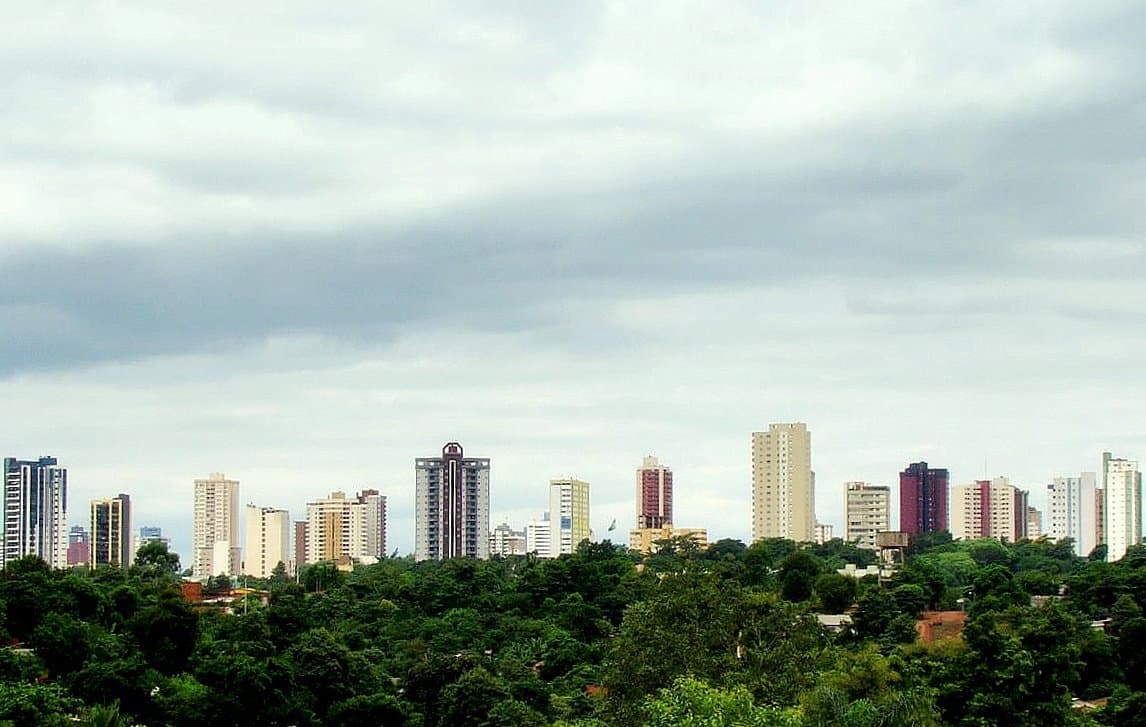
Foz do Iguaçu is the Brazilian launchpad for one of the planet's great spectacles — 275 individual waterfalls thundering across a 2.7 km horseshoe of basalt cliffs on the Paraná-Argentina border. The Brazilian side gives you the panoramic, postcard view of the falls (Argentina's side puts you on top of them, and most travellers do both). Beyond the cataratas, the city is the Tríplice Fronteira where Brazil, Argentina, and Paraguay meet, home to the Itaipu hydroelectric dam (the second-largest in the world) and a surprisingly diverse Lebanese-Brazilian-Paraguayan food scene built around shawarma, churrasco, and Paraguayan chipa.

La Paz
Bolivia
The world's highest administrative capital sits in a dramatic canyon surrounded by snow-capped Andean peaks. The teleférico cable car system offers stunning aerial views, witches' markets sell llama fetuses for offerings, and the Moon Valley landscape is otherworldly.

Lima
Peru
Lima is South America's gastronomic capital — ceviche, causa, and anticuchos are just the start. The city's food scene has earned multiple spots on the World's 50 Best list. Beyond the restaurants, colonial Miraflores overlooks the Pacific, the historic center is a UNESCO site, and the Larco Museum's pre-Columbian collection is extraordinary.

Manaus
Brazil
Manaus is the unlikely metropolis dropped into the middle of the Amazon — a city of 2.2 million people 1,400 km up the river from the Atlantic, reachable by air or by multi-day boat and absolutely not by road from anywhere most travellers come from. The fortunes of the rubber boom (1879-1912) built the pink Teatro Amazonas opera house — Italian marble, French chandeliers, all hauled up the river in pieces — and you visit Manaus today for two reasons: the city itself (the opera house, the Adolpho Lisboa market, the Meeting of the Waters where the black Rio Negro and sandy Solimões flow side by side without mixing for 6 km) and as the launchpad for jungle lodges and riverboat trips into the Amazon proper.

Medellin
Colombia
Medellin's transformation from notorious to innovative is one of the great urban comeback stories. The City of Eternal Spring (year-round 22°C) is now known for cable car transit connecting hillside barrios, a thriving startup scene, and a nightlife that rivals anywhere in Latin America. The Botero sculptures in Plaza Botero are a must-see.

Mendoza
Argentina
Argentina's wine capital sits in the Andean foothills at 750m — Malbec country. Three regions deliver: Maipú's classic vineyards close to the city, Luján de Cuyo's premium Malbecs, and Uco Valley's high-altitude trendy bodegas. Tree-lined streets after the 1861 earthquake rebuild, the huge Parque San Martín, and Aconcagua (the Americas' highest peak at 6,961m) within striking distance. Vendimia harvest festival in early March is the year's headline event.

Montevideo
Uruguay
Uruguay's laid-back capital stretches along the Río de la Plata with beautiful rambla boardwalks, Art Deco architecture, and the legendary Mercado del Puerto for grilled meats. A relaxed, walkable city with mate culture on every corner.

Puerto Natales
Chile
The Chilean Patagonia gateway to Torres del Paine, set on the milky-blue Última Esperanza Sound, three hours south of the park entrance by paved road. Once a wool-export port, Puerto Natales now turns over almost entirely on the W trek, the O circuit, and the Navimag four-day fjord ferry that arrives from Puerto Montt twice a week. Eberhard Avenue and Calle Bories make up the compact restaurant and brewpub strip, with Baguales microbrewery, Kau Lodge fireplaces, and outfitters renting tents and stoves on every block. Mylodon Cave 24 kilometres north preserves the giant ground sloth fossil that gave Bruce Chatwin his trip-opening pretext for In Patagonia.

Puno
Peru
Puno sits on the Peruvian shore of Lake Titicaca at 3,827m (12,556 ft) — the highest navigable lake in the world and the second-largest in South America. The city itself is a brick-and-corrugated-iron working port that most travelers use as a base for two boat trips: the Uros floating reed islands (man-made platforms of bundled totora reeds, inhabited by ~2,000 Uros people who built them centuries ago to escape Inca and then Colla incursions) and the Quechua-speaking weaving island of Taquile. Add the pre-Inca chullpa burial towers at Sillustani (40 km north) and the cross-border bus to La Paz, Bolivia, and Puno earns its 1-2 nights for travelers heading south.
Quito
Ecuador
Ecuador's Andean capital sits at 2,850m on the equator — the highest official capital in the world. Its colonial Old Town (UNESCO 1978) is among Latin America's best-preserved, with golden baroque churches like La Compañía de Jesús and the cobblestone La Ronda block. The TelefériQo gondola climbs Pichincha volcano to 4,100m, and the Mitad del Mundo straddles 0°0'0". Gateway to Galápagos and the Amazon.

Rio de Janeiro
Brazil
Rio de Janeiro is one of the world's most dramatic cities — Christ the Redeemer watches over a landscape of granite peaks, tropical forest, and golden beaches. Copacabana and Ipanema are iconic, the Carnival is legendary, and the carioca lifestyle of samba, beach volleyball, and acai bowls is infectious. A city that pulses with energy.

Salta
Argentina
Salta — full name Salta la Linda, 'Salta the Beautiful' — is the colonial capital of northwest Argentina, sitting at 1,152 m in a green Andean valley with the country's best-preserved 18th-century centre. The pink-and-yellow Cathedral and the Cabildo frame Plaza 9 de Julio; the MAAM museum holds three Inca child mummies discovered frozen on Llullaillaco volcano in 1999; the Tren a las Nubes climbs to 4,220 m on one of the world's highest railways. Salta is the gateway to Cafayate's high-altitude Torrontés vineyards, the Salinas Grandes salt flats, and the multicoloured Quebrada de Humahuaca two hours north.

Salvador
Brazil
Brazil's first capital (1549-1763) and the heart of Afro-Brazilian culture. The pastel-painted Pelourinho (UNESCO 1985) is a colonial maze of cobblestones, baroque churches, and gold-leafed Igreja São Francisco. Birthplace of capoeira, candomblé, and samba-reggae — Olodum still drums Tuesdays. Acarajé from street vendors, moqueca from neighborhood spots, and a Carnival that rivals Rio's for the world's largest street party. Beaches strung along the Atlantic coast.

Santiago
Chile
Chile's capital sits in a valley framed by the snow-capped Andes. A modern, walkable city with excellent wine bars, the bohemian Barrio Bellavista, world-class seafood, and ski resorts just an hour away. The gateway to Patagonia and the Atacama.

São Paulo
Brazil
South America's largest metropolis is a powerhouse of culture, cuisine, and nightlife. The food scene rivals any city on earth with incredible Japanese, Italian, and regional Brazilian restaurants. Vila Madalena's street art and Paulista Avenue's energy define the city.

Sucre
Bolivia
Bolivia's whitewashed constitutional capital and the country's most beautiful colonial city, sitting at a far gentler 2,810 metres than altitude-blasted La Paz. The 16th-century UNESCO old town is a grid of low white buildings with red-tiled roofs, framed by the Cordillera de los Frailes. Casa de la Libertad on Plaza 25 de Mayo is where Bolivia signed its declaration of independence in 1825, the Sunday Tarabuco textile market draws Yampara weavers in striped ponchos from the surrounding villages, and the cement quarry at Cal Orck'o preserves the world's largest single set of dinosaur footprints — over 5,000 prints across an 80-degree wall.