
La Paz
THE QUICK VERDICT
By Anthony · Updated June 2026
Choose La Paz if you want the world's highest capital — Mi Teleférico cable-car network, Witches Market, Valle de la Luna, Death Road mountain biking, and Uyuni salt flats flights.
- Best for
- Mi Teleferico cable-car commute, Witches' Market, Death Road downhill, Valle de la Luna spires
- Best window
- May–Sep
- Budget anchor
- $70/day mid-range
- Needs care
- Scores below most of the catalog on safety — read that section before you go
- Language gap
- English gets thin outside tourist areas — a translation app earns its keep
- Skip if
- altitude (3,650 m) hits you hard or you have heart, lung, or sleep-apnea concerns
The world's highest administrative capital sits in a dramatic canyon surrounded by snow-capped Andean peaks. The teleférico cable car system offers stunning aerial views, witches' markets sell llama fetuses for offerings, and the Moon Valley landscape is otherworldly.
The two links below are affiliate links — MapSorted earns a small commission if you book through them, at no extra cost to you. How this works.
Tours & Experiences
Bookable tours, activities, and day trips in La Paz
Where to Stay
Compare hotels and rentals in La Paz
📍 Points of Interest
Mi Teleferico
World's longest urban cable car system with Andean views
Mercado de las Brujas
Traditional market selling Aymara ritual items and remedies
Plaza Murillo
Bolivia's political heart with the Presidential Palace
Valle de la Luna
Surreal eroded clay landscape just outside the city
MUSEF
Ethnography museum showcasing Bolivia's indigenous cultures
★ Local Picks
Calle Jaen
Best-preserved colonial street with colorful museums
Mercado Rodriguez
Authentic local market with fresh juices and cheap lunches
At a Glance
- Pop.
- 900K
- Timezone
- La Paz
- Dial
- +591
- Emergency
- 110 / 118
La Paz is the highest administrative capital in the world, sitting at 3,640m (11,942 ft) above sea level in a dramatic Andean valley
The city has the world's longest urban cable car system (Mi Teleferico) with over 30 km of lines connecting neighborhoods across the canyon
The Witches' Market (Mercado de las Brujas) sells llama fetuses, dried frogs, and traditional remedies used in Aymara rituals
La Paz sprawls from 3,200m to 4,100m elevation — wealthier neighborhoods sit lower where oxygen is slightly more abundant
Bolivia has 37 official languages, making it one of the most linguistically diverse countries on Earth
The nearby Yungas Road, known as "Death Road," is now one of the world's most popular mountain biking routes
Top Sights
Mi Teleferico (Cable Car System)
📌A spectacular urban cable car network with multiple color-coded lines soaring over the city. The views of La Paz's canyon setting and snowcapped Illimani are breathtaking.
Mercado de las Brujas (Witches' Market)
🏪A fascinating market selling traditional Aymara medicines, potions, talismans, and dried llama fetuses used as offerings to Pachamama (Mother Earth).
Plaza Murillo & Government District
🗼The political heart of Bolivia flanked by the Presidential Palace, the National Congress, and the Metropolitan Cathedral. Often buzzing with protests and demonstrations.
Valle de la Luna (Moon Valley)
🌿A surreal landscape of eroded clay spires and canyons just 10 km from the city center, formed by centuries of wind and rain erosion. Short walking trails wind through the formations.
Calle Jaen
🗼La Paz's best-preserved colonial street, a narrow cobblestone lane lined with colorful buildings housing several small museums covering gold, textiles, and musical instruments.
Mercado Rodriguez
🏪An authentic local market sprawling through several streets, where pacenas shop for fresh produce, juices, and cheap set lunches. Far more local than touristy alternatives.
Museo Nacional de Etnografia y Folklore (MUSEF)
🏛️An excellent museum housed in a baroque palace, showcasing Bolivia's indigenous cultures, textiles, masks, and ceremonial objects from across the Altiplano and Amazon.
El Alto & the Feria 16 de Julio
🏪The sprawling market city above La Paz hosts one of South America's largest open-air markets every Thursday and Sunday — a mind-boggling bazaar of absolutely everything.
Safety Breakdown
Exercise Caution
out of 100
La Paz is generally safe for travelers exercising standard precautions, but altitude sickness is the biggest health risk. Petty crime like pickpocketing is common in markets and on crowded minibuses. Political protests can block roads with little warning.
Things to Know
- •Take altitude seriously — rest for 24-48 hours upon arrival, drink coca tea, stay hydrated, and avoid alcohol on your first day
- •Be extremely cautious with belongings on minibuses and in crowded markets like the Witches' Market
- •Beware of fake police scams — real police will never ask to see your wallet or take you to an unmarked car
- •Avoid walking alone in the cemetery district and around the bus terminal area after dark
- •Political protests (bloqueos) can shut down roads suddenly — have a flexible itinerary and check local news
- •Use radio taxis or ride apps rather than hailing unmarked vehicles on the street
Emergency Numbers
Police
110
Ambulance
118
Fire Department
119
Tourist Police
(2) 222-5016
Language & Phrases
Spanish is the primary language for tourism and business, though many locals speak Aymara or Quechua as a first language. La Paz Spanish tends to be clear and relatively slow, making it easier for learners. English is limited to tourist agencies, upscale hotels, and some hostels.
| English | Translation | Pronunciation |
|---|---|---|
| Hello | Hola / Kamisaraki (Aymara) | OH-lah / kah-mee-sah-RAH-kee |
| Thank you | Gracias / Yuspagara (Aymara) | GRAH-see-ahs / yoos-pah-GAH-rah |
| How much is this? | Cuanto cuesta? | KWAHN-toh KWES-tah? |
| Where is...? | Donde esta...? | DOHN-deh es-TAH...? |
| The check, please | La cuenta, por favor | lah KWEN-tah por fah-VOR |
| Yes / No | Si / No | see / noh |
| Please | Por favor | por fah-VOR |
| Excuse me | Disculpe | dees-KOOL-peh |
| I don't understand | No entiendo | noh en-tee-EN-doh |
| Do you speak English? | Habla ingles? | AH-blah een-GLAYS? |
| Water / Beer | Agua / Cerveza | AH-gwah / ser-VEH-sah |
| Coca tea, please | Un mate de coca, por favor | oon MAH-teh deh KOH-kah por fah-VOR |
Costs & Currency
Where the money goes
USD per dayBackpacker = hostel dorm + street food + public transit. Mid-range = 3-star hotel + neighbourhood restaurants + transit cards. Luxury = 4/5-star + fine dining + taxis. How we calibrate these numbers →
Quick cost estimate
Customize per category →Estimates based on regional averages. Flight prices vary by season and airline.
budget
$20-35
Hostel dorm, minibuses and teleferico, set lunch menus (almuerzo), free plazas and markets
mid-range
$50-90
Mid-range hotel, mix of restaurants, radio taxis, guided tours to Valle de la Luna
luxury
$150+
Boutique hotel, fine dining, private tours, Death Road biking, spa treatments
Typical Costs
| Item | Local | USD |
|---|---|---|
| AccommodationHostel dorm bed | BOB 40-80 | $5.80-11.60 |
| AccommodationMid-range hotel (double) | BOB 200-400 | $29-58 |
| FoodAlmuerzo (set lunch) | BOB 12-20 | $1.75-2.90 |
| FoodSaltena (morning pastry) | BOB 5-8 | $0.72-1.16 |
| FoodDinner at a restaurant | BOB 40-80 | $5.80-11.60 |
| FoodFresh juice at market | BOB 5-10 | $0.72-1.45 |
| TransportMi Teleferico ride (per line) | BOB 3 | $0.43 |
| TransportMinibus ride | BOB 1.50-2.50 | $0.20-0.36 |
| TransportRadio taxi across town | BOB 10-30 | $1.45-4.35 |
| AttractionsValle de la Luna entry | BOB 15 | $2.17 |
| AttractionsDeath Road bike tour | BOB 350-550 | $50-80 |
💡 Money-Saving Tips
- •Bolivia is one of the cheapest countries in South America — your budget stretches far here
- •Eat the almuerzo (set lunch) at local restaurants for BOB 12-20 — soup, main course, and drink included
- •Start mornings with a saltena from a street vendor — the best breakfast deal in town
- •Ride the teleferico across all lines for incredible views at just BOB 3 per ride
- •Fresh fruit juices at Mercado Rodriguez cost under $1 and are freshly blended to order
- •Walk downhill through neighborhoods and take the teleferico back up — saves energy and money
- •Book Death Road and Uyuni tours from agencies on Calle Sagarnaga — competition keeps prices low
Boliviano
Code: BOB
1 USD is approximately 6.90 BOB (as of early 2026). The exchange rate has been relatively stable. US dollars can be exchanged at casas de cambio on Calle Camacho or at banks. ATMs are available at major banks (BNB, Banco Mercantil) and dispensing bolivianos is straightforward with international cards.
Payment Methods
La Paz is predominantly a cash economy. Credit cards are accepted at upscale restaurants, hotels, and some tourist shops, but most markets, street food vendors, comedores, and minibuses require cash. Carry small bills as breaking large notes (100 or 200 BOB) can be difficult at small vendors. US dollars are accepted at some tourist agencies for tours.
Tipping Guide
Tipping is not mandatory but 5-10% is appreciated at sit-down restaurants. Many locals do not tip at basic comedores.
Not expected. You may leave small change if the service was notable.
No tipping expected. Agree on the fare before the ride (taxis do not use meters in La Paz). Round up if you wish.
BOB 30-50 per person per day for guided tours. Death Road guides and Uyuni tour drivers also appreciate tips.
Porters appreciate BOB 5-10 per bag. Housekeeping tips are not expected but BOB 5-10 per day is a kind gesture.
Climate & Best Time to Go
La Paz has a subtropical highland climate with two distinct seasons: wet (November-March) and dry (May-October). Temperatures are relatively consistent year-round due to the altitude, with cool days and cold nights. The sun is intense at this elevation — sunburn happens fast.
Dry Season
May - October28-63°F
-2 to 17°C
Clear blue skies and brilliant sunshine with cold nights that can dip below freezing. The best time to visit — dry, sunny, and spectacular Andean views. June-July are the coldest months.
Wet Season
November - March39-64°F
4-18°C
Afternoon thunderstorms are common, sometimes causing flash flooding on steep streets. Mornings are usually clear. Slightly warmer than the dry season but muddier and cloudier.
Shoulder (April)
April34-64°F
1-18°C
Rains taper off and skies clear. A great transitional month to visit with fewer tourists and pleasant daytime conditions.
Shoulder (October-November)
October - November37-66°F
3-19°C
Warming slightly before the rains begin in earnest. The Gran Poder festival usually falls in late May or June.
Best Time to Visit
May through October (the dry season) offers the best conditions with clear skies, sunny days, and minimal rain. June through August are the driest months with brilliant blue skies, though nights can be very cold at altitude.
Dry Season (May - October)
Crowds: Peak tourist season, especially June-AugustClear skies and sunshine with little to no rain. Temperatures are cool but pleasant during the day (10-18 degrees Celsius), dropping to near or below freezing at night. This is the best time for trekking and outdoor activities.
Pros
- + Clear blue skies nearly every day
- + Best conditions for Uyuni and trekking trips
- + Spectacular mountain views
- + Dry conditions for walking the steep streets
Cons
- − Cold nights, especially June-July
- − Peak tourist pricing at popular tour agencies
- − Altitude effects can be more noticeable in cold dry air
- − Dust can be an issue
Wet Season (November - April)
Crowds: Low season — fewer touristsAfternoon rains are common, sometimes heavy, but mornings are usually clear. The surrounding hills turn green and the city feels fresh. Temperatures are slightly warmer.
Pros
- + Fewer tourists and lower prices
- + Greener landscapes
- + Slightly warmer temperatures
- + Uyuni Salt Flats have mirror effect with water (incredible for photography)
Cons
- − Daily afternoon rain showers
- − Mudslides can affect roads
- − Some trekking routes are impassable
- − Clouds can obscure mountain views
🎉 Festivals & Events
Gran Poder Festival
May-JuneLa Paz's biggest festival with thousands of dancers in elaborate costumes parading through the city to honor Jesus del Gran Poder. The energy and scale rival Carnival.
Alasitas Fair
JanuaryA unique Aymara tradition where miniature versions of desired items (houses, cars, diplomas) are bought and blessed by yatiris (shamans) to bring good fortune in the coming year.
Carnaval (Oruro)
February-MarchWhile technically in Oruro (3.5 hours away), Bolivia's UNESCO-listed Carnival is easily accessible from La Paz and features the famous Diablada devil dance.
Dia de los Muertos
NovemberFamilies visit cemeteries with offerings of food, drink, and bread shaped like skulls (tantawawas) to honor deceased relatives. The General Cemetery celebrations are deeply moving.
Off the Beaten Path
Mercado Rodriguez
A bustling local market where La Paz residents buy fresh produce, meats, and prepared lunches. Juice ladies blend fresh tropical fruits to order, and almuerzo stalls serve enormous set lunches for under two dollars.
While tourists crowd the Witches' Market, this is the real everyday market where pacenas shop and eat. The fresh juice stalls alone are worth the visit.
Calle Jaen Museums
La Paz's best-preserved colonial street, a narrow cobblestone lane painted in bright colors and housing four small museums covering Bolivian history, textiles, precious metals, and folk instruments.
One ticket covers all four museums on the prettiest street in the city — it is quiet, photogenic, and gives a deep insight into Bolivian cultural history.
Teleferico Sunset Ride (Linea Amarilla)
The Yellow Line of Mi Teleferico climbs from the city bowl to El Alto, offering breathtaking views of the city cradled in its canyon with Illimani mountain glowing at sunset.
Locals use the teleferico as daily transit, but timing it for sunset transforms a $0.43 ride into one of the most spectacular urban experiences in the Americas.
El Alto Market (Feria 16 de Julio)
One of South America's largest open-air markets, sprawling across the streets of El Alto every Thursday and Sunday. Thousands of vendors sell everything from car parts to traditional clothing.
The sheer scale is staggering — you could browse for hours. The food section with local dishes served from massive pots is an experience in itself.
Sopocachi Neighborhood
A bohemian residential neighborhood with the best cafe culture in La Paz, small galleries, bookshops, and evening penas (folk music bars) featuring live Andean music.
Sopocachi is where La Paz's artists, writers, and university crowd hang out — the penas on weekends with live charango and zampoña music are unforgettable.
How to Get There
✈️ Airports
El Alto International Airport(LPB)
13 km west (in El Alto, at 4,061m elevation)Radio taxi to city center BOB 60-80 (~$8.70-11.60 USD, 30-45 min depending on traffic). Mi Teleferico Red Line connects El Alto to the center. No official airport shuttle bus.
✈️ Search flights to LPB🚌 Bus Terminals
Terminal de Buses La Paz
The main bus terminal near the cemetery district with services to Oruro (4h, BOB 25-40), Cochabamba (7h, BOB 40-70), Sucre (12h, BOB 70-120), Uyuni (10-12h, BOB 80-150), and Copacabana (3.5h, BOB 30-50).
Getting Around
La Paz has no metro, but the Mi Teleferico cable car system is the star of urban transit. Minibuses and trufis (shared taxis) cover the rest. The steep, canyon-like geography makes walking between neighborhoods a serious workout at altitude.
Mi Teleferico
BOB 3 (~$0.43 USD) per lineThe world's longest urban cable car system with 11 color-coded lines. Clean, safe, and offering unbeatable views. Connects La Paz to El Alto and between major neighborhoods.
Best for: Getting between neighborhoods at different elevations without breathless walking, and for the stunning aerial views
Minibuses & Micros
BOB 1.50-2.50 (~$0.20-0.36 USD)Small privately operated buses running fixed routes called out by a voceador (route caller). Cheap and ubiquitous but chaotic for newcomers. Watch for pickpockets.
Best for: Short hops when you know the route, reaching areas not served by the teleferico
Radio Taxis
BOB 10-30 (~$1.45-4.35 USD) for most tripsIdentifiable by illuminated dome signs with the company phone number. Always agree on a price or ensure the meter runs. Much safer than unmarked taxis.
Best for: Evening travel, reaching Valle de la Luna, and when you're too breathless to walk uphill
InDriver / Uber (limited)
BOB 8-25 (~$1.16-3.60 USD) for most tripsInDriver is the dominant ride-hailing app. Uber has limited presence. InDriver uses a bidding system where you propose a fare.
Best for: Airport transfers and when you want pre-agreed pricing without haggling
Walkability
Central La Paz is walkable but physically demanding due to the extreme altitude and steep terrain. Walking downhill from El Alto to the center is far easier than going up. Take it slow, rest often, and use the teleferico for uphill segments. The historic center around Plaza Murillo is flat enough for comfortable exploration.
Travel Connections

Lake Titicaca (Copacabana)
The world's highest navigable lake straddling the Bolivia-Peru border. Visit Isla del Sol, the birthplace of the Inca empire according to legend.
Uyuni Salt Flats
The world's largest salt flat at 10,582 sq km — a surreal white expanse that becomes a giant mirror during the wet season. Bolivia's most iconic landscape.
Coroico & the Yungas
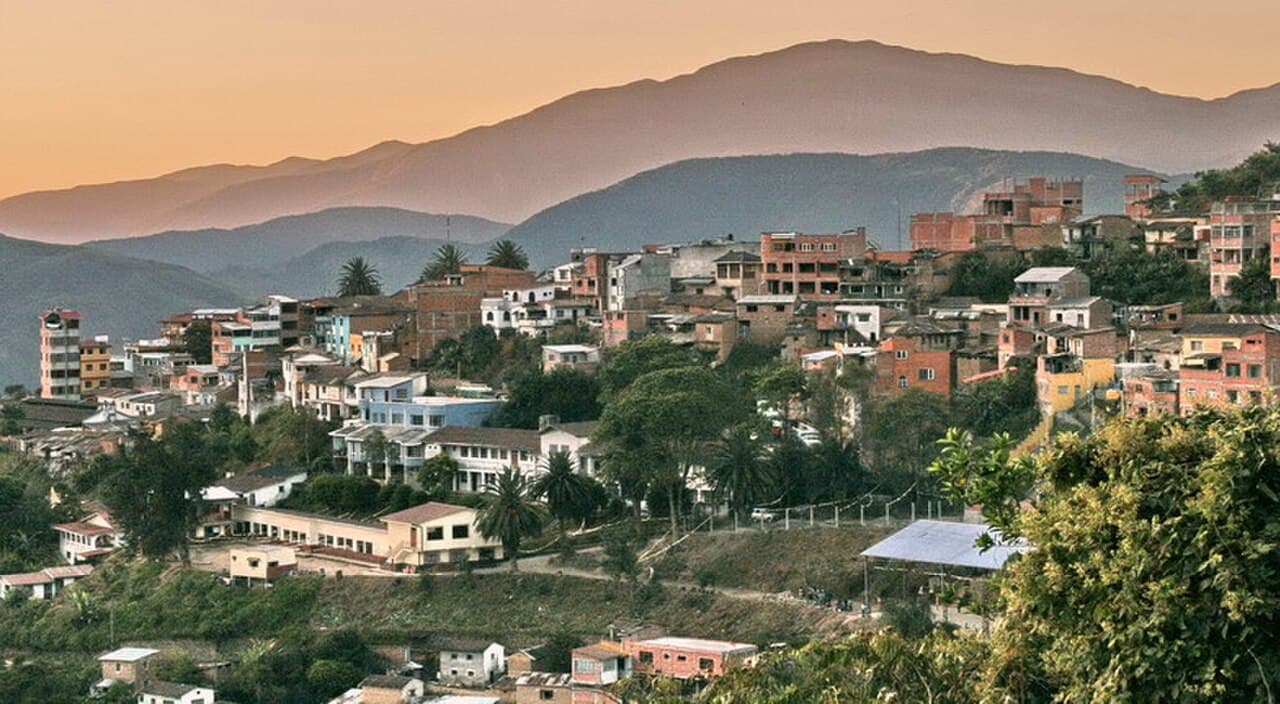
A lush subtropical town at 1,750m with coffee plantations, waterfalls, swimming pools, and cloud forest. The dramatic descent from La Paz is part of the experience.

Tiwanaku
A UNESCO World Heritage pre-Inca archaeological site dating back to 200 BC, with monumental stone temples, the famous Sun Gate, and carved monoliths.

Santiago
Chile's sophisticated capital beneath the Andes with world-class wine regions, innovative cuisine, and a cosmopolitan energy that makes it South America's most livable city.
Entry Requirements
Bolivia has varying visa requirements depending on nationality. Many South American and European citizens can enter visa-free, while US citizens require a visa that can be obtained on arrival. The country eliminated visa reciprocity fees for several nationalities in recent years.
Entry Requirements by Nationality
| Nationality | Visa Required | Max Stay | Notes |
|---|---|---|---|
| US Citizens | Yes | 90 days | Tourist visa available on arrival at El Alto airport for approximately $160. Requires passport photo, proof of hotel, and yellow fever vaccination certificate. Can also be obtained in advance at a Bolivian consulate. |
| UK Citizens | Visa-free | 90 days | Visa-free entry for tourism. Passport must be valid for at least 6 months. |
| Canadian Citizens | Yes | 90 days | Visa on arrival available at El Alto airport. Similar requirements to US citizens. Bring passport photos and cash (USD) for the fee. |
| EU Citizens | Visa-free | 90 days | Most EU nationals enter visa-free for 90 days within a calendar year. |
| Australian Citizens | Visa-free | 90 days | Visa-free entry. Passport validity of 6 months required. |
Visa-Free Entry
Visa on Arrival
Tips
- •US citizens should bring passport photos and cash (USD) for the visa-on-arrival fee at El Alto airport
- •A yellow fever vaccination certificate is required if arriving from or transiting through endemic countries (including Brazil and Peru)
- •El Alto airport is at 4,061 meters — take altitude very seriously. Rest on arrival and drink coca tea
- •Keep your entry stamp and immigration card safe — you will need them when departing
- •The 90-day stay can sometimes be extended at the immigration office in La Paz for a fee
Shopping
La Paz is a treasure trove for handcrafts, textiles, and traditional Andean goods at remarkably low prices. The city's markets are its shopping heart, offering everything from alpaca wool garments to folk art and silver jewelry.
Calle Sagarnaga & Witches' Market
tourist market streetThe main tourist shopping street climbing from Plaza San Francisco with alpaca knitwear shops, silver jewelry stores, and the famous Witches' Market selling Aymara ritual items and dried llama fetuses.
Known for: Alpaca clothing, silver jewelry, traditional remedies, Bolivian souvenirs
El Alto Feria (16 de Julio)
massive open-air marketOne of the largest street markets in South America, spread across dozens of blocks every Thursday and Sunday. Everything from electronics and clothing to traditional textiles and household goods.
Known for: Bargain everything, traditional aguayo textiles, secondhand clothing, local atmosphere
Mercado de las Brujas (Witches' Market)
traditional marketA small but famous market selling traditional Aymara medicinal herbs, potions, dried llama fetuses for offerings, and ritual items used in Andean spiritual practices.
Known for: Traditional remedies, ritual items, unique cultural souvenirs
Calle Linares
artisan shopsA quieter parallel street to Sagarnaga with higher-quality artisan workshops selling handmade leather goods, woven textiles, and contemporary Bolivian design.
Known for: Quality artisan goods, leather work, contemporary Bolivian design
🎁 Unique Souvenirs to Look For
- •Alpaca wool sweaters, scarves, and blankets — lighter and warmer than sheep wool
- •Aguayo textiles, the colorful woven carrying cloths used by Aymara and Quechua women
- •Bolivian silver jewelry from workshops on Calle Sagarnaga
- •Tiwanaku-inspired ceramic replicas from the ancient pre-Inca civilization
- •Singani (Bolivian grape brandy), the national spirit
- •Cholita wrestling dolls and miniature ekeko figurines (god of abundance)
- •Handmade charango (small Andean stringed instrument) from music shops
If you like La Paz, you'll love…
4 cities with a similar vibe, outside of the same country.


