
Colombo
THE QUICK VERDICT
By Anthony · Updated June 2026
Choose Colombo if you want Sri Lanka's gateway — Galle Face sunsets, Pettah bazaars, curry-and-hoppers, and trains south to Galle + Ella tea country.
- Best for
- crab curry at Ministry of Crab, Dutch Hospital arcade dining, Galle Face kottu, train south to Galle
- Best window
- Dec–Mar
- Budget anchor
- $90/day mid-range
- No real seasons
- Within 5°C year-round — timing is about rain, not temperature
- Skip if
- you expect spotless streets — monsoon flooding and roadside grime are normal here
Colombo is Sri Lanka's bustling commercial capital — a mix of colonial heritage, Buddhist temples, and a rapidly modernizing skyline. The Pettah bazaar is sensory overload, Galle Face Green offers sunset strolls along the Indian Ocean, and the food scene blends Sri Lankan curry with international influences. The gateway to the rest of the island.
The two links below are affiliate links — MapSorted earns a small commission if you book through them, at no extra cost to you. How this works.
Tours & Experiences
Bookable tours, activities, and day trips in Colombo
Where to Stay
Compare hotels and rentals in Colombo
📍 Points of Interest
Gangaramaya Temple
Eclectic Buddhist temple with museum of curiosities
Galle Face Green
Oceanfront promenade popular at sunset
National Museum
Sri Lanka's largest museum of history and art
Pettah Market
Sprawling bazaar with street-by-street specialties
Jami Ul-Alfar Mosque
Iconic red and white striped mosque in Pettah
Seema Malaka Temple
Floating temple on Beira Lake by Geoffrey Bawa
Viharamahadevi Park
Colombo's largest park with golden Buddha statue
★ Local Picks
Ministry of Crab
World-renowned Sri Lankan crab restaurant
Barefoot Gallery
Artisan textile shop, gallery, and garden cafe
Wolvendaal Church
Historic 1749 Dutch Reformed church
At a Glance
- Pop.
- 750K (city), 5.6M (metro)
- Timezone
- Colombo
- Dial
- +94
- Emergency
- 119
Colombo has been a trading port for over 2,000 years, attracting Arab, Portuguese, Dutch, and British merchants
Sri Lanka produces some of the world's finest Ceylon tea, and Colombo is the center of the global tea trade
The city is home to Buddhist, Hindu, Muslim, and Christian communities living side by side, reflected in its diverse architecture
Colombo sits on the Indian Ocean coast and experiences two monsoon seasons from the southwest and northeast
The iconic red-and-white lighthouse in the Fort district has guided ships since 1857
Sri Lanka was the first country in the world to have a female prime minister — Sirimavo Bandaranaike in 1960
Top Sights
Gangaramaya Temple
🏯An eclectic Buddhist temple that blends Sri Lankan, Thai, Indian, and Chinese architecture. The museum houses a vast collection of Buddhist artifacts, vintage cars, and curiosities donated by devotees over decades.
Galle Face Green
🗼A sprawling oceanfront promenade where Colombo residents gather at sunset to fly kites, eat street food, and watch the Indian Ocean waves. The adjacent Galle Face Hotel is a colonial landmark.
Colombo Fort District
🏘️The historic commercial heart of the city with grand colonial-era buildings, the Old Lighthouse, the Dutch Hospital shopping complex, and the striking red-brick Cargills building.
National Museum of Colombo
🏛️Sri Lanka's largest museum, housed in a stately Italian Renaissance-style building. Collections span ancient royal regalia, pre-colonial art, and archaeological finds from across the island.
Pettah Market District
🏪A chaotic, colorful bazaar quarter with street after street of specialized vendors selling everything from electronics to spices. Each street tends to focus on a single product category.
Viharamahadevi Park
🌳Colombo's largest park, formerly Victoria Park, with flowering trees, a golden Buddha statue, and the municipal zoo. A welcome green respite from the surrounding urban density.
Beira Lake & Seema Malaka Temple
🏯A floating temple designed by Geoffrey Bawa on platforms in Beira Lake, connected by wooden walkways. The illuminated temple at dusk is one of Colombo's most photographed scenes.
Jami Ul-Alfar Mosque (Red Mosque)
🗼A striking candy-striped red and white mosque in the heart of Pettah, built in 1909. Its distinctive Indo-Saracenic architecture makes it one of the most recognizable buildings in Colombo.
Climate & Best Time to Go
Colombo has a tropical monsoon climate with high humidity year-round. Two monsoon seasons bring rain at different times, but the city rarely experiences an entirely dry month. Temperatures stay consistently warm throughout the year.
Dry Season (Southwest)
January - March75-88°F
24-31°C
The driest period with plenty of sunshine and lower humidity. The best time for beach activities and sightseeing. February is typically the driest month.
First Inter-Monsoon
April - May77-90°F
25-32°C
Hot and increasingly humid with afternoon thunderstorms. April brings the hottest temperatures of the year. The Sinhala and Tamil New Year in April is a cultural highlight.
Southwest Monsoon
June - September75-86°F
24-30°C
The wettest period for Colombo's west coast. Heavy afternoon and evening rain is common, but mornings are often clear. The east coast is sunny during this season.
Second Inter-Monsoon
October - December75-86°F
24-30°C
Another wet period with thunderstorms and occasional heavy rain. November is typically the wettest month. The northeast monsoon begins affecting the east coast.
Best Time to Visit
January through March is the driest period for Colombo and the west coast, offering the most pleasant weather. December through April is generally considered the best window, though Sri Lanka's diverse microclimates mean somewhere on the island is always in season.
Dry Season (January - March)
Crowds: High — peak tourist season for the west coastThe most comfortable months with less rain, more sunshine, and slightly lower humidity. Sea conditions are calm on the west coast, making it ideal for beach activities.
Pros
- + Driest weather of the year
- + Calm seas for swimming and water sports
- + Independence Day celebrations in February
- + Best visibility for sightseeing
Cons
- − Higher accommodation prices
- − Popular sites get busier
- − Advance booking needed for trains to Kandy and Ella
Inter-Monsoon (April - May)
Crowds: Moderate — shoulder seasonHot and humid with increasing afternoon thunderstorms. The Sinhala and Tamil New Year in mid-April is a major cultural celebration.
Pros
- + New Year festivities offer cultural immersion
- + Accommodation discounts begin
- + Fewer crowds at attractions
- + Lush green landscapes
Cons
- − Intense heat and humidity
- − Afternoon thunderstorms common
- − Some beach activities limited by changing seas
Southwest Monsoon (June - September)
Crowds: Low for Colombo and west coastColombo's wettest season with regular heavy rain. However, the east coast (Trincomalee, Arugam Bay) enjoys sunny weather during this period.
Pros
- + Lowest prices of the year
- + East coast beaches in peak season
- + Whale watching season off Trincomalee
- + Lush tropical scenery
Cons
- − Heavy rain on the west coast
- − Rough seas on western beaches
- − Some outdoor activities disrupted
- − Higher humidity levels
Second Inter-Monsoon (October - December)
Crowds: Low to moderate — building toward December peakTransitional period with rain across much of the island. December begins drying out and the tourist season picks up again.
Pros
- + December sees weather improving
- + Christmas and New Year festive atmosphere
- + Accommodation deals in October-November
- + Fewer tourists than peak season
Cons
- − November can be very wet
- − Flash flooding possible in low-lying areas
- − Some roads in rural areas may be affected by rain
🎉 Festivals & Events
Sinhala & Tamil New Year
AprilSri Lanka's biggest cultural celebration marking the New Year on April 13-14. Families gather for feasts, games, and rituals. Many businesses close for several days.
Vesak (Buddha's Birthday)
MayThe most important Buddhist festival, celebrated with illuminated pandals (towering painted panels), free food stalls (dansalas), and lantern-lit streets across Colombo.
Kandy Esala Perahera
July-AugustSri Lanka's grandest festival — a 10-day procession of elephants, dancers, drummers, and fire performers through the streets of Kandy honoring the Sacred Tooth Relic.
Deepavali
October-NovemberThe Hindu festival of lights celebrated with oil lamps, fireworks, and sweets, particularly vibrant in Colombo's Hindu communities in Pettah and Wellawatte.
Off the Beaten Path
Ministry of Crab
A celebrated restaurant in the historic Dutch Hospital building, run by cricket legend Mahela Jayawardene and known for its massive Sri Lankan lagoon crabs prepared multiple ways.
Regularly listed among Asia's best restaurants but still feels like a local institution. The crab curry and pepper crab are unforgettable.
Barefoot Gallery & Cafe
An independent bookshop, art gallery, and garden cafe founded by designer Barbara Sansoni. The courtyard garden is a tranquil oasis displaying contemporary Sri Lankan art.
A beloved gathering place for Colombo's artists and intellectuals. The handwoven textiles sold inside are unique to this shop.
Manning Market
Colombo's wholesale fruit, vegetable, and fish market, operating in the early morning hours with vendors hauling massive tuna, tropical fruits, and spices by the ton.
An overwhelming sensory experience that most tourists never see. Arrive before 6 AM for the fish auction when the energy is electric.
Dehiwala Zoo Neighborhood Kottu Stalls
Street-side stalls near Dehiwala where cooks chop and fry kottu roti on massive flat griddles with a rhythmic clanging that can be heard from blocks away.
The rhythmic knife-on-griddle sound is Colombo's unofficial soundtrack. These neighborhood stalls serve better kottu than any restaurant.
Wolvendaal Church
A Dutch Reformed church built in 1749, one of the oldest Protestant churches in Sri Lanka. The gravestones and VOC (Dutch East India Company) artifacts tell centuries of colonial history.
Hidden in the bustle of Pettah, this tranquil church is rarely visited by tourists but is architecturally and historically significant.
Safety Breakdown
Moderate
out of 100
Colombo is generally safe for travelers, with violent crime against tourists being uncommon. Petty theft, tuk-tuk scams, and overly persistent touts are the main annoyances. The city has made major safety improvements since the end of the civil war in 2009.
Things to Know
- •Negotiate tuk-tuk fares before getting in, or use the PickMe app for metered rides — drivers routinely overcharge tourists by 3-5x
- •Be wary of unsolicited "guides" at temples and tourist sites who offer free tours then demand large tips
- •Keep valuables close in Pettah market — the dense crowds create opportunities for pickpockets
- •Women traveling alone may receive unwanted attention — dress conservatively and use ride-hailing apps at night
- •Avoid displaying expensive jewelry or electronics in crowded areas
Natural Hazards
Emergency Numbers
Police Emergency
119
Ambulance / Fire
110
Tourist Police
011-242-1052
General Hospital Colombo
011-269-1111
Accident Service
011-269-1111
Costs & Currency
Where the money goes
USD per dayBackpacker = hostel dorm + street food + public transit. Mid-range = 3-star hotel + neighbourhood restaurants + transit cards. Luxury = 4/5-star + fine dining + taxis. How we calibrate these numbers →
Quick cost estimate
Customize per category →Estimates based on regional averages. Flight prices vary by season and airline.
budget
$20-40
Guesthouse room, local rice & curry meals, city buses, free temple and market visits
mid-range
$60-120
Mid-range hotel, mix of local and upscale restaurants, tuk-tuks and PickMe rides, museum entries
luxury
$200+
Luxury colonial hotel, fine dining, private driver, spa treatments, curated experiences
Typical Costs
| Item | Local | USD |
|---|---|---|
| AccommodationHostel / guesthouse | LKR 2,000-5,000 | $6.50-16 |
| AccommodationMid-range hotel (double) | LKR 8,000-20,000 | $26-65 |
| AccommodationLuxury hotel | LKR 40,000-100,000 | $130-325 |
| FoodRice and curry plate (local) | LKR 400-800 | $1.30-2.60 |
| FoodKottu roti | LKR 500-1,000 | $1.60-3.25 |
| FoodDinner at mid-range restaurant | LKR 2,000-5,000 | $6.50-16 |
| FoodFresh fruit juice | LKR 150-300 | $0.50-1 |
| FoodBeer at a bar (Lion Lager) | LKR 500-1,000 | $1.60-3.25 |
| TransportCity bus ride | LKR 20-50 | $0.06-0.16 |
| TransportTuk-tuk across town | LKR 300-800 | $1-2.60 |
| TransportPickMe car ride | LKR 400-1,500 | $1.30-5 |
| AttractionsNational Museum entry | LKR 1,000 | $3.25 |
| AttractionsGangaramaya Temple entry | LKR 500 | $1.60 |
| AttractionsHalf-day city tour | LKR 5,000-10,000 | $16-32 |
💡 Money-Saving Tips
- •Eat at local "rice and curry" buffet spots where a full plate costs LKR 400-800 — look for places packed with office workers at lunch
- •Use the PickMe app instead of negotiating with tuk-tuk drivers — you'll typically pay 40-60% less than tourist prices
- •Take the train along the coast to Galle or Mount Lavinia for just LKR 50-100 instead of hiring a car
- •Many temples are free or accept donations rather than fixed entry fees
- •Buy spices and tea at Pettah market rather than tourist-oriented shops for a fraction of the price
- •Drink king coconut water from street vendors (LKR 50-80) instead of bottled drinks
- •Visit the free Galle Face Green promenade at sunset for one of Colombo's best experiences
- •Stay in guesthouses in Colpetty or Bambalapitiya rather than the pricey Fort area hotels
Sri Lankan Rupee
Code: LKR
1 USD is approximately 310 LKR (as of early 2026). ATMs are widely available in Colombo. Commercial Bank and HNB ATMs tend to offer the best rates. Bring USD or EUR cash as backup — exchange at banks or licensed money changers rather than hotels.
Payment Methods
Cash is essential for tuk-tuks, street food, small shops, and markets. Major hotels, upscale restaurants, and malls accept Visa and Mastercard. Contactless payments are growing but not universal. PickMe and Uber accept cards. Many places still operate on a cash-first basis.
Tipping Guide
A 10% service charge is often included in the bill. If not, 10% is appreciated. Some upscale restaurants add both service charge and government tax.
LKR 200-500 (~$0.65-1.60) per bag for porters. Housekeeping LKR 200-300 per day at upscale hotels.
No tip expected if the fare was negotiated. Round up to the nearest LKR 100 for metered rides as a gesture.
LKR 1,500-3,000 (~$5-10) per day for a private guide is standard. Group tour guides appreciate LKR 500-1,000 per person.
LKR 300-500 per treatment is standard at spas and Ayurvedic centers.
How to Get There
✈️ Airports
Bandaranaike International Airport(CMB)
32 km north of Colombo (near Negombo)Airport Express bus to Colombo Fort (LKR 150 / ~$0.50, 1.5 hours). PickMe/Uber car LKR 3,000-5,000 (~$10-16). Metered taxi ~LKR 4,000-6,000 (~$13-20). Pre-booked hotel transfers available.
✈️ Search flights to CMB🚆 Rail Stations
Colombo Fort Railway Station
Central (Fort district)The main railway hub for all intercity trains. Lines run to Kandy (3-3.5h), Galle (2-2.5h), Jaffna (6-7h), Ella (8-9h via Kandy), and Anuradhapura (4-5h). The blue colonial building is a landmark itself.
🚌 Bus Terminals
Colombo Central Bus Stand (Pettah)
The main intercity bus terminal adjacent to Fort Railway Station. Buses depart to virtually every city in Sri Lanka. Government (SLTB) and private luxury buses available. Key routes: Kandy (3h, LKR 250-700), Galle (2.5h, LKR 200-500), Sigiriya (5h, LKR 300-600).
Bastian Mawatha Private Bus Terminal
A secondary terminal nearby handling additional private bus services to southern and central destinations.
Getting Around
Colombo's traffic is notoriously congested. Tuk-tuks are the quintessential way to get around, but ride-hailing apps provide more predictable pricing. The city bus network is extensive but chaotic. A new light rail system is under development.
Three-Wheeler (Tuk-Tuk)
LKR 200-800 (~$0.65-2.60) for trips within the city; metered starts at LKR 100The iconic Sri Lankan transport. Small, nimble three-wheelers weave through traffic efficiently. Always agree on a price before starting or insist on the meter.
Best for: Short to medium trips around the city, especially in heavy traffic
PickMe / Uber
LKR 300-1,500 (~$1-5) for most trips within ColomboPickMe is the dominant local ride-hailing app. Uber also operates. Both offer cars and tuk-tuks with transparent, metered pricing.
Best for: Avoiding negotiation hassles, airport transfers, and late-night travel
City Buses (SLTB & Private)
LKR 20-50 (~$0.06-0.16) per rideGovernment (SLTB) and private buses cover the city extensively. Crowded and confusing for first-timers but extremely cheap. Route numbers are displayed in Sinhala and English.
Best for: Budget travelers comfortable with crowded public transit
Colombo Commuter Rail
LKR 20-100 (~$0.06-0.33) for suburban routesCommuter trains run from Colombo Fort Station to suburbs and nearby cities. The coastal line to Mount Lavinia and Galle is scenic. Trains are slower but avoid road traffic.
Best for: Getting to Mount Lavinia beach, Galle, or Kandy without battling road traffic
Metered Radio Cabs
LKR 500-2,000 (~$1.60-6.50) within the cityAir-conditioned metered taxis can be booked by phone or app. More comfortable but pricier than tuk-tuks. Budget Taxi and Kangaroo Cabs are reliable companies.
Best for: Comfortable air-conditioned travel, especially in the heat or rain
Walkability
Walking in Colombo is possible but challenging due to broken sidewalks, heavy traffic, and intense heat. The Fort and Galle Face areas are the most walkable. Carry an umbrella for sudden rain and use sunscreen year-round.
Travel Connections

Kandy
The cultural capital of Sri Lanka, home to the sacred Temple of the Tooth and surrounded by misty mountains and tea estates. The train ride is one of the most scenic in Asia.
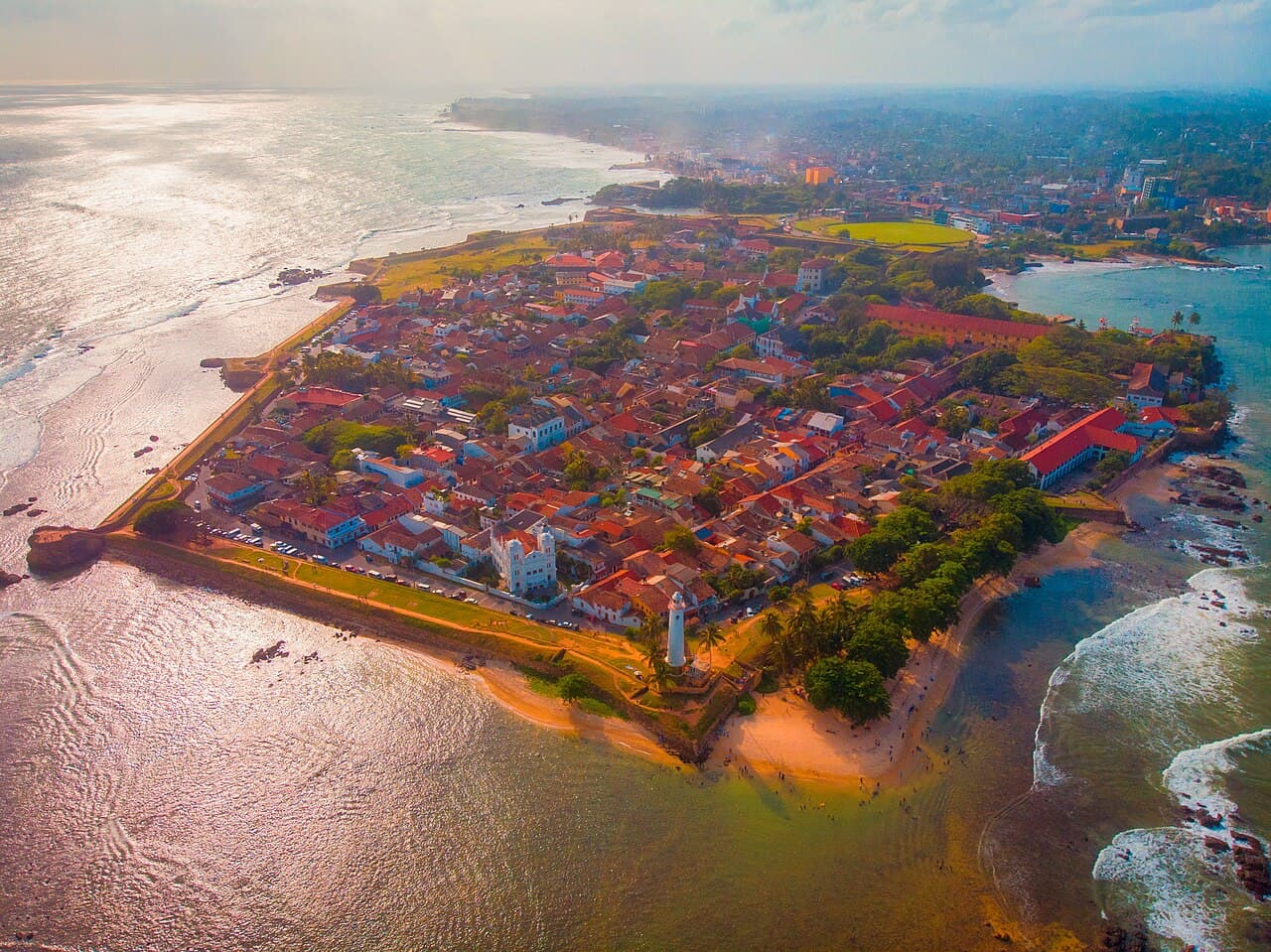
Galle
A UNESCO World Heritage fort city on the southwestern coast with cobblestone streets, colonial Dutch architecture, boutique hotels, and world-class surf beaches nearby.

Sigiriya
An ancient rock fortress rising 200 meters above the jungle, with frescoes, water gardens, and panoramic views. One of Sri Lanka's most iconic archaeological sites.

Negombo
A beach town near the airport with a Dutch canal, colorful fishing boats, and a lively fish market. A convenient first or last stop when flying in or out of Colombo.
Ella
A small hill country town perched on the edge of tea plantations with the famous Nine Arches Bridge, Little Adam's Peak, and stunning valley views.
Entry Requirements
Most visitors need an Electronic Travel Authorization (ETA) to enter Sri Lanka, which can be obtained online before travel. The process is straightforward and usually approved within 24 hours. Some nationalities may receive visa-free entry for short stays.
Entry Requirements by Nationality
| Nationality | Visa Required | Max Stay | Notes |
|---|---|---|---|
| US Citizens | Yes | 30 days (ETA) | Apply online for ETA ($50) before travel. Can be extended up to 90 days at the Department of Immigration in Colombo. |
| UK Citizens | Yes | 30 days (ETA) | Online ETA application. Passport must be valid for at least 6 months. Extensions available in-country. |
| Indian Citizens | Yes | 30 days (ETA) | ETA available online or free visa on arrival for short visits (policy subject to change — verify before travel). |
| Canadian Citizens | Yes | 30 days (ETA) | Standard ETA process. Proof of return ticket and accommodation may be requested. |
| Australian Citizens | Yes | 30 days (ETA) | ETA required. Same rules apply as other Western nationals. Can extend up to 90 days in-country. |
| EU Citizens | Yes | 30 days (ETA) | ETA required for all EU nationalities. Apply at least 48 hours before travel for guaranteed processing. |
Visa-Free Entry
Visa on Arrival
Tips
- •Apply for the ETA online at least 48 hours before departure — approval is usually fast but can take longer during peak periods
- •The ETA costs $50 for most nationalities and allows a 30-day stay with double entry
- •Extensions up to 90 days can be arranged at the Department of Immigration in Colombo for an additional fee
- •Your passport must be valid for at least 6 months from the date of arrival
- •Customs allows up to 1.5 liters of alcohol and 2 cartons of cigarettes duty-free
Shopping
Colombo blends chaotic street markets with modern malls and artisan boutiques. Sri Lanka is famous for its gems, tea, spices, and handloom textiles. The best shopping experiences range from Pettah's sensory overload to refined boutiques in Colpetty.
Pettah Market
traditional bazaarA massive, sprawling market district where each street specializes in different goods — textiles on one, electronics on another, spices on the next. Chaotic, loud, and utterly authentic.
Known for: Bulk spices, textiles, gold jewelry, household goods, and a sense of organized chaos
Dutch Hospital Shopping Precinct
upscale dining & retailA beautifully restored 17th-century Dutch colonial hospital building now housing upscale restaurants, boutiques, and gem shops in a courtyard setting.
Known for: Sri Lankan gem jewelry, designer clothing, upscale dining
Odel & Alexandra Place
department storeSri Lanka's premier department store chain with multiple floors of local and international fashion, homeware, and souvenirs. The flagship store in Colpetty is the largest.
Known for: Sri Lankan fashion designers, batik clothing, curated souvenir selection
Barefoot Store
artisan boutiqueAn iconic Colombo institution selling vibrant handwoven textiles, homeware, and clothing designed by Barbara Sansoni. The attached garden cafe is a cultural hub.
Known for: Handwoven fabrics, unique homeware, contemporary Sri Lankan crafts
🎁 Unique Souvenirs to Look For
- •Ceylon tea — look for single-estate varieties from Nuwara Eliya, Uva, or Dimbula regions
- •Sri Lankan blue sapphires and other gems (buy only from certified dealers)
- •Handwoven batik fabrics and clothing
- •Cinnamon (Sri Lanka produces the world's finest true cinnamon) and spice sets
- •Handmade wooden masks from the Ambalangoda tradition
- •Coconut shell crafts and lacquerware
- •Ayurvedic products — balms, oils, and herbal teas
- •Elephant-themed crafts supporting wildlife conservation
Language & Phrases
Sinhala and Tamil are the official languages of Sri Lanka. English is widely spoken in Colombo, especially in tourist areas, hotels, and among younger generations. A few Sinhala phrases will earn warm smiles.
| English | Translation | Pronunciation |
|---|---|---|
| Hello | Ayubowan | ah-yu-BOH-wan |
| Thank you | Istuti | is-TOO-tee |
| Yes / No | Ow / Naha | oh / NAH-hah |
| Please | Karunakara | kah-roo-NAH-kah-rah |
| How much? | Kiyada? | kee-YAH-dah? |
| Too expensive | Hari ganan | HAH-ree GAH-nan |
| Delicious | Rasai | RAH-sai |
| Water | Watura | WAH-too-rah |
| Where is...? | Koheda...? | koh-HEH-dah...? |
| I don't understand | Mata therenawa naha | MAH-tah teh-reh-NAH-wah NAH-hah |
| Excuse me / Sorry | Samavenna | sah-mah-VEN-nah |
| Good / Fine | Hondai | HON-dai |
If you like Colombo, you'll love…
4 cities with a similar vibe, outside of the same country.

Morocco · OVR 70
reliable eating scene · reasonable value

Mozambique · OVR 65
reliable eating scene · reliable wifi, decent English

Mongolia · OVR 68
workable for remote days · reasonable value

Morocco · OVR 67
strong food culture · workable for remote days