Compare 576 Travel Destinations
62 of 576 guides match

Antigua
Antigua and Barbuda
The larger of the two islands that make up Antigua and Barbuda, a 108-square-mile volcanic-and-coral landmass in the Leeward Caribbean with a much-quoted boast of 365 beaches, one for every day of the year. The southwest coast holds Nelson's Dockyard at English Harbour, the only continuously-running Georgian-era dockyard on Earth and a UNESCO World Heritage Site. Sunday evenings draw the island to Shirley Heights for steel-band-and-barbecue sunsets over the same harbour. The Dickenson Bay strip on the northwest coast anchors the all-inclusive resort cluster, and a 90-minute ferry north reaches Barbuda's pink-sand Princess Diana Beach.

Aruba
Aruba
A 19-mile Dutch Caribbean island 15 miles north of Venezuela — outside the hurricane belt, dry and breezy year-round, and reliably sunny (the local saying is “sun, sand, and sea every day”). Eagle Beach’s photogenic divi-divi trees, Palm Beach’s high-rise resort strip, the otherworldly Arikok National Park (cactus-and-iguana desert covering 18% of the island), the Natural Pool tucked in volcanic rocks, and the colonial Dutch capital of Oranjestad with its pastel architecture. US dollars accepted everywhere; English universally spoken; US Pre-Clearance at the airport.

Azores
Portugal
Portugal's mid-Atlantic volcanic archipelago offers crater lakes, whale watching, hot springs, hydrangea-lined roads, and Europe's best-kept secret for nature lovers.
Bali
Indonesia
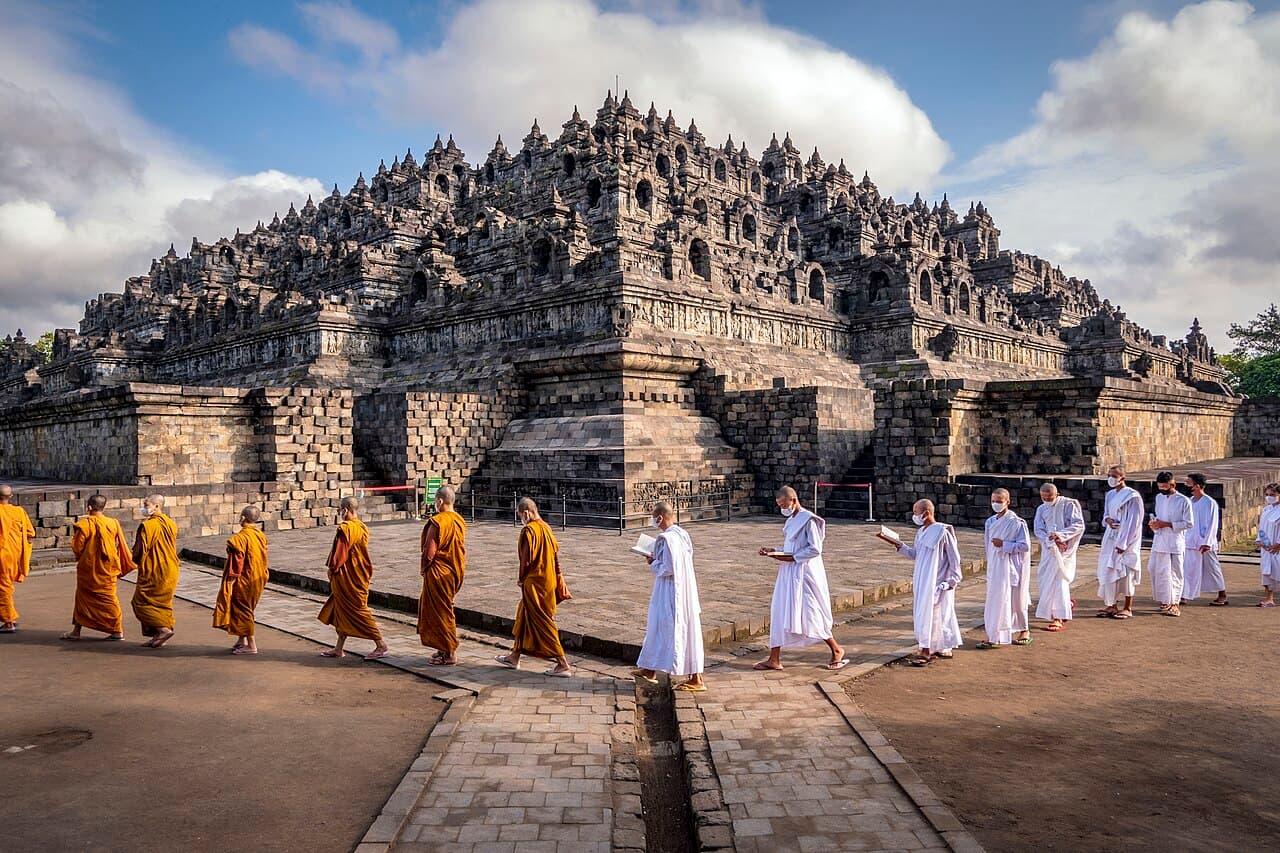
Bali is Indonesia's most famous island — a tropical paradise of terraced rice paddies, ancient Hindu temples, volcanic peaks, and world-class surf breaks. From the spiritual heart of Ubud to the beach clubs of Seminyak and the cliffside temples of Uluwatu, Bali offers something for every type of traveler.

Barbados
Barbados
The easternmost Caribbean island — a Commonwealth nation that became a republic in 2021 and the birthplace of rum (Mount Gay, 1703, is the world's oldest still-running distillery). UNESCO Bridgetown and its Garrison preserve the British military layout of the 17th–19th centuries; the rugged east coast (Bathsheba's mushroom rocks) is for surfers; the calmer Caribbean west (Holetown, Speightstown) for swimmers. Crop Over (July–August) is the largest carnival outside Trinidad. Flying fish is the national dish, served with cou-cou. The dry season runs December–May.

Batam
Indonesia
An Indonesian island in the Riau archipelago lying 20 km southeast of Singapore, close enough that Sindo Ferry and Batam Fast catamarans cross from HarbourFront Centre and Tanah Merah in 45 to 60 minutes for about SGD 38 round-trip. Batam is the duty-free weekend escape Singaporeans use for cheap seafood at Top 100 and Welcome Restaurant, beach overnights at Montigo Resorts Nongsa, Turi Beach Resort and Nongsa Point Marina, golf at Palm Springs and Tamarin Santana, and the reflexology and shopping circuit of Nagoya Hill. The centre is industrial rather than pretty, but it is the most affordable island getaway in the region — and the only one with no flights from Singapore because the ferry is simply faster.

Big Island
United States
Hawaii Island is bigger than all the other Hawaiian islands combined and is still actively growing — Kilauea is one of the world’s most active volcanoes (currently erupting as of April 2026) and Mauna Kea’s 4,205-m summit hosts 13 international observatories under what astronomers consider Earth’s clearest skies. Eight of the world’s 13 climate zones exist on this single island: the Hilo side gets 3,400 mm of tropical rainforest rain a year while the Kona side stays dry desert at 500 mm; Mauna Kea’s summit has alpine conditions year-round and snows in winter. Add Punaluʻu black-sand beach, Kona coffee country, the green sea turtles at Puʻuhonua o Hōnaunau, and the manta-ray night snorkel off Keauhou Bay. The most geologically dramatic of the Hawaiian islands.
Bocas del Toro
Panama
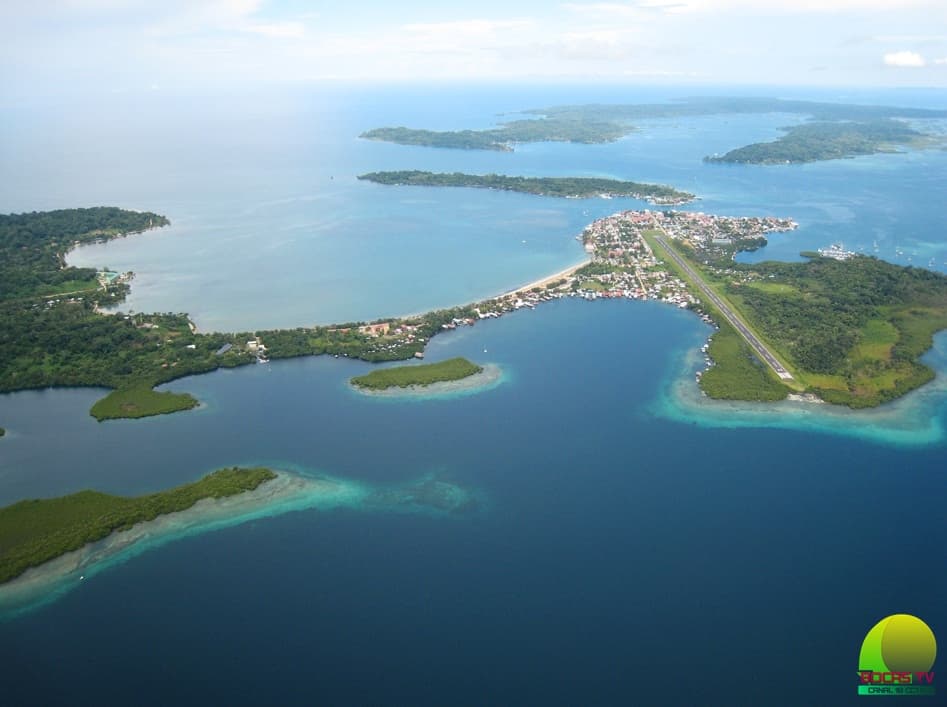
An archipelago of nine main islands and 200-something islets in Panama's far northwest Caribbean — a cheaper, scruffier, more laid-back answer to Costa Rica or San Blas. Isla Colón holds the main town (Bocas Town); Bastimentos has Red Frog and Wizard beaches; Isla Carenero is a 5-minute boat ride for sunset bars over the water. Snorkel the cays, see strawberry poison-dart frogs, and accept that everything runs on island time and most floors are wooden boards over the sea.

Bohol
Philippines
A tear-drop island in the Central Visayas, two hours by fast ferry from Cebu and home to the most famous landform in the Philippines: the Chocolate Hills, 1,776 conical limestone mounds spread over 50 sq km of Carmen and Sagbayan that turn from green to brown in the February-to-May dry months. The Loboc River cruise glides past nipa-palm villages on a floating buffet boat, the Philippine Tarsier Sanctuary in Corella protects the 13cm saucer-eyed primate, and the resort island of Panglao — connected by causeway to the main island — strings Alona Beach with dive shops running daily trips to Balicasag's wall and Pamilacan's whale sharks. A 1-hour Cebu Pacific or PAL flight from Manila lands at Bohol-Panglao (TAG).

Bora Bora
French Polynesia
The island that invented the overwater bungalow (Hotel Bora Bora, 1967) — a volcanic peak (Mt Otemanu, 727m) ringed by a turquoise lagoon and a barrier reef 50m offshore. Access is Tahiti (PPT) international then a 50-minute Air Tahiti hop to BOB. Honeymoon-grade resorts (St. Regis, Four Seasons, Intercontinental Thalasso) dominate the main atoll; Matira Beach is the public gem. May–October dry season is peak; November–April is cyclone risk. XPF (CFP Franc) is the currency, pegged to the Euro.

Bornholm
Denmark
Denmark's outlier — a 588 km granite island in the middle of the Baltic, closer to Sweden and Poland than to Copenhagen. Locals call it Solskinsoen (sunshine island) for clocking the country's highest annual sunshine totals, and it shows in the smoked herring smokehouses of Svaneke, the wooden cottage colonies of Gudhjem, and the white-sand beaches at Dueodde and Sandvig. Four medieval round churches built as Knights-Templar fortresses ring the interior, with Osterlars the largest and oldest. The Hammershus castle ruin on the northern cliffs is the largest medieval fortress complex in northern Europe. Reach it from Copenhagen by 3-hour combined train and ferry through Ystad in Sweden, or 35-minute direct flight.

Capri
Italy
A 4-square-mile limestone island in the Bay of Naples — the Faraglioni sea stacks rising 100m straight from the Mediterranean, the eerie blue glow of the Blue Grotto where Tiberius bathed, the open chairlift to Mt Solaro’s 589m summit, the Piazzetta’s aperitivo theatre, and Villa San Michele’s cliff-edge Roman columns. Where Tiberius ruled the Roman Empire from AD 27–37, where Capri Pants were invented, and where 10,000 day-trippers pour off Naples ferries by 11 AM — overnight to see the island after they leave.
.jpg%3Fwidth%3D1280&w=1600&q=75)
Coron
Philippines
The northern tip of Palawan and the world capital of recreational wreck diving — twelve Imperial Japanese Navy vessels sunk by US carrier planes on 24 September 1944 lie between 10 and 40 metres in Coron Bay, accessible to anyone with an open-water certification. Above the waterline, the Tagbanwa-owned island of Coron itself walls in jade-water lagoons fringed by 200-metre limestone karsts: Kayangan Lake (often called the cleanest lake in the Philippines), Twin Lagoon's swim-through opening, the 38-metre fresh-and-saltwater pool of Barracuda Lake. Reach: a 1-hour AirSwift, Cebgo or Philippines AirAsia flight from Manila MNL into Busuanga (USU).
.jpg%3Fwidth%3D1280&w=1600&q=75)
Cozumel
Mexico
A flat 478 sq km Caribbean island east of Playa del Carmen, reached in 35 minutes by passenger ferry. The reason to come is underwater: Cozumel sits on the Mesoamerican Reef, the second-largest barrier reef system in the world, with Palancar, Santa Rosa Wall and Punta Sur drift dives consistently ranked among the planet's best. San Miguel is the only real town, a low-rise grid built around a cruise terminal that sees regular Carnival and Royal Caribbean stops. Inland, Chankanaab Park combines a Mayan ruin with snorkelling lagoons; the rest of the island is mostly mangroves, beach clubs and one perimeter road.

Crete
Greece
Greece's largest island is a world unto itself — the Palace of Knossos preserves the earliest advanced civilization in Europe (Minoan, 2700–1450 BCE); the Heraklion Archaeological Museum holds the finest Minoan collection on earth; the Samaria Gorge is a 16 km hike through Europe's longest canyon. In the west: Chania's Venetian harbor, Elafonissi's pink-sand beach, Balos Lagoon. A car is essential — the island rewards those who leave the package-resort coast.

Curaçao
Curaçao
A 444 km² Dutch Caribbean island just off the coast of Venezuela — the largest of the ABC islands (Aruba-Bonaire-Curaçao), defined by the pastel Dutch colonial Handelskade row of UNESCO Willemstad and the Queen Emma Pontoon Bridge that swings open 30+ times per day to let cargo ships pass. Outside the hurricane belt, with 35+ beaches packed into a 60 km long coastline, the world's only authentic Blue Curaçao distillery, the second-oldest synagogue in the Americas, and Christoffel National Park's desert moonscape. Far less developed than Aruba but more architecturally distinctive; Dutch tilt with universal English.

Easter Island
Chile
Rapa Nui — one of the most remote inhabited islands on Earth, 3,500 km from continental Chile. Home to nearly 1,000 moai stone statues including the 15-moai row at Ahu Tongariki, the quarry at Rano Raraku, the sea-facing Ahu Akivi, and the Birdman cult ceremonial village at Orongo. UNESCO Rapa Nui National Park covers 40% of the island. Sole air link is LATAM from Santiago (5.5 hr); the island's only town is Hanga Roa (~8,000 people). National park pass ~$80 USD.
_(cropped2).jpg%3Fwidth%3D1280&w=1600&q=75)
Fernando de Noronha
Brazil
A 21-island UNESCO archipelago of volcanic origin lying 350 km off the northeast coast of Brazil, reached only by a one-hour flight from Recife or Natal. The federal government caps the population on the main island at 470 visitors at any one time and charges a daily environmental preservation fee plus a national park entry, which keeps the place close to pristine. Praia do Sancho, accessed by a steep ladder down a cliff face, is consistently rated the world's best beach. Baia dos Golfinhos hosts the largest known resident colony of spinner dolphins on Earth, who arrive every dawn to rest after night feeding.
Fiji
Fiji
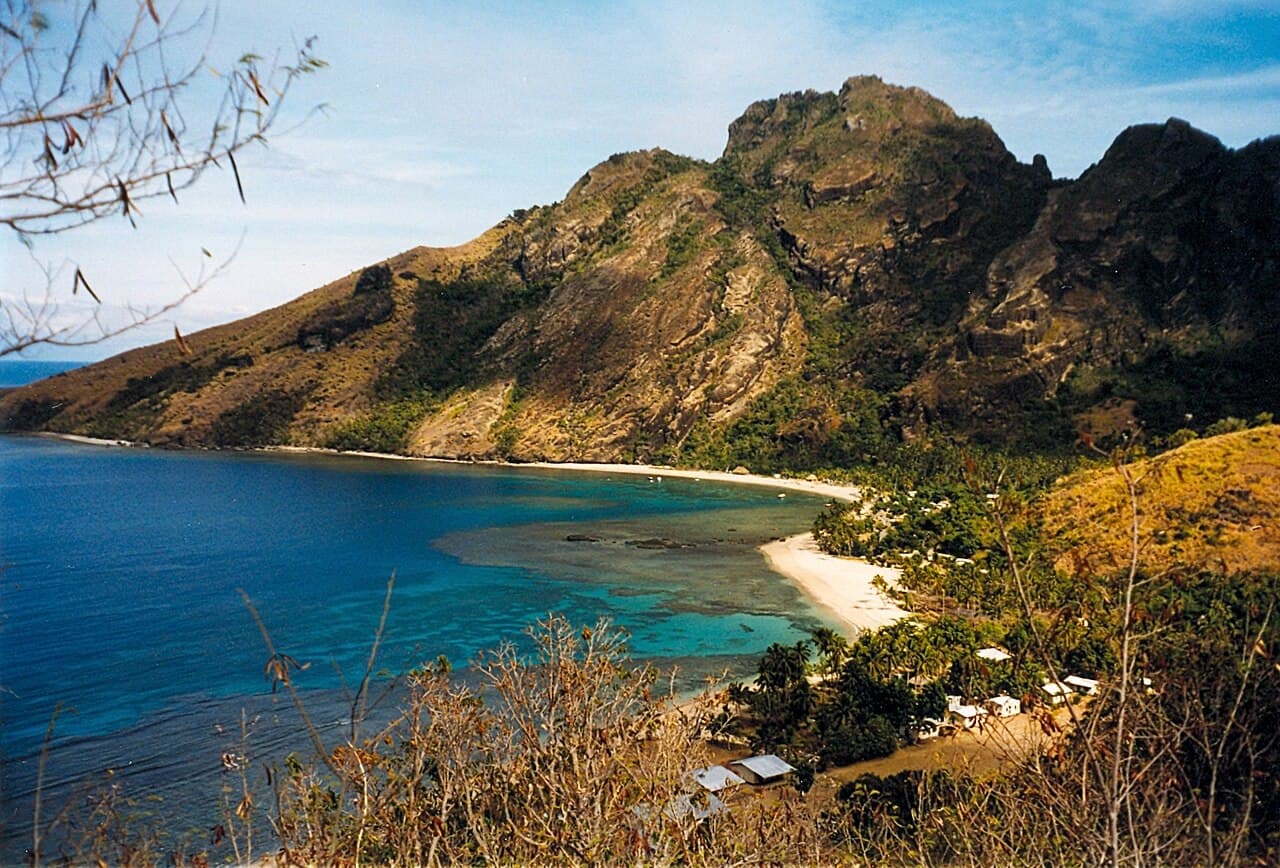
An archipelago of 333 islands where the first "Bula!" hits like a physical thing — warm, oceanic, genuine. The Mamanuca Islands are 30 minutes by speedboat from Nadi; the Yasawas are a 4-hour catamaran ride with the Blue Lagoon and manta ray encounters at Drawaqa Passage. Taveuni's Rainbow Reef is rated top-10 globally for diving. The kava ceremony, the Garden of the Sleeping Giant, Sabeto's mud pools, and a culture that invented the overwater resort experience.

Flores
Indonesia
A long volcanic spine of an island in Indonesia's Lesser Sundas chain east of Bali, anchored by the harbour town of Labuan Bajo where every Komodo National Park live-aboard and day boat departs. Inland, the 1,639-metre Kelimutu volcano holds three crater lakes that shift colour independently — turquoise, olive, black — and the cool highland villages of Bena and Wae Rebo preserve thatched conical houses and Ngada megalithic ancestor stones. Days run from dawn dragon walks on Rinca to swim stops at Pink Beach, manta cleaning stations at Manta Point, and the 5km drone-friendly ridge of Padar Island. Christian-majority and overwhelmingly local in feel.

Florianópolis
Brazil
A 54-km-long island off the southern Brazilian coast with 42 distinct beaches — broad surf beaches at Mole and Joaquina, calm family bay waters at Jurerê, the bohemian Lagoa da Conceição lagoon at the centre, and the wild undeveloped south where Lagoinha do Leste requires a 2.5-hour rainforest hike. Florianópolis (locally "Floripa") is consistently ranked the highest quality-of-life Brazilian capital, settled by Azorean Portuguese in 1748 with fishing villages still preserving Azorean lacework, oyster farms (90% of Brazilian oysters come from this bay), and the lilting "Manezinho" accent. The 1898 Mercado Público's upstairs Box 32 oyster bar is the most beloved local institution. Public transit is genuinely mediocre — rent a car or rely on Uber. Beach scene is world-class; peak summer (December-February) is crowded and expensive.

Galápagos Islands
Ecuador
Darwin's living laboratory — volcanic islands where giant tortoises, marine iguanas, blue-footed boobies, and sea lions exist without fear of humans. A bucket-list wildlife destination.
Gili Islands
Indonesia
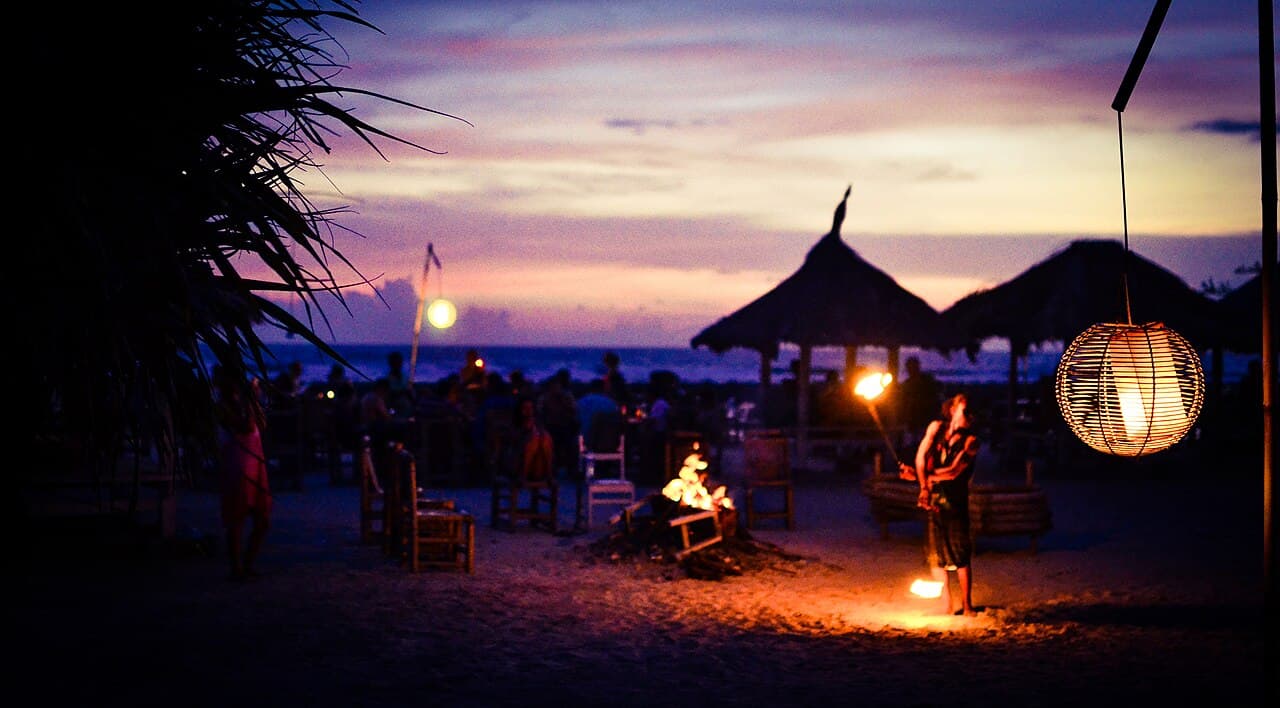
Three tiny islands off Lombok's northwest — Gili Trawangan (party), Gili Meno (honeymoon), and Gili Air (balance). Zero motorized vehicles: walk, bike, or pony cart. Turtles guaranteed on the snorkel, diving world-class, Bintang at sunset swings. 2-hour fast boat from Bali Padangbai or 20-minute public ferry from Lombok Bangsal.

Hilton Head
United States
A 12-mile crescent-shaped Lowcountry barrier island off the southern coast of South Carolina, master-planned in the 1950s by developer Charles Fraser around the principle that buildings should never overshadow the trees. The result is a quietly affluent island of 33-plus golf courses (host of the RBC Heritage PGA tournament every April at Harbour Town Links, played around the candy-striped 1969 lighthouse on the 18th hole), 60 miles of paved bike paths threading the maritime forest, and the 605-acre Sea Pines Forest Preserve. Charleston is two hours north on US-17; Savannah is 45 minutes south across the Talmadge Bridge.