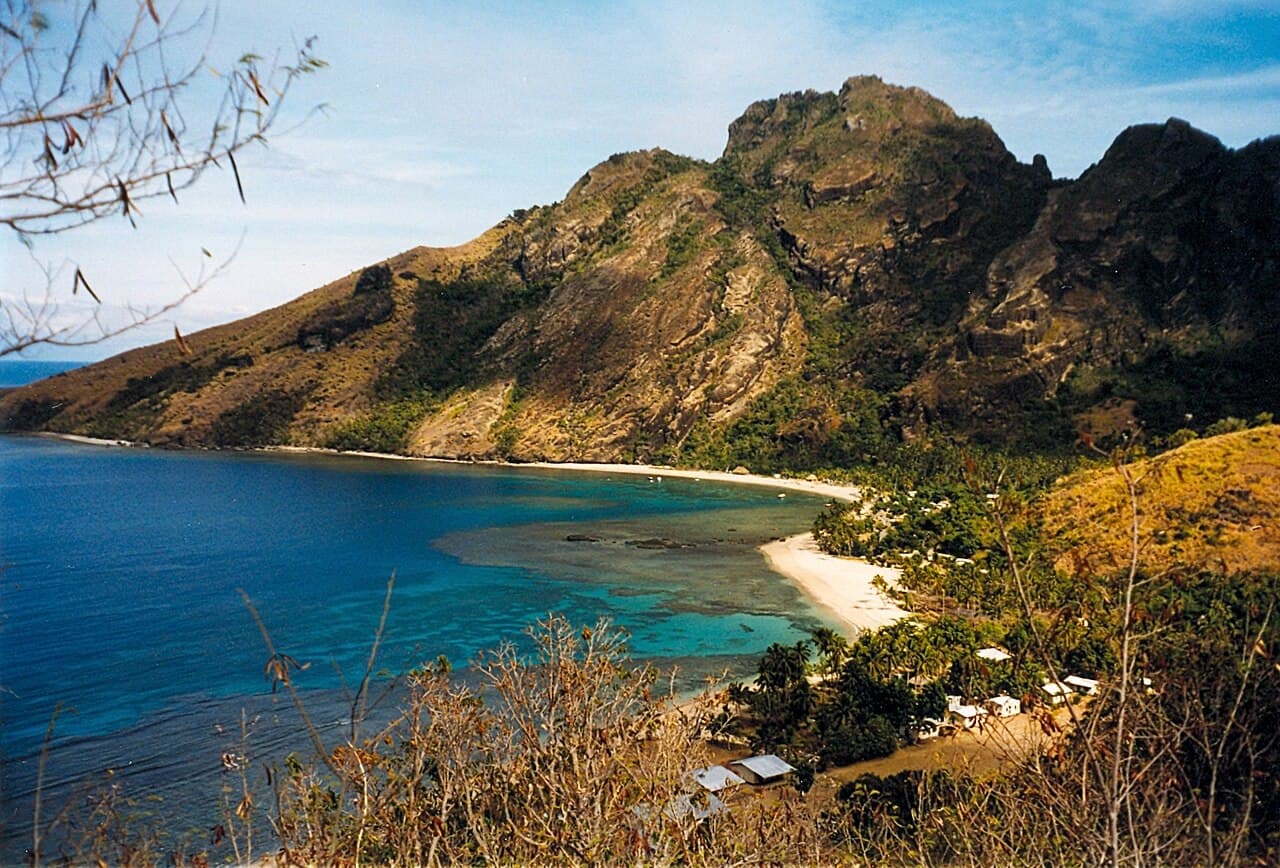
Fiji
THE QUICK VERDICT
By Anthony · Updated April 2026
Choose Fiji if you want South Pacific island paradise — Yasawa island-hopping, Rainbow Reef diving, Mamanuca overwater resorts, kava ceremonies, and Bula! warmth.
- Best for
- Yasawa island-hopping, Rainbow Reef diving, Mamanuca overwater stays, kava ceremonies
- Best window
- May–Oct
- Budget anchor
- $200/day mid-range
- Worth a look
- the Bula Pass lets you island-hop on the Yasawa Flyer for about $400 over 7-21 days
An archipelago of 333 islands where the first "Bula!" hits like a physical thing — warm, oceanic, genuine. The Mamanuca Islands are 30 minutes by speedboat from Nadi; the Yasawas are a 4-hour catamaran ride with the Blue Lagoon and manta ray encounters at Drawaqa Passage. Taveuni's Rainbow Reef is rated top-10 globally for diving. The kava ceremony, the Garden of the Sleeping Giant, Sabeto's mud pools, and a culture that invented the overwater resort experience.
The two links below are affiliate links — MapSorted earns a small commission if you book through them, at no extra cost to you. How this works.
Tours & Experiences
Bookable tours, activities, and day trips in Fiji
Where to Stay
Compare hotels and rentals in Fiji
📍 Points of Interest
Nadi Town Market· 67 km W
Municipal market with tropical produce, tapa cloth, woven goods, and kava sets — best at 07:00–10:00
Garden of the Sleeping Giant· 69 km W
50-acre orchid garden established by actor Raymond Burr with 2,000+ orchid varieties at the base of the Nausori Highlands
Sigatoka Sand Dunes National Park· 72 km SW
Fiji's first national park — 60m dunes with 3,000-year-old Lapita pottery finds and sea turtle nesting beaches
Coral Coast· 53 km SW
Southwest Viti Levu beach resort zone — accessible reefs, bull shark diving at Pacific Harbour, and adventure sports
Mamanuca Islands· 102 km W
Closest resort island group — turquoise lagoons, snorkelling reefs, day trips from Port Denarau in 20–45 min by speedboat
Yasawa Islands· 114 km NW
Remote volcanic chain — Blue Lagoon, Sawa-i-Lau limestone caves, manta ray encounters at Drawaqa Passage, village stays
★ Local Picks
Sabeto Hot Springs & Mud Pools· 72 km W
Geothermal mud pools for body application followed by natural hot and cold spring rinses — unique and inexpensive
At a Glance
- Pop.
- 930K
- Timezone
- Fiji
- Dial
- +679
- Emergency
- 911 / 917
Fiji is an archipelago of 333 islands — only 110 are inhabited, and the vast majority of tourists stay on the two largest (Viti Levu and Vanua Levu) while the outer islands (Yasawa, Mamanuca, Taveuni, Kadavu) require ferries or small planes to reach. The country spans an ocean area larger than France
The International Date Line originally ran directly through the Fiji archipelago, splitting the country between two calendar days. In 1879, the Fijian government moved the line east to place all of Fiji on the same day — making Fiji one of the first countries to begin each new day and each new year
Fiji Water comes from the Yaqara artesian aquifer on Viti Levu's north coast — the bottling plant is at Ba, 80 km from Nadi. The aquifer has been filtering through volcanic rock for 450 years before reaching the surface. Fiji Water is owned by an American company (Roll Global/Wonderful Company); the Fijian government takes a royalty per bottle
Taveuni Island's Rainbow Reef (the Great White Wall and the Yellow Tunnel) is ranked among the top 10 dive sites in the world — a soft coral wall of 1,000+ fish species in visibility that regularly exceeds 30 metres. Getting there requires a 1-hour domestic flight and a boat transfer, but divers rank it alongside the Great Barrier Reef
The sevusevu (kava ceremony) is the formal protocol for entering a Fijian village as a guest — you bring a bundle of kava root (yaqona), present it to the chief or village head, clap in the traditional pattern, and drink a coconut shell of the mildly narcotic grey liquid. Skipping the ceremony in a traditional village is a serious breach of respect
"Bula!" is the Fijian greeting — it literally means "life" and is used as hello, welcome, cheers, and general affirmation. You will hear it hundreds of times a day in Fiji. Responding with "Bula vinaka!" (life and good) is the correct warm reply
Top Sights
Mamanuca Islands
🌿The closest island group to Nadi (20–45 minutes by speedboat), with the most accessible resort islands — Malolo, Matamanoa, Tokoriki, Castaway, Mana. The sea here is calm, shallow, and the turquoise colour associated with Fiji's postcard image. The Mamanucas are where the reality TV show Survivor has filmed multiple times. Day trips from Nadi to Mamanuca beaches and snorkel reefs from FJD 120–180; resort stays from FJD 400/night.
Yasawa Islands
🌿The more remote, more beautiful volcanic island chain stretching 80 km northwest of Nadi — reachable by the Yasawa Flyer catamaran (4–6 hr to the far islands) or by small plane (30 min). The Blue Lagoon (near Naviti Island), Sawa-i-Lau limestone caves, Barefoot Manta Island resort (adjacent to a certified manta ray cleaning station), and the village-stay options make the Yasawas the standout Fijian experience. Backpacker budget lodges from FJD 80/night; mid-range resorts from FJD 300/night.
Coral Coast
🌿The southwest coast of Viti Levu between Sigatoka and Pacific Harbour is the "Coral Coast" — the island's most accessible beach zone from Nadi (1.5–2 hr drive). The Shangri-La Yanuca, Warwick Fiji, and Outrigger Fiji all sit on the Coral Coast with direct reef access. The area around Pacific Harbour is the adventure sports hub: shark diving with bull sharks, white-water rafting on the Navua River, and ziplining.
Garden of the Sleeping Giant
🌿Raymond Burr (Perry Mason actor) established this orchid garden in 1977 on 50 acres of rainforest at the base of the Sleeping Giant mountain range north of Nadi. Over 2,000 orchid varieties are on display, including rare native Fijian species and Burr's personal collection of over 5,000 hybrid orchids. Best in the morning when flowers are brightest; the guided walk takes 45 minutes. FJD 15 entry.
Sabeto Hot Springs & Mud Pools
📌Natural geothermal mud pools and hot springs at the base of the Nausori Highlands, 30 minutes from Nadi. You apply the mineral mud to your skin, let it dry in the sun, then rinse in the adjacent hot and cold springs — the experience is surreal, deeply relaxing, and unlike anything in the standard resort itinerary. FJD 30 per person, no booking required. Combine with the Garden of the Sleeping Giant.
Sigatoka Sand Dunes National Park
🌿Fiji's first National Park — 650 hectares of sand dunes up to 60 metres high rising from the mouth of the Sigatoka River, the longest river in Fiji. Archaeological excavations have found Lapita pottery (3,000 years old) and pre-contact village sites in the dunes. Walk the rim trail at sunrise for the best light and sea views. Also an important sea turtle nesting site October–March. FJD 10 entry from the visitor centre.
Nadi Town Market
🏪The municipal market in Nadi town (not the resort strip) is the most vivid local experience within reach of the airport. Women in sulus sell taro, cassava, rourou (taro leaves), Indian-Fijian curries, tropical fruits, and bundles of kava root from wooden stalls. The upper floor has clothing and textile sellers. Go in the morning (07:00–10:00) when the market is freshest and the vendors are willing to talk.
Climate & Best Time to Go
Fiji has a tropical oceanic climate — warm and humid year-round with a distinct wet season (November–April) and dry season (May–October). The wet season brings heavy rain and cyclone risk (especially January–March); the dry season brings the reliably sunny, lower-humidity weather that most tourists seek. Temperatures are stable (26–32°C year-round) and sea temperature barely varies (26–29°C).
Dry Season (Peak)
May - October72 to 82°F
22 to 28°C
The best time to visit. Low humidity, predominantly sunny days, calm seas for island transfers and water sports. July–August are the most popular months; also the coolest. Underwater visibility is at its best (30+ metres on outer reefs). Book resort accommodation 3–6 months ahead for school holiday periods.
Shoulder (Late Dry / Early Wet)
October - November75 to 88°F
24 to 31°C
October is excellent — the dry season winds down with warm temperatures and reduced crowds. November starts the wet season and brings more rain, but the humpback whales pass through Fiji's waters on their annual migration (July–October is the window, tapering in November).
Wet Season
November - April79 to 90°F
26 to 32°C
Hot, humid, and wet — daily rain in short intense bursts rather than all-day drizzle. January–March carries real cyclone risk (TC Winston in 2016 was Category 5 and caused widespread destruction; TCs form and intensify quickly in this region). Resort prices are 30–40% lower in wet season. If you must come in the wet, keep travel flexible and insurance current.
Cyclone Risk Period
January - March81 to 91°F
27 to 33°C
The highest cyclone risk period. Not every year has a direct hit — but Category 4–5 cyclones do form in the Coral Sea and Fiji has been directly hit multiple times in recent decades. If you travel in this period, choose resort accommodation over island bures, get comprehensive travel insurance with cyclone cancellation, and monitor the Fiji Meteorological Service.
Best Time to Visit
May–October (dry season). The reliably sunny, lower-humidity dry season is when Fiji operates at its best — clear visibility for diving, calm seas for island transfers, and the lowest cyclone risk. July–August is peak season with the highest prices and school-holiday crowds; May–June and September–October are the sweet spots.
Dry Season — Sweet Spot (May–June, September–October)
Crowds: Low to moderateThe optimal combination: dry season weather without peak school-holiday prices or crowds. May and September offer the best value for quality. Diving visibility peaks. Humpback whales pass through Fiji's waters July–October (Tonga is better for this, but Fiji operators do have sightings).
Pros
- + Best weather
- + No cyclone risk
- + Lower prices than July–August
- + Best diving visibility
- + Whale sightings possible (Sept–Oct)
Cons
- − Some resorts increase prices before/after school holidays
- − July–August peak has slightly more activities/entertainment on offer
Peak Dry Season (July–August)
Crowds: HighSchool holidays for Australia, New Zealand, and Europe drive the highest prices and fullest resorts of the year. Weather is excellent (coolest months, 22–26°C). Book 6+ months ahead for any top-tier resort. The advantage is the most activities, entertainment, and staff on offer.
Pros
- + Coolest temperatures
- + Full resort programming
- + Peak diving season
- + Long daylight hours
Cons
- − Highest prices of the year
- − Resorts fully booked
- − More families and children
Shoulder — Early Wet Season (November)
Crowds: ModerateNovember is the transition month — temperatures rise, humidity increases, and rain becomes more frequent but the seas remain generally calm and prices begin to fall. A reasonable compromise for budget travellers.
Pros
- + Lower prices than dry season
- + Warm and green
- + Good surfing season starts
Cons
- − Increasing humidity
- − Rain more frequent
- − Cyclone risk starts
Wet Season / Cyclone Season (December–April)
Crowds: LowThe risky period. Heavy rain most days (intense bursts), high humidity (30°C+), and genuine cyclone risk January–March. Prices are 30–40% lower. Most years Fiji is not directly hit by a major cyclone, but TC Winston (2016) killed 44 people and destroyed hundreds of homes and resorts. If you come, choose robust concrete resort accommodation, get comprehensive insurance, and stay flexible.
Pros
- + 30–40% cheaper resorts
- + Fewer tourists
- + Vibrant tropical green
- + Good surf on northern shores
Cons
- − Cyclone risk (particularly Jan–March)
- − Daily heavy rain
- − Some small islands inaccessible
- − Jellyfish season starts
🎉 Festivals & Events
Fiji Day / Independence Day
October 10Fiji's independence from Britain (1970) celebrated with parades, traditional ceremonies, and cultural performances across the country. Village celebrations are the most authentic — ask your resort to connect you with a local village event.
Diwali
October/November (varies)Diwali is widely celebrated in Fiji given its large Indo-Fijian population (~38% of the country) — lights, sweets, fireworks, and Hindu temple ceremonies. The Nadi and Suva celebrations are the most visible.
Hibiscus Festival
AugustSuva's week-long annual festival with cultural performances, beauty pageant, food stalls, and entertainment. One of the largest community festivals in the Pacific.
Off the Beaten Path
Taki's Bar, Nadi Town — Off the Tourist Strip
A simple tin-roofed bar on the edge of Nadi town where local Fijian men and Indo-Fijian workers drink Fiji Bitter and watch rugby. Not a tourist destination — which is exactly why it's worth visiting. Buy a round for the table next to you, learn to clap the tanoa (kava bowl salute), and have a conversation with a Fijian who doesn't work in tourism. A large Fiji Bitter costs FJD 3.
Resort Fiji is beautiful but insulated. Taki's is what Fijians do on a Tuesday evening — and the spontaneous hospitality directed at the one tourist who wanders in is often the story people bring home from Fiji.
Levuka — Fiji's First Colonial Capital
The original capital of Fiji (before Suva), built in the 1820s on Ovalau Island and now a UNESCO World Heritage Site. The entire town is preserved in its colonial-era form — a single waterfront street of 19th-century wooden buildings backed immediately by a jungle cliff. Getting there requires a ferry from Natovi Landing (3 hr from Suva) or a domestic flight. Fewer than 100 tourists visit per week.
Levuka is on UNESCO's World Heritage list as an exceptional example of 19th-century colonial Pacific town planning — and almost no one goes. The preserved wooden churches, town hall, and Morris Headstrom store (1868) are completely intact.
Navala Village — Traditional Fijian Architecture
The only remaining intact traditional Fijian village in which all houses are still built in the traditional bure style — walls of reeds and bamboo, thatched pandanus roofs, no concrete. In the highlands 45 km from Ba (north of Nadi). Village visits require going through a licensed guide and following the sevusevu protocol; bring kava root. The setting — terraced hillside, thatched rooftops, views across the Ba River valley — is extraordinary.
Every other village in Fiji has been partly or fully rebuilt in concrete and corrugated iron. Navala is the sole exception — a conscious decision by the villagers to maintain traditional architecture. The chief has refused development offers for decades.
Barefoot Manta Island (Drawaqa)
Between Naviti and Drawaqa islands in the Yasawas, a certified manta ray cleaning station sits in shallow water that mantas visit year-round. Barefoot Manta Island resort operates directly on the passage. Non-guests can arrive on the Yasawa Flyer and day-snorkel the passage for a fee. The mantas — 3-metre wingspans banking through 4-metre visibility — often breach alongside swimmers without awareness that a human is nearby.
The manta ray season here is year-round (not seasonal like most sites) due to the cleaning station dynamic. The mantas are not being fed — they return because cleaner wrasse remove parasites. It's the most consistent manta encounter in Fiji.
Safety Breakdown
Moderate
out of 100
Fiji is generally safe for tourists within resort areas and tourist-circuit destinations. The legendary Fijian warmth is genuine and petty crime at resorts is low. The main risks are: petty theft in Nadi town (particularly at the bus station and in crowded markets), ocean hazards (strong currents, box jellyfish in wet season, coral cuts), and the cyclone risk November–April. Suva has higher crime rates than Nadi or resort areas.
Things to Know
- •Nadi town is safe during the day; take care at the bus station and market areas with bags and valuables. Evening in Nadi town is generally fine but don't leave the main streets
- •Ocean currents around Fiji's outer reefs are strong and occasionally unpredictable — only swim in areas designated by your resort or local guide; never swim alone at new spots
- •Box jellyfish (sea wasps) are present in Fijian waters from October to May — stings are painful and potentially dangerous. Resorts monitor for these and will advise; heed warnings
- •Coral cuts from reef contact get infected fast in tropical water — clean any cut immediately with fresh water and antiseptic; see a doctor if signs of infection develop within 24 hours
- •Sun protection is critical at Pacific latitudes — UV index in Fiji regularly reaches 12–14 (extreme). Reef-safe sunscreen is both environmentally and personally important; SPF50+ every 2 hours
- •Drink only bottled or resort-filtered water — tap water quality varies widely across islands; do not brush teeth with tap water in non-resort accommodation
- •Cyclone preparedness: if a tropical cyclone warning is issued, follow resort management instructions immediately; inland concrete buildings are safer than beach bures
- •The kava ceremony is safe — kava (yaqona) has mild relaxant effects similar to a glass of wine. Multiple shells back to back can cause numbness of lips/tongue and slight dizziness; pace yourself at village ceremonies
Natural Hazards
Emergency Numbers
Emergency (police/fire/ambulance)
911
Fiji Police
917
Ambulance
910
Fiji Meteorological Service (cyclone updates)
+679 330 2021
Costs & Currency
Where the money goes
USD per dayBackpacker = hostel dorm + street food + public transit. Mid-range = 3-star hotel + neighbourhood restaurants + transit cards. Luxury = 4/5-star + fine dining + taxis. How we calibrate these numbers →
Quick cost estimate
Customize per category →Estimates based on regional averages. Flight prices vary by season and airline.
budget
$60-90
Backpacker bure dorm on a Yasawa island ($25–40/night), local meals and market food, Yasawa Flyer transport, reef snorkelling from shore
mid-range
$150-250
Small resort with bure accommodation (Outrigger or similar), daily resort activities, restaurant meals, day trip to adjacent island
luxury
$500+
Overwater or beachfront bure at top-tier resorts (Kokomo Private Island, Liku'alofa, Toberua Island Resort), all-inclusive packages, private boat charters
Typical Costs
| Item | Local | USD |
|---|---|---|
| AccommodationBackpacker island bure dorm (Yasawa) | FJD 55–90/night | $24–40 |
| AccommodationMid-range island resort bure (Malolo, Tokoriki) | FJD 300–600/night | $133–267 |
| AccommodationLuxury resort bure (Kokomo, Liku'alofa) | FJD 1,500–4,000/night | $667–1,778 |
| FoodLocal lunch (roti/curry) in Nadi town | FJD 6–12 | $2.70–5.30 |
| FoodResort dinner (2 courses) | FJD 60–100 | $27–44 |
| FoodFiji Bitter beer | FJD 4–8 (local); FJD 12–18 (resort) | $1.80–8 |
| TransportNadi Airport to Port Denarau taxi | FJD 20–25 | $9–11 |
| TransportYasawa Flyer to Mamanucas (day trip) | FJD 35–55 return | $15–24 |
| TransportDomestic flight to Taveuni | FJD 200–400 one-way | $89–178 |
| AttractionGarden of the Sleeping Giant entry | FJD 15 | $6.70 |
| AttractionSabeto Hot Springs | FJD 30 | $13.30 |
| AttractionSigatoka Sand Dunes National Park | FJD 10 | $4.40 |
💡 Money-Saving Tips
- •The Bula Pass (FJD 350–550) for the Yasawa Flyer is significantly cheaper than buying individual legs if you plan to island-hop for 5+ days
- •Eat in Nadi town rather than Port Denarau — local curry/roti lunches at FJD 6–12 vs resort restaurant prices of FJD 40–80 for the same caloric input
- •Wet season (November–April) resort prices drop 30–40%; many resorts offer genuine deals. Risk is higher (cyclone) but most years pass without a direct hit
- •Many activities that resorts charge for — beach access, snorkelling from shore, kayaking — are free if your resort has equipment. Ask before booking expensive water tours
- •Cooking from the Nadi market is possible in backpacker accommodation — tropical fruits, local taro, and fresh fish from the market are excellent quality and a fraction of restaurant prices
- •Book domestic flights 2+ months ahead — last-minute Fiji Airways domestic pricing is very high; advance booking can save 40–50%
Fijian Dollar
Code: FJD
1 USD ≈ FJD 2.25 (early 2026). The Fijian Dollar is not freely available outside Fiji — convert at arrival. ATMs (ANZ, Westpac, BSP) are at Nadi Airport arrivals and throughout Nadi town; resort ATMs charge higher fees. Major credit cards (Visa, Mastercard) accepted at all resorts and larger restaurants; smaller guesthouses, markets, and local transport require cash. Carry FJD in small denominations for markets and local taxis.
Payment Methods
Cards accepted at all resorts, larger restaurants, and souvenir shops. Cash required for local markets, smaller guesthouses, Yasawa Flyer tickets (can also book online), local taxis, and village-level transactions. Airport ATMs give FJD at fair rates; do not exchange at exchange desks in the arrivals hall if you can avoid it.
Tipping Guide
Tipping is not traditionally part of Fijian culture — the Fijian concept of veiqaravi (service and hospitality as a cultural value) means staff don't expect tips as personal gratuities. Many resorts have communal tip boxes; adding FJD 10–20/day to a shared fund on departure is the appropriate gesture at upmarket resorts.
Not expected at local restaurants. At resort or tourist-oriented restaurants, 10% is appreciated and increasingly expected given tourism normalisation.
FJD 10–20 per person for a half-day village or nature tour is appropriate and makes a significant difference.
Beyond the sevusevu (kava gift, ~FJD 10–15 value), a donation to the village school or cooperative is better received than direct personal tips.
How to Get There
✈️ Airports
Nadi International Airport(NAN)
9 km north of Nadi townTaxis from the airport to Port Denarau (resort hub): FJD 20–25 (15 min). To Nadi town: FJD 8–12 (10 min). Resort shuttles are included in most package bookings; confirm on reservation. No public bus from the terminal itself. The terminal is modern and air-conditioned with duty-free, ATMs, and money exchange.
✈️ Search flights to NANNausori Airport (Suva)(SUV)
23 km northeast of Suva cityTaxi to Suva city: FJD 25–35 (30–40 min). Some domestic services also use this airport. International connections are limited; Nadi is the main international hub.
✈️ Search flights to SUVTravel Connections
Entry Requirements
Fiji is straightforward for most Western passport holders — free visa on arrival for up to 4 months for US, UK, Australian, New Zealand, and most European nationals. No advance paperwork required beyond a valid passport and onward/return ticket.
Entry Requirements by Nationality
| Nationality | Visa Required | Max Stay | Notes |
|---|---|---|---|
| US Citizens | Visa-free | 120 days on arrival (4 months) | No advance visa needed. Present passport at immigration; officer stamps a 4-month visa on arrival. Onward ticket required. Passport must be valid 6 months beyond departure. A straightforward entry. |
| UK Citizens | Visa-free | 120 days on arrival | Same as US — 4-month visa stamped on arrival. Onward/return ticket required. Standard Commonwealth friendly process. |
| Australian Citizens | Visa-free | 120 days on arrival | Fiji is Australia's #1 short-haul international destination by visitor numbers. Entry is completely routine — stamp on arrival at Nadi. |
| EU Citizens | Visa-free | Varies by country (generally 90–120 days) | Most EU passport holders get 90 days on arrival; check your specific nationality with Fiji Immigration as bilateral agreements vary. |
Visa-Free Entry
Visa on Arrival
Tips
- •You must have an onward or return ticket to present at immigration — an open-ended ticket without a return booking is flagged; print your return itinerary or have it on your phone
- •Passport validity: must be valid for at least 6 months beyond your planned departure from Fiji
- •Currency declaration: amounts over FJD 10,000 (or equivalent foreign currency) must be declared on arrival; standard international practice
- •Customs: fresh fruit, vegetables, plant material, and meat are subject to strict biosecurity inspection. Declare everything on your arrival card — Fiji takes biosecurity seriously
- •Kava: bringing kava root as the sevusevu gift to a village is acceptable and encouraged. Commercial import of large quantities for resale requires a permit
Shopping
Shopping in Fiji is primarily for local craft and duty-free goods. Nadi has a dedicated "handicraft" strip along the Queens Road and the municipal market; Suva's Cumming Street and Municipal Market have the widest range of Fijian and Indian-Fijian goods. Port Denarau mall has duty-free jewellery and international brands. Quality craft is available but you need to distinguish genuine hand-woven items from machine-made imports.
Port Denarau Marina Mall
marina retailThe main shopping area for resort visitors — duty-free jewellery (Prouds, Tappoo), sarongs and resort wear, liquor, and basic essentials. Convenient for last-minute purchases before island ferries. Prices are higher than Nadi town.
Known for: Duty-free jewellery, resort wear, Fiji Bitter and Fiji rum for airport
Nadi Municipal Market & Handicraft Centre
marketThe main indoor market on Hospital Road in Nadi town has both the fresh produce section (wonderful for tropical fruits — pawpaw, soursop, rambutan, jackfruit) and an upper floor of handicrafts. Tapa cloth, masi fabric, woven baskets, carved tanoa bowls, and kava sets. Prices are lower than Port Denarau and bargaining is acceptable.
Known for: Tapa cloth (masi), woven goods, kava sets, tropical fruit
Suva Municipal Market & Cumming Street
market and shopping streetSuva's market is the largest and best in Fiji — a three-storey building with fresh produce on the ground floor, handicrafts above, and Indian-Fijian textile sellers on the top floor. Cumming Street in central Suva has the best selection of Indian-Fijian sari fabric, hardware, and local electronics. Jack's of Fiji has the most reliable souvenir quality in Suva.
Known for: Sari fabric, handicrafts, Fijian and Indian produce, wider selection than Nadi
🎁 Unique Souvenirs to Look For
- •Masi (tapa cloth) — hand-printed bark cloth with geometric patterns unique to Fijian culture; genuine hand-printed pieces from village women's cooperatives are worth seeking over machine-printed copies
- •Tanoa bowl and bilo cups — the ceremonial kava bowl set; the genuine article is carved from a single piece of vesi (heartwood) and is a lifetime object
- •Fijian woven basket (kato) — hand-woven from pandanus leaf in patterns specific to different regions; takes weeks to make and is genuinely useful
- •Pearl jewellery — Fiji's Savusavu is a pearl farming centre; black pearl and white pearl jewellery from certified farms is excellent quality at better prices than similar pieces in French Polynesia
- •Fiji Rum — the Fiji Rum Company produces a range from Port Denarau; the Bula Gold aged rum is the local choice and makes an excellent affordable gift
- •Fiji Airways special edition Fiji Bitter — the airline's namesake beer in the souvenir can, sold at the airport duty-free
Language & Phrases
Fiji has three official languages: Fijian (Bauan dialect), Fiji Hindi (a creole distinct from standard Hindi), and English. English is the language of government, business, and all tourism — you will have zero communication problems anywhere on the tourist circuit. Speaking even a few words of Fijian, however, produces an extraordinary response — Fijians are among the warmest people on earth when you make the effort.
| English | Translation | Pronunciation |
|---|---|---|
| Hello / Welcome / Cheers! | Bula! / Bula vinaka! | BOO-la / BOO-la vee-NA-ka |
| Good morning | Ni sa yadra | nee-sa YAN-dra |
| Good evening | Ni sa moce (evening/sleep well) | nee-sa MO-theh |
| Please | Yalo vinaka | YA-lo vee-NA-ka |
| Thank you | Vinaka / Vinaka vakalevu | vee-NA-ka / vee-NA-ka va-ka-LEH-vu (formal) |
| Yes / No | Io / Sega | EE-o / SENG-a |
| How much? | E vica? | EH-vee-tha? |
| Delicious! | Totoka! | to-TO-ka |
| I don't understand | Au sega ni kila | ow SENG-a ni KEE-la |
| Where is...? | E vei...? | EH-vay? |
| The food is very good | E dina kina na kakana | EH dee-NA kee-na na kan-KA-na |
| Goodbye | Moce mada | MO-theh MAN-da |
Getting Around
Getting around Fiji requires combining road transport (on Viti Levu), boats (to outer islands), and domestic flights (to more remote islands). Nadi is the hub for everything — road west to Port Denarau (island ferries), road east to Suva and the Coral Coast, and the domestic terminal for island flights. Taxis in Nadi should have meters (or negotiate price before entering); Bolt is not widely available outside Suva.
Yasawa Flyer (Awesome Adventures Fiji)
FJD 35–130 one-way depending on island; Bula Pass FJD 350–550The Yasawa Flyer catamaran departs Port Denarau daily at 08:30, making stops at Mamanuca and Yasawa island resorts. One-way to Nacula (far end of Yasawas): FJD 80–130. The Bula Pass (FJD 350–550) gives unlimited hop-on-hop-off travel for 5–15 days across all stops. The journey is pleasant on calm days; rough in the wet season when the outer islands can be inaccessible.
Best for: Mamanuca day trips, Yasawa island-hopping, budget travel
Domestic Flights (Fiji Airways / Northern Air)
FJD 150–400 one-way depending on route and availabilityFiji Airways and Northern Air operate small-plane domestic routes from Nadi to Taveuni (TVU, 1 hr), Savusavu (SVU, 45 min on Vanua Levu), Kadavu (KDV, 30 min), and Ovalau (OVA, 30 min). Fast and reliable; essential for Taveuni. Book ahead as capacity is limited (9–50 seat aircraft).
Best for: Taveuni (Rainbow Reef), Vanua Levu (Savusavu), Kadavu
Pacific Transport / Sunbeam Express Bus
FJD 4–15 depending on distance and express vs. localComfortable express coaches run the Queens Highway between Nadi and Suva (3.5 hr, FJD 15) with stops at Sigatoka and Pacific Harbour. Local buses (cheaper, slower) cover the same route with more stops. For short hops between Nadi and the Coral Coast resorts, local buses cost FJD 4–8.
Best for: Nadi to Suva, Coral Coast access, budget inter-town travel
Taxi
FJD 3 flagfall + FJD 1.50/kmMetered taxis (white, with yellow "TAXI" signs) are the standard transport in Nadi, Suva, and Lautoka. Meters are required by law; agree on a metered or quoted price before entering to avoid disputes. From Nadi Airport to Port Denarau: FJD 20–25. From Nadi town to Sabeto/Garden of the Sleeping Giant: FJD 30–40 one-way. For day trips to Coral Coast (1.5 hr each way), negotiate a return fare (FJD 120–180 for the day).
Best for: Airport, Nadi town, short resort-to-town trips
Walkability
Resort areas are walkable within their grounds. Nadi town is walkable from the resort strip (15 min). For anything beyond — Mamanucas, Coral Coast, Yasawas — water transport or road is required.
If you like Fiji, you'll love…
4 cities with a similar vibe, outside of the same country.

Saint Lucia · OVR 69
landscapes that steal the show · workable for remote days

Antigua and Barbuda · OVR 70
jaw-dropping scenery · reliable wifi, decent English
.jpg%3Fwidth%3D1280&w=1600&q=75)
Mexico · OVR 71
jaw-dropping scenery · clean enough to relax

Zimbabwe · OVR 71
unforgettable natural beauty · workable for remote days