Gili Islands
THE QUICK VERDICT
By Anthony · Updated April 2026
Choose Gili Islands if you want three tiny car-free islands off Lombok — turtles guaranteed, diving world-class, and Gili Trawangan party on demand.
- Best for
- Trawangan sunset swings, Meno turtle snorkel, Air free-diving, cidomo carts, full-moon parties
- Best window
- May–Sep
- Budget anchor
- $83/day mid-range
- No real seasons
- Within 2°C year-round — timing is about rain, not temperature
- Worth a look
- fast boats from Bali Padang Bai run 2 hours each way and can be paired with Lombok's Mount Rinjani trek
Three tiny islands off Lombok's northwest — Gili Trawangan (party), Gili Meno (honeymoon), and Gili Air (balance). Zero motorized vehicles: walk, bike, or pony cart. Turtles guaranteed on the snorkel, diving world-class, Bintang at sunset swings. 2-hour fast boat from Bali Padangbai or 20-minute public ferry from Lombok Bangsal.
The two links below are affiliate links — MapSorted earns a small commission if you book through them, at no extra cost to you. How this works.
Tours & Experiences
Bookable tours, activities, and day trips in Gili Islands
Where to Stay
Compare hotels and rentals in Gili Islands
📍 Points of Interest
Gili Trawangan
The largest and liveliest of the three Gili Islands — dive schools, beach bars, night market, turtle snorkeling, and epic Rinjani volcano sunsets. No motorized vehicles.
Gili Meno
The quietest of the three islands — honeymoon paradise with empty beaches, a saltwater lake walk, and the fewest tourists. Best for genuine solitude.
Statue Circle Turtle Snorkel
An underwater sculpture circle off Trawangan's northeast coast at 3-5 meters depth. Green turtles graze on the surrounding reef daily — no boat required.
Sunset Swings (Trawangan West)
Famous wooden swings over the water on Trawangan's west coast with Mount Rinjani volcano as a backdrop. A photo institution — arrive before golden hour to beat the queue.
Bounty Wreck Dive Site
A deliberately sunk wooden ship off Trawangan's southwest coast at 18 meters, now thickly encrusted with hard and soft coral. A superb site for Open Water and Advanced divers.
Trawangan Night Market
Central open-air food market on Gili Trawangan where vendors grill fresh fish, prawn satay, and corn skewers over charcoal from sunset. Prices 15,000-25,000 IDR per skewer.
Shark Point Dive Site
A dive site off Trawangan's northeast tip at 18-28 meters where white-tip reef sharks reliably rest on the sandy bottom. One of the most sought-after dives in the Gili Islands.
★ Local Picks
Gili Air
The most balanced of the three islands — genuine local community, excellent east-coast turtle reef, yoga studios, and a relaxed pace. Closest to Lombok mainland.
Gili Meno Saltwater Lake
A brackish interior lake on Gili Meno encircled by a 3 km walk through dry scrub and coconut palms. Wading birds and seasonal flamingoes. Bring insect repellent.
Turtle Heaven Reef
A shallow reef site between Gili Meno and Gili Air where multiple green turtles rest and feed. One of the most reliable turtle-sighting spots in the archipelago.
At a Glance
- Pop.
- ~3000 across 3 islands
- Timezone
- Makassar
- Dial
- +62
- Emergency
- 112 / 110
The Gili Islands are three small coral-fringed islets — Trawangan, Meno, and Air — sitting off the northwest coast of Lombok, Indonesia. Each island has a distinct personality: Trawangan is party central, Meno is honeymoon-quiet, and Air is the balanced locals' favourite
Motorized vehicles are banned on all three Gili Islands. Walking, cycling, and cidomo (traditional pony-drawn carts) are the only options. This gives the islands an unusually peaceful atmosphere — no scooters, no traffic noise, no exhaust
Snorkeling with sea turtles is close to guaranteed on all three islands. Green and hawksbill turtles are resident year-round at multiple shallow reef sites, often surfacing just meters from shore
The local Sasak people are predominantly Muslim, and the islands reflect this cultural backdrop. Mosques begin the call to prayer at 5am. Dress modestly off the beach, especially in village areas. Ramadan meaningfully alters bar hours and food availability
The 2018 Lombok earthquake (magnitude 6.9) caused significant damage across the region, including infrastructure on the Gili Islands. Recovery has been largely complete — most dive sites, reefs, and tourist facilities have returned to pre-quake condition or better
Gili Trawangan is roughly 3 km by 2 km; Gili Air can be walked around entirely in under two hours; Gili Meno is the smallest and quietest. All three can be island-hopped in a single day via short public boat transfers
Top Sights
Gili Trawangan
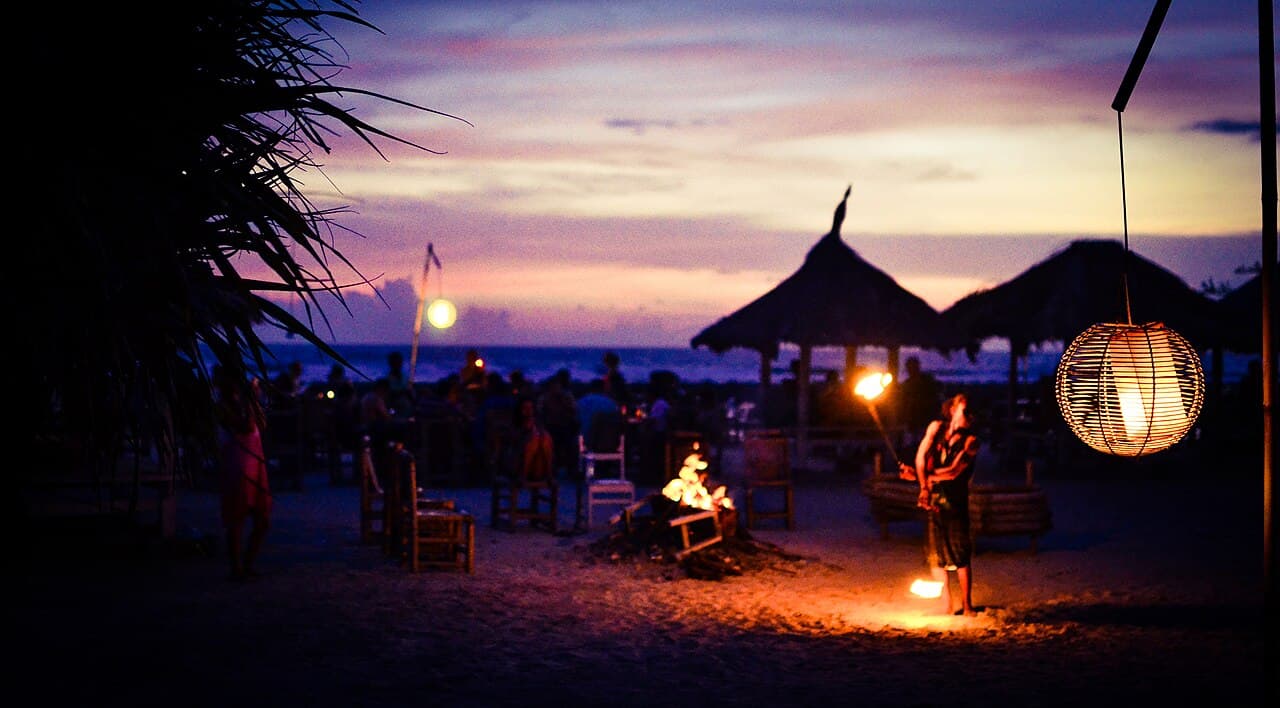
🏝️The largest and liveliest of the three islands. A well-developed strip of beach bars, dive schools, and seafood restaurants runs along the west coast facing a spectacular Lombok and Rinjani volcano sunset. The east side is quieter with better snorkeling and a local village. The night market in the center serves excellent grilled skewers and fresh seafood from 17k-30k IDR.
Gili Meno
🏝️The middle island and the most tranquil of the three. Gili Meno is known for its honeymooners, empty white-sand beaches, and a small saltwater lake in the interior that makes a lovely 3 km walk (bring insect spray). Fewer dive schools and bars means more birdsong and the feeling of having a tropical island almost to yourself.
Gili Air
🏝️The island closest to Lombok mainland, Gili Air has a genuine local community alongside its tourist infrastructure. A mix of dive schools, warungs, cafes, and yoga studios sits alongside fishing families. The reef on the east side is excellent for snorkeling, and the pace of life is noticeably slower than Trawangan without feeling as remote as Meno.
Statue Circle Turtle Snorkel (Trawangan NE)
🌿An underwater sculpture garden off the northeast coast of Trawangan where a circle of human figures sits on the seafloor at 3-5 meters depth. Green turtles routinely graze on the surrounding coral and are used to snorkelers. This is the single most reliable spot on all three islands for close-up turtle encounters — accessible without a guide.
Sunset Swings (Trawangan West)
📌Wooden swings mounted over the water on the western shore of Trawangan, with Mount Rinjani framed in the background. A notorious photo magnet — the swings draw crowds at golden hour and there can be a wait. Go earlier in the afternoon for a shorter queue and softer light. Several beachside bars have their own versions.
Scuba Diving — Shark Point, Halik & Bounty Wreck
🌿The Gili Islands have some of the best accessible diving in Indonesia. Shark Point off Trawangan reliably has white-tip reef sharks resting on the sand at 18-28 meters. Halik Reef is a wall dive with strong current and abundant pelagics. The Bounty Wreck (a deliberately sunk wooden ship) off Trawangan's southwest sits at 18 meters and is encrusted with coral. Trawangan has the most dive operators; Gili Air is slightly quieter.
Cidomo Pony Cart Rides
📌The traditional cidomo carts are the main taxi on all three islands, pulled by small ponies along sandy tracks. They are the primary form of heavy-load transport. Note: cidomo welfare has been a persistent concern — some ponies show signs of overwork and poor care. If you use one, choose operators whose animals look healthy and well-fed, and consider walking or cycling for shorter trips.
Trawangan Night Market
📌A lively open-air night market near the center of Gili Trawangan where local vendors grill fresh fish, prawns, satay skewers, and corn over charcoal. Prices run 15,000-25,000 IDR per skewer — some of the cheapest and most satisfying food on the island. The market starts filling up around sunset and peaks by 8pm.
Climate & Best Time to Go
The Gili Islands have a tropical climate with two distinct seasons: a dry season from April to October and a wet season from November to March. Temperatures are warm year-round, typically 25-32°C, and the sea stays at 27-29°C in all months — making diving and snorkeling comfortable throughout the year. The key variable is not temperature but sea conditions: during the wet season, strong winds and rough seas can cancel fast-boat services from Bali and make some dive sites inaccessible. The dry season brings reliably calm water, excellent visibility for diving (15-25 meters), and near-constant sunshine. Humidity is high in both seasons; even in the dry season, brief morning showers are not unusual. Mosquitoes are present year-round but significantly worse in the wet season — dengue fever is a real risk, particularly from November to February, and DEET-based repellent is strongly recommended.
Dry Season (Best)
April - October77-90°F
25-32°C
The optimal time to visit. Calm seas, reliable fast-boat connections from Bali, excellent diving visibility, and near-constant sunshine. May, June, and September are ideal — good conditions without the peak July-August crowds. Water temperature holds at 27-29°C.
Shoulder Season
March - April, October - November77-88°F
25-31°C
Transitional months with generally good weather but increasing chance of rain and choppier seas. March and April can still see rough Bali-Lombok crossings from lingering wet season swells. October and November offer good value with fewer tourists and mostly acceptable conditions.
Wet Season (Avoid Jan-Feb)
November - March77-86°F
25-30°C
Heavy rain, rough seas, and reduced diving visibility characterize the wet season. Fast boats from Bali are frequently cancelled in January and February — sometimes for multiple consecutive days. Diving is still possible but visibility drops to 5-10 meters. Mosquito numbers spike significantly. Accommodation prices drop 30-50% and the islands are far less crowded.
Best Time to Visit
May through September is the optimal window — dry weather, calm seas, excellent diving visibility, and reliable fast-boat connections from Bali. July and August are peak season with higher prices and full accommodation; May, June, and September offer the same conditions with meaningfully fewer crowds. Avoid January and February if at all possible — these are the roughest months with frequent boat cancellations, heavy rain, and spiking mosquito numbers.
Dry Season — Peak (July - August)
Crowds: Very high — accommodation books out weeks in advanceGuaranteed sunshine, flat calm seas, and diving visibility up to 25 meters. The downside is that accommodation on Trawangan fills entirely and prices spike 30-50%. Book at least 2-3 months in advance for peak weeks. The islands feel genuinely crowded, particularly Trawangan during full-moon parties.
Pros
- + Best weather of the year
- + Calm fast-boat crossings
- + Maximum diving visibility
- + Full range of activities available
Cons
- − Highest prices of the year
- − Trawangan feels overcrowded
- − Advance booking essential
- − Busier dive sites
Dry Season — Sweet Spot (May, June, September)
Crowds: Moderate — comfortable without being emptyThe best time to visit for most travelers. Near-identical weather to July-August without the crowds or price premium. May and early June see the dry season firmly established; September has excellent conditions and noticeably fewer tourists than peak summer. Diving visibility is at its best in September after months of calm water.
Pros
- + Excellent weather and sea conditions
- + 20-30% lower prices than peak
- + More relaxed atmosphere
- + Dive sites less congested
Cons
- − Slightly higher chance of an overcast day than July-August
- − Fewer evening events on Trawangan
Shoulder Season (March - April, October - November)
Crowds: Low to moderateMarch and April are the tail end of wet season — weather is improving but seas can still be rough and fast-boat cancellations from Bali remain possible. October and November bring the dry season's end; conditions are usually fine but rain frequency increases through November. Good value for budget-conscious travelers willing to accept some weather unpredictability.
Pros
- + Lower accommodation prices
- + Fewer tourists
- + Good diving still possible
- + Lush green vegetation
Cons
- − Risk of rough seas for the Bali crossing
- − Increasing mosquitoes by November
- − Some dive sites temporarily affected by currents
Wet Season (November - March, Avoid Jan-Feb)
Crowds: Very lowThe hardest time to visit, especially January and February. Heavy daily rain, consistently rough seas, and frequent fast-boat cancellations mean you could be stranded on an island or stuck on the mainland. Diving is possible but visibility drops to 5-10 meters. The upside is that prices can drop 40-50% and the islands are genuinely quiet. Dengue risk is elevated — DEET is non-negotiable.
Pros
- + Lowest prices
- + Almost no crowds
- + Empty beaches
- + Dive course prices negotiable
Cons
- − Heavy daily rain
- − Frequent fast-boat cancellations
- − Rough seas possible
- − Reduced diving visibility
- − Dengue risk highest
- − Some restaurants and bars close or reduce hours
🎉 Festivals & Events
Ramadan
Varies (Islamic calendar — approx. Feb-March in 2026)The month of fasting observed by the Sasak Muslim community. Some warungs close during daylight hours and alcohol service at local establishments can be restricted. Tourist bars on the Gilis generally remain open but operate differently. The pre-dawn and post-sunset meals (sahur and iftar) create a quiet, respectful atmosphere in village areas.
Lebaran / Eid al-Fitr
Varies (end of Ramadan)The end of Ramadan is the most important holiday in Indonesia. The Gili Islands and Lombok see a surge of domestic Indonesian tourists during the Lebaran holiday week. Accommodation prices rise significantly and ferries and fast boats fill up — book early if your visit falls during Lebaran.
Indonesian Independence Day
August 17National holiday with local celebrations on the islands. Flags, games, and community gatherings in the villages. A good opportunity to witness Sasak community life and join in the celebrations.
Nyepi — Bali Day of Silence
March (Balinese calendar)Nyepi is Bali's Hindu New Year, observed as a full day of silence. The practical consequence for Gili visitors: Bali's Ngurah Rai International Airport closes for the day and fast boats do not operate on the Bali-Gili route. Do not plan to arrive or depart via Bali on Nyepi day — check the date before booking.
Off the Beaten Path
Gili Air for Turtles Without the Chaos
The reef on Gili Air's east coast has regular turtle sightings at the same density as Trawangan's famous spots but with significantly fewer snorkelers in the water. The walk from the main pier to the east side takes 15 minutes and you can snorkel directly from the beach — no boat or tour needed.
Most tourists gravitate to Trawangan, leaving Gili Air's eastern reef blissfully uncrowded. The turtles here are habituated to humans but not overwhelmed by them — the encounters feel more natural.
Gili Meno Saltwater Lake Walk
A roughly 3 km trail circles the interior of Gili Meno through dry scrub and coconut palms to a saltwater lake populated by flamingoes (when conditions are right) and wading birds. The walk takes 45-60 minutes at a leisurely pace and offers a glimpse of the island beyond its beach strip.
Almost no one bothers with the Meno interior — most day-trippers stay on the beach. The lake walk is entirely free, genuinely quiet, and a reminder that these islands are real places, not just beach bars.
Glass-Bottom Boat for Non-Swimmers
Several operators on all three islands run short glass-bottom boat tours over the reef, allowing people who can't swim or are prone to seasickness to see the coral and turtles without getting in the water. Tours run 45-75 minutes and cost around 80,000-120,000 IDR per person.
A genuinely good option for families with young children or anyone who wants the underwater experience without the currents. The boats are stable, the views through the glass panels are surprisingly clear.
Trawangan Night Market Skewers
The central night market on Gili Trawangan is where locals and budget travelers eat. Grilled fish, prawn satay, and corn skewers run 15,000-25,000 IDR each — a fraction of restaurant prices. Arrive by 7pm to grab a plastic stool before the rush.
The night market is the best value food on Trawangan, and the grilled-over-charcoal flavor of freshly caught reef fish beats most of the pricier beachfront restaurants.
East Side Sunrise (Any Island)
The tourist action on all three Gili Islands faces west for sunset views of Lombok and Rinjani. The east sides are quiet, and in the early morning you can watch the sun rise over the Sumbawa mountains across the water with almost no other people around. Especially peaceful on Gili Meno and Gili Air.
Sunrise on the east side of any Gili Island is one of the most overlooked experiences here — completely free, crowd-free, and genuinely beautiful. Bring coffee.
Safety Breakdown
Moderate
out of 100
The Gili Islands are generally safe for tourists, but several specific risks require genuine attention. Fast-boat accidents are the most serious concern — there have been multiple fatal incidents on the Bali-Gili route over the years, caused by overcrowding, unseaworthy vessels, and inadequate safety equipment. Only book with reputable, established operators and always confirm that life jackets are on board. Ocean hazards include strong currents between the islands (not safe for casual swimming), fire coral, stonefish, and sea urchins. Drug activity is present on Gili Trawangan — street dealers offering mushrooms and harder substances are a fixture, and some have reported police involvement in scams targeting buyers. The risks of purchasing drugs here are real and severe. Trawangan also has a petty theft problem particularly at night — secure your belongings. Off the beach, Muslim cultural norms apply: cover up in the village areas and be respectful of the call to prayer.
Things to Know
- •Only use reputable fast-boat operators for the Bali crossing — Gili Getaway, Blue Water Express, and Semaya One have better safety records than budget alternatives. Confirm life jackets are accessible before departure
- •Do not swim in the channels between islands — currents are powerful and have caused drownings among swimmers who underestimated them
- •Avoid purchasing drugs of any kind on the Gili Islands. Gili Trawangan has a documented history of scams involving sellers who then alert corrupt police — the risk is arrest, extortion, or both
- •Wear reef shoes or watch your step carefully when entering or exiting the water — stonefish blend into the sandy bottom and their sting is extremely painful
- •Apply DEET insect repellent at dusk and throughout the evening, particularly in the wet season. Dengue fever is present and there is no vaccine
- •Lock your room and secure valuables on Gili Trawangan, especially during the busy party nights. Opportunistic theft from unlocked rooms and bags on the beach does occur
- •Dress modestly in village areas away from the beach. Women should cover shoulders and knees; both genders should be respectful near mosques and during prayer times
- •Always snorkel with a buddy and be aware of boat traffic — charter boats and island hoppers move through snorkel areas
Natural Hazards
Emergency Numbers
General Emergency
112
Ambulance
118
Police
110
Search & Rescue (BASARNAS)
115
Costs & Currency
Where the money goes
USD per dayBackpacker = hostel dorm + street food + public transit. Mid-range = 3-star hotel + neighbourhood restaurants + transit cards. Luxury = 4/5-star + fine dining + taxis. How we calibrate these numbers →
Quick cost estimate
Customize per category →Estimates based on regional averages. Flight prices vary by season and airline.
budget
$25-40
Basic fan bungalow or hostel dorm, eating at the night market and local warungs, cycling everywhere, snorkeling from shore
mid-range
$55-110
Air-conditioned bungalow, restaurant meals, one dive or snorkel trip per day, island-hopping boat
luxury
$250+
Private beachfront villa, daily guided dive trips, fine dining, glass-bottom boat tours, spa treatments
Typical Costs
| Item | Local | USD |
|---|---|---|
| FoodIndonesian meal at warung (nasi goreng, mie goreng) | 50,000-100,000 IDR | $3.25-6.50 |
| FoodWestern meal at tourist restaurant | 100,000-200,000 IDR | $6.50-13 |
| FoodGrilled skewers at night market | 15,000-25,000 IDR each | $1-1.60 each |
| FoodBintang beer (bottle) | 30,000-50,000 IDR | $2-3.25 |
| AccommodationBasic fan bungalow or hostel dorm | 150,000-350,000 IDR | $10-23 |
| AccommodationMid-range bungalow (AC, hot water) | 800,000-1,500,000 IDR | $52-97 |
| AccommodationLuxury beachfront villa | 5,000,000-8,000,000 IDR | $323-516 |
| TransportFast boat from Bali (Padangbai) | 550,000-850,000 IDR | $36-55 |
| TransportPublic ferry from Lombok (Bangsal) | 15,000-25,000 IDR | $1-1.60 |
| TransportBicycle rental per day | 30,000-50,000 IDR | $2-3.25 |
| TransportIsland-hopping boat (one crossing) | 20,000-35,000 IDR | $1.30-2.25 |
| ActivitiesFun dive (equipment included) | 400,000-600,000 IDR | $26-39 |
| ActivitiesPADI Open Water course (3-4 days) | 4,000,000-5,500,000 IDR | $258-355 |
| ActivitiesSnorkel tour (half-day, 3 sites) | 150,000-250,000 IDR | $10-16 |
| ActivitiesGlass-bottom boat tour | 80,000-120,000 IDR | $5.20-7.75 |
💡 Money-Saving Tips
- •Take the public ferry from Lombok (Bangsal pier) instead of a fast boat from Bali — the difference is 500,000-800,000 IDR per person each way
- •Eat at the Trawangan night market and local warungs — a full meal with rice and a Bintang costs under 100,000 IDR versus 200,000+ at tourist restaurants
- •Stay on Gili Air or Gili Meno where accommodation is 20-40% cheaper than equivalent rooms on Trawangan
- •Snorkel from shore at the east coast of any island — turtles are free to see and you do not need a paid tour
- •Share dive trips with other travelers — most dive schools offer group rates that reduce the per-person cost
- •Bring cash from Bali or Lombok to avoid ATM fees on the islands (up to 50,000 IDR per withdrawal) and poor exchange rates
- •Avoid dive shops on the Trawangan main tourist strip — slightly cheaper and quieter options exist on the north and east coasts
Indonesian Rupiah
Code: IDR
1 USD is approximately 15,500 IDR (as of early 2026). Think of 100,000 IDR as roughly $6.50. ATMs exist on Gili Trawangan — there are two or three near the main strip, with BNI generally having the lowest fees (~20,000-30,000 IDR per withdrawal). ATMs on Gili Air exist but are fewer; Gili Meno has no ATM at all. Crucially, ATMs on the Gili Islands regularly run out of cash, especially on weekends and during peak season. Bring sufficient rupiah from Bali or Lombok. Exchange rates on the islands are poor — use authorized money changers on the mainland first.
Payment Methods
The Gili Islands are a predominantly cash economy. Warungs, the night market, bicycle rentals, ferry tickets, and most dive shops operate on cash only. A growing number of mid-range dive schools and restaurants on Trawangan accept credit cards, but often add a 2-3% surcharge. Digital wallets (GoPay, OVO, DANA) are technically accepted at some places on Trawangan but not reliably so for foreign tourists. The bottom line: bring enough cash from Bali or Lombok. Do not rely on finding working ATMs on the islands.
Tipping Guide
Not expected at local warungs. At tourist-oriented restaurants, 5-10% is appreciated if a service charge is not already included in the bill — check first.
50,000-100,000 IDR per person for a fun dive is appreciated. For a full day of teaching or a multi-day course, 100,000-200,000 IDR is a thoughtful gesture and makes a real difference.
20,000-50,000 IDR per person for a snorkel trip. Boat crews for full-day island-hopping tours appreciate 50,000-100,000 IDR total for the group.
Tip housekeeping 10,000-20,000 IDR per night at mid-range and budget places. At luxury villas, 20,000-50,000 IDR per night is appropriate.
Agree on a fare beforehand. If the driver was helpful with heavy luggage or went the extra distance, round up by 10,000-20,000 IDR.
How to Get There
🚌 Bus Terminals
From Bali — Fast Boat (Padangbai, Amed, or Serangan)
The most popular route for international visitors. Fast boats from Bali's east coast port of Padangbai take approximately 2-3 hours to reach the Gili Islands, depending on sea conditions. Reputable operators: Gili Getaway (~550,000-700,000 IDR one way), Blue Water Express (~650,000-850,000 IDR), and Semaya One (~600,000-750,000 IDR). Book directly through official websites to avoid third-party markup. Boats run daily in dry season; reduced frequency or cancellations in wet season (November-March). Always confirm life jackets are on board and avoid overloaded budget boats — there have been multiple fatal accidents on this route.
From Lombok — Public Ferry (Bangsal Pier)
The cheapest way in or out. Take a taxi or public bemo (minivan) from Lombok International Airport (LOP) or Senggigi/Mataram to Bangsal pier (~1.5-2 hr drive). From Bangsal, public ferries depart when full to Gili Air (20 min, ~15,000 IDR), Gili Meno (25 min, ~15,000 IDR), and Gili Trawangan (35-45 min, ~15,000 IDR). Expect firm pressure from unofficial "helpers" at Bangsal pier — use only the official ticket windows inside the terminal. For groups or late arrivals, private speedboats from Bangsal are available for 200,000-400,000 IDR.
From Lombok — Fast Boat or Speedboat (Teluk Nare / Senggigi)
Faster connections from northern Lombok. Teluk Nare has regular fast-boat connections to all three Gili Islands taking 15-30 minutes. Some Senggigi hotels arrange private speedboat transfers. Useful if you are staying in Senggigi or want to avoid the Bangsal pier crowd. Cost is higher than public ferry but comparable to Bali fast boats per minute of travel.
Travel Connections

Lombok
The parent island and primary gateway to the Gilis. Lombok offers Mount Rinjani trekking, pristine southern beaches (Tanjung Aan, Selong Belanak), traditional Sasak villages, and Kuta Lombok surf. Public ferry from Bangsal pier is the cheapest connection; Senggigi and Mataram are also access points. If you're on a budget, sleep in Lombok and day-trip to the Gilis.
Bali
Bali is the primary international gateway and the most common origin for Gili Island visitors. Fast boats run daily from Padangbai (east Bali) and take 2-3 hours depending on sea conditions. Reputable operators include Gili Getaway, Blue Water Express, and Semaya One. Bali offers everything the Gilis do not — temples, rice terraces, spa culture, and international flight connections.

Komodo Islands
Komodo National Park is home to the Komodo dragon, pink beaches, and world-class diving that rivals and in some respects surpasses the Gilis. Fly to Labuan Bajo (Flores) and book a multi-day liveaboard or day-boat tour through the park. Most visitors combine a Gilis stay with Komodo as part of a broader Indonesia itinerary.

Yogyakarta
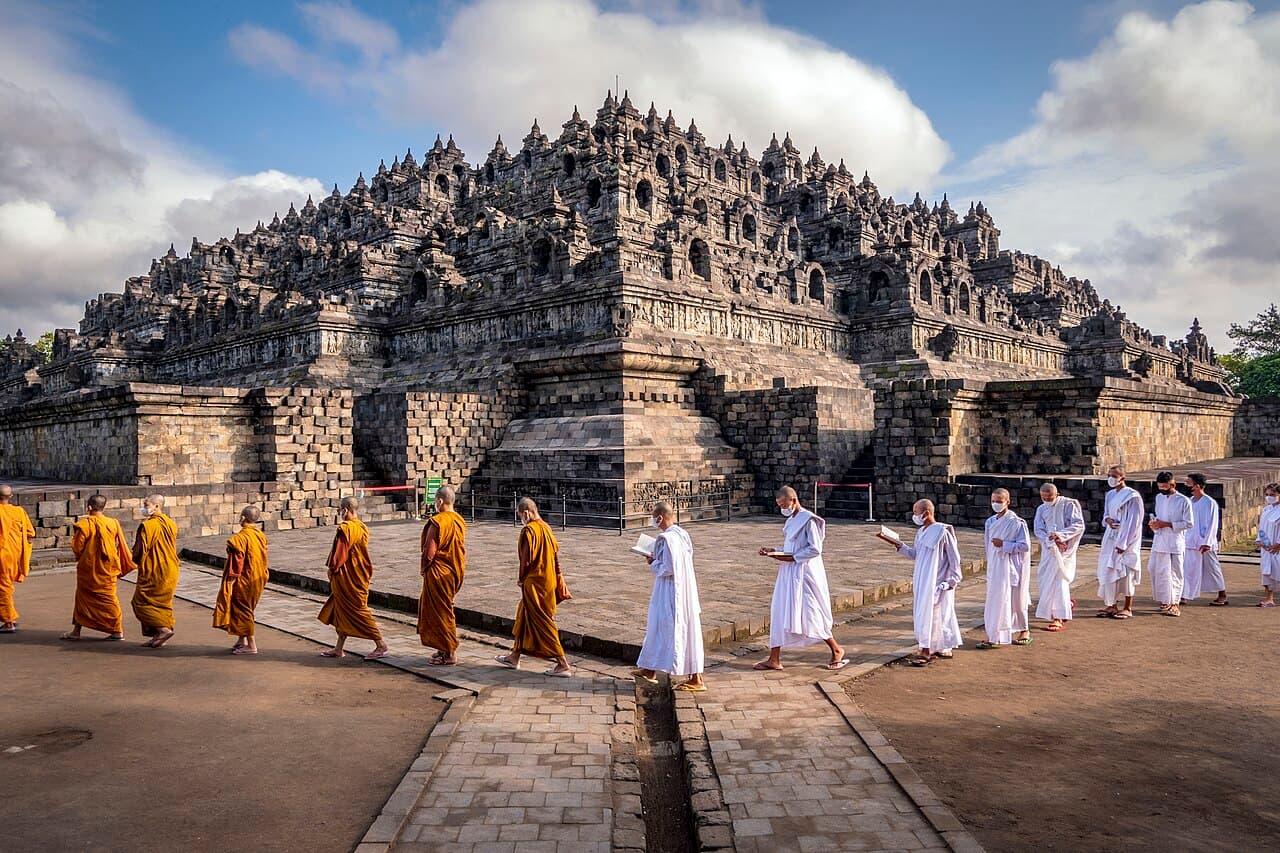
The cultural capital of Java and gateway to Borobudur (the world's largest Buddhist temple) and the active volcano Merapi. A sharp cultural contrast to the beach-focused Gilis. Fly from Lombok International Airport or via Bali.

Kuala Lumpur
Southeast Asia's most connected hub and a great onward destination or starting point. No direct flights from the Gili Islands — transit through Lombok International Airport (LOP) or Bali Ngurah Rai (DPS). AirAsia and Malindo fly the route frequently.
Entry Requirements
The Gili Islands are part of Indonesia and use the same visa system as the rest of the country. Most international visitors arrive on a 30-day Visa on Arrival (VOA), extendable once for another 30 days. An Electronic Visa on Arrival (e-VOA) can be purchased online before departure to skip queues. If arriving via fast boat from Bali, immigration for the Gili Islands is typically processed at the boat terminal rather than at an airport. If flying in, Lombok International Airport (LOP) is the closest airport; Bali Ngurah Rai (DPS) is the main international hub. Passport must be valid for at least 6 months from entry date.
Entry Requirements by Nationality
| Nationality | Visa Required | Max Stay | Notes |
|---|---|---|---|
| US Citizens | Visa-free | 30 days VOA (extendable to 60) | Visa on Arrival costs IDR 500,000 (~$32). Apply for e-VOA online at molina.imigrasi.go.id before departure to avoid queues. Extendable once for 30 more days at Mataram immigration office on Lombok. |
| UK Citizens | Visa-free | 30 days VOA (extendable to 60) | Same VOA terms as US citizens. Passport must have at least 6 months validity and 2 blank pages. e-VOA recommended. |
| Australian Citizens | Visa-free | 30 days VOA (extendable to 60) | Australia is the single most common visitor nationality on the Gilis. VOA process is fast at Bali and Lombok airports. e-VOA strongly recommended during peak season. |
| EU Citizens | Visa-free | 30 days VOA (extendable to 60) | Most EU nationals qualify for VOA. Some ASEAN neighbors receive visa-free entry without a fee. |
| Indian Citizens | Visa-free | 30 days VOA | VOA available. Bring proof of onward travel and accommodation booking. e-VOA available online. |
Visa-Free Entry
Visa on Arrival
Tips
- •Apply for your e-VOA online at molina.imigrasi.go.id before travel — it costs the same as the on-arrival fee (IDR 500,000 / ~$32) but avoids the airport queue entirely
- •If extending your visa, do so at the immigration office in Mataram, Lombok (accessible by taxi from Bangsal pier). Start the process at least 7 days before your initial 30-day visa expires
- •When arriving by fast boat from Bali, your immigration may be processed at the Bali departure terminal — have your passport and VOA payment ready
- •Carry a photocopy of your passport when exploring the islands; keep the original locked in your accommodation safe
- •Bring cash (USD or IDR) to pay the VOA fee if not using e-VOA — card payment is available at major airports but can be slow
Shopping
Shopping on the Gili Islands is limited and largely tourist-focused. Gili Trawangan has the most shops — a mix of sarong sellers, souvenir stalls, dive gear retailers, and small supermarkets stocking sunscreen, snacks, and cold drinks at a premium. Gili Air has a handful of basic shops and a small supermarket. Gili Meno has almost nothing beyond a few beach stalls. The islands are not the place for quality souvenir shopping — prices are high and selection is narrow. For quality Sasak textiles, genuine handcrafts, and better prices, head to Lombok (Sukarara village for weaving, Banyumulek for pottery) or Ubud in Bali. Make sure you have enough cash before arriving — ATMs exist on Trawangan but are unreliable.
Trawangan Main Strip (West Side)
tourist stripA loose collection of souvenir shops, beach gear stores, dive equipment retailers, and minimarkets along the western beach road. Open late, aimed entirely at tourists. Good for forgotten essentials (sunscreen, flip flops, medications) at elevated prices.
Known for: Beach gear, souvenirs, sunscreen, snorkel rentals, Bintang singlets
Trawangan Night Market
food marketNot a shopping market per se, but the central hub for fresh food at local prices. Grilled seafood, skewers, and Indonesian staples cooked on charcoal in the open air each evening from sunset.
Known for: Grilled fish, prawn satay, corn, Indonesian snacks, affordable meals
Island Minimarkets (All Three Islands)
convenienceSmall convenience stores on all three islands carry water, snacks, instant noodles, beer, sunscreen, and basic toiletries. Prices are 30-80% higher than mainland Indonesia. Bring essentials from Bali or Lombok.
Known for: Water, beer, sunscreen, snacks, basic toiletries
🎁 Unique Souvenirs to Look For
- •Ethical shell jewelry made by local artisans — look for pieces that don't use protected species
- •Handmade natural soaps and coconut-oil skincare products sold at small stalls
- •Sasak textiles (ikat sarongs) — better prices and selection on Lombok, but some decent pieces on Trawangan
- •Handpainted Gili Islands t-shirts and singlets
- •Dive certification cards and logbook stamps — your dive school on the islands will provide these
Language & Phrases
Bahasa Indonesia is the national language and is spoken and understood across all three Gili Islands and on Lombok. The local Sasak people have their own language (Sasak) but Indonesian is universal. English is widely spoken at dive schools, tourist restaurants, and accommodation on the Gili Islands — it is one of the more English-friendly destinations in Indonesia. Still, even a few words of Indonesian go a long way in local warungs and at the ferry docks.
| English | Translation | Pronunciation |
|---|---|---|
| Hello | Halo | ha-LOH |
| Thank you | Terima kasih | teh-REE-mah KAH-see |
| Please (requesting help) | Tolong | TOH-long |
| Cheers! (toast) | Selamat minum | suh-LAH-mat MEE-num |
| Yes / No | Ya / Tidak | yah / TEE-dahk |
| Goodbye | Sampai jumpa | SAHM-pie JOOM-pah |
| Excuse me / Sorry | Permisi | per-MEE-see |
| Do you speak English? | Bisa Bahasa Inggris? | BEE-sah bah-HAH-sah ING-gris? |
| How much? | Berapa? | buh-RAH-pah? |
| Delicious! | Enak! | EH-nahk! |
Getting Around
There are no motorized vehicles of any kind on the Gili Islands — no scooters, no cars, no tuk-tuks. This is one of the defining features of the islands and makes them uniquely peaceful. Getting around each island is done on foot, by bicycle, or via cidomo (traditional pony-drawn cart). All three islands are small enough that walking is the primary mode of transport. For moving between islands, public island-hopping boats run throughout the day and are cheap and reliable in the dry season. Cidomo carts are available for heavier luggage but welfare concerns around the working ponies are real — many animals are visibly overworked, particularly on Trawangan during high season. If you use one, choose healthy-looking animals and avoid forcing multiple runs for short distances you could easily walk.
Walking
FreeThe default mode of transport on all three islands. Sandy paths connect the entire perimeter of each island. Gili Air can be fully circumnavigated in about 1.5 hours; Trawangan in about 2.5 hours. No shoes required on the beach paths, though sandals are useful on the interior tracks.
Best for: All trips under 20 minutes; exploring the beach perimeter
Bicycle Rental
30,000-50,000 IDR (~$2-3.25) per dayBasic bikes are available for rent across all three islands. Trawangan has the most rental shops; Air and Meno have fewer options. Bikes are a practical way to cross from one side of an island to the other without getting tired in the heat. Paths are sand and dirt — no paved roads.
Best for: Crossing Trawangan coast-to-coast; reaching the interior of Gili Meno
Cidomo (Pony Cart)
50,000-200,000 IDR (~$3.25-13) per trip depending on distance and loadTraditional horse-drawn carts that serve as the island's taxis, primarily for luggage and longer distances. Found waiting near the boat docks on each island. Negotiate a fare before boarding. Note welfare concerns with some operators — ponies can be overloaded or poorly fed during peak season.
Best for: Heavy luggage from the ferry dock to your accommodation; older travelers who struggle with the heat
Island-Hopping Boats
20,000-35,000 IDR (~$1.30-2.25) per crossingSmall wooden speedboats run between all three Gili Islands throughout the day, roughly every 1-2 hours. The most reliable connections are Gili Air ↔ Gili Meno ↔ Gili Trawangan. Last boat is typically around 5pm. In rough weather, services can be reduced or cancelled.
Best for: Day trips between islands; returning to Lombok via Bangsal ferry
Public Ferry (Bangsal ↔ Gili Islands)
15,000-25,000 IDR (~$1-1.60) per crossingSlow but very cheap public ferries run between Bangsal pier on Lombok's northwest coast and the three Gili Islands. The crossing takes 20-45 minutes depending on the island. Ferries depart when full rather than on a fixed schedule. The Bangsal pier area has a reputation for aggressive touts — be firm about not paying for unsolicited "help".
Best for: Budget travelers arriving from Lombok; returning to Lombok mainland
Walkability
Extremely high. The Gili Islands are essentially car-free pedestrian spaces. Every attraction, restaurant, and dive school is reachable on foot. Gili Air (roughly 1.5 hr circumference walk) and Gili Meno (1.5-2 hr) are fully explorable by foot; Trawangan (2.5+ hr full circle) benefits from a bicycle for cross-island trips.
If you like Gili Islands, you'll love…
4 cities with a similar vibe, outside of the same country.

Thailand · OVR 70
jaw-dropping scenery · easy on the wallet

Thailand · OVR 70
landscapes that steal the show · evening buzz

Thailand · OVR 73
landscapes that steal the show · workable for remote days
Panama · OVR 69
jaw-dropping scenery · reliable wifi, decent English