Bali
THE QUICK VERDICT
By Anthony · Updated June 2026
Choose Bali if you want tropical paradise vibes, stunning rice terraces, surf culture, Hindu temples, and ultra-affordable luxury.
- Best for
- rice terraces, surf breaks, temple mornings, and ultra-affordable luxury once you’re off the main strip
- Best window
- Apr–Sep
- Budget anchor
- $110/day mid-range
- No real seasons
- Within 3°C year-round — timing is about rain, not temperature
- Skip if
- you don’t want to rely on scooters and you hate bumper-to-bumper traffic in Canggu
Bali is Indonesia's most famous island — a tropical paradise of terraced rice paddies, ancient Hindu temples, volcanic peaks, and world-class surf breaks. From the spiritual heart of Ubud to the beach clubs of Seminyak and the cliffside temples of Uluwatu, Bali offers something for every type of traveler.
The two links below are affiliate links — MapSorted earns a small commission if you book through them, at no extra cost to you. How this works.
Tours & Experiences
Bookable tours, activities, and day trips in Bali
Where to Stay
Compare hotels and rentals in Bali
📍 Points of Interest
Tegallalang Rice Terraces· 23 km SE
Iconic cascading rice paddies north of Ubud
Uluwatu Temple· 54 km S
Clifftop sea temple with sunset Kecak dance
Ubud Monkey Forest· 27 km SE
Sacred nature reserve with 1,200 macaques
Tanah Lot Temple· 31 km S
Iconic offshore sea temple on a rock formation
Seminyak Beach· 40 km S
Trendy beach strip with clubs and sunset views
Tirta Empul Water Temple· 26 km E
Sacred purification temple with holy spring pools
Mount Batur· 33 km E
Active volcano with popular sunrise trek
★ Local Picks
Sidemen Valley· 45 km E
Quiet rice terrace valley with Mount Agung views
Jatiluwih Rice Terraces
UNESCO subak landscape far less crowded than Tegallalang
Munduk Waterfalls
Highland waterfalls amid coffee and clove plantations
At a Glance
- Pop.
- 4.3M (island)
- Timezone
- Makassar
- Dial
- +62
- Emergency
- 112 / 110
Bali is the only Hindu-majority island in Indonesia, a country of over 17,000 islands that is 87% Muslim
The island is roughly the size of Delaware (5,780 sq km) but receives over 6 million international visitors per year
Balinese temples hold ceremonies called "odalan" every 210 days based on the Pawukon calendar, not the Gregorian one
Rice terraces in Bali use a centuries-old cooperative irrigation system called "subak," a UNESCO-recognized cultural landscape
Nyepi (Day of Silence) shuts down the entire island for 24 hours — no flights, no driving, no lights, no noise
The average Balinese person participates in at least one temple ceremony per week, making offerings called "canang sari" daily
Top Sights
Tegallalang Rice Terraces
📌Dramatic cascading rice paddies carved into a steep valley north of Ubud. Walk the narrow paths between terraces for stunning photos. Arrive before 9 AM to avoid crowds and the midday heat.
Uluwatu Temple (Pura Luhur Uluwatu)
🏯A clifftop sea temple perched 70 meters above the Indian Ocean on Bali's southern tip. The nightly Kecak fire dance at sunset is mesmerizing. Watch your belongings — the resident monkeys are notorious thieves.
Ubud Monkey Forest
🌿A sacred nature reserve in the heart of Ubud housing over 1,200 long-tailed macaques across 12.5 hectares of forest with ancient temples and moss-covered statues.
Tanah Lot Temple
🏯One of Bali's most photographed landmarks — a sea temple sitting on a rock formation surrounded by crashing waves. Best visited at sunset when the silhouette is iconic.
Seminyak Beach & Sunset Strip
🏖️Bali's trendiest beach area lined with upscale beach clubs (Potato Head, Ku De Ta), boutique shops, and excellent restaurants. The sunsets here are legendary.
Tirta Empul Water Temple
🏯A sacred water temple near Ubud where Balinese Hindus come for ritual purification. Visitors can participate in the purification ritual by walking through the spring-fed fountains in the courtyard.
Mount Batur Sunrise Trek
📌A pre-dawn hike up an active volcano (1,717m) to catch sunrise over the caldera lake. The 2-hour climb starts around 3:30 AM. Hot springs at the base reward tired hikers after the descent.
Nusa Penida
🏝️A rugged island 45 minutes by speedboat from Sanur with dramatic cliffs, Kelingking Beach (T-Rex cliff), Angel's Billabong, and world-class manta ray diving.
Climate & Best Time to Go
Bali has a tropical monsoon climate with two distinct seasons: dry (April-October) and wet (November-March). Temperatures are consistently warm year-round, with highland areas like Ubud and Kintamani noticeably cooler than the coast.
Dry Season
April - October75-88°F
24-31°C
Warm, sunny days with low humidity and minimal rainfall. July-August is peak season with the best weather but also the most tourists. Evenings can be cool in Ubud (down to 22°C).
Shoulder - Early Wet
November75-86°F
24-30°C
Transition month with increasing afternoon thunderstorms but still plenty of sunshine. Crowds thin out and prices drop. A good time to visit for deals.
Wet Season
December - March75-86°F
24-30°C
Heavy tropical downpours, usually in the afternoon for 1-3 hours, then clearing. Mornings are often sunny. Humidity is high. Some roads and paths can flood.
Shoulder - Late Dry
April - May75-88°F
24-31°C
Rain tapers off quickly. One of the best times to visit — good weather, green landscapes from the wet season, and fewer tourists than June-August peak.
Best Time to Visit
April to June and September to October offer the best balance of dry weather, manageable crowds, and reasonable prices. July-August is peak season with the best weather but highest prices and heaviest traffic.
Dry Season Peak (July - August)
Crowds: Very high — peak tourist seasonThe best weather of the year with virtually no rain and low humidity. However, this is absolute peak season — prices surge, beaches are packed, and traffic in south Bali is at its worst.
Pros
- + Best weather, dry and sunny
- + Ideal surfing conditions on the west coast
- + All attractions and activities fully operational
- + Long sunny days for outdoor exploration
Cons
- − Highest accommodation prices (30-50% above shoulder)
- − Very heavy traffic in Kuta-Seminyak-Canggu corridor
- − Popular attractions overcrowded
- − Flights from Australia sell out far in advance
Shoulder Season (April - June, September - October)
Crowds: Moderate — the sweet spotExcellent weather with occasional brief showers. Fewer tourists mean better prices and a more relaxed atmosphere. Landscapes are lush green from the wet season.
Pros
- + Great weather with lower prices
- + Lush green rice terraces
- + Easier to get villa and restaurant bookings
- + Less traffic on roads
Cons
- − Some afternoon showers possible
- − Surf conditions less consistent than peak dry season
- − A few operators reduce schedules
Wet Season (November - March)
Crowds: Low — except Christmas/New Year and Chinese New YearDaily tropical downpours, usually 1-3 hours in the afternoon. Mornings are often clear and sunny. Humidity is high. Some roads and river areas flood.
Pros
- + Lowest prices of the year (40-60% discounts)
- + Few tourists at major sites
- + Great for spa retreats and yoga
- + Waterfalls at their most impressive
Cons
- − Heavy afternoon rain
- − Some outdoor activities cancelled
- − Roads can flood, especially in low-lying areas
- − Haze and cloud can obscure volcano views
Holiday Peak (Christmas - New Year)
Crowds: Very high — holiday peak within wet seasonDespite being wet season, prices surge to their highest levels as Australians and Europeans flood in for the holidays. Book 3-6 months ahead.
Pros
- + Festive atmosphere
- + New Year celebrations on the beach
- + Many events and parties
- + Rain is manageable with indoor activities
Cons
- − Highest prices of the entire year
- − Accommodation books out months ahead
- − Roads gridlocked in south Bali
- − Weather is unpredictable
🎉 Festivals & Events
Nyepi (Day of Silence)
March (varies)The Balinese New Year shuts down the entire island for 24 hours. No lights, no travel, no activity. The night before (Ogoh-Ogoh parade) features giant demon effigies paraded through streets and burned.
Galungan & Kuningan
Every 210 days (Pawukon calendar)A 10-day celebration when ancestral spirits visit Earth. Bamboo penjor poles line every road, temples are decorated, and the island buzzes with ceremony and family gatherings.
Bali Arts Festival
June - JulyA month-long celebration of Balinese dance, music, crafts, and cuisine at the Bajra Sandhi monument grounds in Denpasar. Performances nightly and craft exhibitions.
Ubud Writers & Readers Festival
OctoberSoutheast Asia's premier literary festival bringing authors from around the world to Ubud for panels, workshops, and cultural performances.
Off the Beaten Path
Warung Babi Guling Ibu Oka
A legendary warung in Ubud serving babi guling (suckling pig) — Bali's most iconic dish. The crispy skin, tender meat, and spiced lawar side dishes draw locals and visitors alike.
This is where Anthony Bourdain famously ate. Despite growing fame, it remains a simple warung where you sit on benches and eat with your hands. Arrive before noon — it sells out daily.
Sidemen Valley
A lush river valley in east Bali with terraced rice fields, Mount Agung views, traditional weaving villages, and almost no tourists compared to Ubud.
Sidemen offers the Bali experience that Ubud provided 20 years ago — authentic village life, genuine homestays, and rice terraces you can walk through alone.
Pasar Badung (Denpasar Central Market)
Bali's largest traditional market spread across four floors. The ground level is a riot of tropical fruits, spices, temple offerings, and fresh fish. Upper floors sell textiles and ceremonial goods.
Almost entirely local — no tourist markup, no English menus. Come early (6-8 AM) for the full experience when vendors are freshest and the flower section is in full bloom.
Munduk Waterfalls
A cluster of waterfalls in Bali's cool, lush northern highlands surrounded by coffee and clove plantations. Munduk, Melanting, and Golden Valley falls are all within hiking distance.
North Bali gets a fraction of the tourists who flock south. The Munduk area offers genuine rural Bali with homestays run by farming families and trails through spice plantations.
Jatiluwih Rice Terraces
A UNESCO World Heritage rice terrace landscape in Tabanan that's far more expansive and less crowded than Tegallalang. Walking trails wind through the terraces for 2-3 hours.
While Tegallalang is packed with Instagram tourists, Jatiluwih offers a genuine subak irrigation experience across 600+ hectares. The drive through the highlands is spectacular.
Safety Breakdown
Moderate
out of 100
Bali is generally safe for tourists, but road safety is a major concern — motorbike accidents are the leading cause of tourist injury and death. Petty theft, tourist scams, and alcohol-related incidents are common in party areas like Kuta and Seminyak.
Things to Know
- •Motorbike accidents are extremely common — if you rent a scooter, wear a helmet, ride defensively, and ensure your travel insurance covers motorbike use (many policies exclude it)
- •Never drink arak (local spirit) from unknown sources — methanol poisoning from bootleg arak kills several tourists each year
- •Be cautious of monkeys at temples, especially Ubud Monkey Forest — they grab sunglasses, phones, and jewelry; remove shiny items before entering
- •Avoid exchanging money at street-side money changers — many use sleight-of-hand or rigged calculators; use ATMs or reputable exchanges like BMC or Central Kuta
- •Strong currents and undertow at many beaches — always swim between the red-and-yellow flags and heed lifeguard warnings, especially at Kuta Beach
- •Watch for scams involving "free" temple tours that end with high-pressure donation requests
Natural Hazards
Emergency Numbers
General Emergency
112
Ambulance
118
Police
110
Tourist Police (Kuta)
(0361) 224111
BIMC Hospital (international)
(0361) 761263
Costs & Currency
Where the money goes
USD per dayBackpacker = hostel dorm + street food + public transit. Mid-range = 3-star hotel + neighbourhood restaurants + transit cards. Luxury = 4/5-star + fine dining + taxis. How we calibrate these numbers →
Quick cost estimate
Customize per category →Estimates based on regional averages. Flight prices vary by season and airline.
budget
$25-45
Guesthouse or hostel, warung meals, scooter rental, free temple visits and beach days
mid-range
$70-150
Mid-range villa or boutique hotel, mix of warungs and restaurants, private driver for day trips, paid activities
luxury
$250+
Luxury private villa with pool, fine dining, spa treatments, guided tours, and premium experiences
Typical Costs
| Item | Local | USD |
|---|---|---|
| AccommodationHostel dorm bed | IDR 100,000-200,000 | $6.50-13 |
| AccommodationMid-range hotel (double) | IDR 500,000-1,200,000 | $33-78 |
| AccommodationPrivate pool villa | IDR 2,000,000-5,000,000 | $131-327 |
| FoodNasi goreng at a warung | IDR 25,000-40,000 | $1.65-2.60 |
| FoodBabi guling (suckling pig) plate | IDR 40,000-60,000 | $2.60-3.90 |
| FoodMeal at tourist restaurant | IDR 80,000-150,000 | $5.25-10 |
| FoodBintang beer (large) | IDR 30,000-50,000 | $2-3.25 |
| FoodFresh coconut from a vendor | IDR 15,000-25,000 | $1-1.65 |
| TransportScooter rental (per day) | IDR 60,000-100,000 | $4-6.50 |
| TransportGrab car ride (Kuta to Ubud) | IDR 150,000-250,000 | $10-16 |
| TransportFull-day private driver | IDR 500,000-700,000 | $33-46 |
| AttractionsTemple entry (most temples) | IDR 30,000-50,000 | $2-3.25 |
| AttractionsMount Batur sunrise trek (guided) | IDR 450,000-600,000 | $29-39 |
💡 Money-Saving Tips
- •Eat at warungs (local eateries) rather than tourist restaurants — the same nasi goreng costs 3-5x more with a "Western" menu
- •Rent a scooter for IDR 70,000/day instead of using Grab for multiple trips — it pays for itself after 2-3 rides
- •Stay in homestays (rumah tamu) run by Balinese families for authentic experiences at a fraction of hotel prices
- •Book Nusa Penida and Gili fast boats directly at the harbor rather than through tour agencies for 30-50% savings
- •Buy water in large 5-liter gallons from minimarts (IDR 10,000) instead of individual 600ml bottles (IDR 5,000 each)
- •Visit temples early morning for free or reduced fees and far fewer crowds
- •Negotiate scooter rental for multi-day or weekly rates — weekly discounts of 20-30% are standard
- •Use Grab's food delivery (GrabFood) for restaurant-quality meals at local prices delivered to your villa
Indonesian Rupiah
Code: IDR
1 USD is approximately 15,300 IDR (as of early 2026). ATMs are widespread in tourist areas. Use ATMs inside banks (BCA, Mandiri, BNI) to avoid skimmers. Carry small bills — many warungs and drivers cannot break IDR 100,000 notes.
Payment Methods
Cash is king in Bali, especially at warungs, local markets, and smaller shops. Credit cards are accepted at upscale restaurants, hotels, and boutiques in Seminyak, Ubud, and Nusa Dua, but always carry cash as backup. Visa is more widely accepted than Mastercard. QRIS (QR code payments) are growing.
Tipping Guide
Many restaurants add a 10% service charge plus 11% tax. If no service charge is included, 5-10% is appreciated. At warungs (local eateries), tipping is not expected.
IDR 20,000-50,000 ($1.30-3.25) per bag for porters. IDR 30,000-50,000/day for housekeeping at mid-range to upscale hotels.
IDR 50,000-100,000 ($3.25-6.50) for a full-day driver. More if they went above and beyond as a guide.
IDR 20,000-50,000 ($1.30-3.25) per therapist, especially for budget massages. High-end spas include service charge.
IDR 50,000-100,000 ($3.25-6.50) per person for a half-day tour. More for specialist guides like trekking guides on Mount Batur.
How to Get There
✈️ Airports
Ngurah Rai International Airport (I Gusti Ngurah Rai)(DPS)
13 km south of Denpasar, 2 km from KutaOfficial airport taxi to Kuta IDR 80,000-100,000 (~$5-6.50), to Seminyak IDR 150,000 (~$10), to Ubud IDR 350,000 (~$23). Grab pickups from designated area outside arrivals. No public bus to the airport.
✈️ Search flights to DPS🚌 Bus Terminals
Ubung Bus Terminal (Denpasar)
Main terminal for long-distance buses to Java. Overnight buses to Surabaya (10-12 hours) and ferries + buses to Yogyakarta (14-16 hours). Perama Tourist Bus offers more comfortable shuttle services to major Bali destinations.
Travel Connections

Nusa Lembongan
A small island with crystal-clear water, mangrove forests, and a much slower pace than mainland Bali. Great snorkeling at the Blue Lagoon and seaweed farms to explore.

Gili Islands (Lombok)
Three car-free islands (Trawangan, Meno, Air) with white sand, turquoise water, and sea turtles. Gili T is the party island; Gili Meno is the quiet honeymoon spot.

Lombok
Bali's less-developed neighbor with pristine beaches, the challenging Mount Rinjani trek (3,726m), and a more traditional Sasak culture.

Yogyakarta (Java)
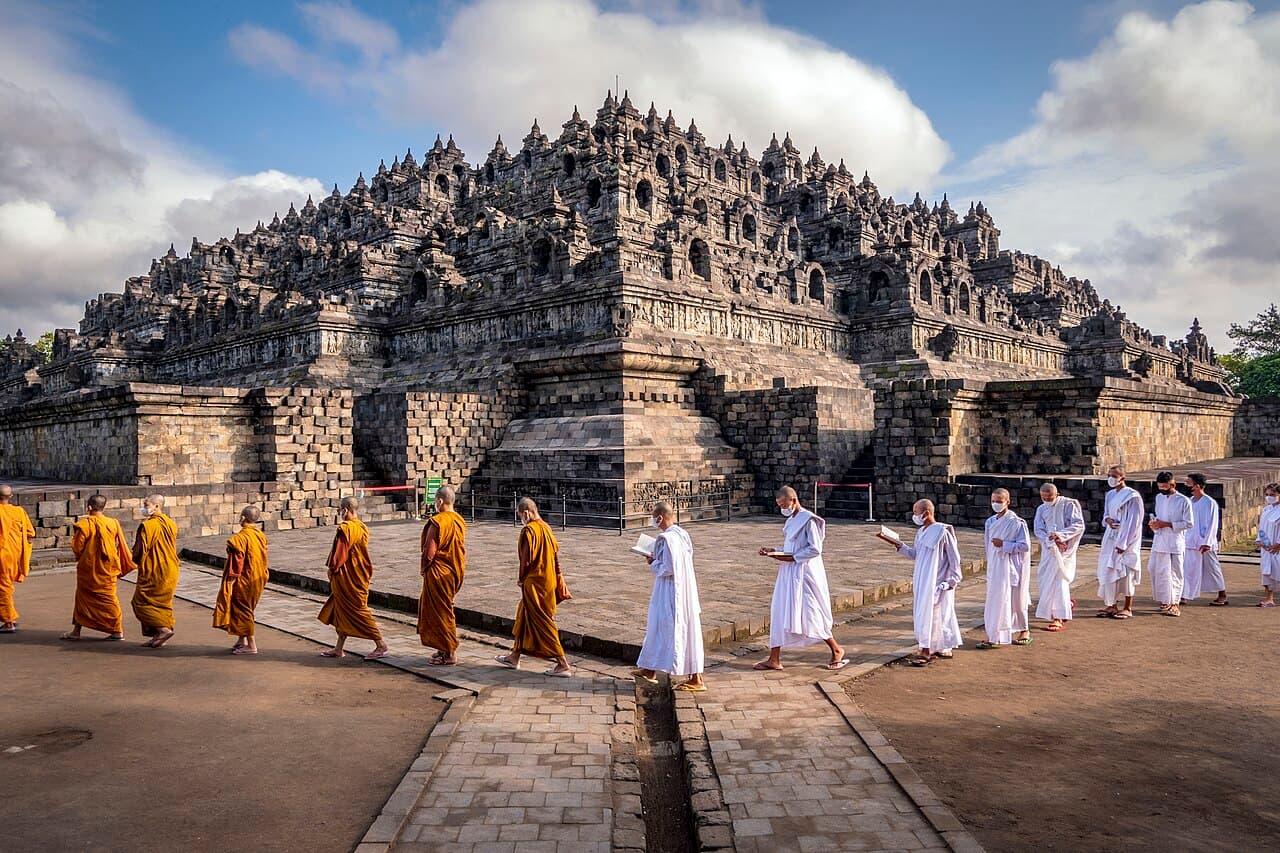
Java's cultural heart and gateway to Borobudur (world's largest Buddhist temple) and Prambanan Hindu temple complex. A fascinating contrast to Bali's beach culture.

Komodo National Park (Flores)
Home to the Komodo dragon, the world's largest lizard. Multi-day boat trips explore pink sand beaches, world-class diving at Manta Point, and Padar Island viewpoints.

Singapore
The gleaming city-state with Marina Bay Sands, Gardens by the Bay, world-class hawker food, and a seamless blend of cultures. Scoot, Singapore Airlines, and Garuda Indonesia fly direct from Ngurah Rai.
Entry Requirements
Indonesia offers Visa on Arrival (VOA) to citizens of most Western countries, valid for 30 days and extendable once for another 30 days. The VOA costs IDR 500,000 (~$33) and can be paid at the airport on arrival. E-VOA (electronic visa on arrival) can also be applied for online before travel.
Entry Requirements by Nationality
| Nationality | Visa Required | Max Stay | Notes |
|---|---|---|---|
| US Citizens | Visa-free | 30 days (VOA, extendable to 60) | Visa on Arrival costs IDR 500,000 (~$33). Passport must be valid for 6 months with at least 2 blank pages. Can extend once at a local immigration office. |
| UK Citizens | Visa-free | 30 days (VOA, extendable to 60) | Same VOA terms. E-VOA available online before travel to skip the airport queue. |
| Australian Citizens | Visa-free | 30 days (VOA, extendable to 60) | VOA widely used by the large Australian tourist population. Apply for e-VOA at molina.imigrasi.go.id for faster processing on arrival. |
| EU Citizens | Visa-free | 30 days (VOA, extendable to 60) | Most EU nationals qualify for VOA. Check the official list as a few EU countries have different arrangements. |
| Indian Citizens | Visa-free | 30 days (VOA) | India was added to the VOA list. IDR 500,000 fee applies. Must have proof of onward travel and sufficient funds. |
Visa-Free Entry
Visa on Arrival
Tips
- •Apply for the e-VOA online before travel at molina.imigrasi.go.id — it saves 30-60 minutes in the airport arrival queue
- •The VOA is extendable once for 30 more days at any immigration office in Bali — apply at least a week before your original 30 days expires
- •Keep your departure card (given on arrival) safe — you need it when leaving Indonesia
- •If you plan to stay longer than 60 days, apply for a B211A social/cultural visa before arrival through an Indonesian embassy or authorized agent
- •Indonesia recently introduced a tourist tax of IDR 150,000 (~$10) for international visitors to Bali, payable online or on arrival
Shopping
Bali is a treasure trove for handcrafted goods, from intricate silver jewelry to hand-carved wood and batik textiles. Bargaining is expected in markets and small shops — start at 30-40% of the asking price and negotiate from there. Fixed-price boutiques in Seminyak and Ubud offer curated goods without the haggling.
Ubud Art Market (Pasar Seni Ubud)
traditional marketA vibrant two-story market across from the Royal Palace selling paintings, carvings, baskets, scarves, and souvenirs. Best selection and lowest tourist markup early in the morning (before 9 AM) when locals also shop.
Known for: Handmade baskets, silk scarves, wooden carvings, paintings by local artists
Seminyak & Petitenget
boutique shoppingBali's most upscale shopping strip with international designer boutiques, surf brands, homewares stores, and concept shops along Jalan Laksmana (Eat Street) and Jalan Petitenget.
Known for: Indonesian designer fashion, premium swimwear, homeware and ceramics, artisan jewelry
Celuk Village
artisan villageA village near Ubud specializing in gold and silver jewelry crafted by multi-generational artisan families. Watch craftsmen at work and buy directly from workshops.
Known for: Handcrafted silver and gold jewelry, filigree work, custom pieces made to order
Sukawati Art Market
wholesale marketA large, less touristy market south of Ubud where many Bali souvenir shops source their stock. Better prices than Ubud Art Market but requires harder bargaining.
Known for: Wholesale-priced sarongs, wood carvings, wind chimes, ceremonial items
🎁 Unique Souvenirs to Look For
- •Luwak coffee (kopi luwak) — only buy from ethical producers that do not cage civets
- •Handmade silver jewelry from Celuk village
- •Balinese batik and ikat hand-woven textiles
- •Carved wooden masks used in traditional dance performances
- •Organic coconut oil and body products from local producers
- •Rattan bags (the "Bali bag" made famous on Instagram) from Tenganan village
- •Vanilla beans from Bali's highlands — far cheaper than at home
- •Traditional Balinese paintings in Kamasan wayang style
Language & Phrases
Bahasa Indonesia is the national language and is spoken everywhere in Bali. Balinese (Bahasa Bali) is the local language used among Balinese people. Indonesian is very easy to pronounce — it uses the Latin alphabet and is largely phonetic. A few basic phrases will earn you warm smiles.
| English | Translation | Pronunciation |
|---|---|---|
| Hello | Halo | ha-LOH |
| Good morning | Selamat pagi | seh-LAH-mat PAH-ghee |
| Good afternoon | Selamat siang | seh-LAH-mat see-AHNG |
| Thank you | Terima kasih | teh-REE-mah KAH-see |
| Please / You're welcome | Silakan / Sama-sama | see-LAH-kan / SAH-mah SAH-mah |
| Yes / No | Ya / Tidak | yah / TEE-dak |
| How much? | Berapa harganya? | beh-RAH-pah har-GAH-nyah? |
| Too expensive | Terlalu mahal | ter-LAH-loo MAH-hal |
| Delicious | Enak | eh-NAK |
| Where is...? | Di mana...? | dee MAH-nah...? |
| Sorry / Excuse me | Maaf / Permisi | mah-AHF / per-MEE-see |
| I don't understand | Saya tidak mengerti | SAH-yah TEE-dak men-GER-tee |
Getting Around
Bali has no public transit system, trains, or metro. Getting around relies on scooter rental, private drivers, and ride-hailing apps. Traffic is congested in southern Bali, especially between Kuta, Seminyak, and Canggu. Hiring a driver for the day is often the most comfortable and surprisingly affordable option.
Scooter Rental
IDR 60,000-100,000/day (~$4-6.50)The most popular way to get around for independent travelers. Automatic scooters (110-125cc) are rented from hotels, warungs, and shops throughout the island. International Driving Permit officially required but rarely checked.
Best for: Short trips, navigating Ubud's narrow roads, independent exploration of the north and east coast
Grab / Gojek
IDR 15,000-80,000 (~$1-5.25) for most rides; bikes are cheaperBoth ride-hailing apps operate across Bali with cars and motorbike taxis. Prices are transparent and much cheaper than traditional taxis. Some tourist areas (Ubud center, temples) have restrictions due to local transport mafia pressure.
Best for: Short to medium trips, airport transfers, avoiding scams from unlicensed drivers
Hired Driver (Full Day)
IDR 500,000-700,000/day (~$33-46) for car + driverHiring a local driver with a car for 8-10 hours is extremely popular and excellent value. Most speak English and double as informal guides. Book through your hotel or ask around.
Best for: Day trips to temples, rice terraces, and waterfalls; families; covering long distances comfortably
Blue Bird Taxi
IDR 7,000 flag-fall + IDR 6,500/km; typical trip IDR 30,000-80,000 (~$2-5.25)The only reputable metered taxi company in Bali. Light blue cars with the Blue Bird logo. Insist on the meter being used. Beware of copycat taxis with similar colors.
Best for: Short rides in southern Bali (Kuta, Seminyak, Sanur, Nusa Dua) when you want a metered fare
Walkability
Most areas of Bali are not walkable in the traditional sense — sidewalks are rare, traffic is dangerous for pedestrians, and distances between attractions are large. Ubud center and Seminyak's main strip are the most pleasant for walking. Always carry a flashlight at night as streets are poorly lit.
If you like Bali, you'll love…
4 cities with a similar vibe, outside of the same country.

Tanzania · OVR 71
jaw-dropping scenery · strong food culture

India · OVR 75
unforgettable natural beauty · strong food culture

Thailand · OVR 74
landscapes that steal the show · strong food culture

Thailand · OVR 69
unforgettable natural beauty · reliable eating scene