All Destinations
374 of 576 guides match

Tirana
Albania
Albania's capital spent 45 years as Europe's most isolated country (1944–1992); today Tirana is one of the continent's most energetic up-and-coming cities. Former mayor Edi Rama — now Prime Minister — painted communist-era grey apartment blocks in psychedelic colors, transforming the city's identity. Bunk'Art 1 and 2 repurpose Hoxha's nuclear bunkers (there were 750,000 — one per four Albanians) as extraordinary art museums. Blloku, once the exclusive communist party quarter, is now packed with cafes and bars. Ridiculously affordable.

Tokyo
Japan
Tokyo is a city of striking contrasts where ultramodern skyscrapers stand alongside ancient temples. The world's largest metropolitan area pulses with energy across its distinct neighborhoods — from the neon-lit streets of Shinjuku and Shibuya to the serene gardens of the Imperial Palace. Expect world-class food at every price point, efficient transit that runs like clockwork, and a culture that seamlessly weaves tradition into daily life.

Toledo
Spain
Toledo sits on a granite hill nearly encircled by a hairpin bend of the Tagus — the entire walled old city is UNESCO-listed and looks essentially as El Greco painted it in 1600. For five centuries it was Spain's capital and the meeting point of three faiths: the Gothic cathedral (one of the great cathedrals of Christendom) stands a few minutes' walk from the Sinagoga del Tránsito and the converted-mosque Cristo de la Luz. Marzipan workshops, Damascene-steel sword-makers, and El Greco's restored house round it out. The AVE high-speed train from Madrid Atocha takes 33 minutes — making Toledo the easiest serious day trip in Spain, though staying overnight is the way to see it without the day-tripper rush.

Toronto
Canada
Canada's largest city holds the CN Tower (553m), the world's most multicultural population (200 languages spoken), and St. Lawrence Market (National Geographic's #1 food market in the world). The Distillery District is the largest collection of Victorian industrial architecture in North America. From Kensington Market's bohemian stalls to the waterfront Islands ferry and the Royal Ontario Museum, Toronto delivers a world-class city without the pretension — and Niagara Falls is 90 minutes away.
Trinidad
Cuba
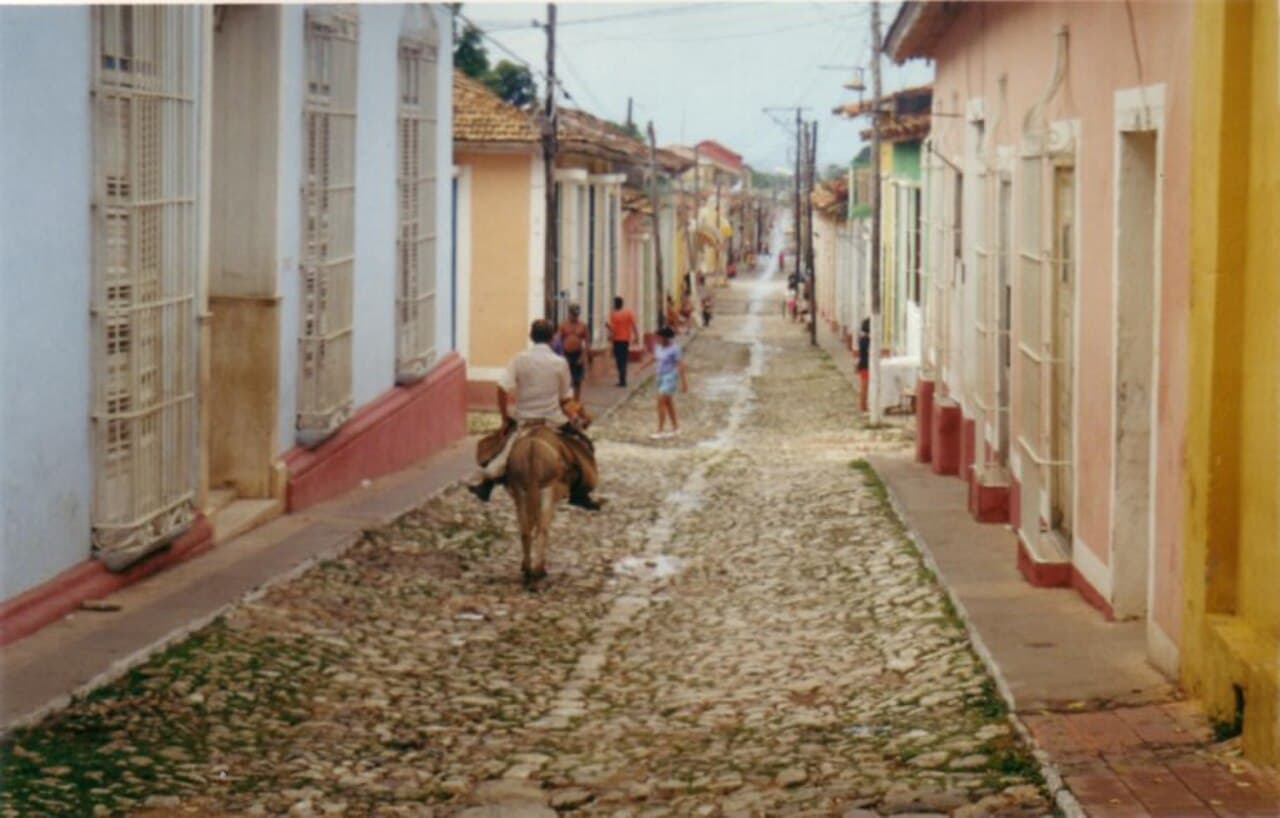
UNESCO-listed colonial city frozen in the 18th century — founded in 1514, Trinidad's pastel-painted houses and cobblestone streets have barely changed since sugar wealth peaked. Plaza Mayor is the finest colonial square in Cuba. Valle de los Ingenios preserves the sugar-plantation landscape that made the city rich and enslaved thousands.

Tromsø
Norway
The "Gateway to the Arctic" — Norway's largest city above the Arctic Circle sits on an island connected by the iconic Tromsø Bridge. Sitting directly under the auroral oval gives it roughly 240 aurora-visible nights a year; Fjellheisen cable car, the Arctic Cathedral, Polar Museum, and Mack Brewery (the world's northernmost) define the city. Surprisingly mild winters (−5°C average) thanks to the North Atlantic Current — dog sledding at Camp Tamok and Sami reindeer experiences round out the Arctic week.

Tucson
United States
Tucson sits in a Sonoran Desert basin ringed by five mountain ranges and saguaro forests so dense they got their own national park (split into east and west units that bracket the city). It's the oldest continuously inhabited place in the US — 4,000+ years of history layered through the Tohono O'odham, the Spanish mission of San Xavier del Bac (1797), Mexican rule, and the Wild West railroad town. The food scene is the only UNESCO City of Gastronomy in the US, built on Sonoran-Mexican traditions with chimichangas (invented here), sonoran hot dogs, and fresh tortillas at decades-old neighborhood spots.

Tunis
Tunisia
Tunisia's capital is where the Arab Spring began — where Mohamed Bouazizi's December 2010 self-immolation in Sidi Bouzid triggered a revolution that toppled Ben Ali and spread across the Arab world. But Tunis's layered history runs far deeper: Carthage's ruins 15 km north, the UNESCO Medina of Tunis (one of the Arab world's finest, with Ez-Zitouna Mosque at its heart), the Bardo's extraordinary Roman mosaics (world's largest collection), and Sidi Bou Said's blue-and-white clifftop village above the bay.

Udaipur
India
Rajasthan's "City of Lakes" is India at its most romantic — white-marble palaces ring Lake Pichola, with the Taj Lake Palace floating on its own island. Founded 1559 by Mewar king Maharana Udai Singh II. The City Palace is Rajasthan's largest, Bagore-ki-Haveli puts on a nightly folk-dance show, and the Monsoon Palace crowns the sunset hill. James Bond Octopussy filmed here. Day trip to Kumbhalgarh Fort (UNESCO, second-longest wall after China). Cleaner air and saner traffic than Delhi or Agra.

Ulaanbaatar
Mongolia
The world's coldest capital city (winter lows −40°C) holds roughly 45% of Mongolia's population on the steppe between Russia and China. Gandan Monastery with its 26m Buddha, Sükhbaatar Square, the Chinggis Khaan Equestrian Statue (40m stainless steel) an hour east, and Gorkhi-Terelj National Park 2 hours northeast for ger camps and Turtle Rock. Naadam Festival (July 11–13) is the peak cultural window — wrestling, horse racing, archery. Gateway to the Gobi Desert by train or flight. Best June–September.

Ushuaia
Argentina
Officially the southernmost city in the world — 'Fin del Mundo' (End of the World) — and the standard departure port for ~90% of all Antarctic Peninsula cruises (October-March, $7,000-$25,000+). The Beagle Channel (Darwin's HMS Beagle) frames the city on one side; the Martial Mountains rise on the other. Tierra del Fuego National Park (12km west) holds the southern terminus of Argentina's Ruta 3 marked 'Buenos Aires 3,063 km'. The 1902-1947 prison is now an excellent Maritime Museum. Tax-free Tierra del Fuego makes electronics and Argentine wine cheaper than mainland; Cerro Castor ski resort 26km away is the world's southernmost commercial slope.

Utrecht
Netherlands
Utrecht is the Netherlands without the Amsterdam crowds, plus a quirky architectural feature you will not see in any other Dutch city: the medieval canals run a level below the street, and the old wharves (werfkelders) along the Oudegracht are now packed with restaurants and bars at water level. The 112-metre Domtoren is the tallest church tower in the country, the DOMunder tour walks you through 2,000 years of buried Roman and medieval foundations, and the compact medieval center is built for bikes and slow afternoons. Twenty-seven minutes by Intercity train from Amsterdam.

Valencia
Spain
Spain's third-largest city sits on the Mediterranean coast 350 km southeast of Madrid — the birthplace of paella (originated in the rice paddies and orange groves of the Albufera lagoon south of the city), home to Santiago Calatrava's futuristic City of Arts and Sciences (Europe's largest cultural-architectural complex), and built around the 9 km Turia Gardens — a linear park created in the diverted riverbed after the 1957 flood. Add Las Fallas (the UNESCO Intangible Heritage festival of 700+ giant satirical papier-mâché monuments burned in March), the medieval El Carmen quarter, the modernista Mercado Central (Europe's largest fresh-produce market), the Holy Grail in the cathedral, and a wide urban beach reachable by tram — and Valencia delivers more variety per square mile than any other major Spanish city.

Valletta
Malta
Built by the Knights of St. John after the Great Siege of 1565 — UNESCO 1980, one of Europe's smallest capital cities (0.8 km²) and European Capital of Culture 2018. St. John's Co-Cathedral holds Caravaggio's Beheading of St. John masterpiece; Upper Barrakka Gardens fire the saluting battery daily at noon and 4pm; the Grand Harbour is ringed by the Three Cities (Vittoriosa, Senglea, Cospicua) older than Valletta itself. Mdina — Malta's "silent city" — is a 30-minute bus away. Schengen EUR, 90-day visa-free entry for most Western passports (ETIAS from 2026).

Valparaíso
Chile
Chile's bohemian port city — UNESCO-listed hillside neighborhoods blanketed in street art, connected by century-old funiculars, and buzzing with poets, galleries, and seafood.

Vancouver
Canada
Vancouver is where mountains meet the Pacific — snowboard in the morning, kayak in the afternoon, and eat world-class sushi for dinner. Stanley Park, Granville Island, and the Capilano Suspension Bridge are highlights, but the city's real draw is its setting. The food scene reflects its Asian-Pacific crossroads, especially in Richmond's Chinese restaurants.

Varanasi
India
One of the world's oldest continuously inhabited cities, Varanasi is the spiritual heart of Hinduism. The ghats along the Ganges, evening aarti ceremonies, and silk weaving tradition create an unforgettable experience.
.jpg%3Fwidth%3D1280&w=1600&q=75)
Veliko Tarnovo
Bulgaria
The medieval capital of Bulgaria from 1185 to 1393 — a tiered amphitheatre of red-roofed houses stacked across the cliffs above a horseshoe bend of the Yantra River. Tsarevets Fortress rises from its own peninsula on the eastern hill, its restored ramparts and Patriarchal Cathedral hosting a son et lumiere show on summer nights that floods the rock in coloured light. Samovodska Charshia is the restored craft street of woodcarvers and coppersmiths in the Old Town below. Three hours by train from Sofia, this is the traditional gateway to Bulgarian rural tourism in the Balkan range.

Venice
Italy
118 islands stitched together by 400 bridges across a saltwater lagoon — a thousand years of maritime republic concentrated into 7.6 km² that have no cars and never will. St Mark's Basilica's gold mosaics under five Byzantine domes, the Doge's Palace and Bridge of Sighs, the Rialto Bridge across the Grand Canal's S-curve, Burano's painted houses and Murano's glass furnaces in the lagoon, and the gondola routes that have run essentially unchanged for 400 years. UNESCO-listed in its entirety; under serious pressure from 25 million annual visitors and Acqua Alta floods, with a €5 day-tripper fee in effect peak summer.

Verona
Italy
A UNESCO city of 2,000 years of continuous urbanism in a single Adige river bend — the third-largest surviving Roman amphitheatre still hosting the world’s biggest open-air opera season, the Casa di Giulietta balcony where Shakespeare’s romance lives in collective imagination, Castelvecchio’s Carlo Scarpa-restored Scaligeri fortress, the marble-paved Piazza delle Erbe market square, and the Valpolicella wine region in the eastern hills. The smartest base in the Veneto for visiting Lake Garda, Venice, and the Palladian villas.

Vienna
Austria
Vienna is the city of music, imperial grandeur, and coffeehouse culture. The former heart of the Habsburg Empire impresses with its Baroque palaces, world-class museums, and a cultural scene that rivals any European capital. Classical concerts, Sachertorte, and wine taverns in the Vienna Woods — it's refined without being stuffy.

Vientiane
Laos
Southeast Asia's most laid-back capital, Vientiane is a charming Mekong River city of golden stupas, French bakeries, and sunset cocktails along the riverside promenade. The golden Pha That Luang stupa is the national symbol and the Buddha Park is delightfully eccentric.

Vigan
Philippines
A UNESCO-listed Spanish colonial city on the Ilocos Sur coast of northwest Luzon, founded in 1572 and the best-preserved example of a planned colonial settlement in Asia. Calle Crisologo is the cobblestone showpiece — a strip of two-storey ancestral mestizo houses where horse-drawn calesas still clatter over the stones at sunset. Beyond Crisologo: the Bantay Bell Tower, the St Paul Metropolitan Cathedral, the Ilocano food canon of longanisa sausage and empanada, and the burnay clay-jar workshops. An hour by flight from Manila to Laoag, then 90 minutes by van south, or 8 hours direct by overnight bus.

Vík í Mýrdal
Iceland
Iceland's southernmost village — 750 people clinging to the foot of Mýrdalsjökull glacier, with the black-sand crescent of Reynisfjara and the Reynisdrangar sea stacks two minutes' drive west. The red-roofed clifftop church above town is one of the country's most photographed landmarks. Vík is the practical base for the South Coast circuit (Seljalandsfoss, Skógafoss, Sólheimajökull, Dyrhólaey), 187 km / 2.5 hours from Reykjavík on the Ring Road.