
Toledo
THE QUICK VERDICT
By Anthony · Updated April 2026
Choose Toledo if You want a single small UNESCO city that compresses Christian, Jewish, and Moorish Spain into one walkable hilltop, 33 minutes from Madrid..
- Best for
- Cathedral, El Greco's Burial of Count Orgaz, Synagogue of El Tránsito, marzipan from Santo Tomé
- Two seasons
- Apr–Jun and Sep–Oct
- Budget anchor
- $150/day mid-range
- Worth a look
- sleep over and walk the floodlit Alcázar at 10pm — day-trippers from Madrid clear out by sunset
Toledo sits on a granite hill nearly encircled by a hairpin bend of the Tagus — the entire walled old city is UNESCO-listed and looks essentially as El Greco painted it in 1600. For five centuries it was Spain's capital and the meeting point of three faiths: the Gothic cathedral (one of the great cathedrals of Christendom) stands a few minutes' walk from the Sinagoga del Tránsito and the converted-mosque Cristo de la Luz. Marzipan workshops, Damascene-steel sword-makers, and El Greco's restored house round it out. The AVE high-speed train from Madrid Atocha takes 33 minutes — making Toledo the easiest serious day trip in Spain, though staying overnight is the way to see it without the day-tripper rush.
The two links below are affiliate links — MapSorted earns a small commission if you book through them, at no extra cost to you. How this works.
Tours & Experiences
Bookable tours, activities, and day trips in Toledo
Where to Stay
Compare hotels and rentals in Toledo
📍 Points of Interest
Toledo Cathedral (Catedral Primada)
Gothic primate cathedral of Spain — Custodia de Arfe gold monstrance, Greco's Disrobing of Christ, Tomé's Transparente baroque skylit altar
Alcázar of Toledo
Square fortress on the highest point of the city — Roman/Visigothic/Moorish/Christian layered, now the Museo del Ejército
Mirador del Valle
Best view of Toledo — across the Tagus gorge, the El Greco "View of Toledo" angle unchanged since 1600. Sunset is spectacular
Sinagoga del Tránsito & Sephardic Museum
1357 Mudéjar synagogue — Hebrew + Islamic + Castilian plasterwork, now the national museum of Spanish Jewry
Iglesia de Santo Tomé (El Greco)
Small parish church holding El Greco's greatest single canvas, "The Burial of the Count of Orgaz" (1586)
Mezquita del Cristo de la Luz
999 CE mosque — the smallest and oldest standing building in Toledo, nine domes, horseshoe arches, reused Roman columns
Monasterio de San Juan de los Reyes
Late Gothic Isabelline royal Franciscan monastery — Ferdinand and Isabella commissioned 1477, exterior wall hung with chains of freed Christian prisoners
Casa-Museo de El Greco
Reconstructed 16th-century townhouse with 25+ original El Greco canvases including "View and Plan of Toledo"
Puente de San Martín
14th-century Gothic bridge over the Tagus on the western side of the old city — best photo angle from the riverside trail
★ Local Picks
Mariano Zamorano sword shop
One of the few remaining traditional Toledo blade-makers — hand-forged steel since the 1880s, workshop visible from the shop
Santo Tomé Mazapán
Toledo's historic mazapán confitería since 1856 — traditional Cistercian recipe, hand-shaped marzipan figures
At a Glance
- Pop.
- 85K (city)
- Timezone
- Madrid
- Dial
- +34
- Emergency
- 112
Toledo was the capital of Visigothic Spain (542–711), the Caliphate of Córdoba's northern frontier (711–1085), and the capital of Castile (1085–1561) — when Philip II moved the court to Madrid, Toledo froze in time and became a museum-city of the medieval Iberian world
The entire walled old city is UNESCO World Heritage (since 1986) and is encircled on three sides by a hairpin bend of the Río Tajo (Tagus) — the same gorge the river flows down 1,000 km to the Atlantic at Lisbon
For ~400 years from the 8th to 12th centuries, Toledo was the most important centre of cultural exchange in medieval Europe — the School of Translators here rendered Arabic and Hebrew works (Aristotle, Avicenna, al-Khwarizmi) into Latin and made the European Renaissance possible
Domenikos Theotokopoulos — El Greco — moved here from Crete via Venice in 1577 and lived in Toledo until his death in 1614; his "View of Toledo" (now at the Met in NYC) is the first true landscape painting in Western art history
Toledo steel was traded across the Roman world from the 1st century BC and Toledo blade-makers still hand-forge sword and dagger blades today — the city has the only continuous European sword-making tradition that runs unbroken from antiquity
The Toledo Cathedral (Catedral Primada) is the seat of the Primate of Spain — head of the Spanish Catholic Church — and contains the Custodia de Arfe, a 3m monstrance made from 18kg of solid gold from the New World, paraded through the city at Corpus Christi
Mazapán (marzipan) was first documented in Toledo in 1212 — made by the Cistercian nuns of San Clemente from local almonds and honey, and still produced by traditional confiterías across the old city
Top Sights
Toledo Cathedral (Catedral Primada)
🗼One of the great Gothic cathedrals of Christendom — built 1226–1493 over the Visigothic-then-Mosque site — and stuffed with art that would be a national museum anywhere else. The Custodia de Arfe (1517, 3m monstrance, 18kg of solid New World gold), El Greco's "Disrobing of Christ" (in the Sacristy), the Transparente baroque skylit altarpiece by Tomé (1732), and Visigothic-script choir books. €12.50 admission, includes audio guide. Closed Sunday morning for mass. Allow 2 hours.
Mirador del Valle Viewpoint
🗼The single best view in Toledo — a viewing platform across the Tagus gorge (south side, accessible by car or the tourist Zoco bus), looking back at the entire UNESCO old city stacked up the granite hill. This is the El Greco "View of Toledo" angle, basically unchanged since 1600. Free; arrive 30 minutes before sunset for the gold-hour photograph. The 5km Senda Ecológica walking trail circles the gorge below if you want to combine.
Alcázar of Toledo
🏛️The square fortress crowning the highest point of the old city — Roman, Visigothic, Moorish, and Christian incarnations layered on the same site. The current building was largely destroyed in the 1936 Siege of the Alcázar (Spanish Civil War) and reconstructed; it now houses the Museo del Ejército (Army Museum), with an excellent permanent exhibition on Spanish military history. €5 admission; free Sundays. Closed Wednesdays. The four-tower silhouette is the city's skyline anchor.
Sinagoga del Tránsito & Sephardic Museum
🏛️Built 1357 under Pedro the Cruel by his Jewish treasurer Samuel ha-Levi — a Mudéjar synagogue with extraordinary plasterwork blending Hebrew inscriptions, geometric Islamic patterns, and Castilian heraldry. Now the Museo Sefardí, the national museum of Spain's Jewish heritage; it tells the story of Sephardic Jewry from Roman Hispania through the 1492 expulsion to the present. €3 admission; free Saturday afternoons + Sunday mornings.
Iglesia de Santo Tomé & "El Entierro del Conde de Orgaz"
🗼A small parish church in the Judería that holds El Greco's greatest single canvas — "The Burial of the Count of Orgaz" (1586), a 4.8m × 3.6m painting depicting a 14th-century miracle. The lower half, a portrait of late-16th-century Toledo society at the funeral, is one of the Renaissance's great group portraits. €4 admission; the painting is in a side chapel and you go directly to it. Open daily, frequently crowded — go at 10:00 sharp or 17:30.
Mezquita del Cristo de la Luz
🗼The smallest and oldest standing building in Toledo — a 999 CE mosque (the inscription gives the exact founding date) that became a Visigothic-style chapel after 1085. Tiny by mosque standards (8m square) but perfectly preserved with nine domes, horseshoe arches, and Roman columns reused from earlier buildings. €4 admission. The neighbouring archaeological excavation shows the original Roman road below.
Monasterio de San Juan de los Reyes
🗼The royal Franciscan monastery commissioned by Ferdinand and Isabella in 1477 to celebrate their victory at Toro and intended as their burial place (until they took Granada in 1492 and changed plans). Late Gothic Isabelline architecture at its most ornate; the cloister is one of the most beautiful in Spain. The exterior wall is hung with the iron chains of Christian prisoners freed from Granada. €4 admission. Closed Sunday afternoons.
Casa-Museo de El Greco
🏛️The reconstructed house of El Greco (he didn't actually live in this exact building, but the museum is in the same neighbourhood where he lived) — a 16th-century townhouse with a recreated period kitchen and 25+ original El Greco canvases including "View and Plan of Toledo" and the late "Apostolado" series. €3 admission; free Saturday afternoons + Sunday mornings.
Climate & Best Time to Go
Toledo has a Mediterranean continental climate — hot dry summers, cold dry winters, and a pronounced day/night swing thanks to its 530m altitude. Summer afternoons regularly hit 35°C with very low humidity; winter nights drop near freezing. The shoulder seasons (April–early June, late September–October) are the comfortable windows. Annual rainfall is low (~370mm) and concentrated in the cool months.
Spring
April - June46 to 82°F
8 to 28°C
Excellent — comfortable temperatures, the Tagus gorge greens up briefly, Holy Week (Semana Santa) in late March or early April fills the city with religious processions and Corpus Christi (May/June) is the cultural highlight of the year. Good outdoor light for photography.
Summer
June - September59 to 95°F
15 to 35°C
Hot — daytime highs 32–38°C are standard, occasional 40°C heat spikes. The granite city stones radiate heat well into the evening. Tour the cathedral and museums in the morning, retreat for the siesta 14:00–18:00, return at dusk. Days are long; sunset 21:30 in late June.
Autumn
September - November46 to 82°F
8 to 28°C
September still warm but breaking down by month-end; October ideal (15–22°C), November cools fast and brings the only consistent rain. Late October–early November is when the Tagus gorge turns gold. Hotel prices drop after September.
Winter
December - March28 to 57°F
-2 to 14°C
Cold and dry — daytime sun + cold nights, occasional frost, very rare snow. The city is at its quietest; the cathedral fills with locals for Christmas mass and Three Kings (6 January) processions. Hotels at their cheapest. Pack layers; winter mornings often start frosty and finish at 14°C.
Best Time to Visit
April–early June and late September–October are the optimal windows: pleasant temperatures (15–25°C), full operations, manageable crowds. Holy Week (Semana Santa, late March/April) is spectacular but the busiest week of the year. Corpus Christi (May/June) is the cultural highlight — the entire old city is decorated with thyme, lavender, and rosemary, and the Custodia de Arfe is paraded. Summer is hot (35°C+); winter is cold, dry, and quiet.
Spring (April–early June)
Crowds: High during Holy Week and Corpus Christi, moderate otherwiseThe optimal window — warm days (18–25°C), cool nights, the Tagus gorge greens up briefly. Holy Week brings religious processions; Corpus Christi (May/June) is the city's biggest festival with carpeted streets and the gold monstrance procession. Hotel prices high but not peak.
Pros
- + Best weather for walking
- + Holy Week processions (April)
- + Corpus Christi (May/June)
- + Long enough days for full sightseeing
Cons
- − Holy Week crowded
- − Some rain
- − Hotel prices peak around festivals
Summer (June–September)
Crowds: High to very high (peak season)Hot — daytime 32–38°C, the granite stones radiate heat, the city goes quiet 14:00–18:00 in the siesta. Long daylight (sunset 21:30 in late June) compensates if you adjust to a Spanish schedule (sightsee 09:00–13:00, retreat for siesta, return 18:00–22:00). August is hottest and busiest with Madrid weekenders.
Pros
- + Long daylight
- + Outdoor evening dining
- + Festivals and concerts
- + All sights at extended hours
Cons
- − 35°C+ daytime heat
- − Cathedral and Alcázar queues at peak hours
- − Hotel prices peak
- − August heat dangerous for over-65s
Autumn (October–November)
Crowds: Moderate in October, low in NovemberOctober is the perfect month — comfortable 18–22°C, the Tagus gorge turns gold, crowds drop dramatically after the summer. November cools and brings the only consistent rain. Hotel prices reasonable.
Pros
- + Best photographic light
- + Comfortable temperatures
- + Lower hotel prices
- + Tagus gorge in autumn colour
Cons
- − November rain
- − Daylight shortening
- − Some restaurant terraces closing
Winter (December–March)
Crowds: Very low (except Christmas + Three Kings)Cold and dry — daytime 10–14°C, frosty mornings, very rare snow. The city is at its quietest; Three Kings procession on 6 January is the cultural highlight. Hotel prices at their lowest.
Pros
- + Hotels 30–50% cheaper
- + No queues anywhere
- + Crisp dry winter sun
- + Three Kings procession (6 January)
Cons
- − Cold (often below freezing at night)
- − Short days
- − Some smaller museums on reduced hours
- − Tagus gorge looks bare
🎉 Festivals & Events
Semana Santa (Holy Week)
Late March or AprilToledo's Holy Week is among the most atmospheric in Spain — silent processions of hooded penitents through the narrow walled streets, religious brotherhoods carrying ornate floats, and Good Friday's Procession of Silence. Hotel prices peak; book 4+ months ahead.
Corpus Christi
Thursday after Trinity Sunday (60 days after Easter, May or June)Toledo's biggest festival — the entire old city is carpeted in thyme, lavender, and rosemary along the procession route, the Custodia de Arfe (3m gold monstrance) is paraded from the cathedral, and the city government and Church dignitaries lead a 3-hour ceremonial walk. UNESCO Intangible Heritage candidate.
Festividad del Cristo de la Luz
15 AugustPatron saint celebration with religious processions and traditional Castilian music; the Mezquita del Cristo de la Luz hosts a special mass.
Toledo International Music Festival
JuneClassical music concerts in cathedral, Alcázar courtyard, and historic palaces over 2 weeks. Tickets €20–€60.
Three Kings Day (Reyes Magos)
5–6 JanuaryThe most important Spanish-children's holiday — the Three Kings parade on the evening of 5 January throws sweets to children, and presents are exchanged on 6 January morning. Toledo's parade is among the most traditional.
Off the Beaten Path
Santo Tomé Mazapán (since 1856)
Toledo's historic mazapán confitería — Calle Santo Tomé runs through the Judería past the Iglesia de Santo Tomé, and the original Santo Tomé shop has been on this street since 1856. Buy by weight: a small 200g box of "Imperial" assorted shapes is €8–€12 / $9–13. The "anguila" (eel) — a long marzipan log shaped like an eel and topped with sugared fruit — is a Christmas-season specialty. The shop is open daily.
There are 30+ mazapán shops in Toledo; Santo Tomé is the oldest still operating and uses the traditional Cistercian recipe (almonds + sugar + honey, no flour, no preservatives). The kitchen is visible through a glass wall.
Adolfo Restaurante (Calle La Granada)
A serious Castilian restaurant that has been at the centre of the Toledo dining scene for 30+ years — partridge stew (perdiz estofada), wild boar (jabalí), Manchego cheese flights, and the regional Toledo wines (mostly garnacha). Mains €22–€38 / $23–40. Lunch is the move (cheaper menu del día at €30 with three courses + wine); dinner is more formal. Book ahead.
The Castilian-Manchego cuisine of game, lamb, and partridge is what Toledo eats and travellers often miss. Adolfo cooks the regional cuisine without modernist flourishes — this is what locals eat for an anniversary dinner.
Bar Ludeña (Plaza de la Magdalena)
A tiny tapas bar on Plaza de la Magdalena famous for one dish: the carcamusa — a slow-cooked pork-and-tomato stew with peas, pickled chilies, and chorizo, served in a small clay cazuela with crusty bread. €6 / $6.50 a portion, about €4 for a glass of Manchego wine. Open lunch and evening; standing-bar only, no reservations.
Carcamusa is the unofficial dish of Toledo and Bar Ludeña is universally recognised as the best version in the city — locals queue out the door at 14:00 and 21:00. Cash preferred.
Mariano Zamorano sword shop
One of the few remaining traditional Toledo blade-makers — the Zamorano family has hand-forged Toledo steel since the 1880s, supplying knives, swords, and theatre props. The workshop on Calle Ciudad is open to walk through; you can watch a swordsmith working at the anvil. Letter openers from €25, kitchen knives €60–€150, full swords €300–€2,000+. Genuine Toledo steel pieces are stamped with the maker's name and the city marca.
There are dozens of Toledo "sword shops" selling Chinese-imported imitation pieces; Zamorano is one of the last actually forging blades on the premises in the historic Toledo tradition.
Safety Breakdown
Very Safe
out of 100
Toledo is one of the safest destinations in Spain — a small UNESCO city of 85,000 with low crime, visible Policía Local presence, and tourism well integrated into local life. Violent crime is essentially absent; the only meaningful risks are pickpockets in the cathedral and at peak Mirador del Valle hours, scooter accidents on the steep cobbles, and summer-heat issues. Solo female travellers report Toledo as comfortable, including late evening.
Things to Know
- •Pickpockets target the cathedral entrance queue (€12.50 ticket holders bunching), the Mirador del Valle bus, and peak-hour spots in front of the Alcázar — keep wallets in front pockets, bags zipped
- •Toledo cobbles are steep, polished, and slippery in rain — wear shoes with grip, take the same route by elevator-and-escalator (Remonte Mecánico, free) up from the Safont/Recaredo car parks rather than climbing on foot
- •The Mirador del Valle viewpoint after sunset is unlit and the path back to the road can feel isolated — return with the daylight or take the Zoco tourist bus back
- •Beware the unofficial "tour guides" outside the cathedral offering instant private tours — they will charge €30–€60 and provide nothing the audio guide doesn't. Book official tours via Toledo Turismo
- •Tap water is safe to drink across Toledo — local tap is mineral-rich and tastes fine
- •Restaurant scams are rare but do exist on Plaza de Zocodover (the main square) — check menu prices before sitting down, particularly cubierto (cover charge) which should be max €1.50 per person
- •The Tagus gorge has steep unfenced sections on the Senda Ecológica trail and the Mirador del Valle area — keep children close
- •Holy Week (Semana Santa) processions involve large crowds in narrow streets — comfortable shoes, no large bags, and watch for pickpockets
Emergency Numbers
Emergency (all services)
112
National Police
091
Local Police (Toledo)
092
Civil Guard
062
Tourist Office
+34 925 25 40 30
Costs & Currency
Where the money goes
USD per dayBackpacker = hostel dorm + street food + public transit. Mid-range = 3-star hotel + neighbourhood restaurants + transit cards. Luxury = 4/5-star + fine dining + taxis. How we calibrate these numbers →
Quick cost estimate
Customize per category →Estimates based on regional averages. Flight prices vary by season and airline.
budget
$60-100
Hostel dorm or guesthouse (€25–€50/night), tapas dinners, free walking tour, cathedral entry, occasional museum, walking everywhere
mid-range
$140-220
Mid-range hotel inside the walls (€90–€160/night double), restaurant dinners with wine, cathedral + Sephardic Museum + Alcázar entries, taxi to Mirador del Valle
luxury
$320-700
Parador de Toledo or Eugenia de Montijo (€220–€450/night), Michelin-starred dining, private guides, full Damascene-and-mazapán shopping, Cathedral private chapter tour
Typical Costs
| Item | Local | USD |
|---|---|---|
| AccommodationHostel dorm bed | €25–€45/night | $26–48 |
| AccommodationMid-range double room (inside walls) | €90–€160/night | $95–170 |
| AccommodationParador de Toledo (Mirador del Valle side) | €220–€380/night | $233–403 |
| FoodTapas dinner (3 tapas + 2 wines per person) | €18–€28 | $19–30 |
| FoodSit-down restaurant dinner (mid-range) | €30–€55 per person | $32–58 |
| FoodMenu del día (3-course lunch + wine) | €14–€22 | $15–23 |
| FoodBocadillo or sandwich lunch | €5–€8 | $5–8 |
| FoodCafé con leche | €1.80–€2.50 | $1.90–2.65 |
| FoodBeer or glass of Manchego wine | €2.50–€4.50 | $2.65–4.75 |
| TransportAVE/Avant Madrid → Toledo | €13–€25 | $14–27 |
| TransportALSA bus Madrid → Toledo | €5.80 | $6.10 |
| TransportCity bus single ticket | €1.40 | $1.50 |
| TransportTaxi Toledo train station → Zocodover | €8 | $8.50 |
| TransportTaxi to Mirador del Valle round trip | €20–€25 | $21–27 |
| AttractionToledo Cathedral (with audio guide) | €12.50 | $13.20 |
| AttractionAlcázar (Army Museum) | €5 | $5.30 |
| AttractionSinagoga del Tránsito / Sephardic Museum | €3 | $3.20 |
| AttractionIglesia de Santo Tomé (Greco) | €4 | $4.20 |
| AttractionCasa-Museo de El Greco | €3 | $3.20 |
| AttractionPulsera Turística (7-monument bracelet) | €12 | $12.70 |
💡 Money-Saving Tips
- •Buy the Pulsera Turística (Tourist Bracelet) at €12 — admission to 7 monuments (Santo Tomé Greco, San Juan de los Reyes, Sinagoga Santa María la Blanca, Iglesia de los Jesuitas, Cristo de la Luz, Salvador, Real Colegio de Doncellas Nobles), saves ~€15 if you visit even 4 of them
- •Visit on a Sunday morning — Sephardic Museum free Sunday + free Saturday afternoons, multiple monuments free 2–3 hours/week (check Toledo Turismo schedule)
- •Eat the menu del día at lunch (€14–€22 for 3 courses + wine) — same restaurant dinner is double the price; locals eat their main meal at lunch
- •Stay overnight rather than day-tripping — hotels inside the walls drop dramatically at 18:00 when day-trippers leave; the city is yours alone
- •Use the free Remonte Mecánico escalators from peripheral car parks rather than paying central parking; Safont and Recaredo car parks are €5–€10/day vs €18+ inside
- •AVE express train at €13 (book 2+ weeks ahead) is barely more than the bus and saves 50 minutes
- •Free walking tours leave from Plaza de Zocodover at 11:00 and 16:00 (Civitatis, FreeTour) — tip-based, typical tip €5–€10 per person
- •Off-season (November–February excluding Christmas + Three Kings) hotel prices drop 30–50%
Euro
Code: EUR
Spain uses the Euro (€). At writing, €1 ≈ $1.06 USD. ATMs are plentiful — use bank ATMs (BBVA, Santander, CaixaBank, Banco Sabadell) and AVOID Euronet ATMs in tourist zones, which charge poor rates. Cards (Visa, Mastercard, Amex) are accepted everywhere including small shops; contactless is universal. Cash useful only for small purchases (under €5), some markets, and tipping. The "dynamic currency conversion" prompt at card terminals — always pick "charge in EUR" not your home currency.
Payment Methods
Spain has gone heavily cashless — contactless card, Apple Pay, and Google Pay work essentially everywhere including small bakeries, market stalls, museum admissions, and city buses. Cash needed only for: very small purchases (under €5 some shops still ask), tipping, public toilets in some bars (€0.50). Always carry €50–€100 cash for emergencies and small purchases.
Tipping Guide
Not expected for casual meals — locals leave €1–€2 for good service or round up the bill. For sit-down restaurants with full service, 5–10% is appreciated; 10% for excellent service. Service charge is rarely added; cubierto (cover charge) is up to €1.50 per person and is for bread/olives.
No tipping at the standing bar. If you sit at a table and have full service, leave €1–€2 per round.
Round up to the nearest euro. For a longer fare (€10+), a €1–€2 tip is appreciated but not expected.
Bellboy: €1–€2 per bag. Housekeeping: €1–€2/day. Concierge: €5–€10 for a restaurant booking or excursion arrangement.
Free-tour guides survive on tips: €5–€10 per person for a 2-hour walking tour. Private guides: €10–€20 per person on top of the booked fee.
How to Get There
✈️ Airports
Madrid-Barajas Airport(MAD)
85 km northToledo has no airport; Madrid-Barajas (MAD) is the gateway. Cleanest connection: Metro from MAD to Atocha-Renfe (50 min, €5), then AVE/Avant high-speed train to Toledo (33 min, €13–25). Direct ALSA bus from Madrid Estación Sur to Toledo (1 hr 20 min, €5.80) is cheaper but slower. Total Madrid airport to Toledo old city: ~2 hr 30 min by train, 2 hr 45 min by bus.
✈️ Search flights to MAD🚆 Rail Stations
Toledo Station (Avenida de Castilla La Mancha)
A spectacular Mudéjar-style 1920 station 1.5km north of the old city — Avant + AVE high-speed services to Madrid Atocha (33 min, €13–25, ~10 trains/day). No through-services beyond Toledo (it's a terminus). City Bus 12 from outside the station to Plaza de Zocodover (15 min, €1.40); taxi €8 / 10 min.
🚌 Bus Terminals
Toledo Bus Station (Plaza de la Estación)
ALSA intercity buses to Madrid (Estación Sur, 1 hr 20 min, €5.80, every 30 min) and other Castile-La Mancha towns. Cheaper than the AVE if you don't mind the extra time. The bus station is a 10-minute walk from Plaza de Zocodover, mostly uphill — taxi €5 if you have luggage.
Getting Around
Toledo's walled old city is small (1km × 700m) and best explored on foot — but the granite hill is genuinely steep, and there are free public escalators (Remonte Mecánico) and lifts that get you up the hardest sections from peripheral car parks. The city bus network covers the perimeter and to Mirador del Valle. The single best transit decision is parking outside the walls at one of the free / cheap car parks (Safont, Recaredo) and using the escalators, rather than driving inside the walls.
Walking
FreeThe walled old city is fully walkable end-to-end in 20 minutes — but the hill rises ~80m from the river to the cathedral plaza, and cobbles are steep. Most attractions are within 10 minutes of Plaza de Zocodover. Use the free Remonte Mecánico escalators from Safont and Recaredo car parks to skip the worst climbs. Cars are restricted in the historic centre.
Best for: Cathedral, Alcázar, Judería, Plaza de Zocodover, all walled-city sights
Remonte Mecánico (Public Escalators)
FreeToledo's cleverest piece of urban design — covered escalator-and-lift systems get you up the hill from the Safont and Recaredo car parks for free. The Safont escalator from the riverside up to the old city is six covered sections rising ~50m; running 07:30–22:00 daily. Saves about 15 minutes' steep climb.
Best for: Getting from car parks or river-level hotels up to the centre
City Bus (Unauto)
€1.40 single / €8 ten-trip cardToledo's 6 city bus lines circle the walls and serve the modern outskirts; for travellers, only Lines 5 (to the Mirador del Valle) and 12 (train station to Plaza de Zocodover) are useful. Single ticket €1.40, 10-trip card €8. Buy on board or at kiosks.
Best for: Mirador del Valle viewpoint, train station, hospital
Taxi
€5–€15 within cityToledo has one taxi rank at Plaza de Zocodover and another at the train station — call Radio Taxi (+34 925 25 50 50) elsewhere. Trips within the city €5–€10; train station to Plaza de Zocodover €8; Mirador del Valle €12. Uber and Bolt do not operate in Toledo (small-city restriction).
Best for: Late evening, Mirador del Valle return, hotels outside the walls
Zoco / Toledo City Tour Bus
€17 day-passHop-on-hop-off tourist bus loops the walls and includes the Mirador del Valle stop — €17 day-ticket / $18. Useful primarily as a Mirador del Valle round-trip if you don't want to take the regular Line 5 bus and walk. Departures every 30 minutes from Plaza de Zocodover.
Best for: Quick Mirador del Valle round-trip if you have limited time
Walkability
Toledo is one of the most walkable small cities in Europe — the entire old city is a 20-minute walk end-to-end and 95% of attractions are within the walls. The catch is the steep hill (~80m vertical) and the cobbles, polished smooth by 1,000 years of foot traffic; comfortable grippy shoes essential, especially in rain. The escalators (Remonte Mecánico) handle the worst climbs from peripheral car parks.
Travel Connections

Madrid
Spain's capital — Prado, Reina Sofía, Plaza Mayor, Retiro Park. The AVE high-speed train from Toledo to Madrid Atocha runs every 1–2 hours and is the easiest connection; combine Toledo and Madrid as a Madrid-base + Toledo-overnight, or vice versa.
Aranjuez
The Spanish royal summer palace and gardens (Real Sitio de Aranjuez) — UNESCO listed since 2001. Eccentric Tagus-and-Jarama river complex of formal French gardens, the Palacio Real, and orange groves. Easy half-day from Toledo.
Cuenca
The "Hanging Houses" (Casas Colgadas) cantilevered out over a sandstone gorge — UNESCO old town. Combine with Toledo as a 3-day Madrid + Toledo + Cuenca weekend if you have time.
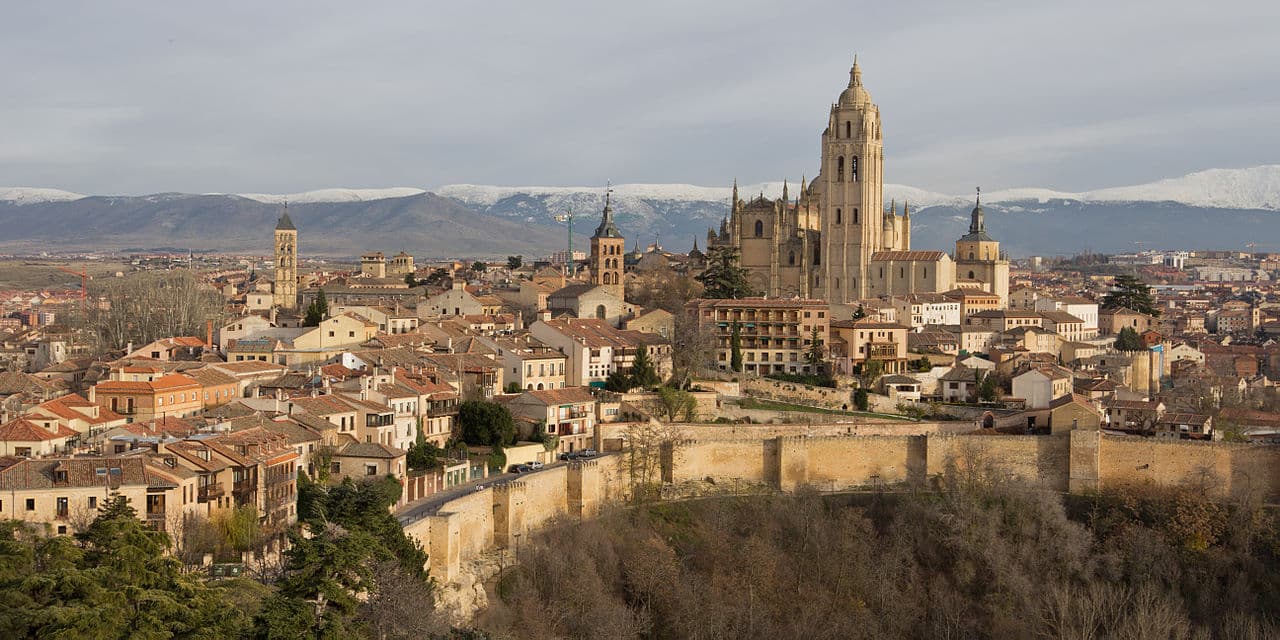
Segovia
The Roman Aqueduct and the fairytale Alcázar (the model for Disney's Cinderella castle). Doable as a day trip but easier as part of a Madrid base. Cochinillo asado (roast suckling pig) at Mesón de Cándido is the regional dish.
El Escorial
The vast Habsburg royal monastery-palace built by Philip II — UNESCO listed, the burial place of most Spanish kings, and one of the great Counter-Reformation buildings. €13.50 admission; allow 4 hours.
Entry Requirements
Spain is in the Schengen Area — most Western passport holders enter visa-free for up to 90 days within any 180-day period for tourism. The 90/180 rule applies cumulatively across all 27 Schengen countries. The new EU-wide ETIAS travel authorisation is expected to apply from late 2026 for visa-free nationalities; cost ~€7, valid 3 years.
Entry Requirements by Nationality
| Nationality | Visa Required | Max Stay | Notes |
|---|---|---|---|
| US Citizens | Visa-free | 90 days in any 180-day period across Schengen | Visa-free for tourism. Passport must be valid 3+ months beyond intended departure. ETIAS authorisation expected from late 2026 (€7, valid 3 years). |
| UK Citizens | Visa-free | 90 days in any 180-day period across Schengen | Post-Brexit, UK citizens are subject to standard third-country Schengen rules. Passport must be issued in the past 10 years and valid 3+ months beyond departure. |
| EU Citizens | Visa-free | Unlimited | Free movement under EU/EEA rules. National ID card sufficient for entry; passport not required. |
| Canadian Citizens | Visa-free | 90 days in any 180-day period across Schengen | Visa-free for tourism. Passport valid 3+ months beyond departure. ETIAS expected from late 2026. |
| Australian Citizens | Visa-free | 90 days in any 180-day period across Schengen | Visa-free entry. Passport valid 3+ months beyond intended departure. |
Visa-Free Entry
Tips
- •Schengen 90/180 rule is cumulative across all 27 Schengen countries — Spain days count alongside France, Italy, Germany, Portugal, etc. Track via the EU Schengen calculator
- •ETIAS travel authorisation expected to apply from late 2026 for visa-free nationals (USA, UK, AU, CA etc.) — €7 fee, valid 3 years for multiple short stays
- •Spanish customs follows EU rules — €10,000+ cash requires declaration, no fresh meat or dairy from non-EU countries, 1 litre spirits / 4 litres wine duty-free for non-EU arrivals
- •No regional Spanish "city tax" applies in Toledo — hotel rates are inclusive (Catalonia and Balearic Islands charge a small tourist tax but Castile-La Mancha does not)
- •Toledo Cathedral and certain religious sites enforce a modest dress code — shoulders covered, no hats inside; light shawls are sold at the entrance for €5
- •Sunday opening for shops is restricted in many Spanish cities, but Toledo has tourist exemptions and most shops in the historic centre open Sunday in summer
Shopping
Toledo's defining shopping is its three traditional crafts — Damascene metalwork (gold and silver inlay on black-oxidised steel, technique introduced from the Middle East via Damascus), Toledo steel blades (continuous tradition since pre-Roman times), and mazapán (Cistercian recipe since the 13th century). Plus a strong line of religious art and books from the Catholic publishing tradition. Most of the tourist sword shops sell Chinese imports — buy from named workshops with on-site forging for genuine pieces.
Calle del Comercio & Calle Hombre de Palo
shopping streetThe two main shopping arteries running north from Plaza de Zocodover — souvenir shops, mazapán confiterías, Damascene workshops, and books. Look for the marca de Toledo seal on certified pieces. Hours generally 10:00–14:00, 17:00–20:00 (siesta closure midday) Monday–Saturday; many shops open Sunday in summer.
Known for: Damascene jewellery, mazapán, souvenirs, religious books
Calle Ciudad & Sword Workshops
craft districtThe traditional Toledo blade-makers cluster on Calle Ciudad and surrounding lanes — Mariano Zamorano (since 1880s), Bermejo, Aceros de Hispania. Look for workshops with visible forges and the Toledo city stamp on blades. Letter openers from €25, kitchen knives €60–€150, full swords €300–€2,000+.
Known for: Hand-forged Toledo steel: knives, swords, letter openers, theatre props
Mazapán Confiterías
food shoppingMultiple traditional shops sell mazapán — Santo Tomé (since 1856) on Calle Santo Tomé is the oldest, Confitería La Flor de la Esquina near the cathedral, and Obrador San Juan in the Judería all use the traditional Cistercian recipe (almonds + sugar + honey, no flour). Small assorted box €8–€12, large box €20–€35. Vacuum-packed for travel.
Known for: Traditional Toledo marzipan: imperial assorted, anguila Christmas eel, almond cakes
Mercado de San Agustín
marketA small covered food market on Calle Cabestreros — fresh produce, Manchego cheeses, Toledo wines, jamón ibérico. Less touristy than the souvenir streets; useful for self-catering and lighter than the average Toledo restaurant. Open Mon–Sat 09:00–14:00.
Known for: Manchego cheese, jamón ibérico, Toledo wines, fresh produce
🎁 Unique Souvenirs to Look For
- •Damascene jewellery (gold-and-silver inlay on black steel) — small earrings €15–€30, larger pendants €40–€80, decorative plates €50–€200. The traditional motifs are stylised flowers, geometric patterns, and Toledo cityscapes
- •Hand-forged Toledo steel knife from Mariano Zamorano or another named workshop — kitchen knife €60–€150, ornamental letter opener €25–€60. Stamped with the maker's mark and the Toledo city seal
- •Box of traditional mazapán from Santo Tomé — imperial assorted €8–€12, anguila Christmas log €25–€35, almond cakes (Pasta de Almendra) €15–€20. Vacuum-packed travels well
- •Manchego cheese from Mercado de San Agustín — €20–€40 for a 500g wedge of aged Manchego curado, vacuum-sealed for travel. The Toledo region produces some of the best
- •Toledo wine — DO Méntrida (garnacha-based reds) or DO Mancha — €8–€25 a bottle. Lighter and less famous than Rioja but excellent value
- •Religious art print or icon from a Casco Histórico shop — Toledo School icon reproductions €15–€80, framed Greco prints €25–€150
Language & Phrases
Castilian Spanish is the national language; English proficiency is good in hotels and main museums but limited in smaller restaurants, taxi drivers, and older locals. Toledo's Castilian is among the clearest spoken Spanish in the country (the "ceceo" — pronouncing "z" and soft "c" as "th" — is standard here, distinguishing "casar" from "cazar"). A few Spanish phrases are warmly received and dramatically improve interactions outside the obvious tourist circuits.
| English | Translation | Pronunciation |
|---|---|---|
| Hello | Hola | OH-lah |
| Good morning | Buenos días | BWE-nos DEE-as |
| Good evening | Buenas tardes / Buenas noches | BWE-nas TAR-des / NO-ches |
| Please | Por favor | por fa-VOR |
| Thank you | Gracias | GRAH-thee-as |
| You're welcome | De nada | deh NAH-dah |
| Yes / No | Sí / No | see / no |
| How much? | ¿Cuánto cuesta? | KWAN-toh KWES-tah |
| The bill, please | La cuenta, por favor | lah KWEN-tah por fa-VOR |
| A coffee, please | Un café, por favor | oon ka-FEH por fa-VOR |
| Where is...? | ¿Dónde está...? | DON-deh es-TAH |
| Cheers! | ¡Salud! | sa-LOOD |
| Excuse me | Perdón / Disculpe | per-DON / dis-KOOL-peh |
| I don't understand | No entiendo | no en-TYEN-doh |
| Do you speak English? | ¿Habla inglés? | AH-blah in-GLES |
If you like Toledo, you'll love…
4 cities with a similar vibe, outside of the same country.
.jpg%3Fwidth%3D1280&w=1600&q=75)
Croatia · OVR 78
compact, pedestrian-first layout · remarkably safe

Portugal · OVR 77
compact, pedestrian-first layout · immaculate streets

Canada · OVR 78
you barely need transit · nomad-ready infrastructure

Mexico · OVR 78
eminently walkable core · safe after dark