
Mérida
THE QUICK VERDICT
By Anthony · Updated April 2026
Choose Mérida if you want one of the safest cities in Mexico, a UNESCO-adjacent base for Chichén Itzá and Uxmal, distinctive Yucatec cuisine and Maya culture, and a colonial Centro that is genuinely walkable.
- Best for
- Sunday Mérida en Domingo street fest, cochinita pibil tacos, Chichén Itzá and Uxmal day trips, cenote swims
- Best window
- Nov–Mar
- Budget anchor
- $160/day mid-range
- No real seasons
- Within 5°C year-round — timing is about rain, not temperature
- Worth a look
- consistently ranked one of the safest cities in Mexico — safety_index 86 beats most US capitals
The colonial capital of Yucatán founded by Francisco de Montejo in 1542 on the site of the Maya city of T'hó — the conquistadors used dismantled Maya pyramid stones to build the cathedral, which you can still see in the walls. Mérida is consistently ranked among the safest cities in Mexico, the cultural capital of the Yucatec Maya (the only Mexican city where you regularly hear an indigenous language in everyday life), and the gateway to Chichén Itzá, Uxmal, and the Yucatán cenotes. The Paseo de Montejo is a French-influenced boulevard lined with henequen-boom mansions; the Mercado Lucas de Gálvez serves the best cochinita pibil in the country; the Sunday Bici-Ruta closes the city centre to cars. Heat April-May is brutal — visit November-February.
The two links below are affiliate links — MapSorted earns a small commission if you book through them, at no extra cost to you. How this works.
Tours & Experiences
Bookable tours, activities, and day trips in Mérida
Where to Stay
Compare hotels and rentals in Mérida
📍 Points of Interest
Plaza Grande & Cathedral
Colonial heart of Mérida — 1598 cathedral built with Maya pyramid stones, Government Palace, Casa de Montejo
Paseo de Montejo
Grand 19th-century boulevard modelled on the Champs-Élysées with henequen-boom French-influenced mansions
Gran Museo del Mundo Maya
World-class Maya civilisation museum with 1,000+ artefacts; ceiba-tree-inspired modern architecture
Casa de Montejo
1549 conquistador residence with extraordinary plateresque façade depicting Spaniards stepping on Maya heads
Chichén Itzá· 114 km E
New Seven Wonder Maya site 2 hr east — El Castillo equinox serpent shadow, Great Ball Court, Sacred Cenote
Uxmal· 69 km S
UNESCO Maya site 80 km south — Pyramid of the Magician, Governor's Palace, Nunnery Quadrangle, less crowded
Cuzamá Cenotes· 43 km SE
Three connected cenotes accessed by horse-drawn rail cart 45 min east of Mérida — classic cenote experience
★ Local Picks
Mercado Lucas de Gálvez
Largest market in southern Mexico — segundo piso food court is best authentic Yucatec lunch in the city
At a Glance
- Pop.
- 1.1M (city), 1.3M (metro)
- Timezone
- Merida
- Dial
- +52
- Emergency
- 911
Mérida is the capital of the state of Yucatán, founded by Spanish conquistador Francisco de Montejo in 1542 on the site of the Maya city of T'hó — the Spaniards used the dismantled Maya pyramids as the building stones for the new colonial city, and you can still see the carved Maya stones in the walls of the cathedral and Casa de Montejo
Mérida is consistently ranked among the safest cities in Mexico — the homicide rate is comparable to many US cities and dramatically lower than Mexican beach destinations like Acapulco, Cancún, or Tulum. The Yucatán peninsula's historic cultural and political distance from central Mexico is part of why
The city is the cultural capital of the Yucatec Maya — over 800,000 Yucatec Maya speakers live in the surrounding region, the second-most-spoken indigenous language in Mexico (after Nahuatl), and the only city in Mexico where you regularly hear an indigenous language spoken in cafes, markets, and public buses
Mérida is called "The White City" (La Ciudad Blanca) — possibly because of its limestone buildings, possibly because of the white linen guayabera shirts worn by men, possibly because of the cleanliness of its streets relative to other Mexican cities
The city was the wealthiest in the Americas per capita in the early 20th century thanks to the henequen boom — Mérida had more millionaires per capita than any city in the world by 1900, the legacy is the European-styled Paseo de Montejo with its French-influenced "Quinta" mansions modeled on the Champs-Élysées
Mérida is the gateway to the Yucatán's great Maya archaeological sites — Chichén Itzá (UNESCO, the most-visited site in Mexico) is 2 hours east, Uxmal (UNESCO, far less crowded) is 1 hour south, and the Puuc Route, Dzibilchaltún, and several cenotes are within easy day-trip range
Top Sights
Plaza Grande & Mérida Cathedral
🗼The Plaza Grande is the colonial heart of Mérida — fronted by the Cathedral of San Ildefonso (1598, the first cathedral built on the American mainland and still incorporating dressed Maya stones), the Government Palace (with monumental murals by Fernando Castro Pacheco depicting Yucatec history), and the Casa de Montejo (the conquistador's 1549 house, with a famous façade depicting Spanish conquistadors stepping on Maya heads). Free; the centre of every Mérida visit.
Paseo de Montejo
🗼Mérida's grand 19th-century boulevard modelled on the Champs-Élysées — French-influenced "Quinta" mansions built by henequen-boom millionaires line both sides for several kilometres. The Palacio Cantón (now the Regional Anthropology Museum), the Casa de Montes Molina, and the Monumento a la Patria (a sculpted limestone tribute to Mexican history) are highlights. The Sunday closure of the boulevard for the "Bici-Ruta" is the city's best Sunday activity.
Gran Museo del Mundo Maya
🏛️A modern, world-class museum on the northern edge of the city dedicated to Maya civilisation — over 1,000 artefacts from across the Maya world, multimedia presentations, and a striking ceiba-tree-inspired modern building. Excellent context before visiting Chichén Itzá or Uxmal. MX$150 entry; closed Tuesdays. Take an Uber or the R-2 bus.
Casa de Montejo
🏛️The 1549 conquistador's residence on Plaza Grande — its façade is one of the most extraordinary examples of plateresque colonial sculpture in the Americas, with carved figures of Spanish soldiers literally stepping on the heads of vanquished Maya warriors. Now operated as a free museum by Banamex with restored 19th-century period rooms. Free; closed Mondays.
Chichén Itzá (day trip)
🗼The single most-visited archaeological site in Mexico — UNESCO World Heritage and one of the New Seven Wonders of the World. The 30 m El Castillo pyramid produces a serpent-shadow effect on the equinoxes, the Great Ball Court is the largest in Mesoamerica, and the Sacred Cenote was the centre of Maya sacrificial ritual. 2 hours east of Mérida. Arrive at 08:00 opening to beat the cruise-ship crowds from Cancún. MX$571 entry.
Uxmal
🗼The other great Yucatec Maya site — UNESCO-listed, 80 km south of Mérida, featuring the spectacular Pyramid of the Magician (oval-based, almost unique in Maya architecture), the Governor's Palace, and the Nunnery Quadrangle. Significantly less crowded than Chichén Itzá and arguably more beautiful. The "Light and Sound Show" runs nightly. MX$413 entry. Often paired with the Puuc Route (Kabah, Sayil, Labná).
Cenotes day trip
🌳The Yucatán peninsula has no surface rivers — all freshwater is in cenotes, the underground sinkholes carved out of limestone by the Chicxulub asteroid impact 66 million years ago. The Cuzamá circuit (45 minutes east of Mérida by car, then a horse-drawn rail cart between three connected cenotes) is the classic Mérida cenote experience. Cenote Ik Kil near Chichén Itzá is the most photographed; Cenote Suytun is Instagram-famous; Cenotes X-Batún and X-Lakah are quieter. MX$100-300 entry.
Mercado Lucas de Gálvez
📌The largest market in southern Mexico — a chaotic warren of stalls covering several city blocks, selling everything from cochinita pibil tacos to live chickens to Mayan herbal remedies. The food court (segundo piso) is the best place in Mérida for an authentic Yucatec lunch — cochinita pibil, panuchos, sopa de lima — for under MX$120. Open daily; busiest mornings.
Climate & Best Time to Go
Mérida has a tropical savanna climate — hot year-round, with a wet season May-October and a dry season November-April. The hottest months (April and May, before the rains arrive) regularly hit 38-40°C with brutal humidity. The most pleasant months are December and January (24-30°C, low humidity). Mérida is 30 km inland and lacks coastal sea-breeze relief.
Spring
March - May68 to 100°F
20 to 38°C
Hot and getting hotter — March is bearable, April and May are brutal. April-May is the hottest period of the year, with daytime 35-40°C and night-time 24-26°C. Air conditioning becomes essential.
Summer
June - August73 to 95°F
23 to 35°C
The rainy season — daily afternoon thunderstorms cool things slightly, but humidity is at its peak. Mornings often warm-and-humid; afternoons stormy; evenings warm-and-still. Mosquitoes most aggressive after rain.
Autumn
September - November68 to 90°F
20 to 32°C
September peak rain (and the only real hurricane risk window for the Yucatán); October still wet but cooling; November is the start of pleasant weather. By late November, the heat has broken and it's consistently nice.
Winter
December - February63 to 86°F
17 to 30°C
The optimal window — daytime 25-30°C, lower humidity, and the occasional cool "norte" weather front bringing temperatures into the high teens. December and January are the most pleasant months for sightseeing. Holiday crowds and Day of the Dead crowds are real.
Best Time to Visit
November to February is the optimal window — daytime 25-30°C, lower humidity, clear skies. December and January are particularly pleasant for sightseeing. Avoid April-May (brutal pre-rains heat reaching 40°C) and September (peak rain and the only real hurricane risk window). Equinox visits to Chichén Itzá (March 20-21 and September 22-23) are dramatic but extremely crowded.
High Season (December-March)
Crowds: HighPleasant weather, low humidity, clear skies. December/January are the most comfortable months. February-March still good but heat is rising. Crowds peak Christmas-New Year and Spring Break (mid-Feb to mid-Mar).
Pros
- + Best weather of the year
- + Comfortable for walking
- + All sites and tours running
- + Cool nights for outdoor dining
Cons
- − Highest prices of the year
- − Christmas/New Year very crowded and 30-40% more expensive
- − February-March Spring Break crowds at Chichén Itzá
Pre-rains Heat (April-May)
Crowds: Moderate (apart from Holy Week)The hottest period of the year — daytime 35-40°C, brutal humidity, evening 24-27°C. Air conditioning essential. Outdoor sightseeing 07:00-10:00 and 17:00-19:00 only. Holy Week (around Easter) brings a brief crowd surge.
Pros
- + Lower prices than peak
- + Holy Week processions in Centro
- + Fewer tourists at Chichén Itzá
Cons
- − 40°C heat brutal
- − Outdoor sightseeing limited to early/late
- − No real upside vs other months
Wet Season (June-October)
Crowds: Moderate (Mexican school holidays)Rainy season — daily afternoon thunderstorms, peak humidity, lush green landscapes. September is peak rain (and hurricane risk window). Domestic Mexican summer holiday brings local tourists. Mosquitoes more aggressive after rains.
Pros
- + Lower hotel prices (30-50% off peak)
- + Lush green landscapes
- + Mornings often clear
Cons
- − Daily afternoon storms
- − Heat and humidity
- − Hurricane season September
- − Mosquitoes worse
Shoulder (November)
Crowds: ModerateThe sweet spot — heat has broken, rains have ended, crowds haven't fully arrived for Christmas. Day of the Dead (1-2 November) brings dramatic ofrendas across the city. Hotel prices 20-30% off December peak.
Pros
- + Excellent weather
- + Day of the Dead celebrations
- + Lower prices than Dec-Mar
- + Few crowds at Chichén Itzá and Uxmal
Cons
- − Some risk of late-season storms
- − Tren Maya can book up
🎉 Festivals & Events
Day of the Dead (Hanal Pixán)
31 October - 2 NovemberThe Yucatec version of Day of the Dead — Hanal Pixán ("food of the souls") features altars throughout Centro Histórico, the parade of souls, and the Pib bread baked underground for the occasion. Less commercialised than Mexico City's celebration.
Chichén Itzá Spring Equinox
20-21 MarchThe annual phenomenon when the late-afternoon sun creates a serpent-shadow effect down the El Castillo pyramid — a Maya astronomical/religious feature still drawing 50,000+ daily visitors at the equinox. Crowded, but the only chance to see the effect.
Mérida Fest (city anniversary)
January 6-30The city's month-long birthday celebration — concerts, dance, theatre, food festivals throughout the Centro Histórico. The Plaza Grande is transformed nightly. Free or low-priced events most evenings.
Vaquerías
Year-round (Saturday/Sunday in surrounding villages)Traditional Yucatec dances and bullfighting (vaquería) in Maya villages around Mérida — Hocabá, Acanceh, Maxcanú are famous. Tour agencies arrange visits; genuine cultural experience.
Chichén Itzá Equinox + Carnaval
February (Carnaval)Mérida's Carnaval is more family-friendly than Veracruz or Mazatlán but features parades on Paseo de Montejo, costume balls, and the burning of the bad-tempered "Juan Carnaval" effigy.
Off the Beaten Path
Sunday Bici-Ruta on Paseo de Montejo
Every Sunday 08:00-12:00, the Paseo de Montejo and a connected loop through the Centro Histórico are closed to cars and given over to bikes, skaters, and pedestrians. Free bike rentals at multiple stations along the route. The boulevard is full of mérida families, kids, food carts, and pop-up exhibitions. Ends with breakfast at one of the Paseo cafes. The single best Mérida Sunday morning.
Bici-Ruta is genuinely a local event — far more locals than tourists — and gives you Mérida at its most relaxed. The Paseo de Montejo is car-choked the rest of the week; on Sunday it's a public living room.
Free Mérida en Domingo Concerts
Every Sunday evening, the Plaza Grande hosts a free outdoor concert and traditional dance show — Yucatec trios, jaranas (regional dance), folkloric ballet — drawing huge local crowds with families on plastic chairs and food vendors selling marquesitas (Yucatec crepes with Edam cheese and Nutella, MX$30). The most charming city centre Sunday evening in Mexico.
Free, weekly, and genuine — not a tourist staging but the city's actual Sunday-night ritual. The marquesita is a Yucatec specialty you can't get anywhere else in Mexico.
Ermita de Santa Isabel Sunset
A 16th-century chapel in the Ermita neighbourhood (10 minutes south of the Plaza Grande by Uber) — one of the oldest churches in the city and far from the tourist core. The small plaza in front is shaded by ceiba trees and has lovely sunset light. The barrio is gentrifying with several excellent boutique hotels (Casa Lecanda, Casa San Roque) and small craft beer bars. Free; the most charming Mérida residential neighbourhood.
The Centro Histórico can feel touristic. Ermita is residential Mérida — old houses, old families, old church — and the sunset light through the ceiba trees is genuinely beautiful.
Hacienda Sotuta de Peón
40 minutes south of Mérida — a working henequen hacienda restored to its 19th-century operational state with the original Decauville-rail system, mule-drawn carts, and the German-built rasping machinery still functioning. Tours include a cenote swim, a hacienda tour, and a traditional Yucatec lunch. The most accessible introduction to the henequen-era economy that built Mérida's wealth. MX$1,400 with lunch and cenote.
Henequen built modern Mérida — the henequen mansions on Paseo de Montejo are everywhere — but the actual industry is mostly invisible now. Sotuta de Peón is the only working hacienda that still produces henequen with original methods.
Slow Food Saturday Market (La Norma)
A small Saturday morning market (07:00-12:00) on Calle 27 near Parque de las Américas — local farmers from the Yucatán peninsula selling organic produce, artisan honey, Maya-village hot sauces, and cooked foods. The cochinita pibil torta from the corner stall is famous among Mérida foodies. Mix of locals and expats; very low-key.
Mérida has a serious slow-food and farm-to-table scene driven by the local-expat community, but most tourist guides skip it entirely. La Norma is the weekly anchor for the genuine local food scene.
Safety Breakdown
Very Safe
out of 100
Mérida is consistently ranked among the safest cities in Mexico and Latin America — the homicide rate is comparable to many US cities and dramatically lower than Mexico's tourist beach destinations. Solo female travellers, LGBTQ+ visitors, and older travellers regularly report comfort. The genuine concerns are heat, taxi/transport overcharging in tourist contexts, and routine urban awareness. Cartel-related violence has not significantly affected Yucatán state.
Things to Know
- •Use Uber or DiDi (both operate in Mérida) over taxis — cheaper and no haggling. Mérida taxis don't use meters and inflate prices for tourists; Uber to/from the airport is MX$150-200 vs taxi MX$300+
- •The historic centre is well-lit and police-patrolled until late; comfortable to walk after dark even for solo travellers
- •Heat is the bigger risk than crime — between 11:00 and 16:00 in April-September, do indoor activities (museums, Casa de Montejo) and save outdoor sightseeing for early morning or evening
- •Tap water is not safe to drink — bottled water only, ice in restaurants is generally fine
- •Cenote safety: bring water shoes (limestone is rough), don't apply sunscreen before swimming (some cenotes prohibit it for water quality), and follow the swim-area markings
- •Mérida's mosquitoes carry occasional dengue — repellent with DEET is sensible, especially evenings and after rain
- •When visiting Chichén Itzá, the parking lot has assertive vendors — keep walking past them and ignore offers of "free tours" that lead to commission shops
- •Solo female travellers consistently rate Mérida as one of the most comfortable Mexican cities; standard urban awareness suffices
Emergency Numbers
Emergency (all services)
911
Tourist Police (Policía Turística)
+52 999 942 0060
Red Cross Ambulance
+52 999 924 9813
Hospital Star Medica (private)
+52 999 930 2880
US Consular Agency Mérida
+52 999 942 5700
Costs & Currency
Where the money goes
USD per dayBackpacker = hostel dorm + street food + public transit. Mid-range = 3-star hotel + neighbourhood restaurants + transit cards. Luxury = 4/5-star + fine dining + taxis. How we calibrate these numbers →
Quick cost estimate
Customize per category →Estimates based on regional averages. Flight prices vary by season and airline.
budget
$45-90
Hostel dorm or budget pension in Centro Histórico, mercado lunches and street food, walking + public bus, occasional museum entry
mid-range
$110-220
Boutique colonial hotel double (US$80-150/night), restaurant meals, Uber transport, Chichén Itzá day tour, evening cocktails
luxury
$350-900
Heritage hacienda hotel (Hacienda Xcanatún, Casa Lecanda, US$280-700/night), fine dining, private guide, hired car for archaeology, premium cenote experiences
Typical Costs
| Item | Local | USD |
|---|---|---|
| AccommodationCentro Histórico hostel dorm | MX$300-600/night | $17-33 |
| AccommodationBoutique colonial hotel double | MX$1,500-3,500/night | $83-195 |
| AccommodationHeritage hacienda hotel | MX$5,000-15,000/night | $280-840 |
| FoodCochinita pibil torta from a market stall | MX$60-90 | $3.30-5 |
| FoodMercado Lucas de Gálvez lunch (sopa de lima + main) | MX$80-130 | $4.50-7.20 |
| FoodCentro Histórico restaurant dinner for two with drinks | MX$700-1,500 | $39-83 |
| FoodMarquesita (Yucatec crepe with cheese) | MX$30-50 | $1.70-2.80 |
| FoodMexican craft beer at a Centro bar | MX$60-120 | $3.30-6.70 |
| TransportPublic bus single ride | MX$10-12 | $0.55-0.70 |
| TransportUber Centro to airport | MX$150-220 | $8.30-12.20 |
| TransportUber within Centro | MX$50-80 | $2.80-4.50 |
| TransportADO bus to Cancún | MX$700-900 | $39-50 |
| TransportTren Maya Mérida to Cancún | MX$1,200-1,800 | $67-100 |
| ActivityChichén Itzá entry (foreigner price) | MX$571 | $32 |
| ActivityUxmal entry | MX$413 | $23 |
| ActivityGran Museo del Mundo Maya | MX$150 | $8.30 |
| ActivityCenote entry | MX$100-300 | $5.50-17 |
| ActivityGroup day tour to Chichén Itzá + cenote + Valladolid | MX$1,000-1,500 | $56-83 |
💡 Money-Saving Tips
- •Eat lunch at the Mercado Lucas de Gálvez segundo piso — MX$80-130 for a full Yucatec meal versus MX$300+ at a Centro restaurant for the same dish
- •Use Uber rather than taxis (30-50% cheaper, no haggling); set up before arrival
- •Free Sunday concert in the Plaza Grande and free Bici-Ruta on Paseo de Montejo make Sunday the best free-entertainment day in Mexico
- •Casa de Montejo is a free museum on the main plaza — most tourists walk past without going in
- •Mérida is dramatically cheaper than Cancún or Tulum — same Mexican Caribbean region, half the price for similar quality
- •ADO first-class buses to Maya sites are cheaper than organised tours and very comfortable; rent a car for one day to do Uxmal + Puuc Route on your own (MX$800-1,200/day vs MX$1,500/person tour)
- •Cenote entries through the smaller, less famous cenotes (Cuzamá circuit, Xbatun) are MX$100-200 vs MX$300+ for the famous Ik Kil and Suytun
- •Late November and February-March are equally pleasant weather but March is more expensive (Spring Break) — late November or early December offer the best price-weather balance
Mexican Peso
Code: MXN
Mexico uses the Mexican Peso (MX$ or $). At writing, MX$1 ≈ $0.05 USD. Mérida is significantly less dollarised than Cancún/Tulum — most shops and small restaurants quote in pesos and want pesos. ATMs (HSBC, Banamex, Santander, BBVA) inside banks are reliable; standalone ATMs in tourist areas charge poor rates and have skimming risks. Cards (Visa, Mastercard) widely accepted; American Express more limited. Carry pesos for street food, taxis, market stalls, and bus fares.
Payment Methods
Visa and Mastercard accepted at hotels, restaurants (above the comida corrida level), and shops. American Express widely accepted at hotels but less so at restaurants. US dollars accepted at some tourist hotels and tour operators (often at unfavourable rates). Cash needed for: street food, taxis (cash often preferred), market stalls, public buses, parking. ATMs widespread; HSBC/Banamex/BBVA inside the actual bank are safest. Foreign withdrawal fees typically MX$30-100 plus your home bank's charge.
Tipping Guide
Tipping expected — 10% for casual, 15% for full service, 20% for exceptional. Service rarely included; check the bill for "propina" or "servicio". Cash tips preferred over card add-ons.
10% on the bar tab, or MX$15-30 per cocktail.
Round up to the next MX$10-20. Longer trips MX$30-50 tip.
Bellboy MX$30-50 per bag. Housekeeping MX$50-100/day. Concierge MX$100-300 for substantive help.
Group tour guide MX$100-200 per person for full day. Private guide MX$300-600 per person per day.
10-15% of service price.
No tip; bargain on price first.
How to Get There
✈️ Airports
Manuel Crescencio Rejón International Airport(MID)
10 km southwestMID is the regional Yucatán airport — direct flights from Mexican hubs (Mexico City, Cancún, Monterrey, Guadalajara), and direct international from Houston, Miami, Dallas, Toronto, and a few European seasonal routes. Most international visitors connect via Mexico City. Transport to Centro: Uber MX$150-220 (15 min), official airport taxi MX$280-350, public bus 79 MX$25 (35 min, the only public-bus airport route).
✈️ Search flights to MID🚆 Rail Stations
Tren Maya - Mérida (Teya)
The new Tren Maya station is at Teya, 5 km north of central Mérida — services to Cancún (3.5 hr, MX$1,200-1,800), Palenque (4 hr, MX$1,400-2,000), Campeche (1.5 hr, MX$700-1,000). Modern, comfortable, scenic; book in advance via the official Tren Maya site or local agencies.
🚌 Bus Terminals
Terminal CAME (ADO First Class)
The first-class ADO bus terminal in central Mérida — services to Cancún (4 hr, MX$700-900), Tulum (5 hr, MX$700-900), Mexico City (overnight, MX$1,800-2,500), Palenque (overnight, MX$1,200), Valladolid (2.5 hr, MX$300). ADO platinum and ADO GL are the comfortable options. The cheaper Terminal de Segunda (TAME, two blocks away) handles second-class regional buses.
Getting Around
Mérida's Centro Histórico is compact and walkable — the Plaza Grande to the Paseo de Montejo is a 25-minute walk. Beyond the centre, Uber (operates throughout the city), DiDi, and city buses cover everything. Day trips to Maya sites and cenotes are best handled by hired car, ADO bus, or organised tour. The new Tren Maya (opened 2024) connects Mérida to other Yucatán Peninsula destinations including Cancún.
Walking
FreeThe Centro Histórico is dense, flat, and walkable. Plaza Grande to the Paseo de Montejo (Anthropology Museum) is 25 minutes. Heat is the limiting factor April-September; do walking sightseeing 07:00-10:00 and 17:00-20:00.
Best for: Centro Histórico, between major plazas and museums
Uber / DiDi
MX$50-220Uber operates throughout Mérida (including the airport) and is cheaper than taxis. DiDi also widely available. Centro Histórico to airport: MX$150-220. Centro to Paseo de Montejo: MX$50-80. Centro to Gran Museo del Mundo Maya: MX$120-180.
Best for: Inter-district travel, airport, museum trips, late-night returns
Public bus
MX$10-12Mérida's public buses are excellent value (MX$10-12 flat fare) and cover everywhere — but signage is local-knowledge and routes can be confusing for visitors. The R-2 to Gran Museo del Mundo Maya and bus 79 to the Paseo de Montejo are the most useful tourist routes.
Best for: Budget travellers, simple routes
Tren Maya
MX$700-1,800 depending on route and classThe new Tren Maya (launched late 2023) connects Mérida to Cancún (3.5 hr), Palenque (4 hr), and Campeche (1.5 hr) — all from a station 5 km north of central Mérida. A genuinely scenic and comfortable option for Yucatán Peninsula touring; book in advance.
Best for: Cancún transfers, Palenque and Campeche regional touring
Day-tour van or hired car
MX$700-4,500For Chichén Itzá, Uxmal, the Puuc Route, or cenote tours, a hired van/driver or organised tour is dramatically more efficient than public transport. Group tours from Mérida: MX$700-1,500 per person depending on inclusions. Private driver with car for the day: MX$2,500-4,500.
Best for: Chichén Itzá, Uxmal, cenote circuits, multi-stop archaeology
Walkability
The Centro Histórico is one of the most walkable colonial centres in Mexico — flat, dense, with shaded portales (arcaded sidewalks) along the main streets. The Paseo de Montejo and Ermita neighbourhoods are also pleasant walking. Heat between 11:00 and 16:00 in summer makes long walks unpleasant; plan accordingly.
Travel Connections
Chichén Itzá
The most-visited Maya site in Mexico — UNESCO and a New Seven Wonders winner. El Castillo, the Great Ball Court, the Sacred Cenote. Day trip from Mérida; arrive at 08:00 opening to beat the cruise crowds from Cancún.
Valladolid
A small colonial city halfway to Cancún — Convento de San Bernardino, Cenote Zaci right in town, and a more relaxed base for visiting Chichén Itzá and Ek Balam. Worth an overnight if you want to mix colonial and archaeological.
Tulum
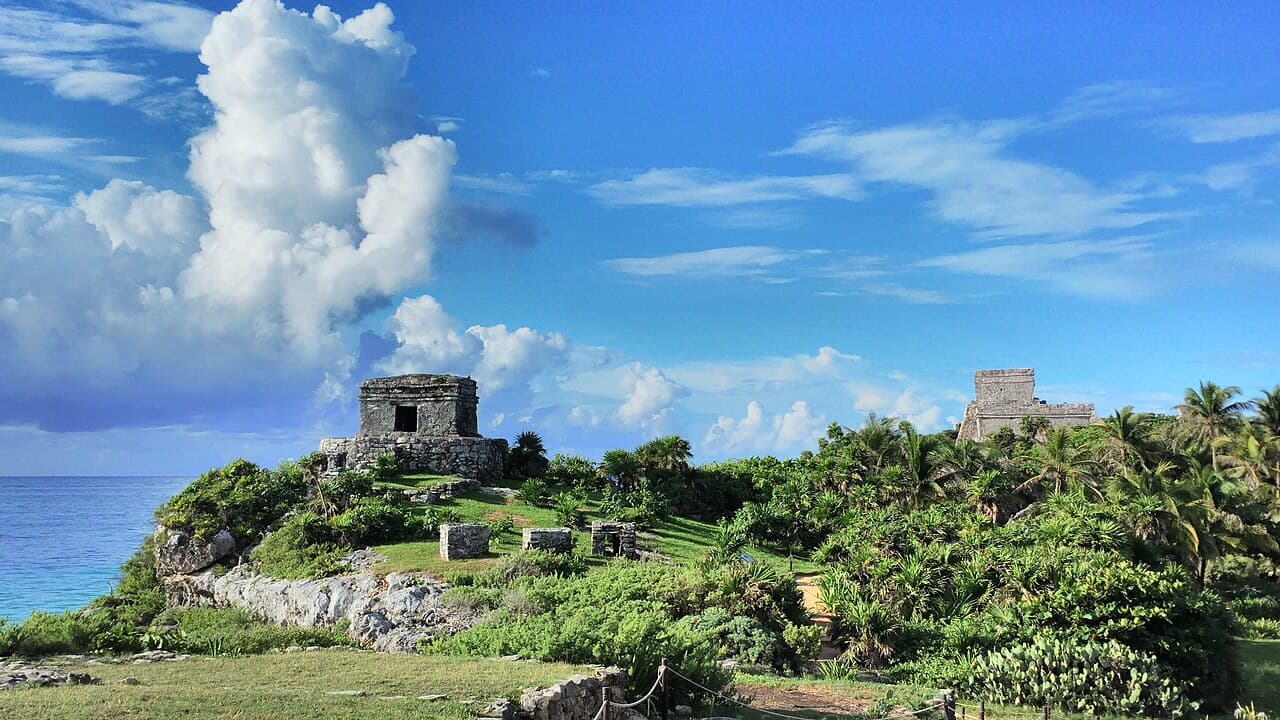
Cliff-top Maya ruins overlooking the Caribbean, jungle-set boutique hotels, and the Sian Ka'an biosphere. Tulum is in Quintana Roo, not Yucatán, and is significantly more touristy and expensive than Mérida. Better as a separate stop than a day trip.
Campeche
A UNESCO-listed walled colonial port city on the Gulf of Mexico — pastel-painted buildings, the original 17th-century pirate-defence walls and bastions, and a sleepy charm. Significantly less touristed than Mérida; an excellent overnight or weekend.
Entry Requirements
Mexico is among the most visa-friendly countries in the Americas — visa-free entry for up to 180 days for tourism for most Western passports. The previous paper FMM tourist card has been digitised at most major airports including Mérida MID; the immigration officer simply stamps your passport with the days granted.
Entry Requirements by Nationality
| Nationality | Visa Required | Max Stay | Notes |
|---|---|---|---|
| US Citizens | Visa-free | Up to 180 days | No visa required. Passport book required at MID airport (passport card not accepted by air). Days granted at officer discretion — request 180 specifically if you want a long stay. |
| UK Citizens | Visa-free | Up to 180 days | Visa-free for tourism. Passport valid for stay duration. |
| EU Citizens | Visa-free | Up to 180 days | Visa-free entry. Passport valid for stay. |
| Canadian Citizens | Visa-free | Up to 180 days | Visa-free for tourism. |
| Australian Citizens | Visa-free | Up to 180 days | Visa-free entry. |
Visa-Free Entry
Visa on Arrival
Tips
- •Request 180 days specifically at immigration if you want long stay — officers sometimes default to 30-60 days
- •No paper FMM card required at MID airport since 2023 — fully digital process
- •Yucatán's archaeological zone fees include both a federal entry fee and a state fee — adds up over multiple sites; budget MX$400-600 per Maya zone
- •Travel insurance is strongly recommended; private hospital costs in Mérida are MX$3,000-15,000+ per night
- •Mérida is in the safer state of Yucatán — much different security context than Tamaulipas, Sinaloa, or Guerrero. Standard tourist precautions sufficient
- •Bring a Mexican plug adapter only if from Europe/UK/Australia; voltage and plug type same as US/Canada
- •Spanish helps significantly outside the tourist core but English is widely spoken in Centro Histórico hotels and restaurants
Shopping
Mérida and the surrounding Yucatán have distinctive crafts: hammocks (the best in Mexico, made in Tixkokob and other Mayan villages), guayabera shirts (the formal-but-cool Caribbean linen shirt), Yucatec embroidery (huipiles, ponchos), Maya cacao, recado spice pastes, and panama-style hats from the village of Becal. The Centro Histórico has the genuine craft shops; the major markets have the tourist-grade versions.
Centro Histórico craft shops
craft districtThe streets around Plaza Grande have several excellent craft shops — Casa de las Artesanías (the official state crafts cooperative, fair pricing and quality assurance), Hamacas El Aguacate (the famous hammock shop), Camisería Canul (genuine guayaberas). Better quality than Mercado Lucas de Gálvez at slightly higher prices.
Known for: Hammocks, guayaberas, Yucatec embroidery, panama hats
Mercado Lucas de Gálvez
public marketThe largest market in southern Mexico — chaotic, multi-block, and selling everything. The handicrafts section (segundo piso) has hammocks, embroidered blouses, Maya hot sauces, and dried herbs. Bargaining expected. Quality variable but dramatically cheaper than tourist shops.
Known for: Hammocks, embroidered blouses, Maya hot sauces, food
Bazar de Artesanías (Sundays)
craft marketEvery Sunday, an artisan market sets up in the Plaza Grande and along Calle 60 — direct sales from artisans across Yucatán state, often with craftspeople demonstrating their work. The best place to buy genuine Maya village hammocks and embroidered huipiles.
Known for: Sunday artisan market, direct from craftspeople
Galerías Mérida (mall)
mallModern shopping mall in the north of the city — Liverpool, Sears, US/Mexican chains, multiplex cinema. Useful for things you forgot or US-style mall break. Less character than the Centro Histórico.
Known for: Mall shopping, chain stores, cinema
🎁 Unique Souvenirs to Look For
- •Tixkokob hammock from a reputable shop (Hamacas El Aguacate, Casa de las Artesanías) — Yucatec hammocks are widely considered the best in the world; cotton MX$700-1,500, sisal/henequen MX$1,000-2,500, large family-size MX$2,500+
- •Genuine guayabera linen shirt from Camisería Canul or similar — the classic Caribbean formal-yet-cool shirt; basic cotton MX$500-900, tailored linen MX$1,200-3,000
- •Embroidered huipil (traditional women's dress) from a Sunday Bazar artisan — direct-from-village MX$800-3,500 depending on embroidery complexity; worth taking time to find one you love
- •Recado rojo (red Yucatec spice paste, the base of cochinita pibil) from the Mercado Lucas de Gálvez — MX$50-100 jar, vacuum-packs for travel
- •Yucatec habanero hot sauce (the famous regional chile) — MX$60-150, far better than supermarket versions, several artisan brands
- •Becal panama-style hat (made of jipi palm in caves to keep the leaves cool) — MX$700-3,000+ depending on weave fineness; the regional formal hat
Language & Phrases
Spanish is the national language. Yucatec Maya is spoken by 800,000+ people in the surrounding region and you'll regularly hear it in markets and on local buses — the only city in Mexico where you regularly hear an indigenous language. English proficiency in Centro Histórico tourism is moderate to high; basic Spanish is helpful elsewhere. A few Yucatec Maya phrases will earn enormous goodwill from older market vendors and Maya village artisans.
| English | Translation | Pronunciation |
|---|---|---|
| Hello | Hola | OH-la |
| Good morning | Buenos días | BWAY-nos DEE-as |
| Please | Por favor | por fa-VOR |
| Thank you | Gracias | GRA-syas |
| You're welcome | De nada | day NA-da |
| Yes / No | Sí / No | see / no |
| How much? | ¿Cuánto cuesta? | KWAN-toh KWES-ta |
| The bill, please | La cuenta, por favor | la KWEN-ta por fa-VOR |
| Where is the bathroom? | ¿Dónde está el baño? | DON-day es-TA el BAN-yo |
| Cheers! | ¡Salud! | sa-LOOD |
| Hello (Yucatec Maya) | Bix a beel | beesh ah bell |
| Thank you (Yucatec Maya) | Dios bo'otik | dee-os BO-oh-teek |
If you like Mérida, you'll love…
4 cities with a similar vibe, outside of the same country.

Canada · OVR 78
legendary food scene · you barely need transit

Italy · OVR 78
serious culinary pedigree · compact, pedestrian-first layout

Spain · OVR 77
compact, pedestrian-first layout · remarkably safe

Croatia · OVR 78
serious culinary pedigree · fast wifi, English-friendly