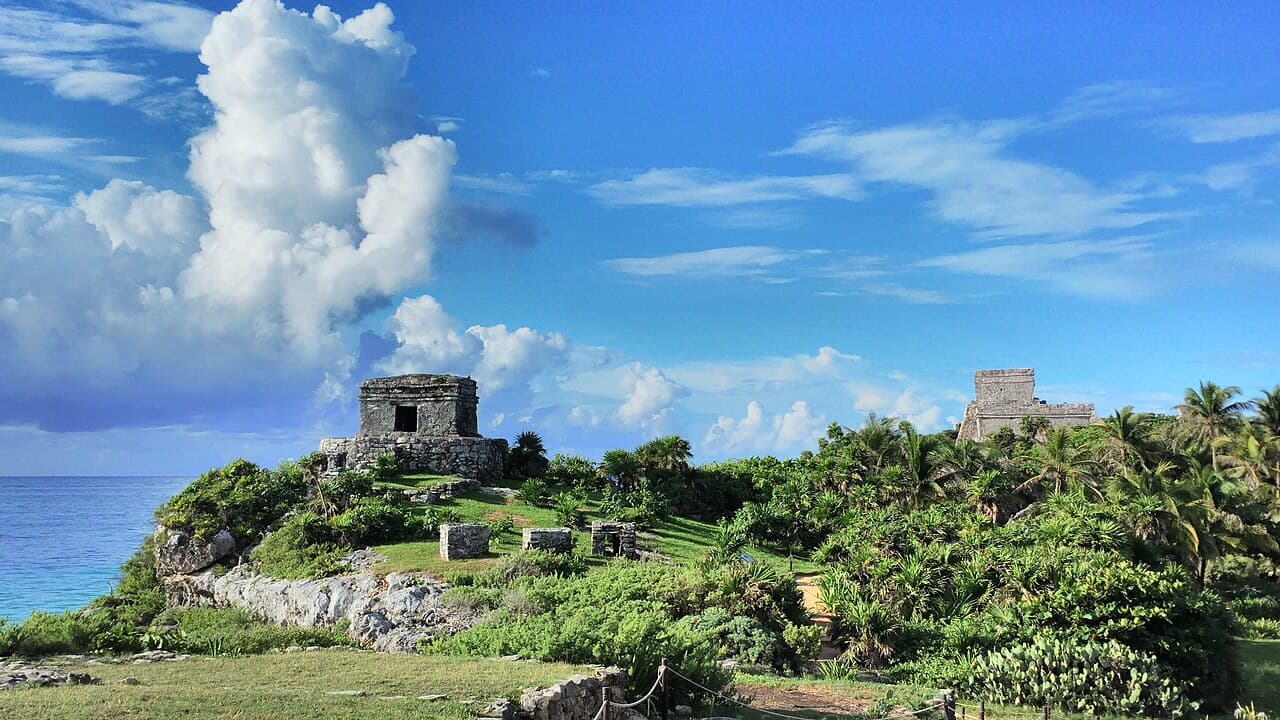
Tulum
THE QUICK VERDICT
By Anthony · Updated April 2026
Choose Tulum if you want Mayan cliff ruins above turquoise Caribbean, cenote diving, and a boho-chic beach scene (with eye-watering hotel-zone prices).
- Best for
- Gran Cenote snorkel, Sian Ka'an biosphere boat, El Castillo cliff ruins, Casa Jaguar dinners, beach-club Sundays
- Best window
- Nov–Apr
- Budget anchor
- $150/day mid-range
- Needs care
- Scores below most of the catalog on safety — read that section before you go
- No real seasons
- Within 5°C year-round — timing is about rain, not temperature
- Skip if
- you wanted budget Caribbean — beachfront cabanas now run $400+ and even taco stands charge resort prices
Riviera Maya's boho-chic capital — the only walled coastal Mayan ruins, perched on a cliff above turquoise Caribbean. Two Tulums coexist: the Pueblo (taco stands, hostels, real prices) and the Beach Hotel Zone (Instagram-famous palapa resorts at eye-watering rates). Cenotes everywhere — Gran Cenote, Dos Ojos, Sac Actun. Sian Ka'an Biosphere south, Coba Ruins inland. The new Maya Train and a brand-new Tulum airport opened late 2023.
The two links below are affiliate links — MapSorted earns a small commission if you book through them, at no extra cost to you. How this works.
Tours & Experiences
Bookable tours, activities, and day trips in Tulum
Where to Stay
Compare hotels and rentals in Tulum
📍 Points of Interest
Tulum Archaeological Zone
Only walled Mayan coastal city, perched on a cliff above the Caribbean
Gran Cenote
Open-ceiling cenote with crystal water, stalactites, and resident turtles
Dos Ojos Cenote
Twin-chamber cenote system connecting to the Sac Actun underwater cave network
Cenote Calavera
Dramatic skull-shaped cavern cenote with cliff jumping and scuba diving
Playa Paraíso
Sweeping white-sand beach with iconic view of the Mayan ruins on the cliff
Sian Ka'an Biosphere Reserve· 15 km S
UNESCO wetland reserve with Mayan channels, mangroves, jaguars, and manatees
Cobá Ruins & Nohoch Mul· 42 km NW
Jungle Mayan city 47 km inland with the tallest pyramid on the peninsula
★ Local Picks
Muyil Archaeological Zone· 18 km SW
Uncrowded Mayan ruins inside Sian Ka'an with lagoon views and jungle trails
Aktun-Ha (Car Wash) Cenote· 19 km NW
Peaceful open cenote on the Cobá road favored by turtles and in-the-know travelers
At a Glance
- Pop.
- ~50K (town)
- Timezone
- Cancun
- Dial
- +52
- Emergency
- 911
Tulum is home to the only walled Mayan coastal city in existence — the Tulum Archaeological Zone sits dramatically on a 12-meter cliff above turquoise Caribbean waters, making it one of the most photographed ruins in Mexico
The town splits into two distinct zones separated by 5 km: Tulum Pueblo, a gritty budget-friendly town of taco stands and colectivo stops, and the Zona Hotelera, a bohemian-chic beach road of jungle resorts, beach clubs, and yoga studios charging New York prices
The Yucatán Peninsula beneath Tulum contains one of the world's largest underwater cave systems — the Sac Actun system stretches over 376 km and is accessible through cenotes (sinkholes) scattered across the jungle
Sargassum seaweed is a serious seasonal problem: from roughly April through September, Atlantic brown seaweed washes ashore in massive quantities, blanketing beaches with a sulfurous smell and reducing swim quality considerably
The Maya Train (Tren Maya) opened in December 2023, connecting Tulum to Cancún, Playa del Carmen, Palenque, and Mérida by rail for the first time — a major shift for regional access previously dominated by ADO buses and colectivos
Tulum's beach club and hotel prices rank among the most inflated in the Americas relative to local wages — a beach club day pass with food minimum can exceed $200 USD, while a taco from Tulum Pueblo costs $1.50 two kilometers away
Top Sights
Tulum Archaeological Zone
🗼The ancient walled Mayan port city perched on a cliff above the Caribbean. The Castillo pyramid and Temple of the Frescoes are the main structures. Go at opening time (8 am) to beat tour groups and catch soft morning light over the sea.
Gran Cenote
🌿The most accessible and popular cenote near Tulum — a large open-ceiling sinkhole with crystalline turquoise water, stalactites, and resident turtles. Snorkeling and scuba diving available. Arrive before 9 am or after 2 pm to avoid peak crowds.
Dos Ojos Cenote
🌿A legendary two-chamber cenote system nicknamed "Two Eyes" for its twin openings. One of the premier cenote dives in the world, with crystal-clear passages connecting to the Sac Actun underwater cave system. Both snorkeling and guided scuba available.
Cenote Calavera
🌿Also called "Temple of Doom," this dramatic cenote features a nearly vertical drop into a deep cavern pool through three skull-shaped openings in the rock. Cliff jumping, snorkeling, and scuba diving available. Less crowded than Gran Cenote.
Playa Paraíso
🌿Widely considered the most beautiful stretch of Tulum's beach — a sweeping arc of white sand with the Mayan ruins visible on the cliff at the north end. Sargassum can affect the shore seasonally. The view north toward the ruins is iconic.
Sian Ka'an Biosphere Reserve
🌿A UNESCO World Heritage Site and vast protected wetland south of Tulum covering 5,280 km² of tropical forest, mangroves, lagoons, and barrier reef. Half-day boat tours drift visitors through ancient Mayan channels. Home to jaguars, manatees, and hundreds of bird species.
Cobá Ruins & Nohoch Mul Pyramid
🗼An extensive Mayan city 47 km inland from Tulum, set among jungle lakes. The Nohoch Mul pyramid at 42 meters is the tallest climbable structure on the peninsula — climbing was banned at Chichén Itzá in 2006 but Cobá permitted it until 2020. Today visitors walk trails around the massive site by bicycle or on foot.
Safety Breakdown
Exercise Caution
out of 100
Tulum is generally safe for tourists in designated areas but requires more vigilance than its boho-paradise image suggests. Between 2021 and 2023, cartel-related violence affected the Riviera Maya region, including incidents in and near Tulum — including a beach club shooting in 2021 that injured foreign tourists. The situation has stabilized but the underlying risk remains. Petty crime, ATM skimming, and drug-related pressure are the most common traveler concerns. Stick to tourist zones, use official or app-based transport, and avoid isolated beaches at night.
Things to Know
- •Stay within the main tourist corridor — Tulum Pueblo, the Zona Hotelera, and established cenotes. Avoid isolated roads or unfamiliar jungle tracks after dark.
- •Never buy or use drugs from strangers — drug-related violence is the primary source of serious crime in the region, and involvement in drug transactions puts travelers directly at risk.
- •Use DiDi (Mexico's dominant rideshare app) or registered hotel taxis rather than flagging down random vehicles, particularly in the Zona Hotelera at night.
- •ATM skimming is widespread in Quintana Roo — use ATMs inside bank branches during daylight hours rather than standalone outdoor machines. Check for card reader tampering before inserting your card.
- •Check beach sargassum reports before booking accommodation — some beaches in the Zona Hotelera are heavily impacted for months at a time. Hotel websites and TulumBeach.com post daily sargassum conditions.
- •Electricity outages occur in the Zona Hotelera — power cuts can last hours, affecting air conditioning, water pumps, and phone charging in smaller properties. Boutique jungle hotels rely heavily on generators.
Natural Hazards
Emergency Numbers
General Emergency (Mexico)
911
Tourist Police Quintana Roo
998-881-2000
Cruz Roja (Red Cross Ambulance)
066
CANIRAC Tourist Assistance
800-903-9200
Fire Department
911
Climate & Best Time to Go
Tulum has a tropical wet-dry climate. Temperatures are warm year-round, ranging from 22°C at night in winter to 34°C on summer afternoons. The dry season (November through April) is peak tourist season with low humidity, calm seas, and almost no rain. The wet season (June through November) brings daily afternoon thunderstorms, higher humidity, hurricane risk, and the annual sargassum seaweed invasion. April through September see the heaviest seaweed on beaches.
Dry Season (Peak)
November - April72-84°F
22-29°C
The best time to visit. Clear skies, low humidity, calm Caribbean, and sargassum-free beaches (November through March especially). December through February are the coolest and most pleasant months. Prices are highest December-January and during Easter (Semana Santa).
Shoulder / Sargassum Start
March - May75-88°F
24-31°C
Temperatures rise and sargassum begins appearing on beaches from April onward. Mexican Semana Santa (Holy Week) in late March or April brings massive domestic tourism and spike prices. May is hot and humid but still mostly dry.
Wet Season (Hurricane Risk)
June - October79-93°F
26-34°C
Daily afternoon thunderstorms bring temporary relief from the heat but high humidity persists. Hurricane season peaks August through October. Sargassum is at its worst July through September. Prices are 30-50% lower and crowds thin dramatically.
Late Wet / Transition
October - November75-86°F
24-30°C
Hurricane risk tapers off in November. Sargassum diminishes. Crowds return slowly as the holiday season approaches. October is statistically the wettest month. A good value window for travelers willing to accept some rain.
Best Time to Visit
November through March is the sweet spot — dry weather, sargassum-free beaches, low humidity, and comfortable temperatures. December and January bring the most reliable beach conditions but also the highest prices. February is widely considered the best overall month: peak conditions without the Christmas premium. Avoid Easter week (Semana Santa) unless you enjoy Mexican spring break energy.
High Season (December - March)
Crowds: Very high December-January; moderate February-MarchPerfect beach weather with almost zero sargassum, calm Caribbean, and comfortable 24-27°C days. Christmas through New Year and mid-February (Valentine's) command peak prices at beach hotels. January and February are the sweet spot for weather-to-price balance.
Pros
- + Best beach conditions of the year
- + No sargassum
- + Comfortable temperatures
- + Low humidity
- + Ideal for ruins and cenotes
Cons
- − Most expensive flights and hotels
- − Christmas week is overcrowded
- − Advance booking essential for beach properties
Shoulder (April - May)
Crowds: Very high during Semana Santa; moderate otherwiseStill mostly dry but heating up significantly and sargassum begins arriving on beaches in April. Mexican Semana Santa (Holy Week before Easter) transforms Tulum into a heaving domestic party scene for 10 days with price spikes and packed beaches. May is excellent value if you're not beach-focused.
Pros
- + Lower prices than peak season (outside Semana Santa)
- + Warm water for swimming
- + Good cenote conditions
- + Festivals and cultural events
Cons
- − Sargassum starting April
- − Semana Santa chaos and price surge
- − Rising heat and humidity
Low Season (June - October)
Crowds: Low to very lowHot, humid, rainy, and hurricane-prone — but the lowest prices and fewest tourists of the year. Daily afternoon rain showers last 30-90 minutes then clear. Sargassum is worst July through September. Budget travelers who tolerate humidity and occasional stormy days can find genuine value.
Pros
- + 30-50% lower accommodation prices
- + Fewer tourists at ruins and cenotes
- + Lush green jungle
- + Good diving visibility
Cons
- − Hurricane risk August-October
- − Worst sargassum July-September
- − High humidity
- − Some businesses and beach clubs close
Value Window (October - November)
Crowds: Low in October, rising through NovemberThe overlooked sweet spot: hurricane risk drops sharply in November, sargassum clears, prices have not yet risen to peak-season levels, and the jungle is at its greenest. Day of the Dead (November 1-2) brings authentic celebrations across the Yucatán.
Pros
- + Improving beach conditions
- + Lower prices than high season
- + Day of the Dead celebrations
- + Declining rain
Cons
- − October can still bring storms and heavy rain
- − Some sargassum lingers
- − Shorter daylight than summer
🎉 Festivals & Events
Semana Santa (Holy Week)
March or April (varies)Mexican Easter week brings enormous domestic tourism to the coast. The beach fills with families and college groups. Prices double, accommodation is scarce, and the normally serene Tulum scene becomes a crowd-heavy party. Book far in advance or avoid entirely.
Día de los Muertos (Day of the Dead)
November 1-2Celebrated authentically across the Yucatán with decorated altars (ofrendas), marigold-lined cemeteries, and family gatherings. Tulum Pueblo and nearby indigenous communities host ceremonies more genuine than the larger tourist events in major Mexican cities.
Vernal Equinox at Chichén Itzá
March 21The spring equinox creates a serpent shadow effect on El Castillo pyramid at Chichén Itzá (90 minutes from Tulum). Tens of thousands gather for the phenomenon — the site becomes extremely crowded for several days around March 21.
Off the Beaten Path
Cenote Escondido & Cenote Cristal
Two adjacent cenotes on the road between Tulum Pueblo and the Zona Hotelera, a short bike ride from either. Cenote Cristal has a sun-drenched open pool ideal for swimming; Escondido is shadier and more secluded. Both charge modest entry fees and are far less crowded than Gran Cenote.
Most visitors shuttle directly from their hotel to Gran Cenote without knowing these two lie right on the road between zones — they're easier to reach by bicycle and rarely feel overcrowded.
Tulum Pueblo Taco Circuit
Avenida Tulum and its side streets in the Pueblo host a rotating constellation of taco stands and small family fondas serving cochinita pibil (slow-roasted pork), al pastor, and regional Yucatecan specialties for MXN 20-35 per taco. El Camello Jr. is a local seafood institution.
Beach zone restaurants charge $30-80 USD for lunch. Walking 10 minutes into the Pueblo for breakfast tacos and fresh agua de Jamaica costs under $3 and tastes better.
Aktun-Ha (Car Wash) Cenote
A large open cenote on the road to Cobá where local taxi drivers historically washed their cars, hence the nickname. Partly open-air with jungle-draped edges and a deeper cave section accessible by diving. Turtles frequent the shallows.
One of the most beautiful and least-promoted cenotes in the region — consistently overlooked by tour operators running preset cenote circuits — making it refreshingly uncrowded.
Sian Ka'an Channel Float
Inside the Sian Ka'an Biosphere, guides lead small groups to ancient Mayan channels where the current pulls swimmers effortlessly through crystal-clear water between mangrove walls. The float lasts about 20 minutes and ends in an open lagoon.
The channel float is one of those rare experiences that genuinely delivers on the hype — completely passive, utterly surreal, and a stark contrast to the manufactured beach club scene a few kilometers north.
Muyil Archaeological Zone
A compact Mayan site inside the Sian Ka'an Biosphere with a tall watchtower pyramid overlooking the lagoon. Almost no tourists make it here, even though it's included in some Sian Ka'an tours. A short trail connects the ruins to the lagoon boardwalk.
Muyil offers the rare experience of standing alone inside a Mayan site — something impossible at the Tulum ruins or Cobá on any given day — surrounded by nothing but jungle and birds.
Costs & Currency
Where the money goes
USD per dayBackpacker = hostel dorm + street food + public transit. Mid-range = 3-star hotel + neighbourhood restaurants + transit cards. Luxury = 4/5-star + fine dining + taxis. How we calibrate these numbers →
Quick cost estimate
Customize per category →Estimates based on regional averages. Flight prices vary by season and airline.
budget
$35-55
Hostel or basic guesthouse in Pueblo, taco stands and fondas, bicycle rental, free beach access, cenotes at off-peak times
mid-range
$100-200
Boutique hotel in Pueblo or budget Zona Hotelera bungalow, restaurant meals, guided cenote tour, one beach club day visit
luxury
$400-1,500+
Beach zone boho-chic resort, beach club minimum spend, private cenote tours, spa treatments, upscale dining
Typical Costs
| Item | Local | USD |
|---|---|---|
| AccommodationHostel dorm (Pueblo) | MXN 350-600 | $20-35 |
| AccommodationMid-range hotel (Pueblo) | MXN 1,400-2,600 | $80-150 |
| AccommodationBeach club resort (Zona Hotelera) | MXN 5,200-26,000 | $300-1,500 |
| FoodTaco (Pueblo street stand) | MXN 25-35 | $1.50 |
| FoodLunch at Pueblo restaurant | MXN 150-350 | $9-20 |
| FoodBeach club lunch (food minimum) | MXN 700-1,400 | $40-80 |
| FoodDinner at Zona Hotelera restaurant | MXN 700-2,000 | $40-115 |
| TransportColectivo to Playa del Carmen | MXN 50-60 | $3 |
| TransportTaxi Pueblo to beach zone | MXN 150-200 | $9-12 |
| TransportBicycle rental (full day) | MXN 100-150 | $6-9 |
| AttractionsTulum Archaeological Zone entry | MXN 95 | $5.50 |
| AttractionsCenote entry (Gran Cenote, Dos Ojos) | MXN 175-520 | $10-30 |
| AttractionsSian Ka'an boat tour (half day) | MXN 1,200-1,900 | $70-110 |
| AttractionsCobá ruins entry | MXN 95 | $5.50 |
💡 Money-Saving Tips
- •Base yourself in Tulum Pueblo — accommodation is 5-10x cheaper than the Zona Hotelera and Pueblo has the best cheap eats on the coast
- •Rent a bicycle (MXN 100-150/day) to access both zones and roadside cenotes without paying for taxis
- •Visit Cenote Escondido and Cenote Cristal instead of Gran Cenote — equally beautiful, less crowded, and lower entry fees
- •Arrive at the Tulum ruins at 8 am opening time to beat tour buses and get better light for photos
- •Buy mezcal and vanilla at Pueblo shops rather than Zona Hotelera boutiques — same products at half the price
- •Take colectivos to Playa del Carmen (MXN 50) instead of ADO buses (MXN 180) or taxis
- •Visit Cobá on a self-organized day trip rather than a tour — entry is MXN 95 plus a cheap colectivo
- •If you want a beach day, the public beach access points (accesos) in the Zona Hotelera are free — you don't need a beach club day pass
- •Travel June through October for 30-50% lower accommodation rates — just check sargassum forecasts and hurricane outlooks first
Mexican Peso
Code: MXN
1 USD is approximately 17-18 MXN (as of early 2026). USD is widely accepted at hotels, beach clubs, and many restaurants in the Zona Hotelera but typically at poor exchange rates (often 15:1 instead of 17:1). Always pay in pesos when possible. ATMs are widely available in Tulum Pueblo; the Zona Hotelera has fewer ATMs and they often carry skimming risk. Use bank-branch ATMs (BBVA, Banamex, Santander) during business hours.
Payment Methods
Cash is essential for colectivos, street food, local cenotes, and markets in Tulum Pueblo. Beach clubs and hotels accept credit and debit cards but commonly add a 3-5% card surcharge. Contactless payments are available at larger restaurants. Withdraw sufficient pesos before heading to the Zona Hotelera — the ATM options there are limited and skimming-prone.
Tipping Guide
Tipping 10-15% of the bill is standard and expected. In Pueblo taco stands and fondas, rounding up or leaving MXN 10-20 is appreciated. Beach zone restaurants often add a "service charge" — check the bill before adding more.
Beach club servers work on tips — tip 15% of your food and drinks bill. Bottle service staff expect MXN 200-500 per bottle in addition to the stated price.
Tip cenote and Sian Ka'an guides MXN 100-200 per person at the end of the tour. Private guides merit MXN 500-1,000 for a full day.
Housekeeping MXN 50-100 per day. Porters MXN 30-50 per bag. Concierge staff who arrange complex transport or tours appreciate MXN 100-200.
Rounding up to the nearest 10 pesos is customary. For longer rides or helpful drivers, MXN 20-50 extra is a kind gesture.
How to Get There
✈️ Airports
Cancún International Airport(CUN)
130 km northADO bus runs directly from Terminal 4 (Domestic/International arrivals) to Tulum ADO station in approximately 2 hours. Cost MXN 250-360 (~$15-20). Shared shuttle vans run door-to-door for MXN 500-800 (~$30-48) per person. Private taxi MXN 1,500-2,500 (~$90-150). The Maya Train does not currently connect directly to CUN airport — requires a taxi or bus to Cancún city or Playa del Carmen first.
✈️ Search flights to CUNTulum International Airport (Felipe Carrillo Puerto)(TQO)
25 km south of Tulum PuebloOpened December 2023. Taxi to Tulum Pueblo approximately MXN 350-500 (~$20-30). Airport is new and international routes are limited — verify airline options before booking, as most flights remain through CUN as of 2025.
✈️ Search flights to TQO🚆 Rail Stations
Tulum Maya Train Station (Estación Tren Maya Tulum)
Located approximately 4 km west of Tulum Pueblo on the highway. Connects to Playa del Carmen (50 min, MXN ~350), Cancún (1.5 hr, MXN ~550-650), Valladolid (1.5 hr, MXN ~350), Cobá (30 min), and Palenque (8+ hr, with connections to Mérida). Economy and first-class seats available. Book at trenmaya.mx or at the station ticket counter. A taxi from the station to Pueblo costs MXN 80-100.
🚌 Bus Terminals
Tulum ADO Bus Terminal (Tulum Pueblo)
Located on Avenida Tulum near the town center. ADO runs to Cancún (2 hr, MXN 250-360), Playa del Carmen (1 hr, MXN 180-220), Mérida (4 hr, MXN 500-650), Chetumal (3 hr, MXN 350-450), and Mexico City (24 hr overnight, MXN 1,200+). Colectivos to Playa del Carmen depart from the Avenida Tulum roadside throughout the day for MXN 50-60.
Getting Around
Tulum has no unified public transport system and navigating between its two zones is one of the main practical frustrations of a visit. The Zona Hotelera beach road is 8-10 km long with no bus service — getting around requires taxis, bicycles, scooters, or rental cars. In Tulum Pueblo, colectivos (shared vans) connect efficiently to Playa del Carmen, Cobá, and other destinations. The Maya Train added a new option for intercity travel but its Tulum station is several kilometers from both zones.
Colectivos (Shared Vans)
MXN 50-80 (~$3-5) to Playa del Carmen; MXN 60 (~$3.50) to CobáWhite shared minivans run continuously between Tulum Pueblo and Playa del Carmen (north) and to Cobá (west). Passengers flag them down on Avenida Tulum or the highway. Cheap, frequent, and efficient. They do not serve the Zona Hotelera directly.
Best for: Budget intercity travel north and west from Tulum Pueblo
Taxis
MXN 80-200 (~$5-12) within or between zonesFixed-rate taxis serve Tulum Pueblo and the Zona Hotelera. Fares are set by a cartel-operated union and are high by Mexican standards — especially within the Zona Hotelera. There are no meters. A Pueblo-to-beach ride costs MXN 150-200 (~$9-12).
Best for: Quick transfers especially with luggage, late-night returns from beach zone
Bicycle
MXN 100-150/day (~$6-9) rentalThe most popular transport option for budget travelers. Rental shops in Tulum Pueblo charge MXN 100-150/day. The 5 km ride to the beach along Avenida Cobá is mostly flat and safe. The Zona Hotelera beach road has a designated bike lane for several kilometers.
Best for: Day trips between Pueblo and beach zone, cenote visits on Cobá road
Scooter / Moto Rental
MXN 350-500/day (~$20-30)Scooters are available for rent from multiple Pueblo shops and provide the most flexible option for reaching cenotes, Sian Ka'an entrance, and the length of the Zona Hotelera. Most rental shops do not require a motorcycle license in practice. Ride cautiously on unpaved jungle roads.
Best for: Independent cenote-hopping, exploring the full length of the hotel zone
Maya Train (Tren Maya)
MXN 300-650 (~$17-38) depending on destination and classMexico's new rail line opened December 2023 with a Tulum station approximately 4 km from Tulum Pueblo. Connects to Cancún (1.5 hr), Playa del Carmen (50 min), Valladolid (1.5 hr), and Palenque (8+ hr). Tickets sold at station or online at trenmaya.mx. A taxi from Tulum station to Pueblo costs MXN 80-100.
Best for: Intercity travel to Cancún airport, Playa del Carmen, Valladolid, Mérida
Walkability
Tulum Pueblo is walkable within its compact grid — the main strip (Avenida Tulum) has restaurants, shops, and services within a few blocks. The Zona Hotelera is emphatically not walkable at 8-10 km long with no sidewalks for much of its length. Between the two zones (5 km) is a bikeable but long walk. A bicycle or scooter is essential for any real exploration.
Travel Connections
.jpg%3Fwidth%3D1280&w=1600&q=75)
Playa del Carmen
The Riviera Maya's most walkable beach town, with the pedestrianized 5th Avenue strip of shops and restaurants, a lively nightlife scene, and regular ferry connections to Cozumel island. More relaxed than Cancún, less pricey than Tulum beach zone.

Cancún
The gateway megacity of the Mexican Caribbean with the international airport (CUN), a strip of all-inclusive mega-resorts along the Hotel Zone, and a sprawling downtown with cheap eats and Mexican daily life. Most visitors pass through but rarely explore beyond the airport.

Bacalar
A quiet lakeside town on the Laguna de Bacalar — a 42 km freshwater lagoon nicknamed the "Lake of Seven Colors" for its stunning gradient of turquoise and indigo. Far less developed than the Riviera Maya, with simple lakefront posadas and sailing tours. One of the Yucatán's best-kept secrets.

Valladolid & Chichén Itzá
Valladolid is a charming colonial town midway between Tulum and Mérida, with colorful streets, the stunning Cenote Zací in the town center, and excellent regional Yucatecan cuisine. Chichén Itzá, 45 minutes west of Valladolid, is one of the New Seven Wonders of the World — a must-visit Mayan ceremonial center despite its crowds.
Entry Requirements
Mexico offers visa-free entry to citizens of most Western countries for tourism stays up to 180 days. On arrival, immigration officers issue an FMM (Forma Migratoria Múltiple) tourist card — previously a paper card, now often stamped directly into the passport since 2021. The authorized length of stay (often 30-180 days at the officer's discretion) is written in the passport stamp. Passport must be valid for the duration of your intended stay.
Entry Requirements by Nationality
| Nationality | Visa Required | Max Stay | Notes |
|---|---|---|---|
| US Citizens | Visa-free | Up to 180 days | No visa required. FMM tourist card issued on arrival at no charge since 2022. Officer typically grants 30-180 days — politely state your intended length of stay if asked. Onward ticket may be requested. |
| UK Citizens | Visa-free | Up to 180 days | Visa-free entry. FMM issued on arrival. Ensure your passport is valid for the full duration of your stay. |
| EU Citizens | Visa-free | Up to 180 days | All EU member state passports are eligible for visa-free entry up to 180 days. |
| Australian Citizens | Visa-free | Up to 180 days | Visa-free for tourism. FMM issued at the border or airport. No minimum passport validity requirement beyond the stay duration. |
| Canadian Citizens | Visa-free | Up to 180 days | Visa-free entry. Canadian travelers should register with the Canadian embassy in Mexico City for extended stays. |
| Indian Citizens | Yes | Up to 180 days | Visa required. Apply through the Mexican embassy or consulate in India. Processing takes 5-15 business days. Required documents include hotel bookings, bank statements, and return flight. |
Visa-Free Entry
Tips
- •Tell the immigration officer how long you plan to stay — the number of days granted is at their discretion and some officers default to 30 days without asking
- •Note the authorized days stamped in your passport — overstaying an FMM results in fines of approximately USD $55 per extra day at departure
- •Most travelers enter through Cancún International Airport (CUN), which has clear immigration and customs lines for international arrivals
- •Medical and travel insurance is strongly recommended — hospital care in Cancún and Playa del Carmen for serious injuries can run $10,000-$50,000+ USD without insurance
- •If arriving by land from Belize or another border crossing, the FMM process is the same but lines can be long at peak times
Shopping
Tulum shopping ranges from cheap souvenir stalls on Avenida Tulum to designer boho boutiques in the Zona Hotelera charging triple what you'd pay elsewhere in Mexico. For authentic crafts and fair prices, shop in Tulum Pueblo or at regional markets. The Zona Hotelera boutiques are curated and beautiful but priced for luxury travelers. Bargaining is less common in Tulum than in other Mexican cities — many boutiques have fixed prices.
Avenida Tulum (Tulum Pueblo)
street market and souvenir shopsThe main street of Tulum Pueblo lined with souvenir stalls, pharmacy-style shops, hammock vendors, and regional craft sellers. Best for Mayan textiles, hammocks, vanilla extract, and mezcal at genuine local prices. Some haggling is expected.
Known for: Hammocks, Mayan embroidered textiles, mezcal, vanilla beans, local price goods
Zona Hotelera Boutiques
designer boutiques and concept storesScattered along the beach road between hotel properties, these curated boutiques sell luxury resortwear, handmade jewelry, aromatherapy products, and artisanal ceramics. Beautiful and browsable but prices are steep — a cotton blouse from a beach road boutique costs what a whole wardrobe does in Pueblo.
Known for: Resortwear, handmade jewelry, artisanal ceramics, scented candles, yoga gear
Local Mercado and Street Vendors
marketA small informal market operates on weekends near the Tulum Pueblo center, with local food vendors and craft sellers from surrounding communities. For Mayan crafts from their original makers, the markets in Valladolid (45 min by Maya Train) offer far better selection and prices.
Known for: Fresh produce, local food, Mayan pottery, embroidered huipiles, regional honey
🎁 Unique Souvenirs to Look For
- •Handwoven hammocks (hamacas) — the Yucatán is the hammock capital of Mexico; buy nylon for outdoors or cotton for indoors
- •Mayan embroidered textiles — huipil blouses with colorful geometric patterns made by indigenous Maya communities
- •Mexican vanilla extract (vainilla) — far more potent and affordable than what's sold elsewhere; look for pure extract, not imitation
- •Mezcal from Oaxaca — widely available in Tulum and far cheaper than exported bottles
- •Obsidian carvings — Mayan-style jaguar and deity figurines in volcanic glass from Hidalgo
- •Talavera ceramics — hand-painted pottery from Puebla, widely sold in Tulum souvenir shops
- •Locally made coconut oil and natural skincare products from small Pueblo producers
Language & Phrases
Spanish is the primary language throughout Mexico including Tulum. Yucatec Maya is still spoken by approximately 800,000 people across the Yucatán Peninsula, and many locals from indigenous communities in and around Tulum speak it as a first language. In tourist-facing businesses, English is widely understood in the Zona Hotelera but limited in Tulum Pueblo — knowing basic Spanish phrases will improve your experience considerably.
| English | Translation | Pronunciation |
|---|---|---|
| Hello | ¡Hola! | OH-lah |
| Good morning | Buenos días | BWEH-nos DEE-ahs |
| Thank you | Gracias | GRAH-see-ahs |
| Please | Por favor | por fah-VOR |
| How much does it cost? | ¿Cuánto cuesta? | KWAHN-toh KWES-tah? |
| Where is the cenote? | ¿Dónde está el cenote? | DON-deh es-TAH el seh-NOH-teh? |
| The bill, please | La cuenta, por favor | lah KWEN-tah, por fah-VOR |
| Is there sargassum today? | ¿Hay sargazo hoy? | eye sar-GAH-so oy? |
| No, thank you | No, gracias | no, GRAH-see-ahs |
| I don't understand | No entiendo | no en-TYEN-doh |
| Hello (Yucatec Maya) | Ba'ax ka wa'alik | baash kah wah-AH-lik |
| Thank you (Yucatec Maya) | Yuum bo'otik | yoom boh-OH-tik |
If you like Tulum, you'll love…
4 cities with a similar vibe, outside of the same country.


