All Destinations
173 of 576 guides match

Málaga
Spain
Picasso's birthplace on the Costa del Sol — a sun-drenched port city with world-class museums, Moorish fortresses, superb tapas, and beach life just steps from the historic center.

Mallorca
Spain
The largest of the Balearics — Palma's Gothic cathedral La Seu rises straight from the harbour, the Serra de Tramuntana's UNESCO cultural landscape protects 1,000-year-old terraced olive groves, and Cap de Formentor's lighthouse marks the dramatic northern tip. Deià was Robert Graves's village; Valldemossa hosted Chopin and George Sand for one famous winter; Sa Calobra and Cala Mondragó are the headline coves. Spring (April–June) and autumn (September–October) are the sweet spots before German charter season.

Marseille
France
France's oldest and most diverse city sits on the Mediterranean coast with the stunning Calanques national park at its doorstep. A gritty, authentic port city famous for bouillabaisse, the Vieux-Port, and the hilltop Notre-Dame de la Garde basilica.

Matera
Italy
One of the oldest continuously inhabited cities in the world — humans have lived in the tufa-rock caves of the Sassi for 9,000 years, making Matera older than Jericho. The UNESCO-listed cave-dwelling labyrinth was Italy's "national shame" until the 1950s when the entire population (16,000 living without running water) was forcibly relocated; abandoned for 25 years, the Sassi were reborn from the 1990s as a remarkable boutique-hotel district. Mel Gibson, Pasolini, and the makers of "No Time to Die" all filmed here for the biblical-Jerusalem aesthetic. Pair the Sassi labyrinth with the cliffside Cathedral panorama, the Crypt of Original Sin ("the Sistine Chapel of rupestrian art"), and the Tibetan Bridge sunset walk across the Gravina canyon.

Milan
Italy
Italy's economic engine and undisputed fashion capital — the Duomo's Gothic spires over the rooftop terraces, Leonardo's Last Supper on a refectory wall, the Galleria Vittorio Emanuele II's 19th-century glass vault, aperitivo hour on the Navigli canals, and La Scala opera house whose opening night (December 7th, Sant'Ambrogio) stops the city every year. Milan generates 10% of Italian GDP and hosts the world's most important design and fashion events.

Mont Saint-Michel
France
A tidal island and abbey rising 92 metres from the bay between Normandy and Brittany — UNESCO World Heritage since 1979 and one of France's three most-visited monuments alongside the Eiffel Tower and the Louvre, with roughly 3 million annual visitors. The permanent population of the island commune is about 30 people, including the seven monks of the Fraternités Monastiques de Jérusalem who maintain liturgical life in the abbey first founded in 708 CE. The bay has the highest tidal range in continental Europe — up to 14 metres — and the famous tide that rises 'like a galloping horse' across the flats genuinely advances at 15 km/h. A €209 million de-causewaying project completed in 2014 replaced the 1879 stone causeway with a sleek pedestrian footbridge; cars now park 2.5 km away on the mainland. The single Grand Rue climbs from the village gates to the abbey past La Mère Poulard's famous copper-pot soufflé omelettes (beaten by hand over the open fireplace since 1888).

Mostar
Bosnia and Herzegovina
A small Herzegovinan town built around the single most photographed bridge in the Balkans — the 16th-century Ottoman Stari Most arching 24m above the emerald Neretva River. The original bridge stood 427 years before being deliberately destroyed in November 1993; the 2004 reconstruction (using stones from the same Tenelija quarry) is now UNESCO-listed. The Old Town's slippery Ottoman cobbles, Kujundžiluk bazaar with its hand-hammered copper workshops, and the Koski Mehmed-Pasha minaret view make for a 24-hour visit that punches well above its weight. Stay overnight: day-trippers from Dubrovnik clear out by 17:00 and the city becomes itself again.

Munich
Germany
Bavaria's capital — Oktoberfest, beer gardens, twin-towered Frauenkirche, and the starting line for the German Alps. Marienplatz's Glockenspiel rings at 11am, surfers ride a standing wave on the Eisbach in Englischer Garten, and Salzburg is 90 minutes east by train. BMW, Nymphenburg, Dachau Memorial, and 400 Bavarian breweries round out longer visits.

Mykonos
Greece
The Cycladic island that defines the Greek summer — Chora's whitewashed Cycladic alleyways and 16th-century windmills frame Little Venice's seafront balconies. Paradise and Super Paradise are the loudest beach clubs in the Mediterranean; Psarou and Agios Sostis are the calmest. Boats run hourly to UNESCO Delos, the sacred birthplace of Apollo and Artemis and one of the most extensively excavated sites in the Aegean. June–September is high season; July–August is when prices triple and clubs run until dawn.

Naples
Italy
The birthplace of pizza is a chaotic, passionate, beautiful city with the best street food in Italy. Vesuvius looms overhead, Pompeii is a day trip away, and the historic center is a UNESCO-listed labyrinth of churches, underground tunnels, and vibrant markets.

Naxos
Greece
The largest Cyclades island (430 km², 20K residents) is the most agriculturally self-sufficient and the best-value Cycladic base — the iconic Portara doorway from a 6th-century BC unfinished Apollo temple silhouetted at sunset, the Venetian Kastro of Naxos Town, the highest peak in the Cyclades (Mt Zeus, 1,003m, with the Cave of Zas where the king of the gods was hidden), the marble-paved mountain village of Apeiranthos, the 4 km Plaka beach arc, and the unique Kitron citrus liqueur from Halki’s 1896 Vallindras Distillery.

Nice
France
French Riviera capital on the Bay of Angels — Promenade des Anglais along pebble beaches, Vieux Nice's socca and salade niçoise shops, Cours Saleya flower market, and Matisse and Chagall museums the artists themselves stocked. Monaco is 25 minutes away for €1.70. UNESCO winter resort town since 2021.

Norwegian Fjords
Norway
Norway's fjords are nature at its most dramatic — sheer cliffs plunging into deep blue water, thundering waterfalls, and tiny villages clinging to narrow shores. Geirangerfjord and Sognefjord are the most famous, but the entire western coast is jaw-dropping. Bergen is the gateway city, and the Norway in a Nutshell route is the classic way to see it all.

Ohrid
North Macedonia
A small UNESCO town on the eastern shore of Lake Ohrid — at 3+ million years one of the oldest lakes on earth, deep enough (288m) and clear enough that you can read the church bells underwater near shore. The hillside Old Town spreads from the lake harbour up to Tsar Samuel's 10th-century fortress through cobbled lanes lined with 30+ medieval Byzantine churches. The Church of St. John at Kaneo, perched on a clifftop above turquoise water, is the icon image of North Macedonia. Add the lake-edge St. Naum monastery boat trip, the underwater Bay of Bones archaeological site, and the highest concentration of Byzantine fresco art in the Balkans — at a third of Croatian-coast prices.

Oslo
Norway
Norway's capital sprawls around the Oslofjord — harbor saunas, an opera house you can walk up, Vigeland's 200 stone and bronze sculptures, and the new Munch Museum. Eye-watering prices but Nordic lifestyle at its most refined. The Bergen Railway (one of the world's most scenic) departs from here for the fjords.

Palermo
Italy
Sicily's capital is one of the Mediterranean's great cities — 2,700 years of Phoenician, Greek, Roman, Arab, Norman, and Spanish layers have created an extraordinary palimpsest. The Cappella Palatina (1143) is the world's finest example of Arab-Norman architecture. Ballarò Market has operated for over 1,000 years. The 8,000 mummies of the Capuchin Catacombs are the world's most striking memento mori.
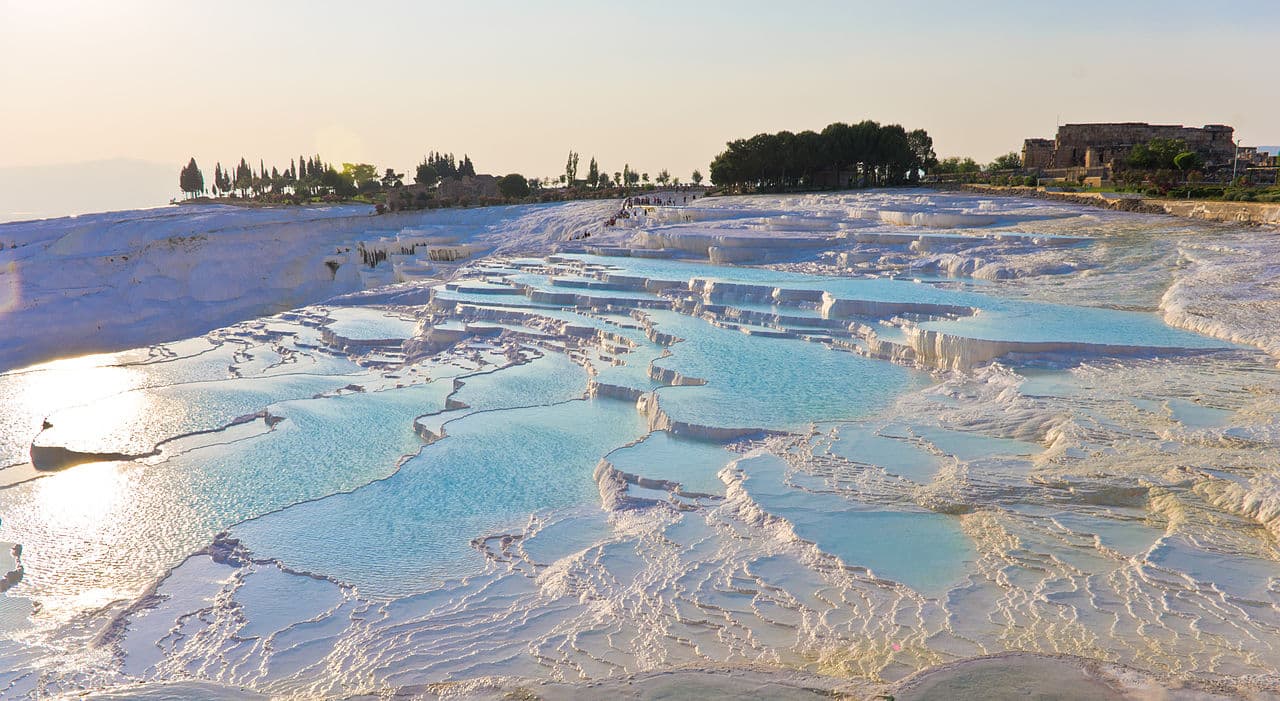
Pamukkale
Turkey
A surreal cascade of blinding-white travertine terraces — calcium carbonate platforms shaped over 14,000 years by hot mineral springs flowing down a 200m cliff in southwestern Turkey. Above the terraces sits Hierapolis, the Greco-Roman spa city Marcus Antonius gifted to Cleopatra, with a 12,000-seat theatre, the largest necropolis in Anatolia, and the still-bathable Cleopatra's Pool studded with toppled marble columns. UNESCO-listed since 1988; visited by 2.5 million per year, but most arrive on day buses from Antalya, Kuşadası, or Marmaris and clear out by 17:00.

Paris
France
Paris lives up to the hype. The City of Light delivers world-class museums, iconic architecture, and some of the best food on the planet. Each arrondissement has its own personality — the Marais for trendy boutiques, Saint-Germain for literary cafes, Montmartre for bohemian charm. The city is surprisingly walkable and the Metro makes everything else easy to reach.

Paros
Greece
The Cyclades island that delivers the Mykonos atmosphere at 30–40% lower prices — Naoussa’s photogenic harbour with a half-submerged 15th-century Venetian Kastro at the entrance, Parikia’s marble-paved Old Town centred on Panagia Ekatontapyliani (one of the oldest continuously functioning Christian churches in the world), the marble quarries at Marathi where the Venus de Milo was carved, the Lefkes mountain village and its 1,000-year-old Byzantine Path, Golden Beach’s windsurfing scene, and the 7-minute ferry to Antiparos with its spectacular cave.

Piran
Slovenia
Slovenia's only proper Adriatic port — a Venetian Gothic peninsula town at the tip of the country's tiny 46-km coastline. Three hundred years under Venice gave Piran the same painted house facades, the same loggia and bell tower, and the same Italianate fish-bone street pattern as the lagoon city itself. The Tartini Square sweeps marble-paved from the harbour to the Cathedral of St George on the cliff above. Hand-harvested fleur de sel still comes off the Sečovlje salt pans 8 km south using Roman-era methods. Old town is car-free and 2 hours by car from Ljubljana.

Plitvice Lakes National Park
Croatia
Sixteen turquoise lakes terraced by travertine dams growing 1cm a year, connected by 78m waterfalls and a wooden boardwalk you cannot swim from (fines enforced). Croatia's most famous national park, UNESCO since 1979, packed in summer — arrive at the 7am opening. Between Zagreb (2h) and Split.
.jpg%3Fwidth%3D1280&w=1600&q=75)
Plovdiv
Bulgaria
Six thousand years old and counting — one of the oldest continuously inhabited cities in Europe, draped across seven hills in the Maritsa River plain two hours south of Sofia. The Roman Theatre cut into a saddle between two hills has hosted performances since 90 AD and still does in summer; the Old Town climbs a cobbled hill of timbered Bulgarian Revival mansions; the Kapana creative district below it has turned former Ottoman bazaar workshops into wine bars and design studios. Plovdiv was the 2019 European Capital of Culture and remains the most stylish small city in the Balkans.

Porto
Portugal
Porto is Lisbon's grittier, more authentic northern sibling — a UNESCO-listed riverside city of blue-tiled churches, port wine cellars, and medieval alleyways. The Ribeira waterfront is stunning, the Livraria Lello bookshop inspired Harry Potter, and a port wine tasting in Vila Nova de Gaia is essential. Outstanding value with incredible food.

Positano
Italy
A vertical village of pastel houses tumbling 300 metres down an Amalfi Coast cliff face above the Tyrrhenian Sea — pedestrian-only, no flat ground anywhere in the historic centre, and stairs serving as the primary streets. Spiaggia Grande's dark grey volcanic pebbles framed by stacked pastel facades is the iconic photograph; the 10th-century church of Santa Maria Assunta with its gold-and-green majolica dome anchors the village; and the Sentiero degli Dei (Path of the Gods) cliff-top trail unfolds 500 metres above. UNESCO-listed Amalfi Coast, made-to-measure leather sandals on Via Pasitea, and the most photogenic Italian fishing-village-turned-romance-destination of them all.