
Matera
THE QUICK VERDICT
By Anthony · Updated April 2026
Choose Matera if you want one of the world's most extraordinary cave-city UNESCO sites — 9,000 years of continuous inhabitation, biblical-Jerusalem aesthetic, and atmospheric cave-hotel stays you can't replicate anywhere else.
- Best for
- cave-hotel sleeps in the Sassi, Crypt of Original Sin frescoes, Tibetan Bridge sunset over the Gravina
- Two seasons
- Apr–Jun and Sep–Oct
- Budget anchor
- $175/day mid-range
- Skip if
- you need real public transit or evening buzz — last bus runs early and the Sassi go silent after dinner
One of the oldest continuously inhabited cities in the world — humans have lived in the tufa-rock caves of the Sassi for 9,000 years, making Matera older than Jericho. The UNESCO-listed cave-dwelling labyrinth was Italy's "national shame" until the 1950s when the entire population (16,000 living without running water) was forcibly relocated; abandoned for 25 years, the Sassi were reborn from the 1990s as a remarkable boutique-hotel district. Mel Gibson, Pasolini, and the makers of "No Time to Die" all filmed here for the biblical-Jerusalem aesthetic. Pair the Sassi labyrinth with the cliffside Cathedral panorama, the Crypt of Original Sin ("the Sistine Chapel of rupestrian art"), and the Tibetan Bridge sunset walk across the Gravina canyon.
The two links below are affiliate links — MapSorted earns a small commission if you book through them, at no extra cost to you. How this works.
Tours & Experiences
Bookable tours, activities, and day trips in Matera
Where to Stay
Compare hotels and rentals in Matera
📍 Points of Interest
Sasso Caveoso
The older, more dramatic of the two cave-dwelling districts — UNESCO-listed labyrinth of stepped lanes and cave churches
Casa Grotta del Casalnuovo
Restored cave dwelling preserving 1950s conditions — 25 m² for 11 people plus livestock, single rainwater cistern
Matera Cathedral
13th-century Romanesque-Apulian cathedral with 52m bell tower, 15th-century frescos, and the best free Sassi panorama
Madonna de Idris Rock Church
Medieval rock-cut church carved into a freestanding tufa pinnacle — Byzantine frescos, summit viewpoint
Belvedere Murgia Timone
Classic postcard viewpoint across the Gravina canyon — reached via the Tibetan Bridge, dramatic at sunset
Palombaro Lungo Cistern
Vast underground rainwater cistern — 5,000 m³, 17m tall, discovered 1991, guided tours every 30 min
Crypt of Original Sin
"Sistine Chapel of rupestrian art" — 9th-century rock-cut church with most important early-medieval frescos in southern Italy
★ Local Picks
Tibetan Bridge Sunset Walk
200m suspension footbridge across Gravina canyon — narrow, planks-only, with 50m drop and the iconic Sassi panorama
At a Glance
- Pop.
- 60K
- Timezone
- Rome
- Dial
- +39
- Emergency
- 112 / 113
Matera is one of the oldest continuously inhabited cities in the world — humans have lived in its tufa-rock caves for at least 9,000 years, making it older than Jericho. The city is in Basilicata in southern Italy, 60 km from the Puglian coast
The Sassi (literally "stones") are the network of cave dwellings carved into the tufa limestone canyon walls — Sasso Caveoso (the older, southern district) and Sasso Barisano (the more developed northern district). UNESCO World Heritage since 1993
Matera was Italy's "national shame" until the 1950s — by then 16,000 people lived in the cave dwellings without running water or sewage, and infant mortality reached 50%. Author Carlo Levi's 1945 book "Christ Stopped at Eboli" exposed the conditions; the Italian government forcibly relocated the entire Sassi population to new public housing 1952–1968
The Sassi were entirely abandoned for 25 years (1968–1993) — starting in the 1990s, after UNESCO designation, residents and entrepreneurs began converting the caves into homes, hotels, and restaurants. The result is a remarkable "rebirth" of an entirely re-inhabited cave city
Matera has been used as a film location for over 30 productions because of its biblical-Jerusalem aesthetic — most famously Mel Gibson's "The Passion of the Christ" (2004), Pasolini's "The Gospel According to St. Matthew" (1964), and "No Time to Die" (2021) Bond opening sequence
Matera was named European Capital of Culture in 2019 — a transformative recognition that brought €40+ million in investment, restoration of major sites, and a 250% increase in annual visitors. The town now sees ~600,000 tourists annually, up from <50,000 in 2010
Top Sights
Sasso Caveoso (Cave District)
📌The older, more dramatic of the two Sassi districts — narrow stepped lanes, cave churches, and the iconic vista from Via Madonna delle Virtù. Walk down from Piazza San Pietro Caveoso, past the rock-cut Madonna de Idris church, and into the heart of the cave-house labyrinth. Bring proper shoes (the cobblestones are uneven and sometimes ankle-twisting); allow 2 hours minimum to walk the whole district. Free to walk; cave church entries €3–€5 each.
Casa Grotta del Casalnuovo
🏛️A restored cave dwelling preserving the conditions in which families lived until the 1950s — the single 25 m² room housed up to 11 people plus livestock (donkey, chickens, the family pig), with no running water and a rainwater cistern carved into the floor. €5 entry; the most direct way to grasp the conditions Carlo Levi described. Open daily 09:30–17:30.
Cathedral of Matera & Piazza Duomo
🗼The 13th-century Romanesque-Apulian cathedral on the highest point of the city — 52m bell tower, the cathedral interior with 15th-century frescos, and the dramatic terrace overlooking Sasso Barisano. The Piazza Duomo terrace is the single best free panoramic view of the Sassi. The cathedral was restored 2013–2016 ahead of the 2019 Capital of Culture year. €1 admission.
Madonna de Idris Rock Church
🗼A medieval rock-cut church carved into a freestanding tufa pinnacle in the Sasso Caveoso — Byzantine frescos (most fading but visible), barrel-vaulted ceiling chiselled directly from the rock, and a viewpoint at the summit looking across to the Murgia plateau. €3.50 with combined ticket for 4 rock churches. The most photographed rock church in Matera.
Belvedere Murgia Timone Viewpoint
📌The classic postcard photo of Matera comes from across the Gravina canyon — a 30-minute walk from the centre, crossing the Tibetan-style suspension footbridge over the gorge. The viewpoint shows the entire Sassi in profile, dramatic at sunset (golden hour) and unforgettable at night when the city is lit. The bridge is open 24/7; bring a torch for night walks.
Cisterns of Palombaro Lungo
🗼A vast underground cistern carved into the rock under Piazza Vittorio Veneto — 5,000 cubic metres of capacity, 17m tall, used to collect rainwater for the entire upper city until 1926. Discovered only in 1991 during piazza renovation. Guided tours every 30 minutes (€4); the cathedral-like vaulted space underground is genuinely spectacular.
Crypt of Original Sin (Cripta del Peccato Originale)
🗼14 km outside Matera in the Murgia countryside — a 9th-century rock-cut church called "the Sistine Chapel of rupestrian art" containing the most important early-medieval frescos in southern Italy: Genesis scenes (the original sin, the creation, Cain and Abel) by an anonymous artist known as "the Painter of the Flowers of Matera." €10 entry; reservations required (the crypt has timed entry to limit climate damage). 30 minutes' drive from Matera.
Strada Panoramica & Sunset Walk
📌The southern panoramic walking road skirts the Gravina canyon, giving alternating views into the Sassi and across to the Murgia. The 20-minute walk from Convicinio di Sant'Antonio to Belvedere Luigi Guerricchio at sunset, with the lights of the Sassi turning on one by one, is the single most memorable walk in town. Free; wheelchair-accessible for most of the route.
Climate & Best Time to Go
Matera has a Mediterranean climate moderated by elevation (400m) and inland position — hot dry summers (highs 32–35°C in July–August), cool wet winters (occasional snow). The tufa stone of the Sassi reflects heat strongly in summer, making the streets uncomfortably hot at midday. Spring and autumn are the optimal seasons; winter is cold but atmospheric and significantly cheaper.
Spring
April - May46 to 72°F
8 to 22°C
Optimal — comfortable temperatures, wildflowers across the Murgia plateau, and full operations across the Sassi. Easter brings a surge in crowds (Italian school holidays); otherwise pleasantly busy. Some rain but generally pleasant. Hotel prices below summer peak.
Summer
June - August64 to 95°F
18 to 35°C
Hot and busy — the tufa streets reflect heat strongly at midday (uncomfortable from 12:00–17:00 in July–August), but evenings are pleasant. August is the peak with crowds and prices. The traditional Italian solution: heavy lunch, siesta indoors, evening walking from 18:00. Reliably sunny.
Autumn
September - November41 to 77°F
5 to 25°C
September excellent (warm, post-summer crowds reduced); October pleasant with golden Murgia colour; November turning cold. The annual Festa della Bruna (early July) is past, but smaller wine and food festivals continue through October. Hotel prices noticeably lower than summer.
Winter
December - March28 to 54°F
-2 to 12°C
Cold and atmospheric — occasional snow on the Sassi (genuinely magical for photography), and the city in its quietest, most authentic state. Some Sasso restaurants reduce hours but most stay open. Tourist crowds thin; hotel prices 30–50% off summer. Christmas market in late December.
Best Time to Visit
April–May and late September–October are the optimal windows: comfortable temperatures (15–22°C), full operations across Sassi sites, manageable crowds, and the best photographic light. June–August is hot (regularly 32°C+) and at maximum tourist density with prices to match. Winter is cold but atmospheric and significantly cheaper; the rare snow on the Sassi is photographically magical.
Spring (April–May)
Crowds: Moderate to high (especially Easter week)Optimal — comfortable temperatures, wildflowers across the Murgia plateau, and full operations. Easter brings a surge in Italian visitors; otherwise pleasantly busy. Some rain but generally pleasant. Hotel prices below summer peak.
Pros
- + Best weather for walking
- + Wildflowers in Murgia
- + Lower prices than summer
- + Long daylight
Cons
- − Easter week extreme crowds
- − Some rain
- − Murgia trails muddy after rain
Summer (June–August)
Crowds: Very high (peak)Hot and busy — the tufa streets reflect heat strongly at midday (uncomfortable from 12:00–17:00), but evenings are pleasant. August is the peak with crowds and prices. The traditional approach: heavy lunch, siesta indoors, evening sightseeing from 18:00. Festa della Bruna (early July) is the major festival.
Pros
- + Reliably sunny
- + Long evening light
- + Festa della Bruna in July
- + Outdoor dining every night
Cons
- − Extreme midday heat (35°C+)
- − Maximum crowds
- − Peak prices
- − Crypt of Original Sin booked weeks ahead
Autumn (September–November)
Crowds: Moderate in September, low in October–NovemberSeptember excellent (warm, post-summer crowds reduced); October pleasant with golden Murgia colour; November turning cold. Hotel prices noticeably lower than summer; smaller wine and food festivals continue through October.
Pros
- + Best photographic light
- + Comfortable temperatures
- + Lower prices
- + Wine and harvest festivals
Cons
- − October rain frequent
- − Some Sassi spots reduce hours by November
- − November cold by sunset
Winter (December–March)
Crowds: LowCold and atmospheric — occasional snow on the Sassi (genuinely magical for photography), and the city in its quietest, most authentic state. Some Sasso restaurants reduce hours; most stay open. Tourist crowds thin; hotel prices 30–50% off summer. Christmas market in late December.
Pros
- + Cheap accommodation
- + Snow on Sassi is rare and magical
- + No tourist crowds
- + Authentic local atmosphere
Cons
- − Cold and damp
- − Some restaurants closed
- − Short daylight (sunset 17:00)
- − Tibetan Bridge dangerous in ice
🎉 Festivals & Events
Festa della Bruna
July 2 (annually)Matera's patron saint festival — over 600 years old, culminating in the procession of the "Carro Trionfale" (a paper-mâché chariot of the Madonna) which is then ritually torn apart by the crowd in a 700-year-old tradition believed to bring good luck.
Matera Film Festival
OctoberAnnual film festival celebrating Matera's cinematic legacy — screenings at the Cinema Comunale, Italian and international films, and tributes to the directors who have used Matera (Pasolini, Gibson, Boorman). Tickets €10–€30.
Christmas Market & Living Nativity
Late November - January 6The Sassi's natural Bethlehem-like aesthetic makes for an extraordinary Christmas season — large Christmas market in Piazza Vittorio Veneto, plus a "Living Nativity" (Presepe Vivente) staged in the Sassi with locals in period costume.
Materadio (Rai Radio 3 Festival)
SeptemberThree-day classical music and cultural festival hosted by Italian state radio Rai Radio 3 — concerts in cave settings, lectures, and the most intellectually engaging Matera festival.
Notte di San Lorenzo (Stars Night)
August 10Stargazing night across the Murgia plateau — the Perseid meteor shower viewed from the dark Murgia is spectacular. Special programme of Sassi rooftop dinners and guided star tours.
Off the Beaten Path
Pane di Matera at Forno Paoluccio
Matera bread (pane di Matera, IGP-protected since 2008) is one of Italy's great breads — high-hydration durum-wheat dough fermented for 36 hours, baked in a wood-fired oven at 250°C, with a uniquely tall crumb. Forno Paoluccio in the upper town has been making it since 1975 using the original wood-fired oven. €4–€6 for a 1 kg loaf; comes with the local olive oil for €3 a tasting.
Most tourists buy mass-produced "pane di Matera" from supermarkets; the genuine wood-fired version from a 50-year-old family bakery is dramatically different — tall, chewy, and golden.
Tibetan Bridge Sunset Walk
The Ponte Tibetano (Tibetan-style suspension footbridge) crosses the Gravina canyon from the Sassi side to the Murgia plateau — narrow, planks-only, 200m long, with a 50m drop into the gorge below. Entirely free; not for vertigo-sufferers. The 30-minute walk to Belvedere Murgia Timone, crossing this bridge at sunset, is a Matera classic.
The Tibetan Bridge is genuinely thrilling — you bounce slightly with each step, the gorge drops dramatically below, and the Sassi panorama from the far side at sunset is the iconic Matera image.
Caveman Aperitivo at Cumino
Cumino is a small wine bar in the Sasso Barisano carved into a former cave dwelling — local Aglianico del Vulture wines (the great Basilicata red), crostini with regional ingredients (lardo di Colonnata, cima di rapa, peperoni cruschi), and the most atmospheric aperitivo in town. €15 for a glass + crostini board. Dark cave interior, candle-lit, often live local guitar music in summer.
Drinking Aglianico del Vulture in a 9,000-year-old cave dwelling that has been continuously inhabited makes the wine taste better. Cumino is one of the few cave bars where the local owner is the bartender, the music is unamplified, and the experience feels genuinely Sassi rather than tourist-trap.
Carlo Levi Mural at Palazzo Lanfranchi
Inside the Palazzo Lanfranchi (the Basilicata National Museum), Carlo Levi painted a giant mural in 1961 depicting his exile in 1935–1936 to the small Basilicata village of Aliano — the regional poverty, the peasants, the malaria-stricken landscape. The mural is 18m × 3.2m and is the visual companion to "Christ Stopped at Eboli." €5 museum admission; the room with the mural is the highlight.
Most visitors to Matera have read or heard of "Christ Stopped at Eboli" but haven't seen Carlo Levi's painted version. The mural is the regional history of Basilicata in one extraordinary canvas.
Pasta Tasting at Le Botteghe
The Locorotondo-trained chefs at Le Botteghe serve traditional Basilicata cucina povera (peasant cuisine) — orecchiette with peperoni cruschi (crisp dried sweet peppers), cavatelli with fried baccalà, lampascioni (wild bitter onion bulbs) confit. €40–€55 per person with wine. Book ahead. Located in a restored Sasso Barisano cave; the Basilicata wine list is the strongest in the city.
Most Matera restaurants serve standard Italian fare with cave atmosphere. Le Botteghe is one of the few that actually cooks regional Basilicata dishes — peperoni cruschi, lampascioni, cavatelli al ferretto — that are hard to find outside the region.
Safety Breakdown
Very Safe
out of 100
Matera is one of the safest cities in Italy — extremely low violent crime, almost no street crime, and a small enough city that residents and police are familiar. The genuine concerns are physical: uneven cobblestones in the Sassi (ankle-twisting risk), steep stairs without handrails, summer heat and dehydration, and the Tibetan Bridge for vertigo-sufferers.
Things to Know
- •Cobblestones in the Sassi are uneven, sometimes wet from rainwater, and can twist ankles — wear sturdy shoes with grip; avoid heels
- •Many Sassi alleys have steep stairs without handrails; descending in rain or after dark requires extra care
- •Summer heat in the tufa streets at midday is intense (often 40°C+ in direct sun) — carry water, wear a hat, and adjust to siesta hours
- •The Tibetan Bridge sways slightly with each step and has a 50m drop below — not for vertigo-sufferers; cross slowly and don't look down
- •Cave church floors are uneven and frequently slippery — entry fees support maintenance but the historic floors are not modernised
- •Pickpocketing is rare but not unknown in heavy summer crowds at the Belvedere Luigi Guerricchio viewpoint and at the cathedral terrace
- •Solo female travellers report Matera as comfortable and welcoming; standard urban awareness applies
- •Gravina canyon hiking trails (especially across to the Murgia plateau and the Crypt of Original Sin area) require water, hat, and proper shoes — temperatures get extreme in July–August
Emergency Numbers
Emergency (all services)
112
Police
113
Carabinieri
112
Ambulance
118
Fire
115
Costs & Currency
Where the money goes
USD per dayBackpacker = hostel dorm + street food + public transit. Mid-range = 3-star hotel + neighbourhood restaurants + transit cards. Luxury = 4/5-star + fine dining + taxis. How we calibrate these numbers →
Quick cost estimate
Customize per category →Estimates based on regional averages. Flight prices vary by season and airline.
budget
$60-110
B&B in the upper town, supermarket picnics + cheap trattorie, walking for everything, free Sassi exploration, occasional cave church entry
mid-range
$140-260
Mid-range cave hotel in Sassi, restaurant dinners with wine, Casa Grotta + Palombaro Lungo + Madonna de Idris entries, Crypt of Original Sin tour
luxury
$350-900
Sextantio Le Grotte della Civita (the famous luxury cave-hotel) or Palazzo Gattini, fine dining at Le Botteghe or Vitantonio Lombardo, private guide, day trip to Alberobello
Typical Costs
| Item | Local | USD |
|---|---|---|
| AccommodationB&B in upper town | €55–€90/night | $58–95 |
| AccommodationMid-range cave hotel in Sassi | €110–€220/night | $117–233 |
| AccommodationLuxury cave-hotel (Sextantio, Palazzo Gattini) | €400–€800/night | $424–848 |
| FoodTrattoria dinner with wine | €20–€35 per person | $21–37 |
| FoodCave restaurant dinner (mid-range, with wine) | €40–€65 per person | $42–69 |
| FoodAglianico del Vulture (wine shop) | €15–€60 bottle | $16–64 |
| FoodEspresso at a bar (standing) | €1.20–€1.50 | $1.30–1.60 |
| FoodPane di Matera 1 kg loaf | €4–€6 | $4.20–6.40 |
| FoodAperol Spritz at an outdoor bar | €5–€8 | $5.30–8.50 |
| TransportFAL train to Bari (one-way) | €7 | $7.40 |
| TransportPugliairbus to Bari Airport | €5–€8 | $5.30–8.50 |
| TransportTaxi within Matera | €10–€15 | $10.60–16 |
| TransportRental car day rate | €35–€50/day | $37–53 |
| AttractionCasa Grotta del Casalnuovo | €5 | $5.30 |
| AttractionPalombaro Lungo cistern tour | €4 | $4.20 |
| AttractionCathedral of Matera | €1 | $1.10 |
| AttractionCrypt of Original Sin tour (with transport) | €10 | $10.60 |
| Attraction4-rock-church combined ticket | €7 | $7.40 |
💡 Money-Saving Tips
- •Stay in the upper town rather than the Sassi — same walking access, half the price (€60 vs €150+)
- •The 4-rock-church combined ticket (€7) is dramatically cheaper than buying each separately (€3–5 × 4 = €12–20)
- •Espresso at the bar (standing) is €1.20; sitting at a table doubles to €2.50+
- •Trattorie in the upper town serve the same regional dishes for half the cave-restaurant price
- •Pane di Matera + cured meats + Aglianico from a wine shop = a great picnic at a sunset viewpoint for €15 per person, vs €40 in a restaurant
- •The Tibetan Bridge sunset walk and the Belvedere Murgia Timone viewpoint are entirely free — and arguably the best Matera experiences
- •Off-season (November–February excluding Christmas week) hotel prices in the Sassi drop 30–50%
- •The FAL train to Bari (€7) is dramatically cheaper than rental car for a day trip
Euro
Code: EUR
Italy uses the Euro (€). At writing, €1 ≈ $1.06 USD. ATMs (Bancomat) widespread in Matera — use bank ATMs (UniCredit, Intesa Sanpaolo, BPER) over Euronet ATMs for better rates. Cards accepted at hotels, restaurants, museums, and most shops; some smaller cave bars and trattorie are cash-only or have €15 minimums on cards. Always carry €30–€50 in cash.
Payment Methods
Cards accepted at hotels, restaurants (above small trattoria level), shops, and museums. Contactless widely supported. Cash needed for: cave church entries (€3–€5 each), public toilets (€1), small market stalls, and tipping. Foreign card ATM withdrawals: 3–5% fee depending on home bank.
Tipping Guide
Tipping not expected (service is included via the coperto cover charge of €2–€4). For exceptional service, round up or leave 5–10%. Mandatory coperto is shown on menu and added to bills.
No tipping at the counter for an espresso. If served at a table, round up to the nearest Euro.
Round up to the nearest Euro. Bari Airport-Matera transfer (€90): €5–€10 tip is appropriate.
Bellboy: €1–€3 per bag carried up steep Sassi stairs (the cave-hotels often require porter assistance). Housekeeping: €2–€5/day.
Private guide: €10–€20 per person for a half-day tour; €30+ for full day. Group tour guides: €5–€10 per person.
How to Get There
✈️ Airports
Bari Karol Wojtyła Airport(BRI)
60 km northeastBRI is the main airport for Matera — Ryanair, easyJet, Wizz Air, Lufthansa, Air France, and most major European routes. From the airport: Pugliairbus direct shuttle to Matera (€5–€8, 90 min, 4–6 daily); rental car (€40/day, 60 min drive); taxi (€90, 60 min). The Pugliairbus is the most economical and reliable.
✈️ Search flights to BRINaples International Airport (alternative)(NAP)
255 km westNaples (NAP) is occasionally cheaper for European routes — but reaching Matera requires train Naples → Bari → FAL Bari → Matera (4 hr 30 min total) or a 3-hour drive. Generally only worth it for significant savings.
✈️ Search flights to NAP🚆 Rail Stations
Matera Centrale
A small terminal of the regional FAL (Ferrovie Appulo Lucane) narrow-gauge railway — connects only to Bari (75 min, €7). Not on the Italian national rail network; from Bari you transfer to Trenitalia for onward travel. Walking distance to Sasso Barisano (15 min) and the Cathedral (10 min).
🚌 Bus Terminals
Piazza Matteotti / Via Don Minzoni
The main bus stop for Pugliairbus to Bari Airport, FlixBus services to Naples / Rome / Milan, and regional Marozzi/Marino buses. No covered bus station; tickets bought online or onboard. Walking distance to the historic centre.
Getting Around
Matera is small enough to traverse entirely on foot — the historic centre and both Sassi are within 25 minutes' walk of each other. There is no bus or tram in the historic centre (impractical given the medieval lanes); cars are restricted to the upper modern town. Reaching Matera from the wider region requires the FAL train from Bari or rental car. The single biggest practical issue: Matera has no main train station connected to the national rail network — only the regional FAL train from Bari.
Walking
FreeThe only practical mode within the historic centre — the Sassi and upper town are entirely pedestrianised. Sasso Caveoso to Sasso Barisano via the Cathedral: 30 min. Upper town piazzas to the Tibetan Bridge: 25 min. Pavement is mostly cobblestone, sometimes uneven; bring proper shoes.
Best for: Sassi, sightseeing, restaurants, Tibetan Bridge
FAL Train (Ferrovie Appulo Lucane)
€7 single (Bari)The narrow-gauge regional FAL train connects Matera to Bari (75 min, €7) — the only direct rail connection. Trains run hourly on weekdays, less frequently on weekends. Tickets bought at the small Matera Centrale station. The FAL is not connected to the Italian national rail (Trenitalia); from Bari you transfer to the main rail network for onward travel.
Best for: Day trip to Bari, onward travel via Bari
Taxi
€10–€90Standard rates: €5 base + €1.50/km. Matera Centrale (FAL station) to your Sassi hotel: €10–€15. Bari Airport to Matera: ~€90 (60 km). Useful with luggage given the steep cobblestoned approach to most Sassi hotels.
Best for: Airport transfers with luggage, late-night returns
Rental Car
€35–€60/dayUseful for day trips to Alberobello, the Crypt of Original Sin, and the broader Puglia/Basilicata countryside. Cars cannot drive into the historic centre (ZTL — limited traffic zone, €70+ fines for illegal entry); use the public car parks at Piazza della Visitazione or Via Saragat. ~€40/day for compact; fuel ~€1.70/L.
Best for: Day trips, Crypt of Original Sin, Alberobello, broader Puglia
Pugliairbus
€5–€8 (Bari Airport)Direct bus service between Bari Airport and Matera — €5–€8 one-way, 90 min, runs 4–6 times daily. Tickets via pugliairbus.com or onboard; the most economical airport transfer.
Best for: Bari Airport transfers
Walkability
Matera's historic centre is highly walkable but physically demanding — significant elevation changes (the Sassi descend 100m+ from the upper town), uneven cobblestones, and steep stairs throughout. Wheelchair access is extremely limited in the Sassi due to the historical staircases; the upper town piazzas and Cathedral terrace are accessible. Bring proper walking shoes; high heels and sandals are unsuitable.
Travel Connections
Alberobello
The UNESCO town of trulli — 1,500 cone-roofed limestone houses unique to this part of Puglia. Easy day trip from Matera with a rental car; combine with Locorotondo for a full day.
Bari
Puglia's capital and main airport — lively waterfront, the Old Town (Bari Vecchia) of Norman streets, the Basilica di San Nicola (relics of St. Nicholas / Santa Claus), and the orecchiette-making nonnas of Strada delle Orecchiette.
Lecce
The "Florence of the South" — extraordinarily ornate Lecce baroque architecture in a soft local limestone that blackens beautifully with age. Roman amphitheatre, Piazza Sant'Oronzo, and the gateway to the Salento peninsula.

Naples
Italy's most chaotic and authentic southern city — the Amalfi Coast, Mount Vesuvius, Pompeii, the National Archaeological Museum, and the world's best pizza. Better as a 3-day extension than a day trip.
Entry Requirements
Italy is in the Schengen Area and the EU — most Western passport holders enter visa-free for up to 90 days within any 180-day period for tourism. The 90/180 rule applies cumulatively across all Schengen countries. The new EU-wide ETIAS travel authorisation is expected to apply from late 2026 for visa-free nationalities.
Entry Requirements by Nationality
| Nationality | Visa Required | Max Stay | Notes |
|---|---|---|---|
| US Citizens | Visa-free | 90 days in any 180-day period across Schengen | Visa-free for tourism. Passport must be valid 3+ months beyond intended departure. ETIAS authorisation expected from late 2026 (~€7, valid 3 years). |
| UK Citizens | Visa-free | 90 days in any 180-day period across Schengen | Post-Brexit, UK citizens are subject to standard third-country Schengen rules. Passport must be issued in the past 10 years and valid 3+ months beyond departure. |
| EU Citizens | Visa-free | Unlimited | Free movement under EU/EEA rules. National ID card sufficient for entry; passport not required. |
| Canadian Citizens | Visa-free | 90 days in any 180-day period across Schengen | Visa-free for tourism. Passport valid 3+ months beyond departure. ETIAS expected from late 2026. |
| Australian Citizens | Visa-free | 90 days in any 180-day period across Schengen | Visa-free entry. Passport valid 3+ months beyond intended departure. |
Visa-Free Entry
Tips
- •Schengen 90/180 rule is cumulative across all 27 Schengen countries — Italy days count alongside France, Spain, etc.
- •ETIAS travel authorisation expected to apply from late 2026 for visa-free nationals (USA, UK, AU, CA etc.) — €7 fee, valid 3 years for multiple short stays
- •Matera tourist tax (tassa di soggiorno) of €1.50–€3 per person per night is charged by hotels and paid in cash on check-out
- •Italian customs are strict on cash (€10,000+ requires declaration), counterfeit goods, and certain food items (fresh meat, dairy from non-EU countries)
- •Reaching Matera typically requires Bari Airport (BRI) — direct international flights to Bari are limited; many travellers transit via Rome FCO or Milan MXP
Shopping
Matera's shopping is small-scale and concentrated in the upper town (Via Lucana, Via Domenico Ridola, Piazza Vittorio Veneto) and the converted cave-shop boutiques in the Sassi. The genuine local specialities are the IGP pane di Matera bread, peperoni cruschi (dried sweet peppers), Aglianico del Vulture wine, terracotta whistles (cucù), and traditional Matera-design ceramics.
Via Domenico Ridola
shopping streetThe main shopping street in the upper town — small boutiques selling Matera-themed leather goods, ceramics, wine shops, and the Palazzo Lanfranchi museum. Mid-range Italian fashion mixed with local crafts. Closed Sundays at most shops.
Known for: Local crafts, leather goods, ceramics, mid-range fashion
Sassi Cave Boutiques
craft districtA handful of cave-shops in the Sasso Barisano have been converted to small artisan boutiques — Bottega del Cucù makes traditional terracotta whistles, Cantine Madonna delle Virtù sells regional wines, and a couple of small cooperatives sell hand-woven Basilicata textiles. Quality varies; watch for "made in China" tourist tat.
Known for: Cucù whistles, hand-woven textiles, local ceramics, regional wines
Piazza Vittorio Veneto Cafés & Wine Shops
food shoppingThe main piazza in the upper town has half a dozen wine and food shops — Vinarius (extensive Basilicata wine selection), Dolce Vita pastries, and the Saturday morning small farmer's market. Best for picnic supplies, Aglianico, and packaged peperoni cruschi to take home.
Known for: Aglianico del Vulture wine, peperoni cruschi, regional cheeses, sweets
Via Lucana
commercial streetThe main artery in the modern upper town — Italian chain stores (Coin department store, OVS, Tezenis), a Conad supermarket, banks, and pharmacies. Practical rather than charming; the only place to find chain-store basics in Matera.
Known for: Chain stores, supermarket, pharmacies, practical shopping
🎁 Unique Souvenirs to Look For
- •Terracotta cucù (traditional Matera whistle) — small €5–€10, large hand-painted versions €25–€50; symbol of fertility and good luck
- •Bottle of Aglianico del Vulture from a Vinarius wine shop — the great Basilicata red, €15–€60 for a serious bottle
- •Vacuum-packed pane di Matera bread + bag of peperoni cruschi — €10–€20 combined, lasts 2 weeks at home, perfect Basilicata flavour
- •Hand-woven Basilicata wool textile (pezzara or pegnone) from a cooperative — small placemats €15, large rugs €100+
- •Carlo Levi-themed art print or museum book from Palazzo Lanfranchi gift shop — €10–€30, ties to "Christ Stopped at Eboli"
- •Bottle of Amaro Lucano (regional bitter liqueur, made in Pisticci, Basilicata) — €15–€25, an Italian classic seldom available abroad
Language & Phrases
Italian is the national language; Materano (the local Basilicata dialect) is spoken among older residents at home but everyone speaks standard Italian. English proficiency in Matera tourism (hotels, restaurants, museum tour guides) is good but lower than in major Italian cities — outside tourism, English is limited. A handful of Italian phrases significantly improve interactions, especially in upper town trattorie and small shops.
| English | Translation | Pronunciation |
|---|---|---|
| Hello | Ciao / Salve (informal/formal) | CHA-oh / SAL-veh |
| Good morning | Buongiorno | bwon-JOR-no |
| Good evening | Buonasera | bwo-na-SEH-ra |
| Please | Per favore | pair fa-VOR-eh |
| Thank you | Grazie | GRA-tsee-eh |
| You're welcome | Prego | PREH-go |
| Yes / No | Sì / No | see / no |
| How much? | Quanto costa? | KWAN-to KOS-ta |
| The bill, please | Il conto, per favore | eel KON-to pair fa-VOR-eh |
| A coffee, please | Un caffè, per favore | oon ka-FEH pair fa-VOR-eh |
| Where is...? | Dov'è...? | doh-VEH |
| Cheers! | Cin cin / Salute! | cheen-cheen / sa-LOO-teh |
If you like Matera, you'll love…
4 cities with a similar vibe, outside of the same country.
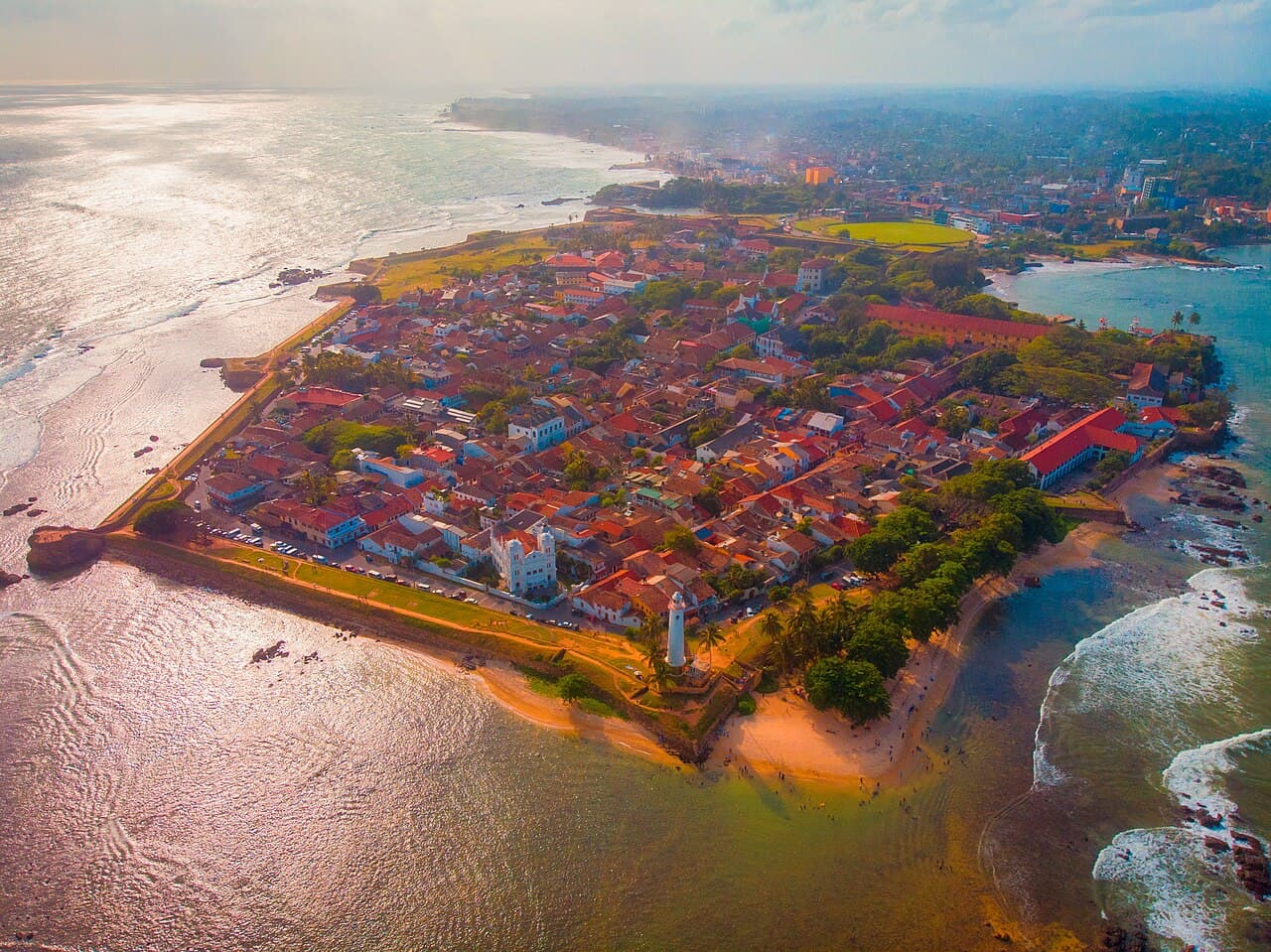
Sri Lanka · OVR 74
low-anxiety streets · strong food culture

Mexico · OVR 74
deep artistic heritage · reliable eating scene

Portugal · OVR 77
rich cultural layers · low-anxiety streets

France · OVR 72
deep artistic heritage · reliable wifi, decent English