All Destinations
134 of 576 guides match

Acadia National Park
United States
The first national park east of the Mississippi (1916) — 47,000 acres across Mount Desert Island, the Schoodic Peninsula, and Isle au Haut. Cadillac Mountain at 1,530 ft is the first place in the continental US to see sunrise October through early March. Rockefeller's 45 miles of carriage roads exclude cars; the 27-mile Park Loop Road connects Sand Beach, Thunder Hole, Otter Cliffs, and Jordan Pond. The Beehive and Precipice ladder trails are some of the most dramatic hikes in the eastern US.

Albuquerque
United States
Albuquerque straddles the Rio Grande on a high desert plateau (5,300 ft) with the granite face of the Sandia Mountains rising 5,000 ft directly east of downtown — reachable by the longest aerial tramway in the Americas. The Old Town adobe plaza dates to 1706 Spanish settlement, and green chile (the state question is literally 'red or green?') drips from every breakfast burrito. Each October the world's largest hot air balloon festival floods the sky with 500+ balloons; the rest of the year you get Breaking Bad locations, Petroglyph National Monument, and 310 days of sunshine.

American Southwest
United States
A road-trip region of red-rock canyons and impossibly wide skies — Grand Canyon's South Rim, Sedona's crimson buttes, Antelope Canyon's light shafts, Horseshoe Bend, and Monument Valley's towering mesas. Flagstaff and Sedona anchor most itineraries; a rental car is mandatory and the distances are bigger than they look.

Anchorage
United States
Anchorage holds nearly 40% of Alaska's population on a Cook Inlet promontory ringed by the Chugach Mountains. The Tony Knowles Coastal Trail runs 11 miles along the water with regular moose sightings and beluga whales offshore. It's the staging ground for Denali, the Kenai Peninsula, and Prince William Sound — and the only US city where you can land on a Boeing 737, fish for king salmon downtown on Ship Creek, and watch a midnight-sun sunset around 23:30 in late June.

Annapolis
United States
Maryland's capital was briefly the capital of the United States (Nov 1783–Aug 1784), and the State House is the oldest US capitol still in continuous legislative use. The 18th-century brick streets of the historic district run downhill to the Chesapeake Bay-fed harbor — known locally as Ego Alley because boaters love to be seen there. The US Naval Academy occupies 338 waterfront acres on the Severn River; Maryland blue crabs come steamed with Old Bay; and Annapolis is the self-proclaimed sailing capital of America, with a fleet of charter sloops on the city dock most weekends.

Antigua
Antigua and Barbuda
The larger of the two islands that make up Antigua and Barbuda, a 108-square-mile volcanic-and-coral landmass in the Leeward Caribbean with a much-quoted boast of 365 beaches, one for every day of the year. The southwest coast holds Nelson's Dockyard at English Harbour, the only continuously-running Georgian-era dockyard on Earth and a UNESCO World Heritage Site. Sunday evenings draw the island to Shirley Heights for steel-band-and-barbecue sunsets over the same harbour. The Dickenson Bay strip on the northwest coast anchors the all-inclusive resort cluster, and a 90-minute ferry north reaches Barbuda's pink-sand Princess Diana Beach.

Antigua Guatemala
Guatemala
A UNESCO World Heritage colonial city surrounded by volcanoes, with cobblestone streets, baroque churches, and some of Central America's best coffee and chocolate.

Arches National Park
United States
Arches sits on 76,000 acres of red Entrada and Navajo Sandstone north of Moab in eastern Utah, holding more than 2,000 documented natural stone arches — the densest concentration on the planet. Delicate Arch (the Utah license-plate arch) is the iconic 3-mile sunset hike, while Landscape Arch on the Devil's Garden Trail spans 306 feet, one of the longest natural arches on Earth. The Windows section delivers four major arches in one short loop. Timed-entry vehicle reservations are required April through October via recreation.gov. Moab is the gateway town and pairs naturally with a Canyonlands NP day trip.

Aruba
Aruba
A 19-mile Dutch Caribbean island 15 miles north of Venezuela — outside the hurricane belt, dry and breezy year-round, and reliably sunny (the local saying is “sun, sand, and sea every day”). Eagle Beach’s photogenic divi-divi trees, Palm Beach’s high-rise resort strip, the otherworldly Arikok National Park (cactus-and-iguana desert covering 18% of the island), the Natural Pool tucked in volcanic rocks, and the colonial Dutch capital of Oranjestad with its pastel architecture. US dollars accepted everywhere; English universally spoken; US Pre-Clearance at the airport.

Asheville
United States
Blue Ridge Mountain city nicknamed Beer City USA — more craft breweries per capita than any American city. Biltmore Estate (250 rooms, George Vanderbilt, 1895) is the largest private home in America. The River Arts District has 200+ working artist studios in former industrial buildings. Gateway to the Great Smoky Mountains National Park (45 minutes) and the Blue Ridge Parkway.

Aspen
United States
America's most famous ski town and the priciest in this set — a 7,000-resident former silver-mining town at 7,908 ft surrounded by four separate mountains under one Aspen Snowmass lift ticket: Aspen Mountain (Ajax) rising from town, Aspen Highlands with the legendary Highland Bowl hike, Buttermilk (Winter X Games home since 2002), and massive Snowmass 12 miles down-valley. The Maroon Bells, twin 14,000-ft peaks reflected in Maroon Lake, are the most photographed mountains in North America (reservation shuttle May-October). Off the slopes, the Aspen Music Festival fills July and August, the Food and Wine Classic takes over mid-June, and the Aspen Ideas Festival convenes thinkers each summer. ASE airport sits 4 miles from downtown.

Atlanta
United States
The capital of the New South — Sherman burned the city in 1864 and the phoenix on the official seal commemorates the rise from ashes. Martin Luther King Jr. was born here, preached at Ebenezer Baptist Church on Auburn Avenue, and is buried at the King Center; the MLK National Historical Park is the essential Civil Rights pilgrimage. Coca-Cola was invented here in 1886 and the brand still anchors downtown alongside the Georgia Aquarium (largest in the Western Hemisphere) and the Civil and Human Rights Center. The 22-mile Beltline trail has connected 45 neighborhoods into a continuous urban park; Ponce City Market and Krog Street Market on the Eastside Trail are the food-scene anchors. ATL is the busiest airport in the world; Atlanta is the cultural and economic capital of the South.

Austin
United States
Austin is Texas with the volume turned up — a tech-money boomtown still nursing its "Keep Austin Weird" soul. Live music spills from honky-tonks on South Congress, smoked brisket lines form by 10 a.m. at Franklin, and Lady Bird Lake threads the downtown skyline with paddleboards and bats. Rainey Street, East Austin, and the Hill Country day-trip loop all reward a car or rideshare.

Banff
Canada
Banff National Park is the Canadian Rockies at their finest — turquoise lakes (Lake Louise, Moraine Lake), towering peaks, glaciers, and abundant wildlife. The charming town of Banff sits right inside the park, and the Icefields Parkway connecting to Jasper is one of the world's most scenic drives. World-class skiing in winter, incredible hiking in summer.

Bar Harbor
United States
The gateway town to Acadia National Park on the northeast shore of Mount Desert Island, three hours by car from Portland. Once a Gilded Age summer colony for Rockefellers, Vanderbilts, and Astors (the 1947 fire destroyed most of the cottages), Bar Harbor today is a compact downtown of brick storefronts, lobster pounds, ice-cream parlours, and the trailhead for nearly every Acadia visitor's first day. Cadillac Mountain summit (1,530 feet, the highest point on the eastern seaboard) is a 20-minute drive away, the carriage roads start a mile south, and Jordan Pond House serves the legendary popovers a 15-minute drive from the town pier.

Barbados
Barbados
The easternmost Caribbean island — a Commonwealth nation that became a republic in 2021 and the birthplace of rum (Mount Gay, 1703, is the world's oldest still-running distillery). UNESCO Bridgetown and its Garrison preserve the British military layout of the 17th–19th centuries; the rugged east coast (Bathsheba's mushroom rocks) is for surfers; the calmer Caribbean west (Holetown, Speightstown) for swimmers. Crop Over (July–August) is the largest carnival outside Trinidad. Flying fish is the national dish, served with cou-cou. The dry season runs December–May.
Belize
Belize
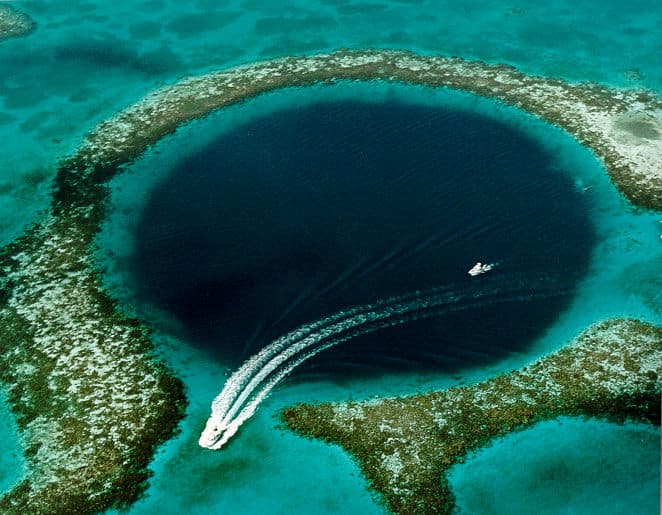
The only English-speaking country in Central America — Caribbean coast on one side, Guatemalan jungle on the other, the world's second-largest barrier reef just offshore. The 124m-deep Great Blue Hole anchors the offshore atolls and decorates the country's banknotes; Ambergris Caye is the model for Madonna's "La Isla Bonita"; tiny car-free Caye Caulker takes the "Go Slow" mantra so seriously that they painted it on signs. Inland, the ancient Maya pyramids of Caracol, Xunantunich, and Lamanai rise from jungle reserves, and Actun Tunichil Muknal cave still holds skeletal sacrifices from a thousand years ago. English-speaking, BZD pegged 2:1 with USD, and one of the least-visited adventure paradises in the Caribbean.

Big Island
United States
Hawaii Island is bigger than all the other Hawaiian islands combined and is still actively growing — Kilauea is one of the world’s most active volcanoes (currently erupting as of April 2026) and Mauna Kea’s 4,205-m summit hosts 13 international observatories under what astronomers consider Earth’s clearest skies. Eight of the world’s 13 climate zones exist on this single island: the Hilo side gets 3,400 mm of tropical rainforest rain a year while the Kona side stays dry desert at 500 mm; Mauna Kea’s summit has alpine conditions year-round and snows in winter. Add Punaluʻu black-sand beach, Kona coffee country, the green sea turtles at Puʻuhonua o Hōnaunau, and the manta-ray night snorkel off Keauhou Bay. The most geologically dramatic of the Hawaiian islands.
Bocas del Toro
Panama
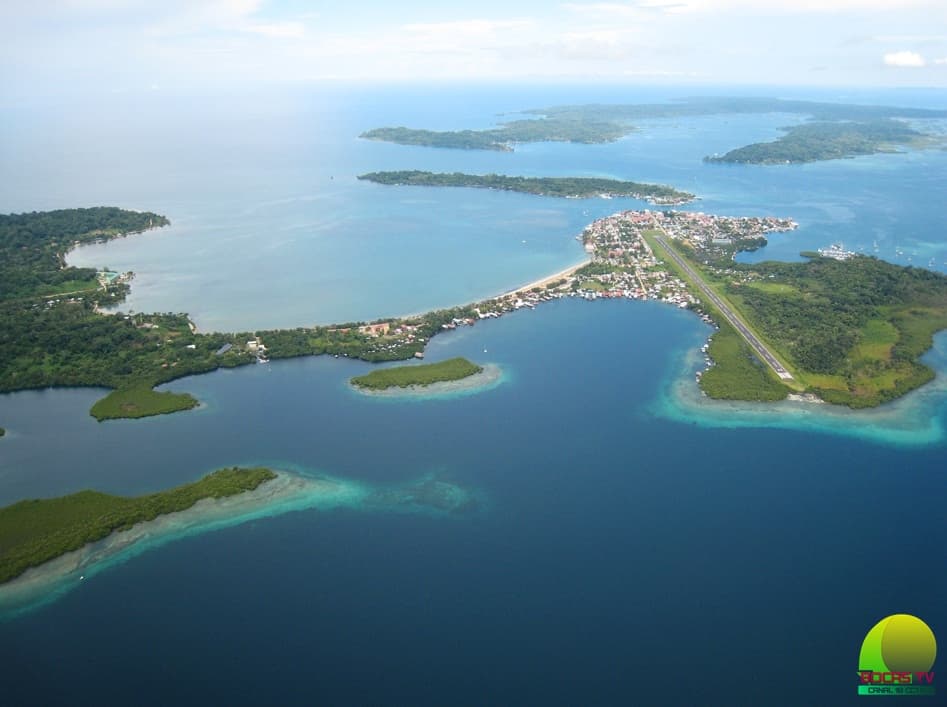
An archipelago of nine main islands and 200-something islets in Panama's far northwest Caribbean — a cheaper, scruffier, more laid-back answer to Costa Rica or San Blas. Isla Colón holds the main town (Bocas Town); Bastimentos has Red Frog and Wizard beaches; Isla Carenero is a 5-minute boat ride for sunset bars over the water. Snorkel the cays, see strawberry poison-dart frogs, and accept that everything runs on island time and most floors are wooden boards over the sea.

Boise
United States
Idaho's capital sits where the high desert meets the Rockies — the Boise River cuts straight through downtown, lined by a 25-mile greenbelt of cottonwoods and bike paths that locals treat as the city's spine. The state's only Basque population in the country (roughly 15,000) gave Boise a Basque Block of pintxos bars and the Cyrus Jacobs-Uberuaga House. Add the climbable foothills behind town, the gold-domed Idaho State Capitol, and a tech scene anchored by Micron and HP, and you have one of the fastest-growing small cities in the West.

Boston
United States
Boston is America's most walkable big city — four centuries of history packed into cobblestone streets, punctuated by Fenway's green monster, Italian cannolis in the North End, and college-town energy from Harvard and MIT across the river. The Freedom Trail delivers Revolutionary history in a single 2.5-mile walk.

Branson
United States
Branson is a 10,000-person Ozark Mountain town in southwest Missouri that pulls roughly 9 million visitors a year on the strength of 50-plus live theaters, a 49-mile shoreline on Table Rock Lake, and the Silver Dollar City theme park up the road. The downtown 76 Country Boulevard strip stacks neon-lit theaters end to end (more theater seats than Broadway, the locals like to point out), Branson Landing runs a mile and a half along Lake Taneycomo with a fountain show and chain restaurants, and Dolly Parton's Stampede dinner theater feeds 1,000 people a night. Most travelers fly into Springfield (SGF, 45 minutes north) since Branson Airport (BKG) has thin scheduled service.

Bryce Canyon National Park
United States
Bryce Canyon is the hoodoo amphitheater of southern Utah — not actually a canyon but a series of natural amphitheaters carved into the eastern edge of the Paunsaugunt Plateau, packed with the densest concentration of hoodoos (eroded sandstone spires) on Earth. The rim sits at 8,000 to 9,000 feet, which makes it noticeably cooler than nearby Zion (4 hours from Las Vegas, 1.5 hours from Zion). The classic combination is a sunrise stop at Inspiration or Sunrise Point followed by descending into the amphitheater on the Navajo Loop and Queens Garden Trail. An International Dark Sky Park, the night skies here are extraordinary.

Buffalo
United States
Buffalo invented the chicken wing at the Anchor Bar on Main Street in 1964 and never quite got over it — but the city is also the closest American gateway to Niagara Falls (20 miles north), the home of Frank Lloyd Wright's masterpiece Darwin Martin House complex, and a rebuilt waterfront at Canalside that turned a derelict freight terminus into the city's summer centre. Add Bills Mafia at Highmark Stadium, the Albright-Knox-Buffalo AKG Art Museum (one of the best modern collections between Manhattan and Chicago), and the cheapest steak fingers in the East, and the city has quietly stopped being a punchline.