All Destinations
19 of 576 guides match

Auckland
New Zealand
New Zealand's largest city is built on 53 volcanic cones with harbors on two sides. The "City of Sails" offers world-class sailing, Polynesian culture, excellent food, and easy access to black sand beaches, wine regions, and native bush.

Bora Bora
French Polynesia
The island that invented the overwater bungalow (Hotel Bora Bora, 1967) — a volcanic peak (Mt Otemanu, 727m) ringed by a turquoise lagoon and a barrier reef 50m offshore. Access is Tahiti (PPT) international then a 50-minute Air Tahiti hop to BOB. Honeymoon-grade resorts (St. Regis, Four Seasons, Intercontinental Thalasso) dominate the main atoll; Matira Beach is the public gem. May–October dry season is peak; November–April is cyclone risk. XPF (CFP Franc) is the currency, pegged to the Euro.

Brisbane
Australia
Queensland's sunny capital offers a laid-back river lifestyle, South Bank's cultural precinct with a man-made beach, and easy access to the Gold Coast and Sunshine Coast. The 2032 Olympics host city is undergoing a major transformation.

Cairns
Australia
Tropical northeastern Queensland's gateway to two adjacent UNESCO World Heritage sites — the Great Barrier Reef offshore and the 180-million-year-old Daintree Rainforest just to the north (the world's oldest continuously surviving tropical rainforest, where it meets the reef at Cape Tribulation). Cairns itself is a compact, walkable city of ~150K built around the Esplanade Lagoon (free saltwater pool replacing the unswimmable mudflat foreshore), with most of life happening between the lagoon, the Pier marina, and the night markets. Reef day trips (90min boat to outer reef pontoons; ~$220-280 AUD) and Kuranda Skyrail-and-Scenic-Railway combo to the rainforest village (~$120 AUD) are the standard outings. Tropical wet season Nov-April brings heat, humidity, monsoon rain, and stinger jellyfish — May-October is the dry, calm, pleasant window.

Christchurch
New Zealand
New Zealand's South Island gateway — rebuilt after the 2010–11 earthquakes into a living showcase of urban innovation. Shigeru Ban's Cardboard Cathedral is a global architectural icon. The International Antarctic Centre is the world's best gateway to the southern continent (without going). The TranzAlpine train crossing the Southern Alps is one of the world's great rail journeys.
Fiji
Fiji
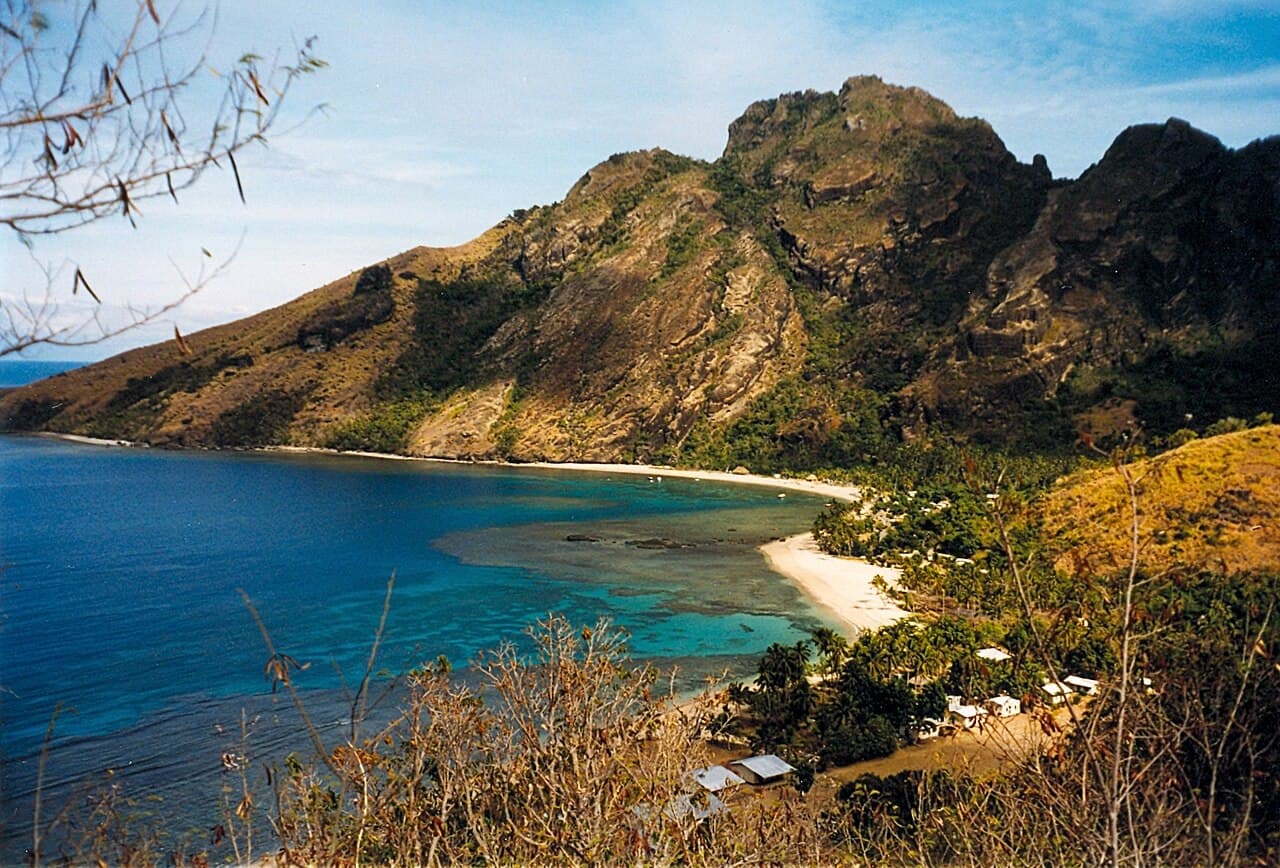
An archipelago of 333 islands where the first "Bula!" hits like a physical thing — warm, oceanic, genuine. The Mamanuca Islands are 30 minutes by speedboat from Nadi; the Yasawas are a 4-hour catamaran ride with the Blue Lagoon and manta ray encounters at Drawaqa Passage. Taveuni's Rainbow Reef is rated top-10 globally for diving. The kava ceremony, the Garden of the Sleeping Giant, Sabeto's mud pools, and a culture that invented the overwater resort experience.

Great Barrier Reef
Australia
The Great Barrier Reef is the largest coral reef system on Earth — visible from space and home to an incredible diversity of marine life. Snorkeling and diving among the coral gardens, manta rays, and sea turtles is unforgettable. Cairns and Airlie Beach are the main gateway towns, and the Whitsunday Islands offer stunning white sand beaches alongside the reef.

Hobart
Australia
Hobart is the capital of Tasmania and Australia's second-oldest city — a working deep-water port at the foot of 1,271-metre kunanyi/Mount Wellington, with sandstone Georgian warehouses on Salamanca Place that fill every Saturday with Tasmania's best produce market. MONA (the Museum of Old and New Art) is the reason most visitors come now: a private subterranean museum funded by a professional gambler, reached by ferry from the city centre, and consistently ranked among the world's most provocative contemporary collections. Beyond Hobart proper lie Bruny Island oysters, the Tasman Peninsula's sea cliffs, and the Tasmanian wilderness.

Melbourne
Australia
Melbourne is Australia's cultural capital — a city obsessed with coffee, street art, food, and sport. The laneway culture of hidden bars and cafes, the Queen Victoria Market, and the Great Ocean Road day trip are highlights. More laid-back than Sydney, with a European-influenced food scene that's consistently ranked among the world's best.

Milford Sound
New Zealand
The fjord Rudyard Kipling called the eighth wonder of the world — a 15-km arm of the Tasman Sea cut into Fiordland's granite, with Mitre Peak rising 1,692 m straight out of the water and Stirling Falls plunging 151 m off the cliff. It rains 200+ days a year and that's the point: every storm makes hundreds of temporary waterfalls. There's effectively no town, two cruise piers, one lodge, and a road in from Te Anau that closes for avalanche control most winters.
Queenstown
New Zealand
Queenstown is the adventure capital of the world — bungee jumping was invented here, and the stunning Southern Alps and Lake Wakatipu provide the backdrop for everything from skiing to skydiving. Beyond the adrenaline, there's a sophisticated food and wine scene, and Milford Sound is a day trip away. New Zealand's most photogenic town.

Rotorua
New Zealand
New Zealand's geothermal capital — the Taupo Volcanic Zone's heat manifests in boiling mud pools, shooting geysers, and sulfurous steam rising from the city streets. Pohutu Geyser at Te Puia is the Southern Hemisphere's largest at up to 30 metres. Wai-O-Tapu's Champagne Pool is a vivid orange-rimmed acid lake. The Whakarewarewa Living Village has been continuously inhabited above geothermal ground for centuries.

Sydney
Australia
Sydney is defined by its harbor — the Opera House and Harbour Bridge framing one of the world's most recognizable waterfronts. Beyond the postcard views, there are world-class beaches (Bondi, Manly), diverse neighborhoods, a thriving food scene, and easy access to the Blue Mountains and Hunter Valley wine country.

Tahiti
French Polynesia
French Polynesia's main island and the only international gateway to the South Pacific — every flight to Bora Bora, Moorea, the Tuamotus and the Marquesas first lands at Faaa (PPT). Papeete's Marché is the country's best market; Pointe Vénus is where Cook observed the 1769 transit of Venus; the Musée Gauguin and the Arahoho blowholes line the windward coast. Tahiti Iti's southeastern peninsula hides Teahupo'o — the planet's heaviest barrelling reef wave and a 2024 Olympic surf venue. The volcanic interior (Mt Orohena, 2,241m) is essentially unvisited.

Tasmania
Australia
Australia's island state and one of the world's last great wildernesses — the Tasmanian Wilderness World Heritage Area covers 20% of the island. Cradle Mountain–Lake St Clair frames the Overland Track (the country's premier long-distance hike), Wineglass Bay's perfect crescent in Freycinet is the headline beach, and the Bay of Fires lights up orange-lichened granite at sunrise. Hobart's MONA is the most provocative private museum in the southern hemisphere; the Port Arthur penal colony (UNESCO) is Australia's most powerful convict-history site. The air here is among the cleanest measured anywhere on Earth.

Uluru
Australia
A 348-metre sandstone monolith (taller than the Eiffel Tower) rising from the Northern Territory's Red Centre — sacred to the Aṉangu Traditional Owners who have inhabited the area for at least 30,000 years, dual UNESCO listed for both natural and cultural significance, and jointly managed by the Aṉangu and Parks Australia under one of the world's most successful Indigenous co-management arrangements. Climbing the rock was permanently banned in 2019 out of respect for Aṉangu beliefs; the 10.6 km base walk, the Mala ranger talk, and the Mutitjulu waterhole are the proper ways to engage with the site. Pair Uluru with Kata Tjuta (36 sandstone domes 30 km west, with the Valley of the Winds walk that many consider more dramatic than Uluru itself) and Bruce Munro's Field of Light installation, and the desert evening dining experiences (Sounds of Silence, Tali Wiru) — the Red Centre delivers the most spiritually charged landscape in Australia.

Wanaka
New Zealand
Queenstown's quieter alpine cousin — a lake town wrapped in the Southern Alps where the population (10,000-ish) doubles in summer for hiking and triples in winter for ski. The lone willow growing out of Lake Wanaka (the Wanaka Tree) is New Zealand's most photographed tree. Roy's Peak, Cardrona, and Mt Aspiring National Park are all within 20 minutes. Fewer bachelor parties, no bungee touts, more board shorts and trail runners.

Wellington
New Zealand
New Zealand's compact, creative capital punches well above its weight with world-class Te Papa museum, a thriving craft beer and coffee scene, colorful wooden houses, and stunning harbor setting. Often called the "coolest little capital in the world."

Whitsundays
Australia
A 74-island archipelago in the Coral Sea off central Queensland — protected within the Great Barrier Reef Marine Park (UNESCO) and the Whitsunday Islands National Park, with most islands uninhabited. Whitehaven Beach on Whitsunday Island runs 7 km of 98% pure silica sand — so fine and white that it stays cool underfoot in 35°C summer sun, and repeatedly voted one of the world's top beaches. Hill Inlet's tide-shifting cream-and-turquoise sand patterns are the iconic Whitsundays photograph; Heart Reef (visible only by helicopter or seaplane) is the heart-shaped coral formation in the outer Great Barrier Reef. Add multi-day sailing trips through the Whitsunday Passage's reliable trade winds, snorkelling at Hardy Reef pontoon, and Hamilton Island's resort scene with One Tree Hill sunsets — Australia's most photogenic tropical archipelago.