Compare 576 Travel Destinations
576 guides — page 17 of 24

Palm Springs
United States
California's mid-century modern oasis — a 50,000-person resort city tucked against the 10,800 ft wall of San Jacinto Peak, 1.5 hours east of Los Angeles in the Coachella Valley. The town carries the highest concentration of preserved 1950s-60s desert modernism in the country (Modernism Week every February draws 162,000 attendees). The Palm Springs Aerial Tramway climbs 8,500 vertical ft to alpine wilderness in 10 minutes; Joshua Tree National Park is 30 minutes east. Pool culture is the local religion — over 100 hotels are designed around the courtyard pool. Coachella and Stagecoach drop into nearby Indio in April; summers spike to 45°C, but Oct-May is dry, mild, and built for cocktails.
Pamukkale
Turkey
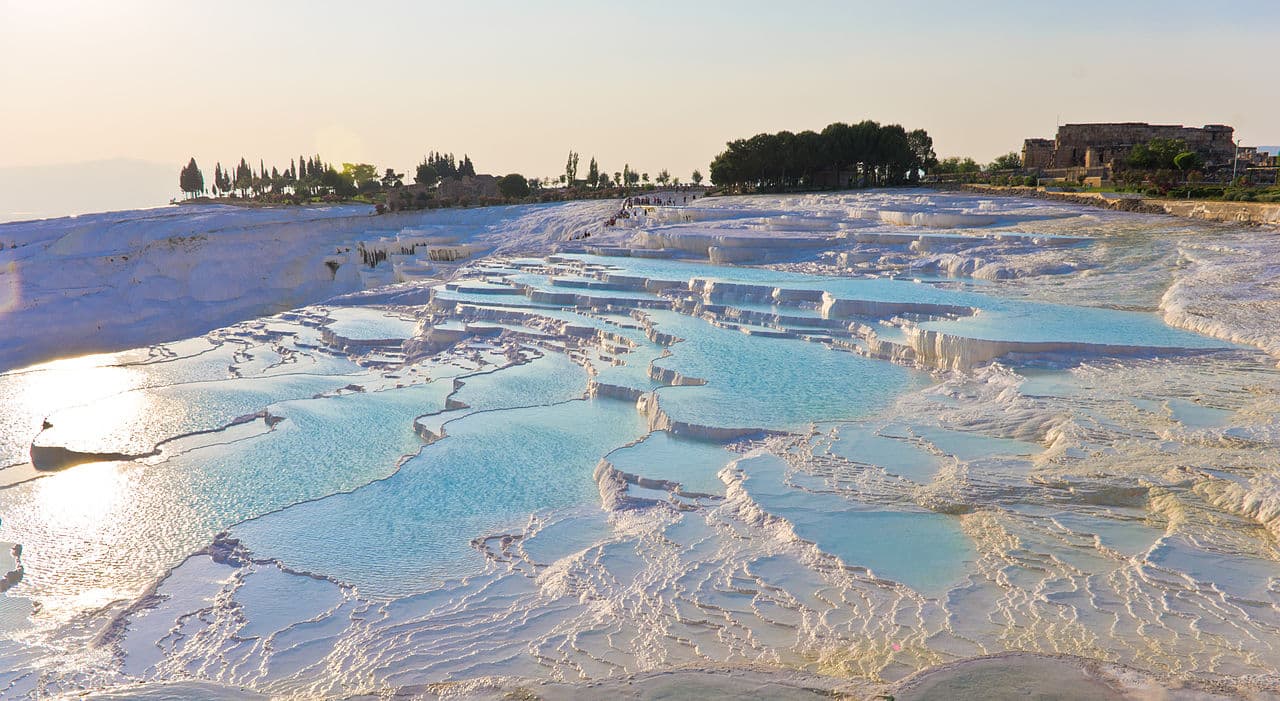
A surreal cascade of blinding-white travertine terraces — calcium carbonate platforms shaped over 14,000 years by hot mineral springs flowing down a 200m cliff in southwestern Turkey. Above the terraces sits Hierapolis, the Greco-Roman spa city Marcus Antonius gifted to Cleopatra, with a 12,000-seat theatre, the largest necropolis in Anatolia, and the still-bathable Cleopatra's Pool studded with toppled marble columns. UNESCO-listed since 1988; visited by 2.5 million per year, but most arrive on day buses from Antalya, Kuşadası, or Marmaris and clear out by 17:00.

Panama City
Panama
A modern skyline rising above a historic old quarter (Casco Viejo), with the famous Panama Canal, tropical biodiversity, and a crossroads-of-the-Americas energy.
Paraty
Brazil
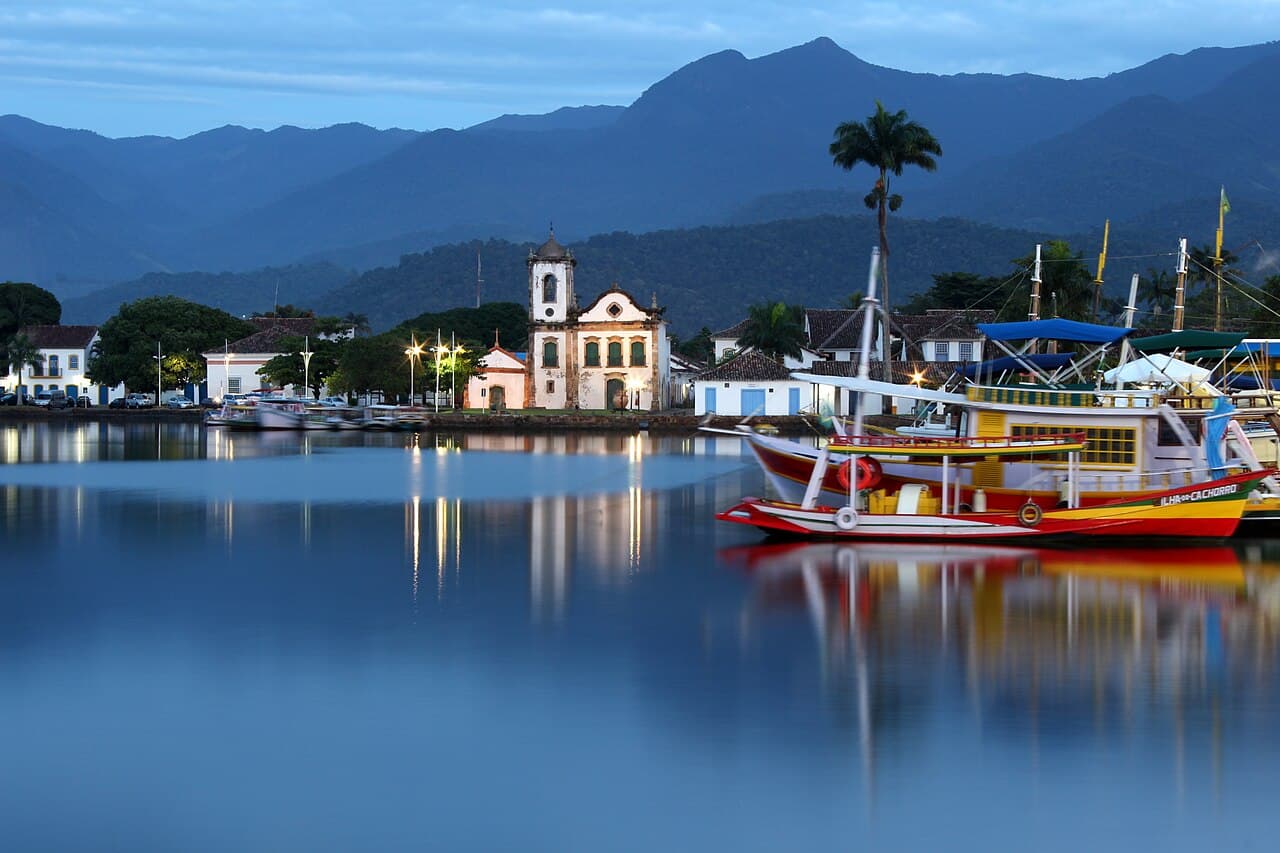
Paraty is the perfectly preserved 18th-century colonial port halfway between Rio and São Paulo — whitewashed houses with bright shutters, churches at every corner, and cobblestone streets so uneven you stop pretending shoes will help. UNESCO inscribed the historic centre in 2019 (alongside the surrounding Atlantic Forest reserves) for its colonial architecture and the cultural landscape that grew around the gold-mining caminho do ouro. Today the harbour fills with traditional schooners (saveiros) running day trips to dozens of green islands and turquoise coves; the back lanes hide some of Brazil's best cachaça stills, and the surrounding Serra da Bocaina forest hides 100m waterfalls reachable on foot.

Paris
France
Paris lives up to the hype. The City of Light delivers world-class museums, iconic architecture, and some of the best food on the planet. Each arrondissement has its own personality — the Marais for trendy boutiques, Saint-Germain for literary cafes, Montmartre for bohemian charm. The city is surprisingly walkable and the Metro makes everything else easy to reach.

Park City
United States
Utah's flagship ski town and the closest big-airport-to-resort drive in the US — 32 miles east of Salt Lake City via I-80, just 40 minutes from SLC International. Two world-class resorts share the basin: Park City Mountain (the largest ski resort in the US at 7,300 acres after the 2015 Canyons merger) and Deer Valley (skiers-only, perennially ranked the nation's top resort by SKI Magazine readers). Historic Main Street is a preserved 1890s silver-mining town with 64 buildings on the National Register, hosting Sundance Film Festival each January. At 7,000 ft base it's lower than Colorado giants — easier acclimation. Summer brings world-class mountain biking and the Utah Olympic Park.

Paro
Bhutan
The gateway to Bhutan — the country's only international airport (PBH), famously one of the most difficult commercial approaches in the world. Home to the cliff-hanging Tiger's Nest monastery (Taktsang), the fortress-monastery Paro Dzong, Kyichu Lhakhang (7th century), and the National Museum in the circular Ta Dzong watchtower. Bhutan's Sustainable Development Fee ($100-200/night) and mandatory licensed-tour-operator visa rules make it one of the most tightly-managed tourism destinations anywhere.

Paros
Greece
The Cyclades island that delivers the Mykonos atmosphere at 30–40% lower prices — Naoussa’s photogenic harbour with a half-submerged 15th-century Venetian Kastro at the entrance, Parikia’s marble-paved Old Town centred on Panagia Ekatontapyliani (one of the oldest continuously functioning Christian churches in the world), the marble quarries at Marathi where the Venus de Milo was carved, the Lefkes mountain village and its 1,000-year-old Byzantine Path, Golden Beach’s windsurfing scene, and the 7-minute ferry to Antiparos with its spectacular cave.

Patagonia
Chile
Patagonia is the end of the world — and it's breathtaking. Torres del Paine's granite spires, Perito Moreno's thundering glacier, and vast windswept steppes define one of the planet's last truly wild frontiers. Shared between Chile and Argentina, the region rewards serious hikers and nature lovers willing to brave the elements.

Pattaya
Thailand
Thailand's Gulf-coast resort city, 150 km southeast of Bangkok and 90 minutes by minivan from Ekkamai bus terminal. Pattaya is unapologetically commercial — the 4 km arc of Pattaya Beach faces the Walking Street nightlife strip while quieter Jomtien Beach stretches south for families and weekenders. Beyond the bars sit the half-finished 105-metre all-wood Sanctuary of Truth, the Nong Nooch Tropical Garden with its Thai dance and elephant show, Coral Island day trips from Bali Hai Pier, the Khao Phra Tamnak hilltop viewpoint, Cartoon Network water park, and more than 25 golf courses within an hour. U-Tapao (UTP) airport sits 30 minutes south, but most travellers still arrive via Bangkok BKK or DMK.

Penang
Malaysia
Malaysia's food capital is an island of incredible hawker food, vibrant street art in George Town's UNESCO-listed core, colorful temples, and colonial mansions. One of Southeast Asia's best-value food destinations.

Petra
Jordan
One of the New Seven Wonders — the rose-red Nabataean city carved into desert cliffs. The Siq gorge narrows to 3m wide and 80m tall before revealing the Treasury's 40m facade. Only 15% of the ancient city has been excavated. The Monastery (Ad-Deir) is larger than the Treasury and requires 800 rock-cut steps — most visitors skip it, which is their loss. Petra by Night (Mon/Wed/Thu) is the most atmospheric experience in the Middle East.

Phi Phi Islands
Thailand
A six-island archipelago in the Andaman Sea between Phuket and Krabi — protected within the Hat Noppharat Thara–Mu Ko Phi Phi National Park, with Permian-era limestone karst cliffs ringing turquoise water. Phi Phi Don is the only inhabited island; Phi Phi Leh holds Maya Bay (the famous beach from "The Beach" 2000), which closed entirely from 2018 to 2022 for coral recovery and reopened with strict daily caps (4,375 visitors/day, 60-minute slots, no swimming inside the bay), closing annually August 1–September 30 for further recovery. The classic Phi Phi day combines Maya Bay, Pileh Lagoon, Bamboo Island snorkelling, and the Phi Phi Viewpoint hike for the iconic double-bay photograph. No roads, no cars, no airport — everything is by boat from the wooden Tonsai Pier.

Philadelphia
United States
America's first UNESCO World Heritage City — where both the Declaration of Independence (1776) and the Constitution (1787) were signed. Reading Terminal Market, Eastern State Penitentiary, the Philadelphia Museum of Art, and the Liberty Bell are all within walking distance. The cheesesteak was invented here, and Philadelphians are passionate about all of it.

Phnom Penh
Cambodia
Cambodia's rapidly changing capital where French colonial architecture meets modern riverside development. The Royal Palace, sobering Tuol Sleng museum, and legendary street food scene at Central Market make it a compelling stop between Angkor Wat and the southern beaches.

Phoenix
United States
America's fifth-largest city and the heart of the Valley of the Sun — 1.6 million in the city proper, nearly 5 million across the metro, sprawling across the northern Sonoran Desert at 1,086 ft elevation. The signature trio is Camelback Mountain (a 1.3-mile rock-scramble up to a city-and-desert panorama), Old Town Scottsdale (boutique-and-margarita strip 20 minutes east), and the Desert Botanical Garden (50,000 plants on 140 acres). Brutal Jun-Sep heat regularly hits 45°C, but Nov-Apr is shirtsleeve perfection — the same window the Cactus League brings 15 MLB teams here for spring training. Phoenix is also the practical gateway: Sedona is 2 hours north, the Grand Canyon 4 hours.

Phu Quoc
Vietnam
Phu Quoc is Vietnam’s largest island, a pepper-and-fish-sauce outpost in the Gulf of Thailand that sits closer to Cambodia than to the Vietnamese mainland. The south end has the postcard beaches — Sao Beach’s soft white crescent and Long Beach’s 20-kilometre sweep of resort and hostel — plus the world’s longest sea-crossing cable car at 7.9 kilometres, which links the mainland to little Hon Thom island and was opened in 2018. Vietnam grants 30-day visa-free entry to every nationality on arrival here, which makes it one of the easiest tropical entries on the planet. The fish-sauce factories of Duong Dong town smell like the Atlantic at low tide.

Phuket
Thailand
Thailand's largest island is a tropical playground of palm-fringed beaches, turquoise Andaman Sea waters, and lively nightlife. From the bustling Patong strip to the serene coves of Kata and Rawai, Phuket offers everything from luxury resorts to budget beach bungalows. The jumping-off point for Phi Phi Islands and Phang Nga Bay.

Pingyao
China
The only fully intact Ming and Qing Han Chinese walled city in the country — a UNESCO-listed grid of grey-brick courtyards in Shanxi province ringed by 6km of 14th-century walls you can climb for the panorama. Rishengchang on South Street was the world's first draft bank when it opened in 1823, sending silver bills as far as Mongolia. The Confucian Temple, the County Government complex, and Shuanglin and Zhenguo temples nearby fill out the historical depth. Four hours from Beijing by G-train via Taiyuan, with siheyuan courtyard guesthouses inside the walls.

Piran
Slovenia
Slovenia's only proper Adriatic port — a Venetian Gothic peninsula town at the tip of the country's tiny 46-km coastline. Three hundred years under Venice gave Piran the same painted house facades, the same loggia and bell tower, and the same Italianate fish-bone street pattern as the lagoon city itself. The Tartini Square sweeps marble-paved from the harbour to the Cathedral of St George on the cliff above. Hand-harvested fleur de sel still comes off the Sečovlje salt pans 8 km south using Roman-era methods. Old town is car-free and 2 hours by car from Ljubljana.

Pittsburgh
United States
The Steel City reborn as a tech and medicine capital — three rivers (Allegheny, Monongahela, Ohio) meeting at the tip of Point State Park, 446 bridges (more than any city in the world), and 712 sets of public city steps climbing the hillsides. Andrew Carnegie's flour-and-steel empire built world-class museums (the Carnegie, the Andy Warhol, the Frick), and the city's unique topography means the Mt. Washington overlook delivers one of America's great urban skylines. Stronger transit than peers expect (free downtown T light rail, two surviving 1870s funicular Inclines), the Strip District for food markets, Primanti Brothers sandwiches since 1933, and dramatically cheaper hotels than peer Eastern US cities.
.jpg%3Fwidth%3D1280&w=1600&q=75)
Playa del Carmen
Mexico
The Riviera Maya's most walkable beach town, an hour south of Cancun airport on Highway 307. The pedestrianised Quinta Avenida runs four kilometres parallel to the sand, packed with restaurants, bars, gelato counters and silver-jewellery boutiques that do not close until 1 am. Mamita's Beach anchors the casual beach-club scene to the north; the all-inclusive resort cluster pushes south toward Tulum. Ferries depart every half hour for Cozumel (35 minutes) and there is a separate boat to Isla Mujeres, which makes Playa a useful base for a Caribbean island day trip without committing to staying offshore.

Plitvice Lakes National Park
Croatia
Sixteen turquoise lakes terraced by travertine dams growing 1cm a year, connected by 78m waterfalls and a wooden boardwalk you cannot swim from (fines enforced). Croatia's most famous national park, UNESCO since 1979, packed in summer — arrive at the 7am opening. Between Zagreb (2h) and Split.
.jpg%3Fwidth%3D1280&w=1600&q=75)
Plovdiv
Bulgaria
Six thousand years old and counting — one of the oldest continuously inhabited cities in Europe, draped across seven hills in the Maritsa River plain two hours south of Sofia. The Roman Theatre cut into a saddle between two hills has hosted performances since 90 AD and still does in summer; the Old Town climbs a cobbled hill of timbered Bulgarian Revival mansions; the Kapana creative district below it has turned former Ottoman bazaar workshops into wine bars and design studios. Plovdiv was the 2019 European Capital of Culture and remains the most stylish small city in the Balkans.