
Pingyao
THE QUICK VERDICT
By Anthony · Updated April 2026
Choose Pingyao if You want the most intact Ming-Qing walled city in China — sleep in a siheyuan courtyard inside the walls and skip a day in Beijing for it..
- Best for
- siheyuan courtyard stays inside the Ming walls, Rishengchang draft bank, Shuanglin temple
- Two seasons
- Apr–May and Sep–Oct
- Budget anchor
- $80/day mid-range
- Extreme range
- 31°C between summer and winter — pack for the month, not the country
- Language gap
- English gets thin outside tourist areas — a translation app earns its keep
- Worth a look
- a single G-train from Beijing puts you 600 years back by lunchtime
The only fully intact Ming and Qing Han Chinese walled city in the country — a UNESCO-listed grid of grey-brick courtyards in Shanxi province ringed by 6km of 14th-century walls you can climb for the panorama. Rishengchang on South Street was the world's first draft bank when it opened in 1823, sending silver bills as far as Mongolia. The Confucian Temple, the County Government complex, and Shuanglin and Zhenguo temples nearby fill out the historical depth. Four hours from Beijing by G-train via Taiyuan, with siheyuan courtyard guesthouses inside the walls.
The two links below are affiliate links — MapSorted earns a small commission if you book through them, at no extra cost to you. How this works.
Tours & Experiences
Bookable tours, activities, and day trips in Pingyao
Where to Stay
Compare hotels and rentals in Pingyao
📍 Points of Interest
Pingyao Ancient City Walls
The 6km circuit of 1370 Ming walls, 12m tall, climb at the South Gate
Rishengchang Former Bank
The 1823 founding draft bank that pioneered Chinese remittance
Pingyao Ancient County Government
Largest surviving county government complex in China with reenacted Qing trials
Pingyao Confucian Temple
Largest preserved Confucian temple in Shanxi, oldest hall dates to 1163
Shuanglin Temple
6th-century Buddhist temple with 2,000 painted clay sculptures
Zhenguo Temple
10th-century temple with one of three surviving Five Dynasties wooden halls
City Tower (Shilou)
The geometric centre of the old town, three-storey Ming tower over Ming Street
Wang Family Compound· 43 km SW
25,000 sq m Qing merchant family compound 35km southwest, 123 courtyards
★ Local Picks
Ming Street
The central Ming-Qing commercial street running north-south through the old town
Southwest Wall Watchtower
A quieter sunset viewpoint along the parapet away from South Gate crowds
At a Glance
- Pop.
- ~50,000 (old town) / 500,000 (county)
- Timezone
- Shanghai
- Dial
- +86
- Emergency
- 110 / 119 / 120
Pingyao is the only fully intact Ming and Qing dynasty (1368-1911) Han Chinese walled city in the country, listed by UNESCO in 1997 alongside the nearby Shuanglin and Zhenguo temples
The 6km of city walls were built in 1370 to a height of 12 metres and a base width of 9-12 metres, with 72 watchtowers and 3,000 crenellations representing Confucius and his 3,000 disciples
Rishengchang on South Street, founded in 1823, was the first draft bank in China and effectively in the world — issuing silver bills accepted from Mongolia to Singapore decades before Western banking caught up
Shanxi merchants (Jin merchants) ran the imperial financial system from Pingyao and a handful of nearby towns for most of the 19th century, before the Qing collapse and Western banks ended the model
The old town runs on a regular grid with the Market Tower (Shilou) at the geometric centre and four main streets aligning with the gates — the layout has not changed since the 14th century
Pingyao sits in Shanxi province at 750m elevation; winter nights drop to -10C and summer days reach the high 30s, but spring and autumn are crisp and clear
Top Sights
Pingyao Ancient City Walls
🗼The 6km circuit of 1370 Ming walls is the centrepiece — climb at the South Gate and walk the full ramparts in about two hours for the panorama down into the grey-tile rooflines and out across the Shanxi plain. Most visitors do half the loop and descend at a side gate.
Rishengchang Former Bank
📌The 1823 founding draft bank that pioneered the Chinese remittance system, with original counters, vault rooms, courier records, and the original ink-and-cipher draft templates on display in 21 connected courtyards along South Street.
Pingyao Ancient County Government (Xian Ya)
📌The largest surviving county government complex in China, with 6 courtyards on a north-south axis including the magistrates court, prison, and great hall. Daily reenactments of Qing-era court trials are staged in the central courtyard at 10 AM and 4 PM.
Confucian Temple (Wenmiao)
📌The largest preserved Confucian temple in Shanxi, with timber halls dating to the Jin dynasty (1163) — older than most of the rest of the city. The Dacheng Hall holds a fine set of Confucius and disciple statues.
Shuanglin Temple
📌A 6th-century Buddhist temple 6km southwest of the walls, famous for over 2,000 painted clay sculptures from the Song through Ming dynasties. The Bodhisattva Hall and Wei Tuo statue are the highlights and rank among the finest religious sculpture in northern China.
Zhenguo Temple
📌A small 10th-century temple 12km northeast of Pingyao with the Wanfo Hall, one of only three surviving wooden structures from the Five Dynasties period (907-960). The interior houses 11 painted Tang-Five Dynasties statues.
City Tower (Shilou) and Market Street
🗼The geometric centre of the city, a three-storey tower with the main north-south Ming Street running below. The street holds most of the higher-end siheyuan guesthouses, antique dealers, and the lacquer shops Pingyao is known for.
Wang Family Compound (Wangjia Dayuan)
📌A vast 25,000 sq m Qing-era merchant family compound 35km from Pingyao with 123 courtyards over 5 main complexes, often called the Forbidden City of Shanxi. A useful pairing for travellers wanting to see how Jin merchant wealth materialised in private architecture.
Climate & Best Time to Go
Pingyao sits at 750m on the Shanxi loess plateau with a continental climate — cold dry winters, hot dry summers, and short pleasant transitional seasons. The summer-monsoon influence is weak this far north, so rain is concentrated in July and August. April-May and September-October are the comfortable windows; winters are cold but the old town is still photogenic under thin snow.
Spring
March - May41-72F
5-22C
Crisp clear days from late March, with peach and pear blossoms in the Wang Family Compound gardens by mid-April. Sandstorms occasionally blow in from Inner Mongolia in March.
Summer
June - August68-91F
20-33C
Hot dry days with cool evenings; the city walls bake at midday. July and August bring the year's only real rainfall in occasional thunderstorms. Domestic crowds peak during school holidays.
Autumn
September - November41-77F
5-25C
The clearest visibility of the year, with golden poplar leaves around Shuanglin Temple in October. The best season for the city walls panorama.
Winter
December - February10-39F
-12 to 4C
Dry cold with occasional thin snow on the grey-tile rooflines, photogenic and almost empty of other visitors. Pack a serious coat; siheyuan guesthouses heat the kang but courtyards are cold.
Best Time to Visit
April-May and September-October are the prime windows, with comfortable temperatures, the clearest visibility of the year, and reasonable crowds. Avoid Chinese national holidays (Golden Week October 1-7, Chinese New Year, May 1-5) when the old town becomes uncomfortably packed and hotel prices spike.
Spring (April - May)
Crowds: Moderate, with spikes during the May 1-5 holidayCrisp clear days, peach and pear blossoms in the Wang Family Compound gardens, and comfortable wall-walking weather. Sandstorms occasionally blow in from Inner Mongolia in early March; by April the air has cleared.
Pros
- + Clear visibility for the wall panorama
- + Spring blossoms in courtyard gardens
- + Comfortable temperatures
- + Reasonable hotel rates outside holidays
Cons
- − May Day holiday brings dense crowds
- − Occasional March sandstorms
- − Cold mornings still
Autumn (September - November)
Crowds: Very high during Golden Week (October 1-7); manageable rest of seasonThe clearest visibility of the year and golden poplar foliage around the temples in October. The best window for photographing the wall and rooflines.
Pros
- + Best visibility for photos
- + Golden autumn foliage
- + Crisp mornings, warm afternoons
- + Stable weather
Cons
- − Golden Week brings extreme overcrowding
- − November cold snap by mid-month
- − Higher hotel prices in October
Summer (June - August)
Crowds: High, especially school holidaysHot dry days with cool evenings and the year only real rainfall in occasional thunderstorms. Domestic crowds peak during school holidays in July and August.
Pros
- + Long daylight hours
- + Lush greenery in temple gardens
- + All sites fully operational
Cons
- − Midday heat above 30C
- − School-holiday crowds
- − Higher hotel rates
Winter (December - February)
Crowds: Low except for Chinese New Year weekCold, dry, and almost empty, with thin snow on the grey-tile rooflines for a uniquely photogenic window. The kang-bed siheyuan stays make sense in this season; outdoor exploration takes serious layers.
Pros
- + Snow on tile rooflines
- + Almost no other visitors
- + Lowest hotel rates of the year
- + Authentic kang-bed lodging experience
Cons
- − Below-freezing nights
- − Coal-heating air pollution on still days
- − Some outlying temples have shorter hours
- − Chinese New Year brings a one-week spike
🎉 Festivals & Events
Pingyao International Photography Festival
SeptemberAnnual photo festival with exhibitions installed in courtyards, factories, and the city walls themselves. Brings extra international visitors but adds substantial creative programming.
Chinese New Year
Late January / FebruaryLantern installations along Ming Street, traditional acrobatic and opera performances at the County Government, and a one-week holiday surge.
Golden Week
October 1-7China national holiday week. Avoid if possible; old town gates can become bottlenecks and hotel rates triple.
Pingyao Crouching Tiger Hidden Dragon Film Festival
OctoberA small but interesting indie film festival in restored courtyards, founded by director Jia Zhangke, who is from Shanxi.
Language & Phrases
Mandarin is universal; older locals speak the Shanxi (Jin) dialect at home. English is very limited outside the heritage hotels and a few guesthouse owners. Save key phrases in a translation app and download offline Mandarin before arrival; Google services are blocked in mainland China.
| English | Translation | Pronunciation |
|---|---|---|
| Hello | 你好 (Nǐ hǎo) | nee how |
| Thank you | 谢谢 (Xièxie) | syeh syeh |
| City wall | 城墙 (Chéngqiáng) | chuhng chyahng |
| Old town | 古城 (Gǔchéng) | goo chuhng |
| Bank | 票号 (Piàohào) | pyao how |
| How much? | 多少钱?(Duōshǎo qián?) | dwoh shaow chee-en |
| I would like | 我要 (Wǒ yào) | woh yow |
| Vinegar | 醋 (Cù) | tsoo |
| Beef | 牛肉 (Niúròu) | nyoh row |
| Too expensive | 太贵了 (Tài guì le) | tie gway luh |
| Where is the hotel? | 酒店在哪里?(Jiǔdiàn zài nǎlǐ?) | jyoh-dyen dzai nah-lee |
| I do not understand | 我听不懂 (Wǒ tīng bù dǒng) | woh ting boo dohng |
Off the Beaten Path
Sleep in a kang-bed siheyuan
Several family-run siheyuan guesthouses on the back lanes off East Street rent rooms with traditional brick kang beds — heated platforms warmed from below by the kitchen flue. Try Yamen Youth Hostel or Jing Sheng Chang for a real version.
A kang night is a Shanxi experience that makes sense of the architecture — the warm brick is what kept these courtyards habitable through brutal winters before central heating.
Shanxi vinegar tasting at a dushi yard
Shanxi black vinegar is one of the four great Chinese vinegars and Pingyao has small producer storefronts on West Street where the masters will let visitors taste 5-year, 8-year, and 15-year vintages. CNY 30-100 a bottle.
Most foreign visitors notice the vinegar with every meal but never see it sold. The 8-year is the sweet spot for cooking and the 15-year is for sipping like a digestif.
Pingyao Lacquerware workshops
Pingyao push-light lacquer (tuiguang qi) is one of four Chinese lacquer traditions, with workshops on the back lanes still hand-rubbing layered lacquer to a mirror finish. Small jewellery boxes start around CNY 200.
The push-light technique uses the artisan palm to polish each lacquer layer, taking weeks for a single piece. Watching the polishing in person changes how you read the price tag.
Wanli Great Wall west tower at sunset
The southwest corner watchtower of the wall has a clear westward view across the Shanxi loess plateau. Climb in the last hour before dusk and most of the day-trippers will already have descended.
Most visitors climb the wall at the South Gate and stay near the gate; the southwest corner is a 15-minute walk along the parapet and has the better sunset light.
Safety Breakdown
Very Safe
out of 100
Pingyao is a very safe destination, with the old town effectively closed to most through traffic and a constant police presence. The main issues are tourist-trap pricing on the central streets, occasional taxi overcharging at the train station, and the air quality, which can be poor in winter when northern China runs on coal heating.
Things to Know
- •Buy tickets at the official ticket office at the visitor centres rather than from touts at the South Gate; the all-attractions pass at CNY 130 covers 22 sites
- •Negotiate or insist on the meter for taxis from Pingyao Ancient City train station; the run into the old town is roughly CNY 20
- •Check air quality on a phone app in winter; an N95 is useful on the worst inversion days
- •Mobile payment (Alipay, WeChat Pay) is universal; carry some cash for the smaller siheyuan guesthouses
- •Stick to bottled water; the local supply is hard and not great for sensitive stomachs
- •Old town gates close to vehicles after 7 PM, so plan luggage drops earlier in the day
Natural Hazards
Emergency Numbers
Police
110
Ambulance
120
Fire
119
Tourist Complaint Hotline
12301
Pingyao County Hospital
+86-354-562-2120
Costs & Currency
Where the money goes
USD per dayBackpacker = hostel dorm + street food + public transit. Mid-range = 3-star hotel + neighbourhood restaurants + transit cards. Luxury = 4/5-star + fine dining + taxis. How we calibrate these numbers →
Quick cost estimate
Customize per category →Estimates based on regional averages. Flight prices vary by season and airline.
budget
USD 30-50
Hostel dorm or basic siheyuan room, street snacks, all-attractions pass spread over two days, walking everywhere
mid-range
USD 60-110
Good siheyuan guesthouse, table-service meals, all-attractions pass, half-day driver for outlying temples
luxury
USD 200-350
Heritage suite (Jing Garden Hotel, Yunjincheng), private guide, full-day driver, fine Shanxi banquet dinners
Typical Costs
| Item | Local | USD |
|---|---|---|
| Park FeesPingyao all-attractions pass (22 sites, 3 days) | CNY 130 | USD 18 |
| Park FeesShuanglin Temple | CNY 35 | USD 5 |
| Park FeesZhenguo Temple | CNY 25 | USD 4 |
| Park FeesWang Family Compound | CNY 55 | USD 8 |
| AccommodationHostel dorm bed | CNY 50-90 | USD 7-13 |
| AccommodationMid-range siheyuan double | CNY 250-500 | USD 35-70 |
| AccommodationHeritage hotel suite | CNY 800-1,800 | USD 110-250 |
| FoodStreet snack (Pingyao niurou bun) | CNY 8-15 | USD 1-2 |
| FoodLocal restaurant meal | CNY 30-80 | USD 4-11 |
| FoodShanxi banquet at heritage hotel | CNY 200-500 | USD 28-70 |
| TransportTrain station to old town taxi | CNY 20-30 | USD 3-4 |
| TransportHalf-day driver to Shuanglin and Zhenguo | CNY 250-300 | USD 35-42 |
| TransportBicycle rental per day | CNY 20-30 | USD 3-4 |
💡 Money-Saving Tips
- •The CNY 130 all-attractions pass covers 22 sites and works for three days — only worth it if you do at least 4-5 of them
- •Shanxi noodle and beef-bun shops on the back lanes serve full meals for CNY 25; Ming Street prices run double
- •Stay at a back-lane siheyuan rather than a Ming Street one; rates drop 30-50 percent for a 5-minute walk
- •Combine Shuanglin and Zhenguo temples in one half-day driver hire to split the cost
- •Visit on a weekday outside Chinese holidays for both lower hotel rates and emptier sites
- •Skip the South Gate ticket touts; buy passes at the official visitor centre
Chinese Yuan (Renminbi)
Code: CNY
1 USD is roughly 7.2 CNY in 2026. Bank of China branches in Pingyao and at Taiyuan airport will exchange cash; international cards work at Bank of China ATMs. WeChat Pay and Alipay can now be linked to international cards (Visa, Mastercard) since 2024 — set this up before arrival to make small purchases painless.
Payment Methods
Mobile payment dominates — WeChat Pay and Alipay are accepted everywhere from siheyuan guesthouses to street snack vendors. Cash works as a backup. International credit cards are only accepted at the larger heritage hotels. Bring CNY cash from a Bank of China ATM and set up Alipay or WeChat Pay with an international card before arriving.
Tipping Guide
Tipping is not customary in China and may be politely refused.
CNY 50-100 per day for a private guide is appreciated.
Not expected. CNY 5-10 per bag for porters at the larger heritage hotels is appropriate.
Round up the agreed fare. No tipping on metered taxis or DiDi.
How to Get There
✈️ Airports
Taiyuan Wusu International Airport(TYN)
90 km north of PingyaoNo direct airport-to-Pingyao service. Take the airport shuttle to Taiyuan South Railway Station (1 hour, CNY 20), then a G-train to Pingyao Ancient City (45 min, CNY 35-50). Direct flights from Beijing, Shanghai, Guangzhou, Xian, Chengdu, Hong Kong, and a handful of regional Chinese cities.
✈️ Search flights to TYN🚆 Rail Stations
Pingyao Ancient City (Pingyao Gucheng) HSR Station
5 km east of old townThe high-speed rail station 5km east of the old town walls. Direct G-trains to Beijing West (4 hours), Xian North (3-4 hours), and Taiyuan South (45 min). Taxi to old town is around CNY 20-30.
Pingyao Railway Station
1.5 km west of old townThe older conventional station 1.5km west of the South Gate, served by slower K and T trains. Useful only for budget overnight services from Beijing or Xian.
🚌 Bus Terminals
Pingyao Bus Station
Long-distance buses to Taiyuan (1.5 hours, CNY 30), Wutaishan (5-6 hours, CNY 150), and surrounding county towns. Slower and less comfortable than the train; most travellers skip it.
Getting Around
The old town is small enough (1.5km on each side) to walk everywhere; vehicles are restricted inside the walls. Outside the walls, taxis and the city bus connect to the high-speed rail station and to the outlying temples. For the further sites (Shuanglin, Zhenguo, Wang Family Compound) hire a half-day driver through your guesthouse.
Walking inside the walls
FreeThe old town is a 1.5km square with restricted vehicle access; everything inside is foot traffic on stone-paved lanes. Plan around 5-8km of walking per day.
Best for: Everywhere inside the city walls
Bicycle and electric scooter rental
CNY 20-120 a daySeveral shops near the South Gate rent bikes (CNY 20-30 a day) and electric scooters (CNY 80-120). Useful for the wider county sites and for racing along the wall sentry path.
Best for: Pingyao to Shuanglin Temple and the south wall route
Taxis and DiDi
CNY 15-30 inside town, CNY 50-150 to outlying sitesTaxis are easy to flag outside the walls; DiDi works in Pingyao but requires a Chinese phone. Train station to old town is roughly CNY 20.
Best for: Train transfers and trips to Shuanglin or Zhenguo
Hired driver for outlying sites
CNY 250-500 per excursionMost guesthouses can arrange a half-day driver to Shuanglin and Zhenguo (around CNY 250) or a full day to the Wang Family Compound (CNY 400-500).
Best for: Combining temples or the Wang Compound efficiently
Walkability
Inside the walls Pingyao is one of the most walkable historic cities in China — pedestrian flagstone lanes, no through traffic, and everything within 15 minutes on foot. Bring shoes that handle uneven stone. Outside the walls, walkability drops sharply and a taxi is needed.
Travel Connections

Beijing
Most travellers reach Pingyao from Beijing on a direct G-train. Two or three nights in Pingyao between Beijing and Xian is the classic Shanxi-Shaanxi sequence.
Xian
The old Tang capital and Terracotta Army site, the natural southern continuation of a Beijing-Pingyao-Xian historical loop.
Datong
Home to the 5th-century Yungang Grottoes (51,000 Buddhist statues carved into cliff caves) and the 6th-century Hanging Monastery. A natural northern extension for Buddhist-history travellers.
Wutaishan
One of China four sacred Buddhist mountains, with 53 monasteries spread across five flat-topped peaks. Best as a 2-3 day side trip from Taiyuan or Datong.
Entry Requirements
China expanded its visa-free entry significantly in 2024. Citizens of many EU countries, Australia, New Zealand, Japan, Korea, Singapore, Malaysia, and the UK can now enter visa-free for stays of up to 30 days for tourism. US and Canadian citizens still require a tourist visa (L), though the 240-hour transit-visa-free programme works at Beijing, Shanghai, and many other entry points and is well suited to a Pingyao trip via Beijing.
Entry Requirements by Nationality
| Nationality | Visa Required | Max Stay | Notes |
|---|---|---|---|
| US Citizens | Yes | 60 days per visit (10-year multi-entry common) | L tourist visa required. Apply via the China Visa Service Center; allow 4-7 business days. The 240-hour transit visa-free programme via Beijing covers a Pingyao trip easily. |
| UK Citizens | Visa-free | 30 days per visit | Visa-free since November 2024 for tourism, business, and family visits. |
| EU Citizens | Visa-free | 30 days per visit | Visa-free for most EU nationalities under 2024 expansion. |
| Australian Citizens | Visa-free | 30 days per visit | Visa-free since November 2024. |
| Canadian Citizens | Yes | 30 days per visit | L visa required. The 240-hour transit visa-free programme via Beijing or Shanghai is a useful alternative. |
Visa-Free Entry
Tips
- •Confirm the latest visa-free list before booking — China expanded it twice in 2024 and may continue adding nationalities
- •For US and Canadian citizens, routing via Beijing Capital unlocks 240-hour transit-visa-free entry that easily covers a Pingyao loop
- •Hotels register foreign guests with local police automatically; carry your passport at all times
- •Set up Alipay or WeChat Pay with an international card before arrival; many vendors no longer accept cash readily
- •Download a VPN, offline Mandarin translation, and a Mandarin map app before crossing the border — Google services are blocked
- •The Pingyao all-attractions pass is tied to your passport at the visitor centre; bring it when buying
Shopping
Almost all shopping is concentrated on Ming Street (north-south) and West Street, the two main commercial axes of the old town. Specialities are Pingyao push-light lacquerware, Shanxi black vinegar, paper-cuts, traditional Shanxi cured beef (Pingyao niurou), and reproductions of the old draft bank documents.
Ming Street (Mingqing Jie)
main commercial axisThe north-south central street running from the City Tower, lined with siheyuan-fronted shops selling lacquer, paper-cuts, calligraphy, and Shanxi specialities. The most polished and most expensive part of town.
Known for: Push-light lacquer boxes, scrolls, antique reproductions
West Street (Xi Dajie)
food and craft streetA more workaday street with vinegar producers, cured beef shops, and tea sellers. Better for picking up edibles and produce-based gifts at non-tourist prices.
Known for: Shanxi black vinegar, Pingyao cured beef, jujube products
Yamen Lane
crafts and antiquesA quieter back street near the County Government complex with several antique dealers and small ink-painting studios. Bargaining expected.
Known for: Old coins, embroidery, ink paintings
🎁 Unique Souvenirs to Look For
- •Pingyao push-light lacquerware boxes and trays
- •Shanxi black vinegar (5, 8, or 15-year vintages)
- •Pingyao cured beef (Pingyao niurou) in vacuum packs
- •Paper-cut window scenes (chuanghua)
- •Reproduction Rishengchang draft bank notes
- •Shanxi jujube and honey products
If you like Pingyao, you'll love…
4 cities with a similar vibe, outside of the same country.

Romania · OVR 75
compact, pedestrian-first layout · rich cultural layers

Bolivia · OVR 75
eminently walkable core · museum-dense old core

North Macedonia · OVR 73
museum-dense old core · remarkably safe
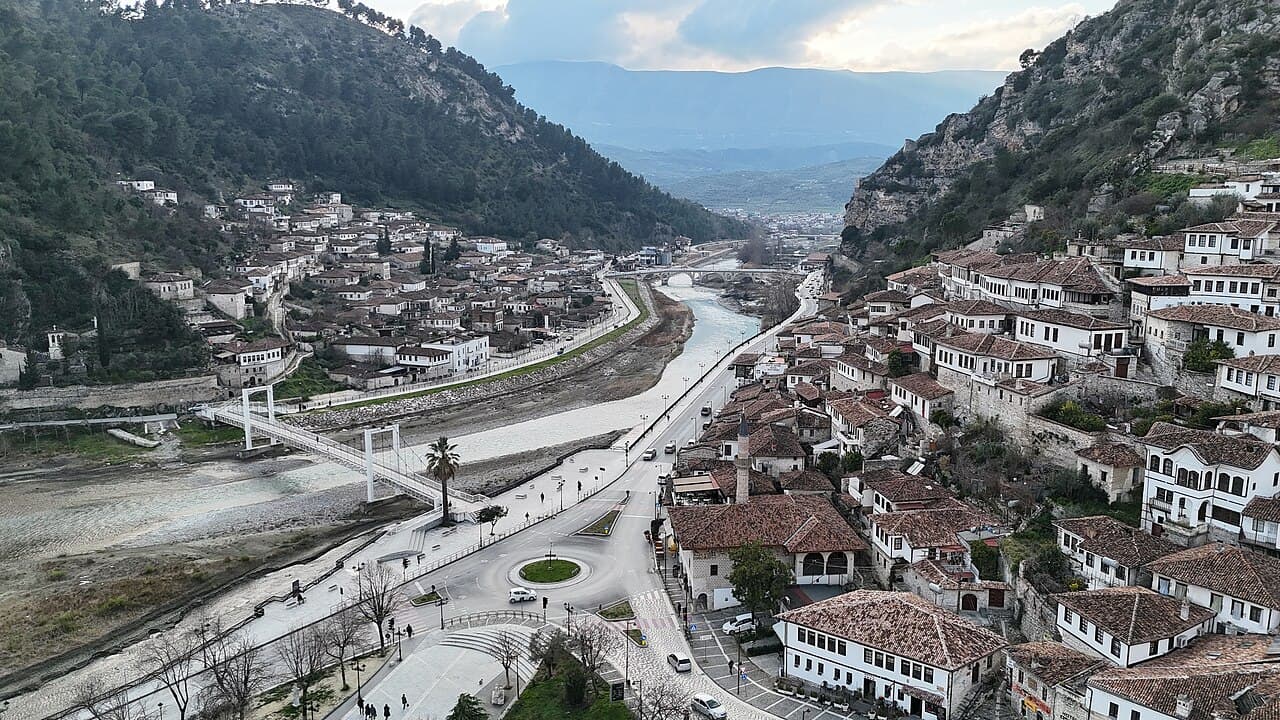
Albania · OVR 76
you barely need transit · museum-dense old core