All Destinations
43 of 576 guides match

Mont Saint-Michel
France
A tidal island and abbey rising 92 metres from the bay between Normandy and Brittany — UNESCO World Heritage since 1979 and one of France's three most-visited monuments alongside the Eiffel Tower and the Louvre, with roughly 3 million annual visitors. The permanent population of the island commune is about 30 people, including the seven monks of the Fraternités Monastiques de Jérusalem who maintain liturgical life in the abbey first founded in 708 CE. The bay has the highest tidal range in continental Europe — up to 14 metres — and the famous tide that rises 'like a galloping horse' across the flats genuinely advances at 15 km/h. A €209 million de-causewaying project completed in 2014 replaced the 1879 stone causeway with a sleek pedestrian footbridge; cars now park 2.5 km away on the mainland. The single Grand Rue climbs from the village gates to the abbey past La Mère Poulard's famous copper-pot soufflé omelettes (beaten by hand over the open fireplace since 1888).

Monteverde
Costa Rica
Monteverde sits at 1,330 metres on the Tilarán mountain ridge, where Pacific and Caribbean trade winds collide to create one of the wettest, mistiest, most biologically rich cloud forests on Earth. The town began in 1951 when a group of Alabama Quakers fleeing the U.S. draft bought land here for dairy farming, and accidentally protected the forest above their fields — now the Monteverde Cloud Forest Biological Reserve, with 500+ orchid species and the resplendent quetzal as its mascot. The dirt road in is famously rough, the gondola-and-cable canopy tours were invented here, and Santa Elena village still feels like a frontier outpost.

Mostar
Bosnia and Herzegovina
A small Herzegovinan town built around the single most photographed bridge in the Balkans — the 16th-century Ottoman Stari Most arching 24m above the emerald Neretva River. The original bridge stood 427 years before being deliberately destroyed in November 1993; the 2004 reconstruction (using stones from the same Tenelija quarry) is now UNESCO-listed. The Old Town's slippery Ottoman cobbles, Kujundžiluk bazaar with its hand-hammered copper workshops, and the Koski Mehmed-Pasha minaret view make for a 24-hour visit that punches well above its weight. Stay overnight: day-trippers from Dubrovnik clear out by 17:00 and the city becomes itself again.

Nikko
Japan
Mountain shrine town 140km north of Tokyo where Tokugawa Ieyasu — the shogun who unified Japan in 1603 — is enshrined at the gold-and-vermilion Toshogu mausoleum. The UNESCO-listed shrine complex sits in a cedar forest at 600m elevation, with cooler air than Tokyo year-round. Beyond the shrines, the Iroha-zaka switchback road climbs to Lake Chuzenji and the 97-meter Kegon Falls — Japan's most celebrated autumn-foliage drive. Stay overnight in town or in the nearby hot-spring hamlet of Yumoto for the deeper Okunikko experience.

Pai
Thailand
Northern Thailand's backpacker mountain town, 762 curves from Chiang Mai (bring motion-sickness pills). Dawn hot-air balloons over karst ridges, the Pai Canyon, Mo Paeng Waterfall, Shan Chinese villages, and fire shows at the walking-street market. Cool year-round, but the burning season February to April turns the air hazardous — plan around it.
Paraty
Brazil
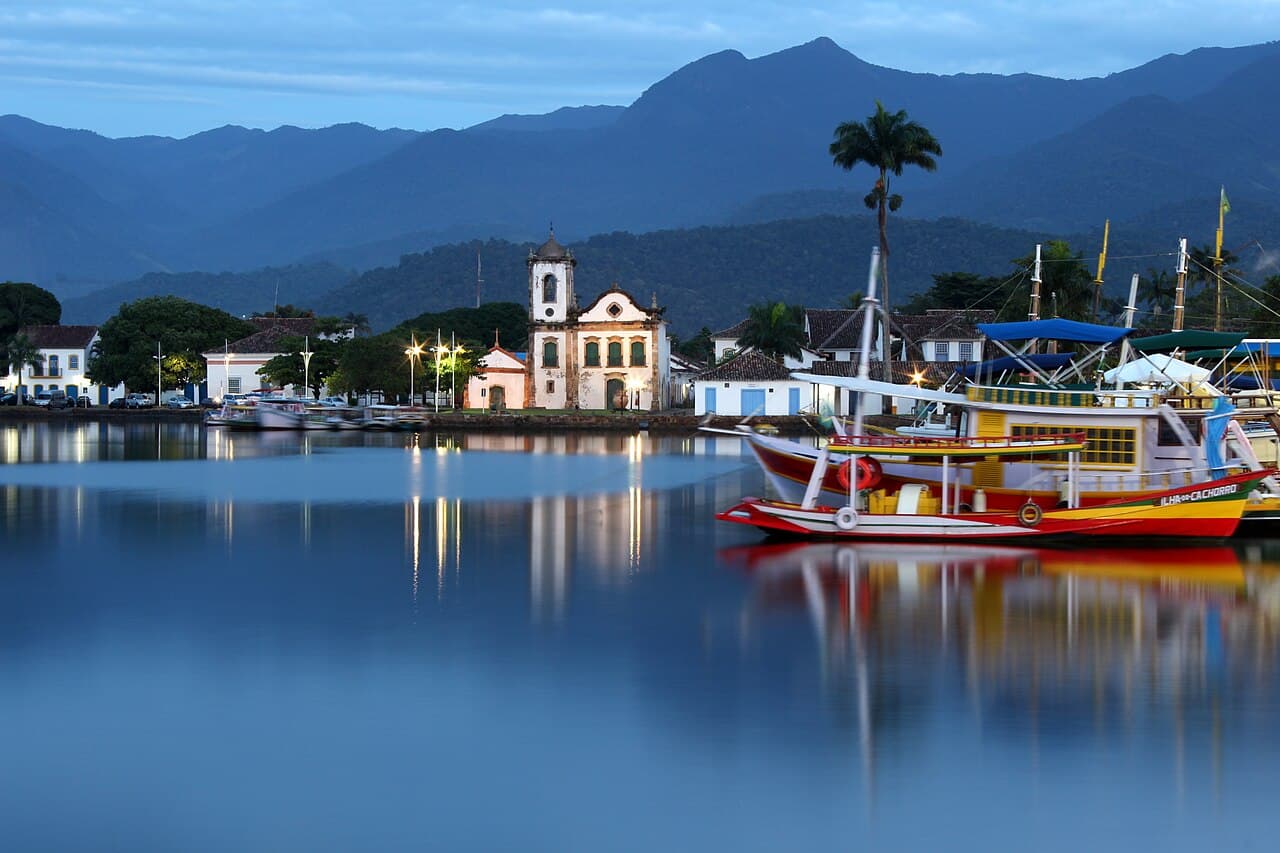
Paraty is the perfectly preserved 18th-century colonial port halfway between Rio and São Paulo — whitewashed houses with bright shutters, churches at every corner, and cobblestone streets so uneven you stop pretending shoes will help. UNESCO inscribed the historic centre in 2019 (alongside the surrounding Atlantic Forest reserves) for its colonial architecture and the cultural landscape that grew around the gold-mining caminho do ouro. Today the harbour fills with traditional schooners (saveiros) running day trips to dozens of green islands and turquoise coves; the back lanes hide some of Brazil's best cachaça stills, and the surrounding Serra da Bocaina forest hides 100m waterfalls reachable on foot.

Paro
Bhutan
The gateway to Bhutan — the country's only international airport (PBH), famously one of the most difficult commercial approaches in the world. Home to the cliff-hanging Tiger's Nest monastery (Taktsang), the fortress-monastery Paro Dzong, Kyichu Lhakhang (7th century), and the National Museum in the circular Ta Dzong watchtower. Bhutan's Sustainable Development Fee ($100-200/night) and mandatory licensed-tour-operator visa rules make it one of the most tightly-managed tourism destinations anywhere.

Positano
Italy
A vertical village of pastel houses tumbling 300 metres down an Amalfi Coast cliff face above the Tyrrhenian Sea — pedestrian-only, no flat ground anywhere in the historic centre, and stairs serving as the primary streets. Spiaggia Grande's dark grey volcanic pebbles framed by stacked pastel facades is the iconic photograph; the 10th-century church of Santa Maria Assunta with its gold-and-green majolica dome anchors the village; and the Sentiero degli Dei (Path of the Gods) cliff-top trail unfolds 500 metres above. UNESCO-listed Amalfi Coast, made-to-measure leather sandals on Via Pasitea, and the most photogenic Italian fishing-village-turned-romance-destination of them all.
Pucón
Chile
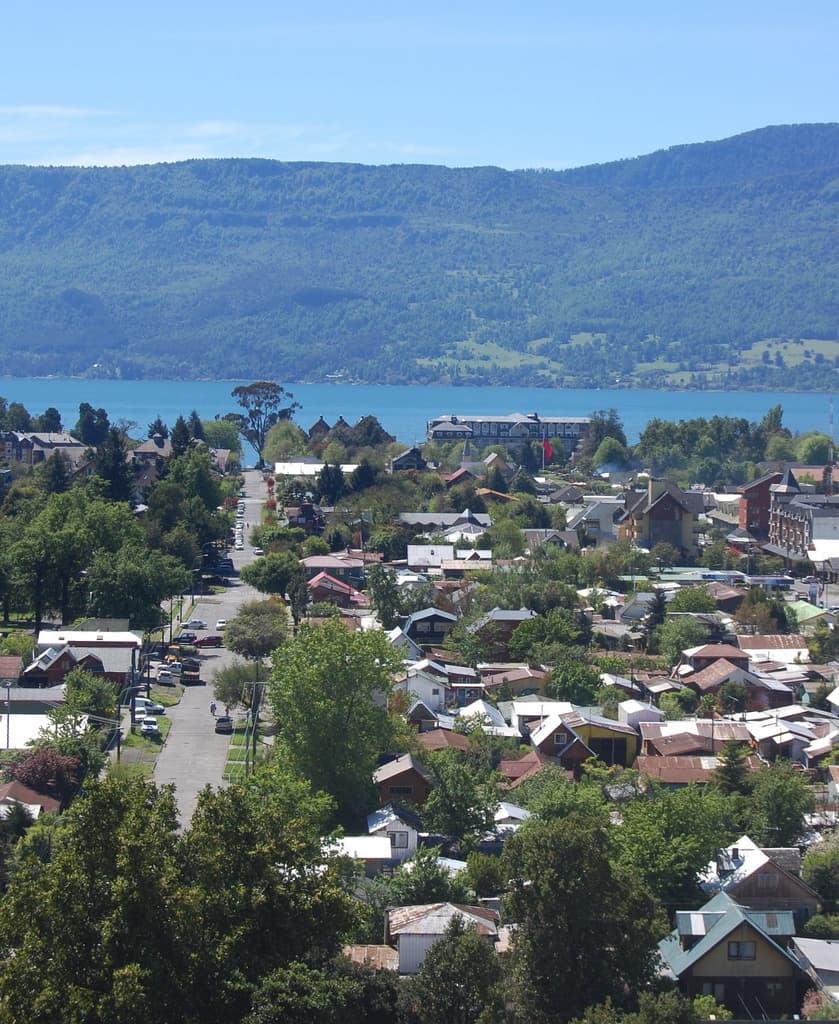
A lakeside resort town in Chile's northern Patagonia — sat at the foot of Volcán Villarrica, one of the world's most active volcanoes (you can climb it in summer and look into a glowing lava lake at the summit). Lago Villarrica's beaches are black volcanic sand, the Termas Geométricas hot springs are a 75-minute drive into Andean rainforest, and Mapuche communities still hold the surrounding land. Adventure capital of Chile: rafting the Trancura, climbing Villarrica, and white-water everything.

Sapa
Vietnam
Northern Vietnam mountain town at 1,500m near the Chinese border — iconic terraced rice paddies carved by Hmong and Dao ethnic minorities, Fansipan's 3,143m "Roof of Indochina" cable car, and multi-day homestay treks through Muong Hoa Valley. Cool year-round, foggy often, and best in golden September-October or green April-May.

Sarandë
Albania
Sarandë is the southern anchor of the Albanian Riviera — a horseshoe bay of pebble beach and pastel apartment blocks staring across 18 km of Ionian Sea at the Greek island of Corfu. From the hilltop Lëkurësi Castle (a 30-minute climb or a €5 taxi) you get the photogenic two-bay sunset; from the harbour ferries cross to Corfu in 30 minutes (€19, multiple daily); and from the bus station the Ksamil islets (turquoise coves, swim-out distance) and the UNESCO Butrint ruins (Greek-Roman-Byzantine-Venetian, 2,500 years of city stacked on an island) are 15 and 25 minutes south. The town itself is honest about being a beach resort first — most architecture is post-1991 — but the location is hard to beat in Europe at €60/day all-in.

Sedona
United States
A small town of about 10,000 people set among Arizona's most photogenic red sandstone — the iron-oxide-coated Schnebly Hill Formation deposited 270 million years ago when the area was a vast inland sea, the same geological layer that extends north to the Grand Canyon's pink lower walls. Cathedral Rock, Bell Rock, Boynton Canyon, and Airport Mesa are the four 'vortex' sites of the New Age belief system that has driven a wellness/metaphysical tourism economy here since the 1980s — there is no scientific evidence for vortexes; there is also no shortage of believers. Sedona was designated only the 8th International Dark Sky Community in the world in 2014, and the Milky Way is naked-eye visible from anywhere in town on clear nights. The Chapel of the Holy Cross (built 1956 by Marguerite Brunswig Staude) rises directly out of the red rock walls with a 250-foot iron cross as structural support. Slide Rock State Park is named for the natural 80-foot sandstone water slide carved into Oak Creek bedrock. Population is just 10,000 but the town receives over 3 million visitors per year — the result is severe summer/holiday traffic on SR-89A and an enforced parking permit system at popular trailheads. Closest airport: Flagstaff (FLG) 30 mi north, or Phoenix Sky Harbor (PHX) 2 hours south.

Sighișoara
Romania
The only inhabited fortified medieval town in southeastern Europe still in continuous use — a UNESCO World Heritage citadel of cobbled lanes, pastel Saxon townhouses, and nine surviving guild towers wrapped around the hilltop above the Tarnava Mare valley. The Clock Tower's hour-marking automatons have rotated since 1648, the covered wooden Scholars' Stairs from 1642 climb 175 steps to the Church on the Hill, and the ochre house at Strada Cositorarilor 5 is the registered birthplace of Vlad the Impaler in 1431. Two and a half hours by train from Brasov puts you inside the walls by lunch.

Sintra
Portugal
A UNESCO Cultural Landscape of romantic palaces perched above Atlantic mist — the yellow-and-terracotta Pena Palace (1854) crowns a forested hill; the Quinta da Regaleira hides an Initiation Well that spirals 27 meters through 9 floors into the earth; Cabo da Roca is the westernmost point of continental Europe. Sintra is 40 minutes by train from Lisbon and frequently its most memorable day trip.

Tamarindo
Costa Rica
Tamarindo is the unofficial capital of Costa Rica's Pacific surf coast — a former fishing village transformed by The Endless Summer II in 1994 into a 7,000-person beach town stacked with surf schools, smoothie bars, and sunset-bar circuits. Playa Tamarindo's mile-long beach break works for total beginners; the more powerful Playa Grande across the estuary is the protected nesting beach for endangered leatherback turtles in Las Baulas National Marine Park. The Liberia airport (LIR) is just 75 km north, putting Tamarindo within five hours of Miami and making it the easiest beach landing in the country.
Tulum
Mexico
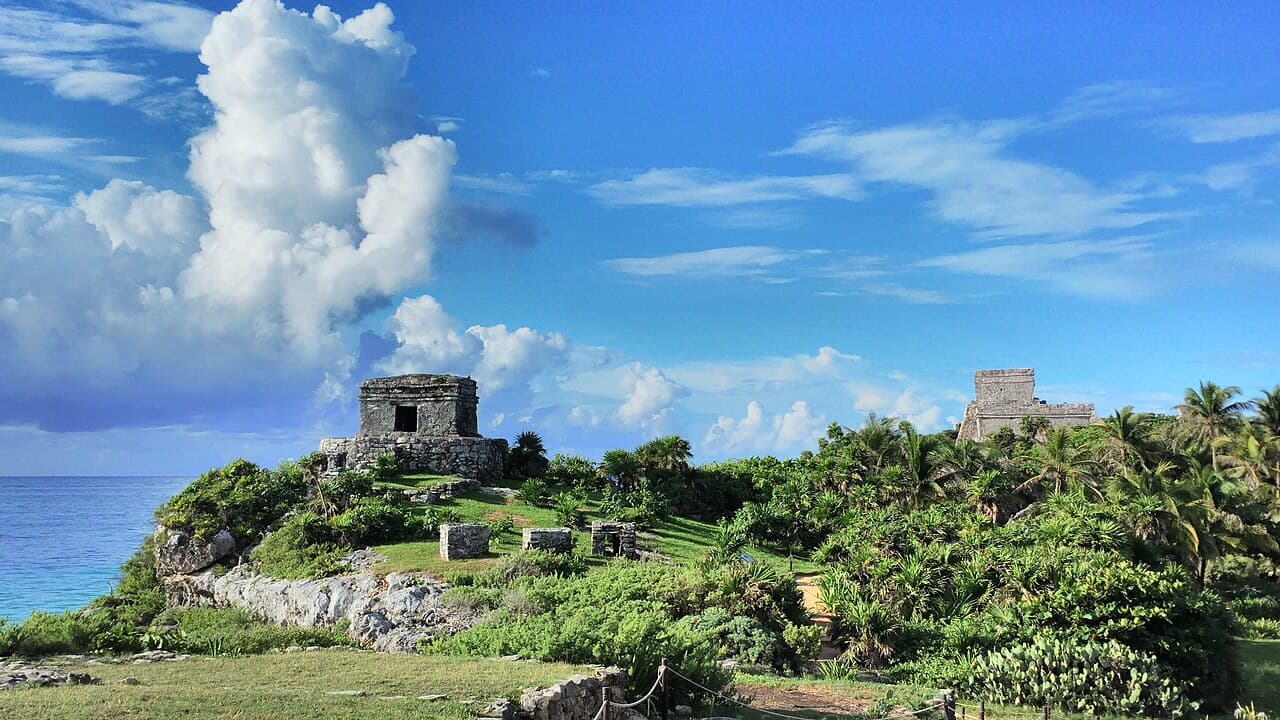
Riviera Maya's boho-chic capital — the only walled coastal Mayan ruins, perched on a cliff above turquoise Caribbean. Two Tulums coexist: the Pueblo (taco stands, hostels, real prices) and the Beach Hotel Zone (Instagram-famous palapa resorts at eye-watering rates). Cenotes everywhere — Gran Cenote, Dos Ojos, Sac Actun. Sian Ka'an Biosphere south, Coba Ruins inland. The new Maya Train and a brand-new Tulum airport opened late 2023.

Ubud
Indonesia
Bali's cultural and spiritual heart, set 200 m up in the foothills above Denpasar — the rice-terrace, monkey-forest, yoga-shala alternative to the surf-and-club Bali of Seminyak and Canggu. The Sacred Monkey Forest sits in the middle of town with 1,200 long-tailed macaques; Tegallalang's terraces are 9 km north; The Yoga Barn runs 15 daily classes; and a hundred warungs serve nasi campur for IDR 25,000. Eat Pray Love did the marketing in 2010, and the digital-nomad wave hasn't really left.

Vang Vieng
Laos
Laotian karst valley town on the Nam Song River that outlived its deadly tubing era — the 2012 crackdown reset it as an adventure hub. Dawn ballooning over the limestone, Blue Lagoon caves, rock climbing, kayaking. The 2021 Laos-China Railway cut Vientiane and Luang Prabang to 1 hour each.

Wanaka
New Zealand
Queenstown's quieter alpine cousin — a lake town wrapped in the Southern Alps where the population (10,000-ish) doubles in summer for hiking and triples in winter for ski. The lone willow growing out of Lake Wanaka (the Wanaka Tree) is New Zealand's most photographed tree. Roy's Peak, Cardrona, and Mt Aspiring National Park are all within 20 minutes. Fewer bachelor parties, no bungee touts, more board shorts and trail runners.