
Vang Vieng
THE QUICK VERDICT
By Anthony · Updated April 2026
Choose Vang Vieng if you want a Laotian karst adventure town — dawn balloons, Blue Lagoons, rock climbing, and the new 1-hour railway from Vientiane or Luang Prabang.
- Best for
- Nam Song tubing, Blue Lagoon 3 jumps, Pha Ngern viewpoint, Tham Phu Kham cave, dawn balloon rides
- Best window
- Nov–Feb
- Budget anchor
- $90/day mid-range
- Visa first
- No visa-free entry listed — check requirements before booking anything
- Skip if
- you want pristine streets — backpacker-town litter and dust persist despite the recent tourism reset
Laotian karst valley town on the Nam Song River that outlived its deadly tubing era — the 2012 crackdown reset it as an adventure hub. Dawn ballooning over the limestone, Blue Lagoon caves, rock climbing, kayaking. The 2021 Laos-China Railway cut Vientiane and Luang Prabang to 1 hour each.
The two links below are affiliate links — MapSorted earns a small commission if you book through them, at no extra cost to you. How this works.
Tours & Experiences
Bookable tours, activities, and day trips in Vang Vieng
Where to Stay
Compare hotels and rentals in Vang Vieng
📍 Points of Interest
Blue Lagoon 1 & Tham Phu Kham Cave
Turquoise spring-fed swimming hole with adjacent limestone cave and reclining jade Buddha
Tham Phu Kham Cave
Large limestone cave with illuminated formations and a reclining jade Buddha near Blue Lagoon 1
Nam Xay Viewpoint
Popular sunrise viewpoint north of town with wide views over the karst flatlands and river
Tham Chang Cave
Accessible illuminated cave at the edge of town with zipline over the Nam Song River
Nam Song River Tubing
Classic Vang Vieng experience — post-2012 safer float downstream through spectacular karst scenery
Pha Ba Cliff
Bolted limestone rock climbing routes south of town with sweeping valley views
Vang Vieng Railway Station
Laos-China Railway station 3km north of town — 1-hour trains to Vientiane and Luang Prabang
★ Local Picks
Blue Lagoon 3· 13 km NW
Quieter, larger emerald swimming hole with rope swings and cave — worth the 25km motorbike ride
Pha Ngern Viewpoint
Demanding 45-minute karst ridge hike rewarded with the iconic panoramic view of the Vang Vieng valley
Vang Vieng Night Market
Small evening market with Lao street food, grilled skewers, and ethnic minority textiles
At a Glance
- Pop.
- ~25K (town), 58K (district)
- Timezone
- Vientiane
- Dial
- +856
- Emergency
- 191 / 1195
Vang Vieng sits in a dramatic limestone karst valley on the Nam Song River, surrounded by towering jungle-covered cliffs that have made it one of Southeast Asia's most photogenic adventure destinations
In the 2000s and early 2010s, Vang Vieng became notorious as a party-tourism disaster zone — riverside bars sold mushroom shakes, alcohol buckets, and zip lines over dangerous water, contributing to over 40 tourist deaths in 2011 alone
The Lao government cracked down hard in 2012, shutting dozens of riverside party bars and transforming the town almost overnight — Vang Vieng has since rebuilt itself as a legitimate outdoor adventure hub
The Laos-China Railway opened in 2021, cutting travel time from Vientiane to just 1 hour ($8-15) and from Luang Prabang to 1 hour — a massive infrastructure shift funded by Chinese investment that transformed Vang Vieng's accessibility
The Blue Lagoons — crystal-clear spring-fed swimming holes near limestone cave systems — have become the defining daytime attraction, with Blue Lagoon 1 the most visited and Blue Lagoon 3 the most rewarding for those with a motorbike
Hot air ballooning at dawn over the karst peaks is Vang Vieng's signature experience — flights launch around 5am in dry season, offering surreal views of mist rising through limestone towers as the valley wakes below
Top Sights
Hot Air Balloon at Dawn
📌Launching around 5am during dry season, flights glide over the Nam Song River and the jagged karst landscape as dawn light fills the valley. A 45-60 minute flight covers the entire karst panorama. Book well in advance November through April — operators fill fast and weather cancellations are common.
Blue Lagoon 1 & Tham Phu Kham Cave
🌿The most visited spot in the area — a turquoise swimming hole fed by natural springs, backed by karst limestone. A short steep climb leads to Tham Phu Kham cave with its reclining jade Buddha. The lagoon is undeniably beautiful but can be very crowded by 10am. Arrive early or visit Blue Lagoon 3 instead.
Blue Lagoon 3
🌿The quieter, larger, and many travelers' preferred alternative to Blue Lagoon 1. Farther out at 25 km west — requiring a motorbike or tuk-tuk — which naturally filters the crowds. Deep emerald water, rope swings, shaded banks, and a cave to explore nearby. Worth the extra distance.
Pha Ngern Viewpoint
📌A demanding 45-minute hike up a steep karst ridge on the east bank of the Nam Song, rewarded with one of Laos's most photographed panoramas: the entire Vang Vieng karst valley laid out below, the river curving through rice paddies and limestone towers. Best at sunrise or late afternoon for golden light.
Nam Xay Viewpoint
📌A shorter, less strenuous climb than Pha Ngern, popular for sunrise. Located north of town on the road toward the railway station. The viewing platform sits atop a steep limestone outcrop with views over the riverine flatland and the karst ridge. A popular spot for early risers.
Nam Song River Tubing
📌The activity that defined and nearly destroyed Vang Vieng is still here — but transformed. Post-2012, tubing is a mellower 3-4 hour float downstream through stunning karst scenery with a handful of tamer riverside stops. Life jackets are standard and alcohol is far less central. Rent tubes in town and arrange a tuk-tuk back.
Pha Ba Cliff
🌿A tall limestone cliff face south of town used for rock climbing with bolted routes ranging from beginner to advanced. Several operators in town offer half-day and full-day guided climbing sessions with equipment. The cliff views over the valley are outstanding even from the base.
Tham Chang Cave
🗼The most accessible cave in the area — a large cave system with illuminated stalactites and stalagmites right at the edge of town. A cool retreat from afternoon heat. Entry includes a zipline over the Nam Song to a riverside beach below the cave entrance. Short visit but highly scenic.
Entry Requirements
Most nationalities can enter Laos via visa on arrival for 30 days, paying $30-45 in USD cash at international entry points. An e-Visa system is also available online for advance processing. Vang Vieng itself has no border crossing — entry to Laos is made at Vientiane (Wattay Airport), Luang Prabang (LPQ Airport), or major land border crossings, with onward travel to Vang Vieng by train or bus.
Entry Requirements by Nationality
| Nationality | Visa Required | Max Stay | Notes |
|---|---|---|---|
| US Citizens | Yes | 30 days | Visa on arrival at international airports and major land borders. Cost $30-45 USD cash. Bring two passport photos and exact change. E-Visa available at laoevisa.gov.la for $50. |
| UK Citizens | Yes | 30 days | Same as US — visa on arrival ($30-45) or e-Visa. Two passport photos required. |
| EU Citizens | Yes | 30 days | Standard visa on arrival for most EU nationals. Luxembourg and Swiss citizens are visa-exempt. |
| ASEAN Citizens | Visa-free | 30 days | Visa-free entry for all ASEAN member nationals. |
| Australian Citizens | Yes | 30 days | Visa on arrival ($30-45) or e-Visa. Standard requirements. |
| Chinese Citizens | Yes | 30 days | Visa on arrival. Given the scale of Chinese tourism and investment in Laos, immigration queues for Chinese nationals at Vientiane airport can be long — consider e-Visa. |
Visa-Free Entry
Visa on Arrival
Tips
- •Bring two passport-sized photos and USD cash in exact change ($35 typical, though it varies by nationality — check current rates before travel)
- •The e-Visa ($50) costs more than visa on arrival ($30-45) but processes in 3-5 days and saves time at the airport immigration queue
- •Overland entry from Thailand via the Friendship Bridge at Vientiane or the slow boat route from Huay Xai (near Chiang Rai) to Luang Prabang both offer visa on arrival
- •Visa extensions are available for $2 per day at the Vang Vieng Immigration Office or at immigration offices in Vientiane and Luang Prabang
- •The Chinese-built railway passes through Laos — note that the Boten border crossing (Laos-China) offers visa on arrival into Laos for travelers entering from China by train
Climate & Best Time to Go
Vang Vieng has a tropical monsoon climate typical of inland Laos, moderated slightly by its valley position between karst ridges. The dry season from November through April is the main visitor window — balloon flights run, caves are passable, and the Nam Song is calm. The wet season brings dramatic green scenery but floods caves, makes rivers dangerous, and can cancel outdoor activities for days at a time. March and April add a burning season smoke hazard.
Cool Dry Season
November - February59-82°F
15-28°C
The best time to visit. Cool mornings (sometimes down to 15°C), warm sunny afternoons, and clear karst views. Balloon flights run consistently. Caves are dry and accessible. The Nam Song is calm for kayaking and tubing. December and January are peak months — book accommodation in advance.
Hot Dry Season
March - May72-97°F
22-36°C
Temperatures climb and March-April brings burning season smoke from agricultural fires across northern Laos, which can fill the valley with haze and reduce karst visibility. Still a viable visit window — fewer tourists and lower prices — but heat is intense by midday. May brings the first rains and relief.
Wet Season
June - October72-86°F
22-30°C
Heavy monsoon rains arrive, the Nam Song rises dramatically, and the karst turns an intense vivid green. Caves flood and close. Tubing on the river becomes genuinely dangerous — several drownings have occurred in flood conditions. Balloon flights are suspended. The scenery is beautiful but activities are severely limited.
Best Time to Visit
November through February is the undisputed best window — dry, cool, and the only time hot air balloon flights run reliably. Caves are accessible, rivers are calm, and the karst scenery is at its crispest. December and January are peak months; book accommodation in advance. March and April still work but bring heat and smoke haze.
Cool Dry Season (November - February)
Crowds: High — peak season, especially December-JanuaryThe sweet spot for Vang Vieng. Mornings are cool enough for comfortable hiking, afternoons are warm and sunny, and the karst is clear of smoke and haze. Balloon flights operate, caves are open, and the Nam Song is calm for paddling. The town is busy but not overwhelmed.
Pros
- + Balloon flights operate
- + Caves fully accessible and dry
- + River safe for kayaking and tubing
- + Cool comfortable hiking temperatures
- + Best karst visibility
Cons
- − Highest accommodation prices
- − Blue Lagoon 1 very crowded
- − Book ahead for December-January
- − Some guesthouse rates double over Christmas/New Year
Hot Dry Season (March - May)
Crowds: Moderate — noticeably fewer than peakStill viable but demanding. March-April brings burning season smoke from slash-and-burn agriculture across Laos and northern Thailand, which can fill the valley with haze for days at a time. Heat is intense by midday. Balloon operators may pause flights in very smoky conditions. Fewer tourists and lower prices.
Pros
- + Lower accommodation prices
- + Fewer tourists at attractions
- + Lao New Year Pi Mai (April 13-16) is a spectacular festival
- + Caves still accessible
Cons
- − Burning season smoke haze (March-April)
- − Intense midday heat limits hiking
- − Balloon flights sometimes cancelled
- − Blue Lagoon water levels slightly lower
Wet Season (June - October)
Crowds: Low — significant off-seasonThe most challenging time. Caves flood and close, the Nam Song runs fast and dangerous, balloon flights cease, and daily rain can disrupt any outdoor plan. The landscape turns a vivid emerald green and the dramatic clouds over the karst are genuinely beautiful. For travelers comfortable with limited activities, it's cheap and atmospheric.
Pros
- + Lowest prices of the year
- + Lush vivid green scenery
- + Town quiet and authentic
- + Dramatic monsoon light for photography
Cons
- − Caves closed due to flooding
- − Tubing and kayaking dangerous in high water
- − Balloon flights suspended
- − Daily rain disrupts plans
- − Road to Blue Lagoon 3 can become impassable
🎉 Festivals & Events
Lao New Year Pi Mai (Boun Pi Mai)
April 13-16The most important festival in Laos — three days of water-throwing celebrations, temple visits, sand stupas on the riverbank, and citywide festivities. Vang Vieng joins the national celebration with parades, water fights, and temple ceremonies. The entire country shuts down; book transport and accommodation well ahead.
Boun Bang Fai (Rocket Festival)
May (full moon)A pre-Buddhist fertility festival celebrated across Laos with homemade rockets launched skyward to encourage the rains. Villages near Vang Vieng host local rocket competitions, traditional music, and dancing. A uniquely Lao experience coinciding with the start of the growing season.
That Luang Festival
November (full moon)The national festival centered on the That Luang stupa in Vientiane, but celebrated with ceremonies across Laos. A good time to pair a Vang Vieng visit with the 1-hour train trip to Vientiane for the full national celebrations.
Off the Beaten Path
Dawn Balloon Flight (Book Far Ahead)
Hot air balloon flights launch around 5am during dry season (November through April), floating silently over the karst towers as the mist clears and the valley lights up. Flights last 45-60 minutes and land in fields across the river. Cost is 2.5-3M LAK ($120-150) per person and worth every kip.
Vang Vieng from the air at sunrise is a genuinely extraordinary sight — the kind of experience that redefines what you thought the destination was. Operators fill weeks in advance in peak season, so book before you arrive, not after.
Blue Lagoon 3 by Motorbike
Skip the tour groups at Blue Lagoon 1 and ride 25 km west on rough roads to Blue Lagoon 3. The journey itself passes village life, rice paddies, and karst scenery. The lagoon is larger, deeper, quieter, and backed by an even more dramatic cliff face. Bring lunch and a whole afternoon.
The extra distance and road quality discourage mass tourism — you'll often have the lagoon nearly to yourself by local standards. The self-guided motorbike ride is also far more rewarding than a minibus tour.
Pha Ngern Sunrise Hike
Cross the bamboo bridge east of town before dawn, follow the trail up the karst ridge (steep, loose rock, ~45 minutes), and reach the top as the valley fills with pink-orange light below. The panorama encompasses the entire karst landscape with the Nam Song winding through. Demanding but one of the best free hikes in Laos.
No entry fee, no crowds before 7am, and a view that appears on more photography lists than any paid attraction in the area. Headlamp essential for the pre-dawn approach. Trail can be slippery in humidity — wear proper shoes.
Kayak + Tube Combo on the Nam Song
Rent a kayak from an operator north of town, paddle upstream through the karst valley scenery for 2-3 hours, then switch to a tube for the leisurely float back downstream. A full day on the water that combines exercise with relaxation and showcases the river landscape at its best.
Most visitors only do one or the other. The combined trip gives you the active upstream views by kayak and the relaxed drift back by tube — the full Nam Song experience without choosing.
Sakura Bar Late-Night Karaoke
Vang Vieng's nightlife is genuinely tame compared to its old reputation, but karaoke bars near the main street stay lively until 1-2am. Sakura Bar and similar spots attract a mix of Lao locals, backpackers, and Chinese visitors in a low-pressure, genuinely fun atmosphere with cheap Beerlao rounds.
A slice of actual Lao nightlife culture rather than backpacker bar culture — locals participate, the music ranges from Lao pop to Thai hits to international, and the LAK prices mean a full night out costs less than one cocktail elsewhere.
Safety Breakdown
Moderate
out of 100
Vang Vieng is considerably safer than its 2000s-2010s reputation suggested, but outdoor adventure activities still carry real risks. The 2012 crackdown eliminated the worst excesses of the party era, but motorbike accidents, river incidents, and cave hazards remain genuine concerns. The town is calm and low-crime — the risks are environmental and activity-related, not social. Petty theft is rare.
Things to Know
- •Motorbike accidents are the leading cause of tourist injury — roads to Blue Lagoons are unpaved and winding; wear a helmet, drive sober, and go slowly on gravel
- •Tubing is safer than before but remain cautious — always wear the provided life jacket, avoid tubing after heavy rain when currents accelerate, and do not drink heavily before entering the water
- •UXO (unexploded ordnance) from the Secret War-era US bombing campaign remains present in rural areas around Vang Vieng — stay on established trails and never pick up or disturb unfamiliar metal objects
- •Cave exploration requires proper lighting — bring a headlamp and spare batteries; wet cave floors and limestone formations cause slips
- •Do not attempt to free-climb karst formations without proper equipment and guides — limestone is extremely sharp and routes are not maintained
- •Heat stroke is a real risk in the March-May period — carry water, take shade breaks, and avoid peak midday sun on exposed viewpoint hikes
- •Dengue fever risk is present year-round; use repellent especially around the Blue Lagoons and river areas at dawn and dusk
- •Medical facilities in Vang Vieng are limited — serious injuries require evacuation to Vientiane; travel insurance with medical evacuation is strongly recommended
Natural Hazards
Emergency Numbers
Police
191
Ambulance
195
Fire
190
Tourist Police Vang Vieng
023 511 535
Costs & Currency
Where the money goes
USD per dayBackpacker = hostel dorm + street food + public transit. Mid-range = 3-star hotel + neighbourhood restaurants + transit cards. Luxury = 4/5-star + fine dining + taxis. How we calibrate these numbers →
Quick cost estimate
Customize per category →Estimates based on regional averages. Flight prices vary by season and airline.
budget
$25-40
Basic guesthouse, local market meals, motorbike rental, self-guided Blue Lagoon and viewpoint hikes
mid-range
$60-120
Mid-range riverside guesthouse, restaurant meals, guided kayak or cave tour, Tham Chang Cave entry
luxury
$200+
Boutique riverfront resort, balloon flight ($120-150), fine dining, private adventure tour packages
Typical Costs
| Item | Local | USD |
|---|---|---|
| AccommodationBudget guesthouse (double) | 100,000-150,000 LAK | $5-8 |
| AccommodationMid-range guesthouse/hotel | 200,000-400,000 LAK | $10-20 |
| AccommodationBoutique riverfront resort | 600,000-1,500,000 LAK | $30-75 |
| FoodNoodle soup / market meal | 30,000-50,000 LAK | $1.50-2.50 |
| FoodRestaurant meal (Lao cuisine) | 60,000-120,000 LAK | $3-6 |
| FoodWestern restaurant meal | 100,000-200,000 LAK | $5-10 |
| FoodBeerlao (large bottle) | 30,000-50,000 LAK | $1.50-2.50 |
| TransportMotorbike rental (full day) | 80,000-150,000 LAK | $4-8 |
| TransportTrain to Vientiane or LPQ | 160,000-300,000 LAK | $8-15 |
| TransportBus to Vientiane (4h) | 70,000-100,000 LAK | $3.50-5 |
| AttractionsBlue Lagoon 1 entry | 10,000 LAK | $0.50 |
| AttractionsBlue Lagoon 3 entry | 10,000-20,000 LAK | $0.50-1 |
| AttractionsHot air balloon flight | 2,500,000-3,000,000 LAK | $120-150 |
| AttractionsKayak rental (half day) | 60,000-100,000 LAK | $3-5 |
| AttractionsTubing (tube + tuk-tuk return) | 60,000-100,000 LAK | $3-5 |
| AttractionsRock climbing (half day, guided) | 400,000-600,000 LAK | $20-30 |
💡 Money-Saving Tips
- •Rent a motorbike and go independently to Blue Lagoon 3 — tour operators charge 3-4x the self-drive cost for essentially the same experience
- •Eat from the morning market and night market food stalls — street noodles and grilled skewers run 20,000-40,000 LAK ($1-2) versus 100,000+ LAK at tourist restaurants
- •Pha Ngern and Nam Xay viewpoints are completely free — the best views in Vang Vieng cost nothing but effort and a pair of shoes
- •Take the train between cities rather than tourist minivans — it's faster, often cheaper, and far more comfortable
- •Tubing independently (rent directly at the riverside) is significantly cheaper than booking through a guesthouse package
- •Beerlao is one of Asia's cheapest and best local beers — drink it at local restaurants over imported spirits
- •Travel in November or early December for peak weather with slightly lower prices before Christmas-New Year crowds arrive
- •Share a tuk-tuk to Blue Lagoon 1 with other travelers rather than hiring privately — the cost drops to a fraction
Lao Kip
Code: LAK
1 USD is approximately 20,000 LAK (early 2026) — the kip is one of the weakest currencies in Asia, so you'll routinely handle millions. Thai baht and US dollars are widely accepted in tourist areas and at the railway station. Paying in kip is always possible and often gives marginally better value. ATMs in Vang Vieng dispense kip only, with limits typically around 2M LAK ($100) per withdrawal. BCEL and LDB ATMs are most common. Bring sufficient cash if staying multiple days.
Payment Methods
Cash is essential everywhere. The vast majority of restaurants, activity operators, shops, and guesthouses are cash-only. A small number of upscale hotels accept credit cards, sometimes with a 3-5% surcharge. The railway station accepts card for train tickets. ATMs are available on the main street but can run dry on busy weekends — withdraw before you need it.
Tipping Guide
Tipping is not traditional in Laos. Rounding up or leaving 5-10% at sit-down tourist restaurants is generous and appreciated.
50,000-100,000 LAK ($2.50-5) per person for half-day guides (rock climbing, caving). Balloon crew tips of 50,000-100,000 LAK per person are customary.
No tipping expected. For a full-day driver arrangement, rounding up by 20,000-30,000 LAK is appreciated.
Not expected at budget guesthouses. 20,000-30,000 LAK per day for housekeeping at mid-range hotels is kind.
20,000-50,000 LAK ($1-2.50) tip for a traditional Lao massage is customary in tourist areas.
How to Get There
✈️ Airports
Wattay International Airport, Vientiane(VTE)
155 km southTake the Laos-China Railway from Vientiane station (Lane Xang) to Vang Vieng — 1 hour, $8-15. Alternatively, bus or minivan from Vientiane takes 4 hours. Most international visitors fly into Vientiane and connect by train.
✈️ Search flights to VTELuang Prabang International Airport(LPQ)
220 km northLaos-China Railway from Luang Prabang station to Vang Vieng — 1 hour, $8-15. Bus or minivan along the mountain road takes 6-8 hours. Train is strongly preferred.
✈️ Search flights to LPQ🚆 Rail Stations
Vang Vieng Railway Station (Lane Xang EMU)
3 km north of town centerThe Laos-China Railway opened in December 2021, connecting Vang Vieng to Vientiane (1h, approximately $8-15) and Luang Prabang (1h, approximately $8-15) with modern Chinese-built EMU trains reaching speeds of 160 km/h. The railway — built with Chinese investment and operated under a concession — has dramatically transformed overland travel in Laos. Book tickets at the station or through local guesthouses. The station is 3 km north of the town center; tuk-tuks and motorbikes connect the two.
🚌 Bus Terminals
Vang Vieng Bus Station
Local and tourist buses connect Vang Vieng to Vientiane (4h, 70,000-100,000 LAK) and Luang Prabang (6-8h on the winding Route 13, 100,000-150,000 LAK). Backpacker minivans are faster and more comfortable. The mountain road to Luang Prabang is scenic but causes motion sickness — take the train if available.
Getting Around
A motorbike is essentially mandatory for getting the most out of Vang Vieng. Most of the key sights — Blue Lagoons, viewpoints, caves — are scattered 10 to 25 km from the town center on roads ranging from paved to rough laterite. The town itself is small and walkable, but the surrounding landscape is not. There is no Grab or ride-hailing. The new railway station is 3 km north of town.
Motorbike Rental
80,000-150,000 LAK ($4-8) per day depending on bike typeThe standard and most practical way to reach outlying sights. Semi-automatic and manual bikes widely available from guesthouses and rental shops along the main street. Range from basic 100cc to larger trail bikes for rougher roads. Helmets provided and legally required.
Best for: Blue Lagoon 3, farther cave systems, viewpoint hikes, full independent exploration
Bicycle Rental
20,000-60,000 LAK ($1-3) per day; e-bikes 80,000-120,000 LAK ($4-6)Suitable for short distances within town and to Blue Lagoon 1 (9 km on largely flat road). Electric bikes are available and increasingly popular. Standard pedal bikes are free to use through some guesthouses.
Best for: Town exploration, Blue Lagoon 1, Tham Chang Cave, short riverside rides
Tuk-Tuk
50,000-80,000 LAK ($2.50-4) for short town trips; 150,000-300,000 LAK ($7-15) for Blue Lagoon day tripThree-wheeled motorized taxis available for hire around town. More expensive than motorbike rental for day trips but useful if you prefer not to drive. Negotiate prices before boarding — fixed rates don't exist.
Best for: Airport/station transfers, traveling with luggage, those who prefer not to motorbike
Tourist Minivans
80,000-150,000 LAK ($4-8) to Vientiane by bus; 100,000-150,000 LAK to LPQ by busShared minivans and buses run between Vang Vieng and Vientiane (4h), Luang Prabang (6-8h on mountain road), and Vang Vieng to the railway station. Booked through guesthouses or tour operators.
Best for: Budget intercity travel when not taking the railway
Walkability
The main town center — restaurants, guesthouses, shops, the night market, and Tham Chang Cave — is compact and walkable in about 20 minutes. The bamboo bridge crossing to the east bank and Pha Ngern trailhead is a short walk from the center. Beyond town, walking is impractical — key sights are too dispersed and roads lack footpaths.
Travel Connections

Vientiane
Laos's laid-back capital on the Mekong is now just one train ride away. Home to the golden That Luang stupa, the COPE Visitor Centre (UXO survivors), the Buddha Park, and some of the best Lao-French cuisine in the country. An easy and rewarding extension from Vang Vieng.

Luang Prabang
UNESCO-listed Luang Prabang — the jewel of Laos — is now one hour north by train. Dawn alms giving, Wat Xieng Thong, Kuang Si Waterfalls, and the Mekong riverfront make it one of Southeast Asia's unmissable destinations. Many travelers pair Vang Vieng and Luang Prabang on the same trip.

Hanoi
Vietnam's charismatic capital with a labyrinthine Old Quarter, world-class street food, and French colonial architecture. Overland routes cross the border at Nam Phao/Cau Treo or Dansavanh/Lao Bao. Flying via Vientiane is faster and often similarly priced.
Chiang Mai
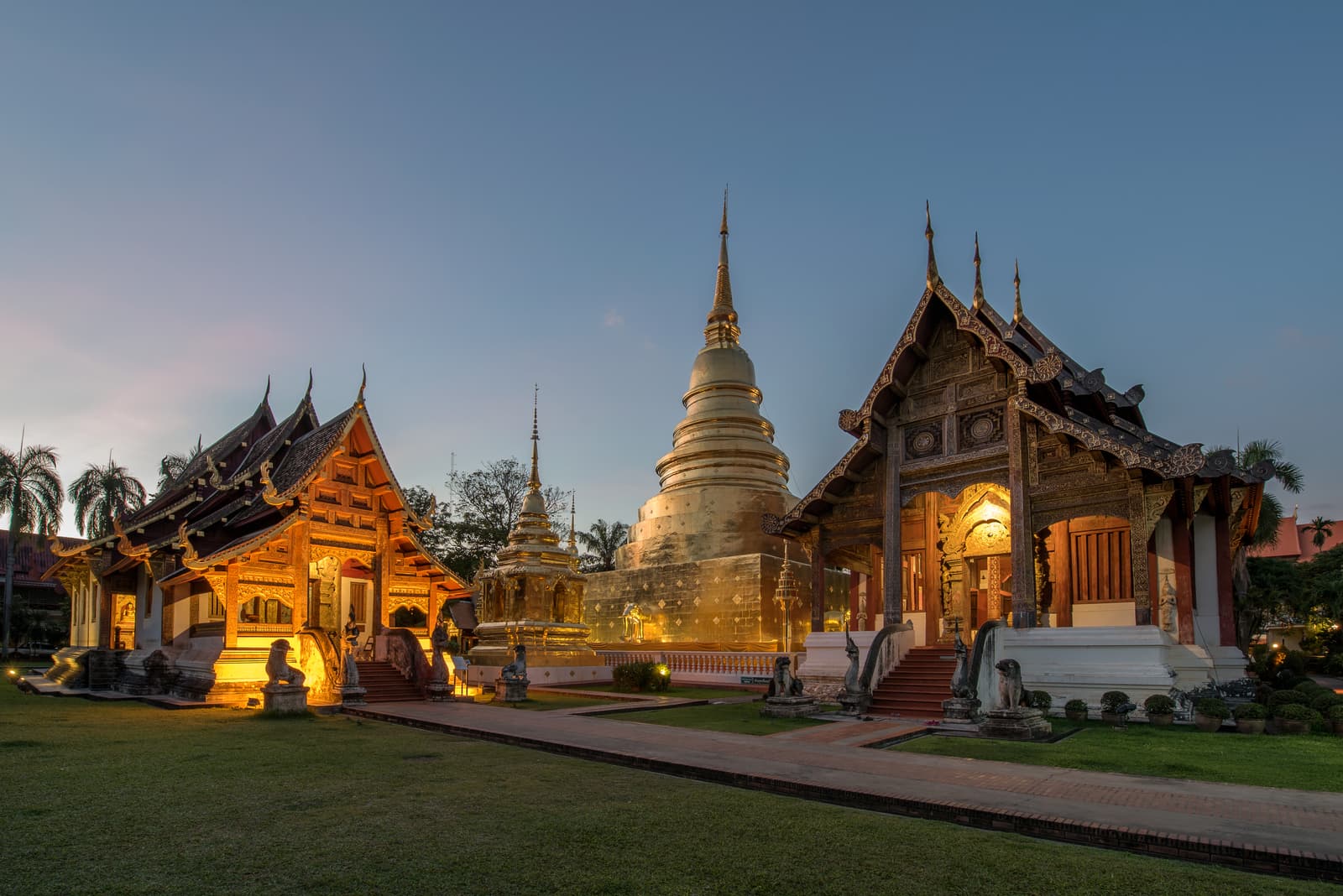
Northern Thailand's cultural capital with hundreds of temples, an acclaimed food scene, and mountain trekking. Overland routes cross at Huay Xai/Chiang Khong by slow boat down the Mekong from Luang Prabang, making it a natural circuit option.

Plain of Jars
One of Laos's greatest archaeological mysteries — thousands of massive ancient stone jars scattered across highland plains in Xieng Khouang Province. The area was also heavily bombed during the Vietnam War-era Secret War, and UXO clearance is ongoing. A haunting, utterly unique destination.
Shopping
Vang Vieng is a small adventure town, not a shopping destination — the quality and range of craft goods is far below what you'll find in Luang Prabang or Vientiane. The main street and a small night market carry the usual mix of tourist goods. That said, a few genuinely worthwhile items are available, particularly Hmong and Khmu ethnic textiles, Lao coffee, and local handicrafts. Save serious shopping for Luang Prabang.
Main Street (Town Center)
tourist shopsA strip of souvenir shops, rental operators, and restaurants running parallel to the Nam Song. Quality varies considerably. Bargaining is expected on textiles and handicrafts.
Known for: Tubing gear, elephant print clothing, Beerlao merchandise, basic Lao handicrafts
Night Market
night marketA small evening market near the town center with vendors selling snacks, local produce, cooked food, and a modest selection of textiles and souvenirs. Livelier on weekends and in peak dry season.
Known for: Grilled skewers, Lao street food, Hmong textiles, saa paper, silver jewelry
Village Handicraft Sellers
roadside stallsOn the roads toward Blue Lagoon 1 and outlying caves, Lao and ethnic minority women sell handwoven goods directly from roadside stalls. Prices are very low and quality can be high — buying here supports rural families directly.
Known for: Handwoven Hmong and Khmu textiles, embroidered bags, woven bracelets
🎁 Unique Souvenirs to Look For
- •Hmong and Khmu ethnic minority textiles — woven and embroidered bags, scarves, and blankets from roadside village sellers
- •Bolaven Plateau coffee beans — widely available in shops; Laos produces excellent single-origin coffee and it travels well
- •Beerlao merchandise — T-shirts, caps, and bottle openers carrying Southeast Asia's best local brew
- •Lao-Lao rice whisky — small bottles of the national spirit available cheaply at market stalls and local shops
- •Saa (mulberry bark) paper products — notebooks, prints, and lampshades made from traditional Lao paper
- •Silver jewelry in ethnic minority designs from night market vendors
- •Handwoven bamboo sticky rice baskets (tip khao) — functional and culturally meaningful souvenirs
Language & Phrases
Lao uses its own script, closely related to Thai — you'll recognize the rounded letterforms on signs around town. Lao is a tonal language, so exact pronunciation matters for meaning, but locals appreciate any attempt and the sounds are forgiving for first-timers. English is spoken at most tourist-facing businesses; some older residents speak French. Given the Laos-China Railway and surge of Chinese visitors, Mandarin is increasingly useful but not expected.
| English | Translation | Pronunciation |
|---|---|---|
| Hello | Sabaidee (ສະບາຍດີ) | sah-bye-DEE |
| Thank you | Khob chai (ຂອບໃຈ) | KOP jai |
| Please | Karuna (ກະລຸນາ) | kah-ROO-nah |
| Cheers! | Nyok kao (ໂຍ້ກາວ) | NYOK gaow |
| Yes / No | Chao / Baw (ແມ່ນ / ບໍ່) | CHOW / baw |
| Goodbye | La gon (ລາກ່ອນ) | LAH gon |
| Excuse me / Sorry | Kor thot (ຂໍໂທດ) | kor TOHT |
| Do you speak English? | Jao pak passa angkit baw? (ເຈົ້າເວົ້າພາສາອັງກິດບໍ?) | jow PAK pah-SAH ang-KIT baw? |
| How much? | Tao dai? (ເທົ່າໃດ?) | TOW dye? |
| Delicious | Sep (ແຊບ) | SEP |
If you like Vang Vieng, you'll love…
4 cities with a similar vibe, outside of the same country.


