Compare 576 Travel Destinations
576 guides — page 15 of 24

Minneapolis
United States
The Mississippi River city built around St. Anthony Falls — the only natural waterfall on the entire 2,340-mile river — with 22 lakes inside city limits, the 50-mile Grand Rounds parkway connecting them all, and the world's largest enclosed Skyway system (9.5 miles of climate-controlled second-floor corridors connecting 80 downtown blocks for the brutal winters). Prince was born and lived almost his entire life here; Paisley Park and First Avenue are the music pilgrimage sites. The Walker Art Center and Minneapolis Institute of Art (permanently free) are world-class; the Mall of America is 12 miles south. Twin city to St. Paul, 11 miles east — one airport, one transit system, no clear hierarchy between them.

Mont Saint-Michel
France
A tidal island and abbey rising 92 metres from the bay between Normandy and Brittany — UNESCO World Heritage since 1979 and one of France's three most-visited monuments alongside the Eiffel Tower and the Louvre, with roughly 3 million annual visitors. The permanent population of the island commune is about 30 people, including the seven monks of the Fraternités Monastiques de Jérusalem who maintain liturgical life in the abbey first founded in 708 CE. The bay has the highest tidal range in continental Europe — up to 14 metres — and the famous tide that rises 'like a galloping horse' across the flats genuinely advances at 15 km/h. A €209 million de-causewaying project completed in 2014 replaced the 1879 stone causeway with a sleek pedestrian footbridge; cars now park 2.5 km away on the mainland. The single Grand Rue climbs from the village gates to the abbey past La Mère Poulard's famous copper-pot soufflé omelettes (beaten by hand over the open fireplace since 1888).

Montego Bay
Jamaica
Jamaica's second city and tourism capital offers white-sand beaches, reggae culture, jerk chicken, and a gateway to the Blue Mountains and Dunn's River Falls.

Monteverde
Costa Rica
Monteverde sits at 1,330 metres on the Tilarán mountain ridge, where Pacific and Caribbean trade winds collide to create one of the wettest, mistiest, most biologically rich cloud forests on Earth. The town began in 1951 when a group of Alabama Quakers fleeing the U.S. draft bought land here for dairy farming, and accidentally protected the forest above their fields — now the Monteverde Cloud Forest Biological Reserve, with 500+ orchid species and the resplendent quetzal as its mascot. The dirt road in is famously rough, the gondola-and-cable canopy tours were invented here, and Santa Elena village still feels like a frontier outpost.

Montevideo
Uruguay
Uruguay's laid-back capital stretches along the Río de la Plata with beautiful rambla boardwalks, Art Deco architecture, and the legendary Mercado del Puerto for grilled meats. A relaxed, walkable city with mate culture on every corner.

Montreal
Canada
Montreal is the most European city in North America — French-speaking, festival-obsessed, and blessed with a food scene that rivals any major city. Old Montreal's cobblestone streets and basilica, the Plateau's colorful staircases, and the underground city are highlights. The bagels are better than New York's (don't @ us), and poutine is a religion.

Mostar
Bosnia and Herzegovina
A small Herzegovinan town built around the single most photographed bridge in the Balkans — the 16th-century Ottoman Stari Most arching 24m above the emerald Neretva River. The original bridge stood 427 years before being deliberately destroyed in November 1993; the 2004 reconstruction (using stones from the same Tenelija quarry) is now UNESCO-listed. The Old Town's slippery Ottoman cobbles, Kujundžiluk bazaar with its hand-hammered copper workshops, and the Koski Mehmed-Pasha minaret view make for a 24-hour visit that punches well above its weight. Stay overnight: day-trippers from Dubrovnik clear out by 17:00 and the city becomes itself again.

Mount Rainier National Park
United States
Mount Rainier is a 14,411-foot active stratovolcano less than 90 miles southeast of Seattle, the most prominent peak in the Lower 48 and the centerpiece of a 369-square-mile park established in 1899. The Paradise area on the south flank (5,400 feet) is the busiest base, with the Skyline Trail circling subalpine meadows that erupt with avalanche lily and Indian paintbrush every July and August. Sunrise on the northeast side, at 6,400 feet, is the highest road in Washington and gives the closest road-accessible view of the mountain. Reflection Lakes is the iconic mirror shot, Mowich Lake holds the quiet northwest corner, and snow lingers on the high country into July most years.

Mui Ne
Vietnam
Mui Ne is a dust-orange fishing village strung along a single coastal road four hours east of Ho Chi Minh City, where the South China Sea hits steady cross-shore wind almost every afternoon. That wind made it the kitesurfing capital of Southeast Asia, with November-to-April peak season packing the bay with kites and beach hostels charging by the lesson. Inland, the landscape goes surreal fast. Red sand dunes glow at sunrise, white sand dunes look like a slice of the Sahara dropped near the sea, and the Suoi Tien fairy stream cuts a shin-deep ribbon of warm water through orange canyon walls. Fish-sauce factories line the back lanes and explain the smell drifting through town at low tide.

Mumbai
India
India's financial capital and Bollywood headquarters is a city of dreams built on seven islands — colonial architecture along Marine Drive, street food paradise, and relentless energy.

Munich
Germany
Bavaria's capital — Oktoberfest, beer gardens, twin-towered Frauenkirche, and the starting line for the German Alps. Marienplatz's Glockenspiel rings at 11am, surfers ride a standing wave on the Eisbach in Englischer Garten, and Salzburg is 90 minutes east by train. BMW, Nymphenburg, Dachau Memorial, and 400 Bavarian breweries round out longer visits.

Muscat
Oman
Oman's elegant capital between mountains and sea — the stunning Sultan Qaboos Grand Mosque, historic Muttrah Souk, pristine wadis, and genuine Arabian hospitality in one of the Middle East's safest cities.

Mykonos
Greece
The Cycladic island that defines the Greek summer — Chora's whitewashed Cycladic alleyways and 16th-century windmills frame Little Venice's seafront balconies. Paradise and Super Paradise are the loudest beach clubs in the Mediterranean; Psarou and Agios Sostis are the calmest. Boats run hourly to UNESCO Delos, the sacred birthplace of Apollo and Artemis and one of the most extensively excavated sites in the Aegean. June–September is high season; July–August is when prices triple and clubs run until dawn.
.jpg%3Fwidth%3D1280&w=1600&q=75)
Myrtle Beach
United States
Myrtle Beach is the resort capital of the 60-mile Grand Strand on the South Carolina coast and the most popular family beach vacation in the South. The 200-foot SkyWheel and the Boardwalk anchor the city center, Broadway at the Beach is the entertainment district with shops and restaurants, and the area holds more than 90 golf courses plus 50-plus miniature golf courses (a self-claimed mini-golf capital of the world). Direct flights into MYR from 30+ US cities, peak season runs April through September, and the food-and-mini-golf scene is unapologetically aimed at families and golf groups, not foodies.

Mysore
India
Karnataka's heritage capital, a 3-hour drive south of Bangalore on the Deccan Plateau, organized around the Indo-Saracenic Mysore Palace - the Wodeyar royal residence rebuilt in 1912 and lit by 100,000 incandescent bulbs every Sunday evening and on every public holiday. Beyond the palace gates, Mysore is the country's silk, sandalwood, and agarbathi (incense) capital, with Devaraja Market piling jasmine garlands and turmeric pyramids in the centre of the old town. Chamundi Hill and its 12th-century temple watches the city from a 1,000-step staircase to the south, and the city's slower pace and cleaner air make it the standard cultural counterweight to Bangalore's tech sprawl.

Nairobi
Kenya
Nairobi is the only capital city in the world with a national park inside its borders — where lions roam against a backdrop of skyscrapers. The city is the gateway to Kenya's incredible safari circuit (Masai Mara, Amboseli, Tsavo), but also has its own draw: the Giraffe Centre, Karen Blixen Museum, and a rapidly growing food and art scene.

Nantucket
United States
A crescent-shaped 48-square-mile island 30 miles south of Cape Cod, named the Faraway Land by the Wampanoag and once the wealthiest port in the world during the 1820s peak of the Nantucket whaling fleet. When kerosene replaced whale oil and the harbour silted up in the late 19th century, the entire town fossilised in place, leaving the largest concentration of pre-1850 architecture in the United States: cobblestone Main Street, 800-plus surviving Federal and Greek Revival houses, and the Whaling Museum in the old Hadwen and Barney Oil Refinery. Daily ferries from Hyannis run one hour by fast catamaran or 2.25 hours by traditional ferry.

Naoshima
Japan
A 14 sq km island in the Seto Inland Sea reborn as one of the world's most ambitious open-air contemporary art experiments. The Benesse Art Site has wrapped the south end in Tadao Ando concrete; Yayoi Kusama's polka-dot Yellow Pumpkin sits on a private pier; the Chichu Art Museum is sunk into a hillside to hold three Monet Water Lilies, a James Turrell skyspace, and a Walter De Maria room. The Honmura village houses are themselves the artworks. Reach by ferry from Uno Port, an hour from Okayama on the mainland.

Napa Valley
United States
Northern California's premier wine region — a 30-mile-long, 5-mile-wide valley an hour north of San Francisco that contains over 400 wineries and produces 4% of California's wine while generating 27% of the state's wine value. The 1976 'Judgment of Paris' blind tasting put Napa on the world map when a French jury rated Stag's Leap Wine Cellars Cabernet Sauvignon and Chateau Montelena Chardonnay above their celebrated French counterparts — Time magazine called it 'the day Napa Valley earned its place.' The first American Viticultural Area outside Augusta, Missouri (1981), the valley now contains 16 sub-AVAs each with distinct soil and microclimate. Cabernet Sauvignon dominates at ~55% of plantings, supported by daily marine fog rolling in from San Pablo Bay through the Petaluma Gap and a 40°F+ diurnal temperature swing. Anchored by Napa town in the south and St. Helena and Calistoga in the north along the SR-29 'Wine Route,' with the parallel Silverado Trail offering a quieter alternative. The 1989 Napa Valley Wine Train still runs vintage Pullman dining cars 36 miles round-trip at 18 mph past vineyards. Closest airports: Oakland (OAK) and SFO.

Naples
Italy
The birthplace of pizza is a chaotic, passionate, beautiful city with the best street food in Italy. Vesuvius looms overhead, Pompeii is a day trip away, and the historic center is a UNESCO-listed labyrinth of churches, underground tunnels, and vibrant markets.

Nara
Japan
Japan's first permanent capital, where friendly deer roam freely among UNESCO temples. Todai-ji houses the world's largest bronze Buddha. A perfect day trip from Osaka or Kyoto.

Nashville
United States
Music City is equal parts bachelorette-pedal-tavern chaos on Broadway and deeply serious songwriter culture at the Bluebird Cafe and Station Inn. Hot chicken sweats at Hattie B's and Prince's, the Ryman Auditorium still hosts acoustic sets under its stained glass, and East Nashville and 12South have eclipsed downtown as the city's creative heart.
Nassau
Bahamas
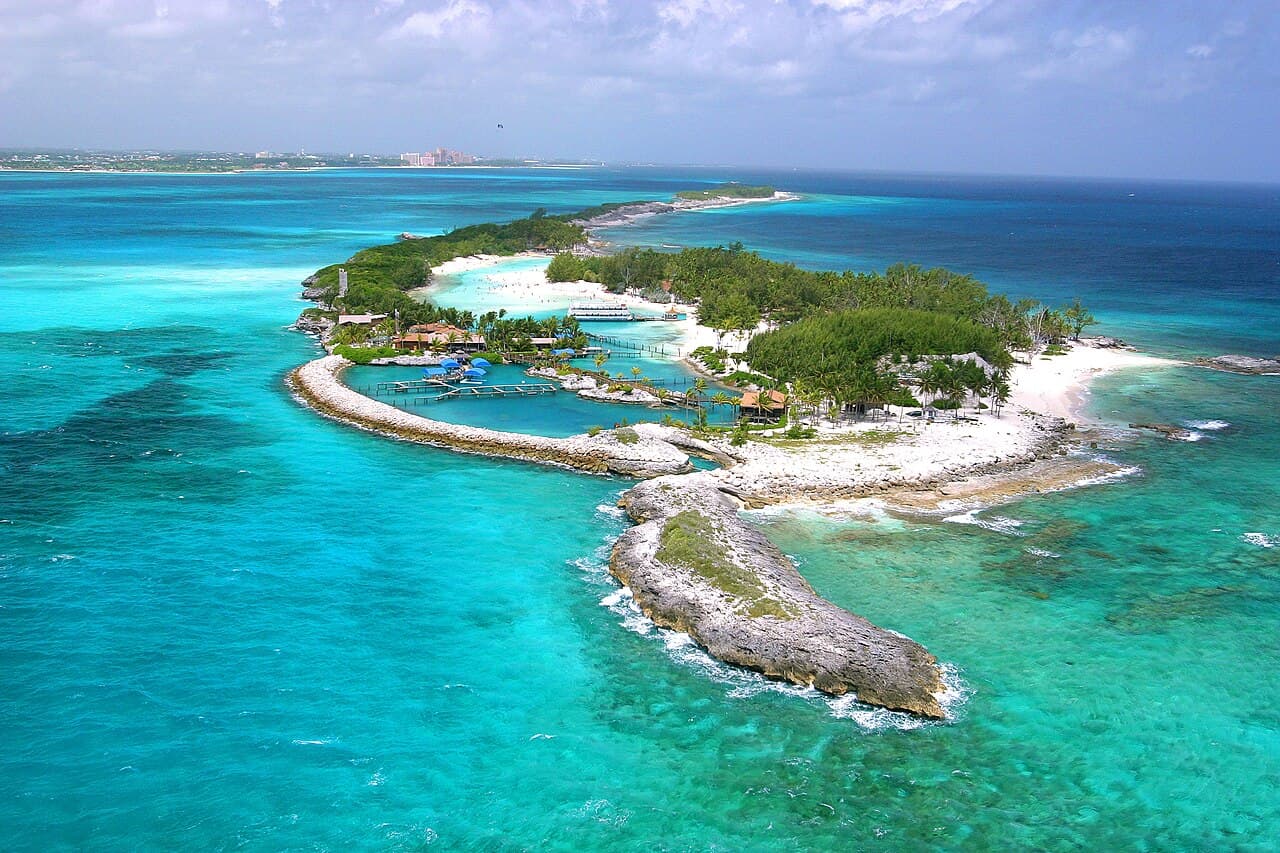
The pastel-pink colonial capital of the Bahamas on New Providence Island — the 102-step Queen’s Staircase carved by enslaved labour in the 1790s, the British colonial Government House, the Pirates of Nassau Museum tracing the city’s 18th-century pirate-republic era, and the massive Atlantis Resort across the bridge on Paradise Island. Cruise-ship central (over 4 million arrivals/year), with US Pre-Clearance at the airport meaning you skip US Customs on your return flight. Pair it with a day trip to Exuma’s swimming pigs to elevate the trip.

Naxos
Greece
The largest Cyclades island (430 km², 20K residents) is the most agriculturally self-sufficient and the best-value Cycladic base — the iconic Portara doorway from a 6th-century BC unfinished Apollo temple silhouetted at sunset, the Venetian Kastro of Naxos Town, the highest peak in the Cyclades (Mt Zeus, 1,003m, with the Cave of Zas where the king of the gods was hidden), the marble-paved mountain village of Apeiranthos, the 4 km Plaka beach arc, and the unique Kitron citrus liqueur from Halki’s 1896 Vallindras Distillery.