Compare 576 Travel Destinations
18 of 576 guides match

Acadia National Park
United States
The first national park east of the Mississippi (1916) — 47,000 acres across Mount Desert Island, the Schoodic Peninsula, and Isle au Haut. Cadillac Mountain at 1,530 ft is the first place in the continental US to see sunrise October through early March. Rockefeller's 45 miles of carriage roads exclude cars; the 27-mile Park Loop Road connects Sand Beach, Thunder Hole, Otter Cliffs, and Jordan Pond. The Beehive and Precipice ladder trails are some of the most dramatic hikes in the eastern US.

Arches National Park
United States
Arches sits on 76,000 acres of red Entrada and Navajo Sandstone north of Moab in eastern Utah, holding more than 2,000 documented natural stone arches — the densest concentration on the planet. Delicate Arch (the Utah license-plate arch) is the iconic 3-mile sunset hike, while Landscape Arch on the Devil's Garden Trail spans 306 feet, one of the longest natural arches on Earth. The Windows section delivers four major arches in one short loop. Timed-entry vehicle reservations are required April through October via recreation.gov. Moab is the gateway town and pairs naturally with a Canyonlands NP day trip.

Banff
Canada
Banff National Park is the Canadian Rockies at their finest — turquoise lakes (Lake Louise, Moraine Lake), towering peaks, glaciers, and abundant wildlife. The charming town of Banff sits right inside the park, and the Icefields Parkway connecting to Jasper is one of the world's most scenic drives. World-class skiing in winter, incredible hiking in summer.

Bryce Canyon National Park
United States
Bryce Canyon is the hoodoo amphitheater of southern Utah — not actually a canyon but a series of natural amphitheaters carved into the eastern edge of the Paunsaugunt Plateau, packed with the densest concentration of hoodoos (eroded sandstone spires) on Earth. The rim sits at 8,000 to 9,000 feet, which makes it noticeably cooler than nearby Zion (4 hours from Las Vegas, 1.5 hours from Zion). The classic combination is a sunrise stop at Inspiration or Sunrise Point followed by descending into the amphitheater on the Navajo Loop and Queens Garden Trail. An International Dark Sky Park, the night skies here are extraordinary.

Crater Lake National Park
United States
Crater Lake is the deepest lake in the United States at 1,949 feet, formed when 12,000-foot Mount Mazama collapsed roughly 7,700 years ago and the caldera filled with snowmelt. The water has no inlets or outlets and produces a near-impossible indigo blue that has stopped photographers for a century. The 33-mile Rim Drive circles the caldera (closed November to May for snow), Wizard Island rises from the western shore as a perfect cinder cone, and Cleetwood Cove Trail is the only legal route to the water — a 700-foot descent and a tougher climb back. The park sits 4 hours from Portland or 1.5 hours from Medford (MFR), peaks July-September, and is a designated International Dark Sky Park.

Denali National Park
United States
Home to Denali (20,310 ft / 6,190m), tallest peak in North America — visible from only ~30% of visits due to cloud cover (the "30 Percent Club"). A 92-mile Park Road is the sole access, with private vehicles restricted past Mile 15 and park camper + tour buses handling visitors. Important: the 2021 Pretty Rocks landslide has closed the road beyond Mile 43, so Eielson + Wonder Lake remain inaccessible in 2026. Wildlife Big 5: grizzly, caribou, moose, wolves, Dall sheep. Anchorage (ANC) 4hr south, Fairbanks (FAI) 2hr north; Alaska Railroad Denali Star stops in the park. Aurora visible from late August.

Glacier National Park
United States
Northern Montana's crown — a million acres of jagged peaks, ice-blue lakes, and dwindling glaciers (26 left, down from 150 in 1850). The Going-to-the-Sun Road across Logan Pass is one of the world's great drives, open only late June through mid-October. Grizzlies are serious here — bear spray isn't optional. Amtrak's Empire Builder actually stops at the park, a rarity for U.S. national parks.

Grand Canyon National Park
United States
One of the planet's most familiar landscapes still lands the first time you walk up to Mather Point. The canyon is 277 miles long, a mile deep, and took the Colorado River roughly six million years to carve. South Rim (open year-round, 90% of visitors) is where most trips happen; North Rim is 10% of the traffic and closed half the year. The rule on Bright Angel: down is optional, up is mandatory.

Great Smoky Mountains National Park
United States
The most-visited national park in the U.S. — 13 million visitors a year, more than double #2 — and still free to enter (parking tag since 2023). 522,000 acres of Appalachian rainforest straddle the TN/NC line, with more tree species than all of Europe, 1,500+ black bears, and the world's only predictable synchronous firefly display in June. Cades Cove at dawn is the wildlife jackpot; the kitsch in Gatlinburg is its own experience.

Jasper National Park
Canada
The northern anchor of the Canadian Rocky Mountain Parks UNESCO site. Maligne Lake's Spirit Island, the Columbia Icefield's Athabasca Glacier, the 230 km Icefields Parkway drive down to Banff, and the Jasper SkyTram up Whistlers Mountain (2,263m). World's 2nd-largest Dark Sky Preserve with an annual Dark Sky Festival. Wildlife: elk, bighorn sheep, bears, wolves. Honest note: the town suffered major damage in the 2024 wildfire; confirm operational status for specific lodges. Access from Edmonton (YEG) 4hr or Calgary (YYC) 5hr; VIA Rail stops in Jasper.

Joshua Tree National Park
United States
Joshua Tree spans 800,000 acres at the meeting point of the Mojave and Colorado deserts in southern California, two hours east of Los Angeles. The park is famous for the namesake yucca trees that cluster in the higher Mojave half, the surreal monzogranite boulder piles at Hidden Valley and Jumbo Rocks, and one of the best concentrations of single-pitch climbing and bouldering in the world (1,400+ routes). Skull Rock, the Cholla Cactus Garden, and Keys View over the Coachella Valley are the can't-miss roadside stops. Twentynine Palms and Yucca Valley are the gateway towns; the season runs October through May.

Lake Tahoe
United States
North America's largest alpine lake — 22 miles long, 12 miles wide, 1,645 ft deep at center, sitting at 6,225 ft elevation in the Sierra Nevada and split between California and Nevada. Twelve ski areas ring the basin (Heavenly, Palisades Tahoe, Northstar, Kirkwood, Sugar Bowl, Mount Rose) — the densest concentration in North America. In summer the same shoreline becomes a beach-and-boat playground: Emerald Bay's granite-walled cove, Sand Harbor's clear turquoise water, and 72 miles of paved bike path on the West Shore. Reno (RNO) is 30 minutes from the North Shore; Sacramento (SMF) is 2 hours from the South. The state line splits casinos onto the Nevada side and most pine-forested cabins onto the California side.

Mount Rainier National Park
United States
Mount Rainier is a 14,411-foot active stratovolcano less than 90 miles southeast of Seattle, the most prominent peak in the Lower 48 and the centerpiece of a 369-square-mile park established in 1899. The Paradise area on the south flank (5,400 feet) is the busiest base, with the Skyline Trail circling subalpine meadows that erupt with avalanche lily and Indian paintbrush every July and August. Sunrise on the northeast side, at 6,400 feet, is the highest road in Washington and gives the closest road-accessible view of the mountain. Reflection Lakes is the iconic mirror shot, Mowich Lake holds the quiet northwest corner, and snow lingers on the high country into July most years.

Niagara Falls
United States
Three waterfalls on the Niagara River between New York State and the Canadian province of Ontario — the American Falls (167 ft tall, 1,060 ft wide), Bridal Veil Falls (the small one separated by Luna Island, also on the US side), and the dominant Horseshoe Falls (167 ft tall, 2,600 ft wide) carrying 90% of the total water volume with the curve sitting mostly in Canada. Combined flow averages 750,000 gallons per second. Second-largest waterfall in the world by flow rate (after Inga Falls in DRC) but only 51st by height — the fame comes from being the largest in the inhabited Western world and the most accessible, drawing 12+ million visitors a year split roughly equally between US and Canadian sides. The falls erode upstream at about 1 ft per year (down from 3 ft historically due to flow control); the 7-mile gorge below is the path the falls have carved over 12,500 years since the last ice age. The Maid of the Mist boat tour has operated continuously since 1846 — the oldest tourist attraction in North America. Niagara also produces ~2.4 million kW of hydroelectric power, with treaty agreements diverting up to 75% of natural flow into the power stations at night and in winter. Closest airports: Buffalo Niagara (BUF, US side) and Toronto Pearson (YYZ, Canadian side).

Olympic National Park
United States
Olympic spans 922,000 acres on Washington's Olympic Peninsula and packs three separate ecosystems into one park, none of them connected by interior roads. The Hoh Rain Forest on the west side gets 12 feet of rain a year and grows moss-draped Sitka spruce cathedrals. The 73-mile Pacific coast strip holds Ruby Beach, Rialto with its sea stacks, and Shi Shi. The interior alpine zone tops out at 5,200-foot Hurricane Ridge with views from the Olympics back across the Strait of Juan de Fuca to Vancouver Island. Lake Crescent and Sol Duc Hot Springs are the natural bases, the park is 2.5 hours from Seattle including a ferry, and the coast stays open year-round.

Yellowstone National Park
United States
Yellowstone was the world's first national park (1872) and still one of its strangest — 2.2 million acres sitting on a supervolcano, home to half the planet's geysers, the continent's largest free-roaming bison herd, and the wolves of Lamar Valley. The Grand Loop Road connects Old Faithful, Grand Prismatic Spring, and the Grand Canyon of the Yellowstone in a weeklong figure-eight.

Yosemite National Park
United States
Yosemite Valley is seven miles of polished granite — El Capitan's 3,000-foot wall, Half Dome's hood above it, and three of the tallest waterfalls in North America — all visible from Tunnel View in one shot. Most visitors never leave the Valley; the high country at Tuolumne Meadows and the Mariposa Grove of giant sequoias reward the detour, and a Merced Amtrak + YARTS bus is a real budget route from San Francisco.
Zion National Park
United States
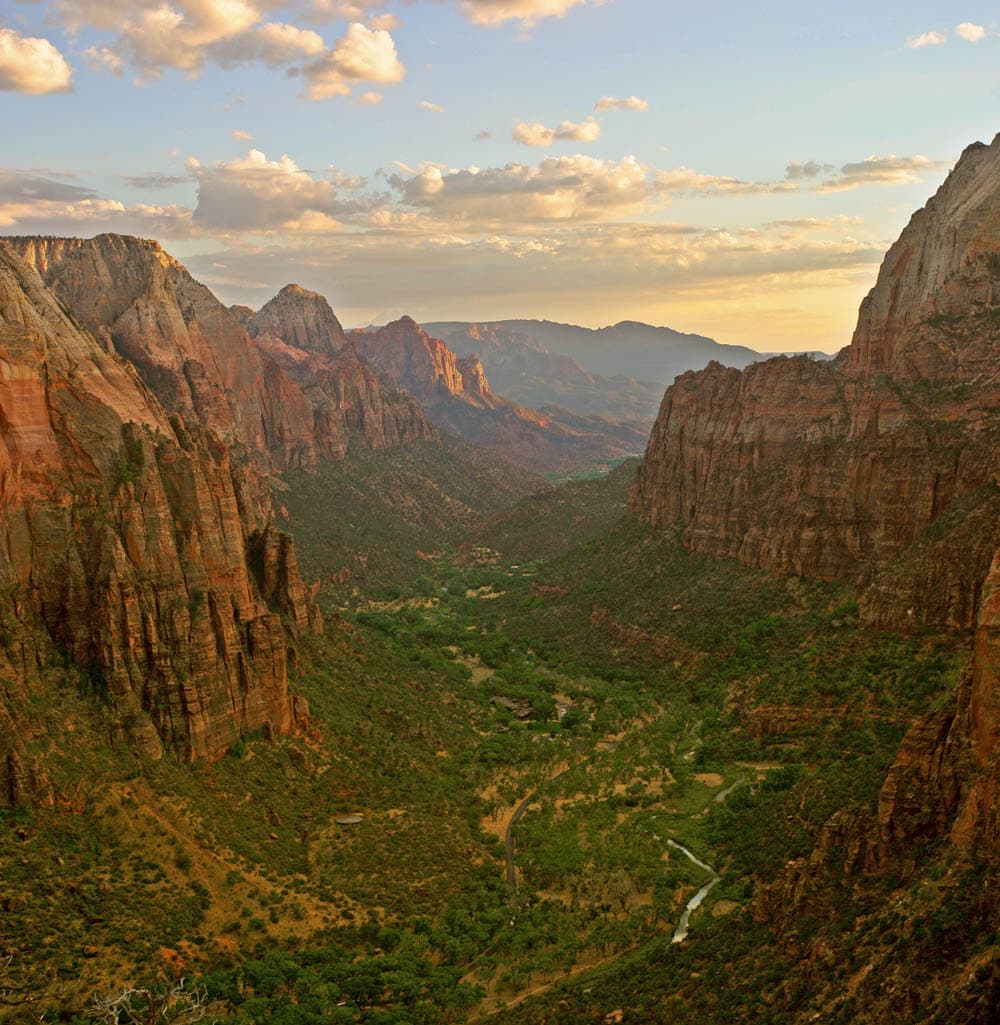
Zion is a slot canyon national park — the Virgin River carved red-and-white Navajo Sandstone walls up to 2,000 feet above the valley floor. It's the third most-visited U.S. park (4.5 million a year), which is why the Zion Canyon shuttle is mandatory April–November. Angels Landing's chained ridge requires a permit lottery and has killed hikers; the Narrows is a wade-up-river slot that closes on flash-flood days.