Compare 576 Travel Destinations
148 of 576 guides match

Nikko
Japan
Mountain shrine town 140km north of Tokyo where Tokugawa Ieyasu — the shogun who unified Japan in 1603 — is enshrined at the gold-and-vermilion Toshogu mausoleum. The UNESCO-listed shrine complex sits in a cedar forest at 600m elevation, with cooler air than Tokyo year-round. Beyond the shrines, the Iroha-zaka switchback road climbs to Lake Chuzenji and the 97-meter Kegon Falls — Japan's most celebrated autumn-foliage drive. Stay overnight in town or in the nearby hot-spring hamlet of Yumoto for the deeper Okunikko experience.

Niseko
Japan
Hokkaido's premier ski region, two hours by road from Sapporo's New Chitose airport. Four interconnected resorts — Grand Hirafu, Hanazono, Niseko Village, Annupuri — share a single all-mountain pass on the slopes of Mount Niseko Annupuri, with the conical Mount Yotei staring across the valley like a small Mount Fuji. The 15+ metres of dry, light powder per season is the most reliable in the world, which is why an Australian and Singaporean expat scene has set up a year-round base. December through March is ski; July and August add hiking, rafting, and onsen-and-green-season pricing.

Okinawa
Japan
Japan's subtropical island chain has a culture distinctly its own — the Ryukyu Kingdom (1429–1879) left Shuri Castle, a UNESCO World Heritage Site rebuilt after its 2019 fire, and a cuisine defined by champuru stir-fry, awamori liquor, and the "Okinawa diet" that helped create one of the world's highest concentrations of centenarians. The Kerama Islands 30 minutes by ferry have water clarity among the finest in Asia. The US military controls 30% of the main island's land area — a geopolitical reality woven into daily life.
Osaka
Japan
Osaka is Japan's kitchen — a city that lives to eat. Dotonbori's neon-lit food street, takoyaki (octopus balls) stalls, and the finest street food culture in Japan define this boisterous, working-class city. The Osakans are famously friendly and funny, the castle is impressive, and Universal Studios Japan is a massive draw for families.

Pai
Thailand
Northern Thailand's backpacker mountain town, 762 curves from Chiang Mai (bring motion-sickness pills). Dawn hot-air balloons over karst ridges, the Pai Canyon, Mo Paeng Waterfall, Shan Chinese villages, and fire shows at the walking-street market. Cool year-round, but the burning season February to April turns the air hazardous — plan around it.

Paro
Bhutan
The gateway to Bhutan — the country's only international airport (PBH), famously one of the most difficult commercial approaches in the world. Home to the cliff-hanging Tiger's Nest monastery (Taktsang), the fortress-monastery Paro Dzong, Kyichu Lhakhang (7th century), and the National Museum in the circular Ta Dzong watchtower. Bhutan's Sustainable Development Fee ($100-200/night) and mandatory licensed-tour-operator visa rules make it one of the most tightly-managed tourism destinations anywhere.

Pattaya
Thailand
Thailand's Gulf-coast resort city, 150 km southeast of Bangkok and 90 minutes by minivan from Ekkamai bus terminal. Pattaya is unapologetically commercial — the 4 km arc of Pattaya Beach faces the Walking Street nightlife strip while quieter Jomtien Beach stretches south for families and weekenders. Beyond the bars sit the half-finished 105-metre all-wood Sanctuary of Truth, the Nong Nooch Tropical Garden with its Thai dance and elephant show, Coral Island day trips from Bali Hai Pier, the Khao Phra Tamnak hilltop viewpoint, Cartoon Network water park, and more than 25 golf courses within an hour. U-Tapao (UTP) airport sits 30 minutes south, but most travellers still arrive via Bangkok BKK or DMK.

Penang
Malaysia
Malaysia's food capital is an island of incredible hawker food, vibrant street art in George Town's UNESCO-listed core, colorful temples, and colonial mansions. One of Southeast Asia's best-value food destinations.

Phi Phi Islands
Thailand
A six-island archipelago in the Andaman Sea between Phuket and Krabi — protected within the Hat Noppharat Thara–Mu Ko Phi Phi National Park, with Permian-era limestone karst cliffs ringing turquoise water. Phi Phi Don is the only inhabited island; Phi Phi Leh holds Maya Bay (the famous beach from "The Beach" 2000), which closed entirely from 2018 to 2022 for coral recovery and reopened with strict daily caps (4,375 visitors/day, 60-minute slots, no swimming inside the bay), closing annually August 1–September 30 for further recovery. The classic Phi Phi day combines Maya Bay, Pileh Lagoon, Bamboo Island snorkelling, and the Phi Phi Viewpoint hike for the iconic double-bay photograph. No roads, no cars, no airport — everything is by boat from the wooden Tonsai Pier.

Phnom Penh
Cambodia
Cambodia's rapidly changing capital where French colonial architecture meets modern riverside development. The Royal Palace, sobering Tuol Sleng museum, and legendary street food scene at Central Market make it a compelling stop between Angkor Wat and the southern beaches.

Phu Quoc
Vietnam
Phu Quoc is Vietnam’s largest island, a pepper-and-fish-sauce outpost in the Gulf of Thailand that sits closer to Cambodia than to the Vietnamese mainland. The south end has the postcard beaches — Sao Beach’s soft white crescent and Long Beach’s 20-kilometre sweep of resort and hostel — plus the world’s longest sea-crossing cable car at 7.9 kilometres, which links the mainland to little Hon Thom island and was opened in 2018. Vietnam grants 30-day visa-free entry to every nationality on arrival here, which makes it one of the easiest tropical entries on the planet. The fish-sauce factories of Duong Dong town smell like the Atlantic at low tide.

Phuket
Thailand
Thailand's largest island is a tropical playground of palm-fringed beaches, turquoise Andaman Sea waters, and lively nightlife. From the bustling Patong strip to the serene coves of Kata and Rawai, Phuket offers everything from luxury resorts to budget beach bungalows. The jumping-off point for Phi Phi Islands and Phang Nga Bay.

Pingyao
China
The only fully intact Ming and Qing Han Chinese walled city in the country — a UNESCO-listed grid of grey-brick courtyards in Shanxi province ringed by 6km of 14th-century walls you can climb for the panorama. Rishengchang on South Street was the world's first draft bank when it opened in 1823, sending silver bills as far as Mongolia. The Confucian Temple, the County Government complex, and Shuanglin and Zhenguo temples nearby fill out the historical depth. Four hours from Beijing by G-train via Taiyuan, with siheyuan courtyard guesthouses inside the walls.

Pokhara
Nepal
Nepal's adventure capital sits at 830m on Phewa Lake with the Annapurna massif filling the horizon — Annapurna I (8,091m), the sacred unclimbed Machhapuchhre Fishtail (6,993m), and Dhaulagiri all visible from town on a clear morning. Lakeside (Baidam) is the laid-back tourist district — paragliding from Sarangkot is world-class. Trek launch point for Annapurna Circuit, ABC, and Poon Hill. The new Pokhara International Airport opened 2023. Domestic flight from Kathmandu is 25 minutes.

Pushkar
India
A small Hindu pilgrimage town in central Rajasthan built around a sacred lake ringed by 52 ghats and dominated by the only major Brahma temple in India - the rare temple to the creator god in a country that overwhelmingly favours Vishnu and Shiva. Pushkar is a strict vegetarian and alcohol-free zone year round, anchoring a slow backpacker scene of rooftop cafes and Aravalli sunset hikes for most of the calendar. Once a year, on the November full moon, the desert outside town fills with the Pushkar Camel Fair: 50,000-plus camels, horses, and cattle traded over five days in the year's flagship Rajasthani spectacle. Ajmer railhead is 30 minutes east.

Railay
Thailand
Technically a peninsula on mainland Thailand (Krabi Province) but the towering limestone karst cliffs cut it off from road access — the only way in is by longtail boat (10–15 minutes from Ao Nang, 45 minutes from Krabi Town). No cars, no scooters, no traffic, and a small-island feel that makes Railay Thailand's most beach-paradise mainland destination. It is one of the world's most legendary rock-climbing destinations, with over 700 bolted routes split between Railay East, Tonsai, and Phra Nang Beach across grades from 5a to 8c. Phra Nang Cave at the southern tip contains a 'Princess Cave' shrine where local fishermen leave wooden phallus offerings (lingam) to the spirit of a princess believed to bestow fertility. The four beaches sit within 15 minutes' walk of each other but feel dramatically different — Railay West for postcard sunsets, Railay East as the climbing-and-mangrove backside, Phra Nang Beach (the most beautiful), and Tonsai (rougher, backpacker climbing zone). Closest airport: Krabi (KBV), 25 minutes by car to Ao Nang.

Raja Ampat
Indonesia
The highest marine biodiversity on Earth — 1,500 fish species, 700 molluscs, and 600+ coral species inhabit these four islands and 1,500 islets in West Papua. Cape Kri holds the world record for fish species counted in a single dive (374). The Pianemo viewpoint — karst limestone islands dotting a turquoise lagoon — is one of the most photographed landscapes in the world.

Rishikesh
India
The self-styled Yoga Capital of the World sits where the Ganges descends from the Himalayas into the plains of north India — 280+ ashrams, 100+ yoga schools, the iconic Lakshman Jhula and Ram Jhula suspension bridges, and the abandoned Beatles Ashram (Chaurasi Kutia) where Lennon, McCartney, Harrison, and Starr wrote much of the White Album in February-April 1968. The entire city is officially vegetarian and alcohol-free by municipal law. Add white-water rafting on the Class III-IV upper Ganges, the nightly Ganga Aarti fire ceremonies at Triveni Ghat and Parmarth Niketan, and the spectacular setting in the Himalayan foothills, and Rishikesh is the most spiritually distinctive destination in India that doesn't require pilgrim-level commitment.

Samarkand
Uzbekistan
The jewel of the Silk Road, Samarkand's Registan Square is one of the most breathtaking architectural ensembles on earth. Turquoise-tiled madrasas, the Shah-i-Zinda necropolis, and Tamerlane's mausoleum transport you to the height of the Timurid Empire.

Sapa
Vietnam
Northern Vietnam mountain town at 1,500m near the Chinese border — iconic terraced rice paddies carved by Hmong and Dao ethnic minorities, Fansipan's 3,143m "Roof of Indochina" cable car, and multi-day homestay treks through Muong Hoa Valley. Cool year-round, foggy often, and best in golden September-October or green April-May.
Sapporo
Japan
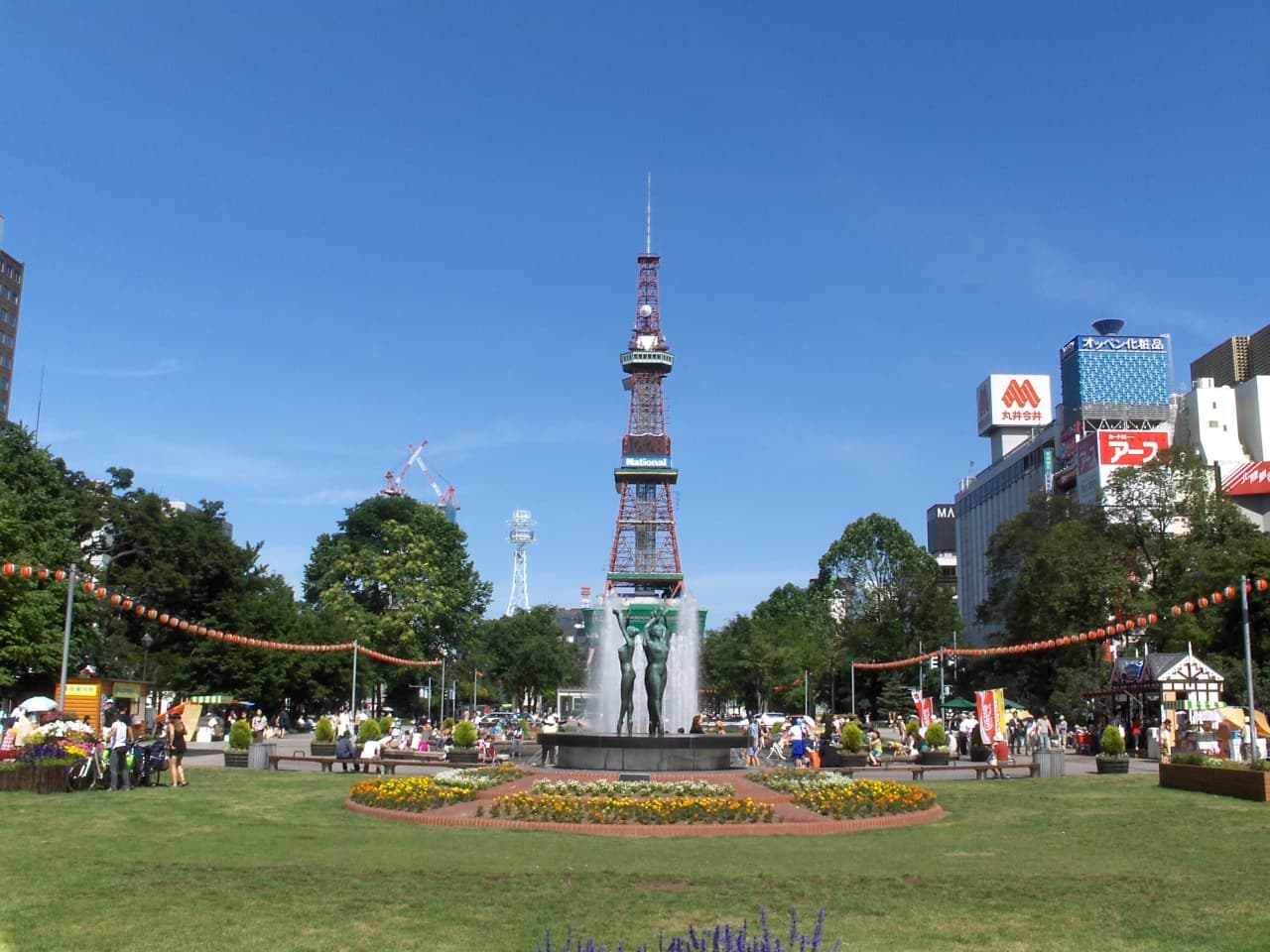
The capital of Hokkaido and Japan’s 5th-largest city — a 1.97-million-person grid laid out in 1869 with Boston-influenced street planning during Japan’s rapid Hokkaido colonisation, now the gateway to the country’s northernmost main island. Sapporo invented miso ramen (1955) and soup curry (1971); the Snow Festival every February draws 2+ million people to see 200+ massive snow and ice sculptures up to 15 m tall; Niseko’s premier-tier powder skiing is 90 minutes west; Susukino is Japan’s third-largest nightlife district after Tokyo’s Kabukicho and Osaka’s Dotonbori. Add the original Sapporo Beer Garden’s Genghis Khan jingisukan barbecue, the morning sushi at Nijo Market (Hokkaido seafood at half the Tokyo price), and Mount Moiwa’s sunset — one of Japan’s "Three Greatest Night Views".

Seoul
South Korea
Seoul is a high-octane blend of ancient palaces and K-pop culture, street food alleys and neon-lit shopping districts. The city moves fast — cutting-edge technology, 24-hour everything, and one of the world's best subway systems. Yet ancient hanok villages and serene temples exist just minutes from the buzz.

Shanghai
China
China's most cosmopolitan city dazzles with the futuristic Pudong skyline, historic Bund waterfront, and French Concession tree-lined streets. A global financial hub that blends old Shanghai charm with cutting-edge modernity, incredible food, and world-class art scenes.

Sharjah
United Arab Emirates
The UAE's third emirate and its self-styled cultural capital, sitting just 30 minutes north of Dubai but operating on a different frequency. Sharjah is a UNESCO Creative City home to the Sharjah Art Foundation and the Sharjah Biennial, with a restored Heart of Sharjah heritage quarter, Souq Al Arsah (one of the oldest in the UAE), and the cascading Ottoman-style domes of Al Noor Mosque on the Buhaira corniche. It is also a dry emirate with no alcohol and a more conservative dress code than its glassy neighbour, which is the trade-off for getting Emirati culture, museums, and pearl-diving heritage rather than rooftop pool clubs.