Sapporo
THE QUICK VERDICT
By Anthony · Updated April 2026
Choose Sapporo if you want northern Japan’s biggest city with the world’s greatest snow festival, world-class miso ramen at the source, Niseko ski access, and a cool dry escape from mainland Japan’s humid summer.
- Best for
- February Snow Festival ice sculptures, Susukino miso ramen alleys, Niseko powder day trips, Odori beer gardens
- Best months
- Feb, May–Aug, Oct
- Budget anchor
- $200/day mid-range
- Worth a look
- cool, dry summer escape from mainland Japan's humidity — late July hits 22°C while Tokyo bakes at 35°C
The capital of Hokkaido and Japan’s 5th-largest city — a 1.97-million-person grid laid out in 1869 with Boston-influenced street planning during Japan’s rapid Hokkaido colonisation, now the gateway to the country’s northernmost main island. Sapporo invented miso ramen (1955) and soup curry (1971); the Snow Festival every February draws 2+ million people to see 200+ massive snow and ice sculptures up to 15 m tall; Niseko’s premier-tier powder skiing is 90 minutes west; Susukino is Japan’s third-largest nightlife district after Tokyo’s Kabukicho and Osaka’s Dotonbori. Add the original Sapporo Beer Garden’s Genghis Khan jingisukan barbecue, the morning sushi at Nijo Market (Hokkaido seafood at half the Tokyo price), and Mount Moiwa’s sunset — one of Japan’s "Three Greatest Night Views".
The two links below are affiliate links — MapSorted earns a small commission if you book through them, at no extra cost to you. How this works.
Tours & Experiences
Bookable tours, activities, and day trips in Sapporo
Where to Stay
Compare hotels and rentals in Sapporo
📍 Points of Interest
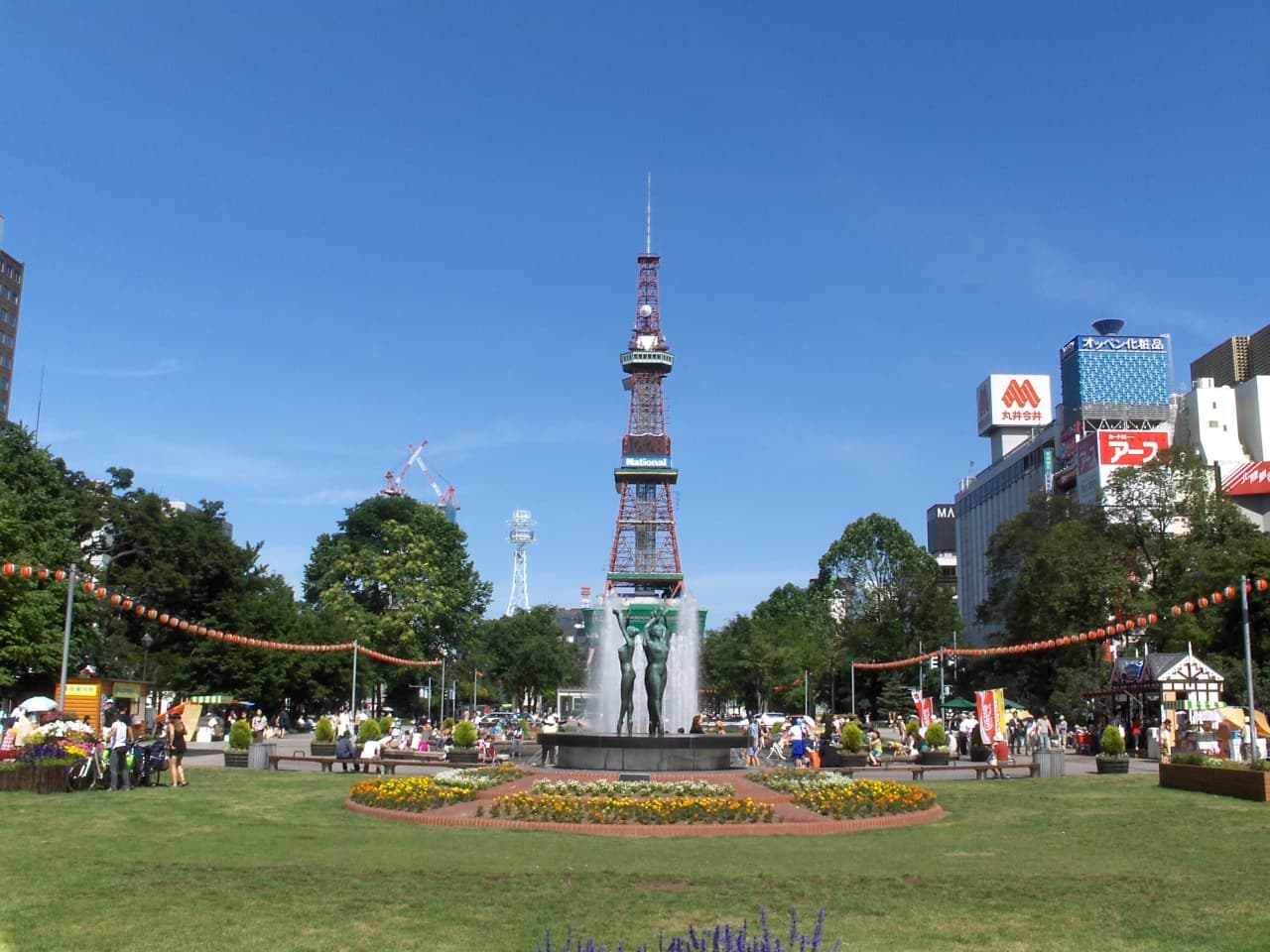
Odori Park & TV Tower
1.5-km tree-lined park slicing east-west through downtown — host site of Snow Festival, Beer Festival, Christmas Market
Susukino Nightlife District
Japan's 3rd-largest entertainment district — 4,000+ restaurants, izakayas, ramen shops, jazz bars, Nikka Whisky neon
Sapporo Beer Museum & Garden
1890 brick brewery — Japan's only beer museum, Genghis Khan all-you-can-eat-and-drink at adjacent Beer Garden
Hokkaido Shrine
Hokkaido's most important Shinto shrine in Maruyama Park — 1869, dedicated to Hokkaido colonisation; spring cherry blossom site
Mount Moiwa Ropeway
531-m mountain ropeway to summit observatory — one of Japan's "Three Greatest Night Views"
Sapporo Clock Tower
1878 American-style wooden building — one of the oldest Western-influenced structures in Japan, city landmark
Sapporo Ramen Republic
8 famous Hokkaido ramen shops in a recreated alley on the 10th floor of ESTA — Sumire, Aoba, miso ramen heritage
★ Local Picks
Nijo Market
170-year-old downtown fish market — morning sushi (uni, ikura, kani) at half Tokyo prices
Moerenuma Park
188-hectare landscape sculpture park designed by Isamu Noguchi — geometric mountains, glass pyramid, sea fountain
At a Glance
- Pop.
- 1.97M (city), 2.6M (metro)
- Timezone
- Tokyo
- Dial
- +81
- Emergency
- 110 (police) / 119 (fire+amb)
Sapporo is the capital of Hokkaido (Japan's northernmost main island) and the country's 5th-largest city — population 1.97 million, founded only in 1869 when the Meiji government laid out a Boston-influenced grid as part of Hokkaido's rapid colonisation
The Sapporo Snow Festival (Yuki Matsuri, since 1950) draws 2+ million visitors every February to see 200+ massive snow and ice sculptures (some 15 m tall) at Odori Park, Susukino, and Tsudome — the largest winter festival in Japan
Sapporo hosted the 1972 Winter Olympics — the first Olympic Games held in Asia — and the bid for 2030 was withdrawn in 2023 due to public opposition
Sapporo Beer was founded in 1876 by Seibei Nakagawa (the first Japanese to study Western brewing in Germany) — the original brick brewery is now the Sapporo Beer Museum, the only beer museum in Japan
Sapporo is the gateway to Niseko (90 min drive west), one of the world's premier powder-skiing destinations — the area receives ~15 m of light, dry snow per season, attracting Australian, Singaporean, and Hong Kong skiers from December to April
Hokkaido's indigenous Ainu people had their ancestral homeland in the area — the National Ainu Museum (Upopoy) opened in 2020 in nearby Shiraoi (90 min south) as Japan's first national institution dedicated to Ainu culture
Top Sights
Odori Park & Sapporo TV Tower
🗼A 1.5-km tree-lined park slicing east-west through downtown — Odori (大通) literally means "main street", and the park is the spine of the city's grid. The 147-m red Sapporo TV Tower at the eastern end (¥1,000 to climb) gives a clear view of the perpendicular grid extending north and south. Odori Park hosts the main Snow Festival site in February (snow sculptures up to 15 m), the Lilac Festival in May, the YOSAKOI Soran dance festival in June, and the German Christmas Market in December.
Susukino Nightlife District
📌Japan's third-largest entertainment district after Tokyo's Kabukicho and Osaka's Dotonbori — 4,000+ restaurants, izakayas, ramen shops, jazz bars, and karaoke parlours packed into a 12-block grid south of Odori Park. The Susukino Crossing (with the iconic Nikka Whisky neon sign that's been there since 1969) is the photographic centrepiece. The 17-shop Ramen Yokocho ("ramen alley") is a 50-year-old narrow alley with the city's most concentrated ramen options.
Sapporo Beer Museum & Beer Garden
🏛️The original 1890 red-brick Sapporo Brewery converted to Japan's only beer museum — free admission, paid tasting at the bar (¥200 for a 200ml glass of three Sapporo varieties including the rare premium "Star" lager only sold at the museum). The adjacent Sapporo Beer Garden serves "Genghis Khan" (jingisukan) — Hokkaido-style barbecued lamb cooked on a dome-shaped iron skillet over charcoal — alongside fresh draught Sapporo. ¥4,000–6,000 per person all-you-can-eat-and-drink.
Hokkaido Shrine (Hokkaido Jingu)
📌Hokkaido's most important Shinto shrine, established 1869 in Maruyama Park — dedicated to the colonisation of Hokkaido and consecrating the gods who guarded the Meiji-era pioneers. Among the most beautiful cherry blossom locations in the city in early May (a month behind Tokyo's peak); a quiet retreat year-round. Free entry; the adjacent Maruyama Zoo and Maruyama Park together make a half-day visit.
Mount Moiwa Ropeway & Summit
📌A 531-m mountain on Sapporo's southwest edge — ropeway + cable car combination ascends to a summit observatory with one of Japan's "Three Greatest Night Views" (alongside Hakodate and Nagasaki). Sunset and the lights coming on across the city grid is the photo. ¥2,100 round-trip on the public ropeway; free if you walk the 2-hour summit trail. Restaurant at the top serves dinner.
Sapporo Clock Tower (Tokeidai)
🗼A 1878 American-style wooden building — one of the oldest Western-influenced structures in Japan and a city landmark. The exhibits inside (¥200) tell the surprisingly interesting story of how Hokkaido was rapidly Westernised by the Meiji government with American advisors (the building is essentially a transplanted New England town hall). Often called "one of Japan's three biggest tourist disappointments" because the surrounding skyscrapers dwarf it — but the inside exhibits are worthwhile.
Otaru Day Trip
📌A historic harbour town 40 min by train from Sapporo — preserved early-20th-century stone warehouses along the Otaru Canal (most photographed at night with gas lamps), the LeTAO cheesecake shop (the original location), and the Sankaku Market sushi restaurants serving Hokkaido-fresh uni and ikura at half the Tokyo price. Glass-blowing studios are an Otaru speciality. JR Hakodate Line, ¥750 each way.
Niseko Ski Resort
📌90 min west of Sapporo — Japan's premier powder-skiing destination, with ~15 m of seasonal snowfall. Four interconnected resorts (Grand Hirafu, Hanazono, Niseko Village, Annupuri) share a single all-mountain pass; the night skiing operation is the largest in the world. Beyond the ski season, Niseko has natural onsen, summer hiking, and the iconic Mount Yotei (a Mt. Fuji-shaped cone). Sapporo-Niseko bus ¥3,000 each way; rental cars also work.
Climate & Best Time to Go
Sapporo has a humid continental climate — long, cold, snowy winters (December–March, regular -10°C lows, ~6 m of seasonal snowfall in the city) and pleasantly warm summers (June–August, 20–28°C with low humidity vs. mainland Japan). Spring and autumn are short but spectacular. Sapporo gets the most snow of any major city of its size in the world (~6 m/year) — the city's underground passageways were built to keep walking commerce alive in deep winter.
Spring
April - May41 to 64°F
5 to 18°C
Late and brief — snow fully melts by mid-April; cherry blossoms peak in early May (a month behind Tokyo). Hokkaido Shrine and Maruyama Park are the city's best hanami spots. May is the comfortable transition into summer.
Summer
June - August59 to 82°F
15 to 28°C
Excellent — Hokkaido summer is one of the best escapes from mainland Japan's humidity (Tokyo regularly hits 35°C with 80% humidity; Sapporo stays 25–28°C with low humidity). The lavender fields of Furano peak in mid-July. The annual Sapporo Beer Festival fills Odori Park late July to mid-August.
Autumn
September - November32 to 72°F
0 to 22°C
Spectacular fall colours peak mid-October across Hokkaido (Sapporo's parks turn red and gold; Hokkaido National Parks are at their most photogenic). November chills rapidly with first snowfall mid-month.
Winter
December - March14 to 32°F
-10 to 0°C
Deep cold and heavy snow — daytime regularly -5°C, nights -10 to -15°C, 6+ m of seasonal snowfall in the city. The Snow Festival in early February is the highlight of the year; Niseko's ski season runs December–April. Heated underground walkways link downtown buildings; quality winter clothing essential.
Best Time to Visit
Sapporo has two peak seasons: February (Snow Festival, Niseko ski peak) and June–August (warm low-humidity summer, lavender fields, beer festival). May (cherry blossoms a month behind Tokyo), September–October (autumn colours), and December (early snow, Christmas market) are excellent secondary windows. November and April are the lowest-tourist months — both shoulders see lower prices and reasonable weather.
Spring (April–May)
Crowds: Low to moderateLate spring — snow fully melts mid-April; cherry blossoms peak in early May (a month behind Tokyo). Hokkaido Shrine is the city's main hanami spot. Pleasant transitional weather, low crowds, lower prices.
Pros
- + Cherry blossoms in early May
- + Lower prices than peak summer or winter
- + Comfortable temperatures
- + Lilac Festival in late May
Cons
- − Lingering cold in April
- − Limited daylight (sunset 18:30 in April)
Summer (June–August)
Crowds: High (peak summer)Hokkaido summer is one of the best in Japan — pleasant temperatures (22–28°C), low humidity, lavender fields in Furano, the Sapporo Beer Festival in Odori Park (late July to mid-August), the YOSAKOI Soran dance festival in early June.
Pros
- + Best weather of year
- + Lavender fields (mid-July)
- + Beer festival in Odori Park
- + Niseko summer hiking
Cons
- − Higher hotel prices
- − Lavender areas crowded
- − Some restaurants book out
Autumn (September–November)
Crowds: Moderate (Sept–Oct), low (Nov)Spectacular autumn — fall colours peak mid-October, comfortable temperatures, smaller crowds than summer. November chills rapidly with first snowfall mid-month; ski resorts begin opening late November.
Pros
- + Fall foliage in mid-October
- + Best photographic light
- + Lower prices
- + Comfortable hiking weather
Cons
- − Rapid temperature drop in November
- − First snowfall mid-November
Winter (December–March)
Crowds: Very high (Snow Festival, Niseko peak)Deep cold and heavy snow — the Snow Festival in early February is the year's peak event (book hotels 6+ months ahead), Niseko ski season runs December–April with heaviest powder January–February. Christmas Market in Odori Park December.
Pros
- + Snow Festival (Yuki Matsuri, early Feb)
- + World-class powder skiing at Niseko
- + Christmas Market in December
- + Genuine winter atmosphere
Cons
- − Extreme cold (-10°C regularly)
- − Heavy snow disrupts travel
- − Snow Festival prices very high
- − Slippery sidewalks dangerous
🎉 Festivals & Events
Sapporo Snow Festival (Yuki Matsuri)
Early February (7 days)Japan's biggest winter festival, drawing 2+ million visitors — 200+ massive snow and ice sculptures (some 15 m tall) at Odori Park, Susukino (ice sculptures), and Tsudome (family-friendly snow slides). Free; book hotels 6+ months ahead.
Sapporo Beer Festival
Late July to mid-August (4 weeks)Odori Park's largest summer event — outdoor beer gardens running 4 km along the park, all major Japanese breweries plus international beers, food vendors, live music. Free entry; pay-per-glass. The major Sapporo summer ritual.
YOSAKOI Soran Festival
Early June (5 days)A 30,000-dancer Hokkaido folk-dance festival in Odori Park and across central Sapporo — combining traditional Soran fishing songs with contemporary choreography. Free spectator entry; the most distinctly Hokkaido festival.
Sapporo White Illumination
Late November to late DecemberChristmas illuminations in Odori Park and Sapporo Station Square — combined with the Munich Christmas Market in Odori Park for ¥0 entry. Most Japanese cities have illuminations; Sapporo's combined snow-and-lights atmosphere is the most impressive.
Hokkaido Jingu Festival
Mid-June (3 days)The Hokkaido Shrine's annual festival — mikoshi (portable shrine) procession, food stalls in Maruyama Park, traditional dance performances. Free; the most distinctly Shinto annual event in Sapporo.
Off the Beaten Path
Sapporo Ramen Republic / Ramen Yokocho
Sapporo is the birthplace of miso ramen (a 1955 invention by Aji no Sanpei) — and there are two destination-grade ramen alleys in the city. Ramen Republic (Ramen Kyowakoku) on the 10th floor of ESTA shopping mall has 8 famous Hokkaido shops in a neon-lit recreated alleyway (¥1,200–1,800 per bowl, English menus). Ramen Yokocho in Susukino is the original 1955 alley with 17 shops in a much narrower setting (more local, less English, slightly cheaper). Sumire and Aoba are the two heritage Sapporo names.
Sapporo invented miso ramen — eating a bowl in the city of its origin (especially in winter, when the steam rises off the broth in -5°C air outside) is a genuine pilgrimage. Ramen Yokocho is the more atmospheric of the two; Ramen Republic is the easier of the two for English-speaking visitors.
Sapporo Curry Soup
A Sapporo local invention (1971) — soup curry (スープカレー) is a thinner, more soupy version of Japanese curry, served with a generous chunk of chicken, salmon, or vegetables, eaten by spooning the curry over rice rather than pouring rice into curry. Soup Curry GARAKU (Susukino, the city's most famous), Picante (downtown), and Suage (Susukino) are the three institutional shops. ¥1,500–2,200 per bowl; spice level adjustable from 1 to 40.
Soup curry is unique to Sapporo — you can't reliably find it elsewhere in Japan. The combination of warm spicy broth, large vegetable chunks, and rice on the side is a brilliant winter food and a Sapporo signature most visitors miss.
Asahiyama Memorial Park (City View)
A free 137-m hill on the southwest edge of Sapporo — a 5-min walk from the bus stop to a panoramic city overlook. Less famous than Mount Moiwa, free instead of ¥2,100, and the same view direction with a slightly different angle. Best at sunset and after dark when the city lights catch the snow in winter. Take the city bus #7 or #8 from Maruyama-koen subway station.
Mount Moiwa is the photographed sunset; Asahiyama Memorial Park is the local-favourite version that's free, uncrowded, and arguably better in winter when the snow-covered foreground catches the city lights.
Nijo Market for Hokkaido Sushi Breakfast
170-year-old downtown fish market (smaller and less polished than Tokyo's Tsukiji or Sapporo's Jogai), 5 min walk from Odori subway. The market closes by 18:00; the magic is the morning sushi (07:00–10:00) at the half-dozen stand-up sushi counters specialising in Hokkaido produce — uni (sea urchin), ikura (salmon roe), kani (king crab), botan ebi (giant prawns). A 7-piece chef's selection is ¥3,500–6,000 — half the Tokyo price for genuinely better-quality Hokkaido raw fish.
Hokkaido is Japan's seafood capital and Sapporo gets first pick. The morning sushi at Nijo Market is the most genuinely Hokkaido meal in Sapporo — the quality difference vs. Tokyo sushi is detectable within the first piece.
Moerenuma Park
A 188-hectare landscape sculpture park on Sapporo's eastern outskirts — designed by Japanese-American sculptor Isamu Noguchi as a single integrated artwork (a former landfill turned into geometric mountains, a glass pyramid, and a sea fountain). 25 min from downtown by subway + bus. ¥0 entry; the glass pyramid is the photograph. Magical in any season (cherry blossoms in May, autumn leaves in October, snow in winter).
One of the great late-career works of a major 20th-century artist — and most Sapporo visitors never go. Free, expansive, and feels like a small piece of contemporary art-island Naoshima transplanted to Hokkaido.
Safety Breakdown
Very Safe
out of 100
Sapporo is one of the safest large cities in the world — Japan's overall low crime rate combined with Hokkaido's especially community-oriented culture. Violent crime is rare; pickpockets exist in Susukino on weekend nights but are uncommon. The genuine concerns for visitors are environmental (extreme winter cold, slippery icy sidewalks) and the touts in Susukino aggressively pulling tourists into overpriced "international" bars. Solo female travellers report Sapporo as one of the most comfortable cities in Asia.
Things to Know
- •Susukino has aggressive nightlife touts pulling tourists into overpriced "international" or "snack" bars where bills can run ¥30,000+ for a few drinks — never follow a street tout, never go upstairs with someone unknown; if a place doesn't list prices clearly, walk on
- •Winter sidewalks are extremely slippery — locals wear cleated overboots ("yukimichi") or studded soles; visitors should buy ¥1,000 ice grippers at any convenience store on arrival and walk slowly
- •Avalanche and exposure risk in Niseko backcountry is serious — stay within marked resort boundaries unless with a certified guide; eight backcountry deaths since 2020
- •Pickpockets are uncommon in Sapporo (compared to Tokyo or Osaka) but watch wallets and bags in the busy Susukino crossing area on weekend nights
- •Black ice (transparent ice on dark pavement) makes any bridge or shaded sidewalk dangerous in January–February — taxi rather than walk after dark in deep cold
- •Hokkaido bears (Higuma — Asian black bear) are present in mountain areas; if hiking outside marked trails, carry a bear bell and check trail conditions
- •Earthquakes are less frequent in Hokkaido than in mainland Japan but do occur — the 2018 Hokkaido earthquake caused a 3-day blackout; download the Japan Tourism Agency Safety Tips app
- •Tap water is safe to drink throughout Sapporo and Hokkaido
Emergency Numbers
Police
110
Fire / Ambulance
119
Japan Helpline (English, 24h)
0570-000-911
Sapporo Tourist Information
011-213-5088
Sapporo City Hospital
011-726-2211
Costs & Currency
Where the money goes
USD per dayBackpacker = hostel dorm + street food + public transit. Mid-range = 3-star hotel + neighbourhood restaurants + transit cards. Luxury = 4/5-star + fine dining + taxis. How we calibrate these numbers →
Quick cost estimate
Customize per category →Estimates based on regional averages. Flight prices vary by season and airline.
budget
$60-110
Hostel dorm or capsule hotel ¥3,500–6,500 (~$23–43), ramen and conbini meals, IC card transit, free walking, conbini coffee
mid-range
$130-280
Mid-range business hotel ¥10,000–20,000/night, restaurant dinners with sake, sushi at Nijo Market, day trip to Otaru, occasional taxi
luxury
$400-1500
JR Tower Hotel Nikko, Hyatt Regency Sapporo, kaiseki dinner at Sapporo Park Hotel, private guide for half-day tour, premium ski day at Niseko
Typical Costs
| Item | Local | USD |
|---|---|---|
| AccommodationHostel dorm or capsule hotel | ¥3,500–¥6,500/night | $23–43 |
| AccommodationMid-range business hotel (Sapporo Toyoko Inn, APA) | ¥10,000–¥20,000/night | $67–133 |
| Accommodation5-star (JR Tower Hotel Nikko, Hyatt Regency) | ¥35,000–¥80,000/night | $233–533 |
| FoodRamen bowl (Sumire, Aoba, Yokocho) | ¥1,000–¥1,800 | $7–12 |
| FoodSoup curry (GARAKU, Picante, Suage) | ¥1,500–¥2,200 | $10–15 |
| FoodSushi breakfast at Nijo Market (7 pieces) | ¥3,500–¥6,000 | $23–40 |
| FoodGenghis Khan all-you-can-eat-and-drink | ¥4,000–¥6,000 | $27–40 |
| FoodConbini lunch (rice ball, sandwich) | ¥400–¥800 | $3–5 |
| FoodSapporo Beer at the Beer Garden | ¥600–¥900 | $4–6 |
| TransportSubway single ride | ¥210–¥380 | $1.40–2.50 |
| TransportSubway day pass (Donichika weekend) | ¥520–¥830 | $3.50–5.50 |
| TransportAirport Express CTS to Sapporo Station | ¥1,150 | $7.70 |
| TransportHighway bus to Niseko | ¥3,000 | $20 |
| TransportJR train to Otaru | ¥750 | $5 |
| ActivityMount Moiwa Ropeway round-trip | ¥2,100 | $14 |
| ActivitySapporo TV Tower observation | ¥1,000 | $6.70 |
| ActivityNiseko ski day pass (peak) | ¥9,500 | $63 |
| AttractionSapporo Beer Museum entry | Free (paid tasting ¥200) | Free |
| AttractionSapporo Clock Tower (Tokeidai) | ¥200 | $1.30 |
💡 Money-Saving Tips
- •Stay at a Toyoko Inn or APA business hotel chain — ¥10,000–14,000/night for clean private rooms with bath, breakfast included; substantially cheaper than international-brand hotels
- •Conbini meals (rice ball + bento + drink) cost ¥800 vs ¥2,500 at restaurants — Lawson and 7-Eleven food is genuinely good in Japan
- •The Donichika weekend subway pass (¥520) covers all subway lines for an entire Saturday or Sunday — pays for itself in 3 rides
- •Ramen Republic on the 10th floor of ESTA (Sapporo Station) is the easy-English ramen experience; Yokocho is the cheaper local-only version (¥800–1,200 per bowl)
- •IC card (Sapica or Suica) can be used at conbini for tap-to-pay — eliminates handling small change in a cash-heavy country
- •Free city loop bus #循88 runs the central tourist circuit 09:30–17:00 daily — ¥0 vs ¥210 per ride
- •Sapporo Beer Museum is free entry; the Genghis Khan dinner-with-beer at the adjacent Beer Garden is the actual paid experience and worth it
- •Off-season (early November, mid-March, mid-April) hotel rates drop 40–60% from peak Snow Festival or Niseko ski rates
Japanese Yen
Code: JPY
Japan uses the Japanese Yen (¥). At writing, ¥1 ≈ $0.0066 USD (¥150 ≈ $1). ATMs at 7-Eleven and Japan Post offices accept foreign cards reliably (most other Japanese ATMs don't); 7-Eleven ATMs are inside virtually every convenience store. Cards now widely accepted at hotels, department stores, and major restaurants — but Sapporo still has many cash-only small ramen shops, izakayas, and traditional restaurants. Carry ¥10,000–20,000 for daily cash needs.
Payment Methods
IC cards (Sapica for Sapporo, or the universal Suica/Pasmo) are the easiest payment method — load ¥3,000+ at any subway station kiosk, tap on subways, buses, convenience stores, vending machines, and many restaurants. Cards (Visa/Mastercard) accepted at hotels, department stores, large restaurants; American Express widely accepted but Discover patchy. Cash needed for: small ramen shops, traditional izakayas, temple/shrine offerings (¥5–500 small change), the occasional cash-only food stall.
Tipping Guide
No tipping in Japan — service is included. Leaving cash on the table is considered rude; servers may chase you down to return it.
No tipping. Some upmarket bars add an "otoshi" (small appetiser charge) of ¥300–500 per person automatically — this is not a tip, it's a cover charge.
No tipping. Round to the nearest ¥10. Drivers will return your change precisely.
No tipping at standard hotels. At ryokan (traditional inns), a sealed envelope of ¥1,000–3,000 to your designated nakai-san (room attendant) on arrival is appreciated but not required.
No tipping for licensed Japanese tour guides — service is professional and tips can be considered insulting. For private English-speaking guides, an envelope of ¥3,000–5,000 at the end of the day is a sometimes-accepted exception.
No tipping at Japanese-style onsen or massage establishments.
How to Get There
✈️ Airports
New Chitose Airport(CTS)
46 km southeast (in Chitose city)CTS is Hokkaido's main international airport — direct flights from Tokyo (HND/NRT, 90 min, hourly), Osaka, Nagoya, plus international service from Seoul, Beijing, Shanghai, Taipei, Hong Kong, Singapore, and seasonal Sydney. Airport Express train (JR Rapid Airport) to Sapporo Station: ¥1,150 one-way, 36 min, every 15 min. Limousine bus to downtown Sapporo: ¥1,100, 70 min. Taxi: ¥10,000+ (not recommended due to expense).
✈️ Search flights to CTSSapporo Okadama Airport (alternative)(OKD)
8 km northeast of downtownOKD is the smaller in-city airport — limited domestic service to Hakodate, Kushiro, Misawa, and Niigata only. Connects to Sapporo Station by ¥570 city bus in 20 min. Almost no international visitors use OKD; mention it only because it appears in some search results.
✈️ Search flights to OKD🚆 Rail Stations
Sapporo Station (JR)
The largest rail station in Hokkaido — JR Hokkaido lines connect to Otaru, Hakodate, Asahikawa, Furano, Wakkanai, and Kushiro. The Hakodate Shinkansen (high-speed rail) currently terminates at Shin-Hakodate Hokuto; the Sapporo extension is planned for 2030. International visitors can buy the JR Hokkaido Rail Pass at the JR East Travel Service Center inside the station.
🚌 Bus Terminals
Sapporo Bus Terminal
Adjacent to Sapporo Station — Hokkaido Chuo Bus operates highway-bus services to Niseko, Otaru, Furano, Hakodate, and overnight services to Asahikawa and Wakkanai. Most popular for tourists is the Niseko ski-season shuttle (December–April, ¥3,000 each way, multiple daily departures).
Getting Around
Sapporo has one of Japan's smaller urban-rail networks — three subway lines, a single tram line, and the JR rail network covering Hokkaido. The grid layout makes navigation simple: streets are numbered (north/south) and sectorised (east/west). Most central tourist sights are within a 30-min walk of Odori subway. Heated underground walkways link downtown buildings, allowing winter walking commerce. Niseko and Otaru day trips are easy by JR train or highway bus.
Sapporo Subway
¥210–380 single / ¥520–830 day passThree subway lines (Namboku, Tozai, Toho) intersecting at Odori and Sapporo stations — single fare ¥210–380, day pass ¥830 (¥520 weekends/holidays as the Donichika pass). The JR-Sapporo Station and Odori subway are the central interchange points. Operated 06:00–24:00.
Best for: Cross-city travel, Susukino at night, Odori to Maruyama
Walking + Underground Passages
FreeSapporo's grid is highly walkable — the central Chikaho underground walkway runs 520 m from Sapporo Station south to Odori Park (entirely indoors, climate-controlled, with shops and cafes), allowing winter pedestrian travel without exposure to -10°C cold. Most central sights are within a 30-min walk of Odori.
Best for: Central sightseeing, winter walking commerce, photography
Sapporo City Bus & Highway Bus
¥210–3,500 depending on routeJR Hokkaido and Hokkaido Chuo Bus operate the city bus network and the long-distance highway-bus services. Bus #循88 (free city loop in central area) runs 09:30–17:00 daily. The highway buses to Niseko (¥3,000 each way), Otaru (¥780), and Furano (¥3,500) are the cheapest inter-city option.
Best for: Niseko day trips, longer Hokkaido excursions, free central loop
JR Hokkaido Trains
¥750–9,000 depending on destinationJR Hokkaido operates regional trains from Sapporo Station to Otaru (¥750, 40 min on Hakodate Line), Furano (¥5,500, 2 hr on Limited Express), Hakodate (¥9,000, 4 hr on Limited Express). The new Hokkaido Shinkansen connects Hakodate to Tokyo (4 hr 30 min); Sapporo extension expected 2030+. JR Hokkaido Rail Pass is ¥27,000 for 7 days, useful for multi-Hokkaido trips.
Best for: Otaru, Furano, Hakodate, multi-Hokkaido trips
Sapporo Tram
¥230 flat / ¥600 day passA single 8-km streetcar line looping the Mount Moiwa neighbourhood — the inner-loop runs counter-clockwise around the southwest part of central Sapporo, useful for connecting Odori, Susukino, and the Mount Moiwa ropeway base station. ¥230 flat fare, all-day pass ¥600.
Best for: Mount Moiwa base, southwest neighbourhoods
Walkability
Sapporo's downtown grid is excellent for walking — central Sapporo Station to Susukino is 20 min on foot via the underground walkway. The block sizes and numbered streets make navigation simple. Winter walking is feasible if you have appropriate ice grippers; the 520-m underground Chikaho walkway provides indoor through-traffic during the heaviest snow.
Travel Connections
Otaru
A preserved early-1900s harbour town with stone warehouses along the Otaru Canal — best photographed at night with the original gas lamps lit. Famous for fresh sushi at the Sankaku Market, the LeTAO original cheesecake shop, and glass-blowing studios. The natural Sapporo half-day trip.

Niseko
Japan's premier ski destination — four interconnected resorts (Grand Hirafu, Hanazono, Niseko Village, Annupuri) sharing one mountain, 15+ m of seasonal powder, the world's largest night-skiing operation, and the photogenic Mount Yotei. Australian and Hong Kong winter base; equally compelling in summer for hiking.
Hakodate
Hokkaido's southernmost major city — the Mount Hakodate night view (one of Japan's "Three Greatest"), the Asaichi morning fish market, the historic Motomachi district (Western-influenced 1860s architecture from when Hakodate was one of the first Japanese ports opened to foreigners). Reachable by 4-hour train or 30-min flight.
Furano & Biei
Central-Hokkaido lavender-and-flower fields (peak July–August) with Mount Tokachi as backdrop — Tomita Farm is the most famous lavender producer; the Biei "Patchwork Road" landscapes have made Hokkaido famous for its rolling rural beauty. Better as an overnight than a long day trip from Sapporo.
Entry Requirements
Most Western passport holders enter Japan visa-free for up to 90 days for tourism. The new Japan Electronic System for Travel Authorization (JESTA) is expected to launch in 2027 for visa-free nationals (similar to ESTA). Japan has very strict customs on certain items (fresh meat, fruit, plants are prohibited; medications with stimulants like Adderall are banned). Hokkaido has no separate visa or permit requirements beyond standard Japan entry.
Entry Requirements by Nationality
| Nationality | Visa Required | Max Stay | Notes |
|---|---|---|---|
| US Citizens | Visa-free | 90 days for tourism | Visa-free entry. Passport valid for the duration of stay (no minimum buffer required). JESTA expected to launch 2027. |
| UK Citizens | Visa-free | 90 days for tourism | Visa-free entry. UK citizens can extend by another 90 days (total 180) at a Japanese immigration office. |
| EU Citizens | Visa-free | 90 days for tourism | Visa-free entry. Some EU nationals (UK, Germany, etc.) can extend an additional 90 days at immigration. |
| Australian Citizens | Visa-free | 90 days | Visa-free entry. Major Australian skier base in Niseko makes Sapporo connections frequent. |
| Chinese Citizens | Yes | 15 days (single entry) | Single-entry tourist visa or 5-year multiple-entry visa available; consult Japan embassy. Group tour visas easier. |
Visa-Free Entry
Tips
- •No fresh fruit, meat, dairy, or plant material can be brought into Japan — declare all food items at arrival; sniffer dogs check checked bags
- •Many ADHD/stimulant medications (Adderall, Vyvanse, Ritalin in some forms) are banned in Japan even with a US prescription — consult yakkan-shoumei (medication import certificate) requirements 2+ weeks before travel
- •JESTA (Japan ESTA equivalent) is expected to launch in 2027 for visa-free nationals — small online fee, valid for multiple entries
- •Cherry blossom timing varies — Sapporo peaks ~3 weeks after Tokyo; verify the year's forecast at the Japan Meteorological Agency website
- •No daytime visitor access fee in Sapporo (Venice-style fee exists in Kyoto and a few other cities)
- •Tax-free shopping is available at most major retailers — show your passport at the till; the consumption tax (10%) is removed at the moment of sale (not refunded later)
Shopping
Sapporo shopping is concentrated around Sapporo Station (the JR Tower Stellar Place + Daimaru + ESTA complex), Tanukikoji Shopping Arcade (a 1-km covered street running 7 blocks east-west between downtown and Susukino), the underground Pole Town and Aurora Town shopping streets, and the Susukino night-market alleys. Hokkaido is famous for its fresh dairy, seafood, and confectionery products — those are the most distinctive things to buy.
Tanukikoji Shopping Arcade
covered shopping street1.0-km covered shopping arcade ("tanuki-no-michi", named after the raccoon-dog folklore) in 7 blocks south of Odori Park — 200+ shops including local specialty stores, drugstores, Don Quijote, the famous Royce' Chocolate flagship, Sapporo Stained Glass, and the Tanuki Shrine at Block 5 (rub the raccoon-dog's belly for luck). All weather-protected; the most pleasant winter shopping in the city.
Known for: Hokkaido confectionery, drugstore items, local specialty foods, souvenirs
JR Tower (Sapporo Station)
department store complexHokkaido's biggest mall complex — JR Tower Stellar Place + Daimaru Sapporo + ESTA + Apia + Paseo. 200+ shops across 6 floors plus the 38-floor JR Tower Observation Deck T38 (¥740, free for travellers with a same-day JR ticket). The ESTA 10th floor has Ramen Republic; the basement has Hokkaido souvenir food shops.
Known for: Department store fashion, Hokkaido food halls, Ramen Republic, observation deck
Susukino Night Market & Don Quijote
nightlife shoppingSusukino has the city's most concentrated late-night shopping — the Don Quijote Tanuki-koji superstore is open 24 hours, the AEON Susukino Tower has restaurants and souvenir shops, and 10+ used-electronics shops sell second-hand cameras, watches, and consumer electronics at very fair Japan-domestic prices.
Known for: Late-night essentials, used electronics, drugstore items, ramen shops
Hokkaido Specialty Food Shops
food souvenirsSapporo has the best concentration of Hokkaido specialty food shops in Japan — Royce' (the original Hokkaido chocolate maker; flagship at Tanukikoji), Rokkatei (the white chocolate "Marusei Butter Sand" cookie maker; multiple branches), LeTAO (Otaru cheesecake; Sapporo Station branch), Kitakaro (the original Hokkaido confectioners). The basement food hall (depachika) at Daimaru Sapporo is an entire floor of these.
Known for: Royce' chocolate, Marusei Butter Sand, LeTAO cheesecake, dairy products
🎁 Unique Souvenirs to Look For
- •Royce' Nama Chocolate (the original Hokkaido brand; ¥800–1,200 per box) — the soft truffle-style chocolate that started the Hokkaido confectionery industry in the 1980s
- •Rokkatei "Marusei Butter Sand" — Hokkaido raisin-and-butter cream sandwiched in white-chocolate cookies, ¥1,200/box of 10; the most iconic Hokkaido omiyage
- •Sapporo Beer "Star" lager from the Beer Museum gift shop — ¥600 per bottle; the only Sapporo variety not sold elsewhere in Japan
- •Fresh-caught Hokkaido seafood vacuum-packed for travel — uni (sea urchin), ikura (salmon roe), kani (king crab) at Nijo Market or Daimaru basement; ¥3,000–8,000 per package, packed in dry ice for international flights
- •Hokkaido melon (Yubari king melon in summer) from Daimaru basement — ¥5,000–15,000 per pair-packaged box; the most expensive fruit in Japan
- •Ainu wood carving (a small kotan or bear figure) from a Maruyama-area craft shop or the Upopoy museum gift shop — ¥3,000–15,000; genuine pieces by Ainu artists
Language & Phrases
Japanese is the only language used in everyday Sapporo life — English signage exists at major train stations, the airport, and tourist sights, but English proficiency among hospitality staff is moderate (significantly lower than Tokyo, Osaka, or Kyoto). The Hokkaido Ainu language is the indigenous tongue and survives mostly in place names. Even basic Japanese is warmly received in Hokkaido — locals appreciate the effort and the response is usually generous.
| English | Translation | Pronunciation |
|---|---|---|
| Hello | Konnichiwa | kon-nee-chee-wah |
| Good morning | Ohayou gozaimasu | oh-HAH-yoh goh-ZAI-mahs |
| Good evening | Konbanwa | kohn-BAN-wah |
| Thank you | Arigatou gozaimasu | ah-ree-GAH-toh goh-ZAI-mahs |
| Excuse me / I'm sorry | Sumimasen | soo-mee-mah-SEN |
| Yes / No | Hai / Iie | hai / ee-EE-eh |
| How much? | Ikura desu ka? | ee-KOO-rah des-kah |
| The bill, please | O-kaikei onegaishimasu | oh-KAI-keh oh-neh-GAI-shi-mahs |
| Delicious | Oishii | oy-SHEE |
| I'll have ramen | Ramen onegaishimasu | RAH-men oh-neh-GAI-shi-mahs |
| Cheers! | Kanpai! | KAHN-pai |
| Where is...? | ...wa doko desu ka? | wah DOH-koh des-kah |
If you like Sapporo, you'll love…
4 cities with a similar vibe, outside of the same country.

Spain · OVR 80
legendary food scene · noticeably tidy at every turn

China · OVR 73
serious culinary pedigree · vibrant after-dark energy

New Zealand · OVR 80
serious culinary pedigree · immaculate streets

New Zealand · OVR 74
easy to live online · manageable on foot