All Destinations
374 of 576 guides match

Chengdu
China
Capital of Sichuan Province and the panda capital of the world — the Giant Panda Breeding Research Base houses over 200 pandas and is best visited at 7:30am during feeding. Sichuan cuisine (málà numbing-spice from Sichuan peppercorn) is China's most internationally influential regional cooking. Sichuan Opera's biàn liǎn face-changing tradition is a UNESCO intangible heritage art. The Leshan Giant Buddha at 71 meters tall is the world's largest stone Buddha.
Chiang Mai
Thailand
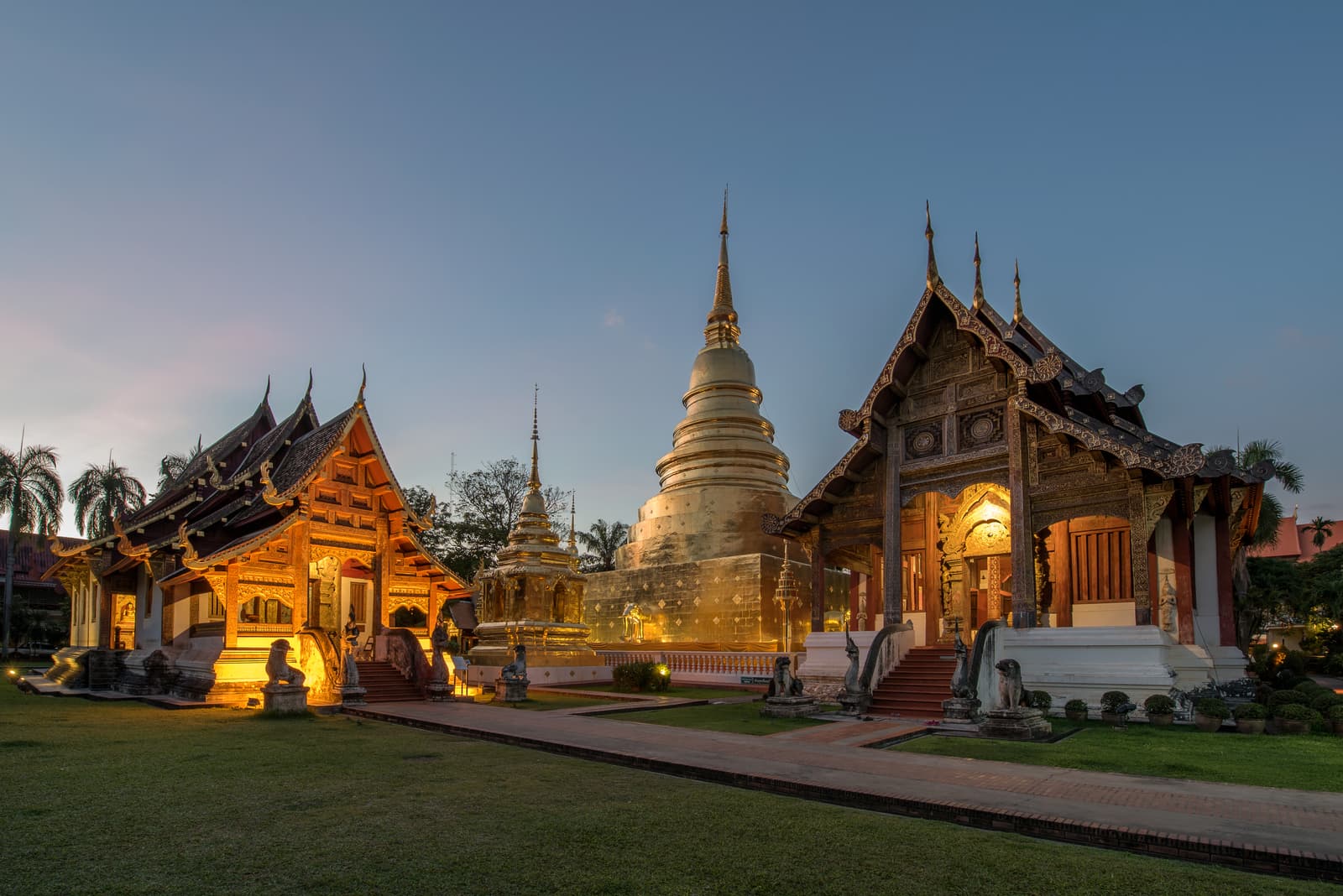
Chiang Mai is northern Thailand's cultural capital — a laid-back city ringed by mountains and packed with over 300 Buddhist temples. The Old City's moat-enclosed streets, legendary night markets, and world-class cooking schools make it a favorite for long-stay travelers. The gateway to hill tribe treks and elephant sanctuaries.

Chiang Rai
Thailand
Thailand's northernmost city is defined by its temples — the White Temple (Wat Rong Khun), an all-white private temple covered in mirror glass and under continuous construction since 1997, is unlike anything else in the Buddhist world; the Black House (Baandam Museum) is its dark counterpart. The Golden Triangle — where Thailand, Myanmar, and Laos meet at the Mekong and Ruak confluence — is 65 km north. Doi Mae Salong, a misty tea-growing mountain village founded by KMT Chinese Nationalist soldiers after 1949, is one of the most surprising detours in all of Southeast Asia.

Chicago
United States
Chicago is America's architectural capital — a skyline of art deco towers and modern masterpieces rising from the shores of Lake Michigan. Deep-dish pizza is iconic, the jazz and blues scene is legendary, and the Art Institute is world-class. The Riverwalk, Millennium Park's Bean, and the city's diverse neighborhoods make the Windy City a must-visit.

Christchurch
New Zealand
New Zealand's South Island gateway — rebuilt after the 2010–11 earthquakes into a living showcase of urban innovation. Shigeru Ban's Cardboard Cathedral is a global architectural icon. The International Antarctic Centre is the world's best gateway to the southern continent (without going). The TranzAlpine train crossing the Southern Alps is one of the world's great rail journeys.

Cincinnati
United States
Cincinnati hits above its weight — the Over-the-Rhine neighborhood is one of the largest collections of 19th-century Italianate architecture in the United States, the John A. Roebling Suspension Bridge (1866) was the prototype for the Brooklyn Bridge, and the city's two contributions to American food (Cincinnati chili and the goetta breakfast sausage) are unlike anything else. The Reds play at riverfront Great American Ball Park, the Bengals next door at Paycor Stadium, and Findlay Market (1855) still anchors the OTR food scene every Saturday morning.

Cleveland
United States
Cleveland sits at the mouth of the Cuyahoga River where it meets Lake Erie, and the city's two great institutions — the Rock & Roll Hall of Fame and the Cleveland Orchestra (one of the world's top five) — sum up its split personality: blue-collar rock town and high-culture European-flavored powerhouse. The West Side Market has been operating since 1912, the lakefront Edgewater beach gives you a real sand swim 10 minutes from downtown, and the city is now arguably the best sports town per-capita in America (Browns, Cavs, Guardians all play within walking distance of each other downtown).
.jpg%3Fwidth%3D1280&w=1600&q=75)
Cluj-Napoca
Romania
Romania's second city and the unofficial capital of Transylvania — a 14th-century Saxon merchant town now reborn as the Silicon Valley of Eastern Europe. Four universities pump 100,000 students through Piata Unirii every year, the Gothic St. Michael's Church spire dominates the skyline, and Untold Festival fills August with 400,000 electronic music fans. Budget airlines from across Europe land at CLJ in 90 minutes from London or Berlin, the cafe scene rivals Berlin at a quarter the price, and you are six hours by train from Bucharest with the Apuseni Mountains an hour away.

Coimbra
Portugal
Coimbra was Portugal's first capital (until 1255) and has been a university city for over 700 years — the University of Coimbra (founded 1290, UNESCO 2013) sits on a hilltop above the river Mondego with the 18th-century Joanina Library still home to the colony of bats released every night to eat manuscript-damaging insects. Coimbra Fado is the male-sung university version of Portugal's national music — sadder, more academic, performed in black student capes — and entirely different from Lisbon Fado. Conímbriga, Portugal's largest Roman ruin, sits 16 km south.

Colmar
France
Colmar is the Alsace capital of half-timbered fairy-tale architecture — a town that survived both World Wars almost entirely intact, with the Petite Venise canal district, the Maison Pfister (1537, said to have inspired Howl's Moving Castle), and the Unterlinden Museum's Isenheim Altarpiece (Grünewald, 1515 — one of the great works of Northern Renaissance painting). It anchors the Alsace Wine Route (170 km of Riesling and Gewürztraminer producers between Strasbourg and Mulhouse), throws one of the four or five best Christmas markets in Europe across six themed plazas in December, and sits exactly on the German border zone — German and French street signs share equal billing in the old town.

Cologne
Germany
Germany's fourth-largest city wraps around a 157-metre Gothic cathedral that took 632 years to finish and now anchors a UNESCO-listed Altstadt. Cross the Hohenzollernbrücke past its 500,000 love locks, drink Kölsch from skinny 200ml glasses in Brauhauses where moustachioed Köbes waiters keep refilling until you cap the glass with a beer mat, and time your visit for Karneval in February when the Rhineland's defining party shuts the city for a week. Roman Cologne, medieval Cologne, post-war reconstruction Cologne — all packed into 1,800 walkable years.

Colombo
Sri Lanka
Colombo is Sri Lanka's bustling commercial capital — a mix of colonial heritage, Buddhist temples, and a rapidly modernizing skyline. The Pettah bazaar is sensory overload, Galle Face Green offers sunset strolls along the Indian Ocean, and the food scene blends Sri Lankan curry with international influences. The gateway to the rest of the island.

Copacabana
Bolivia
A sun-bleached pilgrimage town on the Bolivian shore of Lake Titicaca, three and a half hours by road from La Paz across the Tiquina ferry crossing. The whitewashed Moorish-style Basílica de Nuestra Señora de Copacabana houses the Dark Virgin, Bolivia's patron saint, and on weekends drivers line up the length of Avenida 6 de Agosto to have new vehicles blessed with flower garlands and beer. The harbour launches small wooden boats for the two-hour crossing to Isla del Sol, the Inca creation-myth island where Manco Cápac and Mama Ocllo emerged. Trout pulled fresh from Titicaca arrives whole and grilled at lakefront comedores, and the Yunguyo border crossing puts Peru's Puno just three hours further on.

Copenhagen
Denmark
Copenhagen is Scandinavian cool distilled — colorful Nyhavn waterfront, world-leading restaurants (Noma, Geranium), cutting-edge design, and a cycling culture that puts everywhere else to shame. The city pioneered hygge and it shows: cozy cafes, canal-side hangouts, and a relaxed vibe despite being a serious foodie destination.

Córdoba
Spain
Córdoba was the largest city in Europe in the 10th century — a 500,000-person caliphate capital with paved streets, public lighting, and the largest library west of Baghdad. The Mezquita-Catedral is the surviving wonder: 856 red-and-white horseshoe arches in a forest under a cathedral nave that the Christians dropped into the centre after 1236. The Judería (Jewish Quarter) keeps one of three pre-expulsion synagogues left in Spain; the Roman bridge crosses the Guadalquivir under the Calahorra Tower; the Patios festival in early May opens private flower-stuffed courtyards across the old city. Twenty kilometres west, Medina Azahara — the lost caliphal palace-city — is a UNESCO archaeological site since 2018.

Cork
Ireland
Ireland's second city sits on an island in the River Lee, with the covered English Market (open since 1788) at its centre and the steep Victorian streets of Shandon climbing the hill above. Cork is the gateway to the south-west — Blarney Castle (and its kissable stone) is 8 km north, the deep-water Titanic departure port of Cobh is 25 minutes by commuter rail, and the Wild Atlantic Way begins on the Beara and Mizen peninsulas an hour west. Murphy's and Beamish stouts are brewed here; Jameson's original distillery is 25 km east in Midleton.

Cuernavaca
Mexico
The City of Eternal Spring, 90 minutes south of Mexico City over the mountains, where 1,500 metres of elevation and a mild year-round climate have drawn capital weekenders since the Aztec emperors. Hernan Cortes built his 1526 Palace here on the ruins of an Aztec tribute centre, making it the oldest standing civic building in the Americas. The Borda Garden, laid out by a French silver baron in the 1780s, was Maximilian and Carlota's summer retreat in the 1860s. The Robert Brady Museum, in a former convent, holds the American expat's idiosyncratic collection of Frida Kahlo, Tamayo, and African and Asian art across 14 themed rooms.

Cusco
Peru
Cusco is the ancient capital of the Inca Empire and the gateway to Machu Picchu. Colonial churches built on Inca foundations, the vibrant San Pedro market, and the Sacred Valley are all within reach. At 3,400m elevation, take it slow your first day. The city rewards those who explore beyond the main plaza — every street tells a story.

Da Nang
Vietnam
Vietnam's third-largest city sits on a 30-kilometre crescent of the South China Sea between the Hai Van Pass and the Marble Mountains — the country's fastest-growing urban centre, with the viral Golden Bridge held aloft by giant stone hands at Ba Na Hills, the 666-metre Dragon Bridge that breathes fire and water on weekend nights, and the My Khe (China Beach) resort strip. The five Marble Mountains south of the city hide Buddhist cave temples; the Son Tra peninsula north hosts the 67-metre Lady Buddha statue. Easy day trips to Hoi An (30 km south) and Hue (100 km north via the famous Hai Van Pass coastal route) make Da Nang the natural base for central Vietnam.

Dakar
Senegal
Senegal's vibrant Atlantic capital pulses with Wolof culture, colorful markets, world-class music venues, fresh seafood, and the spirit of Teranga (hospitality) that defines West Africa.

Dallas
United States
Dallas anchors the 8.1M-person DFW metroplex. Downtown Dallas holds the 68-acre Arts District (the largest contiguous arts district in the US), the Sixth Floor Museum at Dealey Plaza covering the JFK assassination from the actual sniper window, and Deep Ellum's live music. Forty miles west in Fort Worth, the Stockyards stage a twice-daily cattle drive, the Kimbell Art Museum (Renzo Piano) holds Caravaggios and Michelangelos, and Sundance Square is the most walkable downtown in Texas. The Cowboys play in Arlington at AT&T Stadium between the two cities.

Dar es Salaam
Tanzania
Tanzania's bustling port city and commercial capital is a gateway to Zanzibar, the Serengeti, and Kilimanjaro. A vibrant mix of Swahili culture, Indian Ocean seafood, busy markets, and a growing arts scene along the Coco Beach waterfront.

Delft
Netherlands
Delft is a small canal town wedged between Rotterdam and The Hague, and it punches well above its size: this is Vermeer's birthplace, the home of Royal Delft pottery (still hand-painting blue-and-white ceramics in the same factory since 1653), and the resting place of William the Silent in the Nieuwe Kerk on the Markt. The leaning tower of the Oude Kerk shelters Vermeer's grave. The whole historic core is walkable in an afternoon, but the cafes around Beestenmarkt make you want to stay longer. Twenty-five minutes by train from Amsterdam-Zuid.
