
Chiang Rai
THE QUICK VERDICT
By Anthony · Updated April 2026
Choose Chiang Rai if you want Thailand's most spectacular temples — the White Temple's mirror-glass otherworldliness, the Black House's macabre genius, and the Golden Triangle without the Chiang Mai crowds.
- Best for
- Wat Rong Khun mirror-glass temple, Black House macabre art, Golden Triangle, hill-tribe trekking
- Best window
- Nov–Mar
- Budget anchor
- $60/day mid-range
- Real bargain
- Bottom 10% on daily spend ($60/day mid-range)
- Worth a look
- far quieter than Chiang Mai with the same temple-art payoff — mid-range stays under $60
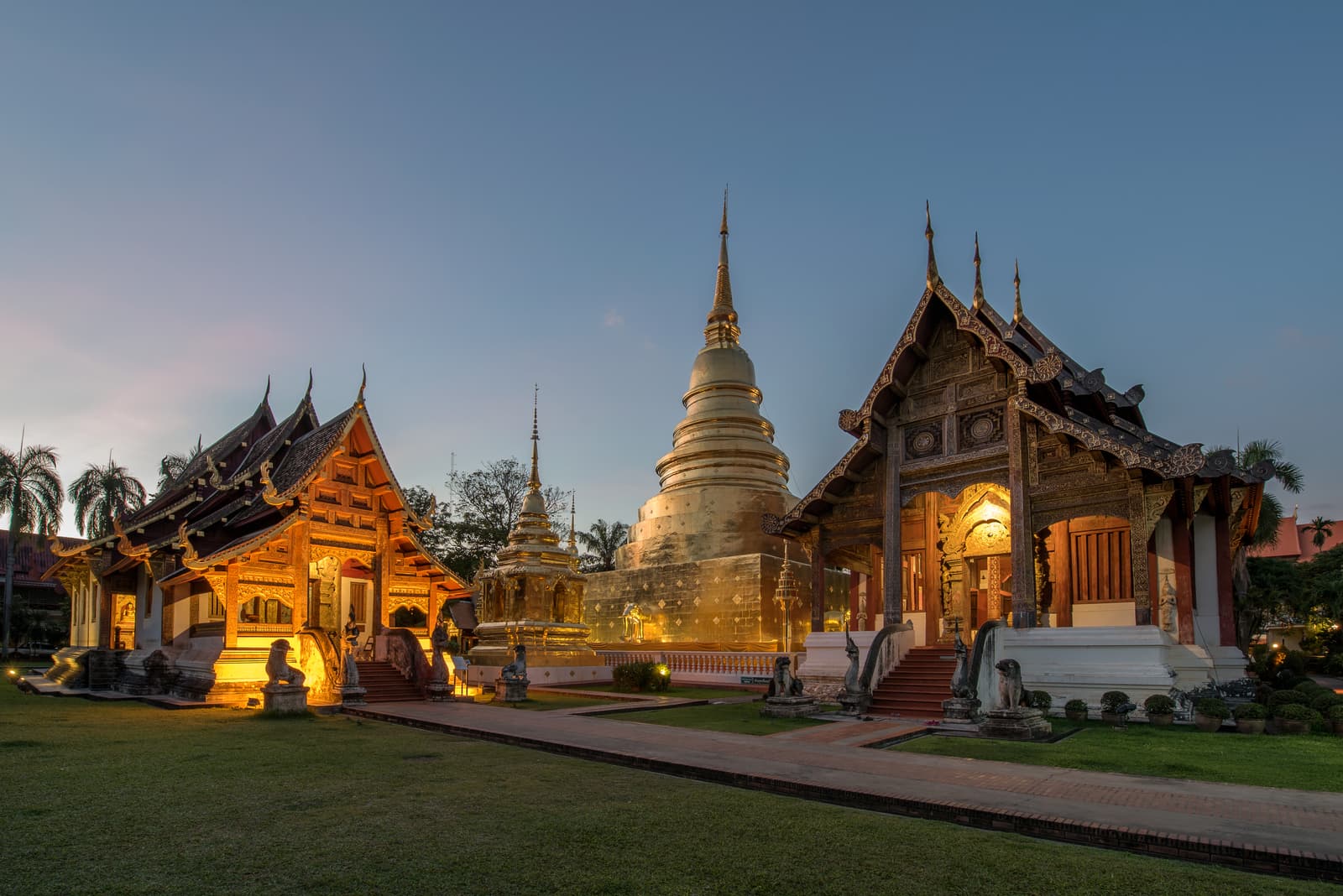
Thailand's northernmost city is defined by its temples — the White Temple (Wat Rong Khun), an all-white private temple covered in mirror glass and under continuous construction since 1997, is unlike anything else in the Buddhist world; the Black House (Baandam Museum) is its dark counterpart. The Golden Triangle — where Thailand, Myanmar, and Laos meet at the Mekong and Ruak confluence — is 65 km north. Doi Mae Salong, a misty tea-growing mountain village founded by KMT Chinese Nationalist soldiers after 1949, is one of the most surprising detours in all of Southeast Asia.
The two links below are affiliate links — MapSorted earns a small commission if you book through them, at no extra cost to you. How this works.
Tours & Experiences
Bookable tours, activities, and day trips in Chiang Rai
Where to Stay
Compare hotels and rentals in Chiang Rai
📍 Points of Interest
Wat Rong Khun (White Temple)· 13 km SW
Artist Chalermchai Kositpipat's all-white mirror-glass masterpiece — a private Buddhist temple blending traditional iconography with pop culture murals of Predator, Superman, and 9/11. The bridge of desire over the hands of the damned leads to the entrance. Free to enter.
Wat Rong Suea Ten (Blue Temple)
A breathtaking deep-blue temple completed in 2016 with golden naga serpents and a dazzling interior ceiling. Less famous than the White Temple but equally stunning and far less crowded.
Baan Dam Museum (Black House)
Artist Thawan Duchanee's extraordinary dark counterpart to the White Temple — 40 teak buildings filled with animal skins, skulls, and art exploring death and the underworld. Genuinely unsettling and unforgettable.
Golden Triangle (Sop Ruak)· 55 km NE
The tri-border meeting point of Thailand, Myanmar, and Laos at the Mekong-Ruak confluence. Home to the Hall of Opium Museum — covering the full history of the regional drug trade — and Mekong boat tours.
Doi Mae Salong· 46 km NW
A mountain village founded by Chinese KMT Nationalist soldiers in 1949, surrounded by oolong tea plantations at 1,300 m. The morning market draws hilltribe farmers and the views over misty valleys are spectacular.
Mae Sai Border Town· 59 km N
Thailand's northernmost town and the busy crossing into Myanmar's Tachileik. The border market has Burmese jade, gems, textiles, and goods unavailable elsewhere. Fascinating cross-cultural people-watching.
Chiang Rai Night Bazaar
A nightly market more authentic than Chiang Mai's equivalent — hilltribe textiles, silver jewelry, carved wood, and excellent street food without the overwhelming tourist crowds.
★ Local Picks
Saturday Walking Street
Every Saturday evening, Thanalai Road closes for Chiang Rai's best market event — higher-quality artisan goods, local food vendors, and sometimes live hilltribe cultural performances.
Doi Mae Salong Morning Market· 46 km NW
A pre-dawn hilltribe market (5–7am) where Akha, Lisu, and other ethnic farmers sell produce, medicinal herbs, and handcrafts. Almost entirely attended by locals — one of northern Thailand's most authentic experiences.
At a Glance
- Pop.
- 75K
- Timezone
- Bangkok
- Dial
- +66
- Emergency
- 191 / 1669
Wat Rong Khun (White Temple) is not a government or religious institution — it is entirely privately owned and funded by artist Chalermchai Kositpipat, who started building it in 1997 and intends it to take 90 years to complete
The White Temple's interior includes murals of Predator, Superman, the Twin Towers burning, and Neo from The Matrix — Kositpipat uses pop culture iconography to represent contemporary evil and suffering in Buddhist cosmology
Chiang Rai sits at the edge of the Golden Triangle — the region where Thailand, Myanmar, and Laos meet at the confluence of the Mekong and Ruak rivers, historically one of the world's largest opium-producing areas
The Doi Mae Salong mountain village was founded by soldiers of the 93rd Division of the Chinese Nationalist (KMT) Army, who fled to Burma after the Chinese Civil War in 1949 and eventually settled in northern Thailand; they brought tea cultivation that now produces some of Thailand's finest oolong
Chiang Rai Province borders both Myanmar and Laos, making it Thailand's only tri-border province; the Mae Sai crossing to Myanmar's Tachileik is the busiest land border in northern Thailand
The province is home to over a dozen distinct hilltribe communities including the Akha, Karen, Lahu, Mien (Yao), Lisu, and the Padaung (long-neck Karen), each with distinct language, dress, and traditions
Top Sights
Wat Rong Khun (White Temple)
🗼One of Thailand's most extraordinary structures — an all-white Buddhist temple covered in mirror-glass shards that blaze in the sunlight. Artist Chalermchai Kositpipat began construction in 1997 using his own funds, intending the project to continue for 90 years. White represents the purity of the Buddha; the embedded mirrors symbolize the Buddha's wisdom shining throughout the universe. Before the entrance bridge, hands reaching from the ground represent the souls trapped in hell, and visitors cross a bridge of desire to enter — a journey from suffering to enlightenment. The interior murals audaciously blend Buddhist iconography with modern pop culture villains including Predator, Superman, and scenes of 9/11. Entry is free but donations are welcome. Visit early morning (8–9am) to beat crowds and photograph in soft light.
Baan Dam Museum (Black House)
🏛️The life's work of artist Thawan Duchanee — the polar opposite of the White Temple in every way. A compound of 40 dark teak buildings filled with disturbing collections of animal skins, skulls, bones, crocodile hides, serpent skins, and Duchanee's own paintings. Where Kositpipat's temple represents heaven, Duchanee's Baan Dam explores death, the underworld, and the dark aspects of human existence. Genuinely unsettling and unforgettable. Open daily 9am–5pm. 14 km north of city.
Wat Rong Suea Ten (Blue Temple)
🗼A newer temple completed in 2016 with a jaw-dropping deep-blue exterior covered in gold naga serpents and intricate carvings. Less famous than the White Temple but equally extraordinary, and far less crowded. The interior ceiling features a vast golden Buddha surrounded by swirling blue and gold murals. The deep cobalt blue was inspired by the artist's meditation experiences. Located 3 km from the city center — best visited in the late afternoon when the blue deepens beautifully.
Golden Triangle (Sop Ruak)
🗼The actual point where Thailand, Myanmar, and Laos meet at the confluence of the Mekong and Ruak rivers. The area around this historic opium-producing region is now a tourist zone with a large golden Buddha on a boat-island in the Mekong, the Hall of Opium Museum (excellent, covers the full history of the drug trade in Southeast Asia), and boat trips on the Mekong to the Laos bank. The views of three countries from a single viewpoint are genuinely remarkable. 1 hour north of Chiang Rai.
Doi Mae Salong
🌿A mountain village at 1,300 m (4,265 ft) founded by Chinese Nationalist (KMT) soldiers who fled the communist revolution in 1949. The village is unmistakably Chinese — Yunnan dialects spoken, Chinese lanterns hanging, and tea plantations blanketing the hillsides. The oolong and green teas grown here are among the finest in Thailand. Walk the morning market (5–7am), buy tea directly from farmers, and hike to viewpoints over the mist-covered valleys. 70 km northwest of Chiang Rai.
Chiang Rai Night Bazaar
📌More authentic than Chiang Mai's equivalent, the Chiang Rai Night Bazaar runs along Phahonyothin Road in the city center every evening. Hilltribe crafts, handwoven textiles, silver jewelry, woodcarvings, and street food fill the stalls. The Saturday Walking Street (Wualai-style) on Thanalai Road features local food and performances by hilltribe groups. Far less touristy than similar markets in Chiang Mai.
Mae Sai Border Town
📌Thailand's northernmost town and the main crossing point into Myanmar's Tachileik. The border market on both sides sells gems, jade, clothes, and goods unavailable elsewhere. The Thai side of Mae Sai has excellent gem shops (Chiang Rai province is one of Thailand's gem-trading centers) and interesting street food. The crossing itself — watching the two-way flow of people between countries — is fascinating. 1 hour north of Chiang Rai.
Costs & Currency
Where the money goes
USD per dayBackpacker = hostel dorm + street food + public transit. Mid-range = 3-star hotel + neighbourhood restaurants + transit cards. Luxury = 4/5-star + fine dining + taxis. How we calibrate these numbers →
Quick cost estimate
Customize per category →Estimates based on regional averages. Flight prices vary by season and airline.
budget
$20-30
Guesthouse dorm (฿200–350), street food all meals, motorbike rental for temples, White Temple (free entry). Chiang Rai is among Thailand's most affordable destinations.
mid-range
$45-75
Comfortable guesthouse or small hotel (฿800–1,200/night), restaurant meals, day trip to Golden Triangle (chartered songthaew), temple entries.
luxury
$120-180
Boutique resort (฿3,000–5,000/night), private driver for temple circuit, hilltribe trek with guide, spa treatments, fine dining.
Typical Costs
| Item | Local | USD |
|---|---|---|
| FoodStreet pad thai or khao man gai | ฿40–60 | $1.14–1.71 |
| FoodBowl of khao soi (northern curry noodle soup) | ฿50–80 | $1.43–2.29 |
| FoodFresh fruit shake | ฿40–60 | $1.14–1.71 |
| FoodLunch at local restaurant | ฿80–150 | $2.29–4.29 |
| FoodDinner at mid-range restaurant | ฿200–400 | $5.71–11.43 |
| FoodChang/Singha beer (bottle) | ฿60–100 | $1.71–2.86 |
| AccommodationDorm bed at guesthouse | ฿200–350/night | $5.71–10/night |
| AccommodationPrivate room at guesthouse | ฿400–800/night | $11.43–22.86/night |
| AccommodationMid-range hotel (double) | ฿800–1,500/night | $22.86–42.86/night |
| AttractionsWhite Temple (Wat Rong Khun) entry | Free (donation) | Free |
| AttractionsBaan Dam Museum entry | ฿80 | $2.29 |
| AttractionsHall of Opium Museum | ฿200 | $5.71 |
| TransportMotorbike rental per day | ฿150–300 | $4.29–8.57 |
| TransportSongthaew city trip | ฿30–50 | $0.86–1.43 |
| TransportBus to Chiang Mai | ฿150–250 | $4.29–7.14 |
💡 Money-Saving Tips
- •Wat Rong Khun (White Temple) has no entry fee — one of Thailand's most spectacular sites is free
- •Street food along the Night Bazaar and near the clock tower costs ฿40–80 per dish — eat here for $2–3 full meals
- •Renting a motorbike (฿200/day) is far cheaper than chartering a songthaew for temple circuits if you're confident riding
- •Stay at guesthouses near the Night Bazaar — many excellent options under $15/night
- •Buy tea directly at Doi Mae Salong tea farms — dramatically cheaper than the same teas in Bangkok tourist shops
- •Combine the White Temple, Blue Temple, and Black House in one rented motorbike day — all within 15 km of each other
Thai Baht
Code: THB
1 USD ≈ 35 THB (2025). ATMs are available in the city center (airports, banks along Phahonyothin Road). Exchange offices near the Night Bazaar offer competitive rates. Avoid airport exchange counters. Cards are accepted at hotels and larger restaurants; most street food, local markets, and songthaews are cash-only.
Payment Methods
Cash-dominant. Thai Baht is the only accepted currency (unlike some tourist areas that accept USD). ATMs widely available. Cards accepted at hotels, larger restaurants, and White Temple ticket office.
Tipping Guide
Not obligatory but appreciated. Rounding up or leaving ฿20–50 is customary at sit-down restaurants. Upscale restaurants may add a 10% service charge.
Not expected. Leave change if you have it — always appreciated but never assumed.
Tip ฿50–100 per hour (20–30% of cost) for traditional Thai massage — masseurs work hard and tipping is a significant part of their income.
Round up to the nearest ฿10 for songthaews. For chartered vehicles, tips of ฿50–100 after a full day are kind.
For hilltribe treks, ฿100–200 per day per guide is expected and forms a meaningful part of guide income.
Climate & Best Time to Go
Chiang Rai has a tropical monsoon climate with three distinct seasons. The cool season (November–February) is the best time to visit — dry, clear skies, and pleasantly warm days. The hot season (March–May) is very hot with smoke from agricultural burning, reducing visibility significantly. The wet season (June–October) brings daily rain but lush green landscapes and far fewer tourists.
Cool Season
November–February55–82°F
13–28°C
The best time to visit. Clear blue skies, cool mornings (sometimes 10°C in the mountains), and comfortable daytime temperatures. The sea of mist over the valleys from hilltop viewpoints is spectacular in November–December.
Hot/Burning Season
March–May77–100°F
25–38°C
Intensely hot and dry, with agricultural burning (farmers clearing fields) creating thick smoke and haze across the region. Air quality can be poor (AQI above 150 on bad days). March and April are the worst months for air quality. Songkran water festival (April 13–15) is a major celebration.
Wet Season (Early)
June–August73–88°F
23–31°C
Daily rain showers, usually in the afternoon. Mornings are often clear and beautiful. The countryside becomes impossibly green, waterfalls fill, and tourist sites are nearly empty. Great for photography.
Wet Season (Late)
September–October72–86°F
22–30°C
The wettest months. Heavy rain can cause river flooding and occasional road closures. The landscape is stunning — lush, misty, and dramatic. October begins the transition to the cool season.
Best Time to Visit
November to February for clear skies, cool temperatures, and the famous sea of mist
November–February (Cool Season)
Crowds: Moderate to high — book accommodation ahead for December–JanuaryThe best time by a significant margin. Clear blue skies, cool mornings, comfortable days, and the famous morning mist rolling over the tea valleys and mountains. Peak tourist season but still far less crowded than Chiang Mai.
Pros
- + Clear skies and visibility
- + Cool comfortable temperatures
- + Sea of mist scenery
- + All attractions accessible
- + Excellent light for photography
Cons
- − Higher accommodation prices in December–January
- − Mountain roads can be cold at night
March–May (Hot/Burning Season)
Crowds: Low — most tourists avoid this periodThe most challenging period. Agricultural burning creates thick haze and poor air quality throughout northern Thailand. Temperatures are extreme. Not recommended unless specifically attending Songkran (April 13–15).
Pros
- + Very cheap accommodation
- + Songkran water festival (April)
- + Minimal crowds at attractions
Cons
- − Poor air quality (AQI 100–200+)
- − Extreme heat 35–38°C
- − Hazy photos
- − Uncomfortable for outdoor activities
June–August (Early Wet Season)
Crowds: Very low — excellent for avoiding crowdsDaily afternoon rains but mornings are clear and lush. The countryside transforms into vivid green. Very few tourists. Good for photography and genuine local experience.
Pros
- + Lush green landscapes
- + Very low prices
- + Empty temple complexes
- + Waterfalls at full flow
Cons
- − Daily rain (usually afternoon)
- − Occasional flooding on rural roads
- − Overcast skies for photography
September–October (Late Wet Season)
Crowds: Very lowHeaviest rainfall but the landscape is at its most dramatic. October transitions toward the cool season — the last two weeks of October see improving conditions and are excellent value.
Pros
- + Lowest prices of the year
- + No crowds
- + Dramatic misty mountain scenery
Cons
- − Heaviest rain
- − Possible flooding and road closures in remote areas
- − Limited outdoor time
🎉 Festivals & Events
Songkran Water Festival
April 13–15Thai New Year celebrated with the world's biggest water fight. Chiang Rai's Songkran is more traditional and less chaotic than Bangkok's — water-throwing is accompanied by temple ceremonies, sand stupa building, and Buddhist rituals.
Chiang Rai Flower Festival
December–FebruaryThe cool season brings flower displays throughout the city, with parks and public spaces filled with blooms. A quieter, more local festival than Chiang Mai's equivalent.
Yi Peng Lantern Festival
November (full moon)Coinciding with Loi Krathong, thousands of paper lanterns are released skyward. Chiang Rai's version is smaller and more intimate than Chiang Mai's mass event — more meaningful and easier to participate.
Lychee Festival
MayChiang Rai province produces the bulk of Thailand's lychees. The harvest festival features lychee varieties, local food, and cultural performances — a very local event with few tourists.
Off the Beaten Path
Baandam Forest (beyond the museum)
Most visitors see Baan Dam's main buildings and leave. Walk deeper into the forest compound — there are smaller structures, spirit houses, and hidden pavilions that feel genuinely otherworldly. The atmosphere becomes increasingly meditative the further you go from the entrance.
The 90% of visitors who rush through miss the forest compound entirely. The deeper structures are where Thawan Duchanee's vision becomes truly immersive.
Morning Market at Doi Mae Salong (5–7am)
Wake up at 4am from Chiang Rai to reach Doi Mae Salong for the pre-dawn market. Akha, Lisu, and other hilltribe farmers descend from surrounding villages to sell produce, medicinal herbs, and handcrafts. The market winds down by 8am. The mist over the tea valleys at sunrise from this elevation is unforgettable.
One of the most authentic hilltribe markets in Thailand — raw, uncommercialized, and attended almost entirely by locals.
Laan Thong Raan Khao Tom (local khao tom restaurant)
A local Chiang Rai institution — a simple open-air restaurant near the clocktower known for khao tom (Thai rice soup) and northern Thai dishes like laab mueang (minced pork salad with dried spices), sai ua (northern Thai sausage), and gaeng hung lay (Burmese-influenced pork curry). Open from 6am. Frequented almost entirely by locals.
Northern Thai cuisine is distinct from central Thai food — earthier, herb-heavy, and deeply satisfying. This is where locals eat it properly.
Kok River Evening Walk
The Mae Kok River runs through the northern edge of Chiang Rai city and has a pleasant riverside park and walkway. In the late afternoon, locals come here to jog, play badminton, and watch the sunset. A few riverside restaurants serve Thai food with views of the water and the mountains beyond. Genuinely local and utterly peaceful.
Far from any tourist circuit — this is where Chiang Rai residents actually spend their evenings, with no souvenir stalls in sight.
Safety Breakdown
Very Safe
out of 100
Chiang Rai is one of Thailand's safer tourist destinations. The city itself is small and relatively crime-free. The main risks are road safety (motorbike accidents are the leading cause of tourist injury in Thailand), scams at tuk-tuk ranks, and occasional gem scams near border markets. The border areas with Myanmar require awareness but are generally safe for day visitors.
Things to Know
- •Motorbike rental accidents are the #1 cause of tourist injury in northern Thailand — if you rent one, wear a helmet and know that Thai traffic laws differ from Western ones
- •At Mae Sai border market, be wary of gem "deals" — gem scams (buying worthless stones at "special prices") are endemic in border markets
- •Use Bolt or ask your hotel to arrange reputable transport to avoid tuk-tuk overcharging
- •During March–May burning season, check air quality (AQI) daily — people with respiratory conditions should avoid outdoor activity when AQI exceeds 150
- •At temple complexes, modest dress is required (shoulders and knees covered); sarongs are usually available at entrances
- •Drug laws in Thailand are extremely strict — possession of even small amounts carries severe penalties
Emergency Numbers
Emergency
191
Tourist Police (English)
1155
Ambulance
1669
Fire
199
How to Get There
✈️ Airports
Chiang Rai International Airport (Mae Fah Luang)(CEI)
8 km north of city centerAirport taxi: 15–20 min, ฿120–150 (metered). Songthaew: ฿30–50 if heading downtown. No public bus — taxi is the standard. Pre-arrange with your hotel for best rates.
✈️ Search flights to CEI🚆 Rail Stations
No direct rail service
Chiang Rai has no train station. The nearest railhead is Chiang Mai (200 km south). From Bangkok, take the overnight train to Chiang Mai (12–13 hr, from ฿300) then connect by bus or minivan to Chiang Rai (3 hr, ฿150–250).
🚌 Bus Terminals
Chiang Rai Bus Terminal 1 (in-town) and Terminal 2 (3 km out)
Green Bus operates comfortable coaches from Chiang Mai's Arcade Bus Terminal (3 hr, ฿150–250, multiple daily departures). From Bangkok, overnight VIP buses depart from Mo Chit Northern Bus Terminal (10–12 hr, ฿600–800). Minivans to Chiang Mai are also available from in-town departure points. For the Laos border: buses to Chiang Khong (2.5 hr, ฿100–150) depart from Bus Terminal 1.
Getting Around
Chiang Rai city center is small and walkable for accommodation, restaurants, and the Night Bazaar. For temples and attractions outside the city (White Temple, Black House, Golden Triangle), transport is needed. Red songthaews (shared pickup trucks) are the local option; hired vehicles give more flexibility.
Red Songthaews (Shared Pickup)
฿30–50 per trip (shared), ฿600–1,000/day (chartered)The backbone of local transport in northern Thailand — red covered pickup trucks that serve as shared taxis on fixed routes. Hail them anywhere on the roadside. For out-of-city sights, negotiate to charter a songthaew for the day (฿600–1,000 for full day, multiple stops).
Best for: Getting to White Temple, Black House, Blue Temple, and the Golden Triangle with a flexible itinerary
Motorbike Rental
฿150–300/day depending on bike typeThe most flexible way to explore — dozens of rental shops near the clock tower offer semi-automatic or automatic bikes. Perfect for reaching temples, mountain villages, and hilltribe areas at your own pace. Helmets required; international driving license recommended.
Best for: Independent exploration of temples, Doi Mae Salong, and rural areas
Tuk-Tuks
฿60–150 for city tripsAvailable in the city center and near bus stations. Negotiate prices before departing. Useful for short city hops but more expensive per km than songthaews.
Best for: Short city center hops, getting to/from bus station
Bicycle Rental
฿50–100/daySeveral guesthouses and shops near the city center rent bicycles for exploring the flat city areas and nearby temples. Suitable for the Blue Temple (3 km) and night bazaar area.
Best for: City exploration, Blue Temple, riverside paths in good weather
Walkability
Good within the city center — the clock tower, night bazaar, and central temples are within 1 km of most guesthouses. The White Temple (13 km), Black House (14 km), and Blue Temple (3 km) require transport.
Travel Connections
Golden Triangle / Sop Ruak
The tri-border meeting point of Thailand, Myanmar, and Laos on the Mekong River. Includes the excellent Hall of Opium Museum and Mekong boat trips.
Chiang Mai
Northern Thailand's cultural capital — temples, cooking schools, trekking, and the famous Sunday Night Market. Easy and frequent bus connections from Chiang Rai.
Doi Mae Salong
The extraordinary KMT Chinese hilltop village surrounded by tea plantations, with a morning market, Chinese temples, and sweeping mountain views.
Chiang Khong / Houayxay (Laos)
The border town for crossing into Laos and boarding the famous 2-day slow boat down the Mekong to Luang Prabang — one of Southeast Asia's great overland journeys.
Luang Prabang, Laos
A UNESCO-listed gem on the Mekong with gilded temples, a monks' alms-giving ceremony at dawn, and one of Southeast Asia's best night markets. The slow boat from Chiang Khong is a legendary journey.
Entry Requirements
Thailand has a relatively open visa policy for tourism. Most Western nationalities receive a 30-day visa exemption on arrival, extendable once at an immigration office. Thailand introduced a 60-day tourist visa (TR-60) in 2024 for most nationalities. Entry to Chiang Rai is via Bangkok (Suvarnabhumi/Don Mueang) or directly through Chiang Rai International Airport (CEI).
Entry Requirements by Nationality
| Nationality | Visa Required | Max Stay | Notes |
|---|---|---|---|
| US / UK / Australia / EU | Visa-free | 60 days (as of 2024 exemption update) — verify current policy before travel | Passport valid for 6+ months required. Onward ticket and proof of funds may be requested at border. Can extend once at immigration (฿1,900). |
| China | Visa-free | 30 days (bilateral agreement) | Visa exemption in place as of 2023. Can extend once at immigration. |
| India | Yes | 15–30 days (visa on arrival) | Visa on arrival available at major airports including Chiang Rai CEI. ฿2,000 fee. 4x4 cm photo required. Long queues possible — consider e-visa from Thai embassy in advance. |
Visa-Free Entry
Visa on Arrival
Tips
- •Thailand's visa rules changed in 2024 — always verify current exemption periods before travel as policies change frequently
- •For long stays, the Thailand LTR (Long-Term Resident) visa allows 10 years — popular with remote workers
- •The Chiang Khong crossing into Laos is a popular "visa run" for extending time in Thailand — but Thailand has cracked down on frequent border crossings
- •If crossing to Mae Sai/Myanmar for a day trip, confirm you're allowed to re-enter Thailand on your visa type
Shopping
Chiang Rai is excellent for authentic hilltribe handicrafts, hill-grown tea, and handwoven textiles — at prices significantly lower than Chiang Mai. Avoid the tourist shops near the White Temple (overpriced, mass-produced) and head to the Night Bazaar or hilltribe markets for genuine goods.
Chiang Rai Night Bazaar
Nightly handicraft and street food marketThe main evening market runs every night along Phahonyothin Road. More authentic and less touristy than comparable markets in Chiang Mai. Good selection of hilltribe textiles, silver jewelry, carved wood, and handmade goods from the surrounding region.
Known for: Hilltribe crafts, silver jewelry, textiles, street food
Saturday Walking Street (Thanalai Road)
Weekly walking street marketEvery Saturday evening from about 4pm, Thanalai Road closes to traffic for a walking street market. Better quality goods, local food vendors, and sometimes live performances by hilltribe cultural groups. The best single shopping event in Chiang Rai.
Known for: Local artisan goods, hilltribe performances, quality street food
Doi Mae Salong Tea Farms
Farm-direct tea purchasingMultiple tea shops and farm-direct vendors along the main road in Doi Mae Salong sell oolong, green, black, and flower teas grown on the surrounding hillsides. Sampling is free and prices are a fraction of what the same teas cost in Bangkok or exported abroad.
Known for: Oolong tea, green tea, flower teas, mountain honey
Border Market at Mae Sai
Border trading marketThe market stretching along the border on the Thai side of Mae Sai has gems, jade (from Myanmar), textiles, clothing, electronic goods, and curiosities. Bargaining is expected. Gem purchases require expertise to avoid scams.
Known for: Burmese jade, gemstones, textiles, border novelties
🎁 Unique Souvenirs to Look For
- •Doi Mae Salong oolong tea — mountain-grown, extraordinary quality, virtually unknown outside Thailand
- •Akha hilltribe silver jewelry — handcrafted silver headdress elements, bracelets, and necklaces
- •Karen hand-woven textiles — naturally dyed, geometric-patterned cotton fabric
- •Burmese lacquerware — brought across the Myanmar border, traditional red-and-black bowls and boxes
- •Lisu embroidered bags — brightly colored embroidered shoulder bags handmade by Lisu women
- •Local Arabica coffee — Chiang Rai highlands grow excellent single-origin coffee beans (look for Doi Chaang and Doi Tung brands)
Language & Phrases
Thai is a tonal language with 5 tones — the same syllable means completely different things depending on your pitch. In Chiang Rai, locals speak a Northern Thai dialect (Kham Mueang) among themselves, but standard Thai is universally understood. The Thai script is an abugida with 44 consonants. English is spoken at hotels and tourist sites but less so off the beaten track. Add "krap" (men) or "kha" (women) to the end of sentences as a politeness particle.
| English | Translation | Pronunciation |
|---|---|---|
| Hello | Sawadee krap/kha (สวัสดีครับ/ค่ะ) | sa-WAH-dee KRAP/KAH |
| Thank you | Khob khun krap/kha (ขอบคุณครับ/ค่ะ) | KHOB-KHUN KRAP/KAH |
| Yes | Chai (ใช่) | chai (rhymes with "eye") |
| No | Mai chai (ไม่ใช่) | MY chai |
| Excuse me / Sorry | Kho thot (ขอโทษ) | KHO-TOHT |
| How much? | Tao rai? (เท่าไหร่) | TAO-RAI |
| Too expensive | Phaeng pai (แพงไป) | PAENG-PAI |
| Where is...? | Yuu thi nai? (อยู่ที่ไหน) | YOO-TEE-NAI |
| Delicious! | Aroi! (อร่อย) | ah-ROI |
| Can you reduce the price? | Lot noi dai mai? (ลดหน่อยได้มั้ย) | LOT-NOY-DAI-MAI |
| Cheers! | Chon kaew! (ชนแก้ว) | CHON-KAEW |
| I don't understand | Mai khao jai (ไม่เข้าใจ) | MY-KAO-JAI |
If you like Chiang Rai, you'll love…
4 cities with a similar vibe, outside of the same country.


