All Destinations
576 guides — page 21 of 24

Singapore
Singapore
Singapore packs an extraordinary amount into a tiny island — futuristic supertrees next to colonial shophouses, Michelin-starred hawker stalls alongside luxury hotels. It's spotlessly clean, incredibly efficient, and home to one of the world's best food scenes. A melting pot of Chinese, Malay, Indian, and Western cultures.

Sintra
Portugal
A UNESCO Cultural Landscape of romantic palaces perched above Atlantic mist — the yellow-and-terracotta Pena Palace (1854) crowns a forested hill; the Quinta da Regaleira hides an Initiation Well that spirals 27 meters through 9 floors into the earth; Cabo da Roca is the westernmost point of continental Europe. Sintra is 40 minutes by train from Lisbon and frequently its most memorable day trip.

Siwa Oasis
Egypt
A Berber oasis of date palms and salt lakes 50 km from the Libyan border, marooned in the Western Desert at the bottom of the Qattara Depression. Siwa was the seat of the Oracle of Amun (consulted by Alexander the Great in 331 BC, who is said to have been told he was the son of a god) and is built around the eroded mud-brick ruin of Shali Fortress, which melted in three days of unprecedented rain in 1926. The Siwi people speak their own Berber language, eat their own food, and have kept the oasis culturally distinct from Arabic Egypt across the 8-10 hour drive from Cairo.

Skardu
Pakistan
Baltistan's Indus-valley capital at 2,228m, ringed by 6,000m Karakoram walls and the launching ramp for K2, Concordia, and the Deosai Plains. The bazaar runs along Yadgar Chowk with cantilever wooden balconies and Balti tea houses; Shigar Fort restored by the Aga Khan Trust sits 30 km north on the Shigar River; Lower Kachura (Shangrila Resort) glints emerald against grey scree; and the road south climbs to Deosai National Park, the world's second-highest plateau at 4,114m. Tibetan-rooted Balti culture, Shia hospitality, and the calmest corner of northern Pakistan.

Skopje
North Macedonia
North Macedonia's capital and Europe's cheapest, where the controversial Skopje 2014 government project blanketed the centre in giant marble statues, neoclassical facades and bridges of warriors over the Vardar river. Cross the 15th-century Stone Bridge into the Old Bazaar — the largest surviving Ottoman-era bazaar in the Balkans outside Istanbul, a warren of caravanserais, hammams, mosques and copper-beating workshops. Mother Teresa was born here in 1910 and her birthplace is marked with a memorial house. The Mt Vodno cable car climbs to the world's largest standing cross. Daily mid-range budget under €60.
Snæfellsnes Peninsula
Iceland
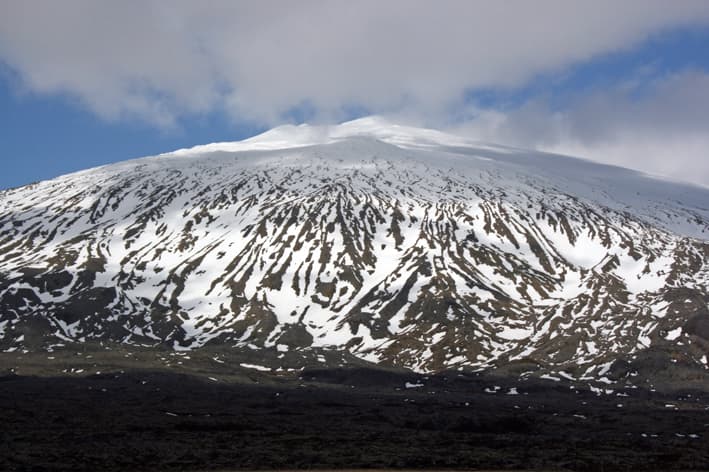
A 90 km finger of land on Iceland's west coast nicknamed "Iceland in miniature" — glacier-volcano Snæfellsjökull at the tip, lava fields, black-pebble beaches, basalt cliffs, the cone of Kirkjufell rising over Grundarfjörður, and the tiny black church of Búðakirkja standing alone on a moss field. Two hours and 190 km from Reykjavík via the Hvalfjörður tunnel; one of the most rewarding two-day drives in the country and a credible substitute for the South Coast when the queues at Reynisfjara feel like too much.

Sofia
Bulgaria
Bulgaria's affordable capital sits beneath Vitosha Mountain, with 2,000 years of layered history — Roman ruins, Ottoman mosques, Orthodox churches, and communist monuments all within walking distance.

Sokcho
South Korea
A Pacific east-coast city wedged between the East Sea and Seoraksan, the most photographed mountain range in Korea — Daecheongbong tops out at 1,708 metres, the granite Ulsanbawi formation rises in six fused peaks above the cable car terminus, and Biryongpokpo waterfall threads through the inner park. The town itself runs along Sokcho Beach, the morning fish market at Daepo Port handles the live-octopus and red-snow-crab trade, and the old Russian-Korean Abai Village quarter at the harbour mouth is the only neighbourhood of its kind in Korea. Two and a half hours by express bus from Seoul.
Sossusvlei
Namibia
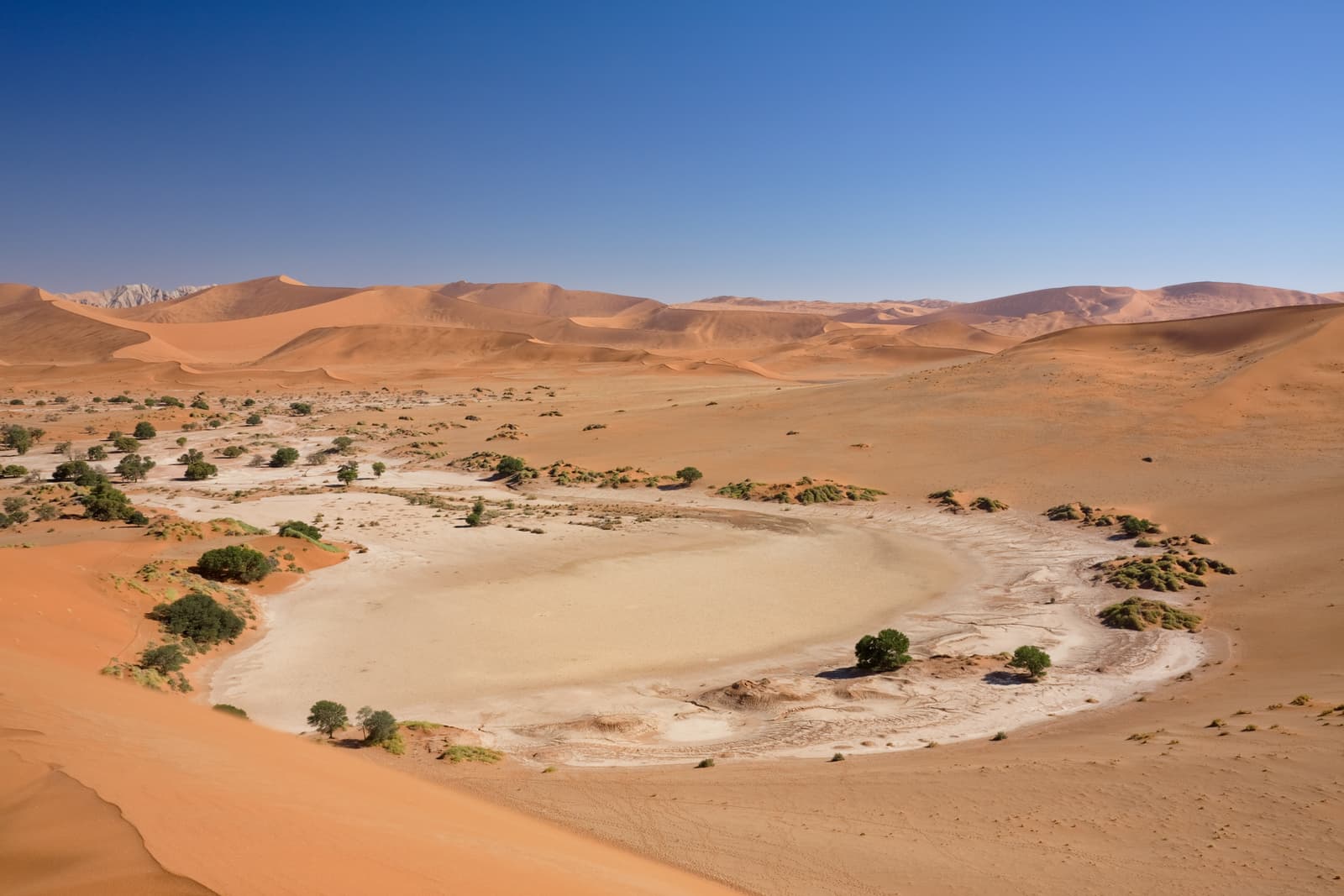
A salt-and-clay pan deep inside Namib-Naukluft National Park, ringed by the world's highest sand dunes — Big Daddy peaks above 325m and Dune 45 draws the sunrise crowds. The adjacent Deadvlei pan holds 900-year-old camel-thorn skeletons against blindingly white clay and orange dune walls — one of the most photographed landscapes on Earth. Access via Sesriem gate; the final 5 km requires 4WD or a shuttle. Part of the Namib Sand Sea UNESCO site.

South Padre Island
United States
South Padre Island is a 34-mile barrier island at the southern tip of Texas, a one-bridge causeway from Port Isabel and a 30-minute drive from Brownsville. The town occupies the southern five miles; everything north is undeveloped Gulf-of-Mexico beach and dune. It is the sport-fishing capital of Texas, headquarters of the Sea Turtle Inc rescue, and home to the world's largest sandcastle competition (Sandcastle Days, October). The reputation is split: a notorious March spring break, then nine quiet, family-friendly months of dolphin tours, kiteboarding, and 25-dollar beachfront tacos. Closest airports are Brownsville/SPI (BRO) and Harlingen (HRL), both inside an hour. Do not confuse it with Padre Island National Seashore, 90 miles north near Corpus Christi.

Split
Croatia
Croatia's second-largest city is built in and around the ruins of Roman Emperor Diocletian's Palace. A living, breathing ancient monument where locals go about daily life amid 1,700-year-old walls. Gateway to Hvar, Brač, and the Dalmatian Islands.

St. Louis
United States
St. Louis sits where the Missouri meets the Mississippi — a Midwestern river city defined by Eero Saarinen's 630-foot Gateway Arch, Forest Park (larger than Central Park, with five free major museums), and a stubborn small-city food culture built on toasted ravioli, gooey butter cake, and tomato-sweet pork-steak BBQ. The population peaked at 856,000 in 1950 and has fallen to roughly 280,000, leaving an oversized skyline, brick neighbourhoods, and two-day weekends that still feel like a 1.5-million-person town. Cardinals baseball at Busch Stadium and the free Anheuser-Busch brewery tour anchor the calendar.

Stavanger
Norway
Norway's oil capital and the base for the country's most famous day hike — Preikestolen (Pulpit Rock), a 604m cliff over Lysefjord that tops nearly every shortlist of the world's great viewpoints. Gamle Stavanger preserves 173 white wooden 18th-century houses in cobblestone lanes; the Norwegian Petroleum Museum is unexpectedly excellent; the Nuart Festival has left world-class street art all over the centre; and Sverd i fjell's three giant swords mark the 872 battle that unified Norway.

Stellenbosch
South Africa
South Africa's wine capital sits 50 km east of Cape Town in a bowl of jagged granite mountains, with 200+ wine estates fanning out from a 300-year-old town centre of whitewashed Cape Dutch gables. Stellenbosch University, the country's oldest, gives the streets a young, café-heavy energy that softens the wine-tourism gloss. Boschendal, Spier, and Delaire Graff anchor the famous estate names, while quieter producers like Tokara, Waterford and Kanonkop reward a second day. The dorpscentrum itself, with its oak-lined Dorp Street and water furrows, is the photogenic core.

Stockholm
Sweden
Stockholm is built on 14 islands connected by bridges — a stunning waterfront capital where medieval Gamla Stan meets sleek Scandinavian design. The Vasa Museum is world-class, the archipelago of 30,000 islands is a summer paradise, and the food scene has evolved far beyond meatballs. Expensive but worth every krona.

Stone Town
Tanzania
Stone Town is the old urban core of Zanzibar — a labyrinth of coral-stone alleys built over 1,000 years of Swahili, Arab, Persian, Indian, and Portuguese trade, and a UNESCO World Heritage Site since 2000. The intricately carved wooden doors (over 500 documented), the white-washed House of Wonders, the East African slave market memorial at the Anglican cathedral, Forodhani Gardens night food market, and the modest house where Freddie Mercury was born in 1946 are all within a 1-square-kilometre warren you can only navigate on foot. Most visitors combine Stone Town with the spice plantations inland and the white-sand east-coast beaches at Paje, Jambiani, and Nungwi.

Sucre
Bolivia
Bolivia's whitewashed constitutional capital and the country's most beautiful colonial city, sitting at a far gentler 2,810 metres than altitude-blasted La Paz. The 16th-century UNESCO old town is a grid of low white buildings with red-tiled roofs, framed by the Cordillera de los Frailes. Casa de la Libertad on Plaza 25 de Mayo is where Bolivia signed its declaration of independence in 1825, the Sunday Tarabuco textile market draws Yampara weavers in striped ponchos from the surrounding villages, and the cement quarry at Cal Orck'o preserves the world's largest single set of dinosaur footprints — over 5,000 prints across an 80-degree wall.

Sun Moon Lake
Taiwan
Taiwan's largest lake, an 8-square-kilometre alpine bowl at 748 metres in the Nantou highlands, named for its split shape — a sun-round eastern half and a crescent western half divided by Lalu Island. Wenwu Temple looks down on the north shore, the Ci'en Pagoda crowns Mount Shabalan, and a 29-kilometre cycle path rated by CNN as one of the world's most beautiful loops the entire shoreline. Reachable in about four hours from Taipei via the High Speed Rail to Taichung plus a Nantou Bus connection.

Surabaya
Indonesia
Indonesia's second-largest city and East Java's industrial capital, a 3-million-strong port at the mouth of the Mas River that most travellers treat as a launchpad for Mount Bromo and Ijen Crater rather than a stop in itself. The Tugu Pahlawan (Heroes Monument) commemorates the 10 November 1945 Battle of Surabaya, the first major engagement of Indonesia's independence war, and Arab Quarter alleys behind Sunan Ampel mosque feel transplanted from Hadhramaut. Madura Bridge — Indonesia's longest at 5.4km — links the city to Madura island and its sapi sono cattle races. East Javanese rawon, lontong balap and rujak cingur define the food scene.

Suzhou
China
The 'Venice of the East' is just 30 minutes from Shanghai by high-speed train — a 2,500-year-old canal city that Marco Polo called 'the great and noble city' in 1276. Nine of Suzhou's classical gardens are inscribed on UNESCO's World Heritage list — the densest concentration anywhere on the planet, including the headlining Humble Administrator's Garden, Lingering Garden, Lion Grove, and Master of the Nets. The Pingjiang Road historic quarter preserves 800 years of Song-dynasty street planning along its parallel canal; the I.M. Pei-designed Suzhou Museum is an architectural pilgrimage. Add the historic capital of Chinese silk and Su xiu embroidery, the Tang-dynasty Hanshan Temple, and easy day trips to Tongli and Zhouzhuang water towns, and Suzhou is the deepest cultural day trip from Shanghai — and worth at least one overnight to see the gardens at dawn.

Svalbard
Norway
The Norwegian Arctic archipelago at 78°N — halfway between mainland Norway and the North Pole. Longyearbyen is the only real settlement (~2,400 people, more polar bears than residents on the archipelago). Global Seed Vault, the ghost Soviet mining town of Pyramiden, snowmobile tours across frozen fjords, and the unique Svalbard Treaty making it visa-free for every passport holder — though Schengen transit is the practical gateway. Rifle required outside settlements for polar bear defense.

Swiss Alps
Switzerland
The Swiss Alps are the definition of mountain perfection — the Matterhorn, Jungfrau, and Eiger tower above pristine valleys of wildflower meadows, crystal lakes, and picturesque villages. Scenic train journeys (Glacier Express, Bernina Express) connect it all, and the infrastructure for hiking, skiing, and paragliding is world-class. Expensive but extraordinary.

Sydney
Australia
Sydney is defined by its harbor — the Opera House and Harbour Bridge framing one of the world's most recognizable waterfronts. Beyond the postcard views, there are world-class beaches (Bondi, Manly), diverse neighborhoods, a thriving food scene, and easy access to the Blue Mountains and Hunter Valley wine country.

Tahiti
French Polynesia
French Polynesia's main island and the only international gateway to the South Pacific — every flight to Bora Bora, Moorea, the Tuamotus and the Marquesas first lands at Faaa (PPT). Papeete's Marché is the country's best market; Pointe Vénus is where Cook observed the 1769 transit of Venus; the Musée Gauguin and the Arahoho blowholes line the windward coast. Tahiti Iti's southeastern peninsula hides Teahupo'o — the planet's heaviest barrelling reef wave and a 2024 Olympic surf venue. The volcanic interior (Mt Orohena, 2,241m) is essentially unvisited.