All Destinations
374 of 576 guides match
Snæfellsnes Peninsula
Iceland
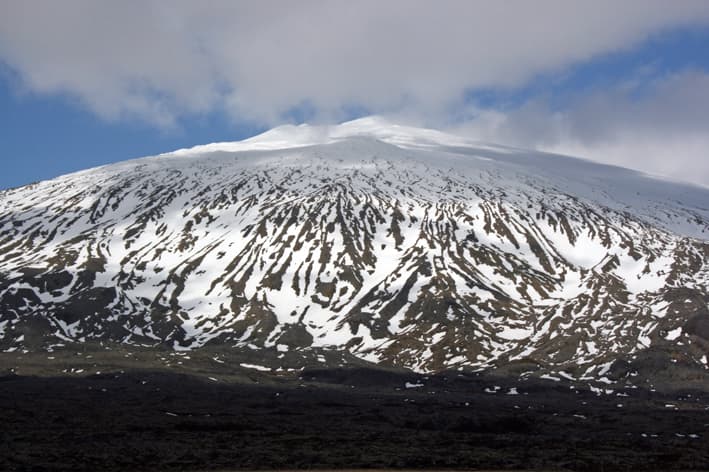
A 90 km finger of land on Iceland's west coast nicknamed "Iceland in miniature" — glacier-volcano Snæfellsjökull at the tip, lava fields, black-pebble beaches, basalt cliffs, the cone of Kirkjufell rising over Grundarfjörður, and the tiny black church of Búðakirkja standing alone on a moss field. Two hours and 190 km from Reykjavík via the Hvalfjörður tunnel; one of the most rewarding two-day drives in the country and a credible substitute for the South Coast when the queues at Reynisfjara feel like too much.

Sofia
Bulgaria
Bulgaria's affordable capital sits beneath Vitosha Mountain, with 2,000 years of layered history — Roman ruins, Ottoman mosques, Orthodox churches, and communist monuments all within walking distance.

Sokcho
South Korea
A Pacific east-coast city wedged between the East Sea and Seoraksan, the most photographed mountain range in Korea — Daecheongbong tops out at 1,708 metres, the granite Ulsanbawi formation rises in six fused peaks above the cable car terminus, and Biryongpokpo waterfall threads through the inner park. The town itself runs along Sokcho Beach, the morning fish market at Daepo Port handles the live-octopus and red-snow-crab trade, and the old Russian-Korean Abai Village quarter at the harbour mouth is the only neighbourhood of its kind in Korea. Two and a half hours by express bus from Seoul.

Split
Croatia
Croatia's second-largest city is built in and around the ruins of Roman Emperor Diocletian's Palace. A living, breathing ancient monument where locals go about daily life amid 1,700-year-old walls. Gateway to Hvar, Brač, and the Dalmatian Islands.

St. Louis
United States
St. Louis sits where the Missouri meets the Mississippi — a Midwestern river city defined by Eero Saarinen's 630-foot Gateway Arch, Forest Park (larger than Central Park, with five free major museums), and a stubborn small-city food culture built on toasted ravioli, gooey butter cake, and tomato-sweet pork-steak BBQ. The population peaked at 856,000 in 1950 and has fallen to roughly 280,000, leaving an oversized skyline, brick neighbourhoods, and two-day weekends that still feel like a 1.5-million-person town. Cardinals baseball at Busch Stadium and the free Anheuser-Busch brewery tour anchor the calendar.

Stavanger
Norway
Norway's oil capital and the base for the country's most famous day hike — Preikestolen (Pulpit Rock), a 604m cliff over Lysefjord that tops nearly every shortlist of the world's great viewpoints. Gamle Stavanger preserves 173 white wooden 18th-century houses in cobblestone lanes; the Norwegian Petroleum Museum is unexpectedly excellent; the Nuart Festival has left world-class street art all over the centre; and Sverd i fjell's three giant swords mark the 872 battle that unified Norway.

Stellenbosch
South Africa
South Africa's wine capital sits 50 km east of Cape Town in a bowl of jagged granite mountains, with 200+ wine estates fanning out from a 300-year-old town centre of whitewashed Cape Dutch gables. Stellenbosch University, the country's oldest, gives the streets a young, café-heavy energy that softens the wine-tourism gloss. Boschendal, Spier, and Delaire Graff anchor the famous estate names, while quieter producers like Tokara, Waterford and Kanonkop reward a second day. The dorpscentrum itself, with its oak-lined Dorp Street and water furrows, is the photogenic core.

Stockholm
Sweden
Stockholm is built on 14 islands connected by bridges — a stunning waterfront capital where medieval Gamla Stan meets sleek Scandinavian design. The Vasa Museum is world-class, the archipelago of 30,000 islands is a summer paradise, and the food scene has evolved far beyond meatballs. Expensive but worth every krona.

Stone Town
Tanzania
Stone Town is the old urban core of Zanzibar — a labyrinth of coral-stone alleys built over 1,000 years of Swahili, Arab, Persian, Indian, and Portuguese trade, and a UNESCO World Heritage Site since 2000. The intricately carved wooden doors (over 500 documented), the white-washed House of Wonders, the East African slave market memorial at the Anglican cathedral, Forodhani Gardens night food market, and the modest house where Freddie Mercury was born in 1946 are all within a 1-square-kilometre warren you can only navigate on foot. Most visitors combine Stone Town with the spice plantations inland and the white-sand east-coast beaches at Paje, Jambiani, and Nungwi.

Sucre
Bolivia
Bolivia's whitewashed constitutional capital and the country's most beautiful colonial city, sitting at a far gentler 2,810 metres than altitude-blasted La Paz. The 16th-century UNESCO old town is a grid of low white buildings with red-tiled roofs, framed by the Cordillera de los Frailes. Casa de la Libertad on Plaza 25 de Mayo is where Bolivia signed its declaration of independence in 1825, the Sunday Tarabuco textile market draws Yampara weavers in striped ponchos from the surrounding villages, and the cement quarry at Cal Orck'o preserves the world's largest single set of dinosaur footprints — over 5,000 prints across an 80-degree wall.

Surabaya
Indonesia
Indonesia's second-largest city and East Java's industrial capital, a 3-million-strong port at the mouth of the Mas River that most travellers treat as a launchpad for Mount Bromo and Ijen Crater rather than a stop in itself. The Tugu Pahlawan (Heroes Monument) commemorates the 10 November 1945 Battle of Surabaya, the first major engagement of Indonesia's independence war, and Arab Quarter alleys behind Sunan Ampel mosque feel transplanted from Hadhramaut. Madura Bridge — Indonesia's longest at 5.4km — links the city to Madura island and its sapi sono cattle races. East Javanese rawon, lontong balap and rujak cingur define the food scene.

Suzhou
China
The 'Venice of the East' is just 30 minutes from Shanghai by high-speed train — a 2,500-year-old canal city that Marco Polo called 'the great and noble city' in 1276. Nine of Suzhou's classical gardens are inscribed on UNESCO's World Heritage list — the densest concentration anywhere on the planet, including the headlining Humble Administrator's Garden, Lingering Garden, Lion Grove, and Master of the Nets. The Pingjiang Road historic quarter preserves 800 years of Song-dynasty street planning along its parallel canal; the I.M. Pei-designed Suzhou Museum is an architectural pilgrimage. Add the historic capital of Chinese silk and Su xiu embroidery, the Tang-dynasty Hanshan Temple, and easy day trips to Tongli and Zhouzhuang water towns, and Suzhou is the deepest cultural day trip from Shanghai — and worth at least one overnight to see the gardens at dawn.

Sydney
Australia
Sydney is defined by its harbor — the Opera House and Harbour Bridge framing one of the world's most recognizable waterfronts. Beyond the postcard views, there are world-class beaches (Bondi, Manly), diverse neighborhoods, a thriving food scene, and easy access to the Blue Mountains and Hunter Valley wine country.

Tainan
Taiwan
Taiwan's oldest city, founded by the Dutch East India Company in 1624 and the island's capital for two centuries before Taipei was built. Locals say there are more temples per capita here than anywhere else in Asia — over 1,600 inside the city limits — and the food canon (danzai noodles, milkfish congee, coffin bread, beef soup) was largely invented within a few blocks of the old Anping Harbour. An hour and a half south of Taipei by High Speed Rail; quieter, slower, and unmistakably more historic than anywhere else on the island.

Taipei
Taiwan
Taipei is Asia's most underrated capital — legendary night markets (Shilin, Raohe), world-class museums (National Palace Museum), stunning mountain hikes (Elephant Mountain, Yangmingshan), and some of the friendliest locals you'll meet anywhere. The MRT is spotless and efficient, bubble tea was invented here, and the food scene is extraordinary.

Tallinn
Estonia
Estonia's medieval Old Town has the best-preserved 14th-century walls in Northern Europe — cobblestone, guild halls, and the Alexander Nevsky Cathedral staring down from Toompea. Digital-republic Estonia birthed Skype and Wise here; Telliskivi Creative City balances the medieval with craft cocktails. 2-hour ferry across to Helsinki.

Tampa
United States
Florida’s Gulf-coast counterweight to Miami — a working city of 395K (3.4M metro) wrapped around the largest open-water estuary in Florida. Ybor City, the 1885-founded Cuban-Spanish-Italian cigar district, is where the Tampa Cuban sandwich was invented (the official sandwich of Tampa by city ordinance) and where wild chickens still roam between the brick streets descended from cigar-rollers’ birds. Add Busch Gardens (the densest concentration of major rollercoasters in the southern US), the 4-km waterfront Riverwalk, the Florida Aquarium’s 500,000-gallon coral reef tank, and the legendary Bern’s Steak House (largest restaurant wine collection on Earth, 500,000 bottles). Tampa International Airport regularly tops US traveller-satisfaction rankings; Clearwater Beach (regularly named America’s best beach) is 40 minutes west.

Tangier
Morocco
Northern Morocco's port city stares across the Strait of Gibraltar to Spain (14km away). The medina + Kasbah climb the hill above the harbor; Cap Spartel marks where the Atlantic and Mediterranean meet, with the Caves of Hercules just below. International Zone era (1923-56) and a literary bohemian past — Bowles, Burroughs, Kerouac, Ginsberg all lived here. The Al Boraq high-speed train (Africa's only) connects to Casablanca in 2h10m. Easier ferry hop to Tarifa than most realize.

Tashkent
Uzbekistan
Uzbekistan's modern capital is a gateway to the Silk Road, with Soviet-era metro stations that rival Moscow's, bustling Chorsu Bazaar, and increasingly excellent restaurants. The high-speed Afrosiyob train connects to Samarkand in just 2 hours.

Tbilisi
Georgia
Georgia's captivating capital tumbles down hillsides along the Mtkvari River with colorful leaning houses, sulfur baths, ancient churches, and one of the world's oldest wine traditions.

Tel Aviv
Israel
Israel's Mediterranean coastal city pulses with Bauhaus architecture, world-class beaches, a legendary food scene, thriving nightlife, and a startup culture rivaling Silicon Valley.

Telluride
United States
A 2,600-person Victorian town wedged into a box canyon at 8,750 ft, walled in on three sides by 13,000-ft San Juan peaks — the most dramatic setting of any ski town in the Lower 48. The free public gondola, the only one of its kind in North America, connects historic Telluride to Mountain Village at 9,500 ft in 13 minutes, running 7am-midnight in ski and summer seasons. Bridal Veil Falls plunges 365 ft at the canyon's eastern dead-end, the tallest free-falling waterfall in Colorado. The whole town is a National Historic Landmark District. Bluegrass Festival in June and Telluride Film Festival each Labor Day weekend draw devoted national crowds.

The Hague
Netherlands
The Hague is the Netherlands' political capital, the seat of parliament, and home to the International Court of Justice at the Peace Palace. The 13th-century Binnenhof courtyard sits at the city's core, the Mauritshuis around the corner holds Vermeer's Girl with a Pearl Earring and Fabritius's Goldfinch, and Madurodam shrinks the entire country into a one-twenty-fifth scale model park. A short tram ride later you are on Scheveningen beach with the pier and a North Sea promenade. Less postcard than Amsterdam, more institutional, with serious museums and easy access to the coast.

Thessaloniki
Greece
Greece's vibrant second city has a legendary food scene, Byzantine churches, Ottoman-era markets, and a stunning waterfront promenade. More laid-back than Athens with excellent nightlife and easy access to Halkidiki beaches and Mount Olympus.