Quick Verdict
Pick Florianópolis for 42 beaches, Box 32 oysters, and Lagoa da Conceição nights on Brazil's south coast. Pick Paraty if pé-de-moleque cobblestones, schooner days, and Atlantic Forest cachaça distilleries fit better.
The real difference is price
These two play in different price tiers: Paraty runs roughly 38% cheaper day to day ($130 vs $180 per day mid-range). Start with your budget — everything else on this page is secondary to that gap.
Can't pick? Visit both.
Build a trip that includes Florianópolis and Paraty, with complementary stops we'll suggest.
🤝 It's a tie — both rated 72 OVR
Keep exploring

Florianópolis
Brazil
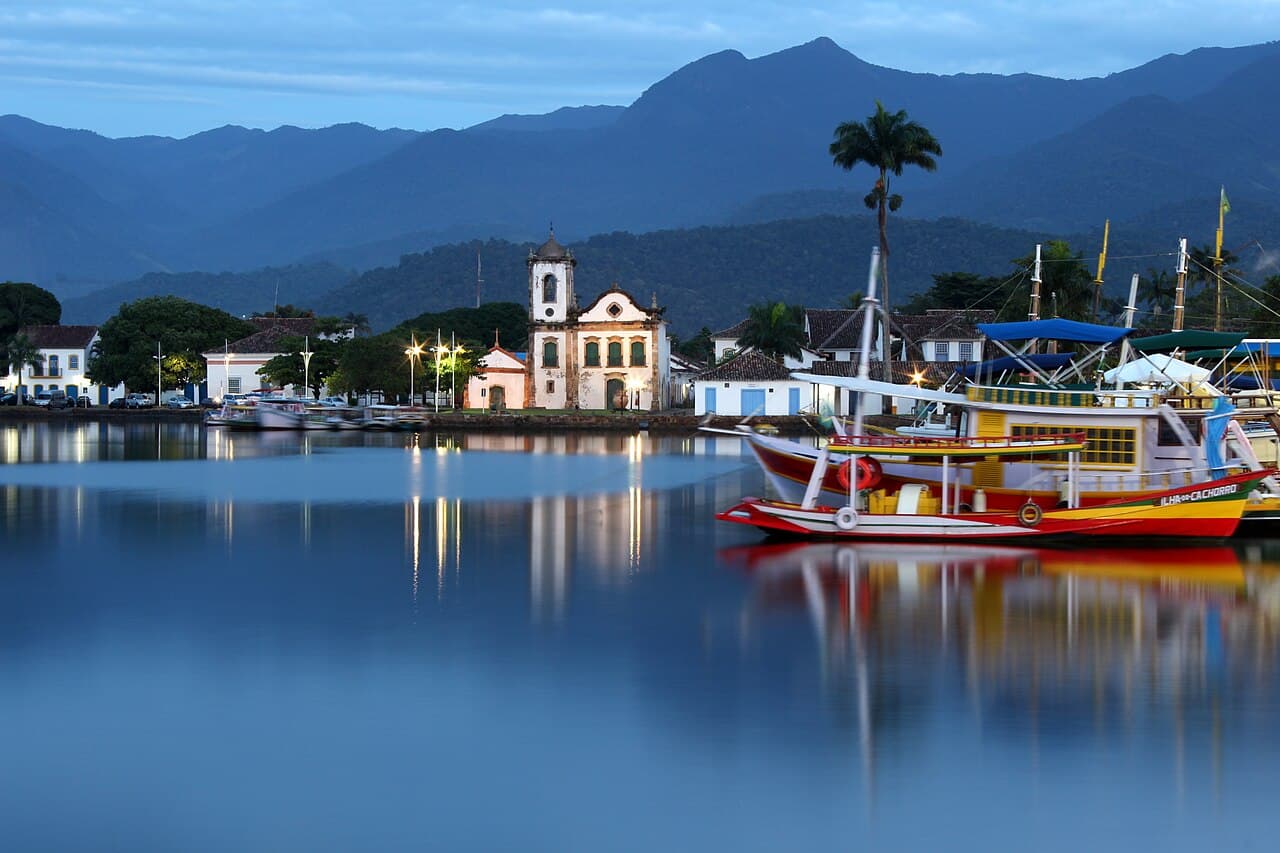
Paraty
Brazil
Florianópolis
Paraty
How do Florianópolis and Paraty compare?
Both are Brazilian Atlantic-coast escapes from São Paulo or Rio, but they sit on different coastlines with very different rhythms. Florianópolis ('Floripa') is a 54 km long Santa Catarina island with 525,000 people and 42 distinct beaches — Mole and Joaquina for surf, Jurerê for the bay-and-luxury crowd, Lagoa da Conceição for bohemian lagoon nights, and the wild undeveloped south where Lagoinha do Leste needs a 2.5-hour rainforest hike. Paraty is a 40,000-person UNESCO colonial port town between São Paulo and Rio on the Costa Verde — whitewashed houses, painted shutters, and pé-de-moleque cobblestones that flood deliberately at high tide.
Connecting them takes a serious detour: Floripa to São Paulo flies in 90 min ($60–$120 on Gol/LATAM), then São Paulo to Paraty is a 5-hour bus or a 4-hour drive. Few travelers do both — pick a side. Floripa runs $70 budget / $180 midrange and skews higher in peak season (December–February); Paraty is $60 / $130. Floripa's strengths are surf at Mole, Box 32 oysters at the Mercado Público, and Lagoa nightlife. Paraty's are colonial-era walking tours, the schooner trip among 65 islands at R$80 ($16), and 30+ artisan cachaça distilleries (alambiques) in the Bocaina valleys.
Pro tip: Floripa public transit is genuinely mediocre — rent a car or budget for Uber, and skip Jurerê Internacional unless flashy beach clubs and bottle-service brunches are the actual goal. In Paraty, the historic centre is car-free and small enough that you don't need wheels until you head to Trindade beach (40 min by bus, R$8) or to a Bocaina alambique cachaça tasting. Pick Florianópolis if 42 beaches across surf, bay, and wild categories, Box 32 oysters, and Lagoa da Conceição nights shape the trip. Pick Paraty if pé-de-moleque cobblestones, schooner days among 65 islands, and Atlantic Forest waterfalls 20 min from your guesthouse are the reason.
💰 Budget
🛡️ Safety
Florianópolis
Florianópolis is one of the safer Brazilian capitals — significantly safer than Rio, Salvador, or Recife. Violent crime in tourist areas is rare; the bigger concerns are opportunistic theft (especially on beaches when belongings are unattended), peak-summer congestion, ocean rip currents, and basic urban awareness in central Florianópolis at night. Solo travellers and women generally report comfort.
Paraty
Paraty is one of the safest tourist towns in Brazil — small, low-population, heavily dependent on tourism, and the historic centre is essentially a pedestrian zone with constant foot traffic. Violent crime is rare; petty theft is occasional; the main physical risks are the slippery cobblestones (sprained ankles are common), heatstroke on the trail, and rip currents on certain beaches.
🌤️ Weather
Florianópolis
Florianópolis has a humid subtropical climate — warm-to-hot summers (December-March, the southern-hemisphere summer), mild and damp winters (June-August), spring and autumn transitions. Sea temperatures range 20-26°C; the southern Atlantic is significantly cooler than tropical Bahia or northeast Brazil. Frequent summer afternoon thunderstorms; winter cold fronts (frente fria) bring 24-48 hours of rain and cooler air every 1-2 weeks.
Paraty
Paraty has a humid tropical climate moderated by the Atlantic — warm, wet summers (Dec-Mar) with frequent thunderstorms; mild, drier winters (Jun-Aug) that are the optimal travel window. The Serra do Mar wrings rain out of the prevailing wind year-round, so Paraty is consistently one of the wettest places in southeast Brazil — annual rainfall ~2,300 mm. Boat trips and forest hikes both require dry-ish weather, so the dry season is double-counted as the best time to visit.
🚇 Getting Around
Florianópolis
Florianópolis has genuinely mediocre public transport — the city was designed assuming car ownership, the bus network is infrequent and slow, and the spread-out island layout means walking is rarely practical for inter-neighbourhood travel. Most travellers rent a car, hire scooters, or rely on Uber. Driving the island is mostly easy except for peak summer congestion.
Walkability: Florianópolis is poorly walkable as a whole — the spread-out island layout, infrequent public transport, and limited sidewalks mean that walking only works within compact areas (Centro Histórico, Lagoa village, Jurerê beachfront, individual beach districts). Plan for car/scooter/Uber for inter-neighbourhood movement.
Paraty
Paraty is small and the historic centre is pedestrian-only — within town you walk everywhere. For day trips, the Costa Verde Transportes local bus runs to Trindade, the Penha valley waterfalls, and along the BR-101 to Angra dos Reis. Taxis and Uber (working but limited driver pool) cover the gaps. A rental car is convenient for the inland waterfalls and cachaça distilleries but unnecessary in town.
Walkability: Paraty's historic centre is one of the most walkable in Brazil — entirely car-free, six blocks across, surrounded by the harbour and river. Walking from one end of the centre to the other takes 10 minutes. Cobblestones are challenging; comfortable shoes essential.
📅 Best Time to Visit
Florianópolis
Jan–Mar, Oct–Dec
Peak travel window
Paraty
Apr–Sep
Peak travel window
The Verdict
Choose Florianópolis if...
you want a Brazilian beach island with 42 beaches across surf, bay, and wild categories, Azorean fishing-village heritage, the country's best oysters, and a high-quality-of-life Brazilian capital
Choose Paraty if...
You want a UNESCO colonial town that does double duty as a beach base — a perfectly walkable historic centre, a schooner-launching harbour, and Atlantic Forest hikes within 20 minutes of your guesthouse.
Florianópolis
Frequently asked
Is Florianópolis or Paraty cheaper?
Paraty is cheaper on average. A mid-range day in Florianópolis costs about $180 vs $130 in Paraty, so Paraty saves you roughly $50 per day compared to Florianópolis.
Is Florianópolis or Paraty safer?
Paraty scores higher on our safety index (75/100 vs 73/100). Paraty is one of the safest tourist towns in Brazil — small, low-population, heavily dependent on tourism, and the historic centre is essentially a pedestrian zone with constant foot traffic.
Which has better weather, Florianópolis or Paraty?
Florianópolis has the more temperate climate year-round. Florianópolis has a humid subtropical climate — warm-to-hot summers (December-March, the southern-hemisphere summer), mild and damp winters (June-August), spring and autumn transitions. Sea temperatures range 20-26°C; the southern Atlantic is significantly cooler than tropical Bahia or northeast Brazil. Frequent summer afternoon thunderstorms; winter cold fronts (frente fria) bring 24-48 hours of rain and cooler air every 1-2 weeks.
When is the best time to visit Florianópolis vs Paraty?
Florianópolis peaks in Jan–Mar, Oct–Dec. Paraty peaks in Apr–Sep. Their peak windows do not overlap, so most travelers pick one and go deep rather than rushing both in one trip.
How long is the flight from Florianópolis to Paraty?
Roughly 1h 19m on a direct flight (about 621 km / 386 mi). One-way fares typically run $120-350 depending on season and how far in advance you book.
How do daily costs in Florianópolis and Paraty compare?
In Florianópolis: budget ~$50-100/day, mid-range ~$130-280/day, luxury ~$400-1,200/day. In Paraty: budget ~$40-70/day, mid-range ~$100-180/day, luxury ~$350-800/day.
You might also compare
FlorianópolisvsParaty
Try another