Compare 576 Travel Destinations
576 guides — page 3 of 24

Barcelona
Spain
Barcelona is where Gothic architecture meets Gaudí's surreal masterpieces, where tapas bars spill onto sunny plazas, and where the beach is just a metro ride from the mountains. The Catalan capital has a creative energy all its own — distinct from the rest of Spain and fiercely proud of it.

Bariloche
Argentina
Argentina's Patagonian lake district capital — a Swiss-chocolate town on the shore of Nahuel Huapi Lake beneath the Andes. Cerro Catedral is South America's largest ski resort; the Circuito Chico drive is one of the hemisphere's most scenic road loops. The "chocolate capital of Argentina" hosts artisan chocolatiers on every corner of Mitre street.

Batam
Indonesia
An Indonesian island in the Riau archipelago lying 20 km southeast of Singapore, close enough that Sindo Ferry and Batam Fast catamarans cross from HarbourFront Centre and Tanah Merah in 45 to 60 minutes for about SGD 38 round-trip. Batam is the duty-free weekend escape Singaporeans use for cheap seafood at Top 100 and Welcome Restaurant, beach overnights at Montigo Resorts Nongsa, Turi Beach Resort and Nongsa Point Marina, golf at Palm Springs and Tamarin Santana, and the reflexology and shopping circuit of Nagoya Hill. The centre is industrial rather than pretty, but it is the most affordable island getaway in the region — and the only one with no flights from Singapore because the ferry is simply faster.

Bath
United Kingdom
Britain's most perfectly preserved Georgian city, and the only British city designated entirely as a UNESCO World Heritage Site. The Roman Baths — a 2,000-year-old complex fed by Britain's only natural hot spring at 46°C — rank among the finest Roman remains in Northern Europe. The Royal Crescent (1767–1775), The Circus, and Pulteney Bridge (shops on both sides, one of only four in the world) form the Georgian masterwork that inspired Jane Austen, who lived here from 1801 to 1806.

Battambang
Cambodia
Cambodia's second-largest city and quiet cultural capital, draped along the lazy Sangker River in the country's rice-bowl northwest. Battambang preserves more French colonial shophouses than anywhere else in Cambodia, with verandahed two-storey rows now housing boutique hotels, third-wave coffee bars, and the studios of Phare Ponleu Selpak, the circus and arts school founded in 1994 to support children orphaned by the Khmer Rouge era. Bamboo Train rides on improvised flat platforms, the cliff temples of Phnom Sampeau with their grim Killing Caves, and the brick stupas of Wat Banan and Wat Ek Phnom round out a destination most travellers regret skipping.

Batumi
Georgia
Georgia's subtropical Black Sea city is a unique architectural kaleidoscope — Ottoman, Art Nouveau, Soviet, and contemporary towers sit side by side. The Alphabet Tower rotates in the wind at 130m; the Ali and Nino kinetic sculpture merges and separates every 10 minutes. Visa-free for 95 nationalities for a full year — Batumi is one of the most accessible destinations in the Caucasus.

Beijing
China
China's capital is a treasure trove of imperial history — the Forbidden City, Great Wall, and Temple of Heaven are just the beginning. Ancient hutong neighborhoods, world-class Peking duck, and a rapidly modernizing cityscape make Beijing endlessly fascinating.

Beirut
Lebanon
The Paris of the Middle East is a resilient Mediterranean city of ancient ruins, legendary cuisine, vibrant nightlife, and a creative spirit that persists through every challenge.

Belfast
United Kingdom
Northern Ireland's capital has transformed from the epicenter of the Troubles into one of the UK's most vibrant cities. Titanic Belfast is the world's largest Titanic exhibition. The political murals of Falls and Shankill Roads are among the most powerful pieces of public art in Europe. The Cathedral Quarter's Victorian pubs and the covered St. George's Market are the social heart of modern Belfast.

Belgrade
Serbia
Serbia's capital at the confluence of the Danube and Sava rivers is famous for its legendary nightlife, Kalemegdan Fortress, hearty Balkan cuisine, and irrepressible spirit.
Belize
Belize
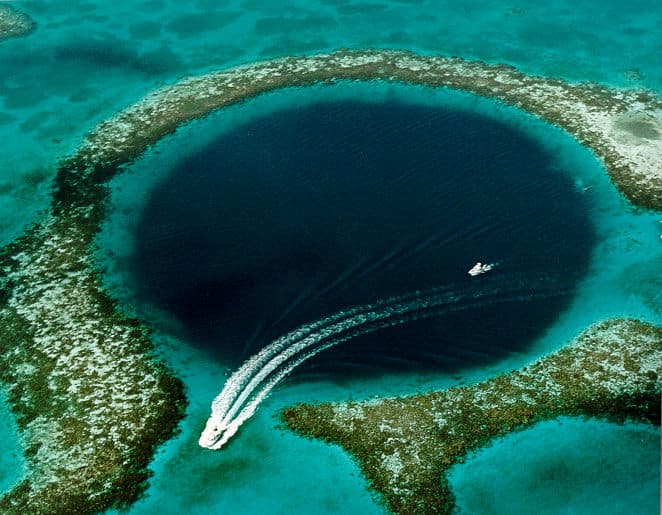
The only English-speaking country in Central America — Caribbean coast on one side, Guatemalan jungle on the other, the world's second-largest barrier reef just offshore. The 124m-deep Great Blue Hole anchors the offshore atolls and decorates the country's banknotes; Ambergris Caye is the model for Madonna's "La Isla Bonita"; tiny car-free Caye Caulker takes the "Go Slow" mantra so seriously that they painted it on signs. Inland, the ancient Maya pyramids of Caracol, Xunantunich, and Lamanai rise from jungle reserves, and Actun Tunichil Muknal cave still holds skeletal sacrifices from a thousand years ago. English-speaking, BZD pegged 2:1 with USD, and one of the least-visited adventure paradises in the Caribbean.
Berat
Albania
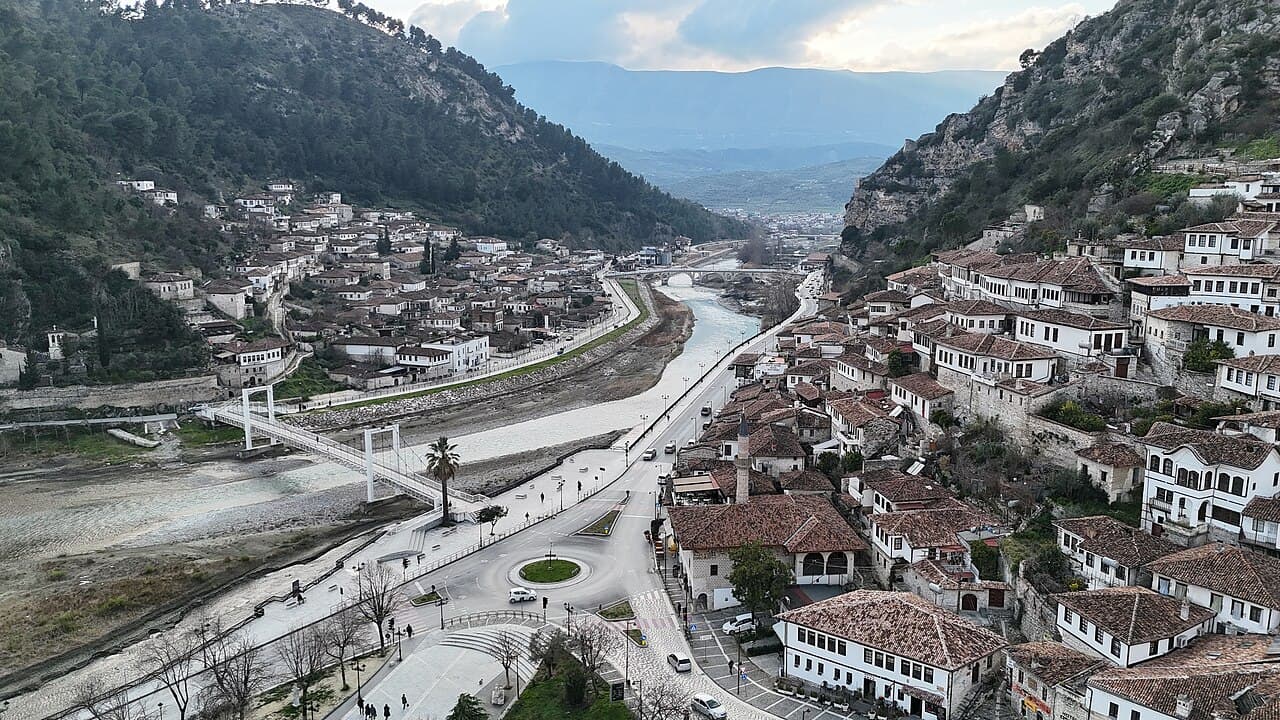
The "City of a Thousand Windows" — tiered white Ottoman houses stacked up the slopes above the Osum River. UNESCO 2008 and one of Europe's oldest continuously-inhabited cities (2,400+ years). Berat Castle (Kalaja) is a still-inhabited medieval citadel — people live inside the walls. Facing Mangalem (Muslim) and Gorica (Christian) quarters across the 18th-century stone bridge. Onufri icon museum inside the castle; Çobo and Kokomani wineries in Albania's wine capital; Tomor Mountain NP 20 km east. Access: 2.5 hr bus from Tirana. ALL currency (EUR widely accepted); 90-day visa-free for most Western.

Bergen
Norway
Norway's second city and the gateway to the western fjords — a UNESCO Hanseatic port wrapped around a harbour hemmed in by seven mountains. Bryggen's coloured wooden wharf buildings are Bergen in a single postcard. The Fløibanen funicular hauls you up Mount Fløyen for fjord-and-city views; the Bergen Railway to Oslo is one of the world's most scenic train rides; and Nærøyfjord (UNESCO) is an easy day trip by Norway in a Nutshell. It rains 270 days a year. Bring a waterproof.

Berlin
Germany
Berlin is Europe's capital of reinvention — a city shaped by its turbulent history and defined by its creative present. The Wall may be gone but its legacy is everywhere, from the East Side Gallery to the vibrant neighborhoods that grew up in its shadow. Cheap by Western European standards, with legendary nightlife and a thriving art scene.

Bern
Switzerland
Switzerland's federal capital — not Zurich, despite the common assumption — wrapped in a horseshoe bend of the turquoise Aare river. The medieval old town gained UNESCO status in 1983 for its 6 km of continuous sandstone arcades, the 1530 Zytglogge astronomical clock that still chimes on the hour, and the Bundeshaus where the Federal Council meets. Albert Einstein wrote his 1905 papers here while working at the patent office. In summer, locals float the Aare straight through the old town with a waterproof bag for their clothes.

Big Island
United States
Hawaii Island is bigger than all the other Hawaiian islands combined and is still actively growing — Kilauea is one of the world’s most active volcanoes (currently erupting as of April 2026) and Mauna Kea’s 4,205-m summit hosts 13 international observatories under what astronomers consider Earth’s clearest skies. Eight of the world’s 13 climate zones exist on this single island: the Hilo side gets 3,400 mm of tropical rainforest rain a year while the Kona side stays dry desert at 500 mm; Mauna Kea’s summit has alpine conditions year-round and snows in winter. Add Punaluʻu black-sand beach, Kona coffee country, the green sea turtles at Puʻuhonua o Hōnaunau, and the manta-ray night snorkel off Keauhou Bay. The most geologically dramatic of the Hawaiian islands.

Bilbao
Spain
The Basque Country's industrial-turned-cultural capital — still rough and confident around the edges where polished San Sebastián is precious. Frank Gehry's 1997 titanium-cloud Guggenheim Museum kicked off the most successful urban regeneration in modern Europe (the global "Bilbao Effect"); the Nervión riverbank that was biologically dead in the 1980s now runs from Calatrava bridges through the Old Town's Casco Viejo, where Calle del Perro's pintxo bars deliver dinner-quality bites for €3–€5 each. Add the Mercado de la Ribera (Europe's largest covered food market), Norman Foster's gleaming metro, and the Athletic Club Bilbao stadium where every player is Basque — and you get a bigger, edgier, dramatically cheaper alternative to San Sebastián.

Bishkek
Kyrgyzstan
Kyrgyzstan's leafy capital is the gateway to Central Asia's most spectacular mountain scenery. Soviet-era plazas, buzzing bazaars, excellent Kyrgyz cuisine, and easy day trips to Ala Archa gorge and Issyk-Kul lake make it an underrated destination.

Black Forest
Germany
A 160 km north-south range of densely-forested hills along Germany's southwest border with France — cuckoo-clock workshops in Triberg, the 163m Triberger Wasserfälle (Germany's highest waterfall), the deep-blue Titisee, the 60 km Schwarzwaldhochstrasse scenic drive, and the half-timbered villages of the Gutach Valley. The original Schwarzwälder Kirschtorte (Black Forest cake) was created here in 1915. Freiburg makes the obvious base — a sunny university town at the southwestern edge with the Münster spire and a tram running into the forest in 20 minutes.
Bocas del Toro
Panama
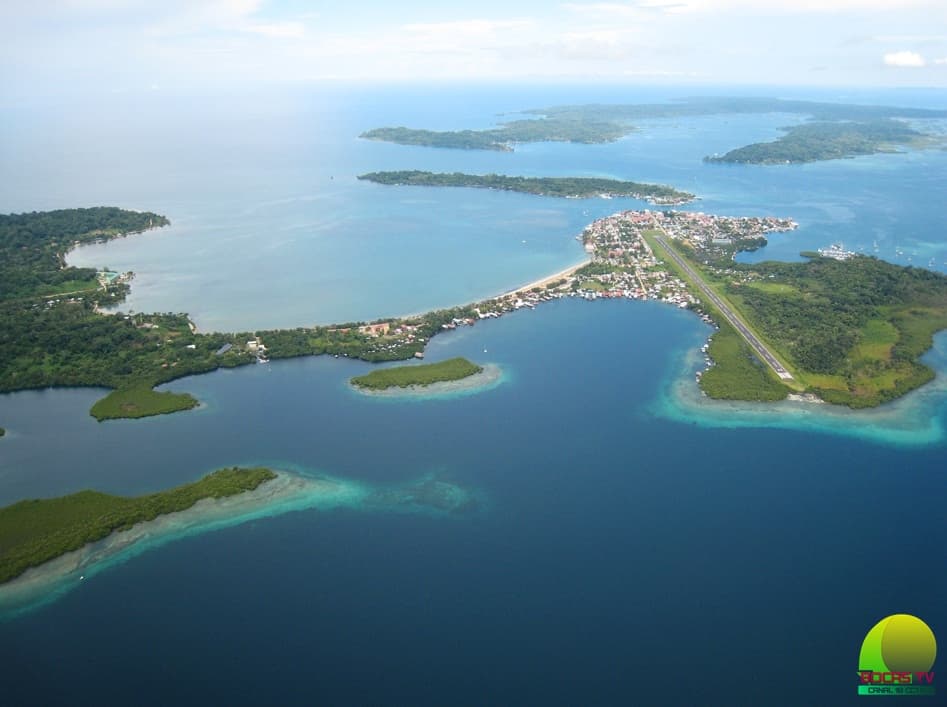
An archipelago of nine main islands and 200-something islets in Panama's far northwest Caribbean — a cheaper, scruffier, more laid-back answer to Costa Rica or San Blas. Isla Colón holds the main town (Bocas Town); Bastimentos has Red Frog and Wizard beaches; Isla Carenero is a 5-minute boat ride for sunset bars over the water. Snorkel the cays, see strawberry poison-dart frogs, and accept that everything runs on island time and most floors are wooden boards over the sea.

Bogota
Colombia
Bogota is a high-altitude capital undergoing a cultural renaissance. La Candelaria's colonial streets are alive with street art, the Gold Museum is dazzling, and Monserrate offers sweeping views from 3,150m. The food scene is booming, the coffee is (unsurprisingly) excellent, and the Ciclovia turns major roads into a car-free playground every Sunday.

Bohol
Philippines
A tear-drop island in the Central Visayas, two hours by fast ferry from Cebu and home to the most famous landform in the Philippines: the Chocolate Hills, 1,776 conical limestone mounds spread over 50 sq km of Carmen and Sagbayan that turn from green to brown in the February-to-May dry months. The Loboc River cruise glides past nipa-palm villages on a floating buffet boat, the Philippine Tarsier Sanctuary in Corella protects the 13cm saucer-eyed primate, and the resort island of Panglao — connected by causeway to the main island — strings Alona Beach with dive shops running daily trips to Balicasag's wall and Pamilacan's whale sharks. A 1-hour Cebu Pacific or PAL flight from Manila lands at Bohol-Panglao (TAG).

Boise
United States
Idaho's capital sits where the high desert meets the Rockies — the Boise River cuts straight through downtown, lined by a 25-mile greenbelt of cottonwoods and bike paths that locals treat as the city's spine. The state's only Basque population in the country (roughly 15,000) gave Boise a Basque Block of pintxos bars and the Cyrus Jacobs-Uberuaga House. Add the climbable foothills behind town, the gold-domed Idaho State Capitol, and a tech scene anchored by Micron and HP, and you have one of the fastest-growing small cities in the West.
