
Bologna
THE QUICK VERDICT
By Anthony · Updated June 2026
Choose Bologna if you want Italy's true food capital — tortellini, ragù, and mortadella — with medieval porticoes and no cruise-ship crowds.
- Best for
- tagliatelle al ragu at Trattoria Anna Maria, Piazza Maggiore evenings, Two Towers climb, Mercato di Mezzo cicchetti
- Two seasons
- Apr–May and Sep–Oct
- Budget anchor
- $190/day mid-range
- Language gap
- English gets thin outside tourist areas — a translation app earns its keep
- Worth a look
- Modena's balsamic acetaia tours and Parma's prosciutto factories make a perfect day-trip food triangle
Italy's culinary capital — birthplace of tortellini, ragù, and mortadella. Medieval towers, 40 km of porticoed streets (UNESCO-listed), and the oldest university in the Western world.
The two links below are affiliate links — MapSorted earns a small commission if you book through them, at no extra cost to you. How this works.
Tours & Experiences
Bookable tours, activities, and day trips in Bologna
Where to Stay
Compare hotels and rentals in Bologna
📍 Points of Interest
Piazza Maggiore
Grand central square with Basilica di San Petronio and Neptune fountain
Le Due Torri
Iconic leaning towers — climb the 97-meter Asinelli for panoramic views
Basilica di San Petronio
Massive basilica with famously unfinished facade and interior meridian line
Quadrilatero Market
Medieval market district overflowing with food shops and delis
Basilica di Santo Stefano
Complex of seven interconnected churches dating from the 5th century
Sanctuary of San Luca
Hilltop sanctuary reached via the world's longest portico (3.8 km)
★ Local Picks
Finestrella di Via Piella
Hidden window revealing Bologna's secret canal beneath the streets
Osteria del Sole
One of Italy's oldest taverns (since 1465) — bring your own food, buy wine
At a Glance
- Pop.
- 400,000 (city), 1M (metro)
- Timezone
- Rome
- Dial
- +39
- Emergency
- 112 / 113
Bologna is known as "La Grassa" (the fat one) for its legendary food — it gave the world tortellini, ragù (Bolognese sauce), and mortadella
The University of Bologna, founded in 1088, is the oldest university in the Western world and still operates today with over 85,000 students
The city has nearly 40 km of covered porticoes (arcaded walkways), recognized as a UNESCO World Heritage Site in 2021
Bologna's two leaning towers — the Asinelli and Garisenda — predate the famous one in Pisa. The Asinelli tower is 97 meters tall with a 2.2-meter lean
The city's nickname "La Rossa" (the red one) refers to both its terracotta-colored buildings and its historically left-leaning politics
Bologna is the capital of Emilia-Romagna, Italy's richest food region — also home to Parmesan cheese, Parma ham, and balsamic vinegar
Top Sights
Piazza Maggiore
🗼The grand central square surrounded by medieval and Renaissance buildings including the Basilica di San Petronio, the Palazzo dei Notai, and the elegant Neptune fountain. The heart of Bolognese life.
Le Due Torri (Two Towers)
📌Bologna's iconic leaning towers — the 97-meter Asinelli (climbable via 498 steps) and the shorter Garisenda (currently closed for stabilization). The views from the top span the city and Apennine foothills.
Basilica di San Petronio
📌One of the largest churches in the world, dominating Piazza Maggiore. Its facade is famously unfinished (half marble, half brick). The interior houses a meridian line used to measure the sun's position.
Quadrilatero Market District
🏪A medieval labyrinth of narrow streets east of Piazza Maggiore crammed with food shops, open-air market stalls, and delicatessens. The sensory overload of cured meats, cheeses, and fresh pasta is unforgettable.
Basilica di Santo Stefano
📌A complex of seven interconnected churches known as "Sette Chiese" (Seven Churches), dating from the 5th century. A peaceful labyrinth of cloisters, courtyards, and ancient sacred spaces.
Archiginnasio of Bologna
🏛️The original seat of the University of Bologna, with a stunning anatomical theater (Teatro Anatomico) decorated with carved wooden figures. The ceilings and walls are covered in coats of arms.
Portico di San Luca
🗼The world's longest portico — a 3.8 km covered arcade climbing from Porta Saragozza to the Sanctuary of San Luca on the hilltop. A beautiful walk with 666 arches and panoramic views.
MAMbo (Museum of Modern Art)
🏛️Bologna's contemporary art museum in a converted bakery, featuring Italian and international modern art. The permanent collection and rotating exhibitions reflect Bologna's creative spirit.
Language & Phrases
Italian is the official language. The Bolognese dialect (Bulgnais) still exists but standard Italian is universally spoken. English is increasingly common among younger Bolognese, but many older shopkeepers and trattoria staff speak little English. A few Italian phrases go a long way.
| English | Translation | Pronunciation |
|---|---|---|
| Hello / Goodbye | Ciao / Arrivederci | CHOW / ah-ree-veh-DEHR-chee |
| Good morning / Good evening | Buongiorno / Buonasera | bwon-JOR-noh / bwon-ah-SEH-rah |
| Thank you | Grazie | GRAH-tsee-eh |
| Please | Per favore | pair fah-VOH-reh |
| Excuse me / Sorry | Scusi / Mi scusi (formal) | SKOO-zee / mee SKOO-zee |
| Yes / No | Sì / No | see / noh |
| How much is this? | Quanto costa? | KWAHN-toh KOS-tah? |
| Where is...? | Dov'è...? | doh-VEH...? |
| The check, please | Il conto, per favore | eel KON-toh, pair fah-VOH-reh |
| I don't understand | Non capisco | non kah-PEE-skoh |
| Do you speak English? | Parla inglese? | PAR-lah een-GLEH-zeh? |
| A coffee, please | Un caffè, per favore | oon kaf-FEH, pair fah-VOH-reh |
Climate & Best Time to Go
Bologna has a humid subtropical climate with hot summers and cold, foggy winters. The Po Valley location means humidity is high year-round. The porticoes are not just beautiful — they provide shade in summer and shelter from rain and snow in winter.
Spring
March - May43-72°F
6-22°C
Gradually warming with April showers. May is delightful — warm, green, and perfect for walking the porticoes and hiking to San Luca.
Summer
June - August64-91°F
18-33°C
Hot and humid with occasional thunderstorms. Many Bolognese leave in August (Ferragosto). The porticoes provide essential shade for walking.
Autumn
September - November45-75°F
7-24°C
September is warm and ideal. October brings truffle and wine harvest season. November is foggy and atmospheric, with the first chill settling over the city.
Winter
December - February32-45°F
0-7°C
Cold, grey, and often foggy — the Po Valley winters are not for the faint-hearted. But the hearty Bolognese cuisine of ragù and tortellini in brodo was made for this weather.
Best Time to Visit
April through June and September through October offer the best weather for walking and outdoor dining. Autumn is truffle and wine season. Summer (July-August) is hot and humid, and many locals leave during Ferragosto. Winter is cold but the hearty cuisine makes it worthwhile.
Spring (March - May)
Crowds: ModeratePleasant warming temperatures ideal for walking the porticoes and climbing to San Luca. The city is lively with students before summer break.
Pros
- + Perfect walking weather
- + University in session (vibrant atmosphere)
- + Gardens and parks in bloom
- + Lower prices than summer
Cons
- − April rain common
- − Easter weekend can be crowded
- − Some days still cool in March
Summer (June - August)
Crowds: Low in August (locals leave), moderate in June-JulyHot and humid. August sees many locals leaving for vacation (Ferragosto) and some restaurants close. The porticoes provide shade but midday heat is oppressive.
Pros
- + Late sunset for evening passeggiata
- + Some restaurants offer special summer menus
- + Fewer students means quieter streets
- + Cinema and events in outdoor venues
Cons
- − Oppressive heat and humidity
- − Many restaurants close in August
- − University on break (less energy)
- − Air conditioning not universal
Autumn (September - November)
Crowds: Moderate — students return in OctoberGlorious season for food lovers. Truffle and porcini mushroom season, grape harvest, and the return of university students brings energy back to the city.
Pros
- + Truffle and harvest season (incredible food)
- + Comfortable temperatures
- + Wine harvest events
- + University back in session
Cons
- − Increasing rain and fog from November
- − Shorter days
- − Po Valley fog can be thick
- − Some outdoor dining ends
Winter (December - February)
Crowds: Low — quietest seasonCold, grey, and often foggy, but Bologna's soul food — tortellini in brodo, ragù, and warming Lambrusco — is at its most comforting. Christmas markets add seasonal charm.
Pros
- + Hearty winter cuisine at its best
- + Lowest prices
- + Atmospheric fog over the porticoes
- + Christmas markets and lights
Cons
- − Cold and damp (often near 0°C)
- − Thick Po Valley fog
- − Short daylight hours
- − Grey skies for days
🎉 Festivals & Events
Cioccoshow (Chocolate Festival)
NovemberA massive chocolate festival in Piazza Maggiore with tastings, workshops, and master chocolatiers from across Italy.
Bologna Jazz Festival
October - NovemberOne of Italy's most important jazz festivals, with concerts in historic venues across the city.
Festa di San Petronio
October 4Bologna's patron saint celebration with special masses in the basilica, food stalls in the piazza, and cultural events.
Cinema Ritrovato
June - JulyA unique film festival screening restored classic films in outdoor venues including Piazza Maggiore — one of the world's most beautiful open-air cinemas.
Off the Beaten Path
Finestrella di Via Piella
A tiny window in a wall on Via Piella that reveals a hidden canal below — a remnant of Bologna's medieval waterway system that once rivaled Venice. Most visitors walk right past it.
Bologna once had an extensive canal network for silk production and trade, now almost entirely covered. This window is one of the last places to glimpse that hidden Venice beneath the streets.
Mercato delle Erbe
A local market and food hall dating to 1910, where Bolognese students and workers eat affordable lunches. Stalls serve everything from fresh pasta to craft cocktails.
While tourists pack the Quadrilatero, this neighborhood market is where students and young locals actually eat. The evening aperitivo scene here is lively and authentic.
San Luca Portico Walk
The 3.8 km walk from Porta Saragozza to the Sanctuary of San Luca along the world's longest portico. The covered arcade passes through 666 arches with progressively better views.
Most tourists never make it past the Two Towers. This walk is a beloved ritual for Bolognese — the sunset views over the city and Apennines from the sanctuary are extraordinary.
Osteria del Sole
One of Italy's oldest taverns (since 1465), where you bring your own food from the nearby Quadrilatero market and they serve only wine. A communal, buzzing atmosphere at shared tables.
A BYOF (bring your own food) pub that's been operating for over 500 years. This concept is uniquely Bolognese and represents the city's love of convivial dining.
Giardini Margherita
Bologna's largest park south of the center, popular with joggers, families, and university students. Wooded paths, a small lake, and a lovely cafe under the trees.
On warm evenings, Bolognese students gather here for impromptu picnics and socializing. It's the best place to experience the youthful, university-town energy.
Safety Breakdown
Very Safe
out of 100
Bologna is a safe city with a strong community atmosphere driven by its large student population. Violent crime is rare. Petty theft occurs around the train station and in crowded areas, but the overall risk is lower than in Rome, Florence, or Milan.
Things to Know
- •The area around Bologna Centrale train station can feel less safe at night — walk purposefully and stay on main streets
- •Watch for pickpockets in the crowded Quadrilatero market and on busy buses
- •The university quarter (Via Zamboni area) is lively and safe but can be rowdy on weekend nights
- •Cycling is popular — watch for bikes when stepping off porticoes onto the street
- •Some areas south of the station near Via Indipendenza are poorly lit at night — stick to porticoed streets
Natural Hazards
Emergency Numbers
General Emergency (EU-wide)
112
Carabinieri (Military Police)
112
Polizia di Stato (State Police)
113
Ambulance
118
Fire Department (Vigili del Fuoco)
115
Costs & Currency
Where the money goes
USD per dayBackpacker = hostel dorm + street food + public transit. Mid-range = 3-star hotel + neighbourhood restaurants + transit cards. Luxury = 4/5-star + fine dining + taxis. How we calibrate these numbers →
Quick cost estimate
Customize per category →Estimates based on regional averages. Flight prices vary by season and airline.
budget
$70-100
Hostel dorm, market picnics and trattoria lunches, free church visits and portico walks, walking everywhere
mid-range
$150-230
Mid-range hotel, restaurant meals, museum visits, Two Towers climb, cooking class or food tour
luxury
$350+
Boutique hotel near Piazza Maggiore, fine dining, private food tour, day trip to Modena, wine tasting
Typical Costs
| Item | Local | USD |
|---|---|---|
| AccommodationHostel dorm bed | €22-35 | $24-38 |
| AccommodationMid-range hotel (double) | €80-150 | $87-164 |
| AccommodationBoutique hotel (double) | €180-350 | $196-382 |
| FoodEspresso at a bar | €1.10-1.50 | $1.20-1.64 |
| FoodTagliatelle al ragù at trattoria | €10-14 | $10.90-15.26 |
| FoodLunch menù fisso (set menu) | €10-15 | $10.90-16.35 |
| FoodDinner at restaurant | €25-45 | $27-49 |
| FoodAperitivo with snacks | €6-10 | $6.54-10.90 |
| TransportSingle bus ticket | €1.50 | $1.64 |
| TransportMarconi Express (airport) | €11 | $11.99 |
| TransportTaxi to airport | €18-22 | $19.62-23.98 |
| AttractionsAsinelli Tower climb | €5 | $5.45 |
| AttractionsMAMbo Museum | €6 | $6.54 |
| AttractionsBologna Welcome Card (48h) | €30 | $32.70 |
💡 Money-Saving Tips
- •The Quadrilatero market is perfect for assembling cheap, delicious picnic lunches with mortadella, bread, and cheese
- •Many churches, including Santo Stefano and San Petronio, are free to enter
- •The portico walk to San Luca is free and one of the best experiences in the city
- •Eat your espresso standing at the bar — sitting at a table often adds a surcharge
- •The menù fisso (fixed-price lunch menu) at trattorias is the best-value way to eat out
- •Bologna's compact center means you rarely need public transport — walk everywhere
- •Osteria del Sole lets you bring your own food and charges only for wine — brilliant for budget dining
- •Visit the Bologna Welcome Card for museum discounts and free public transport
Euro
Code: EUR
1 EUR is approximately 1.09 USD (as of early 2026). ATMs are plentiful, especially around Via Indipendenza and Piazza Maggiore. Use Italian banks like Intesa Sanpaolo or UniCredit for the best rates. Avoid tourist-area standalone ATMs.
Payment Methods
Credit and debit cards (Visa, Mastercard) are widely accepted. By Italian law, all businesses must accept card payments, though some small market stalls and traditional trattorias still prefer cash. Contactless payments are increasingly common.
Tipping Guide
A "coperto" (cover charge) of €1.50-3 per person is common and replaces the need for tipping. An additional 5-10% for exceptional service is a nice gesture but not expected.
No tip expected at the bar. If sitting at a table, the coperto usually applies. Leaving small change is appreciated.
Rounding up to the nearest euro is common but not expected. No percentage tipping required.
€1-2 per bag for porters. Housekeeping tips are not customary in Italy.
€3-5 per person for guided food tours or cooking classes. Free walking tour guides rely on tips (€5-10).
How to Get There
✈️ Airports
Bologna Guglielmo Marconi Airport(BLQ)
6 km northwestMarconi Express monorail to Bologna Centrale station (7 min, €11). BLQ Shuttle bus (20 min, €7). Taxi approximately €18-22. The monorail is the fastest and most reliable option.
✈️ Search flights to BLQ🚆 Rail Stations
Bologna Centrale
1 km north of Piazza Maggiore (12 min walk via Via Indipendenza)A major Italian rail hub with high-speed Frecciarossa trains to Florence (35min, €15-30), Rome (2h, €25-55), Milan (1h, €20-45), Venice (1.5h, €15-35), and Naples (3h, €35-60). Also serves regional trains to Modena, Parma, and Ravenna.
🚌 Bus Terminals
Autostazione di Bologna
Adjacent to the train station. FlixBus and Itabus serve domestic and international routes. Regional TPER buses connect to towns in Emilia-Romagna not on the rail network.
Getting Around
Bologna's historic center is compact and best explored on foot under the 40 km of porticoes. A bus network covers the wider city, and cycling is popular on flat terrain. The center is largely a limited traffic zone (ZTL) where private cars are restricted.
TPER City Buses
€1.50 onboard; €1.30 pre-purchased; €2 for 75 min on appAn extensive bus network with key routes running along Via Indipendenza, Via Ugo Bassi, and to the hills. Bus 20 runs from the train station to the center. The app "Roger" provides real-time tracking.
Best for: Reaching the station, Giardini Margherita, and neighborhoods outside the center
Bike Rental / RideMovi
€0.25/min for RideMovi; €10-15/day for traditional rentalBologna is flat and bike-friendly. RideMovi offers dockless bike and e-scooter sharing. Several rental shops operate near the station and Piazza Maggiore.
Best for: Quick trips across the center, reaching the portico walk start at Porta Saragozza
San Luca Express
€10-12 returnA tourist trackless train running from Piazza Maggiore up to the Sanctuary of San Luca, for those who prefer not to walk the 3.8 km portico climb.
Best for: Reaching San Luca if the uphill walk is too strenuous
Taxis (Cotabo / CAT)
€5-12 for most city trips; airport ~€18-22White taxis available at stands near Piazza Maggiore, the station, and major hotels. Call Cotabo (051 372727) or use the app. Not hail-able on the street.
Best for: Airport transfers, late-night transport, and trips to restaurants in the hills
Walkability
Bologna is one of Italy's most walkable cities. The historic center is entirely manageable on foot — Piazza Maggiore to the Two Towers is 5 minutes, and the entire old town fits within a 30-minute walk. The 40 km of porticoes provide shelter in rain, sun, and snow, making walking comfortable year-round.
Travel Connections

Florence
The Renaissance capital of the world with the Uffizi, Duomo, Ponte Vecchio, and Michelangelo's David. One of Europe's easiest and most rewarding day trips from Bologna.

Venice
The floating city of canals, gondolas, St. Mark's Basilica, and the Rialto Bridge. A comfortable day trip or overnight from Bologna via Italy's high-speed rail.

Rome
The Eternal City with the Colosseum, Vatican, Pantheon, and an endless depth of ancient and Renaissance marvels. Easily reachable by Frecciarossa high-speed train.
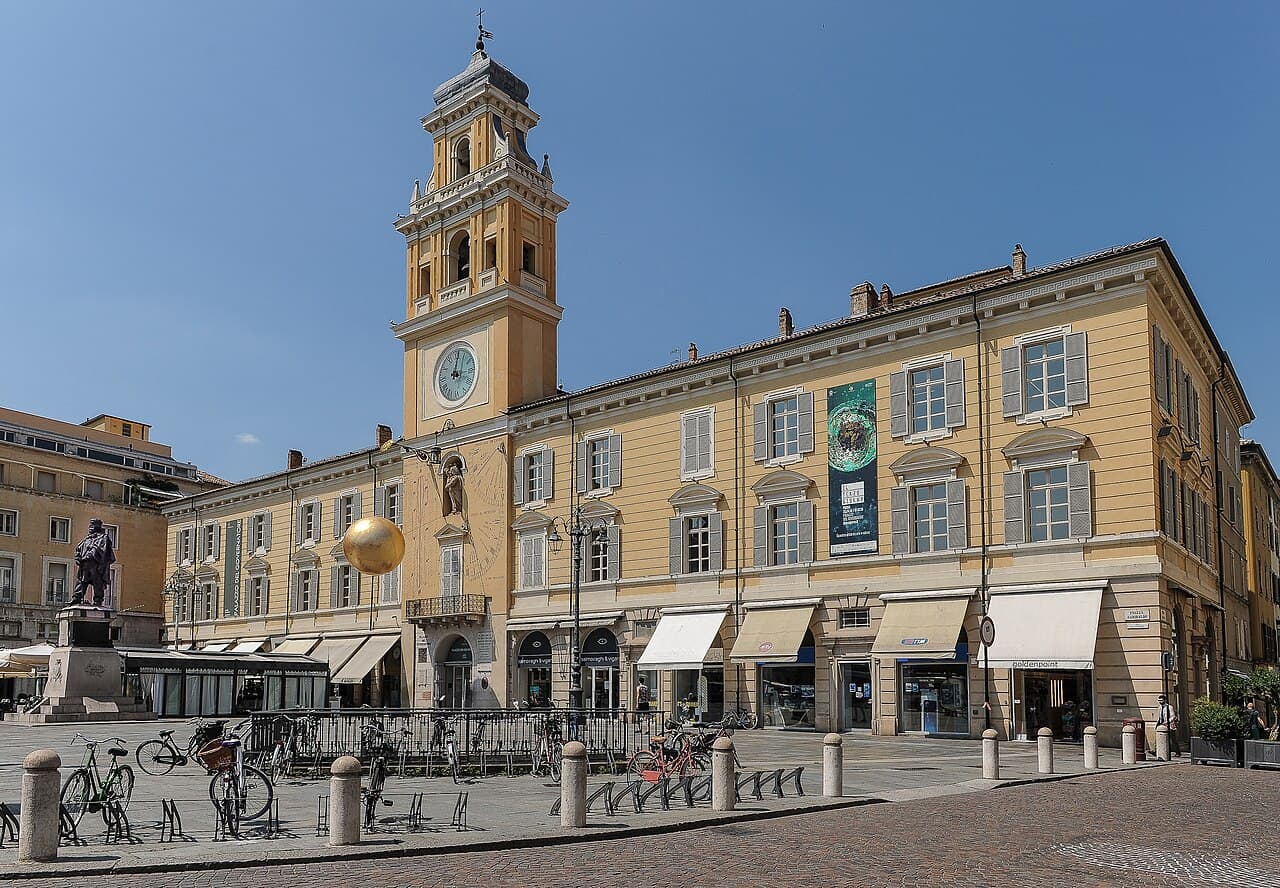
Parma
Italy's food capital for Parmigiano-Reggiano cheese and Parma ham. A charming small city with a beautiful Romanesque cathedral and the Farnese Palace.

Modena
Home of balsamic vinegar, the Ferrari Museum, and Osteria Francescana (consistently ranked among the world's best restaurants). A perfect food-lover's day trip.
Entry Requirements
Italy is part of the Schengen Area. Visitors from many countries can enter visa-free for up to 90 days within any 180-day period. The ETIAS travel authorization system is expected to launch for visa-exempt nationals — check current requirements before travel.
Entry Requirements by Nationality
| Nationality | Visa Required | Max Stay | Notes |
|---|---|---|---|
| US Citizens | Visa-free | 90 days | Passport must be valid for at least 3 months beyond planned departure. ETIAS authorization may be required — check before travel. |
| UK Citizens | Visa-free | 90 days | Post-Brexit, UK nationals follow Schengen third-country rules. The 90/180-day rule applies. |
| Canadian Citizens | Visa-free | 90 days | Standard Schengen rules apply. |
| EU/EEA Citizens | Visa-free | Unlimited | Freedom of movement applies. Can live and work without a visa. National ID card sufficient for entry. |
| Australian Citizens | Visa-free | 90 days | Standard Schengen rules apply. Working Holiday visa available for ages 18-30. |
| Indian Citizens | Yes | Up to 90 days | Must apply for a Schengen visa at the Italian embassy or VFS Global center. Requires travel insurance, accommodation proof, and financial means. |
Visa-Free Entry
Tips
- •The 90-day limit is cumulative across ALL Schengen countries — time in France or Spain counts against your Italy allowance
- •Your passport must be valid for at least 3 months beyond your planned departure from the Schengen area
- •Bologna is well-connected by rail — you may enter Italy at a different airport and train to Bologna without additional border checks
- •Keep proof of accommodation and return travel accessible — occasionally checked at Italian airports
- •EU citizens can enter with just a national ID card — no passport needed
Shopping
Bologna's shopping is defined by food. The Quadrilatero market district and the many salumerie (delis) are the main draw. Beyond food, the city has a strong tradition in leather goods, independent bookshops, and vintage markets fueled by the student population.
Quadrilatero Market District
food market & specialty shopsA medieval grid of streets east of Piazza Maggiore packed with food shops, butchers, fishmongers, cheese shops, and fresh pasta vendors. A sensory feast.
Known for: Fresh tortellini, mortadella, Parmigiano-Reggiano, balsamic vinegar, cured meats
Via Indipendenza
mainstream retailThe main shopping street connecting the station to Piazza Maggiore, lined with Italian and international fashion brands under elegant porticoes.
Known for: Italian fashion (Max Mara, Furla — both born in Bologna), mainstream retail, department stores
Via D'Azeglio & Galleria Cavour
luxury shoppingAn elegant street and covered gallery with high-end Italian and international brands. Galleria Cavour is Bologna's most upscale shopping arcade.
Known for: Designer brands (Gucci, Prada, Louis Vuitton), luxury Italian leather, jewelry
Via Zamboni & University Quarter
independent & vintageThe student quarter with independent bookshops, vintage clothing stores, record shops, and affordable eateries. Creative and youthful energy.
Known for: Secondhand bookshops, vinyl records, vintage clothing, student-friendly prices
🎁 Unique Souvenirs to Look For
- •Fresh tortellini and tortelloni from the Quadrilatero (vacuum-packed for travel)
- •Aged Parmigiano-Reggiano from an Emilia-Romagna producer (vacuum-sealed)
- •Traditional balsamic vinegar of Modena (look for DOP certification for the real thing)
- •Mortadella di Bologna IGP — the original, far superior to commercial versions
- •Emilia-Romagna wines — Lambrusco, Sangiovese, and Pignoletto from local vineyards
- •Artisan leather goods — Bologna has a long leather-working tradition
- •Italian cookbooks focused on Emilian cuisine
If you like Bologna, you'll love…
4 cities with a similar vibe, outside of the same country.

Spain · OVR 76
serious culinary pedigree · compact, pedestrian-first layout

Mexico · OVR 78
eminently walkable core · serious culinary pedigree

Spain · OVR 76
you barely need transit · world-class dining

Canada · OVR 78
compact, pedestrian-first layout · serious culinary pedigree