Postcards · Visited June 2025
Nuuk: They told me there was nothing there
A week in Greenland’s capital, where “nothing” turns out to mean “enough.”
Published May 9, 2026
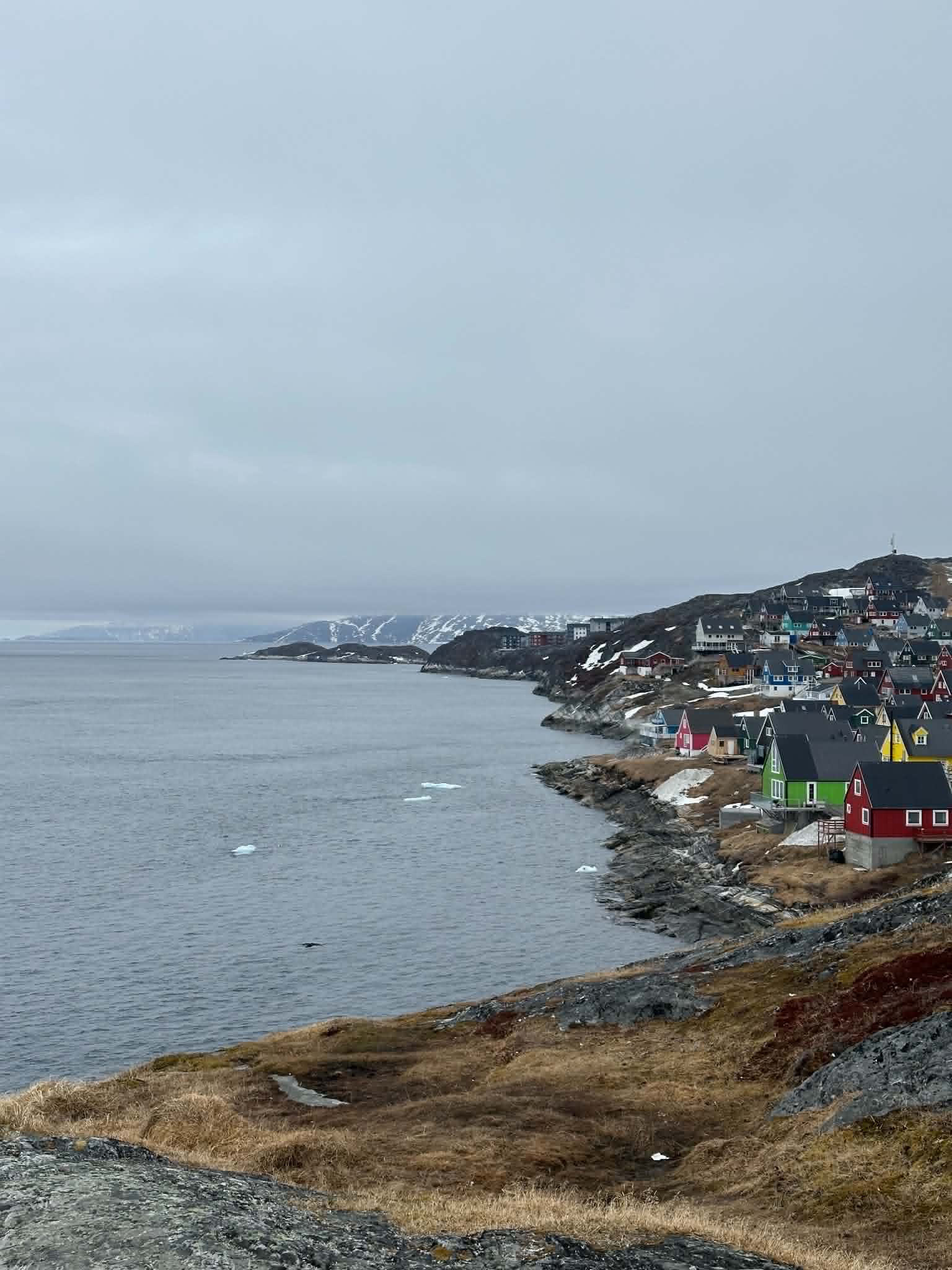
In June 2025, I spent a week in Nuuk, Greenland’s capital, perched on a rocky peninsula on the southwest coast and home to just over 20,000 people. When I told people I was going, I got the same question in different forms: “Why?” “Is there anything to see?” “What do you even do there?” The implication was always clear. You don’t go to Nuuk for the attractions. There aren’t any.
They were almost right. There’s no Eiffel Tower, no Grand Bazaar, no must-see museum. There’s a small town and a much larger landscape: fjords, icebergs, mountains, sea. And a slow rhythm of life that runs against everything I was used to.
But what they got wrong is that nothing was the point. Nuuk is one of the most peaceful places I have ever been.
Getting there
Most travelers reach Nuuk via Iceland. A short hop on a small plane that lands you on a runway tucked between mountains and sea. There are no train stations and no driving routes; the rest of Greenland is reached almost exclusively by boat or another plane.
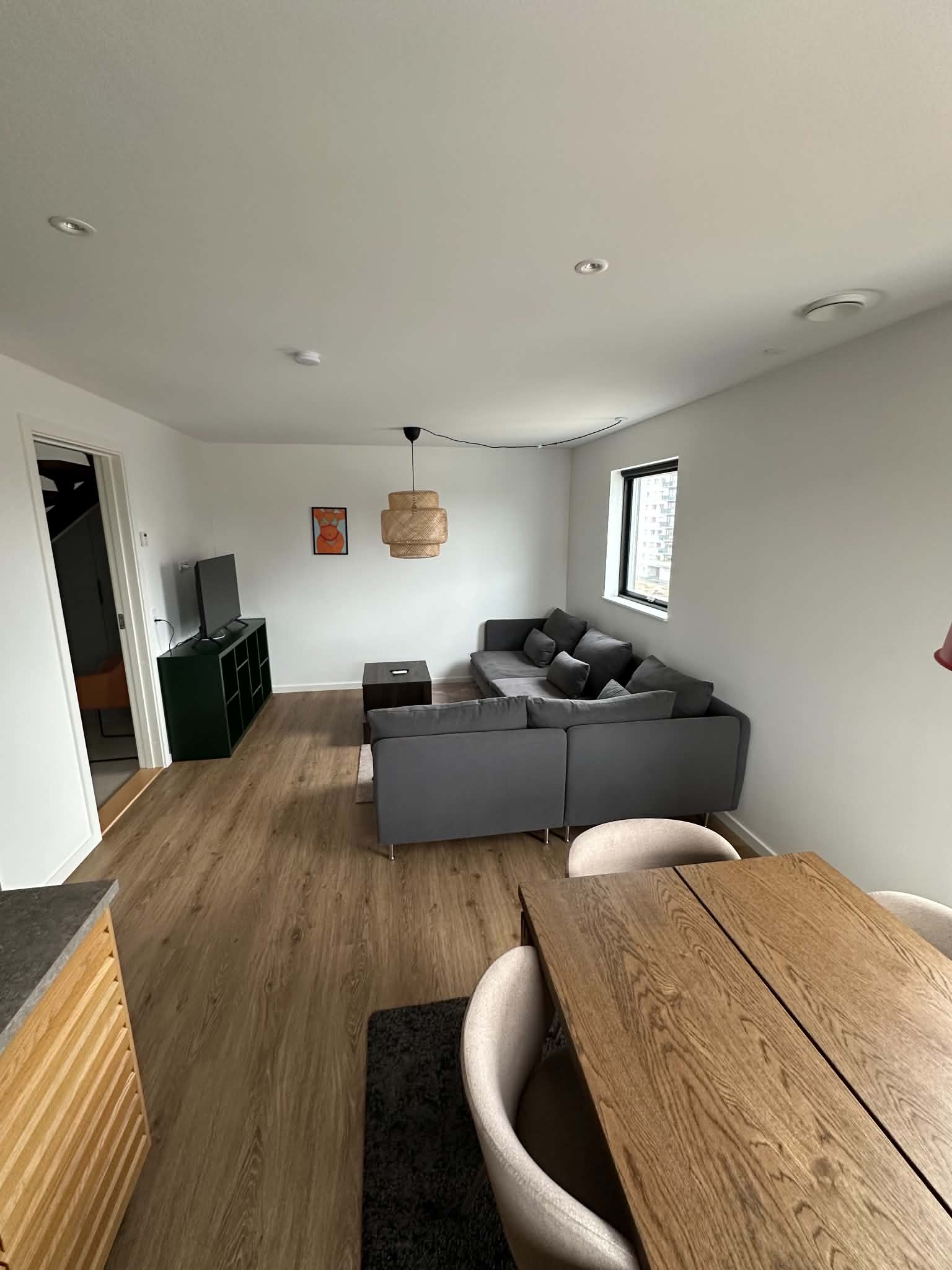
I stayed at the Atcon Apartments. Modern, comfortable, the kind of place you’d expect in a Scandinavian capital, not a town this far north. Credit cards work everywhere. Wifi worked fine. Practically speaking, Nuuk is meaningfully easier to travel in than its “remote Arctic” reputation suggests.
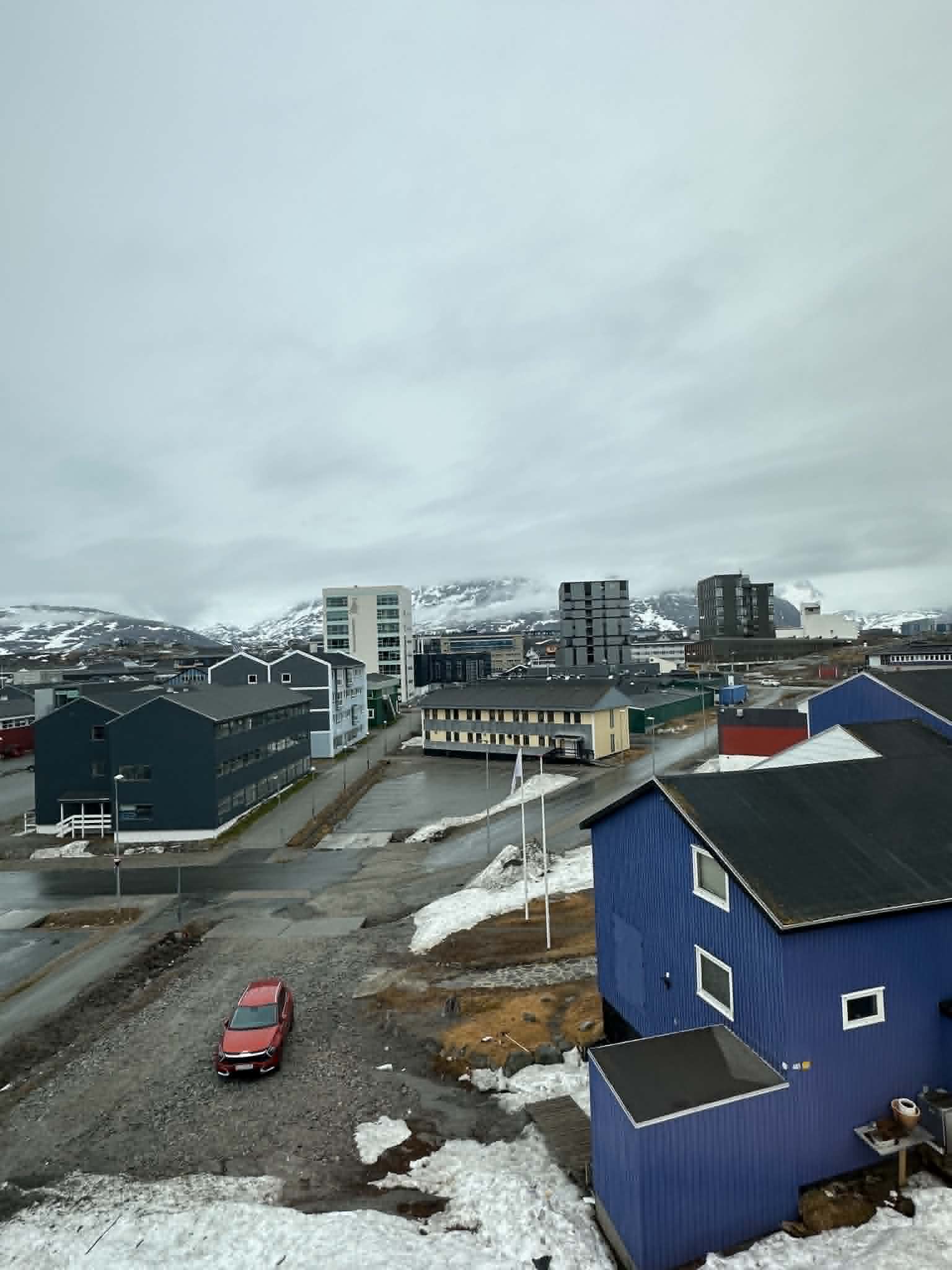
The harder part, in retrospect, was finding the apartment itself. The address pointed me up a hill with no clear road. Several buildings looked nearly identical. At one point I had to track my AirTag to figure out which front door was actually mine. Drop a pin on Google Maps the moment you book. You’ll thank yourself.
The midnight sun and the asparagus
A few things genuinely surprised me about a week in Nuuk.
June in Nuuk means the sun barely sets. One night I went out around 2 AM, walking with no destination, just trying to feel what a city in continuous daylight actually felt like. The sky was a pale, washed-out blue. Dogs were being walked. A few couples were strolling. And in a small playground near the centre of town, four or five kids, none of them older than maybe ten, were chasing each other across a patch of sand, kicking a ball, laughing. To them it wasn’t midnight, or strange, or worth a photograph. It was Tuesday.
What I didn’t expect was what this does to your sense of time. You stop being tired when you’re “supposed” to be. You stop being hungry on a schedule. The mental clock that normally runs your day, the cues from light and shadow that tell you when something should happen, quietly shuts off. What replaces it is something older: you eat when you’re hungry, you walk when you want to walk, you sleep when your body is genuinely done.
The food surprised me too. Despite my normal travel pattern of eating out, I cooked most meals at the apartment. The supermarkets in Nuuk are stocked surprisingly well: fresh fish, decent produce, the basics handled. What stopped me was finding asparagus, of all things. A hothouse vegetable that has no business existing in usable form in a town this far north, and yet there it was, perfectly green, in a supermarket near a fjord. Restaurants are good but limited, and they close shockingly early; by 8 or 9 PM, most kitchens have shut for the night.
Five feet from an iceberg
The single moment I keep coming back to was a small boat tour I booked early in the week. The boat fit maybe four people. The captain was in his early twenties, a young guy who’d lived in Greenland his whole life. A companion was along, his sister or his girlfriend (I never quite worked out which). They were clearly both working: he handled the boat, she handled the hospitality. She made us tea while we were out on the water, served in small mugs that felt oddly domestic against the backdrop of floating ice. We motored out past the harbor and into the bay, and within twenty minutes I was looking at icebergs.
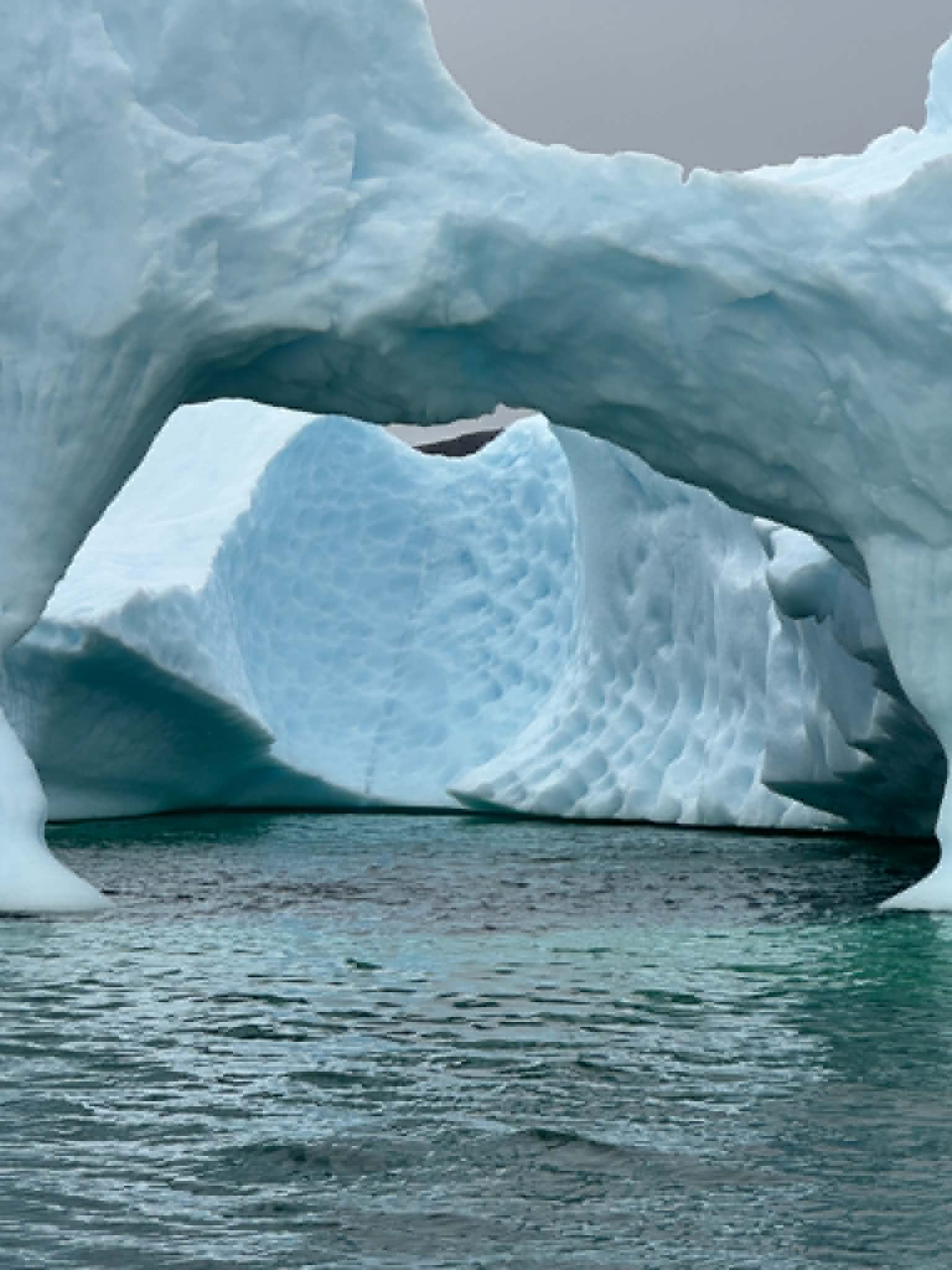
You see icebergs in photographs and you think you understand them. You don’t. The first thing that surprises you is the blue. A glowing, structural blue you can’t really photograph, where compressed older ice catches light differently than ordinary water. The second thing is the silence. The boat cuts its engine and you’re floating in a kind of acoustic vacuum that feels prehistoric.
We got close. Maybe five feet. The captain knew exactly how far was safe. Icebergs roll without warning, and the operators have a healthy fear of them. While we were sitting there, looking up at this floating cathedral of ice, I noticed a seal lounging on a smaller berg drifting just to our side, sunning itself peacefully in the cold light, completely indifferent to us. After a moment it dipped its head into the water. The water was so crystal clear that you could see straight through to whatever quiet world it was watching down there. Then it lifted its head back up and went on with its afternoon.
I keep coming back to that. I keep coming back to that.
What kept hitting me afterward was that the captain had grown up doing this. The bay we were on, the icebergs we were watching, the seal. They weren’t a vacation for him. They were a Tuesday. There’s something humbling about meeting someone whose ordinary life is your once-in-a-lifetime experience. It reframes what you think of as exotic.
One strong recommendation: get on the water
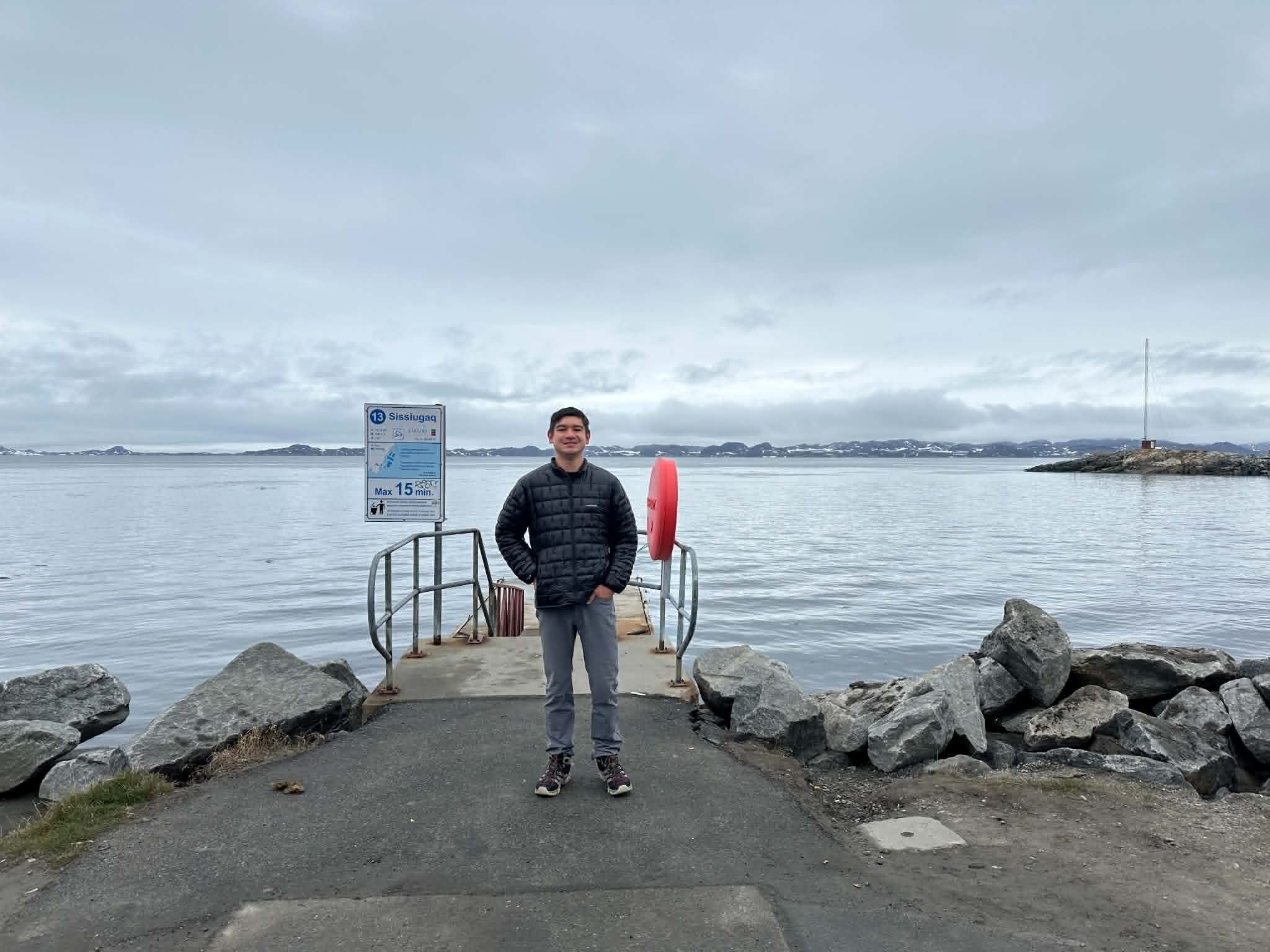
If I went back to Nuuk tomorrow, I would book a boat trip every single day. The town itself is lovely: the colored houses, the harbor, the slow midnight-sun walks. But the experience that transformed Nuuk for me was being out in the bay. The icebergs, the seals, the silence, the shift in perspective when you turn around and see the town from the water.
Boat tours run from the harbor and aren’t expensive by Arctic standards. Multiple operators offer half-day and full-day options. Weather is unpredictable enough that flexibility helps. Plan for the chance that one or two days get cancelled, but know that if you’ve left buffer, you’ll get out.
What I learned
There’s something specific Nuuk teaches you. The pace is different. You stop checking your phone. You start noticing the texture of the light, the way the wind shifts, whether the ice has moved overnight.
I keep thinking about those kids in the playground. They were Greenlandic in a way I will never be Greenlandic. This place, this light, the sea and the mountains across it, was the entire world they had been born into. The midnight sun wasn’t exotic to them; it was June. The icebergs in the bay weren’t a once-in-a-lifetime sight; they were the same icebergs as yesterday, slightly closer or slightly further from shore. After I left Nuuk, they would still be there. Them, and the Inuit taxi driver who told me on the way to the airport that he spends half the year out on the water hunting and fishing and runs his cab the other six months, a rhythm older than the city itself. The young woman at Café Esmeralda, too. She had emigrated from Thailand and left her whole life behind for reasons that were hers alone, and was now pouring espresso in a town she had clearly chosen over the one she came from. They are all still there now, probably, with no idea I ever existed. That is the part of travel that hits hardest, eventually. The place keeps going without you, and the people who live there are not characters in your trip. You were a few hours of background in theirs.
I came in expecting nothing because that’s what everyone told me. I left understanding that “nothing” is a category error. The absence of conventional attractions isn’t an absence. It’s a condition, under which a different kind of attention becomes possible.
If you’re a traveler who needs filled-in itineraries and famous sights, Nuuk is going to feel thin. If you’re a traveler who can sit in a small boat in silence, watching a seal sun itself on a piece of drifting ice, Nuuk might be the most generous trip you’ve taken in years.
I think I’m going back. In winter.
I’m already thinking about going back, but next time in winter. The version of Nuuk I saw, late spring, daylight that wouldn’t quit, ice still drifting in the bay, felt like one half of an answer. The other half is what happens when the sun barely rises, when the houses I photographed against pale skies are buried in snow, when the same bay I crossed in a small boat becomes something you might cross on foot. I don’t know what that version of the place feels like. But I know that the captain who drove me out to that iceberg has been watching this water freeze and thaw his entire life.
Go in early summer if it’s your first time. Stay a week. Get on the water.
It is May now. The ice in Nuuk Fjord is breaking up again. Maybe the captain is back out on the water.
On the same place, structured
For the data side of Nuuk — costs, climate, FIFA-style scoring, and the full structured guide — see MapSorted’s Nuuk guide.
Read more first-hand trip reports in the full collection, or browse the 575 destination guides on MapSorted.