How many days in Sapporo?
Plan 2-4 days for Sapporo. 2 days hits the must-sees; 4 lets you eat well, walk neighbourhoods you've never heard of, and take one day trip.
The minimum
2 days
2 days fits the top sights, one good food walk, and one neighbourhood deep-dive — no day trips.
The sweet spot
4 days
4 days adds one day trip, two more neighbourhoods, and three more sit-down meals you'll actually remember.
Slow travel
6 days
6 days is when you leave the to-do list at home and actually live in the city for a week.
The headline things to do in Sapporo
From the Sapporo guide — these are the items that anchor a 2-day visit. For the full breakdown, read the Sapporo travel guide.
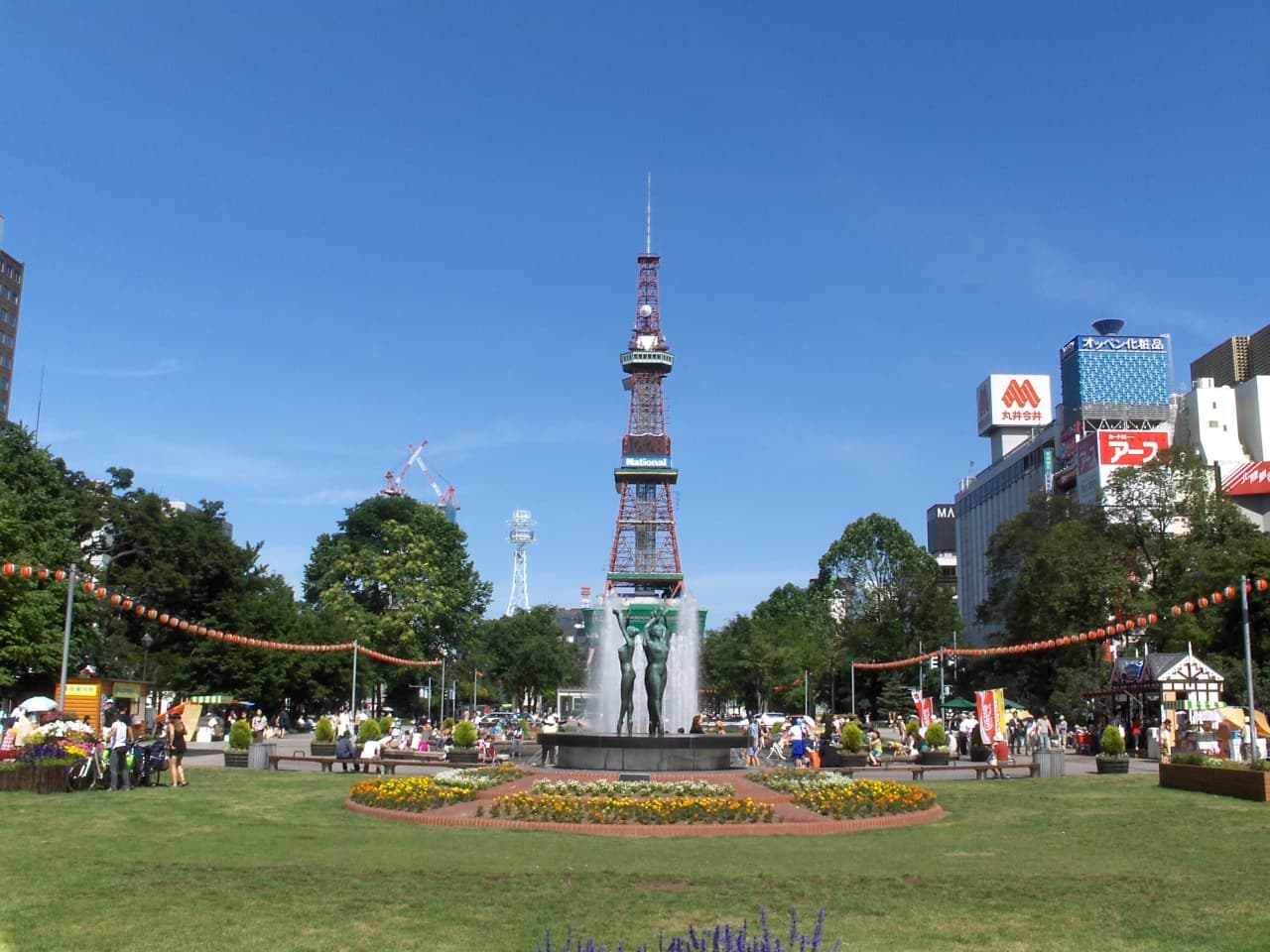
- Odori Park & Sapporo TV Tower — Downtown (Chuo-ku)
A 1.5-km tree-lined park slicing east-west through downtown — Odori (大通) literally means "main street", and the park is the spine of the city's grid. The 147-m red Sapporo TV Tower at the eastern end (¥1,000 to climb) gives a clear view of the perpendicular grid extending north and south. Odori Park hosts the main Snow Festival site in February (snow sculptures up to 15 m), the Lilac Festival in May, the YOSAKOI Soran dance festival in June, and the German Christmas Market in December.
- Susukino Nightlife District — Susukino (Chuo-ku)
Japan's third-largest entertainment district after Tokyo's Kabukicho and Osaka's Dotonbori — 4,000+ restaurants, izakayas, ramen shops, jazz bars, and karaoke parlours packed into a 12-block grid south of Odori Park. The Susukino Crossing (with the iconic Nikka Whisky neon sign that's been there since 1969) is the photographic centrepiece. The 17-shop Ramen Yokocho ("ramen alley") is a 50-year-old narrow alley with the city's most concentrated ramen options.
- Sapporo Beer Museum & Beer Garden — Higashi-ku (15 min from downtown)
The original 1890 red-brick Sapporo Brewery converted to Japan's only beer museum — free admission, paid tasting at the bar (¥200 for a 200ml glass of three Sapporo varieties including the rare premium "Star" lager only sold at the museum). The adjacent Sapporo Beer Garden serves "Genghis Khan" (jingisukan) — Hokkaido-style barbecued lamb cooked on a dome-shaped iron skillet over charcoal — alongside fresh draught Sapporo. ¥4,000–6,000 per person all-you-can-eat-and-drink.
- Hokkaido Shrine (Hokkaido Jingu) — Maruyama Park (west of downtown)
Hokkaido's most important Shinto shrine, established 1869 in Maruyama Park — dedicated to the colonisation of Hokkaido and consecrating the gods who guarded the Meiji-era pioneers. Among the most beautiful cherry blossom locations in the city in early May (a month behind Tokyo's peak); a quiet retreat year-round. Free entry; the adjacent Maruyama Zoo and Maruyama Park together make a half-day visit.
- Mount Moiwa Ropeway & Summit — Mount Moiwa (southwest)
A 531-m mountain on Sapporo's southwest edge — ropeway + cable car combination ascends to a summit observatory with one of Japan's "Three Greatest Night Views" (alongside Hakodate and Nagasaki). Sunset and the lights coming on across the city grid is the photo. ¥2,100 round-trip on the public ropeway; free if you walk the 2-hour summit trail. Restaurant at the top serves dinner.
- Sapporo Clock Tower (Tokeidai) — Downtown (1 block from Odori Park)
A 1878 American-style wooden building — one of the oldest Western-influenced structures in Japan and a city landmark. The exhibits inside (¥200) tell the surprisingly interesting story of how Hokkaido was rapidly Westernised by the Meiji government with American advisors (the building is essentially a transplanted New England town hall). Often called "one of Japan's three biggest tourist disappointments" because the surrounding skyscrapers dwarf it — but the inside exhibits are worthwhile.
- Otaru Day Trip — Otaru (40 min by train)
A historic harbour town 40 min by train from Sapporo — preserved early-20th-century stone warehouses along the Otaru Canal (most photographed at night with gas lamps), the LeTAO cheesecake shop (the original location), and the Sankaku Market sushi restaurants serving Hokkaido-fresh uni and ikura at half the Tokyo price. Glass-blowing studios are an Otaru speciality. JR Hakodate Line, ¥750 each way.
- Niseko Ski Resort — Niseko (90 min by bus from Sapporo)
90 min west of Sapporo — Japan's premier powder-skiing destination, with ~15 m of seasonal snowfall. Four interconnected resorts (Grand Hirafu, Hanazono, Niseko Village, Annupuri) share a single all-mountain pass; the night skiing operation is the largest in the world. Beyond the ski season, Niseko has natural onsen, summer hiking, and the iconic Mount Yotei (a Mt. Fuji-shaped cone). Sapporo-Niseko bus ¥3,000 each way; rental cars also work.
Frequently asked
Is 2 days enough in Sapporo?
2 days is the minimum for a satisfying visit — you'll see the headline sights but won't have flex time. If you can stretch to 4, you unlock a day trip and the food walks that make the trip memorable.
Is 6 days too long in Sapporo?
6 days is for travellers who want to slow down — eat at neighbourhood spots tourists don't reach, take repeat day trips, and live in the city. If you're a tick-the-list traveller, 4 is enough.
What's the ideal trip length for first-time visitors to Sapporo?
4 days is the sweet spot for a first visit — long enough to cover the must-sees, eat at three good spots, take one day trip, and not feel like you're racing a checklist. Less than 2 usually feels rushed; more than 6 is into slow-travel territory.
Should I add Sapporo to a longer regional trip?
Yes — Sapporo works well as a 2-4-day stop on a longer regional itinerary. Pair it with a nearby destination via the trip planner so the transit days don't compress your time on the ground.