All Destinations
64 of 576 guides match

Inle Lake
Myanmar
A 22 km freshwater lake on the Shan Plateau at 880 m elevation — famous worldwide for the Intha leg-rowing fishermen who balance one foot on the bow, the other wrapped around an oar, freeing both hands for the conical net. Floating gardens grow tomatoes on rafts of weed; stilt villages of teak houses sit out on the lake; the Phaung Daw Oo Pagoda holds five Buddha images so encrusted with gold leaf they've lost all human form. Bagan is the architecture; Inle is the everyday human-on-water genius.

Jasper National Park
Canada
The northern anchor of the Canadian Rocky Mountain Parks UNESCO site. Maligne Lake's Spirit Island, the Columbia Icefield's Athabasca Glacier, the 230 km Icefields Parkway drive down to Banff, and the Jasper SkyTram up Whistlers Mountain (2,263m). World's 2nd-largest Dark Sky Preserve with an annual Dark Sky Festival. Wildlife: elk, bighorn sheep, bears, wolves. Honest note: the town suffered major damage in the 2024 wildfire; confirm operational status for specific lodges. Access from Edmonton (YEG) 4hr or Calgary (YYC) 5hr; VIA Rail stops in Jasper.

Joshua Tree National Park
United States
Joshua Tree spans 800,000 acres at the meeting point of the Mojave and Colorado deserts in southern California, two hours east of Los Angeles. The park is famous for the namesake yucca trees that cluster in the higher Mojave half, the surreal monzogranite boulder piles at Hidden Valley and Jumbo Rocks, and one of the best concentrations of single-pitch climbing and bouldering in the world (1,400+ routes). Skull Rock, the Cholla Cactus Garden, and Keys View over the Coachella Valley are the can't-miss roadside stops. Twentynine Palms and Yucca Valley are the gateway towns; the season runs October through May.

Khövsgöl Lake
Mongolia
Khövsgöl Nuur is northern Mongolia's Dark Blue Pearl — a 136 km long, 262 m deep alpine lake near the Russian border that holds roughly 1 percent of the planet's surface fresh water and is over two million years old. It sits at 1,645 m in a basin of larch-and-cedar taiga, ringed by 3,000 m peaks of the Khoridol Saridag range. The Tsaatan reindeer herders camp in the surrounding forest, reached only by multi-day horse trek from the gateway village of Hatgal. Summer means horse trekking, kayaking, and bird-watching; from January the lake freezes a metre solid and the March Ice Festival fills the surface with horse races and shaman ceremonies.
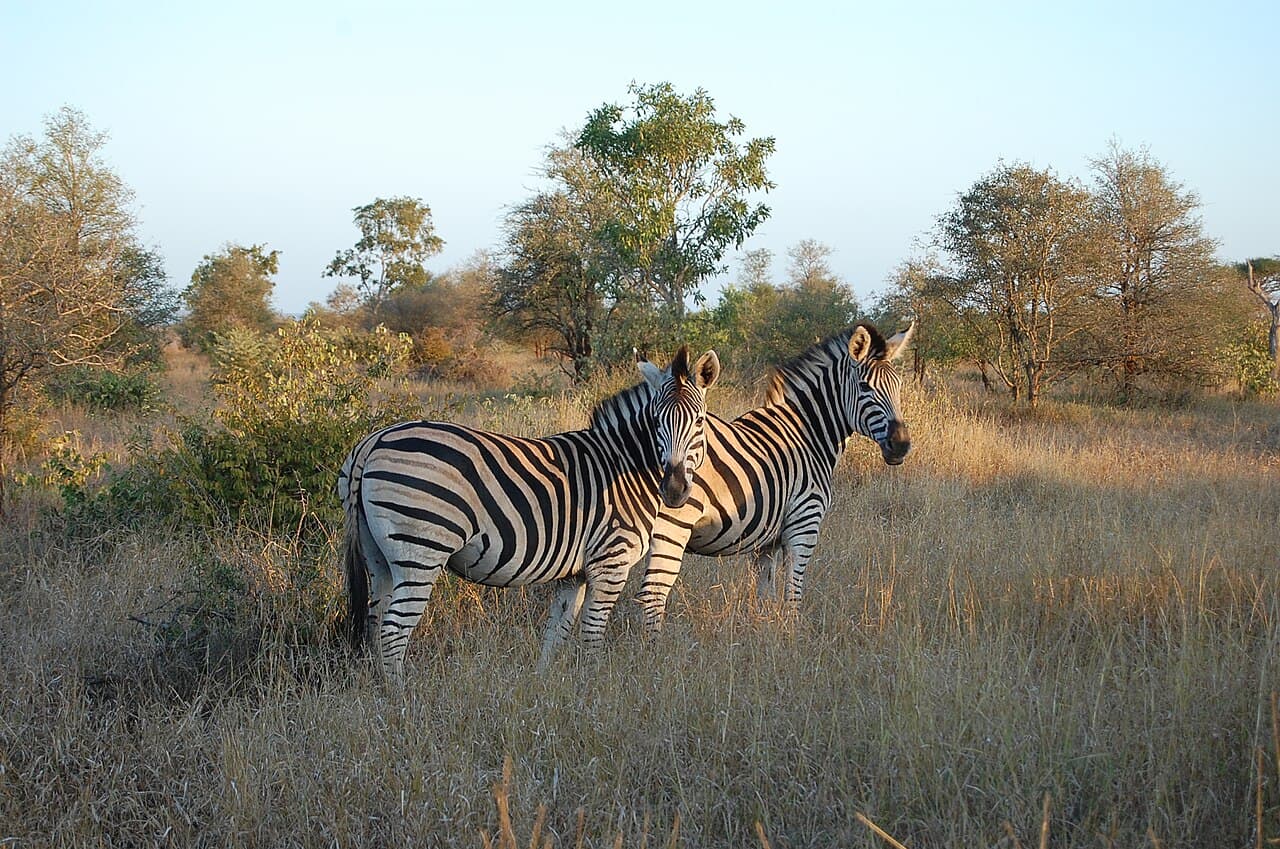
Kruger National Park
South Africa
South Africa's flagship safari park and one of Africa's largest game reserves — home to the Big Five and an incredible diversity of wildlife across nearly 2 million hectares.

Lake Balaton
Hungary
Central Europe's largest lake, 77 km of warm shallow water that Hungarians without sea access have claimed as their summer beach. The Tihany peninsula juts halfway across with its 11th-century Benedictine abbey and lavender fields, the south shore is wall-to-wall family resorts (Siófok, Zamárdi), and the north shore is wine country: Badacsony's volcanic basalt vineyards, Balaton-felvidék uplands, and the Festetics Palace at Keszthely. Trains from Budapest reach Balatonfüred in about two hours, and the lake never gets deeper than 12 metres so the water warms quickly in June.

Lake Bled
Slovenia
An impossibly photogenic 2.1 km alpine lake at the foot of the Julian Alps — fed by underground hot springs, with Slovenia's only natural island (a 17th-century pilgrimage church reached by 99 steps) at its centre and a 1,000-year-old castle on a 130m cliff above. Hand-rowed pletna boats, the original 1953 Bled cream cake (kremšnita) on the lake-facing terraces, and the dramatic Vintgar Gorge boardwalk 4 km away. Triglav National Park's gateway — pair Bled with Lake Bohinj for the broader alpine experience.

Lake Garda
Italy
Italy's largest lake — 370 km² of glacial water, 51 km long, straddling Lombardy, Veneto, and Trentino. The northern half is fjord-like, walled by 2,000-metre Alpine peaks; the southern half opens into a broad amphitheatre with the Sirmione thermal peninsula's 13th-century Scaligero Castle (the only one in Italy with a working drawbridge), the medieval walls of Lazise, and the lemon-grove terraces of Limone sul Garda. Riva del Garda at the northern tip is one of Europe's premier windsurfing spots thanks to the reliable Ora wind. Add the Monte Baldo cable car, Gardaland Italy's largest theme park, the Bardolino wine region, and 30+ ferry-connected lakeshore villages — Lake Garda is northern Italy's most varied single destination.

Lake Malawi
Malawi
Africa's third-largest lake stretches 560 km along Malawi's eastern flank — a freshwater inland sea so clear that the UNESCO Lake Malawi National Park around Cape Maclear is the cichlid biodiversity capital of the world, with 1,000+ endemic species. Beach lodges hug the southern shores at Cape Maclear and Senga Bay, the historic MV Ilala steamer still threads weekly up the lake, and Likoma Island's Anglican cathedral sits improbably mid-water. Snorkel and dive in bilharzia-safe deep water; the lake replaces the ocean most travellers expect from a southern African trip.

Lake Tahoe
United States
North America's largest alpine lake — 22 miles long, 12 miles wide, 1,645 ft deep at center, sitting at 6,225 ft elevation in the Sierra Nevada and split between California and Nevada. Twelve ski areas ring the basin (Heavenly, Palisades Tahoe, Northstar, Kirkwood, Sugar Bowl, Mount Rose) — the densest concentration in North America. In summer the same shoreline becomes a beach-and-boat playground: Emerald Bay's granite-walled cove, Sand Harbor's clear turquoise water, and 72 miles of paved bike path on the West Shore. Reno (RNO) is 30 minutes from the North Shore; Sacramento (SMF) is 2 hours from the South. The state line splits casinos onto the Nevada side and most pine-forested cabins onto the California side.

Maasai Mara
Kenya
1,510 km² of rolling savannah in southwestern Kenya — the northern extension of Tanzania's Serengeti ecosystem and arguably the highest density of large mammals on Earth. The Big Five (lion, leopard, elephant, buffalo, rhino) are all resident year-round; July-October brings the Great Migration when 1.5 million wildebeest, 200,000 zebra, and 350,000 Thomson's gazelle thunder across the Mara River in crocodile-strewn crossings. Hot-air balloon safaris at dawn (300-450 USD), bush flights from Nairobi's Wilson Airport (45min — far quicker than the 5-6hr drive on bone-rattling C12), and conservancy stays in the bordering 14 community-owned reserves (Mara North, Olare Motorogi, Naboisho) which allow off-road driving and night drives forbidden inside the main reserve. Maasai cultural villages dot the perimeter.

Machu Picchu
Peru
Machu Picchu is the 15th-century Inca citadel perched on a mountain saddle 2,430m (7,970 ft) above sea level — built in stone so precise no mortar was used, abandoned around 1572 during the Spanish conquest, and forgotten by the outside world until Hiram Bingham re-introduced it in 1911. Today it draws roughly 4,500 visitors per day on capped-entry tickets, accessed via the PeruRail or Inca Rail train from Ollantaytambo to Aguas Calientes (the cloud-forest valley town below) and then a 25-minute switchback bus ride up to the gate. Sunrise from the Sun Gate (Inti Punku) and the vertiginous Huayna Picchu hike behind the citadel are the iconic experiences.

Milford Sound
New Zealand
The fjord Rudyard Kipling called the eighth wonder of the world — a 15-km arm of the Tasman Sea cut into Fiordland's granite, with Mitre Peak rising 1,692 m straight out of the water and Stirling Falls plunging 151 m off the cliff. It rains 200+ days a year and that's the point: every storm makes hundreds of temporary waterfalls. There's effectively no town, two cruise piers, one lodge, and a road in from Te Anau that closes for avalanche control most winters.

Mount Rainier National Park
United States
Mount Rainier is a 14,411-foot active stratovolcano less than 90 miles southeast of Seattle, the most prominent peak in the Lower 48 and the centerpiece of a 369-square-mile park established in 1899. The Paradise area on the south flank (5,400 feet) is the busiest base, with the Skyline Trail circling subalpine meadows that erupt with avalanche lily and Indian paintbrush every July and August. Sunrise on the northeast side, at 6,400 feet, is the highest road in Washington and gives the closest road-accessible view of the mountain. Reflection Lakes is the iconic mirror shot, Mowich Lake holds the quiet northwest corner, and snow lingers on the high country into July most years.

Niagara Falls
United States
Three waterfalls on the Niagara River between New York State and the Canadian province of Ontario — the American Falls (167 ft tall, 1,060 ft wide), Bridal Veil Falls (the small one separated by Luna Island, also on the US side), and the dominant Horseshoe Falls (167 ft tall, 2,600 ft wide) carrying 90% of the total water volume with the curve sitting mostly in Canada. Combined flow averages 750,000 gallons per second. Second-largest waterfall in the world by flow rate (after Inga Falls in DRC) but only 51st by height — the fame comes from being the largest in the inhabited Western world and the most accessible, drawing 12+ million visitors a year split roughly equally between US and Canadian sides. The falls erode upstream at about 1 ft per year (down from 3 ft historically due to flow control); the 7-mile gorge below is the path the falls have carved over 12,500 years since the last ice age. The Maid of the Mist boat tour has operated continuously since 1846 — the oldest tourist attraction in North America. Niagara also produces ~2.4 million kW of hydroelectric power, with treaty agreements diverting up to 75% of natural flow into the power stations at night and in winter. Closest airports: Buffalo Niagara (BUF, US side) and Toronto Pearson (YYZ, Canadian side).

Norwegian Fjords
Norway
Norway's fjords are nature at its most dramatic — sheer cliffs plunging into deep blue water, thundering waterfalls, and tiny villages clinging to narrow shores. Geirangerfjord and Sognefjord are the most famous, but the entire western coast is jaw-dropping. Bergen is the gateway city, and the Norway in a Nutshell route is the classic way to see it all.

Okavango Delta
Botswana
UNESCO World Heritage Site (2014) — the world's largest inland delta, 15,000 km² of wetlands where the Okavango River ends in the Kalahari rather than reaching the sea. The paradox season: floodwaters from Angolan rains peak in June–August, making Botswana's dry winter months the wildlife spectacle. Mokoro canoe safaris, luxury fly-in camps (Mombo, Vumbura, Duba Plains), Big 5 game plus African wild dogs, and Maun as the MUB gateway town.

Olympic National Park
United States
Olympic spans 922,000 acres on Washington's Olympic Peninsula and packs three separate ecosystems into one park, none of them connected by interior roads. The Hoh Rain Forest on the west side gets 12 feet of rain a year and grows moss-draped Sitka spruce cathedrals. The 73-mile Pacific coast strip holds Ruby Beach, Rialto with its sea stacks, and Shi Shi. The interior alpine zone tops out at 5,200-foot Hurricane Ridge with views from the Olympics back across the Strait of Juan de Fuca to Vancouver Island. Lake Crescent and Sol Duc Hot Springs are the natural bases, the park is 2.5 hours from Seattle including a ferry, and the coast stays open year-round.
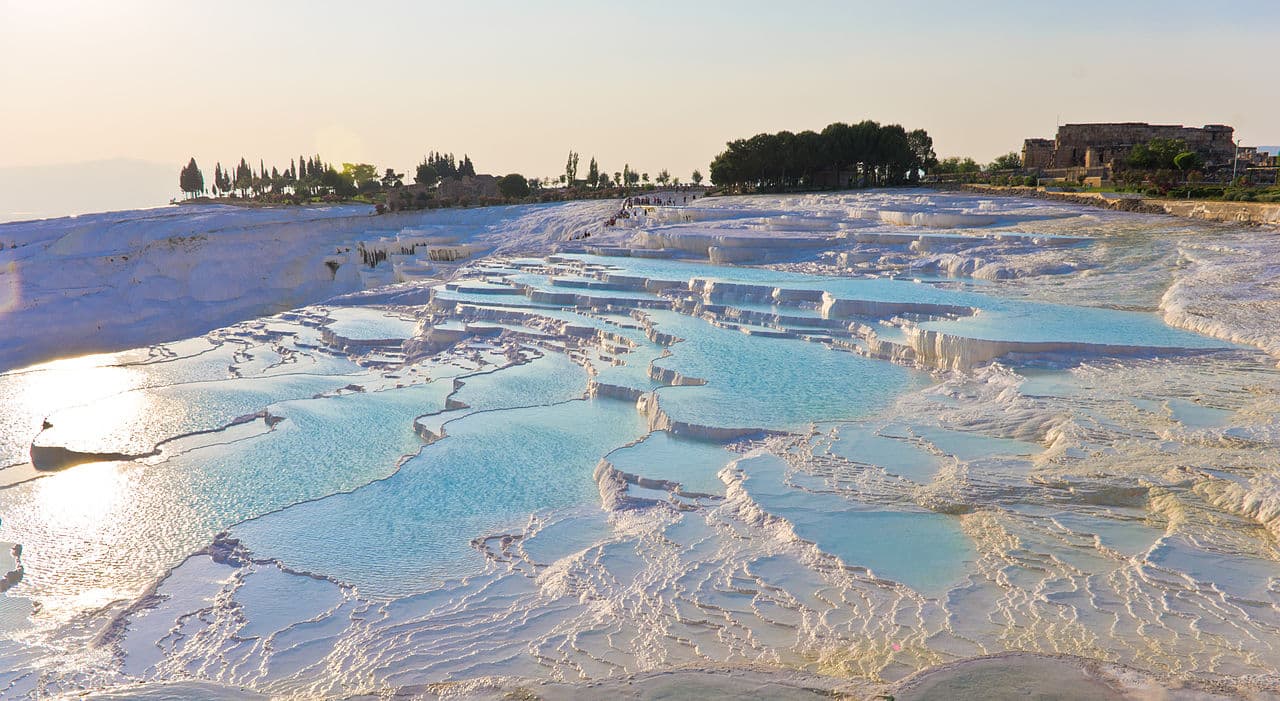
Pamukkale
Turkey
A surreal cascade of blinding-white travertine terraces — calcium carbonate platforms shaped over 14,000 years by hot mineral springs flowing down a 200m cliff in southwestern Turkey. Above the terraces sits Hierapolis, the Greco-Roman spa city Marcus Antonius gifted to Cleopatra, with a 12,000-seat theatre, the largest necropolis in Anatolia, and the still-bathable Cleopatra's Pool studded with toppled marble columns. UNESCO-listed since 1988; visited by 2.5 million per year, but most arrive on day buses from Antalya, Kuşadası, or Marmaris and clear out by 17:00.

Patagonia
Chile
Patagonia is the end of the world — and it's breathtaking. Torres del Paine's granite spires, Perito Moreno's thundering glacier, and vast windswept steppes define one of the planet's last truly wild frontiers. Shared between Chile and Argentina, the region rewards serious hikers and nature lovers willing to brave the elements.

Petra
Jordan
One of the New Seven Wonders — the rose-red Nabataean city carved into desert cliffs. The Siq gorge narrows to 3m wide and 80m tall before revealing the Treasury's 40m facade. Only 15% of the ancient city has been excavated. The Monastery (Ad-Deir) is larger than the Treasury and requires 800 rock-cut steps — most visitors skip it, which is their loss. Petra by Night (Mon/Wed/Thu) is the most atmospheric experience in the Middle East.

Plitvice Lakes National Park
Croatia
Sixteen turquoise lakes terraced by travertine dams growing 1cm a year, connected by 78m waterfalls and a wooden boardwalk you cannot swim from (fines enforced). Croatia's most famous national park, UNESCO since 1979, packed in summer — arrive at the 7am opening. Between Zagreb (2h) and Split.

Railay
Thailand
Technically a peninsula on mainland Thailand (Krabi Province) but the towering limestone karst cliffs cut it off from road access — the only way in is by longtail boat (10–15 minutes from Ao Nang, 45 minutes from Krabi Town). No cars, no scooters, no traffic, and a small-island feel that makes Railay Thailand's most beach-paradise mainland destination. It is one of the world's most legendary rock-climbing destinations, with over 700 bolted routes split between Railay East, Tonsai, and Phra Nang Beach across grades from 5a to 8c. Phra Nang Cave at the southern tip contains a 'Princess Cave' shrine where local fishermen leave wooden phallus offerings (lingam) to the spirit of a princess believed to bestow fertility. The four beaches sit within 15 minutes' walk of each other but feel dramatically different — Railay West for postcard sunsets, Railay East as the climbing-and-mangrove backside, Phra Nang Beach (the most beautiful), and Tonsai (rougher, backpacker climbing zone). Closest airport: Krabi (KBV), 25 minutes by car to Ao Nang.

Raja Ampat
Indonesia
The highest marine biodiversity on Earth — 1,500 fish species, 700 molluscs, and 600+ coral species inhabit these four islands and 1,500 islets in West Papua. Cape Kri holds the world record for fish species counted in a single dive (374). The Pianemo viewpoint — karst limestone islands dotting a turquoise lagoon — is one of the most photographed landscapes in the world.