All Destinations
576 guides — page 10 of 24

Huangshan
China
Anhui province's UNESCO granite range — 1,860m peaks rising from the yunhai sea-of-clouds layer that gave centuries of Chinese poets and ink painters their template for what a mountain should look like. Two cable cars (Yungu on the east, Taiping on the west) lift visitors past the four classic features (oddly-shaped pines, grotesque rocks, sea of clouds, hot springs) onto a plateau of summit hotels at Beihai, Xihai and Baiyun. Most visitors stay one or two nights for sunrise. Five hours from Shanghai by G-train.

Hue
Vietnam
The imperial capital of Vietnam under the Nguyen Dynasty from 1802 to 1945 — UNESCO-inscribed in 1993 as a complex of palaces, royal tombs, pagodas, and citadel walls along the Perfume River (Song Huong, named for the autumnal scent of fruit-tree blossoms drifting from the upstream orchards). The Imperial Citadel covers 520 hectares enclosed by 10-kilometre stone walls and a moat, modelled on Beijing's Forbidden City but smaller, with the Forbidden Purple City reserved exclusively for the emperor and his immediate family at its heart. The 1968 Tet Offensive's 26-day Battle of Hue was one of the bloodiest urban battles of the Vietnam War — much of the citadel was destroyed and restoration is still ongoing. Seven royal tombs scatter through the hills south of the city; Tu Duc, Khai Dinh, and Minh Mang are the most architecturally exceptional. Hue cuisine is its own school of Vietnamese cooking — the iconic everyday dish is bun bo Hue (spicy beef noodle soup with lemongrass and fermented shrimp paste). The Eiffel-firm-designed Truong Tien Bridge connects the imperial north bank with the modern south.

Hunza Valley
Pakistan
A Karakoram valley wedged between 7,000m peaks — Karimabad and Altit perched on terraces above the Hunza River, Baltit Fort surveying the apricot orchards from its 700-year-old foundations, and Rakaposhi (7,788m) filling the southern view from breakfast tables. Turquoise Attabad Lake formed in 2010 after a landslide, and the Karakoram Highway threads north through it to the Khunjerab Pass and the Chinese border. One of the safest corners of Pakistan and the country's tourism crown jewel.

Hurghada
Egypt
Egypt's Red Sea Riviera, strung along 40 km of mainland coast facing the Sinai across the Gulf of Suez. Once a quiet fishing village, Hurghada exploded into the country's largest beach-resort cluster from the 1980s onward and now functions as the lower-cost mainland counterpart to Sharm El Sheikh. The Giftun Islands sit a 30-minute snorkel-boat ride offshore, El Gouna (the upscale planned town with its lagoons, marina and golf course) is 25 km north, and Hurghada International handles direct charters from across Europe and the former USSR.

Hvar
Croatia
Croatia's sunniest island receives over 2,700 hours of sunshine per year — more than anywhere else in the country. The Stari Grad Plain (UNESCO) was laid out by Greek colonists in 384 BC in a geometric field system unchanged for 2,400 years. Hvar Town's limestone piazza, backed by the Fortica fortress and facing the Pakleni Islands, is the most glamorous harbour scene in the Adriatic.

Ibiza
Spain
The third-largest Balearic Island wraps two completely different identities into one Mediterranean idyll — the UNESCO-listed Renaissance walls of Dalt Vila, the most complete coastal fortifications in the Mediterranean, sit above an island that hosts the world's most influential club scene (Pacha since 1973, Amnesia, Ushuaïa, DC10, Hï Ibiza). Two-thirds of the island is protected: Ses Salines Natural Park where Phoenicians have harvested salt for 2,700 years, the underwater Posidonia seagrass meadows that produce the clearest water in Spain, and the rural north of pine-forested fincas and almond groves. Cala Comte sunsets, Es Vedrà mythology, and 30-minute ferry rides to Formentera's white-sand beaches round out an island that delivers everything from teenage stag weekends to UNESCO archaeology.

Iguazu Falls
Argentina
One of the New 7 Natural Wonders — 275 individual cascades stretched 2.7km along the Argentina-Brazil border, dwarfing Niagara. The Argentine side's Devil's Throat catwalk puts you above the roaring central plunge; the Brazilian side delivers the panoramic postcard. Subtropical rainforest with toucans, coatis, and capuchin monkeys. Puerto Iguazú is the Argentine base; Foz do Iguaçu sits across the bridge.

Ilulissat
Greenland
Greenland's third-largest town sits 300 km north of the Arctic Circle at the mouth of the UNESCO-listed Ilulissat Icefjord — where Sermeq Kujalleq glacier calves 35 km³ of icebergs per year (more than any glacier outside Antarctica). Home to 4,700 people and roughly 3,500 Greenlandic sled dogs. Midnight sun May–July, polar night November–January, and one of the planet's most reliable Northern Lights viewing windows September through April.

Indianapolis
United States
Indianapolis is the most under-rated big city in the Midwest — the Indianapolis Motor Speedway hosts the Indy 500 (350,000 spectators, the largest single-day sporting event in the world) every Memorial Day weekend, the NCAA is headquartered downtown, and Mass Ave (Massachusetts Avenue) has emerged as one of the Midwest's best food-and-drink corridors. The downtown is genuinely walkable thanks to the 8-mile Cultural Trail loop, and the city has more memorial monument acreage than any US city outside Washington DC — Soldiers' and Sailors' on Monument Circle is the unofficial symbol.

Inle Lake
Myanmar
A 22 km freshwater lake on the Shan Plateau at 880 m elevation — famous worldwide for the Intha leg-rowing fishermen who balance one foot on the bow, the other wrapped around an oar, freeing both hands for the conical net. Floating gardens grow tomatoes on rafts of weed; stilt villages of teak houses sit out on the lake; the Phaung Daw Oo Pagoda holds five Buddha images so encrusted with gold leaf they've lost all human form. Bagan is the architecture; Inle is the everyday human-on-water genius.

Innsbruck
Austria
Innsbruck is the Tyrolean capital squeezed into the Inn River valley between two enormous limestone walls — the Nordkette to the north (you can ride a Zaha Hadid-designed funicular from the city centre to 2,256 m in 20 minutes) and the Patscherkofel to the south. The medieval Altstadt is anchored by Maximilian I's Goldenes Dachl (Golden Roof, 2,657 fire-gilded copper tiles, 1500 AD), and the city has hosted the Winter Olympics twice (1964, 1976). It is the world's only major city where you can drink a melange in a Habsburg-era cafe at 09:00 and be on a black-graded ski run by 10:30.

Interlaken
Switzerland
Switzerland's alpine adventure capital sits between Lake Thun and Lake Brienz, with the Jungfrau region rising behind town. Base for Jungfraujoch's Top of Europe railway (3,454m), paragliders launching over Höhematte meadow, Lauterbrunnen's 72 waterfalls (inspiration for Rivendell), and Mürren's car-free clifftop perch. Expect Swiss prices.

Isfahan
Iran
"Isfahan is half the world" — Safavid-era capital whose Naqsh-e Jahan Square (UNESCO 1979) is one of the largest public squares on Earth, ringed by the blue-tiled Shah Mosque, the jewel-like Sheikh Lotfollah Mosque, Ali Qapu Palace, and the Grand Bazaar. Si-o-se-pol and Khaju bridges span the Zayandeh, the Armenian Vank Cathedral marks the Jolfa quarter, and Chehel Sotoun's reflected columns complete the Safavid tour. Visa reality is complicated for US/UK/Canadian passports — guided tours only; sanctions block foreign cards (carry USD/EUR cash).

Islamabad
Pakistan
Pakistan's purpose-built capital, planned in the 1960s on a Greek-architect's grid against the Margalla Hills — leafy, organized, and a complete reset from the Subcontinent's older megacities. Faisal Mosque rises like a Bedouin tent against the foothills, F-7 sector cafes spill onto wide boulevards, and the Margalla Trail-3 trailhead is a 15-minute drive from downtown. Most travellers' gateway to Hunza, Skardu, and the Karakoram.

Isle of Skye
United Kingdom
The largest of the Inner Hebrides at 1,656 km², connected to mainland Scotland by the Skye Bridge since 1995 (the toll abolished in 2004 after a long civil-disobedience campaign by islanders refusing to pay). The population is just 10,000 but the island receives 600,000+ tourists a year — a 60-to-1 ratio that has caused real strain on infrastructure (Fairy Pools car-park gridlock is famous). The Old Man of Storr basalt pinnacle, the Quiraing landslip ridge, and the green Trotternish hills define the photogenic north; the Cuillin range divides into the technical Black Cuillin (gabbro and basalt, the Inaccessible Pinnacle is the only Munro requiring rock climbing) and the walkable Red Cuillin. Skye is the spiritual heartland of Gaelic Scotland — about 30% of residents have some Gaelic, and Sabhal Mòr Ostaig on Sleat is the main Gaelic-medium college. Talisker (founded 1830) on the western shore is the island's only legal distillery. Closest airport: Inverness (INV), then a 2.5-hour drive across the Skye Bridge.

Istanbul
Turkey
Istanbul straddles two continents and thousands of years of history. The skyline of minarets and domes, the chaos of the Grand Bazaar, the Bosphorus ferries at sunset — it's a city that overwhelms in the best way. Incredible food, affordable prices, and a depth of culture that rivals anywhere on earth.

Jacksonville
United States
Jacksonville is the largest city by area in the continental United States (875 square miles, after a 1968 city-county consolidation) and the most populous in Florida at roughly 1 million residents. The St. Johns River cuts the downtown in half, the Cummer Museum and MOCA cover the city's serious art interests, and the Jacksonville Zoo and Gardens is regularly ranked in the top 10 nationally. Three full Atlantic beach towns (Jacksonville Beach, Neptune Beach, Atlantic Beach) sit 18 miles east, and the St. Johns River Ferry at Mayport still carries cars across the river to Fort George Island. Amelia Island is 45 minutes north. The NFL Jaguars play at TIAA Bank Field downtown.

Jaipur
India
The Pink City of Rajasthan dazzles with its terracotta-hued old town, hilltop forts, and opulent palaces. Part of India's famous Golden Triangle with Delhi and Agra.

Jakarta
Indonesia
Indonesia's 11-million-strong capital and the economic heart of ASEAN — a sprawling, traffic-choked, food-obsessed megacity layered over the Dutch East India Company's old port of Batavia. Kota Tua's whitewashed VOC warehouses face Sunda Kelapa harbour where pinisi schooners still load cargo by hand, the 132-metre National Monument (Monas) spikes the skyline at Merdeka Square, and Istiqlal — Southeast Asia's largest mosque — stands face-to-face with the neo-Gothic Jakarta Cathedral. Glodok Chinatown and the kerak telor and soto betawi stalls of Setu Babakan are ground zero for Indonesian street food. Most travellers transit through the CGK or HLP airports en route to Bali, Yogya, or Komodo, but a 48-hour stop reveals a city most Instagram itineraries miss.

Jasper National Park
Canada
The northern anchor of the Canadian Rocky Mountain Parks UNESCO site. Maligne Lake's Spirit Island, the Columbia Icefield's Athabasca Glacier, the 230 km Icefields Parkway drive down to Banff, and the Jasper SkyTram up Whistlers Mountain (2,263m). World's 2nd-largest Dark Sky Preserve with an annual Dark Sky Festival. Wildlife: elk, bighorn sheep, bears, wolves. Honest note: the town suffered major damage in the 2024 wildfire; confirm operational status for specific lodges. Access from Edmonton (YEG) 4hr or Calgary (YYC) 5hr; VIA Rail stops in Jasper.

Jeddah
Saudi Arabia
Saudi Arabia's Red Sea gateway and the historic embarkation port for the Mecca pilgrimage — 4.7 million people on a humid coast where the architecture is older, the food is more Levantine, and the pace is gentler than Riyadh. Al-Balad, the UNESCO-listed old town, is a labyrinth of coral-stone houses with carved-wood rawasheen balconies that sealed in shade and modesty for 500 years. The 30-kilometre Corniche promenade runs north along the Red Sea past the King Fahd Fountain (the world's tallest at 312 metres) and the white minaret of the Floating Mosque. Offshore, the Red Sea has some of the planet's least-visited coral reefs. Hotter and stickier than Riyadh; same November-to-March visiting window.

Jeju
South Korea
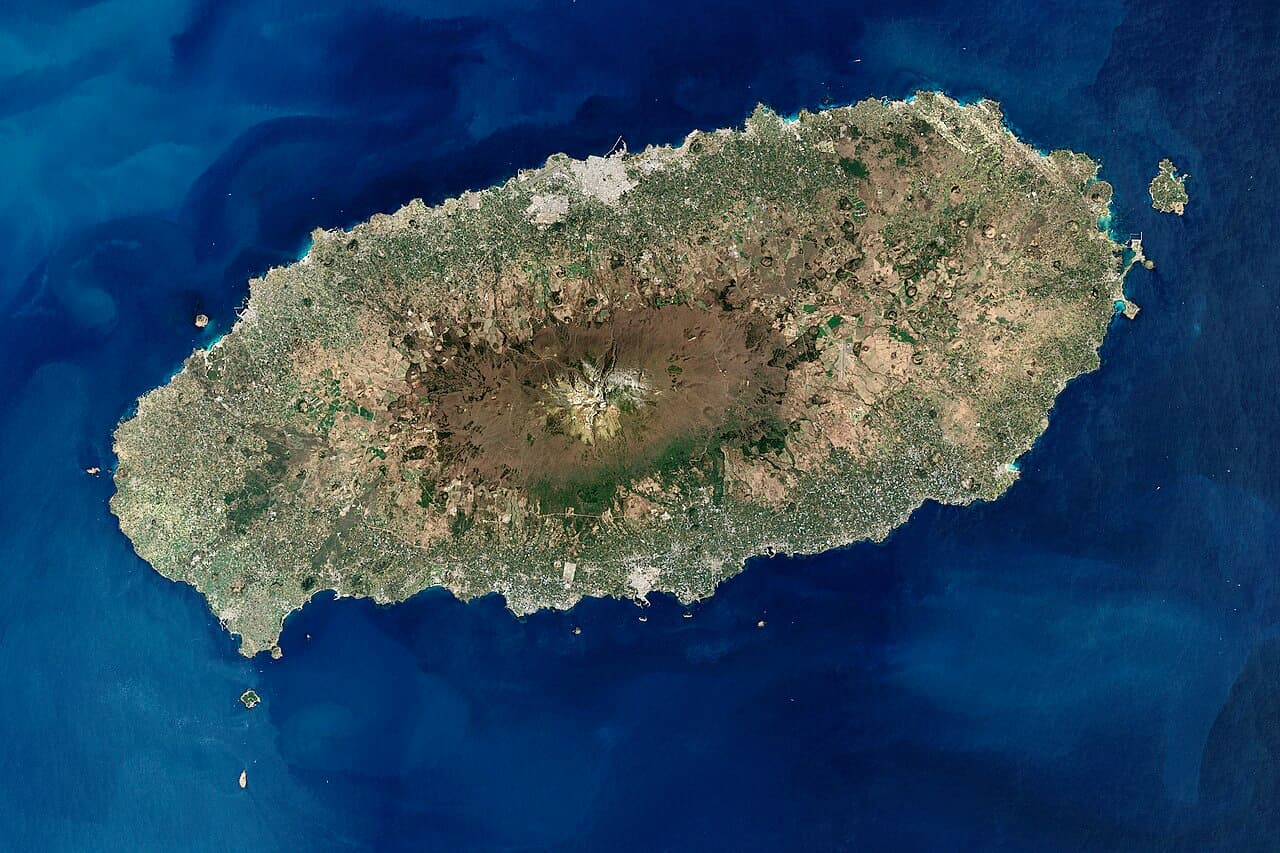
Jeju Island sits 100 km off the southern tip of the Korean peninsula — a 1,850-square-kilometre volcanic island built around 1,947-metre Hallasan, South Korea's tallest mountain. UNESCO has triple-inscribed the island (Biosphere Reserve, Geopark, World Natural Heritage) for the volcano, the Geomunoreum lava-tube system (Manjanggul Cave is 7.4 km long), and Seongsan Ilchulbong, the 'Sunrise Peak' tuff cone on the east coast. The 425-km Olle Trail walking network rings the island in 27 numbered routes, the haenyeo (women free-divers, average age 70+) still harvest abalone off the coast, and Jeju black pork and abalone porridge are the local food obsessions.
Jeju Island
South Korea
South Korea's volcanic island paradise holds a UNESCO triple crown — biosphere reserve, world natural heritage, and global geopark — for Hallasan (1,950m, Korea's highest peak), Seongsan Ilchulbong (a tuff cone rising from the sea), and Manjanggul (one of the world's longest lava tubes at 13 km). The busiest air route in the world runs Seoul–Jeju; 15 million visitors come annually. Jeju has its own visa exemption — 30 days for most nationalities without a Korean visa.

Jeonju
South Korea
Korea's culinary capital and the birthplace of bibimbap — the proper version, layered with raw beef tartare, served in a bronze bowl, paired with a dozen banchan side dishes. Jeonju Hanok Village preserves more than 700 traditional Korean houses inside the central downtown, with tiled roofs sloping in tight rows and most homes still operating as hanok-stay guesthouses where you sleep on a heated ondol floor. Pungnammun Gate, the last surviving gate of the old city wall, anchors the southern edge, and the Jeonju Bibimbap Festival turns the village into one open kitchen each October. Ninety minutes by KTX from Seoul.