Quick Verdict
Pick Chiang Mai for Doi Suthep chedi, Sunday Walking Street markets, and Elephant Nature Park ethical days. Pick Koh Samui if Big Buddha at Wat Phra Yai, Bophut Friday market, and Phangan ferry hops suit you.
Clear winner on the data
Chiang Mai leads in daily cost, cultural sites, walkability, food scene, and public transit. On the numbers alone, this one isn't close.
Can't pick? Visit both.
Build a trip that includes Chiang Mai and Koh Samui, with complementary stops we'll suggest.
🏆 Chiang Mai wins 77 OVR vs 69 · attribute matchup 5–1
Keep exploring
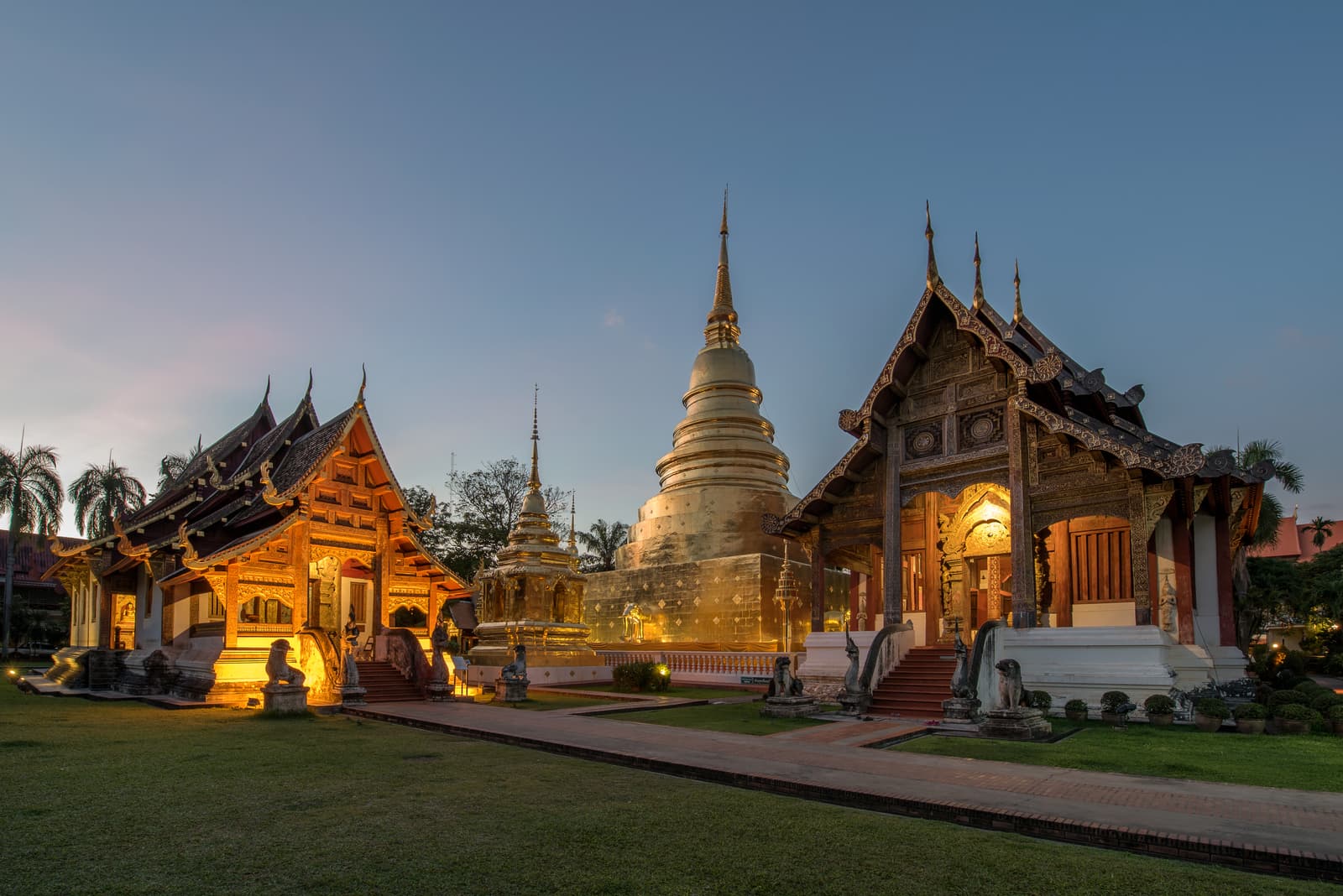
Chiang Mai
Thailand

Koh Samui
Thailand
Chiang Mai
Koh Samui
How do Chiang Mai and Koh Samui compare?
Every Bangkok visitor with more than five days asks this — mountains or beach, north or south. Chiang Mai is northern Thailand's cultural capital at 310 metres elevation, ringed by jungle hills, with 300 Wat temples, the Sunday Walking Street market, ethical elephant sanctuaries at Elephant Nature Park, Doi Suthep's golden chedi above the city, and a digital-nomad food-court culture (Nimman, Old City) that's mostly $4 khao soi and $1.50 mango sticky rice. Koh Samui is a 230 km² Gulf of Thailand island with its own international airport — Chaweng nightlife, the 12-metre Big Buddha at Wat Phra Yai, Bophut Fisherman's Village Friday market, ferry hops to Koh Phangan and Koh Tao, and beach resorts from $40 to $1,500 a night.
From Bangkok, both are 1 hour 20 minute flights — Chiang Mai for $25-50 on Thai Lion or AirAsia, Koh Samui for $80-150 on Bangkok Airways (the only carrier flying USM, hence the price premium). Mid-range budgets are $80/day Chiang Mai versus $130/day Koh Samui; Samui's premium is hotels, not food. Critically, the seasons are opposite: Chiang Mai peaks November-February (cool, dry, no haze — and avoid Feb-April burning season's AQI 200+ readings), while Koh Samui's Gulf calendar runs January through September with peak November-December monsoon (opposite-season from Phuket's Andaman side, which is the whole reason Samui exists on the same Thailand trip).
If you have ten days, do both — five nights Chiang Mai for cooking class, ethical elephant day, and the Doi Inthanon trip, then the morning flight via Bangkok to Samui for four beach days. Pro tip: book Bangkok Airways' through-fare from CNX to USM as one ticket, not separate legs — separate tickets cost the same but you lose checked baggage protection and connection guarantees on the Bangkok layover, which has burned travelers when delays cascade. Pick Chiang Mai for the temples, the cooking schools, and the cool-mountain-air week with elephant ethics. Pick Koh Samui when you want a tropical Gulf-side beach week with island ferry options and a working airport.
💰 Budget
🛡️ Safety
Chiang Mai
Chiang Mai is one of the safest cities in Southeast Asia for travelers. Violent crime against tourists is extremely rare, though petty theft and scams exist. The biggest health concern is air quality during burning season (February-April).
Koh Samui
Samui is generally safe for tourists, with the major risks being road accidents (motorbike rentals are involved in hundreds of tourist injuries and several deaths per year on the island), drowning (rip currents at certain beaches), and alcohol-and-drug-related incidents at parties. Violent crime against tourists is rare. Petty theft (bag snatching, room break-ins) occurs but is not endemic.
🌤️ Weather
Chiang Mai
Chiang Mai has a tropical savanna climate with three distinct seasons: hot, rainy, and cool. The city sits in a valley which traps heat and, unfortunately, smoke during the burning season (February-April).
Koh Samui
Samui has an inverted weather pattern from the Andaman coast (Phuket, Krabi) — its rainy season is October-December rather than May-October. The Gulf of Thailand wet season is short and intense, with heavy rain and occasional tropical storms in November. January-September is essentially dry season, with the hottest months being March-May (32-36°C with high humidity).
🚇 Getting Around
Chiang Mai
Chiang Mai lacks a metro or rail system, so getting around relies on songthaews (red shared trucks), tuk-tuks, Grab ride-hailing, and rented scooters. The Old City is compact enough to walk or cycle. The city is currently building a light rail system planned for future years.
Walkability: The Old City is very walkable — roughly 1.5 km on each side — and most major temples are within easy walking distance of each other. The Nimmanhaemin area is also pedestrian-friendly. Beyond these areas, distances grow and motorized transport is needed.
Koh Samui
Samui has no real public transport system — songthaews (shared red pickup trucks) circle the ring road and act as a hop-on-hop-off bus, but the fares are higher and the schedules looser than mainland Thai songthaews. Rental motorbikes and rental cars are common for independent travellers. Grab is available island-wide and is reliable, though somewhat more expensive than mainland Thailand because of the limited driver pool.
Walkability: The individual beach areas (Chaweng main strip, Lamai centre, Bophut Fisherman's Village) are walkable along their main strips. Between beach areas requires transport — distances are too far and the ring road too dangerous for pedestrians. Plan to be motorised for any inter-beach movement.
📅 Best Time to Visit
Chiang Mai
Jan–Feb, Nov–Dec
Peak travel window
Koh Samui
Jan–Sep
Peak travel window
The Verdict
Choose Chiang Mai if...
you want northern Thailand's temple city — Doi Suthep sunsets, Sunday Walking Street, ethical elephant sanctuaries, and Songkran soaked to the bone
Choose Koh Samui if...
you want a Gulf-of-Thailand island with its own airport — Chaweng nightlife, the Big Buddha temple, Bophut Fisherman's Village, easy ferry hops to Koh Phangan and Koh Tao, and an opposite-season weather window from Phuket
Chiang Mai
Koh Samui
Frequently asked
Is Chiang Mai or Koh Samui cheaper?
Chiang Mai is cheaper on average. A mid-range day in Chiang Mai costs about $80 vs $130 in Koh Samui, so Chiang Mai saves you roughly $50 per day compared to Koh Samui.
Is Chiang Mai or Koh Samui safer?
Chiang Mai and Koh Samui score equally on our safety index (75/100). Specific risks differ by neighborhood — check the Safety section on each guide.
Which has better weather, Chiang Mai or Koh Samui?
Chiang Mai has the more temperate climate year-round. Chiang Mai has a tropical savanna climate with three distinct seasons: hot, rainy, and cool. The city sits in a valley which traps heat and, unfortunately, smoke during the burning season (February-April).
When is the best time to visit Chiang Mai vs Koh Samui?
Chiang Mai peaks in Jan–Feb, Nov–Dec. Koh Samui peaks in Jan–Sep. Both peak in Jan–Feb, so a single trip pairs them naturally.
How long is the flight from Chiang Mai to Koh Samui?
Roughly 1h 48m on a direct flight (about 1,038 km / 645 mi). One-way fares typically run $120-350 depending on season and how far in advance you book.
How do daily costs in Chiang Mai and Koh Samui compare?
In Chiang Mai: budget ~$25-40/day, mid-range ~$60-100/day, luxury ~$200+/day. In Koh Samui: budget ~$30-50/day, mid-range ~$70-120/day, luxury ~$250-500/day.
You might also compare
Chiang MaivsKoh Samui
Try another