Chiang Mai vs Luang Prabang
Which destination is right for your next trip?
Last updated
Quick Verdict
Pick Chiang Mai for Khao Soi Khun Yai, Sunday Walking Street markets, and Nimman flat-whites in coworking lofts. Pick Luang Prabang for tak bat dawn alms, Kuang Si turquoise waterfalls, and slow boats up the Mekong.
Can't pick? Visit both.
Build a trip that includes Chiang Mai and Luang Prabang, with complementary stops we'll suggest.
🏆 Chiang Mai wins 77 OVR vs 71 · attribute matchup 6–1
Keep exploring
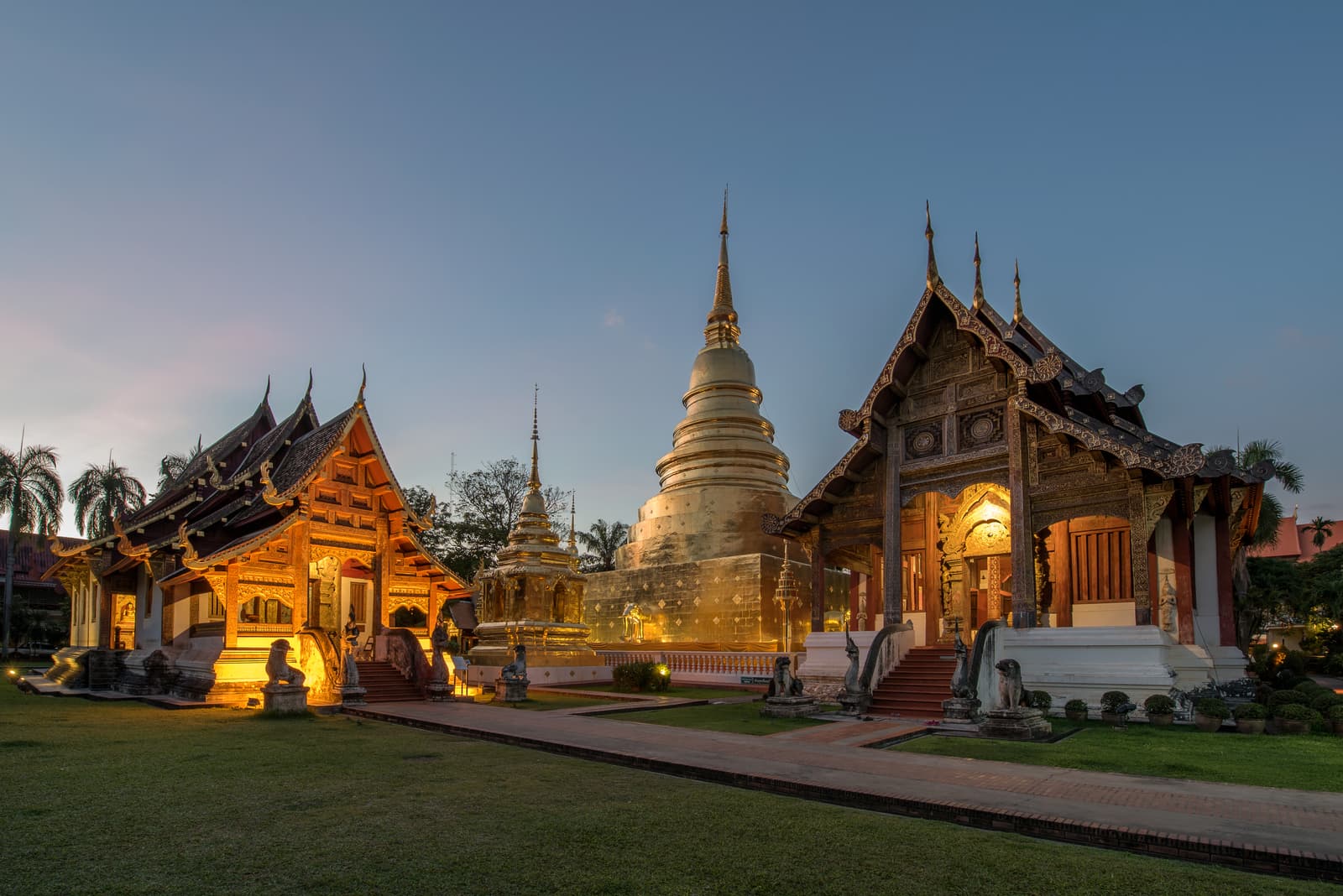
Chiang Mai
Thailand

Luang Prabang
Laos
Chiang Mai
Luang Prabang
How do Chiang Mai and Luang Prabang compare?
These two old kingdoms sit a short flight apart and look like cousins on paper — saffron robes at dawn, teakwood temples, slow rivers — but they move at completely different tempos. Chiang Mai is a walled moat city of 130,000 with night markets sprawling along the Ping River, khao soi noodle shops on every corner of the Old City, and a digital-nomad scene clustered in Nimman with flat whites and coworking lofts. Luang Prabang is one-tenth the size, pinned between the Mekong and Nam Khan rivers, where the loudest sound at 6 AM is bare feet on stone as monks file past for tak bat alms.
Both land near $55–65/day mid-range, so this fork is about pace, not price. Chiang Mai wins on food range and logistics — Khao Soi Khun Yai, the Sunday Walking Street, elephant sanctuaries within an hour, and direct flights to anywhere in Asia. Luang Prabang wins on stillness and scenery: Kuang Si's turquoise tiered waterfalls, slow boats up the Mekong toward Pak Ou caves, and a UNESCO old town small enough to walk end-to-end before breakfast. Chiang Mai gives you a mountain hub; Luang Prabang gives you a river trance.
Both peak November through February when the rains stop and the smoke hasn't started — avoid Chiang Mai in March and April when burning season turns the air orange and AQI passes 200. Skip the standard tak bat photo-op in Luang Prabang and instead take the longtail across the Nam Khan to Ban Xieng Lek for a quieter sunset. In Chiang Mai, base in the Old City for temples, Nimman for cafés — switching hotels mid-trip is worth the hassle. River trance or mountain hub: pick the speed.
The combined trip is one of the best slow-travel pairings in Southeast Asia — Lao Airlines and AirAsia run Chiang Mai-Luang Prabang flights in 70 minutes for $80-120, and the cultural pivot from a 130,000-person hub to a 50,000-person UNESCO town delivers a meaningful pace shift. The standard play is 4-5 nights Chiang Mai (food tours, elephant sanctuary, Doi Suthep, cooking class) followed by 3-4 nights Luang Prabang (Kuang Si, tak bat, Mekong slow boat, night market). The classic mistake is doing them in the wrong order — start in busier Chiang Mai and let Luang Prabang be the wind-down, not the other way around. For digital nomads, Chiang Mai wins; for couples and slow travelers, Luang Prabang.
💰 Budget
🛡️ Safety
Chiang Mai
Chiang Mai is one of the safest cities in Southeast Asia for travelers. Violent crime against tourists is extremely rare, though petty theft and scams exist. The biggest health concern is air quality during burning season (February-April).
Luang Prabang
Luang Prabang is one of the safest destinations in Southeast Asia. Crime against tourists is very rare, and the town has a gentle, welcoming atmosphere. The main risks are road safety (especially on the winding road to Kuang Si), river safety, and heat-related illness.
🌤️ Weather
Chiang Mai
Chiang Mai has a tropical savanna climate with three distinct seasons: hot, rainy, and cool. The city sits in a valley which traps heat and, unfortunately, smoke during the burning season (February-April).
Luang Prabang
Luang Prabang has a tropical savanna climate moderated by its valley location between mountains. It is noticeably cooler than lowland Southeast Asian cities, especially in the cool season when morning temperatures can drop below 15°C. The wet season brings heavy rain but also lush, photogenic scenery.
🚇 Getting Around
Chiang Mai
Chiang Mai lacks a metro or rail system, so getting around relies on songthaews (red shared trucks), tuk-tuks, Grab ride-hailing, and rented scooters. The Old City is compact enough to walk or cycle. The city is currently building a light rail system planned for future years.
Walkability: The Old City is very walkable — roughly 1.5 km on each side — and most major temples are within easy walking distance of each other. The Nimmanhaemin area is also pedestrian-friendly. Beyond these areas, distances grow and motorized transport is needed.
Luang Prabang
Luang Prabang's historic center is tiny and best explored on foot. Bicycles are ideal for reaching temples and restaurants spread along the peninsula. Tuk-tuks and songthaews (shared trucks) cover trips to the waterfalls and outlying areas.
Walkability: The historic peninsula is extremely walkable — you can cross the entire old town in 15 minutes. The main street (Sisavangvong/Sakkaline Road) runs the length of the peninsula, with temples, cafes, and shops along the way. Quiet side streets lead to the riverbanks. No hills except Mount Phousi.
📅 Best Time to Visit
Chiang Mai
Jan–Feb, Nov–Dec
Peak travel window
Luang Prabang
Jan–Mar, Nov–Dec
Peak travel window
The Verdict
Choose Chiang Mai if...
you want northern Thailand's temple city — Doi Suthep sunsets, Sunday Walking Street, ethical elephant sanctuaries, and Songkran soaked to the bone
Choose Luang Prabang if...
you want a UNESCO Mekong-side monastery town — alms at dawn, Kuang Si waterfall, Mount Phousi sunset, Pak Ou caves, and the slow-boat out of Laos
Chiang Mai
Luang Prabang
Frequently asked
Is Chiang Mai or Luang Prabang cheaper?
Chiang Mai is cheaper on average. A mid-range day in Chiang Mai costs about $80 vs $90 in Luang Prabang, so Chiang Mai saves you roughly $10 per day compared to Luang Prabang.
Is Chiang Mai or Luang Prabang safer?
Chiang Mai scores higher on our safety index (75/100 vs 72/100). Chiang Mai is one of the safest cities in Southeast Asia for travelers.
Which has better weather, Chiang Mai or Luang Prabang?
Chiang Mai has the more temperate climate year-round. Chiang Mai has a tropical savanna climate with three distinct seasons: hot, rainy, and cool. The city sits in a valley which traps heat and, unfortunately, smoke during the burning season (February-April).
When is the best time to visit Chiang Mai vs Luang Prabang?
Chiang Mai peaks in Jan–Feb, Nov–Dec. Luang Prabang peaks in Jan–Mar, Nov–Dec. Both peak in Jan–Feb, Nov–Dec, so a single trip pairs them naturally.
How long is the flight from Chiang Mai to Luang Prabang?
Roughly 1h on a direct flight (about 352 km / 219 mi). One-way fares typically run $60-180 depending on season and how far in advance you book.
How do daily costs in Chiang Mai and Luang Prabang compare?
In Chiang Mai: budget ~$25-40/day, mid-range ~$60-100/day, luxury ~$200+/day. In Luang Prabang: budget ~$25-40/day, mid-range ~$60-120/day, luxury ~$200-500+/day.
How many days should I spend in Chiang Mai vs Luang Prabang?
Plan 4-5 days in Chiang Mai and 3-4 in Luang Prabang. Chiang Mai's food scene, temples, cooking classes, and ethical elephant sanctuaries (like Elephant Nature Park) plus a Doi Suthep day need 4-5 days. Luang Prabang is smaller — 2 days for the town and Kuang Si, 1-2 for a Mekong slow boat or longer trekking excursion to Nong Khiaw.
Can I visit Chiang Mai and Luang Prabang in one trip?
Yes — it's the standard Northern Indochina pairing. Lao Airlines and AirAsia fly direct in 70 minutes for $80-120 booked ahead. Most travelers do 4-5 nights Chiang Mai, fly to Luang Prabang, 3-4 nights, then return to Bangkok or Hanoi. The 2-day Mekong slow boat from Huay Xai is a romantic alternative for travelers with time.
Which has better food, Chiang Mai or Luang Prabang?
Chiang Mai, decisively. The depth — khao soi at Khao Soi Khun Yai, sai oua sausage at the markets, the Sunday Walking Street's 1,000+ food stalls, fine dining at Cuisine de Garden — outclasses Luang Prabang's narrower scene. Luang Prabang has its standouts (Tamarind for Lao cooking, Manda de Laos for fine dining), but the variety is thinner.
Is Chiang Mai or Luang Prabang better for couples?
Luang Prabang, narrowly. The slower pace, riverside boutique hotels (Belmond La Résidence, Maison Dalabua), Mekong sunset cruises, and the romantic UNESCO old town deliver couple-time intimacy. Chiang Mai is more about food and activity; great for couples who want busy days but less for romantic decompression.
Which is better for first-time Southeast Asia travelers?
Chiang Mai, by a clear margin. English fluency is higher, infrastructure is more developed, hostels and hotels are deeper at every price point, and the food is approachable. Luang Prabang is gentler and quieter but the smaller scale means less to do if you're traveling slowly with limited interests.
What's the best time to combine Chiang Mai and Luang Prabang?
November through February. Both share a cool, dry season with low humidity and clear skies. Avoid March-April in Chiang Mai (burning season pushes AQI past 200) and avoid May-October monsoon in Luang Prabang. December has the best weather but also the highest prices and most tourists.
You might also compare
Chiang MaivsLuang Prabang
Try another