All Destinations
64 of 576 guides match

Salar de Uyuni
Bolivia
The world's largest salt flat — 10,582 km² of blinding white at 3,656m in southwest Bolivia. In wet season (Dec-Apr) a thin water film turns it into the planet's biggest mirror; dry season reveals hexagonal salt tiles to the horizon. Multi-day 4WD tours typically run 3D/2N from Uyuni to San Pedro de Atacama via the Eduardo Avaroa lagoons, geysers, and flamingo-pink waters. Lithium reserves below are the world's largest.

Serengeti National Park
Tanzania
The world's most famous safari destination — 14,750 km² of golden savanna where 1.5 million wildebeest and 200,000 zebra cycle clockwise each year. Mara River crossings draw the cameras July-October; the southern Ndutu plains host the calving in January-February. Big Five all present (rhino rare — Ngorongoro is the play). Standard "northern circuit" pairs Serengeti with Ngorongoro Crater + Tarangire from Arusha. Hot-air balloon safaris an Out-of-Africa indulgence.
Sossusvlei
Namibia
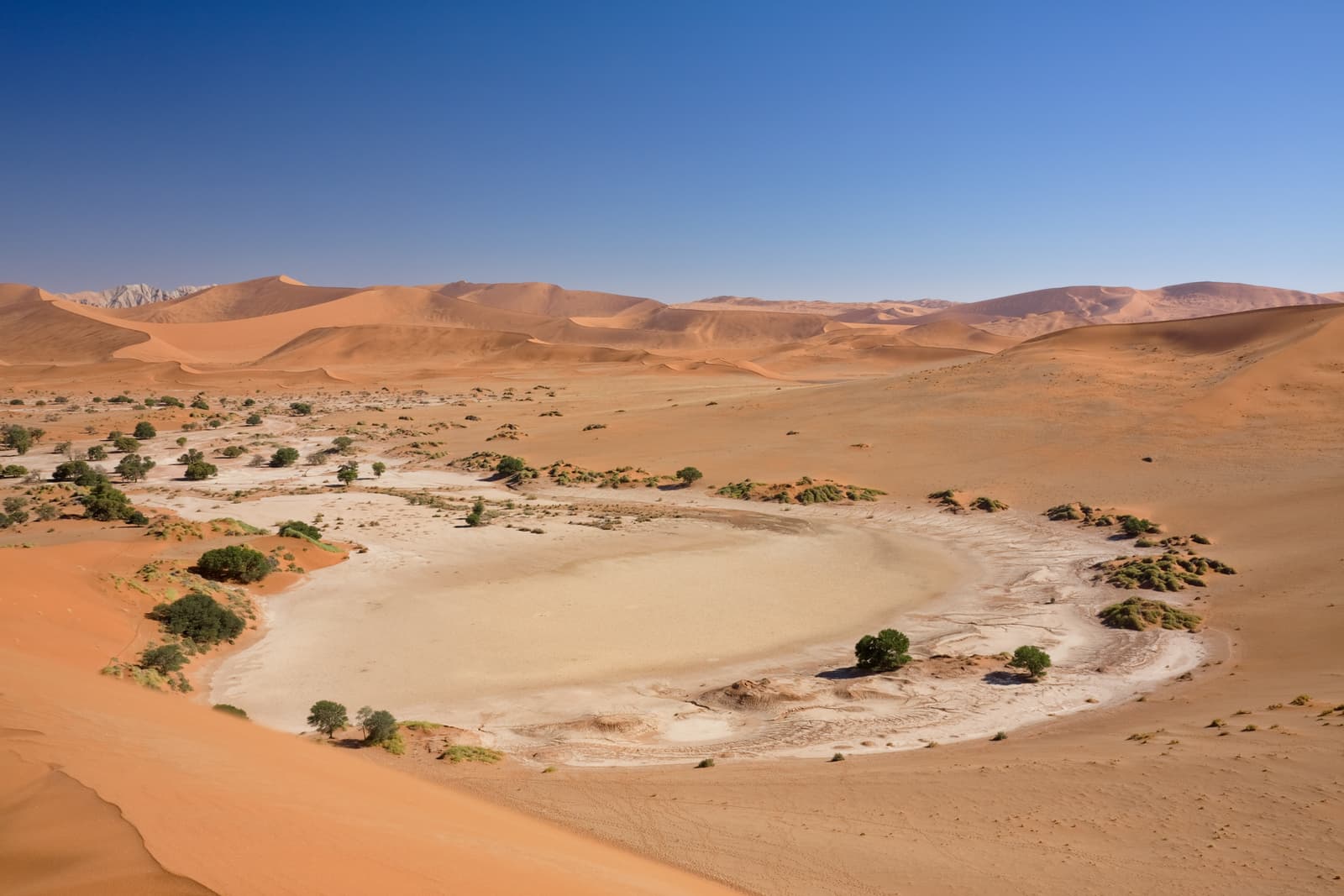
A salt-and-clay pan deep inside Namib-Naukluft National Park, ringed by the world's highest sand dunes — Big Daddy peaks above 325m and Dune 45 draws the sunrise crowds. The adjacent Deadvlei pan holds 900-year-old camel-thorn skeletons against blindingly white clay and orange dune walls — one of the most photographed landscapes on Earth. Access via Sesriem gate; the final 5 km requires 4WD or a shuttle. Part of the Namib Sand Sea UNESCO site.

Sun Moon Lake
Taiwan
Taiwan's largest lake, an 8-square-kilometre alpine bowl at 748 metres in the Nantou highlands, named for its split shape — a sun-round eastern half and a crescent western half divided by Lalu Island. Wenwu Temple looks down on the north shore, the Ci'en Pagoda crowns Mount Shabalan, and a 29-kilometre cycle path rated by CNN as one of the world's most beautiful loops the entire shoreline. Reachable in about four hours from Taipei via the High Speed Rail to Taichung plus a Nantou Bus connection.

Swiss Alps
Switzerland
The Swiss Alps are the definition of mountain perfection — the Matterhorn, Jungfrau, and Eiger tower above pristine valleys of wildflower meadows, crystal lakes, and picturesque villages. Scenic train journeys (Glacier Express, Bernina Express) connect it all, and the infrastructure for hiking, skiing, and paragliding is world-class. Expensive but extraordinary.

Taroko Gorge
Taiwan
A 19-kilometre marble canyon on Taiwan's east coast where the Liwu River has cut through 1,000-metre cliffs of polished white and grey marble. Eternal Spring Shrine clings to a waterfall, the Tunnel of Nine Turns weaves through the narrowest neck of the gorge, and the Swallow Grotto wall is pocked with caves carved by river spray. The 2024 magnitude 7.4 earthquake closed the central highway and most signature trails, so check current trail status before going.

Torres del Paine
Chile
1,810 km² of Chilean Patagonia named for its three granite spires (Torres) rising 2,500m straight from the steppe. The W Trek (4-5 days, 80km) is the iconic route; the O Circuit (8-10 days, 130km) loops the entire massif. Grey Glacier (30km arm of the Southern Patagonian Ice Field) is accessible by catamaran or kayak. Wildlife includes guanaco herds and rare pumas with specialised tracker tours. Famously violent winds (100+ km/h common in summer) and rapidly shifting weather demand serious gear. Park entry $32-45 USD; refugios on the W Trek require booking 6-12 months in advance via Vertice or Las Torres Patagonia.

Uluru
Australia
A 348-metre sandstone monolith (taller than the Eiffel Tower) rising from the Northern Territory's Red Centre — sacred to the Aṉangu Traditional Owners who have inhabited the area for at least 30,000 years, dual UNESCO listed for both natural and cultural significance, and jointly managed by the Aṉangu and Parks Australia under one of the world's most successful Indigenous co-management arrangements. Climbing the rock was permanently banned in 2019 out of respect for Aṉangu beliefs; the 10.6 km base walk, the Mala ranger talk, and the Mutitjulu waterhole are the proper ways to engage with the site. Pair Uluru with Kata Tjuta (36 sandstone domes 30 km west, with the Valley of the Winds walk that many consider more dramatic than Uluru itself) and Bruce Munro's Field of Light installation, and the desert evening dining experiences (Sounds of Silence, Tali Wiru) — the Red Centre delivers the most spiritually charged landscape in Australia.

Victoria Falls
Zimbabwe
The largest sheet of falling water on Earth — 1,708m wide and twice as tall as Niagara. Locally called Mosi-oa-Tunya ("the smoke that thunders"). Zimbabwe's side delivers ~75% of the views and the postcard panoramas; Zambia's side has the Devil's Pool experience at Livingstone Island in the dry season (Sep-Dec). Adventure capital of southern Africa: bungee from the 111m Victoria Falls Bridge, Zambezi Class V rafting, helicopter Flight of Angels, lunar rainbows on full moons. Hwange NP nearby for safari combos.

Wadi Rum
Jordan
Jordan's Mars-like desert of towering sandstone cliffs, natural rock bridges, and Bedouin camps under some of the clearest night skies on Earth. Lawrence of Arabia's playground.

Wahiba Sands
Oman
12,000 square kilometres of classic 1001 Nights desert east of Muscat, officially renamed the Sharqiya Sands but still known to most travellers as Wahiba after the Bedouin tribe whose herds still roam the dunes. Red-orange ridges line up in parallel north-south combs that reach 100 metres at their peak, broken by hardpan flats where camel caravans crossed for centuries. Most visitors arrive overland from the capital, stopping en route at Wadi Bani Khalid for an oasis swim before checking into a Bedouin-style desert camp for sunset 4WD dune-bashing, sandboarding and a stargazing dinner under skies free of light pollution. Peak season runs October to March; summer routinely tops 50°C.

Yangshuo
China
The karst landscape on China's 20-yuan note — limestone peaks rising from emerald paddies along the Li River between Guilin and Yangshuo town. The four-hour bamboo-raft drift between Yangdi and Xingping is the most photographed river journey in China. Moon Hill (a hollowed-out limestone arch) and the Yulong River's quieter rafts are the village base; the Impression Sanjie Liu (a Zhang Yimou-directed open-air light show with 600 performers on the river) plays nightly. Bicycle the Ten-Mile Gallery for the village rice fields. Subtropical — best March–May and September–November.

Yellowstone National Park
United States
Yellowstone was the world's first national park (1872) and still one of its strangest — 2.2 million acres sitting on a supervolcano, home to half the planet's geysers, the continent's largest free-roaming bison herd, and the wolves of Lamar Valley. The Grand Loop Road connects Old Faithful, Grand Prismatic Spring, and the Grand Canyon of the Yellowstone in a weeklong figure-eight.

Yosemite National Park
United States
Yosemite Valley is seven miles of polished granite — El Capitan's 3,000-foot wall, Half Dome's hood above it, and three of the tallest waterfalls in North America — all visible from Tunnel View in one shot. Most visitors never leave the Valley; the high country at Tuolumne Meadows and the Mariposa Grove of giant sequoias reward the detour, and a Merced Amtrak + YARTS bus is a real budget route from San Francisco.

Zhangjiajie
China
The otherworldly sandstone pillar forests that inspired Avatar's Pandora. Glass skywalks, the world's longest cable car, and mist-shrouded peaks create a surreal landscape.
Zion National Park
United States
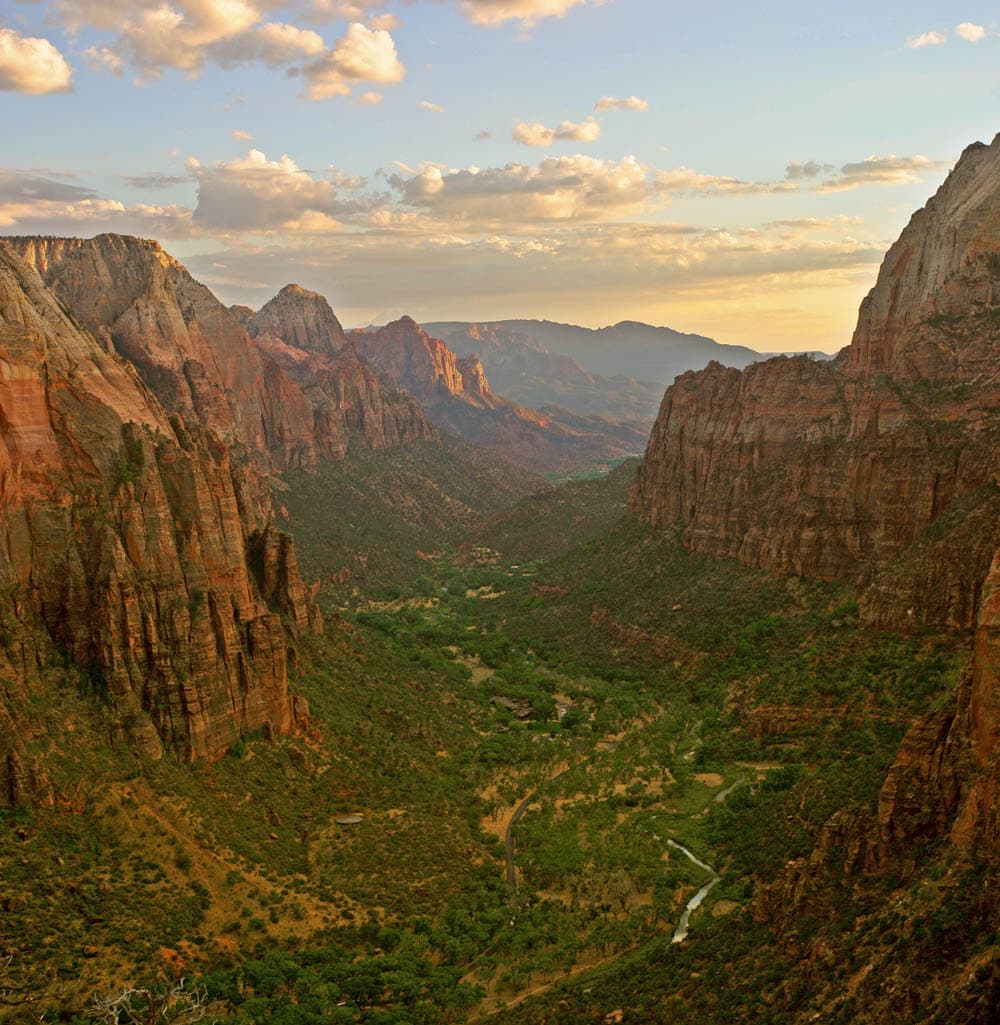
Zion is a slot canyon national park — the Virgin River carved red-and-white Navajo Sandstone walls up to 2,000 feet above the valley floor. It's the third most-visited U.S. park (4.5 million a year), which is why the Zion Canyon shuttle is mandatory April–November. Angels Landing's chained ridge requires a permit lottery and has killed hikers; the Narrows is a wade-up-river slot that closes on flash-flood days.