All Destinations
173 of 576 guides match

Innsbruck
Austria
Innsbruck is the Tyrolean capital squeezed into the Inn River valley between two enormous limestone walls — the Nordkette to the north (you can ride a Zaha Hadid-designed funicular from the city centre to 2,256 m in 20 minutes) and the Patscherkofel to the south. The medieval Altstadt is anchored by Maximilian I's Goldenes Dachl (Golden Roof, 2,657 fire-gilded copper tiles, 1500 AD), and the city has hosted the Winter Olympics twice (1964, 1976). It is the world's only major city where you can drink a melange in a Habsburg-era cafe at 09:00 and be on a black-graded ski run by 10:30.

Interlaken
Switzerland
Switzerland's alpine adventure capital sits between Lake Thun and Lake Brienz, with the Jungfrau region rising behind town. Base for Jungfraujoch's Top of Europe railway (3,454m), paragliders launching over Höhematte meadow, Lauterbrunnen's 72 waterfalls (inspiration for Rivendell), and Mürren's car-free clifftop perch. Expect Swiss prices.

Isle of Skye
United Kingdom
The largest of the Inner Hebrides at 1,656 km², connected to mainland Scotland by the Skye Bridge since 1995 (the toll abolished in 2004 after a long civil-disobedience campaign by islanders refusing to pay). The population is just 10,000 but the island receives 600,000+ tourists a year — a 60-to-1 ratio that has caused real strain on infrastructure (Fairy Pools car-park gridlock is famous). The Old Man of Storr basalt pinnacle, the Quiraing landslip ridge, and the green Trotternish hills define the photogenic north; the Cuillin range divides into the technical Black Cuillin (gabbro and basalt, the Inaccessible Pinnacle is the only Munro requiring rock climbing) and the walkable Red Cuillin. Skye is the spiritual heartland of Gaelic Scotland — about 30% of residents have some Gaelic, and Sabhal Mòr Ostaig on Sleat is the main Gaelic-medium college. Talisker (founded 1830) on the western shore is the island's only legal distillery. Closest airport: Inverness (INV), then a 2.5-hour drive across the Skye Bridge.

Istanbul
Turkey
Istanbul straddles two continents and thousands of years of history. The skyline of minarets and domes, the chaos of the Grand Bazaar, the Bosphorus ferries at sunset — it's a city that overwhelms in the best way. Incredible food, affordable prices, and a depth of culture that rivals anywhere on earth.

Karlovy Vary
Czech Republic
Karlovy Vary is the great-grandfather of European spa towns — founded around 1349 by Charles IV (who allegedly discovered the healing thermal springs while hunting deer), peaked in the 19th century when it hosted Beethoven, Goethe, Tsar Peter the Great, and 26,000 annual guests, and still draws spa-goers to its 80+ hot springs and 16 designated drinking fountains. The Mlýnská kolonáda (Mill Colonnade) and the cast-iron Sadová kolonáda anchor the river-valley promenades, and locals carry porcelain sipping cups (lázeňský pohárek) shaped like little teapots between the fountains. The Becherovka herbal liqueur was invented here in 1807 — the unofficial '13th spring' of Karlovy Vary.

Killarney
Ireland
A small County Kerry town that exists almost entirely as the gateway to two of Ireland's signature experiences — the 179 km Ring of Kerry coastal drive, and Killarney National Park, the country's first national park (1932) covering 26,000 acres of lakes, oak woods, and the McGillycuddy's Reeks mountains. Inside the park: 15th-century Muckross Abbey, Victorian Muckross House, the 15th-century Ross Castle on Lough Leane, and jaunting cars (horse-drawn pony carts) that still ferry visitors to the Gap of Dunloe. The town fills with coach groups May through October.

Kotor
Montenegro
A medieval walled town at the head of Europe's southernmost fjord — Adriatic drama with Venetian architecture, fortress hikes with jaw-dropping bay views, and a fraction of Dubrovnik's crowds and prices.

Krakow
Poland
Krakow is Poland's cultural jewel — a medieval Old Town that survived WWII intact, anchored by Europe's largest market square. The Wawel Castle, Jewish Quarter (Kazimierz), and Wieliczka Salt Mine are world-class, and the city is famously affordable. A sobering but essential day trip to Auschwitz-Birkenau adds historical weight.

Kyiv
Ukraine
Ukraine's golden-domed capital on the Dnipro River — Kyiv Pechersk Lavra (Monastery of the Caves, UNESCO) with its underground catacombs, St. Sophia Cathedral (UNESCO, intact since 1037), Andriyivsky Uzviz's bohemian descent, the Maidan's extraordinary history, and Podil's café scene. The largest city in Eastern Europe by area, Kyiv has remained operational throughout the 2022 war — a city of stunning resilience and extraordinary historical depth. Check current advisories before travel.

Lake Balaton
Hungary
Central Europe's largest lake, 77 km of warm shallow water that Hungarians without sea access have claimed as their summer beach. The Tihany peninsula juts halfway across with its 11th-century Benedictine abbey and lavender fields, the south shore is wall-to-wall family resorts (Siófok, Zamárdi), and the north shore is wine country: Badacsony's volcanic basalt vineyards, Balaton-felvidék uplands, and the Festetics Palace at Keszthely. Trains from Budapest reach Balatonfüred in about two hours, and the lake never gets deeper than 12 metres so the water warms quickly in June.

Lake Bled
Slovenia
An impossibly photogenic 2.1 km alpine lake at the foot of the Julian Alps — fed by underground hot springs, with Slovenia's only natural island (a 17th-century pilgrimage church reached by 99 steps) at its centre and a 1,000-year-old castle on a 130m cliff above. Hand-rowed pletna boats, the original 1953 Bled cream cake (kremšnita) on the lake-facing terraces, and the dramatic Vintgar Gorge boardwalk 4 km away. Triglav National Park's gateway — pair Bled with Lake Bohinj for the broader alpine experience.

Lake Como
Italy
A pre-Alpine Y-shaped lake ringed by mountains where pastel fishing villages, baroque villas with terraced gardens, and a daily ballet of green-and-white ferries make up most of the experience. Bellagio sits on the promontory where the lake's three arms meet, Varenna stacks ochre houses above the eastern shore, Villa del Balbianello's cypress terraces ran the Star Wars and Casino Royale cameras, and Villa Carlotta's azaleas peak through May into early June. Como town anchors the southwestern tip with a Juvarra-domed Duomo and the Brunate funicular for the lake's best panorama. One hour from Milan by train, but lived at ferry pace.
Lake District
United Kingdom
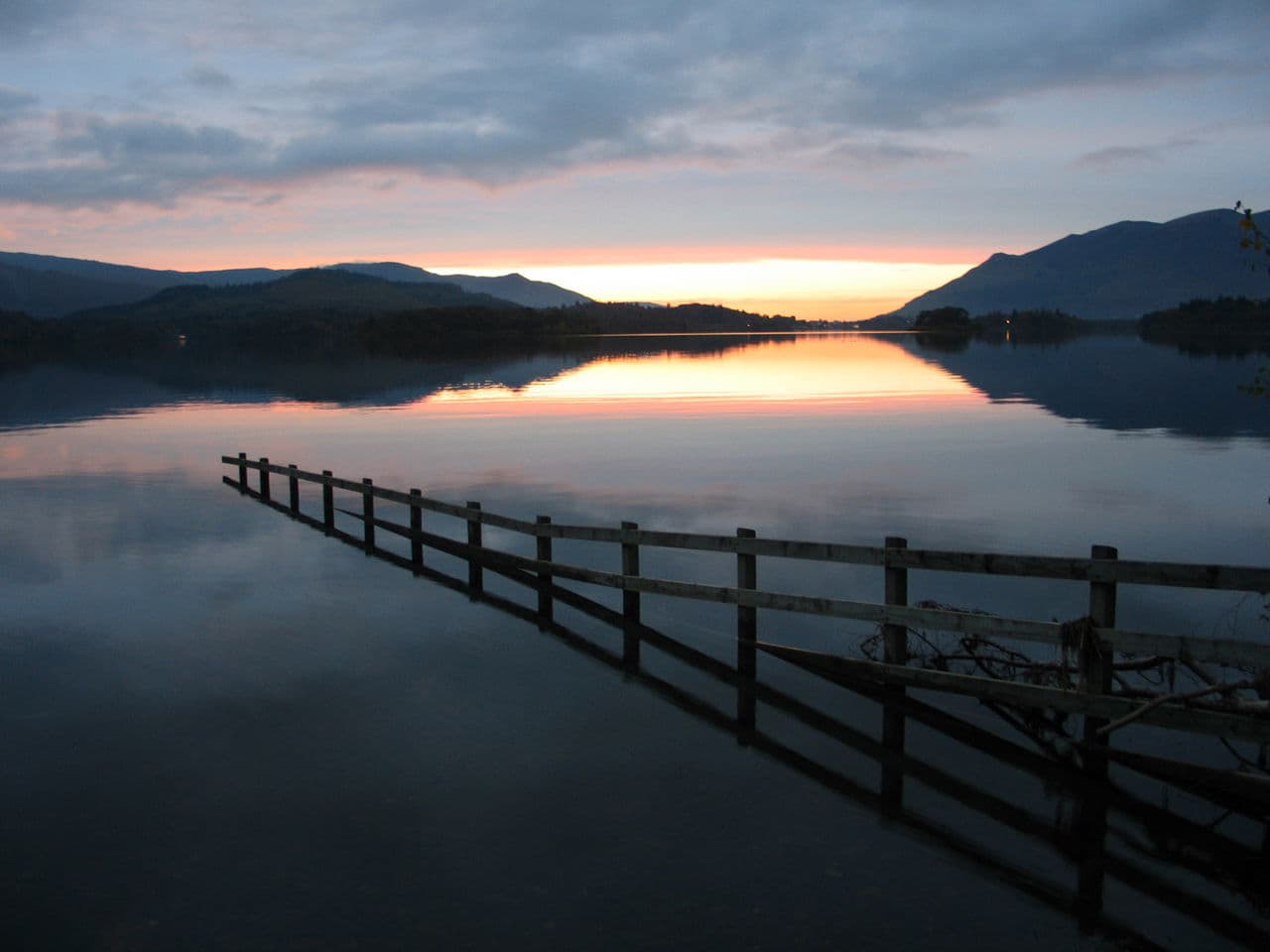
The UK's largest national park (2,362 km²) and a UNESCO World Heritage Site since 2017 — a glacier-carved Cumbrian landscape of slate-grey peaks, ribbon lakes, and dry-stone-walled fell farms. Despite the name, only Bassenthwaite Lake is technically a 'lake'; the rest are 'meres' (Windermere, Buttermere, Grasmere) or 'waters' (Derwentwater, Ullswater, Coniston Water) — Old Norse and Anglo-Saxon remnants. Scafell Pike (978 m) is England's highest mountain, a serious 6–7 hour return walk in often atrocious weather. The Romantic poetry movement was effectively born here — William Wordsworth's Dove Cottage in Grasmere is preserved as he left it, and Beatrix Potter (Peter Rabbit royalties) bought 4,000 acres of fellside farmland over her lifetime and bequeathed every acre to the National Trust. Seathwaite in Borrowdale receives 3,500 mm of rain a year — the wettest inhabited place in the British Isles. Pack waterproofs even in July. Closest airport: Manchester (MAN); the train to Windermere connects via Oxenholme.

Lake Garda
Italy
Italy's largest lake — 370 km² of glacial water, 51 km long, straddling Lombardy, Veneto, and Trentino. The northern half is fjord-like, walled by 2,000-metre Alpine peaks; the southern half opens into a broad amphitheatre with the Sirmione thermal peninsula's 13th-century Scaligero Castle (the only one in Italy with a working drawbridge), the medieval walls of Lazise, and the lemon-grove terraces of Limone sul Garda. Riva del Garda at the northern tip is one of Europe's premier windsurfing spots thanks to the reliable Ora wind. Add the Monte Baldo cable car, Gardaland Italy's largest theme park, the Bardolino wine region, and 30+ ferry-connected lakeshore villages — Lake Garda is northern Italy's most varied single destination.

Lausanne
Switzerland
Switzerland's second-largest French-speaking city, terraced steeply down the north shore of Lake Geneva — the Olympic capital of the world since the IOC moved its headquarters here in 1915. The Olympic Museum at Ouchy on the lakefront draws 250,000 visitors a year, the Notre-Dame Cathedral crowns the upper old town as Switzerland's finest Gothic building, and the Lavaux UNESCO vineyard terraces begin a 15-minute train ride east. The EHL hotel-management school and university give the city an energetic student population that softens the formality of Geneva 60 km west.

Lisbon
Portugal
Lisbon is one of Europe's most underrated capitals — hilly cobblestone streets, pastel-colored buildings, and stunning viewpoints at every turn. The city blends old-world charm with a thriving modern food and nightlife scene. Excellent value compared to Western European peers, with reliable transit and easy day trips to Sintra and the coast.

Ljubljana
Slovenia
Slovenia's tiny, green capital — Jože Plečnik's Triple Bridge and Dragon Bridge, Ljubljana Castle funicular, a car-free cobblestone center, and Lake Bled 55km away. European Green Capital 2016, strategically placed between Venice, Zagreb, Vienna, and the Julian Alps. Budget-friendly and walkable in a morning.

Lofoten Islands
Norway
A Norwegian archipelago of jagged granite peaks rising straight from the Norwegian Sea — among Europe's most photographed landscapes. Iconic red fishermen's cabins (rorbuer) in Reine, Hamnøy, Å, and Henningsvær; the Reinebringen staircase hike, Haukland and Uttakleiv beaches, and centuries-old cod-drying racks. Midnight sun late May to mid-July, Northern Lights mid-September to April. Access via Tromsø or Bodø → LKN/EVE airports, or the iconic E10 scenic drive.

London
United Kingdom
London is a city of villages — each neighborhood has its own personality, from the royal grandeur of Westminster to the edgy markets of Camden and the hipster cafes of Shoreditch. World-class museums (most free!), a legendary theater scene, and one of the most diverse food cultures on earth make it endlessly explorable.

Lucerne
Switzerland
The picture-postcard alpine lake city in central Switzerland — Europe's oldest covered wooden bridge (the 1333 Chapel Bridge) crosses the Reuss river, the 1821 Lion Monument commemorates the Swiss Guards killed defending Louis XVI, and Mount Pilatus (2,128m) and Mount Rigi (1,797m) loom across Lake Lucerne with the world's steepest cogwheel railway and Europe's oldest mountain railway respectively. The 21st-century Elbphilharmonie-rivalling Elbphilharmonie-equivalent here is the KKL concert hall hosting the world-class Lucerne Festival. Genuinely expensive — Switzerland is among Europe's priciest, with CHF 4 city bus rides and CHF 25+ basic restaurant mains.
_16.jpg%2F1280px-%25D0%259B%25D0%25B0%25D1%2582%25D0%25B8%25D0%25BD%25D1%2581%25D1%258C%25D0%25BA%25D0%25B8%25D0%25B9_%25D0%25BA%25D0%25B0%25D1%2584%25D0%25B5%25D0%25B4%25D1%2580%25D0%25B0%25D0%25BB%25D1%258C%25D0%25BD%25D0%25B8%25D0%25B9_%25D1%2581%25D0%25BE%25D0%25B1%25D0%25BE%25D1%2580_(%25D0%259B%25D1%258C%25D0%25B2%25D1%2596%25D0%25B2)_16.jpg&w=1600&q=75)
Lviv
Ukraine
Western Ukraine's cultural and coffee capital — UNESCO old town largely spared WWII destruction, with Renaissance, Baroque, and Vienna Secession architecture stacked across the historical centre. Rynok Square's 44 burgher houses, the Latin Cathedral and Renaissance Boim Chapel, the Armenian Cathedral with extraordinary 1925-1929 frescoes, the 1900 Vienna Secession opera house, and Lychakiv Cemetery (1786) — an open-air encyclopaedia of who has lived and died here. NOTE: Russia's full-scale invasion continues; Lviv has been one of the safer Ukrainian cities throughout but air-raid alerts and missile strikes are not hypothetical. Check current advisories before any travel.

Lyon
France
France's gastronomic capital — Paul Bocuse's legacy, traditional bouchons in the UNESCO Vieux Lyon, and Les Halles covered market. Roman ruins at Fourvière, silk-weavers' traboules hidden through the buildings of Croix-Rousse, and the Fête des Lumières lighting the city in December. 2 hours TGV from Paris for half the prices.

Madeira
Portugal
Portugal's "Island of Eternal Spring" in the Atlantic has never had a winter — subtropical laurel forests (UNESCO World Heritage), 400 km of levada irrigation channels converted into hiking trails, the highest sea cliff in Europe at Cabo Girão (580m), and wicker-basket toboggan rides down Funchal's hills. Cristiano Ronaldo was born here. Madeira wine is made nowhere else on earth; poncha (local rum, honey, lemon) is the island's contribution to cocktail culture.

Madrid
Spain
Spain's vibrant capital pulses with energy from late-night tapas bars to world-class museums like the Prado and Reina Sofía. The city lives outdoors — grand plazas, Retiro Park, and a nightlife scene that doesn't start until midnight.