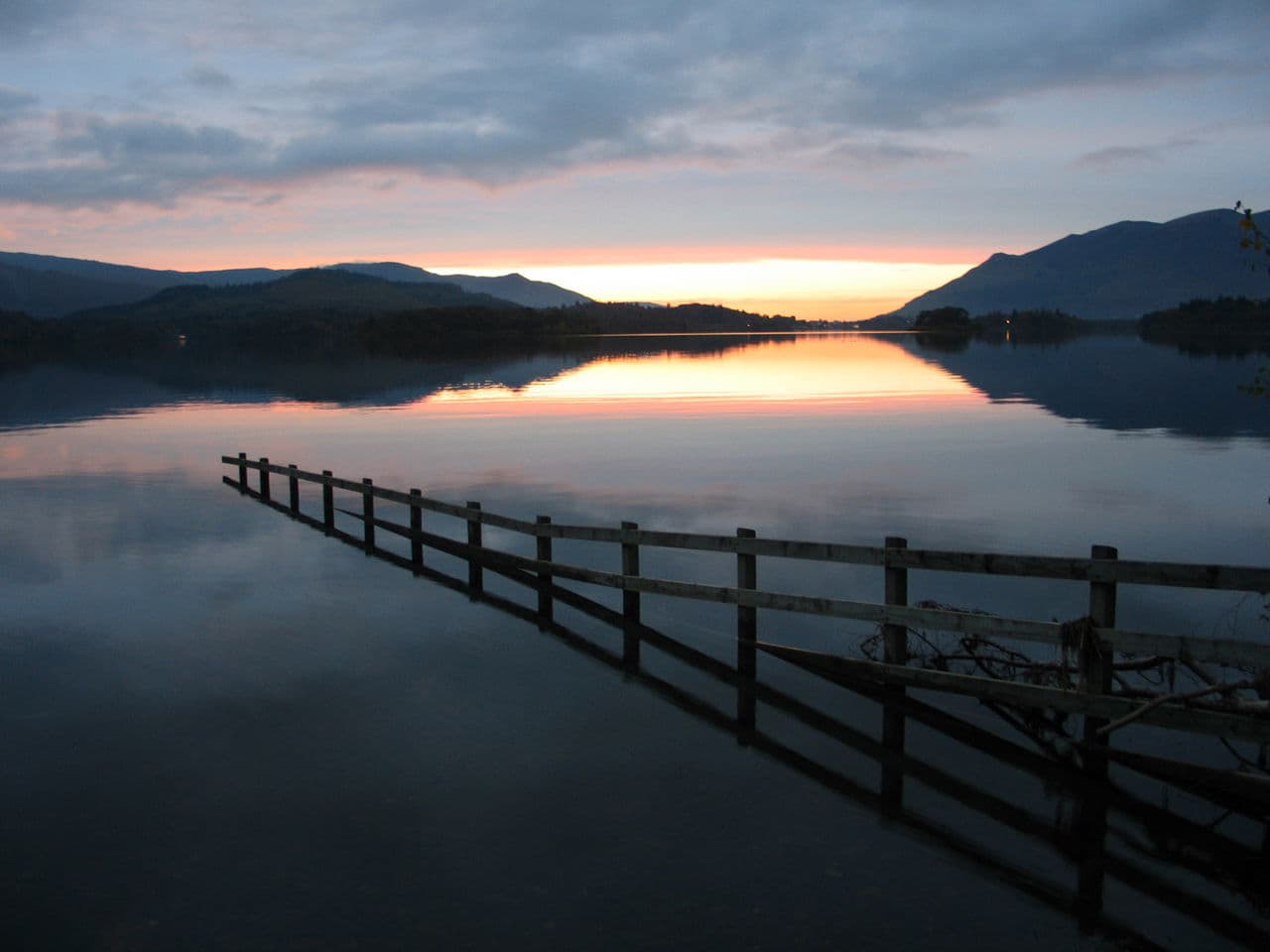
Lake District
THE QUICK VERDICT
By Anthony · Updated April 2026
Choose Lake District if you want England's wildest landscape — Wordsworth and Beatrix Potter country, Windermere and Derwentwater, Scafell Pike, fell-walking with a pub at the bottom, and the wettest weather in England.
- Best for
- Scafell Pike summit, Windermere ferry, Wordsworth's Dove Cottage, Beatrix Potter's Hill Top farm
- Best window
- May–Sep
- Budget anchor
- $195/day mid-range
- Skip if
- you depend on transit — fells are car-only and the wettest weather in England means waterproofs always
The UK's largest national park (2,362 km²) and a UNESCO World Heritage Site since 2017 — a glacier-carved Cumbrian landscape of slate-grey peaks, ribbon lakes, and dry-stone-walled fell farms. Despite the name, only Bassenthwaite Lake is technically a 'lake'; the rest are 'meres' (Windermere, Buttermere, Grasmere) or 'waters' (Derwentwater, Ullswater, Coniston Water) — Old Norse and Anglo-Saxon remnants. Scafell Pike (978 m) is England's highest mountain, a serious 6–7 hour return walk in often atrocious weather. The Romantic poetry movement was effectively born here — William Wordsworth's Dove Cottage in Grasmere is preserved as he left it, and Beatrix Potter (Peter Rabbit royalties) bought 4,000 acres of fellside farmland over her lifetime and bequeathed every acre to the National Trust. Seathwaite in Borrowdale receives 3,500 mm of rain a year — the wettest inhabited place in the British Isles. Pack waterproofs even in July. Closest airport: Manchester (MAN); the train to Windermere connects via Oxenholme.
The two links below are affiliate links — MapSorted earns a small commission if you book through them, at no extra cost to you. How this works.
Tours & Experiences
Bookable tours, activities, and day trips in Lake District
Where to Stay
Compare hotels and rentals in Lake District
📍 Points of Interest
Windermere· 15 km SE
England's longest lake (17 km) with heritage steamer cruises connecting Bowness, Ambleside, and Lakeside
Keswick & Derwentwater· 16 km N
Northern Lake District market town at the head of Derwentwater, ringed by Skiddaw and Catbells
Scafell Pike
England's highest mountain (978 m) — serious 6-7 hour return walk from Wasdale Head or Borrowdale
Dove Cottage (Wordsworth's home)
William Wordsworth lived here 1799-1808 — preserved cottage and adjoining Wordsworth Museum in Grasmere
Hill Top — Beatrix Potter's Farm· 14 km SE
17th-century farmhouse where Potter wrote 13 of her books — interior preserved, gardens appear in illustrations
Coniston Water & Brantwood· 14 km S
Lake of Donald Campbell's water-speed records and the Steam Yacht Gondola; Brantwood is John Ruskin's home
Buttermere & Crummock Water· 15 km NW
Photogenic western valley between two small lakes — Wainwright's ashes scattered above on Haystacks
Ullswater & Aira Force· 19 km NE
"Most beautiful lake in England" with heritage steamers and the 21-metre Aira Force waterfall
★ Local Picks
Wasdale Head & Wast Water· 13 km W
England's "Favourite View" — the deepest lake and the wildest valley, base for Scafell Pike
At a Glance
- Pop.
- 40K (national park area)
- Timezone
- London
- Dial
- +44
- Emergency
- 999 / 112
The Lake District National Park (UK's largest, 2,362 km²) became a UNESCO World Heritage Site in 2017 — recognised not just for its glacier-carved landscape but for the cultural fusion of farming, literature, and conservation that shaped the modern idea of "landscape." Beatrix Potter, William Wordsworth, and the National Trust were all forged here
Despite the name, only one body of water is officially called a "lake" — Bassenthwaite Lake. The others are "meres" (Windermere, Buttermere, Grasmere) or "waters" (Derwentwater, Ullswater, Coniston Water) — Old Norse and Old English remnants from the Vikings and Anglo-Saxons who settled here
Scafell Pike (978 m / 3,209 ft) is the highest mountain in England — modest by alpine standards but a serious 6-7 hour return walk on rough terrain in often atrocious weather. The summit was donated to the National Trust in 1919 by Lord Leconfield as a memorial to the men of the Lake District killed in WWI
William Wordsworth's "Daffodils" (1804) and the entire Romantic poetry movement that codified the modern Western idea of nature as sublime were directly born in the Lake District — Dove Cottage in Grasmere is preserved as he left it
Beatrix Potter (Peter Rabbit, 1902) used royalties from her children's books to buy 4,000 acres of Lake District farmland over her lifetime, all of which she bequeathed to the National Trust on her death in 1943 — the largest single donation that effectively saved the central Lake District from development
The Lake District has the wettest weather in England — Seathwaite in Borrowdale receives over 3,500 mm of rain per year (140 inches), making it the wettest inhabited place in the British Isles. Pack waterproofs even in July
Top Sights
Windermere & Bowness-on-Windermere
📌England's longest lake (17 km) and the busiest gateway to the Lake District. The lake itself is best experienced from a Windermere Lake Cruises steamer (the Tern dates to 1891, still in service) connecting Bowness to Ambleside and Lakeside. Bowness is the main tourist hub — overcrowded in summer but useful for boat trips, the Beatrix Potter attraction, and the World of Beatrix Potter visitor centre. The eastern shore (Belle Isle, Lakeside) is quieter than the western.
Keswick & Derwentwater
📌The northern Lake District's main town — Keswick is a working market town (market days Thursday and Saturday) at the head of Derwentwater, surrounded by some of the region's most dramatic fells (Skiddaw, Catbells, Cat Bells). The Keswick Launch ferry circumnavigates Derwentwater with seven landing stages — perfect for one-way walks back. The Castlerigg Stone Circle (3,000 BC) on the hill above town is one of England's most atmospheric prehistoric sites.
Scafell Pike
📌England's highest mountain at 978 m / 3,209 ft. Multiple routes; the most popular is from Wasdale Head (the shortest at 7 km return, 4-5 hours, very steep) — the most spectacular is the longer Corridor Route from Borrowdale via Sty Head Pass (12 km return, 6-7 hours). This is a serious mountain — full waterproofs, navigation, and proper boots are non-negotiable; the summit is regularly cloud-bound and the rocky ground is unforgiving in mist. Mountain Rescue is busy here every weekend.
Dove Cottage & Wordsworth Museum (Grasmere)
🏛️William Wordsworth lived here 1799-1808 — the most productive period of his life, during which he wrote "Daffodils" and revised the Prelude. The cottage is preserved largely as he and his sister Dorothy left it; the adjoining Wordsworth Museum holds the manuscripts, his pen, and detailed exhibits on the Romantic movement. Combined with the village of Grasmere itself (Sarah Nelson's Grasmere Gingerbread, made to the same recipe since 1854), this is the literary heart of the Lake District.
Coniston Water & Brantwood
📌The 8 km lake where Donald Campbell broke the world water-speed record in 1955 (and died trying to break his own record in 1967). Brantwood, the home of John Ruskin (Victorian art critic and Wordsworth's intellectual heir), sits on the eastern shore and is one of the most beautifully sited writers' houses in England. The Coniston Old Man (803 m) above the western shore is one of the most accessible serious fells. The Steam Yacht Gondola (1859, restored, runs daily) is the iconic way to cross the lake.
Hill Top — Beatrix Potter's Farm (Near Sawrey)
🏛️The 17th-century farmhouse Beatrix Potter bought in 1905 with the royalties from Peter Rabbit and where she wrote 13 of her books. The interior is preserved exactly as she left it; the gardens appear in many of the illustrations (the cabbage patch where Peter Rabbit met Mr. McGregor is the actual one). Timed entry to limit numbers — book ahead in summer. The 30-minute walk from the village of Hawkshead through Potter's own farmland is the proper approach.
Buttermere & Crummock Water
📌The most photogenic of the western valleys — Buttermere village (population 100) sits between two small lakes (Buttermere and Crummock Water) with the dramatic ridges of Haystacks, Fleetwith Pike, and Red Pike rising on either side. The 7 km circular walk around Buttermere is the best easy lake walk in the National Park. Alfred Wainwright, who wrote the seven-volume guidebooks that catalogued every Lake District fell, asked for his ashes to be scattered on Haystacks above Buttermere.
Ullswater & the Aira Force Waterfall
📌Often called "the most beautiful lake in England" — a long, sinuous lake (12 km) curving between fells in the eastern Lakes. The Ullswater Steamers (since 1859) connect Glenridding, Howtown, and Pooley Bridge — a one-way ride and a return walk (the Ullswater Way is the best long lakeside path) is the classic outing. Aira Force is a 21-metre waterfall in a wooded gorge above the western shore; it was here that Wordsworth saw the daffodils that inspired his most famous poem.
Climate & Best Time to Go
The Lake District is the wettest part of England — the western fells receive 3,000-4,000 mm of rain per year (the eastern fringes around Penrith and Ullswater are drier at 1,200 mm). The weather is genuinely changeable; "four seasons in one day" is not a cliché here. Cloud often sits on the higher fells even when the valleys are clear. Pack waterproofs even in July; the saying "no such thing as bad weather, only bad clothing" is the local creed.
Spring
March - May39 to 57°F
4 to 14°C
Lambing season transforms the fells; daffodils bloom by Wordsworth's grave at Grasmere in mid-April. Showers are frequent but the light when sunshine breaks through is spectacular. Mountain weather is still serious — snow on the tops well into May.
Summer
June - August52 to 66°F
11 to 19°C
Long daylight (sunset 21:30 in midsummer), the warmest months but still rainy and rarely truly hot. The most popular tourist period — Windermere, Bowness, and Keswick fill up; book accommodation months ahead. Midges can be a nuisance at dusk in July-August.
Autumn
September - November41 to 57°F
5 to 14°C
Many locals' favourite season — the fells turn rust and gold in October, the bracken glows, the crowds thin after the summer holidays end. November can be wet and dark; late September and early October are the prime weeks.
Winter
December - February32 to 45°F
0 to 7°C
Cold, wet, dark (sunset 16:00 in December). Snow on the high fells from December through March; the lower valleys stay green. Many B&Bs close December-February. A winter clear day with snow on Helvellyn is one of England's greatest sights — but you have to be lucky and properly equipped.
Best Time to Visit
Late April to mid-June and September to early October offer the best balance: long daylight, the fells in spring or autumn colour, and crowds that have not yet reached summer levels. July-August is the busiest period — book months ahead. Winter is dramatic and cheap but many B&Bs close and the daylight is short (sunset 16:00 in December).
Spring (April-June)
Crowds: Moderate (Easter spike then lower until June)The lambing fells in April, the daffodils at Grasmere in mid-April, and the bluebell woods at Rannerdale (Buttermere valley) in mid-May. Long daylight builds toward midsummer. Showers are frequent but the light when sunshine breaks through is unmatched.
Pros
- + Lambing season
- + Daffodils + bluebells
- + Long daylight by June
- + Less crowded than summer
Cons
- − Easter is busy
- − Snow still on tops in April
- − Frequent showers
Summer (July-August)
Crowds: Very high (peak season)The peak British school-holiday period — Bowness, Windermere, and Keswick are at their busiest; major attractions need pre-booking; B&B prices peak. The weather is often warm and dry but rarely truly hot. Midges can be a nuisance at dusk in still weather.
Pros
- + Long daylight (sunset 21:30)
- + Warmest weather
- + All attractions and bus routes operating
Cons
- − Highest accommodation prices
- − Crowded honeypots
- − Midges in still weather
- − Pre-booking essential
Autumn (September-October)
Crowds: Moderate (drops sharply after early September)Many locals' favourite season — the fells turn rust and gold in October, the bracken glows, the crowds drop after the summer holidays end. September is one of the driest months in some years. Late October sees the first snow on the high tops.
Pros
- + Best fell colours of the year
- + Lower prices than summer
- + Less crowded
- + Often dry and clear
Cons
- − Daylight shortening
- − Some attractions reduce hours
- − November can be very wet
Winter (November-March)
Crowds: Low (except Christmas / New Year)Cold, wet, dark, and often spectacular — clear winter days with snow on Helvellyn are among the most beautiful in the British year. Many B&Bs close December-February; some pubs maintain reduced hours. The Mountain Rescue teams are at their busiest with under-prepared walkers. Christmas in the Lakes is a thing — log fires, mulled wine, boutique hotels run festive packages.
Pros
- + Snow scenery
- + Lowest prices outside Christmas
- + Empty fells (if equipped)
- + Christmas atmosphere
Cons
- − Short daylight (sunset 16:00 in December)
- − Many B&Bs close
- − Dangerous on the high fells without proper equipment
🎉 Festivals & Events
Keswick Mountain Festival
MayThree days of guided walks, runs, climbing, talks, and live music at the foot of Skiddaw — the largest mountain-sport festival in the UK. Family-friendly programme alongside the serious adventures.
Cumbria Wools and Local Produce events
OctoberVarious Cumbrian villages hold harvest and wool celebrations through October — Buttermere shepherd's meet (October), Patterdale Sheep Show (August). Glimpse of the working hill-farm culture that the National Park preserves.
Words by the Water (Keswick Literary Festival)
MarchTen-day literary festival at the Theatre by the Lake in Keswick — major UK and international authors, talks on Lake District literature (Wordsworth, Coleridge, Ruskin, Beatrix Potter, Wainwright). Quieter and friendlier than the bigger UK literary festivals.
Off the Beaten Path
Wasdale Head Inn — England's "Favourite View"
A remote 19th-century coaching inn at the head of Wasdale, the wildest of the Lake District's valleys. The view from the inn's front door — Great Gable, Lingmell, and Yewbarrow framing the deepest lake in England (Wast Water) — was voted "Britain's Favourite View" in a 2007 ITV poll. The pub serves real Cumbrian food (Herdwick lamb shepherd's pie, sticky toffee pudding) and the Ritson's Bar inside is a 200-year-old shrine to the British climbing pioneers who started the sport on these surrounding crags in the 1880s.
Wasdale is the Lake District at its most uncompromising — the only valley with no through road, no village shop, no mobile signal (until very recently). Walking out of the pub at dusk to see Yewbarrow turn black against the sunset is a Lake District moment without parallel.
Tarn Hows — The Manufactured Beauty Spot
A small artificial lake (created in the 1860s by the wealthy Marshall family who dammed three smaller tarns) above Coniston, surrounded by larch and pine forest planted by the same family. The 3 km circular path is gentle and stroller-friendly. Beatrix Potter bought the surrounding land and gave it to the National Trust in the 1930s — without her, this would now be a holiday park. Go early or late; the central car park fills by 11 AM.
Tarn Hows is unapologetically a Victorian landscape design — but it's become so beloved that to call it "manufactured" misses the point. It's the most accessible serious Lake District landscape and one of the few that families with very young children can fully experience.
Sticky Toffee Pudding at the Cartmel Village Shop
Cartmel, a small village on the southern fringe of the Lake District (technically just outside the National Park), is the birthplace of sticky toffee pudding — invented at the Sharrow Bay Hotel in the 1970s and now sold worldwide by the Cartmel Village Shop in vacuum packs you can take home. Eat it warm with cream at the shop café, then wander the village (a 12th-century Augustinian priory, the L'Enclume restaurant — currently 3-Michelin-stars and arguably the best restaurant in the UK).
Sticky toffee pudding is the Lake District's contribution to global cuisine. The Cartmel original is genuinely better than every imitation — softer, with a darker toffee sauce, served with proper double cream. A pilgrimage for British food enthusiasts.
Catbells — The Family Fell
A 451-metre rocky ridge on the western shore of Derwentwater — short (3-4 hours return), with hands-on scrambly bits that thrill children, and a summit view of Derwentwater, Skiddaw, and the central Lakes that out-punches any other accessible fell in the National Park. Park at Hawes End (or take the Keswick Launch from Keswick to Hawes End and walk back along the lakeshore). Beatrix Potter set The Tale of Mrs. Tiggy-Winkle on the slopes here.
Catbells is the platonic ideal of a Lake District fell day — short enough for non-walkers, dramatic enough for serious ones, finishable with a pint at the Swinside Inn. Almost every Lake District local cut their teeth here as a child.
Honister Slate Mine
A working slate mine (England's last) above Honister Pass with three excellent tours — the underground mine tour goes 600 m into the mountain; the Via Ferrata follows the original 19th-century miners' "iron way" up the cliff face above the mine; and the new Via Ferrata Xtreme adds a spectacular cable bridge. The mine shop sells genuinely beautiful slate goods — better than the tourist tat in Keswick.
A reminder that the Lake District is still a working landscape — these slate mines built the roofs of half of Victorian Britain, and the pass over Honister is one of the most spectacular drives in the National Park. The Via Ferrata is the only one of its kind in England.
Safety Breakdown
Very Safe
out of 100
The Lake District is one of the safest tourist destinations in the UK — petty crime is low, violent crime against visitors is very rare, and the local population (~42,000 inside the National Park) is small and welcoming. The real risks are environmental: mountain weather, exposure, navigation errors on the high fells, and water cold-shock in the lakes. Mountain Rescue Teams (volunteer-staffed) handle 700+ incidents per year — overwhelmingly walkers underestimating conditions, not crime.
Things to Know
- •Mountain weather can change in 30 minutes — even a fine July day can turn to driving rain and 5°C at 600 m. Carry waterproofs, warm layers, and water on every fell walk regardless of forecast
- •Navigation matters — many fells have no paths above the lower slopes, and cloud can drop visibility to 10 m. Carry a paper OS map (Explorer OL series) and compass, or download offline maps; mobile signal is unreliable on the high fells
- •The lakes look swimmable but stay cold (10-15°C even in August) — cold-water shock is a real drowning risk; if wild swimming, acclimatise gradually and never alone
- •Single-track roads are the Lake District norm — passing places are marked, give way to traffic going downhill on steep sections, and do not assume tourists in front of you will pull over for a local
- •Ticks (carrying Lyme disease) are present in summer in bracken and tall grass — wear long trousers, check for ticks after walks, remove with proper tick remover
- •Honister Pass, Hardknott Pass, and Wrynose Pass are some of the steepest roads in England (1:3 gradients) — not for inexperienced drivers, caravans, or anyone in winter ice
- •Mobile signal is patchy across most of the National Park — download offline maps, tell someone your route, and consider a personal locator beacon for serious mountain days
Natural Hazards
Emergency Numbers
Emergency (all services)
999
Non-emergency police
101
NHS non-emergency
111
Mountain Rescue
999 (ask for Police, then Mountain Rescue)
Costs & Currency
Where the money goes
USD per dayBackpacker = hostel dorm + street food + public transit. Mid-range = 3-star hotel + neighbourhood restaurants + transit cards. Luxury = 4/5-star + fine dining + taxis. How we calibrate these numbers →
Quick cost estimate
Customize per category →Estimates based on regional averages. Flight prices vary by season and airline.
budget
$70-110
YHA hostel dorm, supermarket meals + occasional pub lunch, bus travel, free walking + lakeside days
mid-range
$140-200
B&B or mid-range hotel, pub dinners, hire car for self-drive days, lake cruises, museum entry
luxury
$300-500
4-5 star country house hotel (Sharrow Bay, Linthwaite House, The Samling), Michelin dining (L'Enclume in Cartmel), private guided fell-walking, helicopter pickups
Typical Costs
| Item | Local | USD |
|---|---|---|
| AccommodationYHA hostel dorm (Borrowdale, Ambleside, Keswick) | £25-40/night | $32-51 |
| AccommodationB&B double room (mid-range) | £90-140/night | $115-180 |
| AccommodationCountry house hotel (Linthwaite House) | £250-450/night | $320-575 |
| FoodPub lunch (Cumbrian sausage + chips) | £10-15 | $13-20 |
| FoodPub dinner (Herdwick lamb shepherd's pie) | £14-22 | $18-28 |
| FoodSticky toffee pudding with cream | £6-9 | $8-12 |
| FoodPint of Cumbrian beer (Jennings, Hawkshead) | £4-5 | $5-7 |
| FoodCream tea (scone, jam, cream, tea) | £8-12 | $10-15 |
| FoodRestaurant dinner (3 courses, mid-range) | £35-50 | $45-65 |
| TransportHire car (per day) | £40-60 | $51-77 |
| TransportStagecoach Day Rider | £10 | $13 |
| TransportWindermere Cruise (Bowness-Ambleside one-way) | £10-12 | $13-15 |
| TransportTrain, Manchester to Windermere | £25-40 | $32-51 |
| AttractionHill Top (Beatrix Potter's house) | £14 | $18 |
| AttractionDove Cottage & Wordsworth Museum | £12.50 | $16 |
| AttractionHonister Slate Mine tour | £20-25 | $26-32 |
💡 Money-Saving Tips
- •YHA hostels in the Lakes are some of the best in the UK — often in stunning historic buildings (Borrowdale's YHA was a Victorian shooting lodge); £25-40/night for a dorm beats any B&B
- •A National Trust membership (£84/year for adults) pays for itself in the Lakes — Hill Top, Wordsworth House, Tarn Hows, free parking at all NT car parks
- •Stagecoach Lakes Explorer 7-day pass (£35) covers all Lake District buses — much cheaper than per-trip if you're here a week
- •Pub food at lunch is often half the dinner price — most pubs serve the same menu but with smaller portions and £8-12 mains 12-2 PM
- •Many of the best walks (Catbells, Buttermere round, Tarn Hows) are completely free — the Lake District's greatest attraction is the landscape itself
- •Avoid bank holidays (UK long weekends) and the school summer holidays (mid-July to early September) — accommodation prices double and Bowness/Windermere become unbearable
British Pound Sterling
Code: GBP
1 GBP ≈ 1.27 USD (varies). The UK is not in the Eurozone. Cards (Visa, Mastercard, contactless including Apple Pay / Google Pay) are accepted virtually everywhere — even small village shops, B&Bs, and pub kitchens. Cash is rarely needed; ATMs in Keswick, Bowness, Windermere, Ambleside, and Penrith. Some remote pubs and farmhouse cafés charge a small premium for card payments under £5 — keep a £20 note for emergencies.
Payment Methods
Cards (contactless and chip-and-pin) accepted virtually everywhere — including small village shops, mountain inns, and pubs in remote valleys. Apple Pay / Google Pay universal. Cash needed only for honesty boxes (some farm shops, Lake District car parks) and the very smallest B&Bs. ATMs (cash machines) in all main towns; rural areas have none — withdraw before heading into the western valleys.
Tipping Guide
10-12.5% is the British norm at sit-down restaurants; many add it as "discretionary service" on the bill — check before tipping again. Pub meals: not expected.
Not tipping at the bar is the British norm — but "and one for yourself" (an offer to buy the bartender a drink, which they'll usually take as £1-2 cash) is the traditional way to thank a great barman.
Round up to the nearest £1 or £5 — 10% is generous. No expectation.
£2-5/day left on the pillow is appreciated; not expected at smaller B&Bs.
Mountain Rescue Teams are entirely volunteer-funded — donations at any visitor centre or via the LDSAMRA website are genuinely appreciated and go directly to operational costs. £5-10 if they've helped you or even just for being there.
How to Get There
✈️ Airports
Manchester Airport(MAN)
130 km south of Windermere; 2 hr driveThe closest major international airport — direct trains from Manchester Airport to Oxenholme (1.5-2 hr, £25-50, change at Manchester Piccadilly or direct on TransPennine Express), then change at Oxenholme for Windermere. Hire cars at the airport make the 2-hr drive direct via M6. Manchester is also the largest UK air hub outside London for connections.
✈️ Search flights to MANCarlisle Airport(CAX)
50 km north of Keswick; 1 hr driveTiny regional airport with limited services (mostly Loganair to UK domestic destinations). Useful only if there is a direct route from your origin; otherwise Manchester is far better connected. Closest practical airport for the northern Lakes.
✈️ Search flights to CAX🚆 Rail Stations
Oxenholme (the Lake District) Station
15 km from WindermereOn the main West Coast Line — direct trains from London Euston (3 hr 20, £60-150 advance), Manchester (1.5 hr), Glasgow (1.5 hr), and Edinburgh (2.5 hr via Carlisle). Change here for the Lakes Line branch to Kendal and Windermere (20 min).
Windermere Station
The end of the Lakes Line branch from Oxenholme — the only train station inside the National Park boundary. Walk from the station to Bowness (15 min) or take the bus.
Penrith (North Lakes) Station
On the West Coast Line — direct trains from London (3 hr), Glasgow (1 hr 15). The closest train station to Keswick (40 min by 555 bus) and Ullswater (30 min by 508 bus).
🚌 Bus Terminals
National Express coach routes serve Keswick, Windermere, and Penrith
National Express coaches from London Victoria to Keswick (7-8 hr, £20-40 advance) and Windermere. Slow but cheap; book ahead. Stagecoach 555 Lakeslink connects all the main bus stops within the Lakes.
Getting Around
A car is by far the most practical way to explore the Lake District — public transport exists but is limited outside the main valleys, and many of the best trailheads are unreachable without one. Stagecoach buses serve the main routes (the 555 Lakeslink connects Lancaster, Kendal, Windermere, Ambleside, Grasmere, and Keswick; the 599 is the open-top tourist bus around Windermere); Windermere Lake Cruises and the Keswick Launch turn lakes into useful transport links. Parking is limited and expensive in summer.
Hire Car / Self-Drive
£35-70/day plus fuel (~£1.50/L)The default for serious exploration — most trailheads, Wasdale Head, Buttermere, the western lakes, and the smaller villages are inaccessible by bus. Hire from Manchester (MAN), Carlisle, or Penrith stations. Roads are narrow, often single-track with passing places; high fells passes (Honister, Hardknott, Wrynose) are not for nervous drivers.
Best for: Wasdale, Buttermere, Hill Top, off-the-beaten-track valleys
Stagecoach Bus
£3-9 single; £10/day Rider; £35/week ExplorerThe 555 Lakeslink (Lancaster-Keswick via Windermere, Ambleside, Grasmere) is the spine of public transport; the X4/X5 connects Penrith to Workington via Keswick; the 599 open-top serves Windermere and Bowness in summer. Day Rider tickets (£10) and Lakes Explorer 7-day passes (£35) are good value. Routes thin out dramatically in winter.
Best for: Main central valley (Windermere-Keswick), no-driving day trips
Lake Cruises (Windermere, Ullswater, Coniston, Derwentwater)
£10-25 round trip; one-way fares for walksEach of the four big lakes has a heritage steamer/launch operation — Windermere Lake Cruises (the largest, with multiple historic vessels), Ullswater Steamers, the Coniston Steam Yacht Gondola (1859 restoration), and the Keswick Launch on Derwentwater. Use them as one-way transport for circular walks; piers double as trailheads.
Best for: Hawes End for Catbells, lakeshore walks, scenic transport
Train (West Coast Main Line)
£25-60 from Manchester; £60-150 from London advanceThe London-Glasgow West Coast Main Line stops at Oxenholme (for Kendal/Windermere) and Penrith (for Ullswater/Keswick). The Lakes Line branches from Oxenholme to Windermere (20 min). The Ravenglass & Eskdale heritage railway is a tourist attraction (15-inch narrow gauge, "La'al Ratty"). No trains within the central Lake District.
Best for: Getting to the Lakes from London/Glasgow/Manchester
Walkability
The main villages (Bowness, Ambleside, Grasmere, Keswick) are very walkable — small enough to cover on foot. Between them and out to the trailheads requires bus, boat, or car. The fells themselves are walkable only by genuinely fit walkers properly equipped — this is real mountain country, not a city park.
Travel Connections
Yorkshire Dales
England's second-most beautiful national park — limestone landscapes, dry-stone walls, market towns (Hawes, Grassington, Settle), the Ribblehead Viaduct, and the Three Peaks Challenge (Pen-y-ghent, Whernside, Ingleborough). Lower fells than the Lakes but a different and equally rewarding character.

Edinburgh
Scotland's capital — UNESCO Old Town, Edinburgh Castle, the Royal Mile, Arthur's Seat, and the August Festival when the city hosts the world's largest arts festival. Direct trains from Penrith (~2 hr).
Manchester
England's second city for music, football, and northern grit — Old Trafford and the Etihad, the Industrial Revolution heritage at Castlefield, the Northern Quarter for independent shops and bars, and increasingly excellent food. Manchester Airport (MAN) is the closest major hub.
Hadrian's Wall & Northumberland
The 117 km Roman frontier wall (UNESCO) marches across northern England — best preserved at Housesteads Fort, Vindolanda, and Steel Rigg/Sycamore Gap (the famously decapitated tree). Combine with Northumberland National Park for England's largest dark sky reserve.
Isle of Man
A self-governing British Crown Dependency in the Irish Sea — Viking parliament (Tynwald, the world's oldest continuously sitting), TT motorbike races every June, the Snaefell Mountain Railway, and a distinctive Manx culture. Easy from Heysham (near Lancaster) via Steam Packet ferry.
Entry Requirements
The Lake District is in England — UK entry rules apply. The UK is not in the Schengen Area; UK visa rules are independent of EU rules. Most Western passport holders can enter visa-free for up to 6 months as a "Standard Visitor." Since 2025 the UK requires an Electronic Travel Authorisation (ETA) from most non-visa nationals before travel — a £10 online application valid for 2 years.
Entry Requirements by Nationality
| Nationality | Visa Required | Max Stay | Notes |
|---|---|---|---|
| US Citizens | Visa-free | 6 months as Standard Visitor | No visa needed but UK ETA required since 2025 (£10, 2-year validity, apply online via gov.uk). Passport must be valid for the duration of stay. |
| EU/EEA Citizens | Visa-free | 6 months as Standard Visitor | EU citizens lost free movement post-Brexit. Passport required (national ID cards no longer accepted from most EU states). UK ETA also required since 2025. |
| Australian / New Zealand Citizens | Visa-free | 6 months as Standard Visitor | No visa; UK ETA required since 2025. Working Holiday visa (Youth Mobility) available for 18-30 year olds — 2 years' work and travel rights. |
| Canadian Citizens | Visa-free | 6 months as Standard Visitor | No visa; UK ETA required since 2025. Same Youth Mobility visa available for 18-30s. |
Visa-Free Entry
Tips
- •UK ETA is now required for visa-free visitors since 2025 — apply at least a week before travel via gov.uk; do not use third-party sites that overcharge
- •The UK is NOT Schengen — your time here does not count against any Schengen 90/180 calculation
- •Northern Ireland is part of the UK with the same entry rules but if entering via the Republic of Ireland (Schengen-adjacent Common Travel Area) the rules differ — check the specific route
- •Carry your passport when travelling in the UK; Brexit changed many of the EU-internal travel norms and ID checks have become more common
Language & Phrases
The Lake District is in England — English is the working language. Cumbrian dialect has distinctive words and place-name endings (the "Yan, Tan, Tethera" sheep-counting numbers; "fell" for mountain; "tarn" for small mountain lake; "ghyll" for ravine; "beck" for stream; "force" for waterfall). All are Old Norse remnants from the Viking settlement of the 9th-10th centuries. A handful of Cumbrian words mark you out as someone who has actually been here.
| English | Translation | Pronunciation |
|---|---|---|
| Hello (informal) | Alreet? | ahl-REET |
| Good morning | Mornin' | MOR-nin |
| Mountain | Fell | fell |
| Small mountain lake | Tarn | tarn |
| Stream | Beck | bek |
| Ravine | Ghyll (or Gill) | gill |
| Waterfall | Force | fors |
| Lovely / brilliant | Champion | CHAMP-ee-un |
| Are you well? | Yer alreet? | yer ahl-REET |
| Cheers / thank you | Cheers | cheers |
| A pint of bitter, please | A pint of bitter, please | a pint of BIT-ter, please |
| See you later | Ta-ra! | tah-RAH |
Shopping
The Lake District's shopping is dominated by outdoor gear, local food, and craft — the main towns (Keswick, Ambleside, Bowness) all have multiple outdoor shops (George Fisher in Keswick is the original; Cotswold Outdoor and Trespass also present). For genuinely local goods, head to farmers' markets (Keswick Saturday, Ulverston Thursday) and the village shops in Cartmel, Hawkshead, and Grasmere.
Keswick Town Centre
main shopping townThe Lake District's most complete shopping town — outdoor gear (George Fisher, Cotswold Outdoor, Mountain Warehouse), independent bookshops (Bookends), the Saturday market on Market Square, and a cluster of Cumbrian food shops. The Pencil Museum (Keswick was the birthplace of the modern graphite pencil) is a quirky attraction with a shop attached.
Known for: Outdoor gear, hill-walking books, Cumbrian food
Hawkshead Village
historic villageA car-free 17th-century village in the southern Lakes — Beatrix Potter Gallery, the Hawkshead Grammar School where Wordsworth was educated, and a cluster of independent shops including the Hawkshead Relish Company (chutneys, jams, mustards) which exports across the UK. Charming, touristy, but small enough to retain character.
Known for: Hawkshead Relish chutneys, Beatrix Potter gifts, Cumbrian crafts
Grasmere Village
literary villageTiny village dominated by Wordsworth associations — Sarah Nelson's Gingerbread Shop (1854, recipe unchanged) is the must-visit; the gingerbread is unique to Grasmere and sold nowhere else worldwide. Heaton Cooper Studio (paintings of the Lakes by three generations of the Heaton Cooper family) is the best art gallery in the National Park.
Known for: Grasmere Gingerbread, Lake District watercolours, walking books
Cartmel Village
food villageJust south of the National Park boundary but worth the trip — the Cartmel Village Shop sells the original sticky toffee pudding (vacuum-packed for travel home); L'Enclume (3-Michelin) is one of the best restaurants in the UK; the village is a 12th-century priory town.
Known for: Sticky toffee pudding, fine dining, priory antiquities
🎁 Unique Souvenirs to Look For
- •Sticky toffee pudding from the Cartmel Village Shop — vacuum-packed, the definitive original; lasts in the cupboard for weeks
- •Grasmere Gingerbread — sold only at Sarah Nelson's shop in Grasmere, made to the 1854 recipe; soft, chewy, unique to this one shop
- •Hawkshead Relish chutneys — mustards, jams, marmalades; the damson chutney is the signature; jars travel well
- •Herdwick wool products — the indigenous Lake District sheep breed; jumpers, throws, hats; expensive but extraordinary quality
- •Wordsworth poetry editions — the official Wordsworth Trust shop at Dove Cottage has handsome editions of the Prelude and the Lyrical Ballads
- •Wainwright pictorial guides — the seven-volume hand-drawn guides to the Lake District fells; look for the unrevised originals as collectables
- •Cumbrian rum butter — the regional speciality (rum, butter, sugar, nutmeg) — eaten on bread or scones; unavailable outside Cumbria
- •Lake District slate coasters / signs / clocks — slate from Honister or Coniston, the same material that roofed Victorian Britain
If you like Lake District, you'll love…
4 cities with a similar vibe, outside of the same country.

United States · OVR 80
landscapes that steal the show · nomad-ready infrastructure

Canada · OVR 79
easy to live online · low-anxiety streets

Canada · OVR 79
easy to live online · immaculate streets

Australia · OVR 82
landscapes that steal the show · nomad-ready infrastructure