
Bukhara
THE QUICK VERDICT
By Anthony · Updated June 2026
Choose Bukhara if you want 2,500-year-old caravan Silk Road intact — Lyabi-Hauz, Kalon Minaret, Ark Fortress, covered bazaars, and dozens of working madrasas on a walkable scale.
- Best for
- Lyabi-Hauz tea-house pool, Kalon Minaret, Ark fortress, walkable madrasa-and-bazaar Old Town
- Two seasons
- Apr–May and Sep–Oct
- Budget anchor
- $50/day mid-range
- Extreme range
- 33°C between summer and winter — pack for the month, not the country
- Language gap
- English gets thin outside tourist areas — a translation app earns its keep
- Worth a look
- 2,500 years of caravan history almost entirely on foot in a single dense, low-cost core
One of the best-preserved medieval cities in Central Asia, Bukhara's old town is a UNESCO site of ancient mosques, madrasas, and caravanserais. The Kalyan Minaret, Ark Fortress, and covered bazaars evoke centuries of Silk Road trade.
The two links below are affiliate links — MapSorted earns a small commission if you book through them, at no extra cost to you. How this works.
Tours & Experiences
Bookable tours, activities, and day trips in Bukhara
Where to Stay
Compare hotels and rentals in Bukhara
📍 Points of Interest
Kalyon Minaret
A 47-meter brick minaret from 1127, the most iconic symbol of Bukhara. It survived Genghis Khan's destruction and served as a beacon for Silk Road caravans.
Ark Fortress
An ancient citadel that served as the residence of Bukhara's rulers for over a millennium. Contains several museums and offers panoramic views from its walls.
Chor-Minor
A charming 19th-century gatehouse with four distinctive blue-capped towers. Hidden in a residential neighborhood, it is one of Bukhara's most photographed structures.
★ Local Picks
Lyab-i Hauz
A peaceful plaza surrounding a 17th-century pool shaded by ancient mulberry trees. The social heart of Bukhara, flanked by a madrasa and khanaka.
Ismail Samani Mausoleum
A 10th-century architectural jewel whose intricate brickwork creates shifting patterns in different light. The oldest standing monument in Bukhara.
At a Glance
- Pop.
- 280K
- Timezone
- Samarkand
- Dial
- +998
- Emergency
- 102 / 103
Bukhara has over 140 architectural monuments and its historic center is a UNESCO World Heritage Site — one of the best-preserved old cities in Central Asia
Known as "Bukhara the Noble," it was one of the most important centers of Islamic scholarship for centuries, producing scholars like Avicenna and Imam al-Bukhari
The Kalyon Minaret (1127) was so impressive that Genghis Khan reportedly spared it when he destroyed the rest of the city in 1220
Bukhara's old town has three remaining covered bazaars (trading domes) that have been in continuous use for over 500 years
The city sits on the edge of the Kyzylkum Desert and summer temperatures regularly exceed 40°C (104°F)
Top Sights
Poi Kalyon Complex
📌The iconic trio of the Kalyon Minaret (47m, built 1127), Kalyon Mosque, and Mir-i-Arab Madrasa. The minaret once served as a lighthouse for caravans approaching across the desert and was allegedly used for executions.
Ark Fortress
🗼The ancient citadel of Bukhara's emirs, used for over 1,000 years. The massive walls contain throne rooms, a mosque, a prison, and a museum. The rooftop offers views over the old city.
Lyab-i Hauz
🗼A tranquil plaza centered on a 17th-century pool flanked by mulberry trees, a madrasa, and a khanaka (pilgrim's rest). The most atmospheric spot in Bukhara for evening tea or dinner at an outdoor restaurant.
Ismail Samani Mausoleum
📌A 10th-century masterpiece of early Islamic architecture. Its intricate brickwork creates different patterns depending on the light and angle — no tiles, just brilliant bricklaying. The oldest monument in Bukhara.
Trading Domes (Taq)
🏪Three surviving covered bazaars — Taq-i Sarrafon (moneychangers), Taq-i Telpak Furushon (hat sellers), and Taq-i Zargaron (jewelers). Now mostly selling souvenirs, silk, and carpets, but the architecture is the real draw.
Chor-Minor
🗼A quirky 19th-century gatehouse with four blue-domed towers, each slightly different. Hidden in a residential lane, it's small but photogenic and makes for a pleasant wander through the backstreets.
Bolo Hauz Mosque
📌A stunning 18th-century mosque with an ornate carved wooden portico supported by 20 tall columns. The pool in front creates beautiful reflections. Faces the Ark Fortress across the square.
Climate & Best Time to Go
Bukhara has a harsh continental desert climate — extremely hot summers and cold winters. Spring and autumn are the only comfortable seasons for sightseeing.
Spring
March - May54-86°F
12-30°C
The best time to visit. Warm but not yet scorching, with blooming gardens. April is ideal with pleasant temperatures and longer days.
Summer
June - August86-108°F
30-42°C
Dangerously hot. Temperatures regularly exceed 40°C. Only the most heat-tolerant should visit. If you must, sightsee before 9 AM and after 6 PM.
Autumn
September - November41-82°F
5-28°C
Another excellent window. September-October offers warm, dry weather. The Silk & Spice Festival is often held in late October.
Winter
December - February27-46°F
-3-8°C
Cold with occasional frost and rare snow. Fewer tourists mean quieter experiences, but some guesthouses may not have strong heating.
Best Time to Visit
April through May and September through October are ideal, with comfortable temperatures for exploring the old city on foot. Summers are brutally hot with temperatures exceeding 40 degrees.
Spring (March - May)
Crowds: Moderate — peak tourist season begins in AprilThe best season begins. March is still cool but April and May bring warm, pleasant weather with blooming gardens and comfortable walking temperatures.
Pros
- + Perfect sightseeing temperatures
- + Gardens and courtyards in bloom
- + Long but not extreme daylight
- + Nauruz celebrations in March
Cons
- − April can have occasional rain
- − Tourist numbers building
- − Some days still cool in March
- − Wind and dust storms possible
Summer (June - August)
Crowds: Low — heat deters most visitorsExtremely hot — temperatures regularly exceed 40 degrees and can approach 50. The old city becomes an oven. Only visit if you can handle extreme heat.
Pros
- + Fewest tourists
- + Lowest prices
- + Fruit season with markets full of melons and grapes
- + Long daylight hours
Cons
- − Dangerously high temperatures
- − Sightseeing very difficult after 10 AM
- − Heat exhaustion risk
- − Limited shade in the old city
Autumn (September - November)
Crowds: Moderate — peak season in September-OctoberSeptember and October are excellent with warm days and cool evenings. The harvest season brings abundant fruit and the old city glows in golden light.
Pros
- + Ideal temperatures
- + Harvest season with great food
- + Golden afternoon light on monuments
- + Cotton and silk harvest adds color to the landscape
Cons
- − October can cool quickly
- − November becomes cold and grey
- − Peak season prices in September-October
- − Days shorten by November
Winter (December - February)
Crowds: Very lowCold and quiet. Temperatures drop below freezing and the city is grey, but accommodation is cheap and you may have the monuments to yourself.
Pros
- + Almost no tourists
- + Rock-bottom prices
- + Atmospheric misty mornings
- + Cozy chaikhana culture
Cons
- − Cold with freezing temperatures
- − Short days
- − Some guesthouses unheated
- − Grey and dreary weather
🎉 Festivals & Events
Nauruz
MarchThe spring equinox celebration with traditional food, music, and dance. Sumalak (sprouted wheat pudding) is prepared communally over bonfires throughout the city.
Silk and Spices Festival
May-JuneA cultural festival celebrating Bukhara's Silk Road heritage with traditional music, dance, craft demonstrations, and fashion shows featuring Bukharan silk.
Independence Day
SeptemberCelebrated on September 1st with concerts, cultural events, and festivities in the old city center.
Plov Festival
AutumnInformal gatherings where massive batches of plov (pilaf) are cooked in giant cauldrons in public spaces, with free servings for all.
Language & Phrases
Uzbek is the official language (written in Latin script since 1993). Many Bukharans also speak Tajik (a Persian dialect) as a first language due to the city's Persian heritage. Russian is understood by older generations. English is limited but growing in the tourism sector.
| English | Translation | Pronunciation |
|---|---|---|
| Hello | Assalomu alaykum | as-sa-LO-moo a-LAY-koom |
| Thank you | Rahmat | rah-MAHT |
| Please | Iltimos | il-tee-MOS |
| Yes / No | Ha / Yo'q | ha / yok |
| How much? | Qancha? | kahn-CHA |
| Where is...? | ...qayerda? | ...ka-YER-da |
| Excuse me | Kechirasiz | keh-chee-rah-SEEZ |
| Goodbye | Xayr | khayr |
| Delicious | Mazali | ma-za-LEE |
| Water | Suv | soov |
| Tea | Choy | choy |
| The check, please | Hisob, iltimos | hee-SOB il-tee-MOS |
Costs & Currency
Where the money goes
USD per dayBackpacker = hostel dorm + street food + public transit. Mid-range = 3-star hotel + neighbourhood restaurants + transit cards. Luxury = 4/5-star + fine dining + taxis. How we calibrate these numbers →
Quick cost estimate
Customize per category →Estimates based on regional averages. Flight prices vary by season and airline.
budget
$15-25
Hostel dorm, bazaar meals, walking everywhere, selective monument entries
mid-range
$35-65
Converted madrasa or courtyard guesthouse, restaurant meals, all entries, occasional taxi
luxury
$90-160
Heritage boutique hotel, fine dining, private guide, spa hammam experience
Typical Costs
| Item | Local | USD |
|---|---|---|
| FoodShashlik and bread at a local spot | 20,000-30,000 UZS | $1.60-2.40 |
| FoodDinner at Lyab-i Hauz restaurant | 60,000-100,000 UZS | $4.80-8.00 |
| AccommodationHostel dorm bed | 70,000-100,000 UZS | $5.60-8.00 |
| AccommodationCourtyard guesthouse double | 250,000-450,000 UZS | $20-36 |
| TransportTaxi to train station | 25,000-35,000 UZS | $2.00-2.80 |
| AttractionArk Fortress entry | 35,000 UZS | $2.80 |
💡 Money-Saving Tips
- •The old town is fully walkable — you'll rarely need transport unless going to the train station
- •Stay in a family-run guesthouse with included breakfast for the best value
- •Many exterior views of monuments are free — you only pay to go inside
- •Eat where locals eat: chaikhanas near the bazaar serve generous meals for under $2
- •Buy Samarkand non bread and fruit from the market for cheap lunch supplies
Uzbek Som
Code: UZS
1 USD is approximately 12,700-12,900 UZS (as of early 2026). US dollars are the easiest foreign currency to exchange. Exchange at banks or official exchange points — the black market rate is no longer significantly better than official rates since currency reforms. ATMs exist but are unreliable — bring sufficient cash.
Payment Methods
Cash is essential in Bukhara. Cards are accepted at some hotels and a few upscale restaurants but most transactions are cash-only. Bring clean US dollars to exchange. The Uzbek som comes in large denominations — you will carry thick stacks of bills. Mobile payments via Payme and Click are growing among locals but not accessible to most tourists.
Tipping Guide
Tipping is not traditional in Uzbekistan. In tourist-oriented restaurants, rounding up or leaving 5-10% is appreciated but not expected.
No tipping expected at local tea houses. Simply pay the bill amount.
Not expected. Agree on a fare before the ride and pay that amount.
Small tips of 5,000-10,000 UZS are appreciated at family-run guesthouses. International hotels follow Western tipping norms.
For a full-day guide, $5-10 USD equivalent is generous. Multi-day guides appreciate $10-15 per day.
Off the Beaten Path
Chor-Minor at Dawn
A charming 19th-century gatehouse with four distinctive blue-capped towers tucked in a quiet residential neighborhood. Most visitors come midday but dawn light is magical.
Arriving early before tour groups means you can photograph this fairytale structure in golden light with no crowds, then explore the surrounding old mahalla neighborhood.
Lyab-i-Hauz Evening Scene
The ancient pool complex surrounded by mulberry trees, madrasahs, and outdoor chaikhanas where locals gather to drink tea, play backgammon, and socialize.
While tourists visit during the day, the pool area transforms in the evening into Bukhara's communal living room. Order plov and tea and watch the city unwind.
Ismail Samani Mausoleum
A 10th-century architectural masterpiece whose intricate terracotta brickwork creates shifting patterns as the sun moves. The oldest standing monument in Bukhara.
This small building is considered one of the greatest achievements of Central Asian architecture. The brickwork creates different geometric patterns depending on the angle of light.
Old Jewish Quarter
The historic Jewish neighborhood near the old town center where Bukharan Jews lived for centuries. A few synagogues remain, along with distinctive residential architecture.
Few tourists explore this area, which tells the story of a once-thriving Jewish community that dates back over a millennium. Local residents are friendly and welcoming.
Local Tea Houses Beyond the Center
Neighborhood chaikhanas a few blocks from the tourist center where working-class Bukharans gather for oversized portions of plov, somsa, and endless pots of green tea.
The food is better, cheaper, and more generous than in tourist-facing restaurants. Point at what others are eating and you will not be disappointed.
Safety Breakdown
Moderate
out of 100
Bukhara is one of the safest cities in Uzbekistan for tourists. The old town is compact and heavily visited, with very low crime. The biggest risk is heat-related illness in summer.
Things to Know
- •Carry water at all times, especially in warmer months — dehydration and heatstroke are real risks
- •Keep a copy of your passport handy for occasional police checks
- •Be cautious with carpet and souvenir sellers in the trading domes — prices are heavily inflated for tourists
- •Tap water is not potable — always drink bottled water
- •The old town streets are uneven cobblestones — wear sturdy footwear
- •Dress modestly, especially when visiting active mosques and religious sites
Emergency Numbers
Police
102
Ambulance
103
Fire
101
How to Get There
✈️ Airports
Bukhara International Airport(BHK)
5 km eastTaxi (~15,000 UZS / $1.20 USD, 10-15 min). Limited domestic and international flights.
✈️ Search flights to BHK🚆 Rail Stations
Bukhara-1 (Kagan)
15 km southeast — taxi required (~20,000-30,000 UZS)The main railway station is in Kagan, 15 km southeast of the old town. Afrosiyob trains run to Samarkand (1.5 hrs) and Tashkent (4 hrs). Book at railway.uz.
Getting Around
Bukhara's historic center is compact and best explored on foot. Taxis are needed mainly to reach the train station or outlying sights.
Walking
FreeThe old town is small enough to walk end to end in 20 minutes. All major monuments are concentrated within a walkable area. This is the best way to explore.
Best for: Exploring the historic center
Taxis & Yandex Go
10,000-30,000 UZS ($0.80-2.40 USD)Cheap taxis for getting to the train station (15 km away) or the outskirts. Yandex Go works here. Negotiate prices with informal taxis.
Best for: Getting to/from the train station and outlying sites
Local Marshrutkas
1,500 UZS (~$0.12 USD)Small minibuses running fixed routes. Very cheap but routes are difficult to decipher for visitors. Mostly useful for locals.
Best for: Budget travel if you can figure out the routes
Walkability
Excellent in the old town — it is one of the most walkable historic centers in Central Asia. Major sights are within 1 km of each other.
Travel Connections

Samarkand
The Registan, Shah-i-Zinda, and Bibi-Khanym make Samarkand the essential companion to any Bukhara visit on the Silk Road trail.

Tashkent
Uzbekistan's sprawling capital with ornate metro stations, massive bazaars, and international flight connections.

Khiva
The third jewel of the Uzbek Silk Road — a perfectly preserved walled inner city (Ichan Kala) that feels like an open-air museum.
Entry Requirements
Uzbekistan has dramatically liberalized its visa regime in recent years. Citizens of over 90 countries can now enter visa-free for up to 30 days. E-visas are available for many other nationalities. The country actively encourages tourism.
Entry Requirements by Nationality
| Nationality | Visa Required | Max Stay | Notes |
|---|---|---|---|
| US Citizens | Visa-free | 30 days | Passport must be valid for at least 3 months beyond entry. No invitation letter or registration required for stays under 30 days. |
| UK Citizens | Visa-free | 30 days | Same visa-free access as US citizens. Hotels handle registration automatically. |
| EU Citizens | Visa-free | 30 days | Most EU nationalities enjoy 30-day visa-free access. |
| Canadian Citizens | Visa-free | 30 days | Visa-free for 30 days with standard passport validity requirements. |
| Indian Citizens | Yes | 30 days | E-visa available online through the Uzbek e-visa portal. Processing takes 2-3 business days. Cost is approximately $20. |
Visa-Free Entry
Tips
- •Hotels and guesthouses register you automatically — keep registration slips as you may need them at the border
- •If staying in private homes, the host must register you at the local OVIR office within 3 days
- •The Bukhara airport is small — most travelers arrive by train from Tashkent or Samarkand
- •High-speed Afrosiyob trains connect Bukhara to Samarkand (1.5h) and Tashkent (4h) — book online in advance
- •Land border crossings from Turkmenistan can be bureaucratic — allow extra time
- •Carry copies of your passport and registration slips when walking around the old city
Shopping
Bukhara has been a trading city for over two millennia and shopping here still feels like a Silk Road experience. The covered bazaars and artisan workshops sell traditional crafts made using centuries-old techniques. Haggling is expected and part of the fun.
Taq-i Zargaron (Jewelers' Bazaar)
historic covered bazaarA 16th-century domed trading complex at the crossroads of the old Silk Road routes, historically dedicated to jewelers and now selling a mix of jewelry, crafts, and souvenirs.
Known for: Silver jewelry, gemstones, miniature paintings, traditional crafts
Taq-i Sarrafon (Money Changers' Bazaar)
historic covered bazaarAnother 16th-century trading dome, historically for money changers and now home to carpet dealers, textile vendors, and souvenir shops.
Known for: Carpets, suzani embroidery, silk ikat fabric
Taq-i Tilpak Furushon (Cap Sellers' Bazaar)
historic covered bazaarThe third great trading dome of Bukhara, originally for hat sellers and now offering books, fabrics, and traditional clothing.
Known for: Traditional tubeteika caps, silk scarves, books about Bukhara
Artisan Workshops in Madrasahs
craft workshopsSeveral restored madrasahs have been converted into artisan workshops where you can watch craftsmen create miniature paintings, metalwork, wood carvings, and suzani embroidery.
Known for: Watching artisans at work, custom-made crafts, authentic handmade goods
🎁 Unique Souvenirs to Look For
- •Suzani embroidered wall hangings — hand-stitched with silk thread in traditional floral patterns
- •Bukharan silk ikat fabric (atlas) with distinctive tie-dye patterns
- •Miniature paintings on paper, silk, or camel bone using traditional techniques
- •Hand-hammered copper and brass trays, teapots, and decorative pieces
- •Traditional Bukharan tubeteika caps embroidered with regional patterns
- •Handmade Bukharan scissors with distinctive bird-shaped handles
- •Bukharan carpets and kilims with regional geometric patterns
- •Dried fruits, nuts, and local spices from the bazaar
If you like Bukhara, you'll love…
4 cities with a similar vibe, outside of the same country.

India · OVR 70
stretches your budget · museum-dense old core
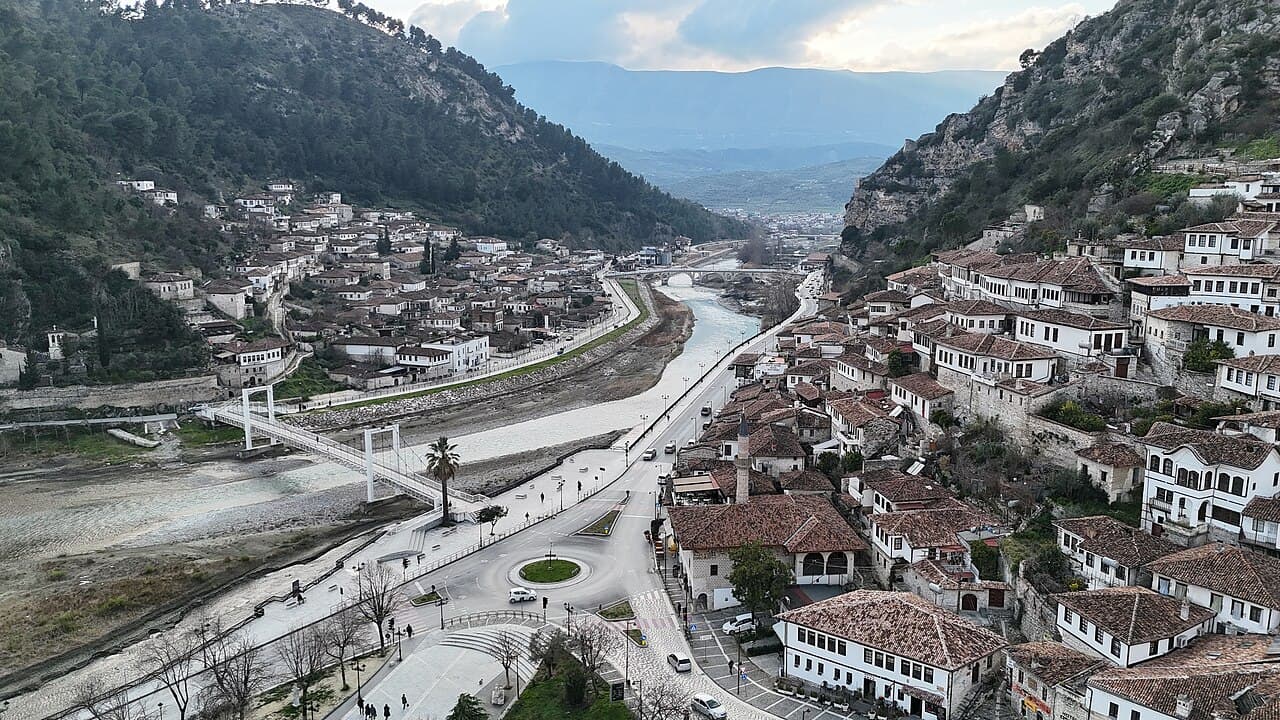
Albania · OVR 76
eminently walkable core · easy on the wallet

India · OVR 72
strong food culture · deep artistic heritage

China · OVR 73
eminently walkable core · rich cultural layers