
Lalibela
THE QUICK VERDICT
By Anthony · Updated April 2026
Choose Lalibela if you want Ethiopia's spiritual heart — 11 monolithic rock-hewn churches still in active worship, with January's Genna and Timkat festivals as the headline events.
- Best for
- Bete Giyorgis cross-shaped church, Genna Christmas pilgrimage, Asheton Maryam monastery hike, Yemrehana Krestos cave church
- Best window
- Oct–Mar
- Budget anchor
- $105/day mid-range
- Visa first
- No visa-free entry listed — check requirements before booking anything
- Needs care
- Scores below most of the catalog on safety — read that section before you go
- Skip if
- you're security-cautious — northern Ethiopia's Tigray-adjacent region still requires checking advisories before booking
Ethiopia's "New Jerusalem" — 11 monolithic churches carved DOWN into volcanic rock as single pieces in the 12th-13th century by King Lalibela. Pilgrimage heart of Ethiopian Orthodox Christianity, where white-shawled priests and pilgrims still gather daily. Bete Giyorgis (St. George), the cross-shaped final church standing alone in its pit, is the most iconic. Sits at 2,500m in the northern highlands. Genna (Ethiopian Christmas, January 7) and Timkat (Epiphany, January 19) are spectacular but expensive. Tigray war (2020-22) affected access — verify current security.
The two links below are affiliate links — MapSorted earns a small commission if you book through them, at no extra cost to you. How this works.
Tours & Experiences
Bookable tours, activities, and day trips in Lalibela
Where to Stay
Compare hotels and rentals in Lalibela
📍 Points of Interest
Bete Giyorgis (St George Church)
Cross-shaped monolithic church carved 12m into basalt — the most iconic image of Lalibela
Bete Medhane Alem
Largest rock-hewn church in the world, supported by 36 exterior columns
Bete Maryam
Oldest and most richly decorated Lalibela church, housing ancient manuscripts
Northern Group Tunnel Network
Rock-cut tunnels and trenches connecting six churches of the northern complex
Bete Amanuel (Southern Group)
The royal family's private church — finest dressed stonework in the southern complex
★ Local Picks
Asheton Maryam Monastery
Cliff-top monastery at 3,150m with panoramic highland views, reached by mule
Yemrehana Krestos Cave Church· 20 km NE
Pre-Lalibela cave church with stunning Axumite architecture 42 km from town
Lalibela Saturday Market
Weekly highland market with local farmers, weavers, and artisans — minimal tourist presence
At a Glance
- Pop.
- ~20K (town)
- Timezone
- Addis Ababa
- Dial
- +251
- Emergency
- 991 / 907
Lalibela's 11 monolithic rock-hewn churches were carved downward into volcanic basalt rock in the 12th-13th century — entire structures chiseled as single continuous pieces from the living bedrock, not assembled from cut blocks
King Lalibela commissioned the churches after a pilgrimage to Jerusalem was blocked, intending to create a "New Jerusalem" in the Ethiopian highlands — the Yordanos (Jordan) River was even renamed to match
The site has been a UNESCO World Heritage Site since 1978 and remains an active place of worship — white-robed priests and pilgrims are present daily, not a museum but a living sacred complex
Lalibela sits at approximately 2,500 meters (8,200 ft) elevation in the northern Ethiopian highlands — altitude sickness is a real concern for newly arrived visitors and nights can drop near freezing year-round
Ethiopia uses the Julian calendar, running 7-8 years behind the Gregorian calendar, and a 12-hour clock that starts at dawn — "1 o'clock" means 7 am by Western reckoning, which can cause significant scheduling confusion
Ethiopian Christmas (Genna, January 7) and Epiphany (Timkat, January 19) draw thousands of white-shawled pilgrims to Lalibela in spectacular all-night ceremonies — the most extraordinary way to experience the churches
Top Sights
Bete Giyorgis (Church of St George)
📌The most iconic church in Lalibela — a perfectly cross-shaped monolith carved 12 meters down into a pit of red rock, its roof engraved with three nested Greek crosses. Standing alone from the main groups, it is the most photographed and architecturally pure of the 11 churches.
Bete Medhane Alem (House of the Savior of the World)
📌The largest rock-hewn church in the world, supported by 36 exterior columns and surrounded by a colonnade of smaller columns on all sides. It houses a replica of the Ark of the Covenant and is considered the most sacred of the northern group.
Bete Maryam (House of Mary)
📌Believed to be the oldest of the Lalibela churches and the most richly decorated, with carvings of the Axumite cross, animals, and geometric patterns covering the interior walls and ceilings. Priests guard ancient illuminated manuscripts and golden crosses inside.
Northern Group Tunnel Network
🗼The six churches of the northern group are connected by a labyrinth of dark tunnels, trenches, and passageways cut through solid rock — some barely wide enough for one person. Navigating these tunnels by torchlight, encountering priests and pilgrims, is unforgettable.
Southern Group Churches
📌Four churches clustered in the southern complex, including Bete Amanuel (the royal family's private church with finely dressed stonework), Bete Mercurios, Bete Abba Libanos, and Bete Gabriel-Rufael — each with distinct architectural character and carved from the same continuous cliff face.
Asheton Maryam Monastery Hike
🌿A high-altitude monastery perched on a cliff face above Lalibela at 3,150 meters, reached by a 2-3 hour mule ride or steep trail. The views across the highland plateau are extraordinary and the small cave church contains centuries-old crosses and robes.
Yemrehana Krestos Cave Church
📌A pre-Lalibela church from the 11th-12th century built inside a natural cave 42 km from town, considered by many scholars to be the most beautiful example of Axumite architecture in Ethiopia. The exterior walls of alternating wood and stone glow in the cave's dim light, and mummified remains of pilgrims line the cave floor.
Entry Requirements
Ethiopia requires a visa from most nationalities. The eVisa system is the preferred and most reliable method, available online before travel. Visa on arrival is technically available at Addis Ababa Bole International Airport but the eVisa is faster and avoids queues. All entry into Ethiopia is through Addis Ababa Bole International for international visitors, with onward domestic connection to Lalibela.
Entry Requirements by Nationality
| Nationality | Visa Required | Max Stay | Notes |
|---|---|---|---|
| US Citizens | Yes | 30-90 days | eVisa available online at evisa.gov.et for $52 (single entry 30 days) or $82 (multiple entry 90 days). Processing takes 3-5 business days. Apply at least 2 weeks before travel. |
| UK Citizens | Yes | 30-90 days | eVisa required. Same fee structure as US. Apply well in advance of travel through evisa.gov.et. |
| EU Citizens | Yes | 30-90 days | All EU nationals require a visa. eVisa is available for most EU countries at evisa.gov.et. |
| Australian Citizens | Yes | 30-90 days | eVisa available and recommended. Apply online at least 2 weeks before departure. |
| Indian Citizens | Yes | 30 days | eVisa available for Indian nationals. Apply online and carry printed confirmation. |
| Chinese Citizens | Yes | 30-90 days | eVisa available. China and Ethiopia have strong bilateral relations and processing is generally straightforward. |
Visa-Free Entry
Visa on Arrival
Tips
- •Apply for your eVisa at least 2-3 weeks before departure — the system can be slow and technical issues occur
- •Print your eVisa approval letter and carry it with your passport — immigration officers will check the physical or digital copy
- •Yellow fever vaccination certificate is required if you are arriving from a yellow fever endemic country — check the current list as it changes
- •Your passport must have at least 6 months validity from your date of entry and at least two blank pages
- •Register with your home country's embassy in Addis Ababa and sign up for travel alerts — particularly important given the regional security situation
Safety Breakdown
Exercise Caution
out of 100
Lalibela town itself is generally safe for visitors, with a low rate of violent crime and a community accustomed to pilgrims and tourists. However, Ethiopia's broader security situation requires careful monitoring — the Tigray conflict (2020-22) significantly disrupted access to northern Ethiopia, and intermittent instability in the Amhara region continues. Always check current government travel advisories before booking. Within the town, petty theft and persistent touts are the main irritants.
Things to Know
- •Check your government's current travel advisory for Ethiopia and specifically the Amhara region before booking — the situation can change quickly and some areas have been under curfew or travel restriction
- •Dress modestly at all times in and around the churches — shoulders and knees covered; remove shoes before entering any church interior
- •Ask permission before photographing priests, pilgrims, or the interior of churches — some priests prohibit photos and will approach you if you photograph without asking
- •Use a registered government-licensed guide for the churches — unregistered touts outside the entrance may provide incorrect information and can create complications at entry points
- •Altitude adjustment takes 1-2 days — take it easy on arrival, drink extra water, avoid alcohol the first night, and ascend slowly if hiking to Asheton Maryam monastery
- •Drink only bottled or treated water throughout your stay — tap water is not safe and ice in restaurants should be avoided outside reputable hotels
Natural Hazards
Emergency Numbers
Police
991
Ambulance
907
Fire Department
939
Ethiopian Airlines Emergency
+251 116 179 900
Language & Phrases
Amharic is the official language of Ethiopia and the primary language in Lalibela. It uses the Ge'ez (Ethiopic) script, one of the world's oldest writing systems still in active use — also used for Ge'ez, the ancient liturgical language of Ethiopian Orthodox ceremonies. Tigrinya is spoken in parts of the northern highlands. English is understood by hotel and restaurant staff but rarely by church priests, guides (who usually speak some English), or market vendors. Even a few Amharic words will be met with warm appreciation.
| English | Translation | Pronunciation |
|---|---|---|
| Hello (formal) | Selam | SEH-lahm |
| How are you? | Dehna neh? (to man) / Dehna nesh? (to woman) | DEH-nah neh / DEH-nah nesh |
| I am fine, thank you | Dehna, ameseginalehu | DEH-nah, ah-meh-seh-GEE-nah-leh-hoo |
| Thank you (very much) | Ameseginalehu | ah-meh-seh-GEE-nah-leh-hoo |
| Please | Ibakwo (to man) / Ibakish (to woman) | ee-BAH-kwo / ee-BAH-kish |
| Yes / No | Awo / Aydelem | AH-wo / eye-DEH-lem |
| How much does this cost? | Sint new? | SINT neh-oo? |
| That's too expensive | Wudd new | WOOD neh-oo |
| Excuse me / Sorry | Yikirta | yee-KEER-tah |
| Where is...? | Yet new...? | YET neh-oo...? |
| Very beautiful / wonderful | Betam konjo | BEH-tam KON-jo |
| God bless you (common greeting) | Igziabher yibarekh | ig-ZI-ab-her yee-BAH-rekh |
Climate & Best Time to Go
Lalibela has a highland tropical climate at 2,500 meters elevation — days are mild to warm year-round (15-25°C), but nights are cool to cold and can drop near 5°C even in summer. There is a distinct wet season from June through September when the highland receives heavy rainfall. The dry season from October through May is the primary travel window. Dust can be intense in the driest months.
Dry Season
October - January50-72°F
10-22°C
The best time to visit. Clear skies, comfortable daytime temperatures, and the spectacular Genna (Christmas, Jan 7) and Timkat (Epiphany, Jan 19) festivals fall in this window. Nights are cool and require a warm layer.
Late Dry Season
February - May55-77°F
13-25°C
Warmer and drier with increasing dust. April and May can be uncomfortably hot by midday. Fewer tourists than the festival months. Good light for photography of the churches in morning hours.
Rainy Season
June - September50-68°F
10-20°C
Heavy afternoon rains are common, often lasting several hours. Roads can become muddy and impassable. The surrounding plateau turns bright green and wildflowers appear. Church interiors can be dark and atmospheric in the low light. Not recommended for first-time visitors.
Short Dry Period
September - October50-72°F
10-22°C
Rains taper off and the plateau is lushly green from the wet season. The Meskel festival (Finding of the True Cross, September 27) is celebrated with bonfires. An underrated time to visit with smaller crowds.
Best Time to Visit
October through January is the ideal window — dry weather, clear highland skies, and the extraordinary Genna (Ethiopian Christmas, January 7) and Timkat (Epiphany, January 19) festivals. Festival dates draw thousands of pilgrims and are spectacular but require booking accommodation months in advance and expect significantly higher prices.
Peak Season (October - January)
Crowds: Moderate October-December; very high during Genna and Timkat (Jan 7-19)Dry, clear, and cool — perfect conditions for exploring the churches and hiking. The two major festivals, Genna and Timkat, fall in January and are among the most remarkable religious gatherings in Africa.
Pros
- + Best weather
- + Clear skies for photography
- + Genna and Timkat festivals
- + Comfortable temperatures
Cons
- − January festival period: high prices, sold-out accommodation, large crowds
- − Book months ahead for January
Shoulder Season (February - March)
Crowds: Low to moderateStill dry but warming. Fewer tourists than festival season and better accommodation availability. Good hiking conditions before the pre-rainy heat of April-May. Ethiopian Easter (Fasika) falls in March-April and is a significant but less crowded celebration.
Pros
- + Quiet churches
- + Good prices
- + Comfortable hiking weather
- + Ethiopian Easter celebration
Cons
- − Warming by March
- − Dust increasing
- − Some guesthouses run reduced services
Hot Dry Period (April - May)
Crowds: Very lowThe warmest months in Lalibela with increasing dust. Daytime temperatures can reach 28°C in April before the rains arrive. Still drier than the rainy season but less comfortable than October-March.
Pros
- + Lowest prices of the dry season
- + Very few tourists
- + Churches uncrowded
- + Green landscape beginning to emerge
Cons
- − Heat and dust uncomfortable midday
- − Hazy skies reduce photography quality
- − Limited facilities in guesthouses
Rainy Season (June - September)
Crowds: Very lowHeavy afternoon rains are common and roads can become difficult. The surrounding highland plateau turns brilliantly green and wildflowers appear. Meskel (Finding of the True Cross, September 27) is celebrated with spectacular bonfires. Not recommended for first-time visitors.
Pros
- + Lush green landscape
- + Lowest prices of the year
- + Meskel festival in late September
- + Almost no tourists
Cons
- − Heavy daily rain
- − Muddy unpaved roads
- − Some remote sites inaccessible
- − Mule trails slippery
🎉 Festivals & Events
Genna (Ethiopian Christmas)
January 7All-night ceremony beginning at midnight with priests processing in full regalia between the rock-hewn churches by torchlight, followed by morning mass. Thousands of white-robed pilgrims fill every open space around the churches.
Timkat (Ethiopian Epiphany)
January 19A two-day celebration of the baptism of Christ, with a procession of the tabot (replica Ark) wrapped in fine cloth carried on a priest's head, followed by a ceremonial re-enactment of baptism. More colorful and processional than Genna.
Meskel (Finding of the True Cross)
September 27A nationwide Ethiopian Orthodox festival marked by the lighting of a large bonfire (demera). Lalibela's celebration, set against the highland landscape, is particularly atmospheric.
Fasika (Ethiopian Easter)
March-April (varies)Ethiopian Orthodox Easter follows the Julian calendar and differs from Western Easter. A significant pilgrimage festival with all-night church services and fasting breaking at dawn on Easter morning.
Off the Beaten Path
Dawn at Bete Giyorgis
Arrive at the pit of Bete Giyorgis before 7 am to watch the mist clear from the highland plateau and see priests in white robes descend the rock-cut stairway for morning prayer. The pink morning light on the red-brown basalt is extraordinary.
Tour groups arrive mid-morning — the church is silent and atmospheric at dawn, accessible with your multi-day entrance ticket already in hand.
Bet Gabriel-Rufael at the Bridge
The most remote church in the southern group, connected to the rest of the complex by a narrow bridge over a deep trench. The interior is hewn from reddish rock and lit only by slits cut into the ceiling — priests here see very few foreign visitors.
The crossing of the narrow rock bridge into this church, with sheer drops on either side, is one of the most dramatic entrances in all of Lalibela.
Lalibela Saturday Market
A large weekly market held on the flat ground below the churches where highland farmers descend from surrounding villages to trade grain, spices, live animals, and hand-woven cloth. A genuine market with almost no tourist presence.
Seeing the people who live in the communities around Lalibela — many in traditional dress — offers context impossible to find inside the church complex.
Women's Craft Cooperatives
Several NGO-supported cooperatives in town employ local women to produce hand-woven scarves, embroidered table runners, and decorative items using traditional highland patterns. Products are sold at fixed fair-trade prices.
Unlike the artisan tables near the church entrance where prices are inflated for tourists, cooperative prices are set and the income goes directly to producers.
Rooftop Injera Dinner
Several guesthouses in the upper part of town serve traditional injera meals on rooftop terraces with views across the highland plateau at sunset. Eating injera with your hands from a shared platter, as Ethiopians do, is the best introduction to the cuisine.
The combination of highland sunset colors, the distant silhouette of cliff churches, and a communal Ethiopian meal is an experience unique to Lalibela.
Costs & Currency
Where the money goes
USD per dayBackpacker = hostel dorm + street food + public transit. Mid-range = 3-star hotel + neighbourhood restaurants + transit cards. Luxury = 4/5-star + fine dining + taxis. How we calibrate these numbers →
Quick cost estimate
Customize per category →Estimates based on regional averages. Flight prices vary by season and airline.
budget
$30-50
Basic guesthouse, local injera meals, walking everywhere, no private guide
mid-range
$80-130
Comfortable hotel, licensed guide, restaurant meals, mule to Asheton Maryam
luxury
$200+
Upscale lodge, private guide, private driver for day trips, full-service dining
Typical Costs
| Item | Local | USD |
|---|---|---|
| AttractionsChurch complex entrance (valid 5 days) | ETB 1500 | $28 |
| AttractionsLicensed guide (full day) | ETB 1000-1500 | $18-27 |
| AttractionsMule hire to Asheton Maryam | ETB 500-800 | $9-14 |
| AttractionsYemrehana Krestos day trip (driver) | ETB 1500-2500 | $27-45 |
| AccommodationBudget guesthouse (double) | ETB 800-1400 | $15-25 |
| AccommodationMid-range hotel (double) | ETB 2200-5000 | $40-90 |
| AccommodationUpscale lodge (double) | ETB 8000+ | $150+ |
| FoodInjera with tibs at local restaurant | ETB 150-300 | $2.70-5.50 |
| FoodMeal at tourist restaurant | ETB 400-800 | $7-15 |
| FoodMacchiato or Ethiopian coffee | ETB 30-60 | $0.55-1.10 |
| TransportBajaj within town | ETB 50-150 | $0.90-2.70 |
| TransportAirport transfer (hotel shuttle) | ETB 300-600 | $5-11 |
💡 Money-Saving Tips
- •The ETB 1500 church entrance ticket is valid for 5 consecutive days — use it to spread visits across multiple mornings rather than rushing all 11 churches in one day
- •Eat injera at small local restaurants away from the church entrance — a full meal costs ETB 150-250 versus ETB 400+ at tourist-facing restaurants
- •Walk between the church groups rather than taking a bajaj — the northern group, southern group, and Bete Giyorgis are all within 10-15 minutes of each other on foot
- •Visit during the shoulder period of October or March to find lower accommodation prices than the peak festival months of January
- •Share a private driver to Yemrehana Krestos with fellow travelers — split four ways, the cost becomes very reasonable
- •Buy frankincense, coffee, and silver jewelry at the Saturday market rather than the church entrance stalls — prices are 30-50% lower
- •The mule to Asheton Maryam is not strictly necessary — fit hikers can walk the trail in 2-3 hours each way and save the hire fee
- •Bring snacks and water from town rather than buying at the church complex area where markup is significant
Ethiopian Birr
Code: ETB
1 USD is approximately 55-60 ETB (as of early 2026). ATMs are limited in Lalibela — there is one Commercial Bank of Ethiopia ATM in the town center that is sometimes out of service or out of cash. Bring sufficient Ethiopian Birr from Addis Ababa. USD is accepted at larger hotels and for church entry fees. Euros are rarely accepted. Do not count on card payments outside the largest hotels.
Payment Methods
Cash is essential. Most restaurants, guesthouses, and all market vendors are cash-only. A handful of upscale lodges accept Visa or Mastercard but may have unreliable card terminals. Church entrance fees can be paid in USD. Withdraw enough Birr in Addis Ababa to last your entire stay, as ATM access in Lalibela is unreliable.
Tipping Guide
ETB 1000-1500 per day ($18-27) is the standard tip for a full-day church guide. Tip at the end of the tour, not the beginning.
ETB 200-300 ($3.50-5.50) for the Asheton Maryam mule ride in addition to the agreed hire fee.
Tipping is not deeply embedded in local culture but is welcomed. ETB 50-100 (~$1-1.80) for a meal is appropriate in tourist restaurants.
ETB 100-200 per day ($1.80-3.60) for housekeeping in mid-range hotels is a generous and appreciated gesture.
Many priests will show you relics, manuscripts, or crosses — a small donation of ETB 50-100 is customary and appreciated for their time.
How to Get There
✈️ Airports
Lalibela Airport(LLI)
Approximately 25 km from townNo public bus or shared taxi from the airport. Most hotels arrange pickup for a fee (ETB 300-600 / ~$5-11) — confirm in advance. Private taxis charge a similar rate. The drive takes 30-45 minutes on a winding mountain road.
✈️ Search flights to LLIAddis Ababa Bole International Airport(ADD)
700 km south — the main international hubInternational visitors fly into Addis Ababa first, then connect to Lalibela on Ethiopian Airlines (1 hour flight, typically $100-200 round trip). Ethiopian Airlines is the only carrier operating the route and has multiple daily frequencies.
✈️ Search flights to ADD🚌 Bus Terminals
Lalibela Bus Station (lower town)
Public buses and minibuses connect Lalibela to Woldia (5-6 hr) and on to Addis Ababa (18+ hr total), but the journey is extremely rough on unpaved highland roads and is not recommended for most visitors. The road from Addis Ababa is approximately 700 km and takes 12-16 hours in good conditions, often more in the rainy season. Flying is strongly preferred for both comfort and safety.
Getting Around
Lalibela is a small highland town and the churches themselves are best explored on foot. The two main church groups and Bete Giyorgis are all within walking distance of each other, though paths between them involve steep rocky terrain and steps. For excursions outside town, local transport options are limited and a private driver or arranged hotel transfer is often the most practical choice.
Walking
FreeThe northern group, southern group, and Bete Giyorgis are all walkable from the town center and from each other. Paths are uneven, rocky, and often steep — sturdy closed-toe shoes are mandatory. Sandals are not appropriate.
Best for: All movement between the church complexes and around the town center
Bajaj (Auto-Rickshaw)
ETB 50-150 (~$0.90-2.70) for short town tripsThree-wheeled auto-rickshaws are available for short distances within town, useful for getting between the hotel area and the church entrance or the market. Negotiate a fare before boarding.
Best for: Short distances within town, especially with luggage or in midday heat
Taxi or Private Driver
ETB 1500-2500 (~$27-45) for a full day with private driverA handful of private car owners operate as taxis in Lalibela. Your hotel can arrange a reliable driver for day trips to Yemrehana Krestos cave church or other sites beyond walking distance. Agree on an all-day price in the morning.
Best for: Yemrehana Krestos church (42 km), airport transfers, and any sites outside town
Mule for Asheton Maryam
ETB 500-800 (~$9-14) for mule hire including handlerThe traditional and most practical way to reach the Asheton Maryam monastery at 3,150 m is by mule, arranged through your hotel or a guide. The ride takes 1.5-2 hours each way. The mule handler serves as a guide for the ascent.
Best for: Asheton Maryam Monastery hike — strongly recommended over walking for first-time highland visitors
Hotel Shuttles
Often included; or ETB 300-600 (~$5-11) if charged separatelyMost mid-range and upscale hotels provide shuttle service to and from Lalibela Airport and can arrange transfers to the church entrance. Confirm details at check-in.
Best for: Airport arrivals and departures; getting between hotels and churches
Walkability
Within the church complexes, walking is the only option and is entirely manageable — the northern group can be explored in 2-3 hours on foot. The terrain between complexes is rocky and uneven with steps and inclines; the footwear you choose matters significantly. The town itself is small enough to walk end-to-end in 20 minutes on flat ground.
Travel Connections

Gondar
Ethiopia's former imperial capital, home to the 17th-century Royal Enclosure of castles (Fasil Ghebbi) and the stunning Debre Birhan Selassie church with its famous ceiling of painted angels. A UNESCO site often combined with Lalibela on northern Ethiopia circuits.
Aksum
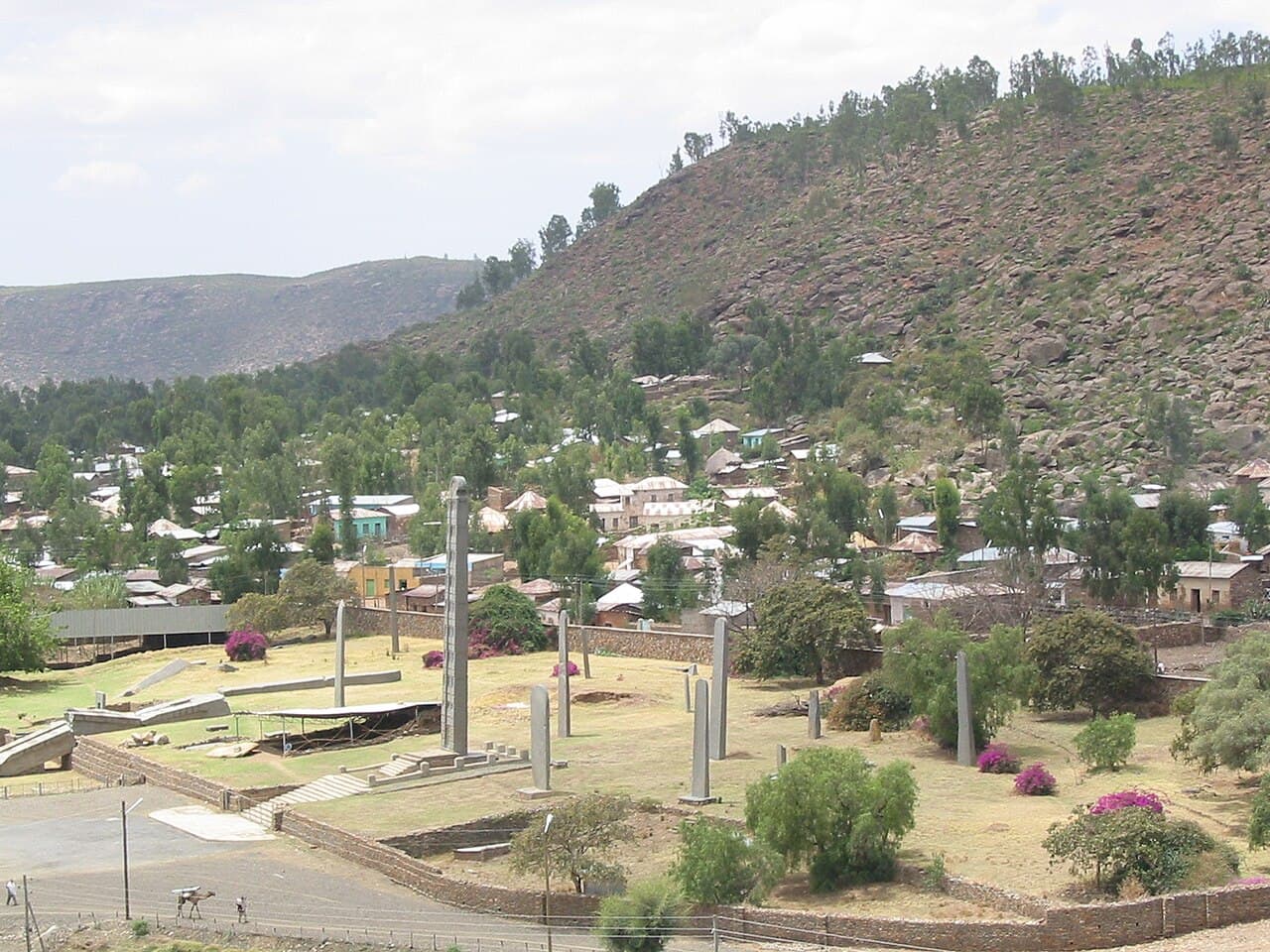
The ancient capital of the Aksumite Empire, with towering granite obelisks, underground royal tombs, and the Church of Our Lady Mary of Zion, which Ethiopians believe houses the original Ark of the Covenant. One of the oldest continuously inhabited cities in Africa.

Addis Ababa
Ethiopia's capital and the hub for all flights into the country. Home to the National Museum (containing Lucy the hominid fossil), the Holy Trinity Cathedral, and the African Union headquarters. The best place to stock up on supplies before heading to Lalibela.

Bahir Dar & Lake Tana
A lakeside city on the shores of Lake Tana, the source of the Blue Nile. Boat trips visit island monasteries with medieval paintings, and the Blue Nile Falls (Tis Issat) are a short drive away. The city itself is pleasant with a wide lakeside promenade.
Shopping
Shopping in Lalibela centers on Ethiopian Orthodox religious items and highland craft traditions. The town is small and shopping is limited compared to Addis Ababa or Gondar, but several reliable spots exist for quality souvenirs. Prices near the church entrance are higher than in town — the Saturday market and women's cooperatives offer better value.
Church Entrance Artisan Tables
artisan marketA row of small stalls and tables set up along the path to the main church entrance selling crosses, icons, prayer scrolls, and scarves. Convenient but prices are set for tourists — bargaining is accepted but margins are already high.
Known for: Ethiopian Orthodox crosses, hand-painted icons, prayer scrolls, frankincense
Saturday Weekly Market
traditional marketA large open-air market held every Saturday in the lower part of town where highland farmers and traders gather. Beyond produce and livestock, vendors sell hand-woven gabi shawls, baskets, spices, and silver jewelry at local prices.
Known for: Hand-woven gabi shawls, local spices, silver jewelry, baskets, live animals
Women's Craft Cooperatives
cooperativesSeveral small cooperatives supported by development organizations employ local women to produce embroidered textiles, woven scarves, and decorative items. Fixed fair-trade prices ensure income goes to producers.
Known for: Hand-woven scarves, embroidered table runners, highland textile patterns
🎁 Unique Souvenirs to Look For
- •Ethiopian Orthodox processional crosses in brass or silver — each regional style is distinct and Lalibela has its own recognizable cross form
- •Hand-painted icons on goat skin (vellum) depicting Ethiopian saints — made by church-trained artists
- •Gabi — the white handwoven cotton shawl worn by pilgrims, priests, and highland farmers throughout Ethiopia
- •Injera basket (mesob) — the tall woven basket used to serve injera, made from qocho palm
- •Silver jewelry from the Saturday market — rings, pendants, and earrings using traditional highland patterns
- •Ethiopian coffee — Lalibela sits near highland coffee-growing areas; whole beans from the market are excellent
- •Frankincense and myrrh — widely available and used in Ethiopian Orthodox ceremonies; buy at the market for local prices
If you like Lalibela, you'll love…
4 cities with a similar vibe, outside of the same country.


