Quick Verdict
Pick Gili Islands for Turtle Point snorkels, Trawangan beach bars, and bicycle-and-cidomo car-free decompression. Pick Yogyakarta if Borobudur's 5:30 AM stupas, Prambanan complexes, and Javanese batik shops anchor the cultural chapter.
Can't pick? Visit both.
Build a trip that includes Yogyakarta and Gili Islands, with complementary stops we'll suggest.
🏆 Yogyakarta wins 71 OVR vs 70 · attribute matchup 4–4
Keep exploring

Yogyakarta
Indonesia
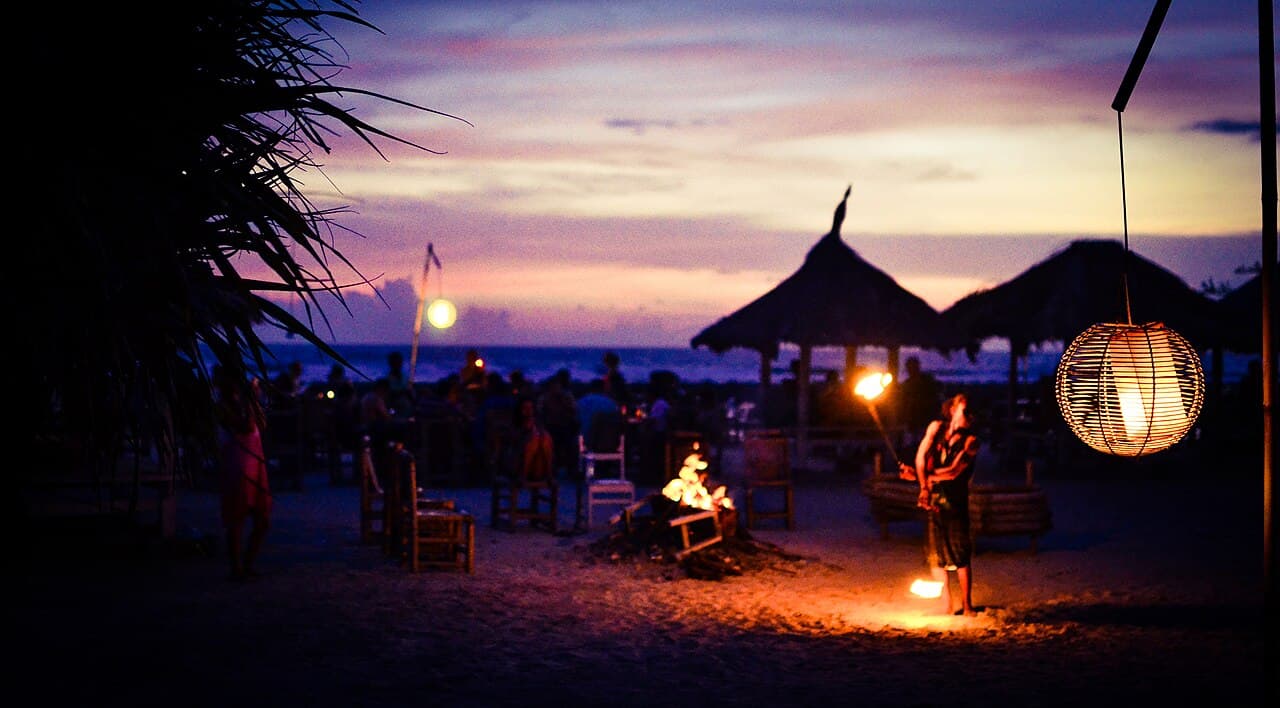
Gili Islands
Indonesia
Yogyakarta
Gili Islands
How do Yogyakarta and Gili Islands compare?
Gili Islands and Yogyakarta are the two non-Bali Indonesia headliners, and most travelers debating between them are deciding between beach time and culture time. The Gilis are three tiny car-free islands off Lombok's northwest coast — Trawangan for parties, Air for the chilled middle ground, Meno for the honeymoon hush. Snorkeling with sea turtles is essentially guaranteed off Turtle Point, the dive sites at Shark Point and Manta Point are world-class, and the entire vibe is bicycles, cidomo horse-carts, and beach bars. Yogyakarta is Java's cultural soul — the sultan's kraton palace, Jalan Malioboro batik shops, and most importantly the springboard for the Borobudur and Prambanan UNESCO temple complexes at sunrise.
Connecting them is a real day of travel. From Yogyakarta you fly to Lombok International Airport (1 hour 30 minutes, roughly $45 on Lion Air), then take a 90-minute taxi plus 15-minute fast-boat from Bangsal — total transit is 5-6 hours minimum. Cost is Yogyakarta's friend: $70/day mid-range against the Gilis' $83/day, with Gili Trawangan's beach-bar markup pushing dinners to $15-20 against Yogya's $4 nasi gudeg. Yogyakarta peaks May through September (dry season, clear sunrises at Borobudur), and the Gilis match almost exactly with the Indonesian dry season May-September for flat-water snorkeling.
Most travelers wedge both into a 10-14 day Indonesia loop: Yogyakarta first for three nights of temples and culture, fly to Bali for a couple of nights at Ubud, then fast-boat from Padang Bai to the Gilis for the beach finale. Pro tip: book the Borobudur sunrise tour through Manohara Hotel directly — it's the only operator with pre-dawn temple access, and the difference between standing on the upper stupas at 5:30 AM versus arriving with the 8 AM crowds is the difference between a trip-defining moment and a regret. Pick Gili Islands for car-free beach decompression, turtle snorkels, and a tropical island wind-down. Pick Yogyakarta for sunrise at Borobudur, Javanese batik culture, and ancient temples that genuinely rival Angkor for atmosphere.
💰 Budget
🛡️ Safety
Yogyakarta
Yogyakarta is generally safe for tourists and has a well-deserved reputation as one of Java's friendliest cities. Violent crime targeting visitors is rare. The main concerns are petty theft, traffic hazards, volcano monitoring, and the occasional earthquake. Use common sense and you'll have a great time.
Gili Islands
The Gili Islands are generally safe for tourists, but several specific risks require genuine attention. Fast-boat accidents are the most serious concern — there have been multiple fatal incidents on the Bali-Gili route over the years, caused by overcrowding, unseaworthy vessels, and inadequate safety equipment. Only book with reputable, established operators and always confirm that life jackets are on board. Ocean hazards include strong currents between the islands (not safe for casual swimming), fire coral, stonefish, and sea urchins. Drug activity is present on Gili Trawangan — street dealers offering mushrooms and harder substances are a fixture, and some have reported police involvement in scams targeting buyers. The risks of purchasing drugs here are real and severe. Trawangan also has a petty theft problem particularly at night — secure your belongings. Off the beach, Muslim cultural norms apply: cover up in the village areas and be respectful of the call to prayer.
🌤️ Weather
Yogyakarta
Yogyakarta has a tropical monsoon climate with two distinct seasons: a dry season (May-October) and a wet season (November-April). Temperatures are consistently warm year-round. Humidity is high, especially during the wet season. Early mornings are the most comfortable time for temple visits.
Gili Islands
The Gili Islands have a tropical climate with two distinct seasons: a dry season from April to October and a wet season from November to March. Temperatures are warm year-round, typically 25-32°C, and the sea stays at 27-29°C in all months — making diving and snorkeling comfortable throughout the year. The key variable is not temperature but sea conditions: during the wet season, strong winds and rough seas can cancel fast-boat services from Bali and make some dive sites inaccessible. The dry season brings reliably calm water, excellent visibility for diving (15-25 meters), and near-constant sunshine. Humidity is high in both seasons; even in the dry season, brief morning showers are not unusual. Mosquitoes are present year-round but significantly worse in the wet season — dengue fever is a real risk, particularly from November to February, and DEET-based repellent is strongly recommended.
🚇 Getting Around
Yogyakarta
Yogyakarta's city center is manageable on foot, but getting to temples and outlying attractions requires transport. Ride-hailing apps (Grab, Gojek) are the most convenient option. The Trans Jogja bus system covers main routes, and renting a motorbike is popular with experienced riders.
Walkability: The Malioboro-Kraton corridor is walkable but hot and dusty during the day. Sidewalks are narrow and often blocked by parked motorbikes. Early morning and evening are the best times to explore on foot. Carry water and sun protection.
Gili Islands
There are no motorized vehicles of any kind on the Gili Islands — no scooters, no cars, no tuk-tuks. This is one of the defining features of the islands and makes them uniquely peaceful. Getting around each island is done on foot, by bicycle, or via cidomo (traditional pony-drawn cart). All three islands are small enough that walking is the primary mode of transport. For moving between islands, public island-hopping boats run throughout the day and are cheap and reliable in the dry season. Cidomo carts are available for heavier luggage but welfare concerns around the working ponies are real — many animals are visibly overworked, particularly on Trawangan during high season. If you use one, choose healthy-looking animals and avoid forcing multiple runs for short distances you could easily walk.
Walkability: Extremely high. The Gili Islands are essentially car-free pedestrian spaces. Every attraction, restaurant, and dive school is reachable on foot. Gili Air (roughly 1.5 hr circumference walk) and Gili Meno (1.5-2 hr) are fully explorable by foot; Trawangan (2.5+ hr full circle) benefits from a bicycle for cross-island trips.
📅 Best Time to Visit
Yogyakarta
May–Sep
Peak travel window
Gili Islands
May–Sep
Peak travel window
The Verdict
Choose Yogyakarta if...
you want ancient temple complexes, authentic Javanese culture, and incredible value in a non-touristy setting
Choose Gili Islands if...
you want three tiny car-free islands off Lombok — turtles guaranteed, diving world-class, and Gili Trawangan party on demand
Yogyakarta
Gili Islands
Frequently asked
Is Yogyakarta or Gili Islands cheaper?
Yogyakarta is cheaper on average. A mid-range day in Yogyakarta costs about $70 vs $83 in Gili Islands, so Yogyakarta saves you roughly $13 per day compared to Gili Islands.
Is Yogyakarta or Gili Islands safer?
Yogyakarta and Gili Islands score equally on our safety index (70/100). Specific risks differ by neighborhood — check the Safety section on each guide.
Which has better weather, Yogyakarta or Gili Islands?
Gili Islands has the more temperate climate year-round. The Gili Islands have a tropical climate with two distinct seasons: a dry season from April to October and a wet season from November to March. Temperatures are warm year-round, typically 25-32°C, and the sea stays at 27-29°C in all months — making diving and snorkeling comfortable throughout the year. The key variable is not temperature but sea conditions: during the wet season, strong winds and rough seas can cancel fast-boat services from Bali and make some dive sites inaccessible. The dry season brings reliably calm water, excellent visibility for diving (15-25 meters), and near-constant sunshine. Humidity is high in both seasons; even in the dry season, brief morning showers are not unusual. Mosquitoes are present year-round but significantly worse in the wet season — dengue fever is a real risk, particularly from November to February, and DEET-based repellent is strongly recommended.
Is it easier to get by with English in Yogyakarta or Gili Islands?
English is more widely spoken in Gili Islands (4/5 vs 2/5 on our scale). You'll find it easier to order food, ask for directions, and navigate transit in Gili Islands.
When is the best time to visit Yogyakarta vs Gili Islands?
Yogyakarta peaks in May–Sep. Gili Islands peaks in May–Sep. Both peak in May–Sep, so a single trip pairs them naturally.
How long is the flight from Yogyakarta to Gili Islands?
Roughly 1h 19m on a direct flight (about 628 km / 390 mi). One-way fares typically run $120-350 depending on season and how far in advance you book.
How do daily costs in Yogyakarta and Gili Islands compare?
In Yogyakarta: budget ~$25-40/day, mid-range ~$50-90/day, luxury ~$150+/day. In Gili Islands: budget ~$25-40/day, mid-range ~$55-110/day, luxury ~$250+/day.
You might also compare
YogyakartavsGili Islands
Try another