Quick Verdict
Pick Paraty for cobblestone king-tide alleys, schooner runs to Praia do Sono, and Estrada-da-Cachaça distillery stops. Pick São Paulo if Liberdade ramen, MASP afternoons, and Vila Madalena bar nights run the week.
Can't pick? Visit both.
Build a trip that includes Paraty and São Paulo, with complementary stops we'll suggest.
🏆 Paraty wins 72 OVR vs 68 · attribute matchup 5–5
Keep exploring
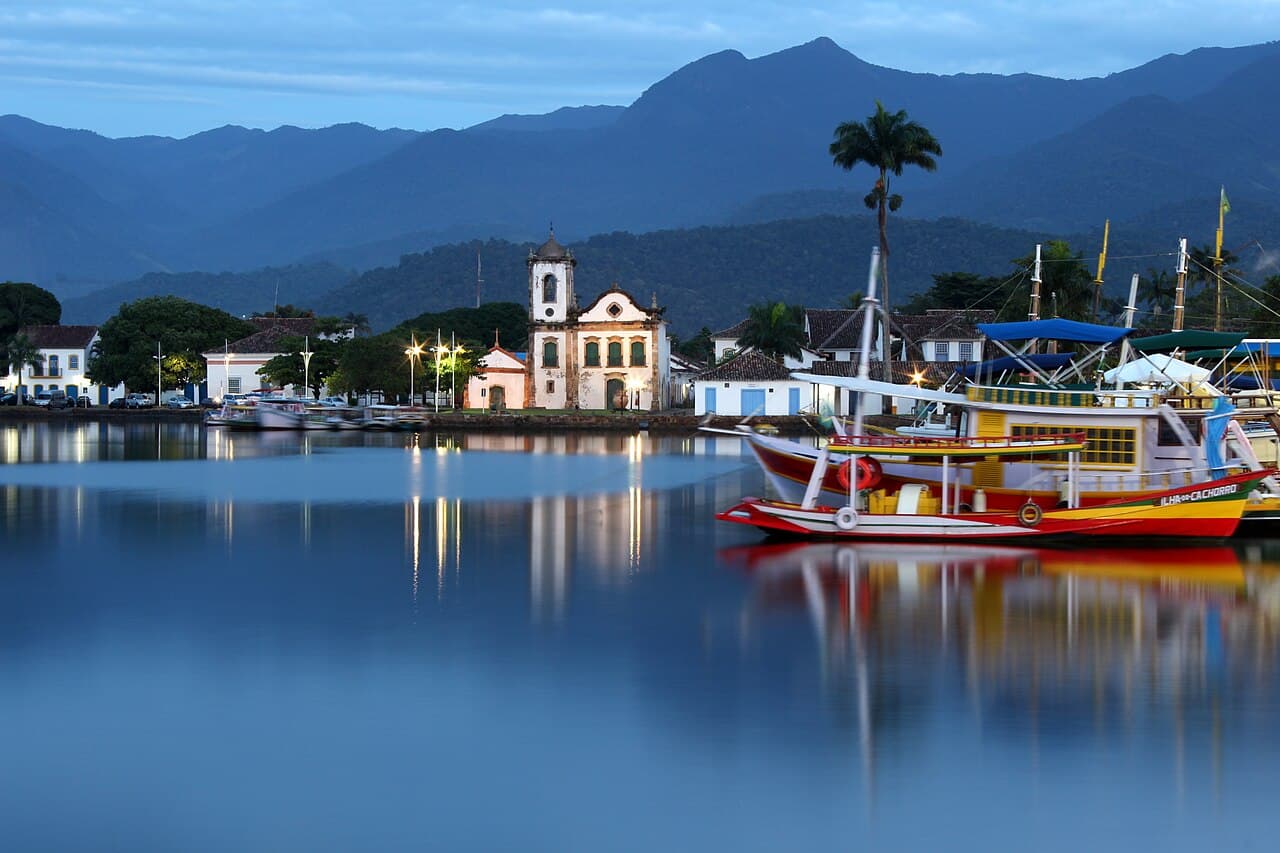
Paraty
Brazil

São Paulo
Brazil
Paraty
São Paulo
How do Paraty and São Paulo compare?
Paraty and São Paulo are roughly equidistant from Rio but they ask totally different things from you. Paraty is the UNESCO colonial port — 36,000 people, a 5-block centro histórico that floods on king tides, schooners running into Saco do Mamanguá and the Bay of Paraty all day, and a one-or-two-day rhythm with cachaça distilleries (Engenho Pedra Branca, Maria Izabel) on the Estrada da Cachaça out of town. São Paulo is the 12-million immigrant-food capital of South America — Liberdade for Japanese ramen and Sunday markets, Bixiga for Italian cantinas, Mercado Municipal for the famous mortadella sandwich at Hocca Bar, MASP and Pinacoteca for the art days, and Vila Madalena for the noisy graffiti-walled streets at midnight.
By ground, São Paulo to Paraty runs about 5-6 hours via Cunha or Ubatuba, around 100-150 BRL on Reunidas Paulista buses from Tietê terminal; many travelers route through Rio because the CGH-SDU shuttle and the Rio-Paraty Costa Verde bus add up to a similar door-to-door time with better road quality. Mid-range São Paulo lands at 125 USD/day with food at every price point — D.O.M. tasting menus at 1,200 BRL and 8 BRL pastel-de-feira on the same block; Paraty is 130 USD with seafood priced at tourist-port markup and pousada rooms at 350-500 BRL. Both peak April-October for dry coastal weather and clearer Paulista skies above the Pinheiros river.
Pro tip: fly into GRU, do São Paulo for three nights, take the bus to Paraty for two more, then ferry-bus to Rio via Angra dos Reis rather than backtracking through São Paulo. Pick Paraty if a slow weekend of cobblestones, cachaça distillery stops on the Estrada da Cachaça, and a schooner to Praia do Sono fits the trip. Pick São Paulo if 250 nationalities of food, Liberdade Sunday markets, and Vila Madalena nights at $8 caipirinhas suit the week.
💰 Budget
🛡️ Safety
Paraty
Paraty is one of the safest tourist towns in Brazil — small, low-population, heavily dependent on tourism, and the historic centre is essentially a pedestrian zone with constant foot traffic. Violent crime is rare; petty theft is occasional; the main physical risks are the slippery cobblestones (sprained ankles are common), heatstroke on the trail, and rip currents on certain beaches.
São Paulo
Sao Paulo requires street smarts but is generally manageable for experienced urban travelers. Petty crime like phone snatching and pickpocketing is common, especially around transit hubs. Affluent neighborhoods like Jardins and Pinheiros are considerably safer than peripheral areas.
🌤️ Weather
Paraty
Paraty has a humid tropical climate moderated by the Atlantic — warm, wet summers (Dec-Mar) with frequent thunderstorms; mild, drier winters (Jun-Aug) that are the optimal travel window. The Serra do Mar wrings rain out of the prevailing wind year-round, so Paraty is consistently one of the wettest places in southeast Brazil — annual rainfall ~2,300 mm. Boat trips and forest hikes both require dry-ish weather, so the dry season is double-counted as the best time to visit.
São Paulo
Sao Paulo sits at about 760m elevation, giving it a milder subtropical climate than coastal Brazil. Summers are warm and wet with frequent afternoon downpours. Winters are dry and cool. The city can experience dramatic temperature swings within a single day.
🚇 Getting Around
Paraty
Paraty is small and the historic centre is pedestrian-only — within town you walk everywhere. For day trips, the Costa Verde Transportes local bus runs to Trindade, the Penha valley waterfalls, and along the BR-101 to Angra dos Reis. Taxis and Uber (working but limited driver pool) cover the gaps. A rental car is convenient for the inland waterfalls and cachaça distilleries but unnecessary in town.
Walkability: Paraty's historic centre is one of the most walkable in Brazil — entirely car-free, six blocks across, surrounded by the harbour and river. Walking from one end of the centre to the other takes 10 minutes. Cobblestones are challenging; comfortable shoes essential.
São Paulo
Sao Paulo has a growing Metro system supplemented by an extensive bus network. Traffic is notoriously bad — the city regularly records traffic jams exceeding 200 km in length during rush hour. The Bilhete Unico transit card works across Metro, trains, and buses.
Walkability: Sao Paulo is walkable within individual neighborhoods — Jardins, Vila Madalena, and Avenida Paulista are excellent on foot. However, the city is enormous and spread out, so you'll need transit between districts. Sunday closures of Avenida Paulista create the best pedestrian experience.
📅 Best Time to Visit
Paraty
Apr–Sep
Peak travel window
São Paulo
Apr–May, Sep–Oct
Peak travel window
The Verdict
Choose Paraty if...
You want a UNESCO colonial town that does double duty as a beach base — a perfectly walkable historic centre, a schooner-launching harbour, and Atlantic Forest hikes within 20 minutes of your guesthouse.
Choose São Paulo if...
you want Brazil's world-capital of immigrant food — Liberdade (Japan), Bixiga (Italy), São Paulo Art Museum (MASP), Avenida Paulista, and the continent's wildest nightlife
São Paulo
Frequently asked
Is Paraty or São Paulo cheaper?
São Paulo is cheaper on average. A mid-range day in Paraty costs about $130 vs $125 in São Paulo, so São Paulo saves you roughly $5 per day compared to Paraty.
Is Paraty or São Paulo safer?
Paraty scores higher on our safety index (75/100 vs 50/100). Paraty is one of the safest tourist towns in Brazil — small, low-population, heavily dependent on tourism, and the historic centre is essentially a pedestrian zone with constant foot traffic.
When is the best time to visit Paraty vs São Paulo?
Paraty peaks in Apr–Sep. São Paulo peaks in Apr–May, Sep–Oct. Both peak in Apr–May, Sep, so a single trip pairs them naturally.
How long is the flight from Paraty to São Paulo?
Roughly 49m on a direct flight (about 199 km / 124 mi). One-way fares typically run $60-180 depending on season and how far in advance you book.
How do daily costs in Paraty and São Paulo compare?
In Paraty: budget ~$40-70/day, mid-range ~$100-180/day, luxury ~$350-800/day. In São Paulo: budget ~$35-55/day, mid-range ~$90-160/day, luxury ~$300+/day.
You might also compare
ParatyvsSão Paulo
Try another