Compare 576 Travel Destinations
16 of 576 guides match

Antigua
Antigua and Barbuda
The larger of the two islands that make up Antigua and Barbuda, a 108-square-mile volcanic-and-coral landmass in the Leeward Caribbean with a much-quoted boast of 365 beaches, one for every day of the year. The southwest coast holds Nelson's Dockyard at English Harbour, the only continuously-running Georgian-era dockyard on Earth and a UNESCO World Heritage Site. Sunday evenings draw the island to Shirley Heights for steel-band-and-barbecue sunsets over the same harbour. The Dickenson Bay strip on the northwest coast anchors the all-inclusive resort cluster, and a 90-minute ferry north reaches Barbuda's pink-sand Princess Diana Beach.

Aruba
Aruba
A 19-mile Dutch Caribbean island 15 miles north of Venezuela — outside the hurricane belt, dry and breezy year-round, and reliably sunny (the local saying is “sun, sand, and sea every day”). Eagle Beach’s photogenic divi-divi trees, Palm Beach’s high-rise resort strip, the otherworldly Arikok National Park (cactus-and-iguana desert covering 18% of the island), the Natural Pool tucked in volcanic rocks, and the colonial Dutch capital of Oranjestad with its pastel architecture. US dollars accepted everywhere; English universally spoken; US Pre-Clearance at the airport.

Barbados
Barbados
The easternmost Caribbean island — a Commonwealth nation that became a republic in 2021 and the birthplace of rum (Mount Gay, 1703, is the world's oldest still-running distillery). UNESCO Bridgetown and its Garrison preserve the British military layout of the 17th–19th centuries; the rugged east coast (Bathsheba's mushroom rocks) is for surfers; the calmer Caribbean west (Holetown, Speightstown) for swimmers. Crop Over (July–August) is the largest carnival outside Trinidad. Flying fish is the national dish, served with cou-cou. The dry season runs December–May.

Big Island
United States
Hawaii Island is bigger than all the other Hawaiian islands combined and is still actively growing — Kilauea is one of the world’s most active volcanoes (currently erupting as of April 2026) and Mauna Kea’s 4,205-m summit hosts 13 international observatories under what astronomers consider Earth’s clearest skies. Eight of the world’s 13 climate zones exist on this single island: the Hilo side gets 3,400 mm of tropical rainforest rain a year while the Kona side stays dry desert at 500 mm; Mauna Kea’s summit has alpine conditions year-round and snows in winter. Add Punaluʻu black-sand beach, Kona coffee country, the green sea turtles at Puʻuhonua o Hōnaunau, and the manta-ray night snorkel off Keauhou Bay. The most geologically dramatic of the Hawaiian islands.
Bocas del Toro
Panama
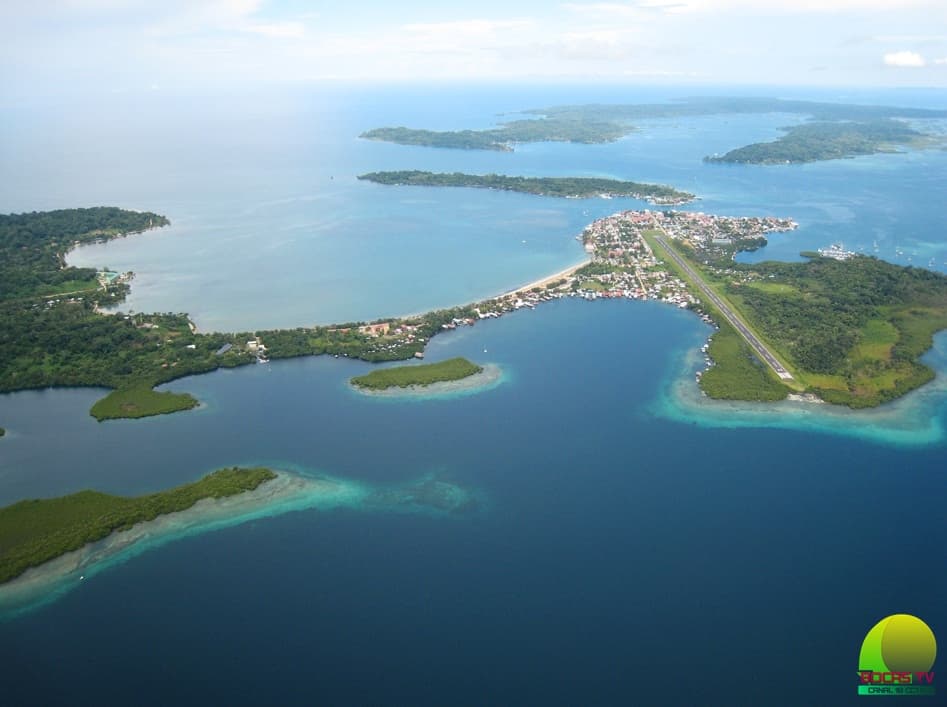
An archipelago of nine main islands and 200-something islets in Panama's far northwest Caribbean — a cheaper, scruffier, more laid-back answer to Costa Rica or San Blas. Isla Colón holds the main town (Bocas Town); Bastimentos has Red Frog and Wizard beaches; Isla Carenero is a 5-minute boat ride for sunset bars over the water. Snorkel the cays, see strawberry poison-dart frogs, and accept that everything runs on island time and most floors are wooden boards over the sea.
.jpg%3Fwidth%3D1280&w=1600&q=75)
Cozumel
Mexico
A flat 478 sq km Caribbean island east of Playa del Carmen, reached in 35 minutes by passenger ferry. The reason to come is underwater: Cozumel sits on the Mesoamerican Reef, the second-largest barrier reef system in the world, with Palancar, Santa Rosa Wall and Punta Sur drift dives consistently ranked among the planet's best. San Miguel is the only real town, a low-rise grid built around a cruise terminal that sees regular Carnival and Royal Caribbean stops. Inland, Chankanaab Park combines a Mayan ruin with snorkelling lagoons; the rest of the island is mostly mangroves, beach clubs and one perimeter road.

Curaçao
Curaçao
A 444 km² Dutch Caribbean island just off the coast of Venezuela — the largest of the ABC islands (Aruba-Bonaire-Curaçao), defined by the pastel Dutch colonial Handelskade row of UNESCO Willemstad and the Queen Emma Pontoon Bridge that swings open 30+ times per day to let cargo ships pass. Outside the hurricane belt, with 35+ beaches packed into a 60 km long coastline, the world's only authentic Blue Curaçao distillery, the second-oldest synagogue in the Americas, and Christoffel National Park's desert moonscape. Far less developed than Aruba but more architecturally distinctive; Dutch tilt with universal English.

Hilton Head
United States
A 12-mile crescent-shaped Lowcountry barrier island off the southern coast of South Carolina, master-planned in the 1950s by developer Charles Fraser around the principle that buildings should never overshadow the trees. The result is a quietly affluent island of 33-plus golf courses (host of the RBC Heritage PGA tournament every April at Harbour Town Links, played around the candy-striped 1969 lighthouse on the 18th hole), 60 miles of paved bike paths threading the maritime forest, and the 605-acre Sea Pines Forest Preserve. Charleston is two hours north on US-17; Savannah is 45 minutes south across the Talmadge Bridge.

Kauai
United States
The oldest of the main Hawaiian islands at 5.1 million years — long enough for erosion to carve the cathedral-green Na Pali Coast cliffs (1,200 m straight from the Pacific) and Waimea Canyon, the "Grand Canyon of the Pacific". Mount Waiʻaleʻale at the centre is among the wettest spots on Earth (~9,500 mm of rain a year), feeding seven rivers that pour out across taro-field valleys to Hanalei Bay’s 3-km golden crescent. The county forbids any building taller than a coconut palm, half the island remains undeveloped, and the only road around it dead-ends 27 km short of completing the loop — making the Na Pali Coast accessible only by foot, boat, or helicopter. The "Garden Isle" is the slowest-paced and most photogenic of the Hawaiian islands.

Martha's Vineyard
United States
A 100-square-mile triangular island seven miles south of Cape Cod, reached by a 45-minute Steamship Authority car ferry from Woods Hole. Six distinct towns share the island, each with its own personality: white-clapboard Edgartown of sea-captain mansions, the working ferry port of Vineyard Haven, the gingerbread-cottage Methodist camp meeting at Oak Bluffs, the Wampanoag tribal lands and 150-foot striated clay cliffs at Aquinnah, plus rural Chilmark and West Tisbury inland. The Vineyard's Camelot legacy runs from JFK summers through the Obama family's recurring August stays at Blue Heron Farm.

Maui
United States
Hawaii's second-largest island — the Road to Hana's 620 curves and 59 bridges past waterfalls and bamboo forests, sunrise above the clouds at Haleakalā's 10,023-ft summit crater, winter humpback whales in the Auʻau Channel, and the snorkel-famous Molokini crater. Lahaina's historic town was devastated by the August 2023 wildfire — visiting West Maui responsibly supports recovery. Kāʻanapali, Wailea, and Kīhei host the resort zones; Pāʻia and Upcountry Makawao are the laid-back alternatives.

Nantucket
United States
A crescent-shaped 48-square-mile island 30 miles south of Cape Cod, named the Faraway Land by the Wampanoag and once the wealthiest port in the world during the 1820s peak of the Nantucket whaling fleet. When kerosene replaced whale oil and the harbour silted up in the late 19th century, the entire town fossilised in place, leaving the largest concentration of pre-1850 architecture in the United States: cobblestone Main Street, 800-plus surviving Federal and Greek Revival houses, and the Whaling Museum in the old Hadwen and Barney Oil Refinery. Daily ferries from Hyannis run one hour by fast catamaran or 2.25 hours by traditional ferry.

Oʻahu
United States
Hawaii's most populated island packs Waikiki Beach's surf, Pearl Harbor's history, the North Shore's legendary winter waves, Hanauma Bay's snorkel reef, and Diamond Head's crater hike into one island you can drive around in a day. Honolulu's Chinatown is unexpectedly great for food and art.

Saint Lucia
Saint Lucia
The Caribbean's most dramatic island — the UNESCO twin Pitons (volcanic spires rising from the sea) define Saint Lucia as completely as the Eiffel Tower defines Paris. The world's only drive-in volcano near Soufrière, Anse Chastanet's world-class shore diving, Marigot Bay's perfect natural harbor, and Friday night Jump-Up street parties make this the Caribbean's most varied island experience.

South Padre Island
United States
South Padre Island is a 34-mile barrier island at the southern tip of Texas, a one-bridge causeway from Port Isabel and a 30-minute drive from Brownsville. The town occupies the southern five miles; everything north is undeveloped Gulf-of-Mexico beach and dune. It is the sport-fishing capital of Texas, headquarters of the Sea Turtle Inc rescue, and home to the world's largest sandcastle competition (Sandcastle Days, October). The reputation is split: a notorious March spring break, then nine quiet, family-friendly months of dolphin tours, kiteboarding, and 25-dollar beachfront tacos. Closest airports are Brownsville/SPI (BRO) and Harlingen (HRL), both inside an hour. Do not confuse it with Padre Island National Seashore, 90 miles north near Corpus Christi.

Turks and Caicos
Turks and Caicos
A British Overseas Territory of 40 low-lying coral islands strung between the Bahamas and Hispaniola — Grace Bay’s 12 miles of powdery white sand and turquoise water regularly tops world’s-best-beach rankings, the third-largest coral barrier reef in the world rims the islands (snorkelling and diving among the Caribbean’s best), and the bioluminescent Conch Bar Caves on Middle Caicos sit alongside Mudjin Harbour’s dramatic limestone cliffs. Higher-end and significantly quieter than Bahamas alternatives. Uses US dollars despite the British flag; British nationality, US currency.